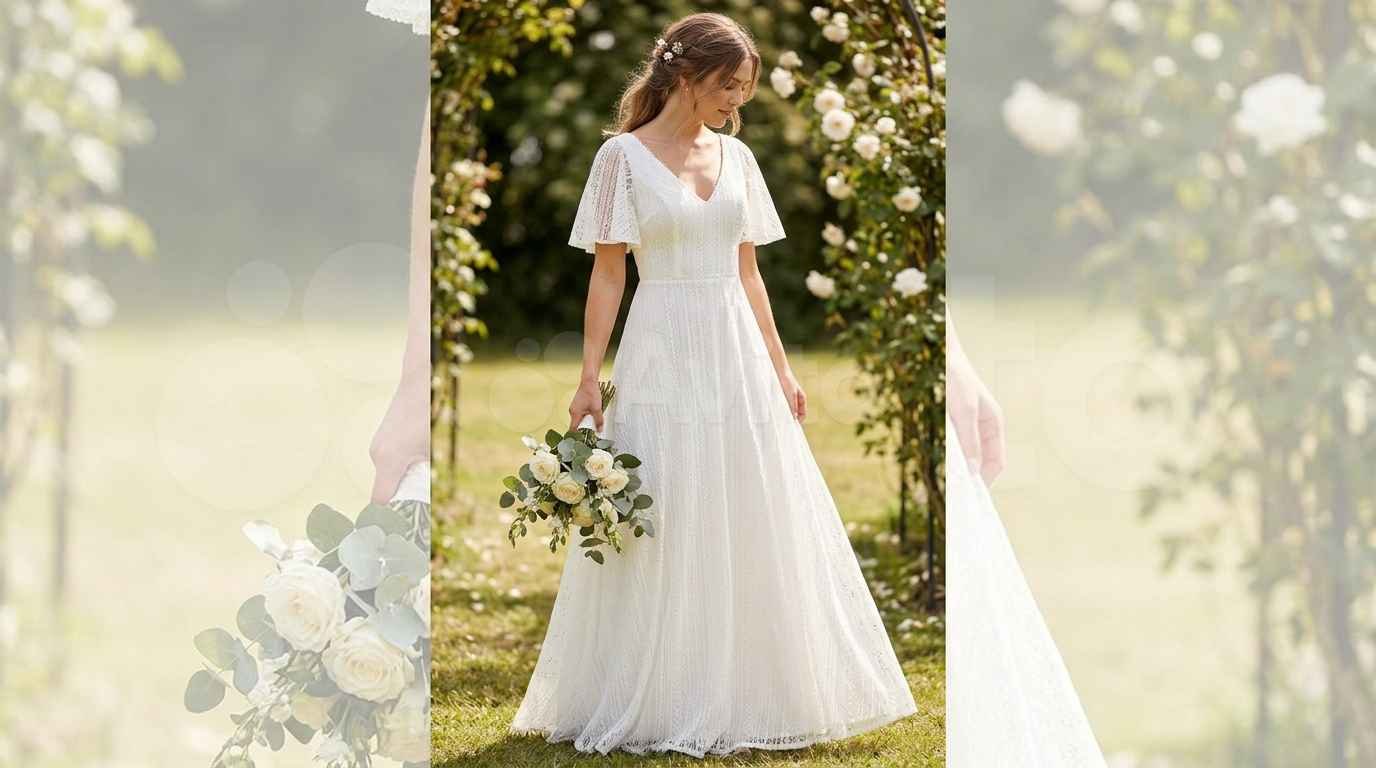
You found your person. Now you need to find the dress. And if you’re reading this in the middle of a Pinterest spiral at 11pm, surrounded by saved pins you can barely categorize anymore, I’ve been there too. White summer wedding dresses sound simple on paper, but the options are genuinely overwhelming once you start looking. Strapless or sleeves? Flowy or structured? A-line or something with a little more drama?
This guide cuts through all of that. 16 ideas, real style notes, and honest opinions from someone who has spent way too much time thinking about bridal fashion. Let’s get into it.
Why white still rules summer weddings
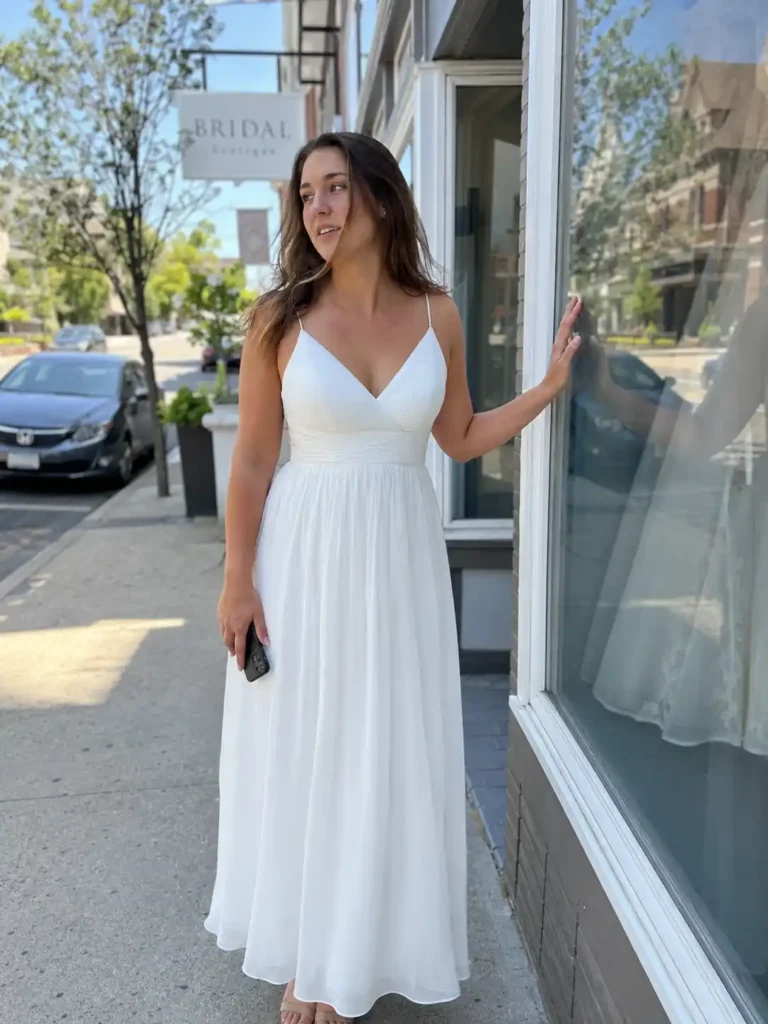
White isn’t going anywhere. I know champagne and ivory get a lot of love, and blush has had its moment (still having it, honestly), but there’s a reason brides keep coming back to true white. It photographs with incredible contrast outdoors. Under summer light, a clean white gown looks almost luminous, the kind of effect that makes your wedding photos feel editorial rather than just pretty.
Fabric choice matters more in summer than any other season. You want something that breathes. Chiffon, organza, light crepe, and cotton eyelet are your friends. Heavy duchess satin in July? That’s a decision you’ll regret somewhere around the cocktail hour.
The 16 white summer wedding dress styles worth knowing
1. Flowy chiffon A-line
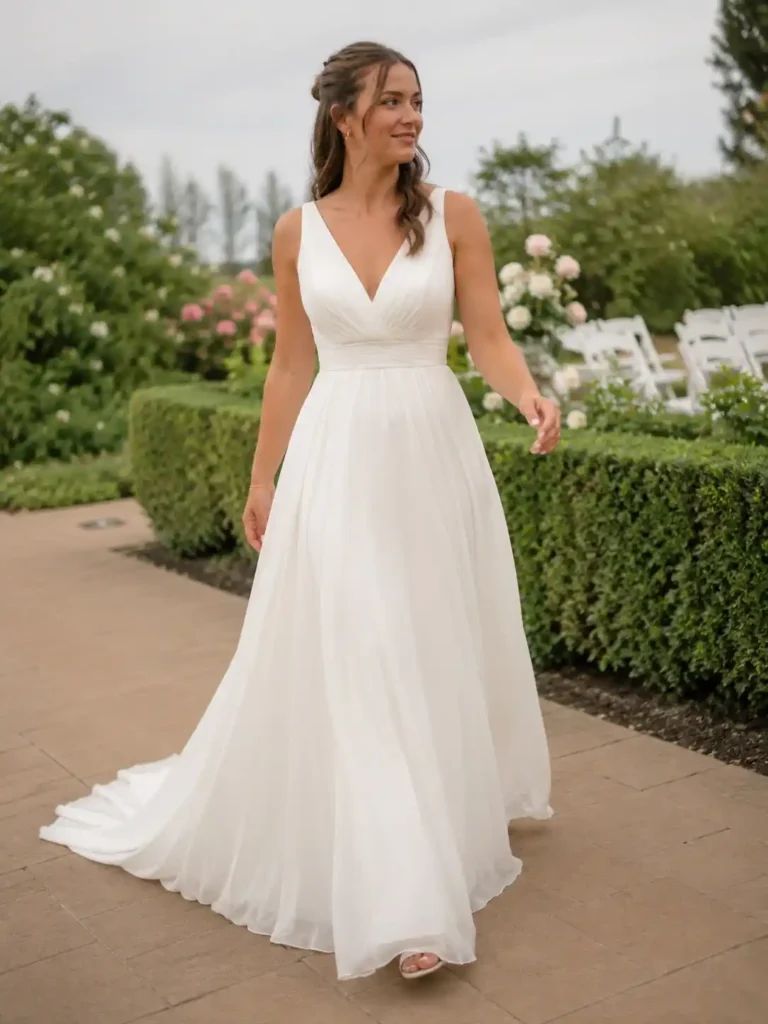
The A-line silhouette is probably the most forgiving shape ever designed for a wedding dress, and chiffon makes it perfect for summer. It moves beautifully, doesn’t trap heat, and works for everything from a garden ceremony to a beach reception. If you’re uncertain about what shape suits you, start here. You can find gorgeous options from designers like Vera Wang that show how a simple A-line in white chiffon can go from casual to formal just by changing the neckline.
2. Off-shoulder with a flutter sleeve
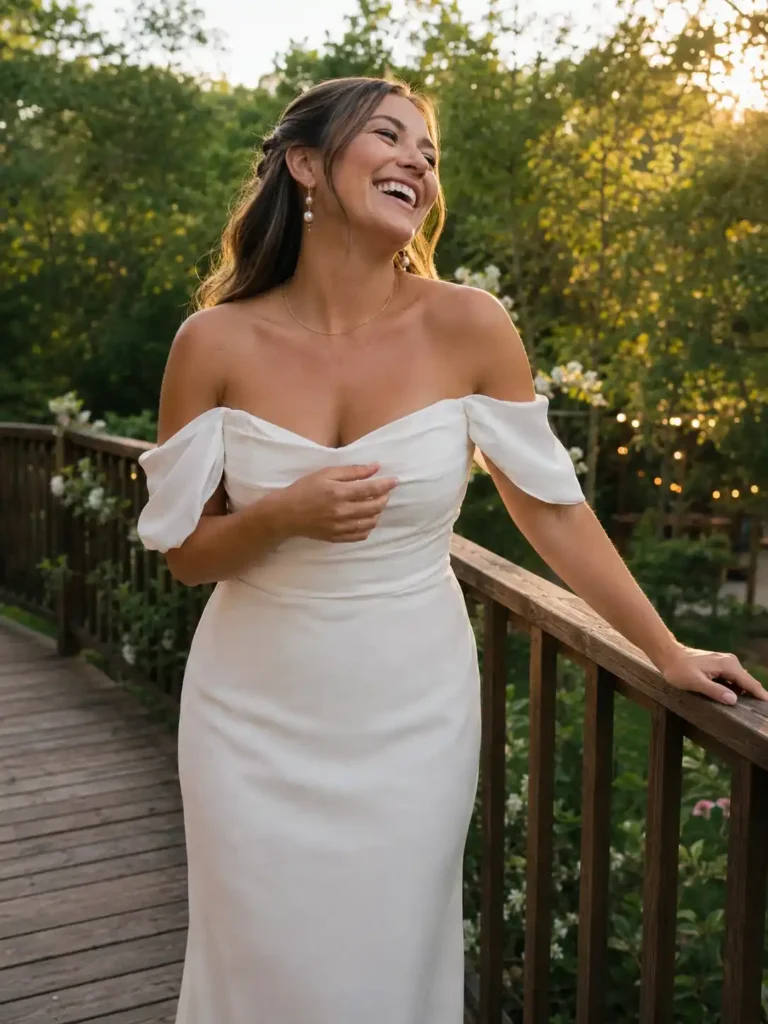
This style had a major moment a few years ago and it genuinely hasn’t aged. The off-shoulder line is flattering on a wide range of body types, and a small flutter sleeve adds enough coverage for outdoor ceremonies where you might hit a shady, slightly cool spot. IMO, it also photographs better than a fully strapless gown because there’s something for the eye to follow up toward the face.
3. Fitted crepe with a low back
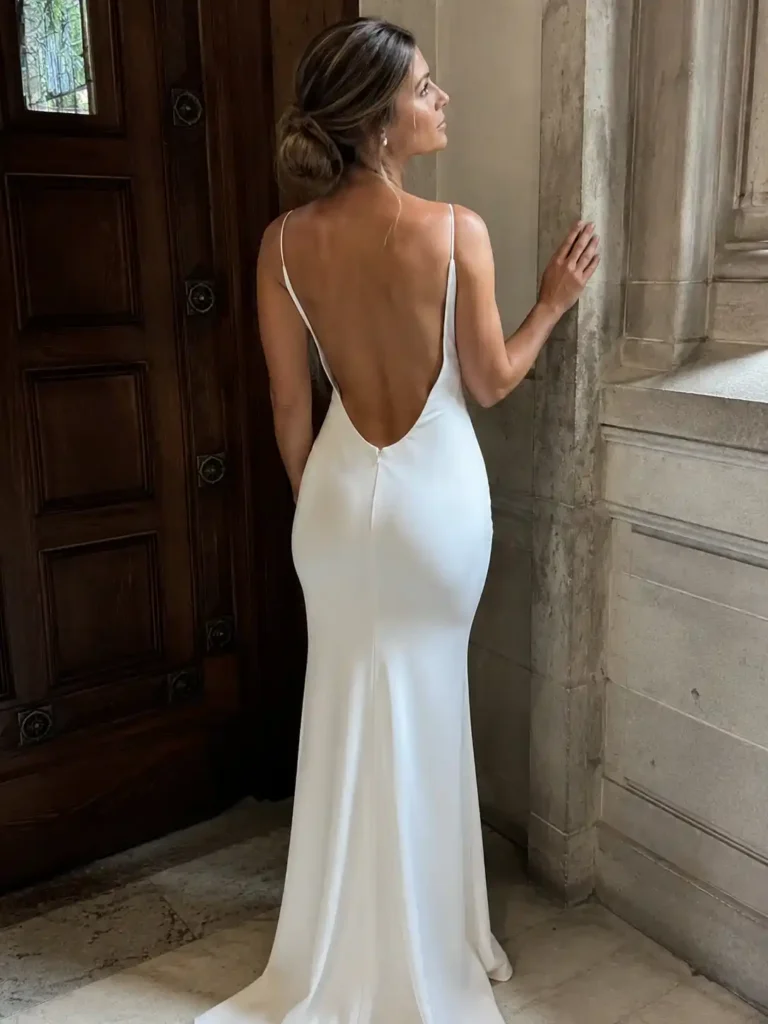
Wow. If there’s one style that stops people mid-scroll on Pinterest, it’s a clean white crepe gown with a dramatically low back. The front reads almost minimalist, totally appropriate for a church or formal venue, and then you turn around. It’s a very specific kind of elegance. The fabric is key: heavyweight crepe stays structured without being stiff, which means it photographs well even after hours of wear.
4. Cotton eyelet midi dress
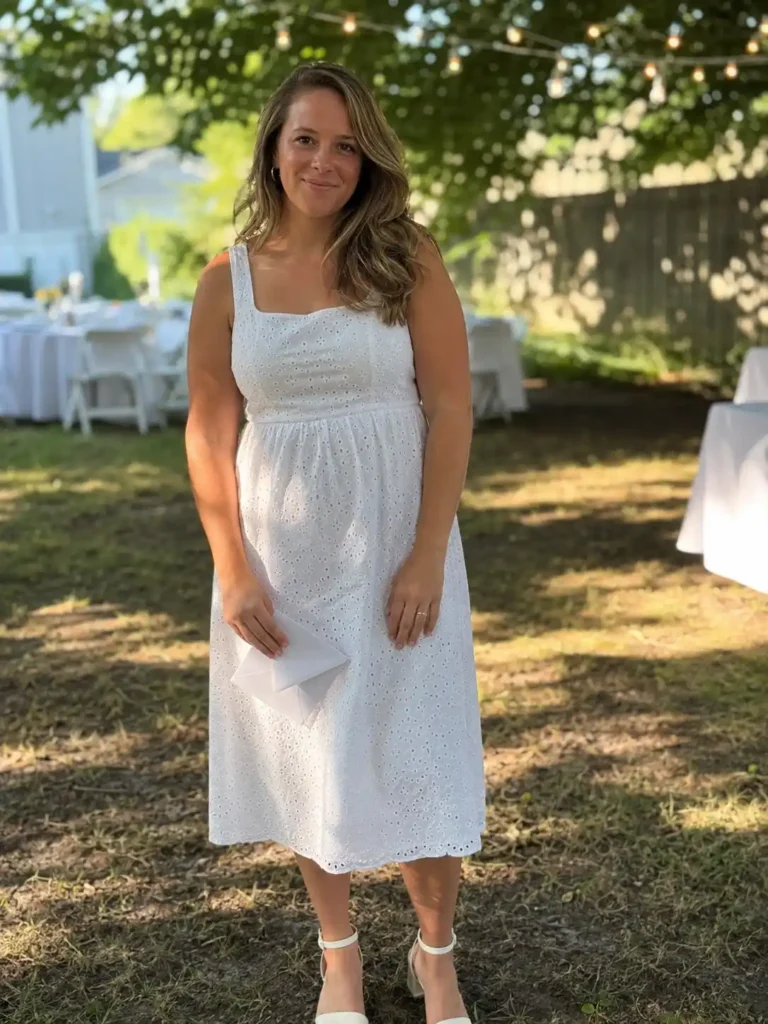
For the bride who genuinely wants a relaxed celebration, a white cotton eyelet midi is worth considering seriously. It has a slightly bohemian, romantic quality without going full flower crown and barefoot. The eyelet texture reads as intentional and designed, not like you grabbed something from a summer sale rack. Pair it with block-heeled sandals and you’ve got a look that works for a backyard wedding or a small courthouse ceremony followed by a nice dinner.
5. One-shoulder asymmetric gown
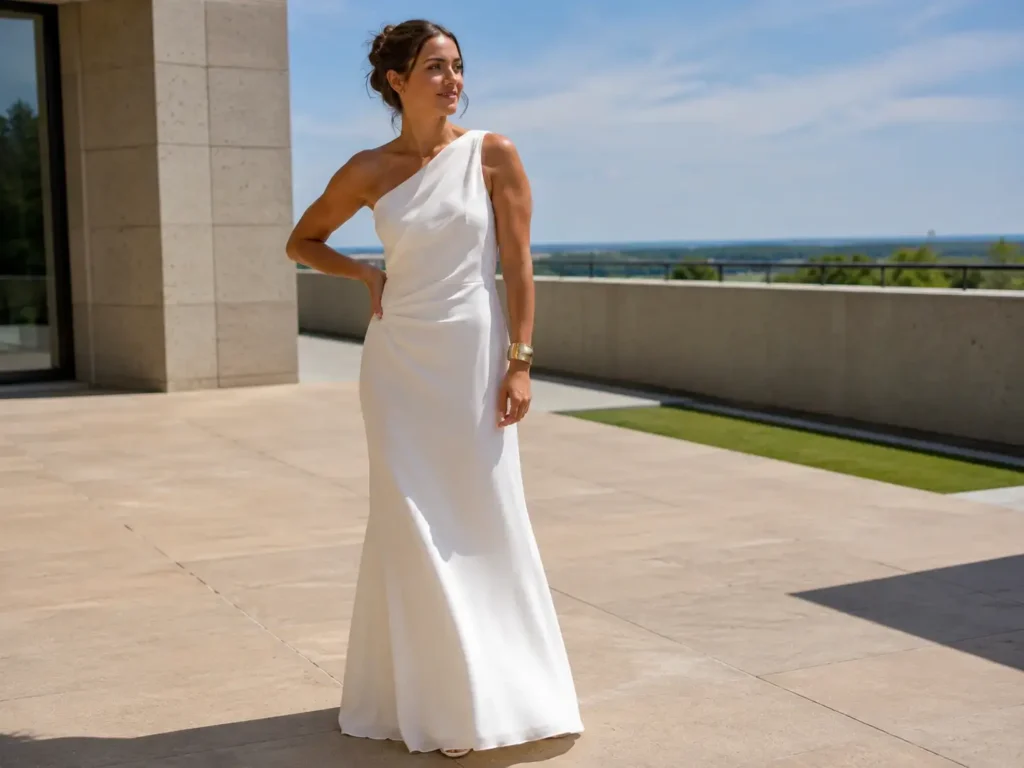
One-shoulder styles are having a real resurgence right now, and the asymmetric cut adds a little sculptural interest without requiring heavy embellishment. A plain white one-shoulder gown in a light fabric looks modern and fashion-forward in a way that’s going to age well in photos. You’re not chasing a trend, you’re wearing a shape that good designers have returned to consistently for 60 years.
6. Square neckline with boning
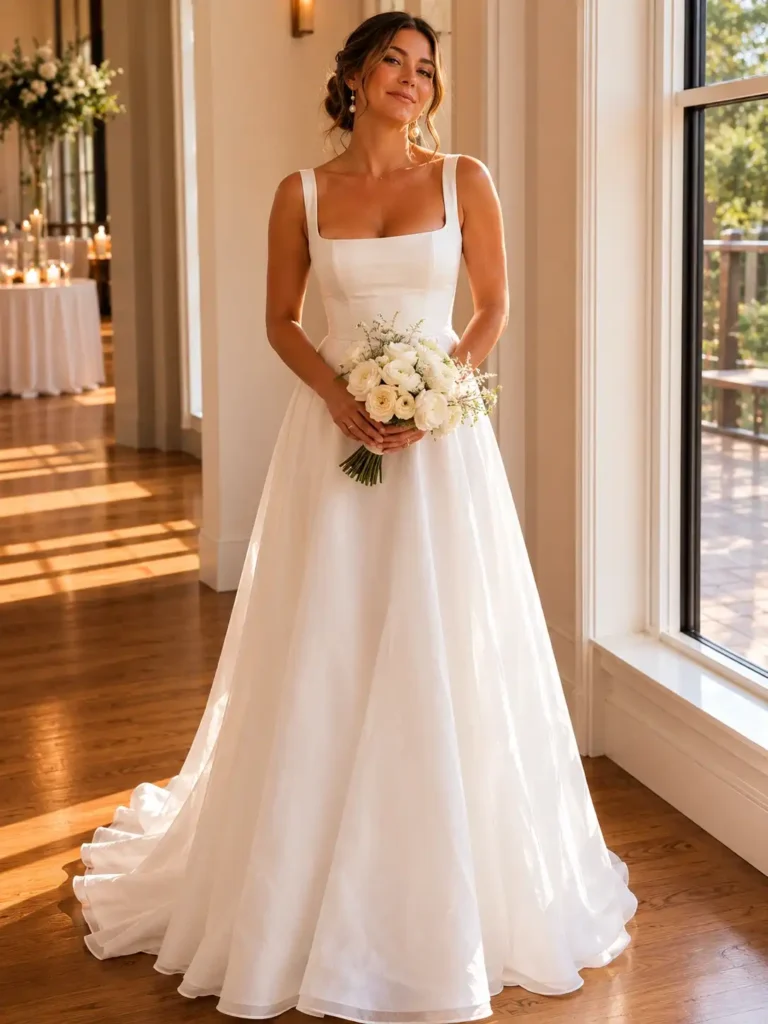
The square neckline is one of those details that looks incredibly chic on camera. It creates a clean horizontal line that frames the collarbone and chest in a way that photographs beautifully. Pair it with structured boning through the bodice and you’ve got a gown that holds its shape all day. This is a good choice if you want to skip a strapless bra situation entirely, because a properly boned bodice does the work itself.
7. Spaghetti strap slip dress
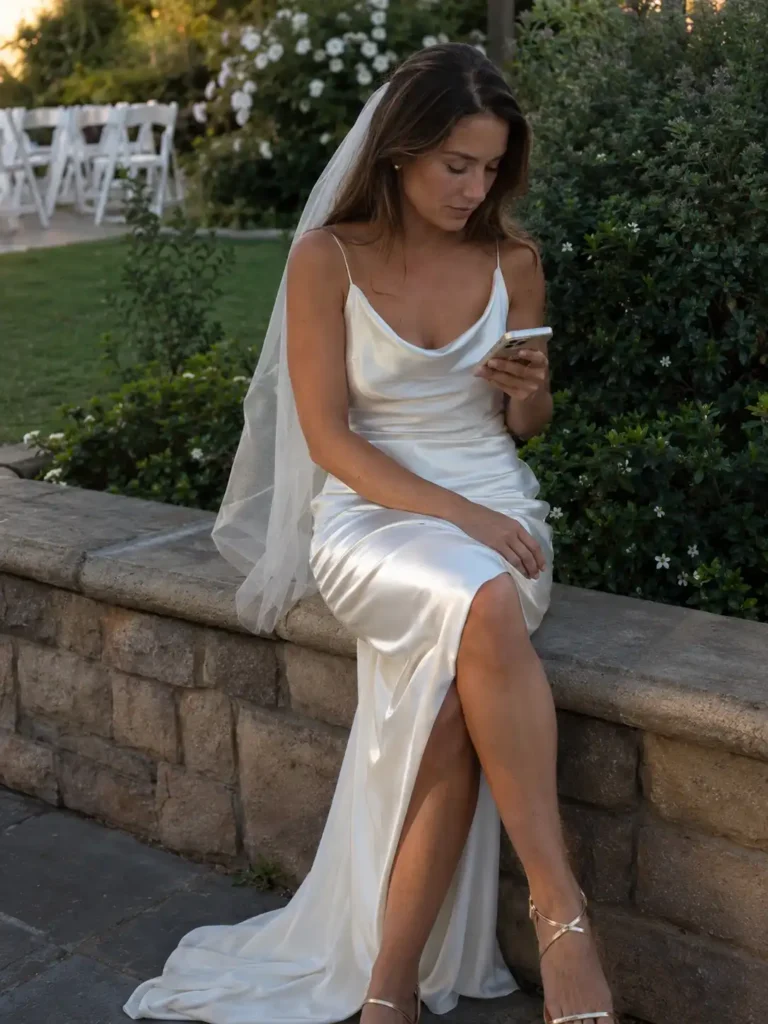
For a bride who thinks most wedding dresses are too much, the slip dress is the answer. White satin or silk charmeuse in a simple slip silhouette reads bridal without screaming it. You can wear it with a veil for ceremony formality and then pull the veil off for the reception and suddenly you just look like yourself, a very elegantly dressed version of yourself, but still you. BHLDN has consistently carried good options in this category at a lower price point than most bridal boutiques.
8. Tiered ruffle skirt with a simple bodic
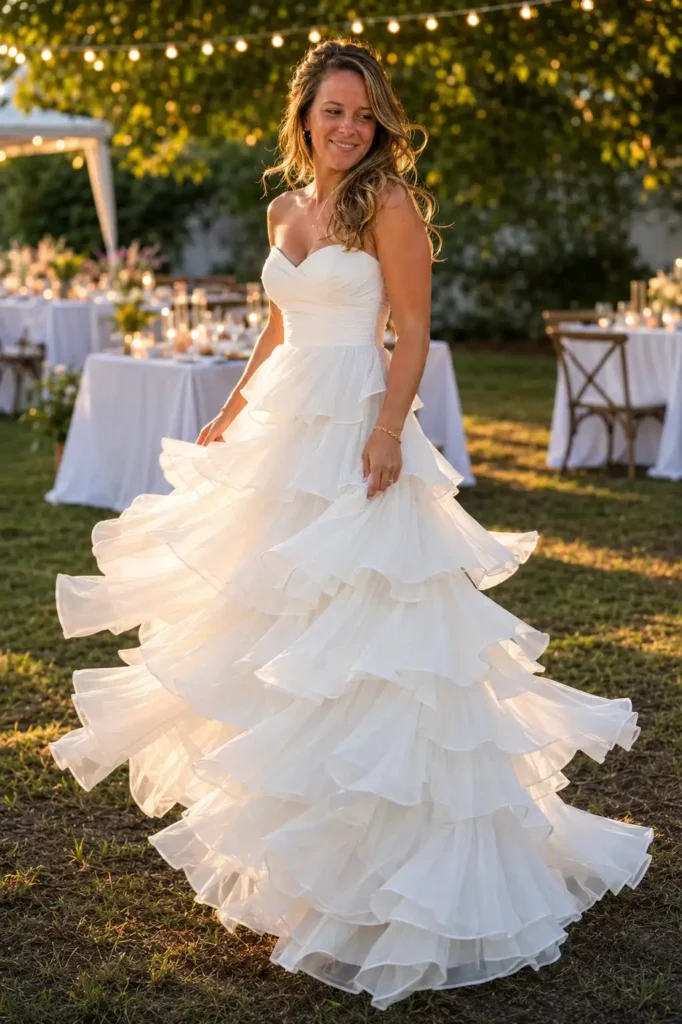
Here’s where things get a little more playful. A tiered ruffle skirt in white chiffon or organza is a very Pinterest-friendly silhouette, the kind that moves constantly in photos and video and creates that effortless, breezy quality that summer wedding aesthetics are built around. Keep the bodice simple (a clean sweetheart or a fitted tank-style top) so the skirt does the talking.
9. Lace overlay gown
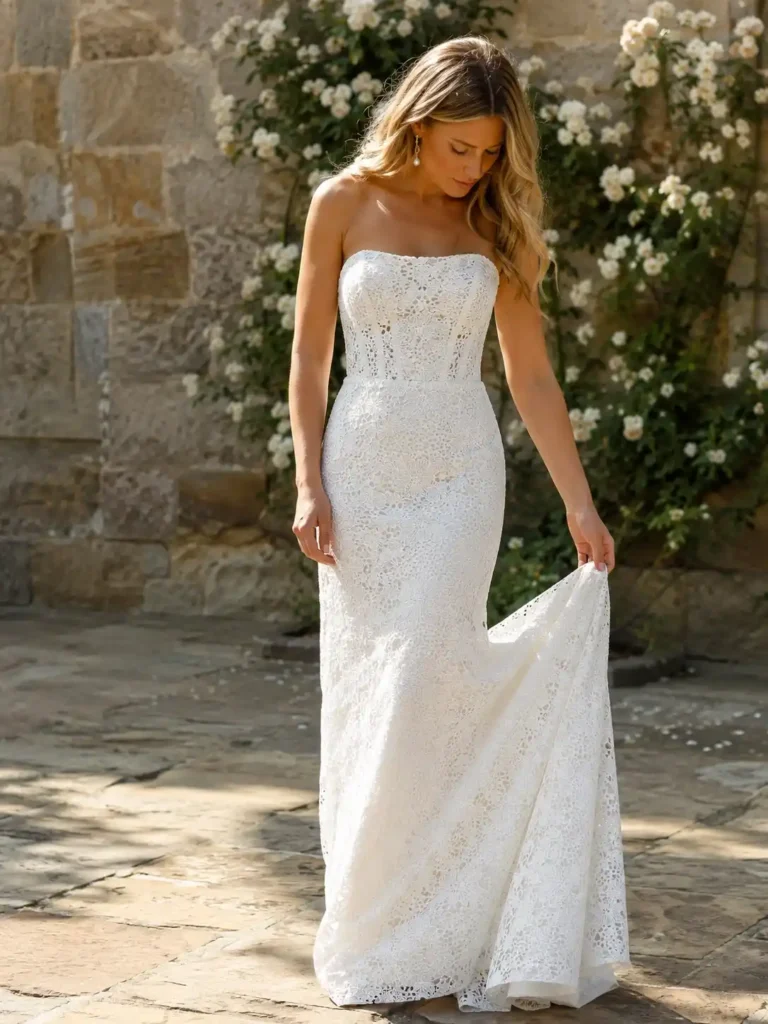
I think lace gets dismissed sometimes as too traditional, which feels unfair. A modern lace overlay, especially in a geometric or floral pattern that’s slightly sparser than vintage lace, reads completely current. Over a white slip, it adds texture and visual depth without any extra embellishment. And honestly, white lace in outdoor summer light is one of those combinations that just works every single time.
10. Corset-top ball gown
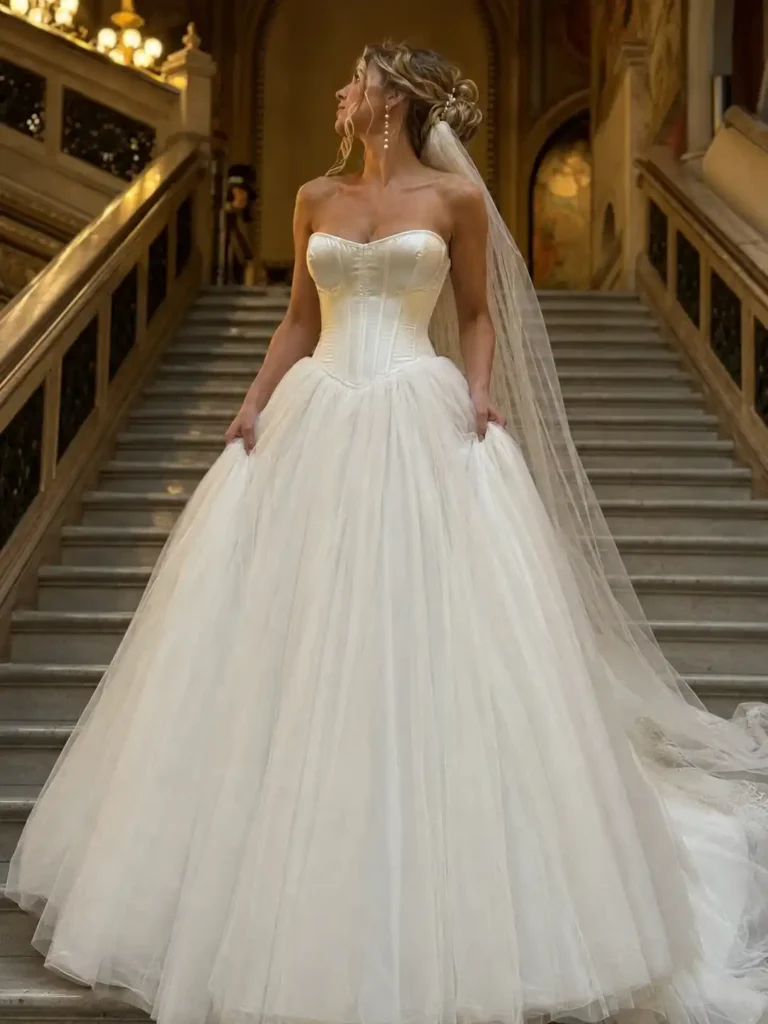
For the bride who wants the full fairytale, the corset-top ball gown in white is the direction. The structured corset bodice with a full skirt is inherently dramatic, and there’s nothing wrong with that. If you’re getting married in a grand venue, a cathedral, a historic estate, a ballroom, this silhouette earns its moment. The corset also solves the fit problem that plagues traditional strapless bodices: you can actually adjust it on the day.
11. Halter neck with a plunging V
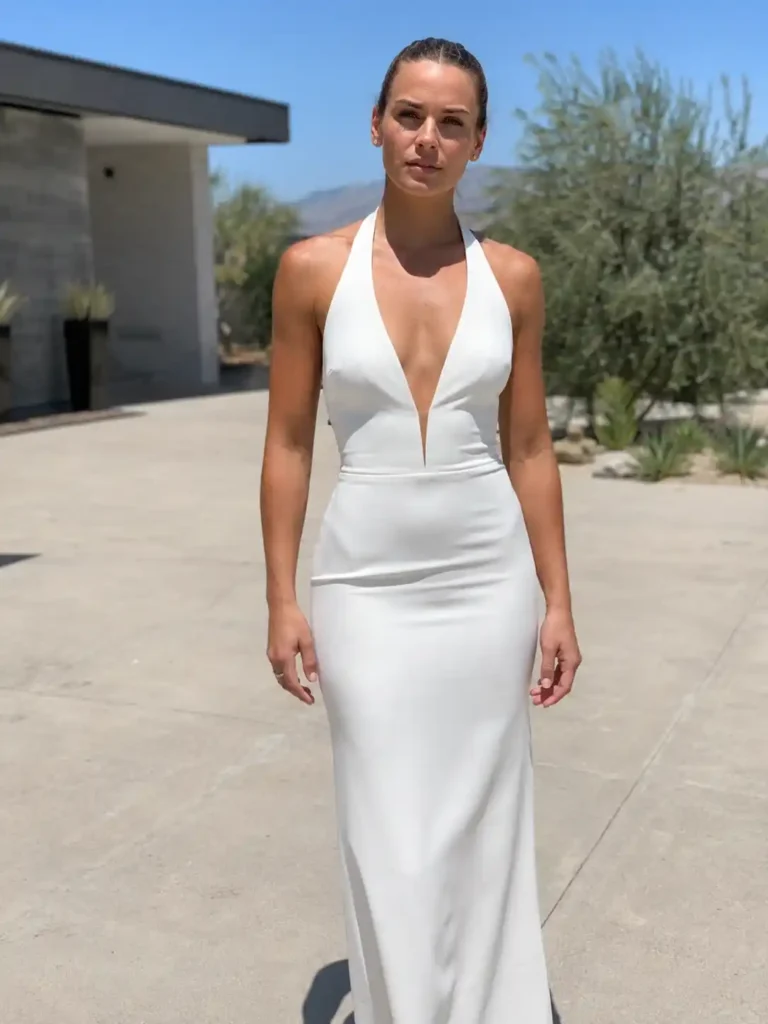
The halter neckline with a deep V is a shape that looks best on athletic or broader-shouldered frames. It draws the eye downward and creates a long vertical line through the body. In white, especially a matte white fabric like crepe, it feels very minimal and modern. This is the kind of dress that reads “bride” in photos even without a veil.
12. Wrap-style dress with a draped skirt
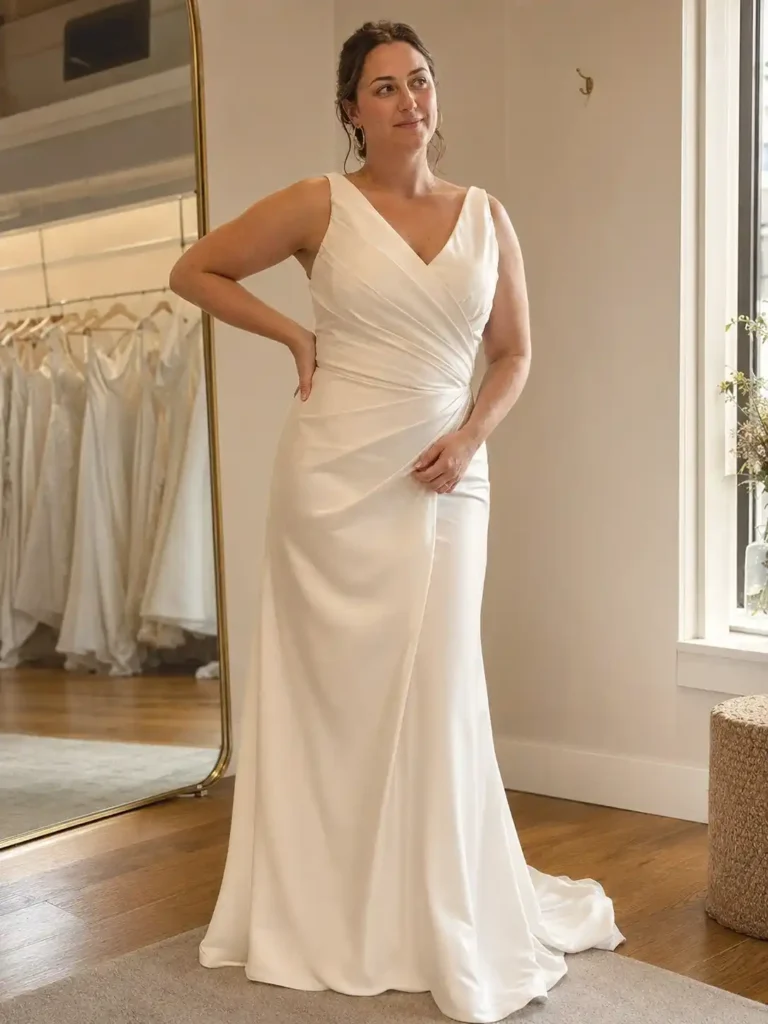
A wrap-style bridal gown sounds casual but it doesn’t have to be. When a designer tailors a wrap silhouette in white silk or heavy satin and adds a properly draped skirt, the result is actually quite formal and sculptural. The wrap creates natural diagonal lines that are genuinely flattering. I’d look at designers like Amsale or Jenny Yoo for this interpretation. You can explore their current collections at JennyYoo.com to see how the wrap silhouette translates across different price points.
13. High-low hemline
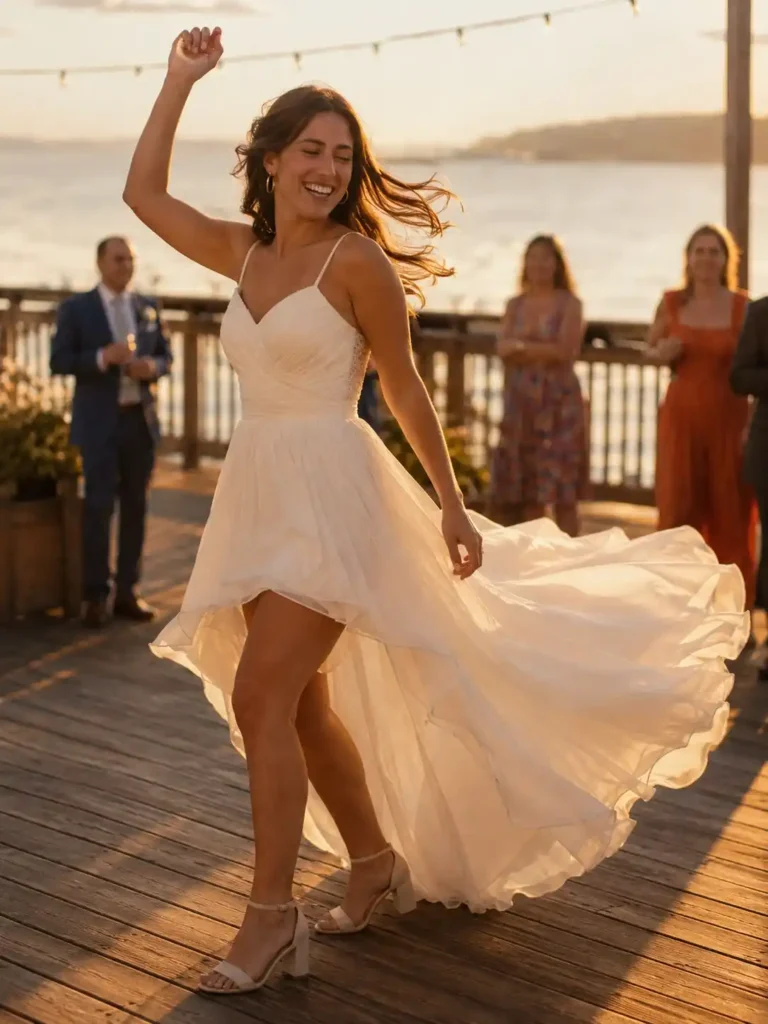
Okay, I know what you’re thinking. High-low hemlines feel like a 2012 thing. But a well-done high-low on a wedding dress is different: the front sits at a graceful midi or even knee length, the back extends into a subtle train. It’s practical (you can actually walk and dance without managing a full skirt) and it still has the drama of length from behind. For a beach or outdoor reception with a dance floor situation, this is genuinely smart design.
14. Puff-sleeve romantic gown
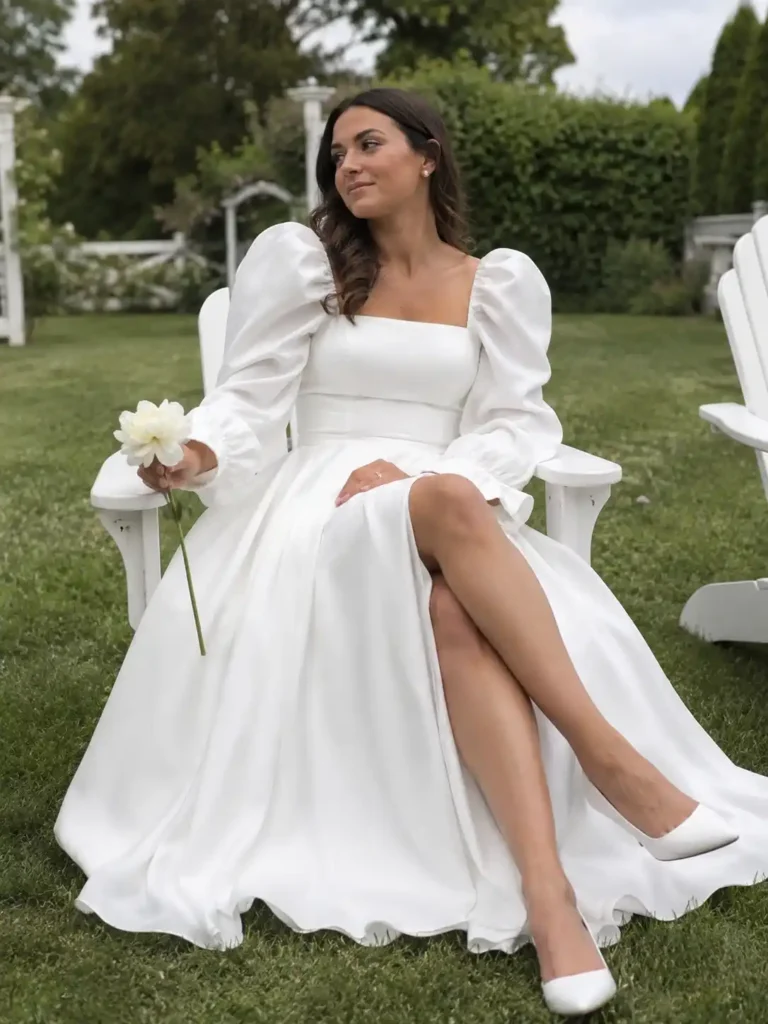
The puff sleeve has fully returned to bridal and it’s showing no signs of leaving. A white gown with structured puff sleeves reads Victorian-inspired but somehow also contemporary, probably because so many designers have found ways to do it that feel fresh. The sleeve adds volume at the shoulder, which can balance out a fuller skirt or add interest to a simple fitted silhouette. This is a good Pinterest-forward choice that photographs memorably.
15. Cape overlay or detachable train
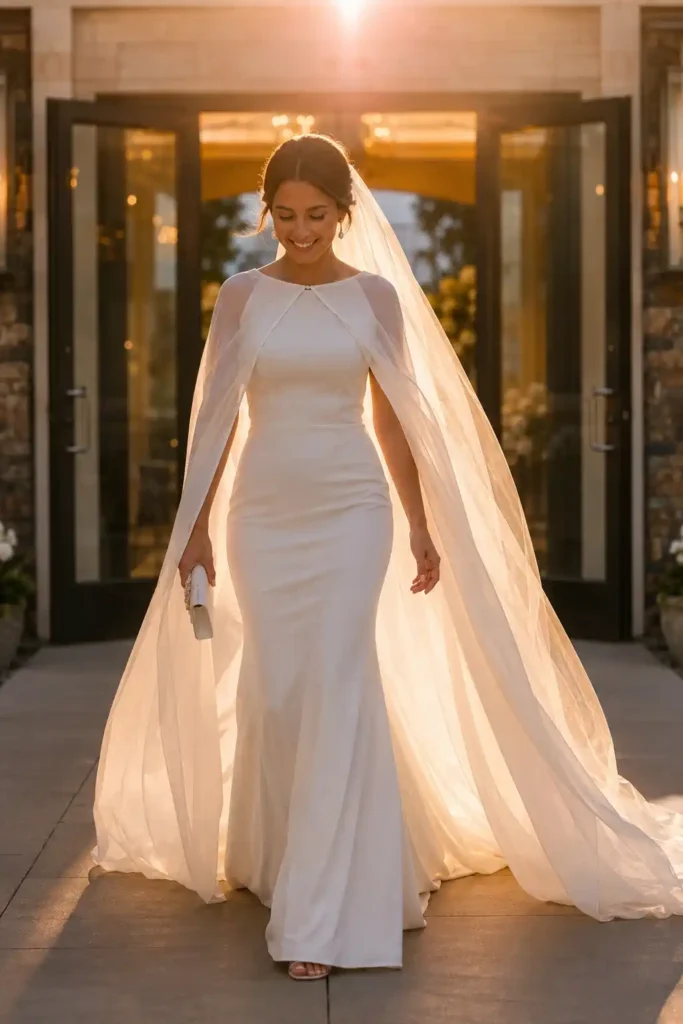
A wedding dress with a detachable cape or extended train is two looks in one, and that’s genuinely practical. You wear the cape for ceremony, it photographs dramatically, it gives you some coverage if the venue is air-conditioned to arctic temperatures (which, in my experience, indoor summer venues often are). Then you remove it for the reception and suddenly you’re in a sleek fitted gown. Designers like Monique Lhuillier have done beautiful versions of this.
16. Column gown with a statement slit
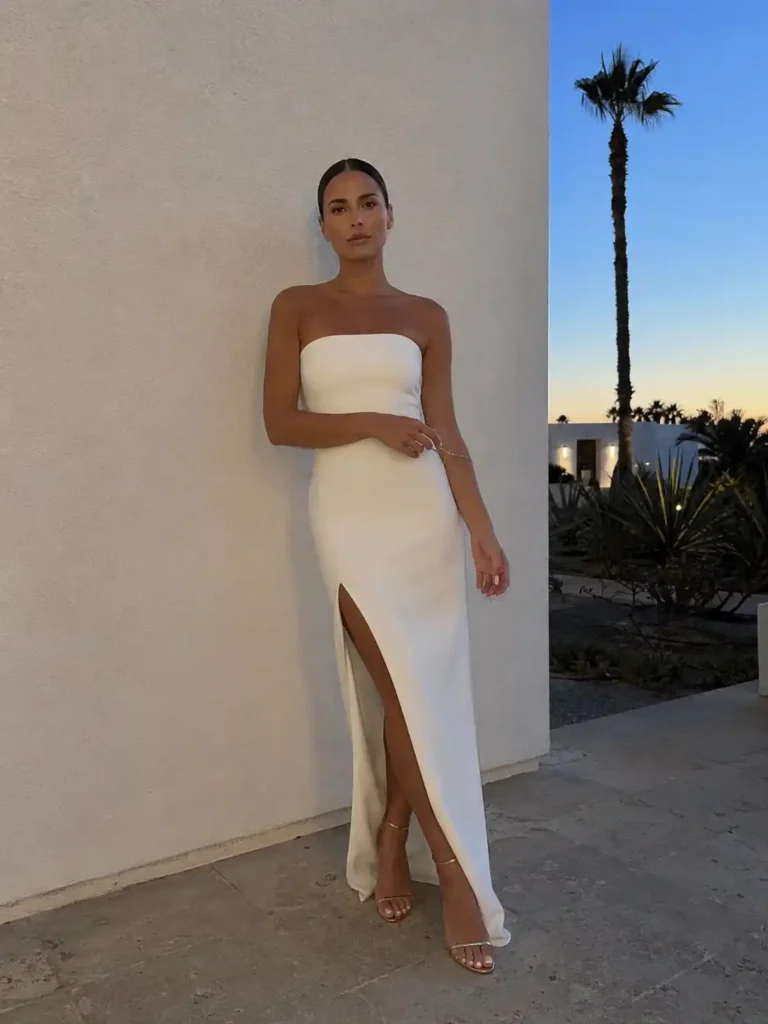
A white column gown is minimal to the point of being nearly architectural. It’s a straight silhouette, close to the body, with very little going on in terms of volume or structure. A statement slit, cut high enough to be dramatic, adds movement and a flash of leg that keeps the look from feeling too stiff. This is the dress for the bride who wants to look like she belongs in a fashion editorial. It’s a confident choice, and it pays off.
Quick style comparison: fabric vs. silhouette for summer
| Style type | Best fabric | Heat level | Formality |
|---|---|---|---|
| Flowy A-line | Chiffon, organza | Low | Casual to formal |
| Fitted column | Crepe, silk | Medium | Formal |
| Ball gown | Tulle, satin | High | Very formal |
| Midi/slip dress | Satin, charmeuse | Low | Casual to semi-formal |
What to actually think about when choosing
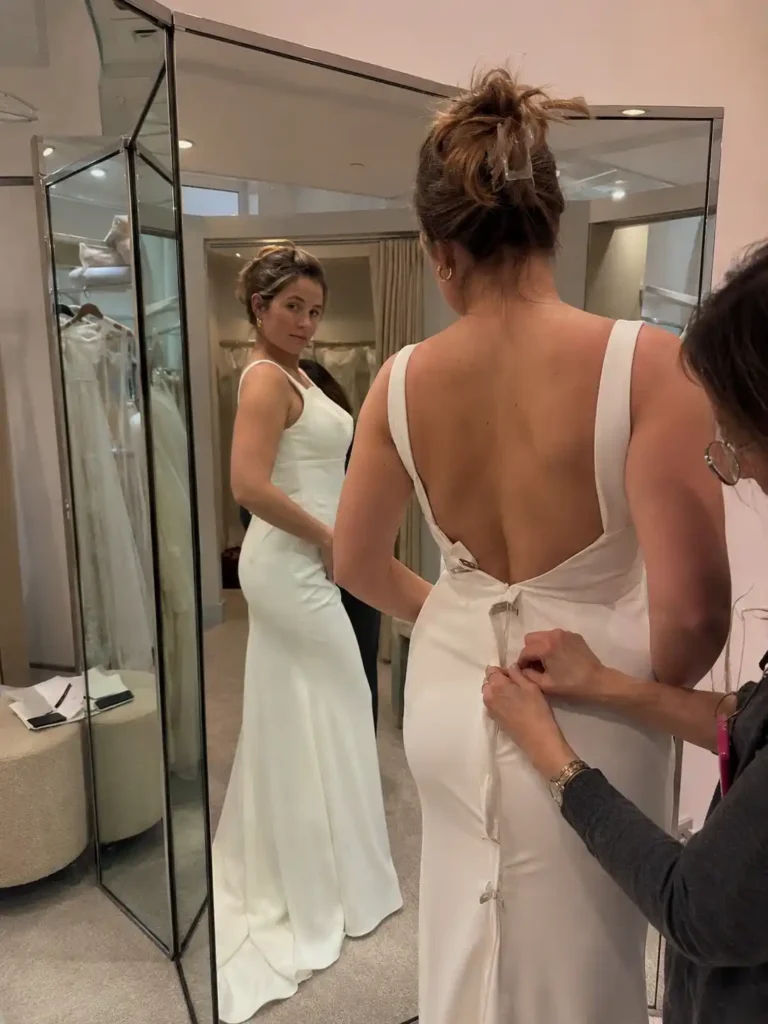
Budget is real. A $4,000 gown and a $400 gown can look similar in photos if the silhouette is right. Where the difference shows up is in fabric quality and construction, and you feel that difference after 6 hours of wearing it. If you’re working with a tight budget, prioritize a dress with a good fit over one with expensive embellishment. Alterations on a well-cut simple dress are far cheaper than fixing a poorly constructed elaborate one.
Alterations also take time. Order your dress at least 5 months before the wedding if you’re buying from a bridal boutique. Most gowns need 2 to 3 rounds of alterations, and a good seamstress can’t rush that without something going wrong.
I think about this every time I see a bride in a perfectly fitted gown versus one that’s clearly pulling or gaping somewhere: fit is the whole thing. The most expensive dress in the world looks bad if it doesn’t fit your actual body.
Accessories that work with white summer gowns
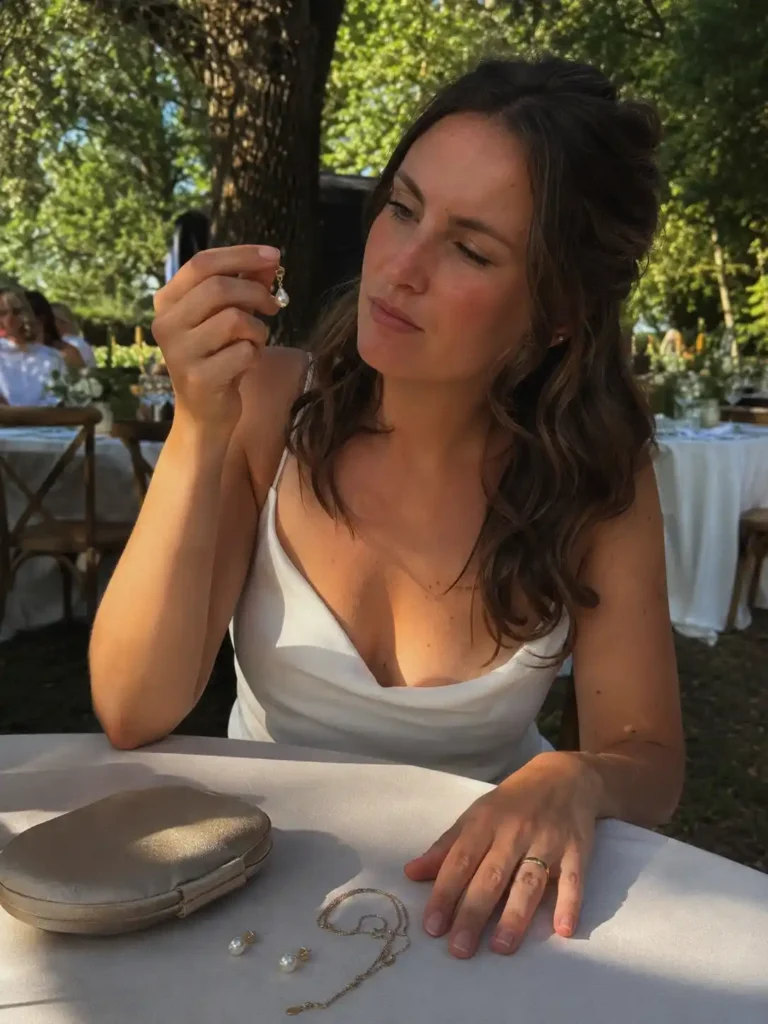
A few things I’ve noticed consistently:
- Warm gold jewelry (yellow gold, not rose gold) works better with true white than silver does. Silver competes with the white; gold grounds it.
- A simple pearl earring, whether real or a good imitation, reads timeless against any white neckline.
- Block-heeled sandals or low kitten heels over stilettos for any outdoor ceremony. Grass is undefeated against spike heels.
- A cathedral veil with a minimal dress, or no veil with a maximalist dress. Rarely do both work simultaneously.
Frequently asked questions
Can I wear true white if I’ve been married before? Yes. The idea that white is reserved for first-time brides is genuinely outdated. Wear the color that photographs well and makes you feel good. That’s the only rule that matters.
What’s the difference between white and ivory for summer photos? Ivory reads warmer and slightly cream-toned in photos, especially in golden hour light. True white is cooler and creates stronger contrast against skin and greenery. For outdoor summer ceremonies with lots of natural light, true white usually photographs more dramatically. Ivory can wash out in very bright midday sun.
How far in advance should I start shopping for a summer wedding dress? If your wedding is in June, July, or August, start shopping the previous October or November at the latest. Custom orders from bridal boutiques typically take 4 to 6 months to arrive, and you need time after that for alterations. Shopping at 8 to 10 months out gives you real flexibility.
Final thought
White summer wedding dresses come down to one thing: which silhouette makes you feel most like yourself. Every style in this list works; none of them is objectively wrong. But the dress you’ll be glad you wore 20 years from now is the one you put on and immediately stopped second-guessing.
So which of these 16 styles are you currently saving to your Pinterest board? Drop it in the comments because I’m genuinely curious whether the slip dress or the puff sleeve is winning right now.
