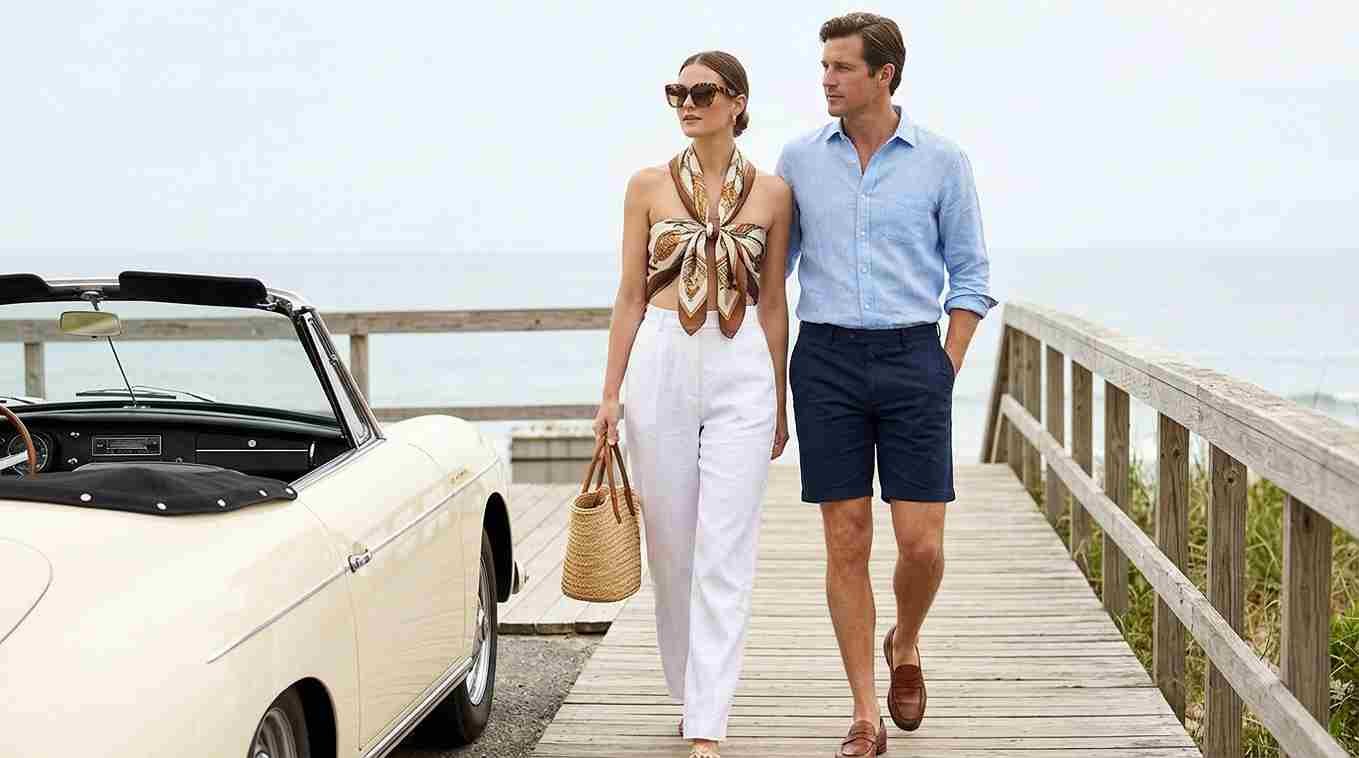
There’s a specific kind of person you notice at the beach.
They’re not wearing anything with a logo the size of a dinner plate. No neon. No “beach life” written across their chest.
They just look… right. Effortlessly put together, like they rolled out of a Nantucket cottage and wandered down to the shore without trying.
That’s old money style. And I’ve spent a lot of time studying it, personally adopting it, and occasionally failing at it (more on that later).
This guide is for anyone who wants that look for summer 2025, whether you’re actually heading to the Hamptons or just spending a weekend at a lake in Ohio.
The clothes don’t know the difference. You just have to dress like you do.
What “old money” actually means at the beach
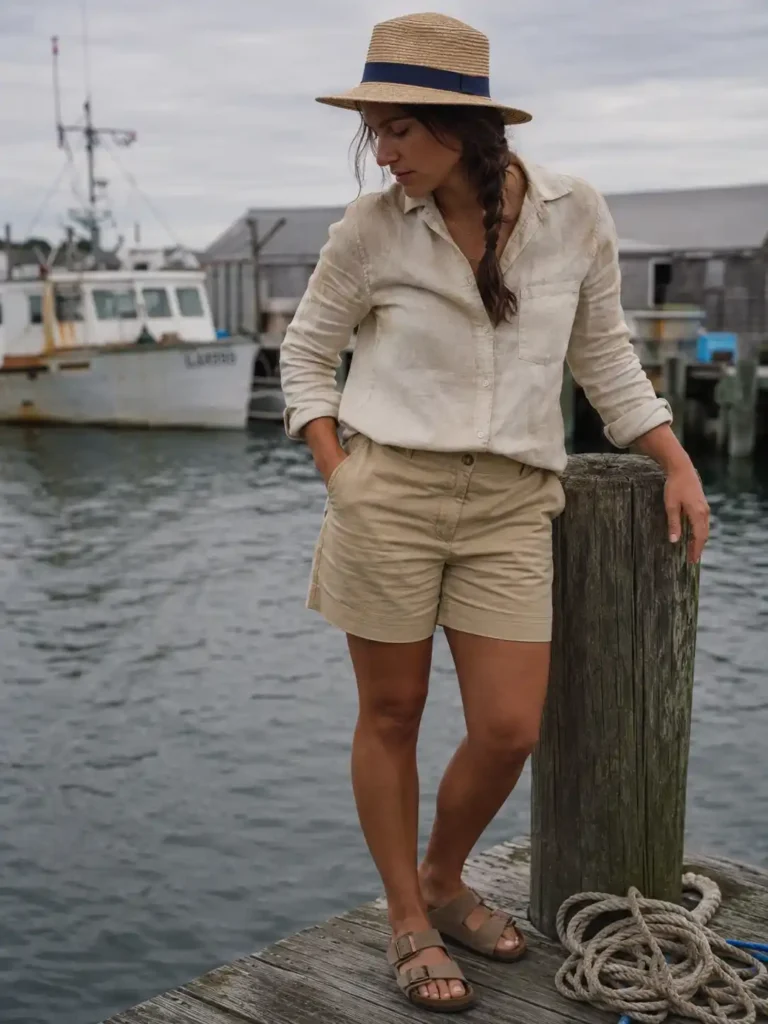
Old money style at the beach isn’t about expensive clothes per se. It’s a philosophy about restraint.
The original coastal families in Kennebunkport or Martha’s Vineyard dressed practically, because they were actually sailing and fishing, and the clothes just happened to look polished.
Over decades, that practical-yet-refined uniform calcified into a recognizable aesthetic: neutral linens, navy stripes, leather sandals, a worn-in canvas hat.
The key word is “worn-in.” Old money beach style reads lived-in. A crisp new white polo with the tags still showing the crease? That’s new money.
A slightly faded linen shirt that’s been washed 40 times? That’s the look you want.
According to style archivists and fashion historians at Vogue, the American prep coastal aesthetic grew directly out of Ivy League sailing culture in the early 1900s,
which explains why the silhouettes are so forgiving and functional. You can actually move in these clothes. Imagine that.
The non-negotiable wardrobe pieces
Linen, always linen
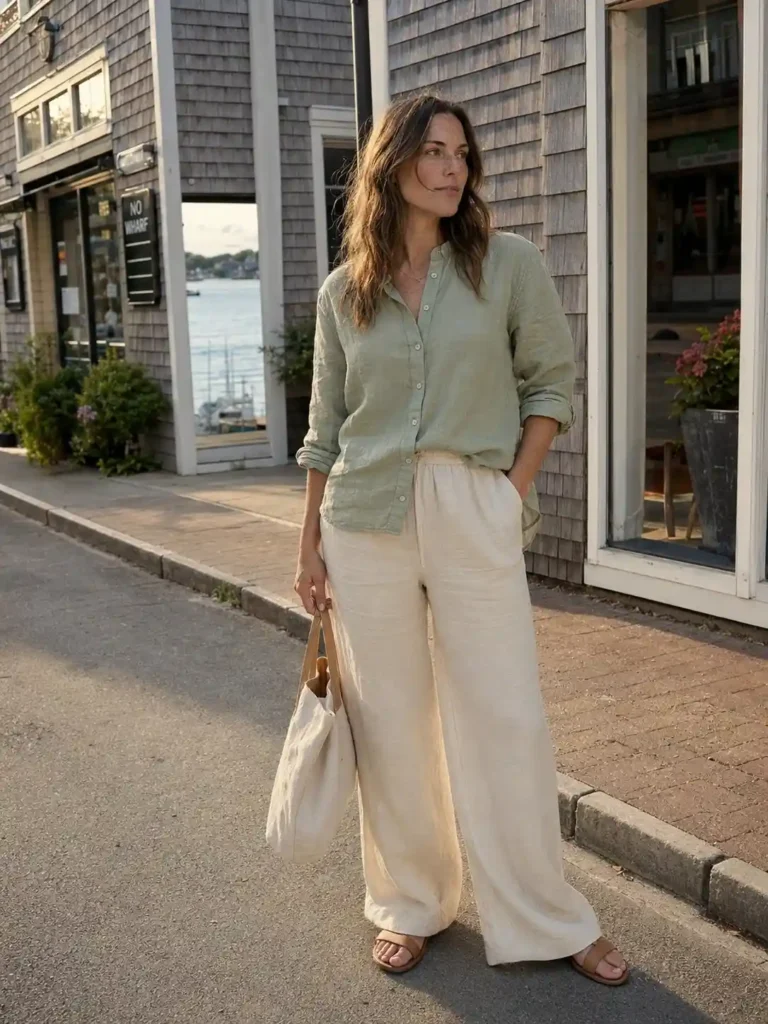
Linen is the fabric of the entire old money beach aesthetic. It wrinkles. That’s fine. The wrinkles are part of it.
A slightly crumpled linen shirt on a tan person walking along a harbor is the platonic ideal of coastal dressing.
Go for natural tones: ecru, sand, pale blue, sage, white.
I personally own a cream linen shirt from a small Italian brand that I’ve had for 6 years, and it keeps getting better.
The color has faded slightly and the fabric has softened to the point where it feels like wearing air.
For women, linen midi skirts and wide-leg trousers are the move.
For men, linen trousers in a relaxed straight cut (not skinny, never skinny) are the backbone of the look.
Striped knit tops and shirts
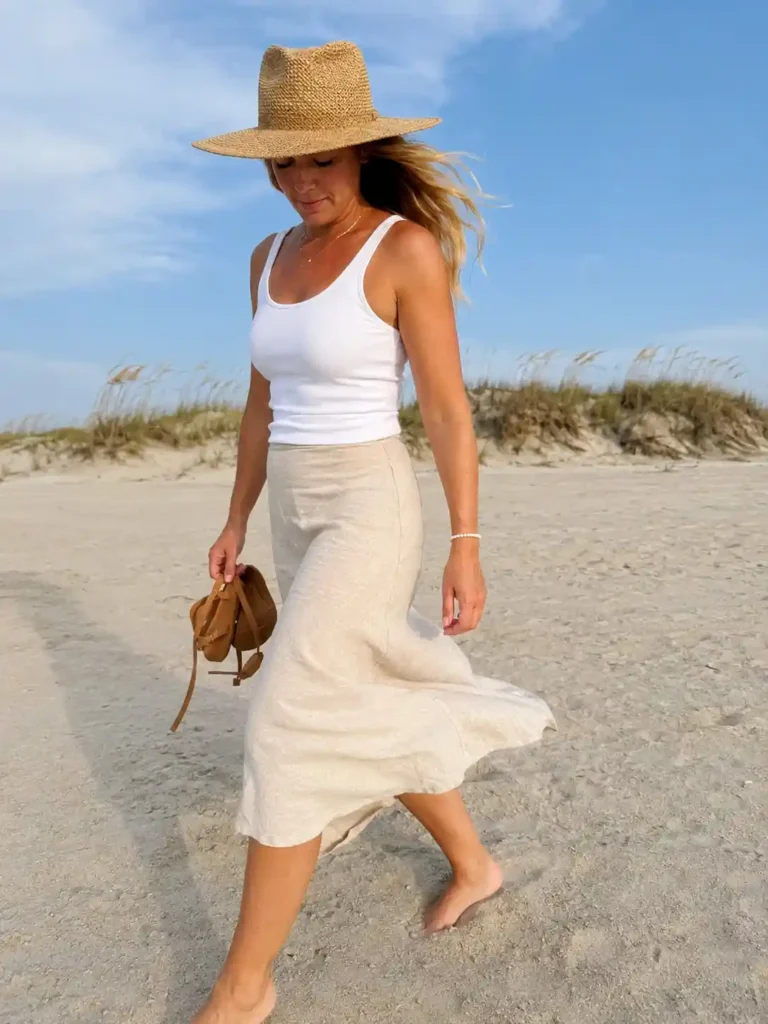
The Breton stripe is so deeply embedded in coastal style that it barely needs an introduction.
Navy and white stripes, typically horizontal, on a fitted knit top. James Dean wore it.
Audrey Hepburn wore it. The whole French Riviera seemed to live in it from about 1950 to 1975.
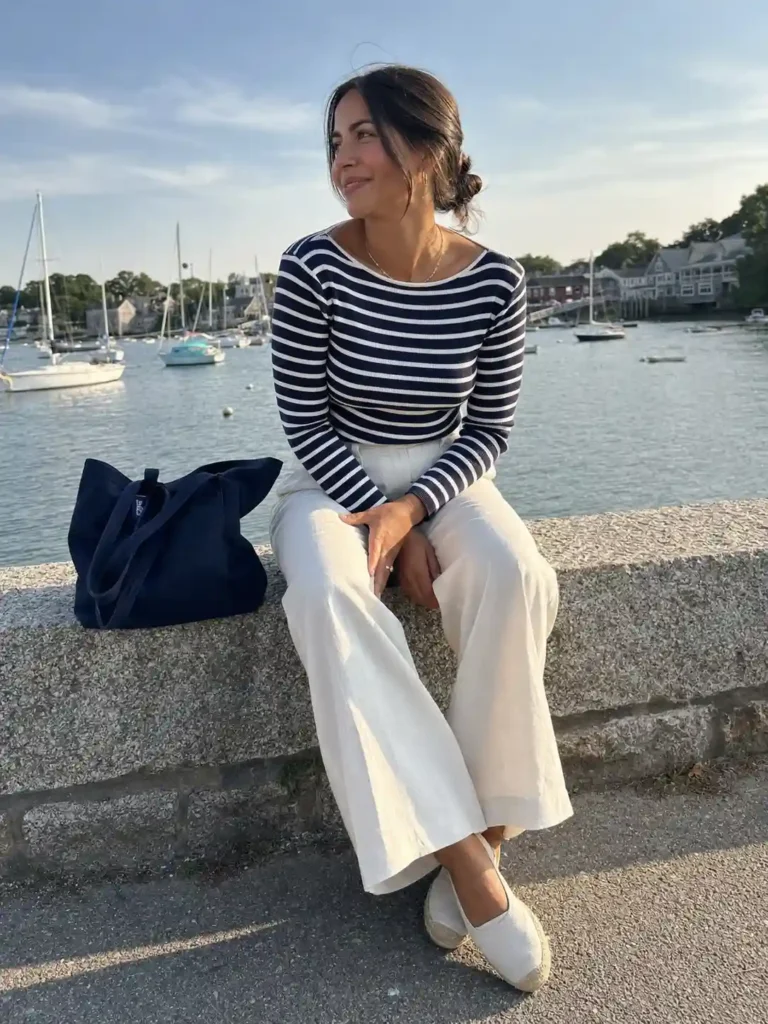
What makes it old money rather than touristy is fit and fabric.
A well-cut cotton or linen Breton stripe from a brand like Saint James (which has been making them since 1889, FYI) reads completely differently from a fast-fashion version that pills after 3 washes.
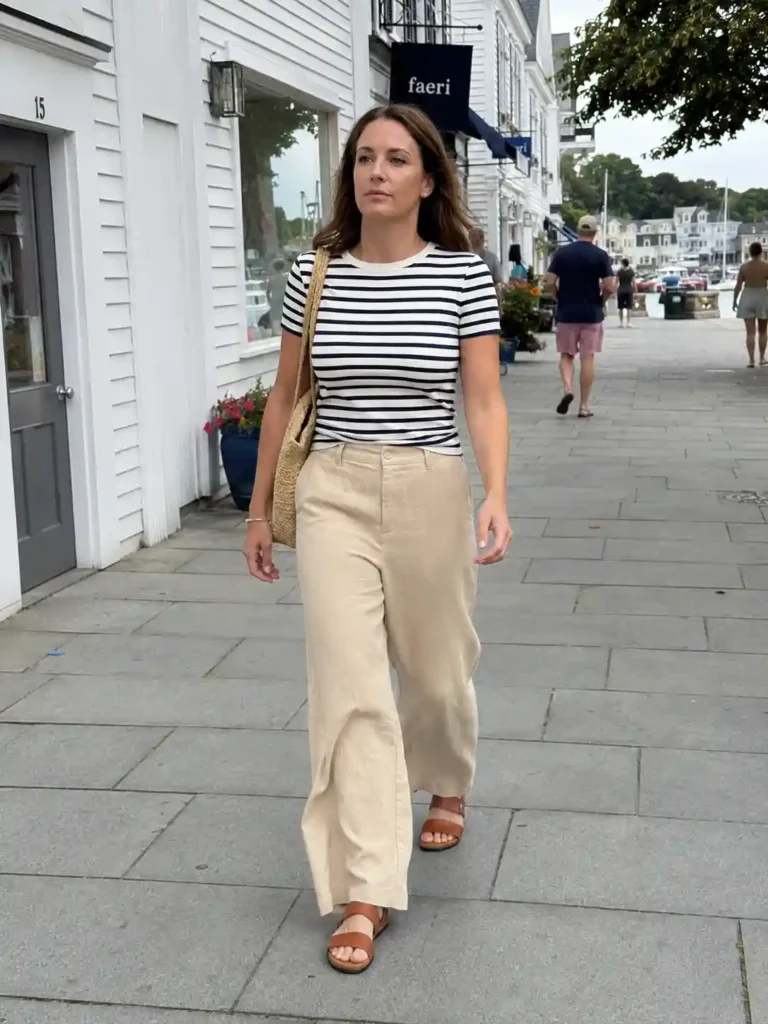
Pair it with chinos or wide trousers and a simple leather sandal. Done.
Swimwear that doesn’t scream for attention
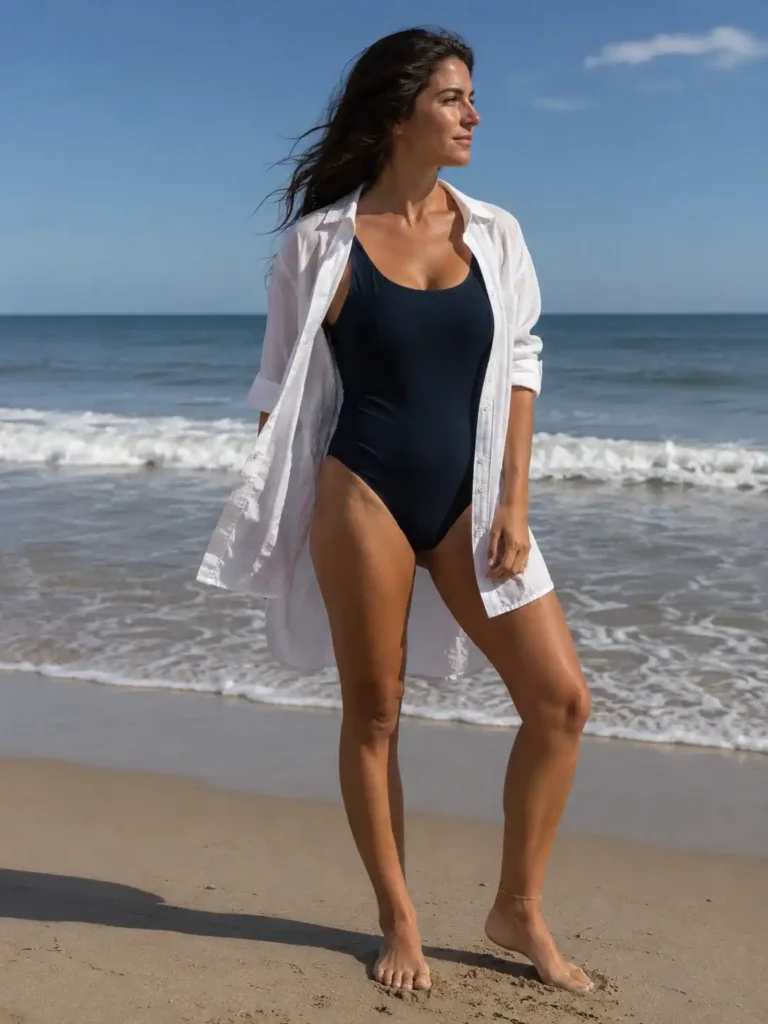
Old money beach swimwear is modest by modern standards.
For men: tailored swim trunks that hit mid-thigh, solid colors or classic patterns like madras plaid or a small nautical print.
Nothing with a cartoon on it. Nothing with the brand name printed across the waistband in 2-inch letters.
For women: a one-piece is arguably more in keeping with the aesthetic, though a simple bikini in a solid color or a classic stripe works too.
The Eres brand is practically the patron saint of old money swimwear (though the prices reflect that status).
A more accessible option is Vilebrequin for men and a classic J.Crew suit for women, both of which hold up well and keep the look clean.
The coverup situation
This is where a lot of people go slightly wrong. They find perfect swimwear, then throw on a cheap coverup that clashes with everything.
The right coverup is either:
- A white linen button-down shirt (oversized, worn open)
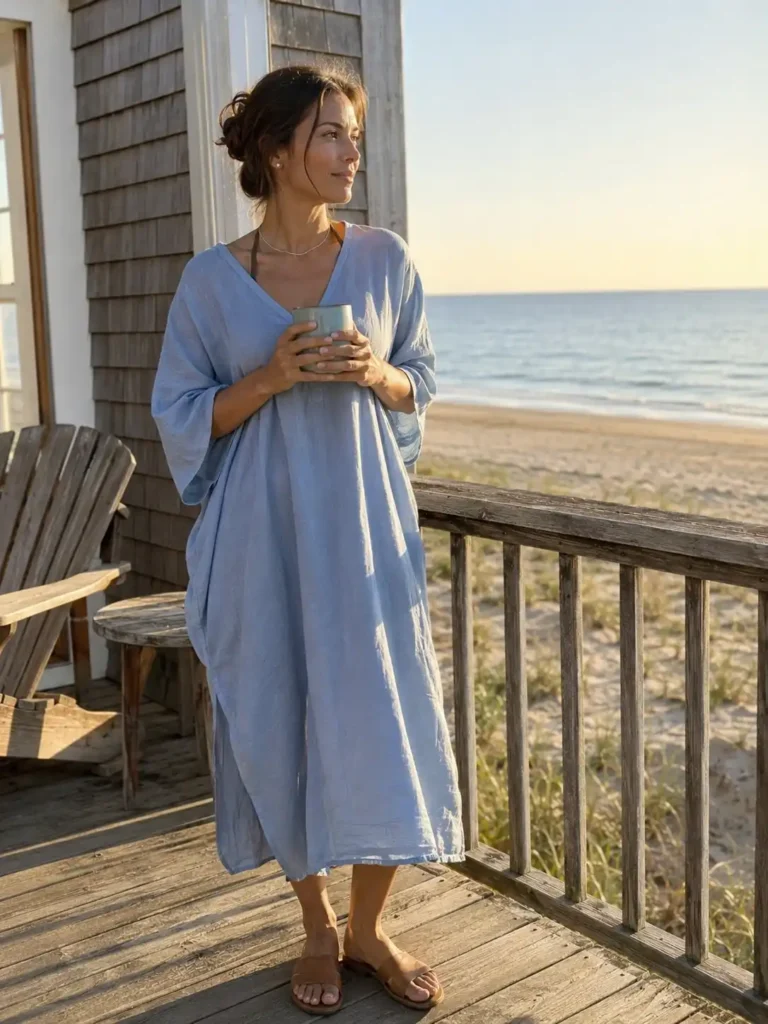
- A lightweight cotton kaftan in a solid color or very subtle print
- Simple wide-leg linen trousers over the swimsuit
That’s it. The coverup should look like you grabbed something from your actual wardrobe, not from a beach gift shop.
Shoes and accessories: where the look gets made or broken
Shoes
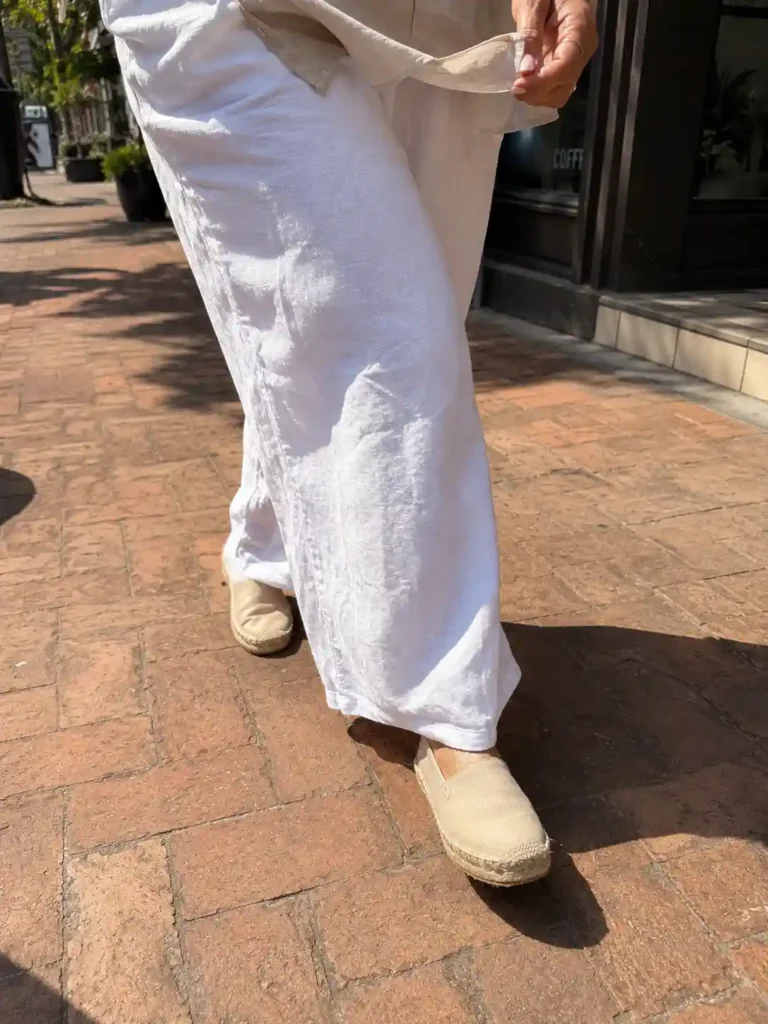
Leather sandals. Specifically, the kind that look like a Roman might have worn them but in a good way.
Birkenstock’s Arizona sandal has become almost ubiquitously associated with this aesthetic at this point, partly because half of coastal New England actually wears them.
But the older options, like a simple two-strap leather sandal from a cobbler or a Grecian-style sandal, read even more authentically.
Espadrilles are another strong option. Classic canvas espadrilles in natural, navy, or white keep the whole look grounded and coastal without being costume-y.
I made the mistake once of wearing white sneakers with a full linen outfit to a beach club and I looked like I was trying too hard. Lesson learned.
At the beach, the shoe should be simple, flat, and made of natural materials.
The hat situation (and it matters more than you’d think)
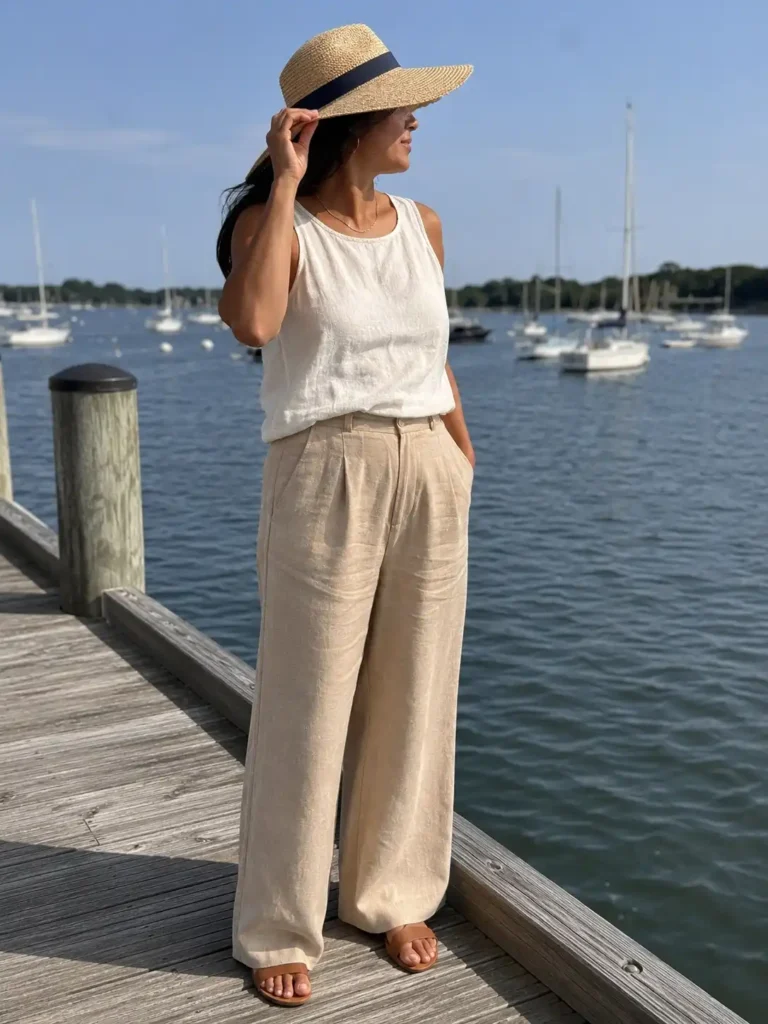
A wide-brim straw hat is the single most recognizable piece of old money coastal style.
It does double duty: sun protection and instant aesthetic credibility.
Look for a natural straw hat with a simple grosgrain ribbon band, not one with flowers or raffia tassels or embroidery.
A classic navy or khaki canvas bucket hat also works, especially if you’re actually getting in the water.
Patagonia makes a good one, and it’s been around long enough that it doesn’t feel like you bought it yesterday.
Avoid: baseball caps with brands on them, visors (sorry), and anything with foam construction.
Jewelry and watches
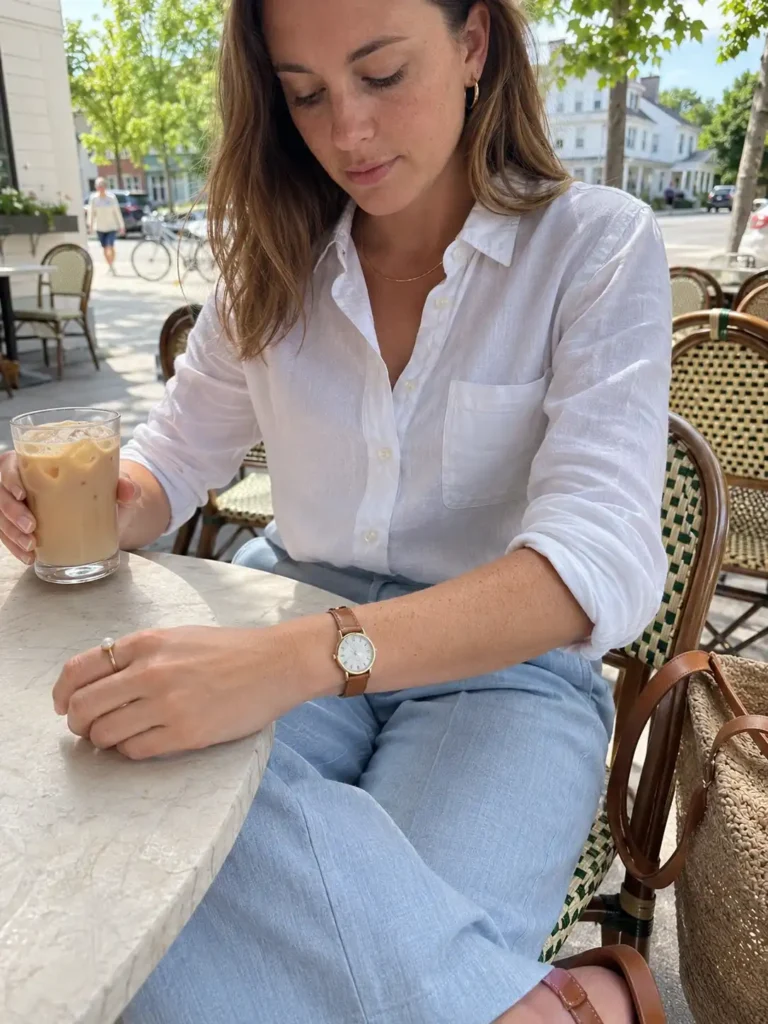
Less is genuinely more here. A simple gold or silver chain. A single pearl or coral bracelet.
If you wear a watch, a classic field watch or a simple diving watch on a leather strap reads correctly. No smart watches. No chunky plastic sports watches.
IMO, a single piece of subtle gold jewelry on an otherwise simple outfit does more work than any expensive logo piece could.
A quick reference: old money beach pieces vs. what to skip
| Category | Go for this | Skip this |
|---|---|---|
| Tops | Linen shirt, Breton stripe knit | Logo tees, graphic prints |
| Bottoms | Linen trousers, chino shorts | Board shorts, printed athletic wear |
| Shoes | Leather sandals, espadrilles | Flip flops, chunky sneakers |
| Accessories | Straw hat, simple gold jewelry | Branded caps, neon sunglasses |
Colors to build around
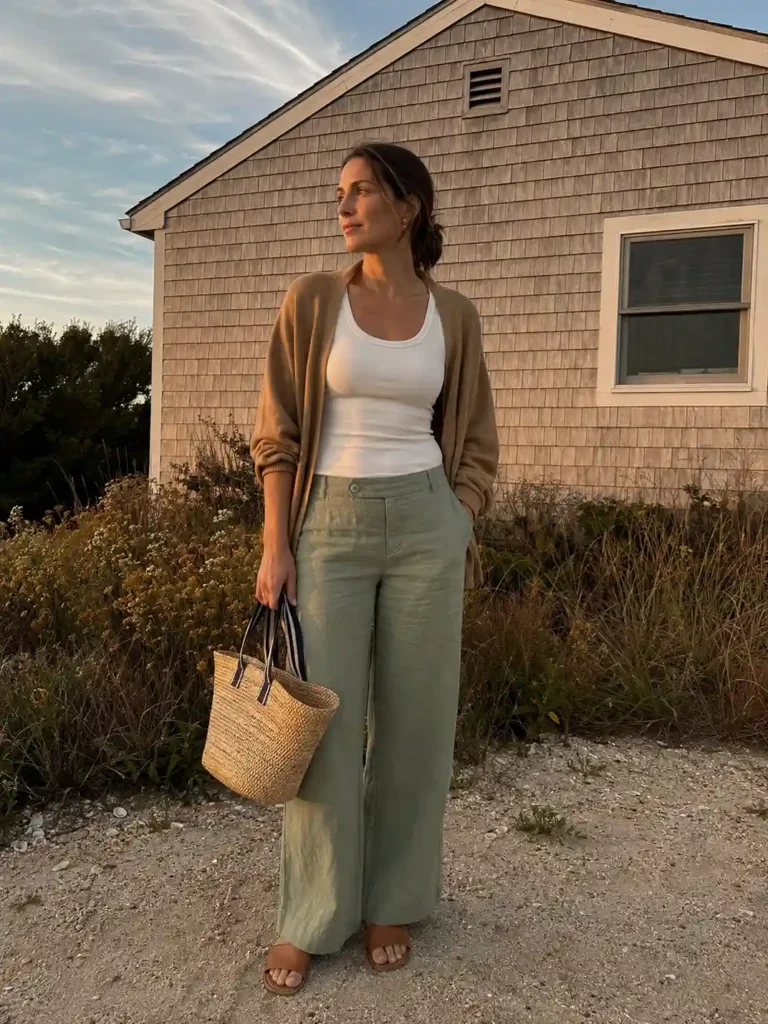
The old money beach palette is tight. Memorize it and you won’t go wrong:
- White and off-white (most important)
- Navy blue
- Camel and sand tones
- Sage and soft olive
- Faded coral (sparingly)
- Pale chambray blue
What’s not on this list: red, neon anything, tropical prints, anything camouflage.
The rule of thumb is: could this color appear in a New England landscape? Fog, sand, sea, weathered wood? Then it probably works.
How to actually build the outfits (not just buy pieces)
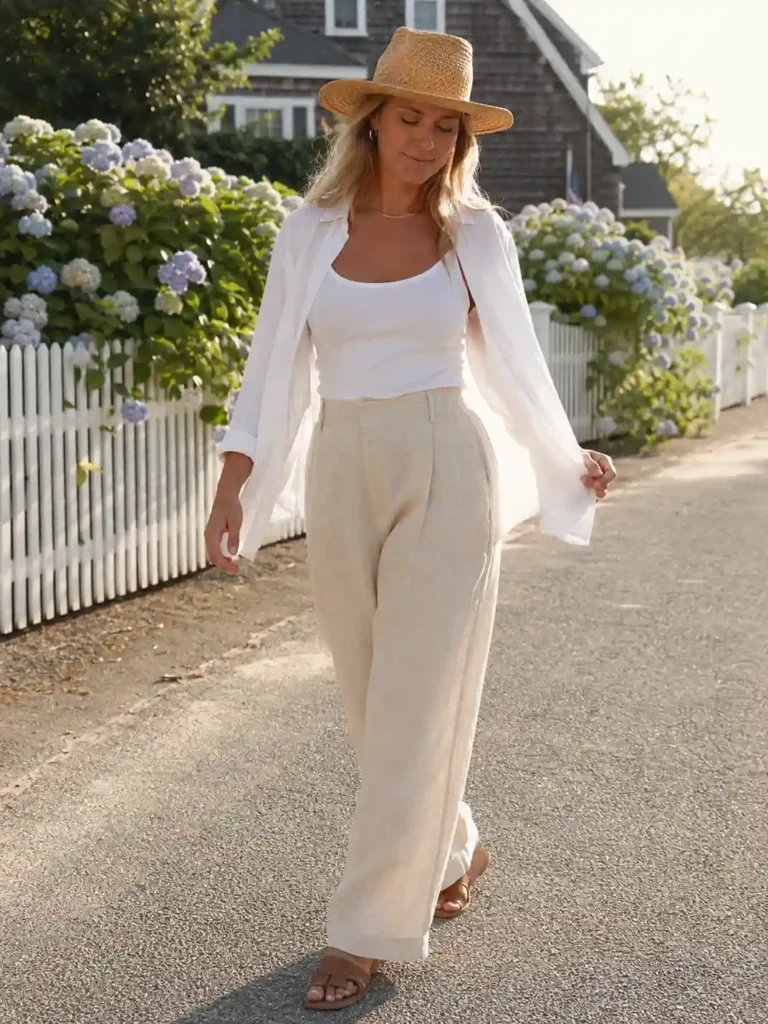
Outfit building in this style is about proportion and restraint. You want 1 statement piece per outfit maximum.
And by “statement,” I mean a single interesting element, like a slightly more dramatic hat, or a linen trouser in an unexpected sage color. Everything else should be quiet.
A sample women’s day-at-the-beach outfit I’ve actually worn and loved:
- Cream linen wide-leg trousers
- White fitted tank underneath
- Oversized white linen shirt worn open as a layer
- Tan leather sandals
- Simple straw hat
- Gold hoop earrings (small ones)
Total cost can vary wildly. I’ve built similar outfits spending under $150 by shopping Everlane, Quince, and thrift stores, all of which stock exactly this kind of clothing.
The key brands for this aesthetic at accessible price points include Quince (their 100% linen is genuinely good), Mango, and Banana Republic.
For investment pieces, Ralph Lauren’s Polo line and their Lauren brand hit the coastal prep aesthetic consistently.
The mindset shift that actually makes the look work
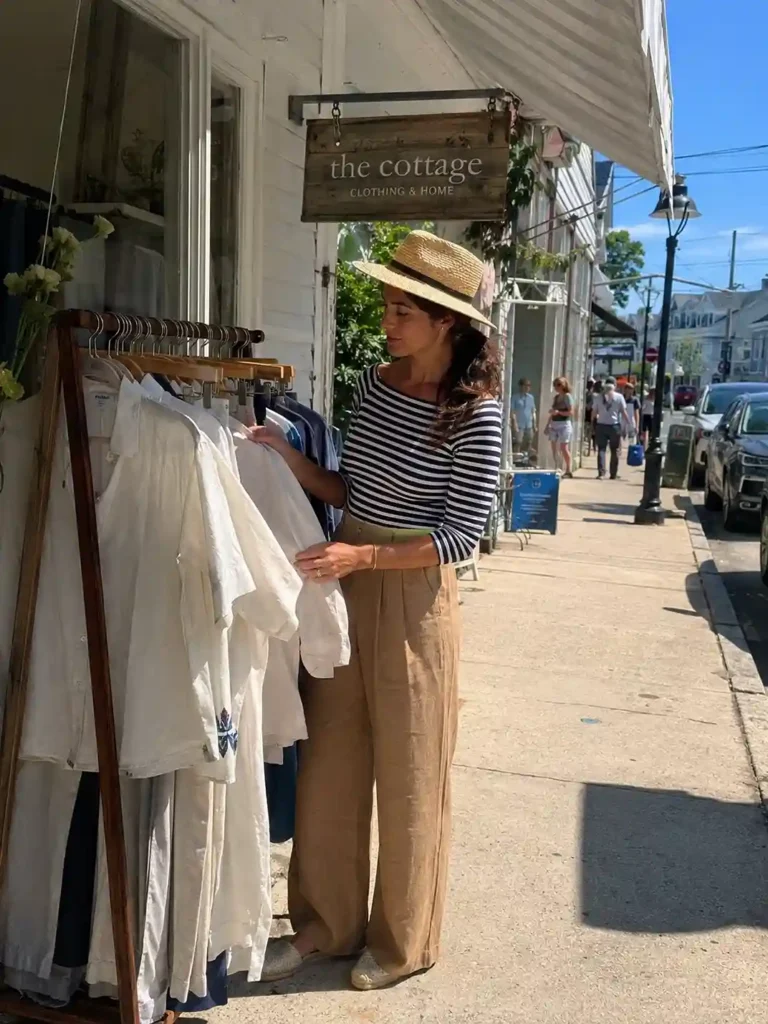
Okay, slight detour here but it matters. I’ve noticed that the people who wear this style best aren’t thinking about the style at all.
They’re thinking about the day. Where are they sailing, who are they having lunch with, when does the tide come in.
The clothes are just what you wear because they’re comfortable and functional.
So when you put together an old money beach outfit, the goal isn’t to look like you spent time curating it.
The goal is to look like you didn’t think about it at all. Which, paradoxically, takes some thought.
The easiest shortcut: buy fewer pieces, better made. 5 really good items that mix and match beat 25 mediocre things every time.
You can read more about the psychology of “effortless” dressing and how capsule wardrobes connect to this aesthetic over at The Business of Fashion, which has covered the old money trend’s resurgence with some genuinely interesting cultural analysis.
Budget breakdown: what to spend where
Spend more on:
- Linen trousers or shirt (this is the centerpiece, quality fabric matters)
- Leather sandals (cheap leather looks cheap fast)
- Straw hat (a good one lasts 10 years)
Spend less on:
- Basic white tanks and tees (Quince or Uniqlo, honestly)
- Swimwear basics in solid colors
- Cotton coverup shirts
The Pinterest boards dedicated to old money beach style (search “quiet luxury beach” or “coastal grandmother aesthetic” for the adjacent trend) are full of specific brand recommendations that update seasonally.
Worth bookmarking if you want visual inspiration alongside written guides.
Frequently asked questions
Can old money beach style work for a casual public beach, or does it only work at upscale resorts?
It works anywhere. The clothes are practical cotton and linen. Nobody’s going to stop you from wearing a linen shirt to a public beach.
If anything, you’ll just look like you know what you’re doing, which is the whole point.
Do the clothes need to be expensive to pull off this look?
No. The look is about color palette, silhouette, and restraint.
A $25 linen shirt from Quince reads identically to a $200 one from a designer when they’re in the same color and cut. Spend your money on fit alterations if anything.
What’s the biggest mistake people make trying to dress in this style?
Buying too much and mixing too many pieces at once. Old money style is quiet. If your outfit has 7 things going on, it’s no longer quiet.
Start with 3 pieces in the same color family nd build from there.
A final thought
The old money beach aesthetic has stuck around for a reason.
It’s comfortable, it photographs beautifully, it ages well, and it doesn’t require you to keep up with trends every season.
That cream linen shirt I mentioned earlier that I’ve had for 6 years? I’ll probably wear it for another 6.
If you’re putting together your coastal wardrobe for this summer, what’s the one piece you’re most unsure about? Drop it in the comments.
I’m curious what’s tripping people up, because sometimes the gap between knowing the aesthetic and actually building it is just one confusing purchase away.
