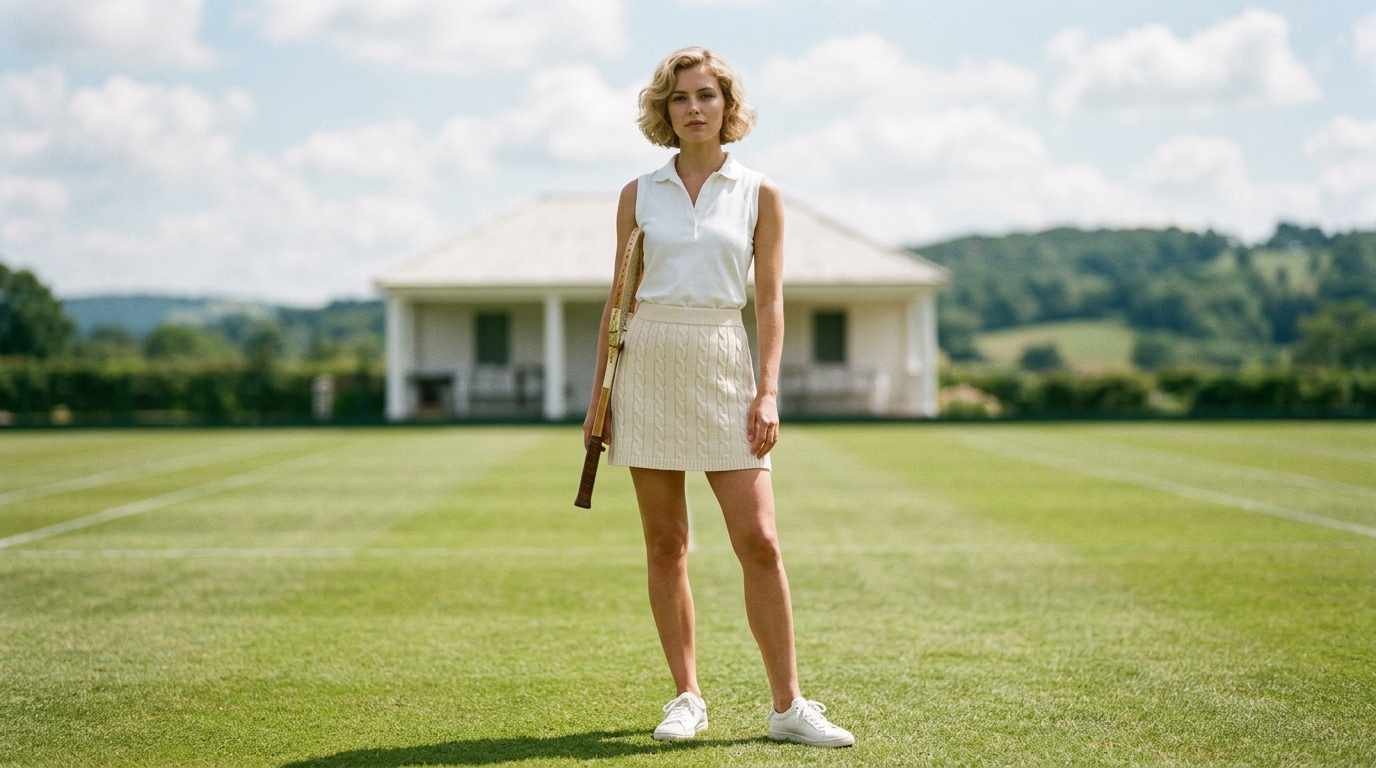
You know that feeling when you walk past someone on the street and just think, “Wow, they look expensive” — but you can’t quite put your finger on why?
They’re not dripping in logos.
They’re not wearing anything obviously designer. They just look… quietly put together in a way that money can’t rush.
That’s old money style. And the good news is, it has very little to do with your actual bank account.
I’ve been obsessed with this aesthetic for a couple of years now, mostly because I got tired of trends that lasted 3 months before looking dated.
Old money dressing, especially in summer, is built around investment thinking: fewer pieces, better quality, worn with a kind of casual confidence that suggests you’ve had these clothes for a decade and intend to keep them for another.
Here are 15 ideas that’ll get you there.
1. Linen is the only fabric that matters in summer
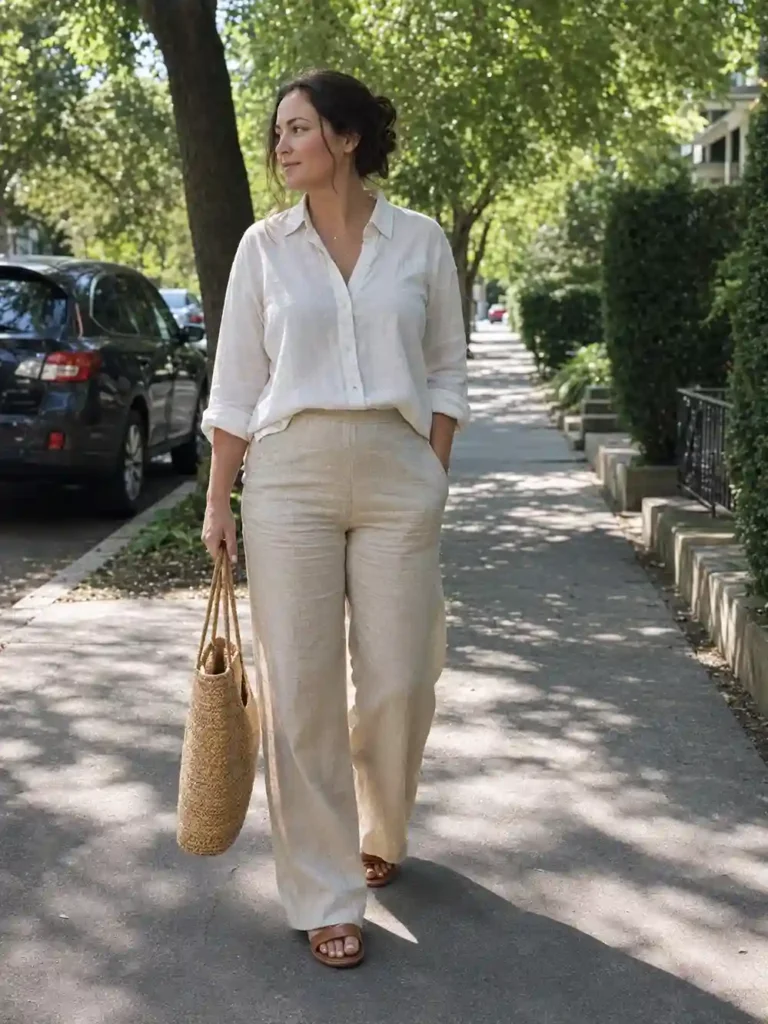
Seriously. If there’s one hill I’ll die on, it’s this one.
Linen breathes in ways cotton simply doesn’t, and it has this beautiful texture that looks expensive even wrinkled (actually, especially wrinkled).
The old money crowd has worn linen trousers, blazers, and shirts for generations, and they’re not stopping anytime soon.
Go for neutral tones: ivory, sand, stone, slate blue. Avoid bright white unless you’re willing to commit to actually keeping it clean (I am not).
2. The white or cream button-down shirt
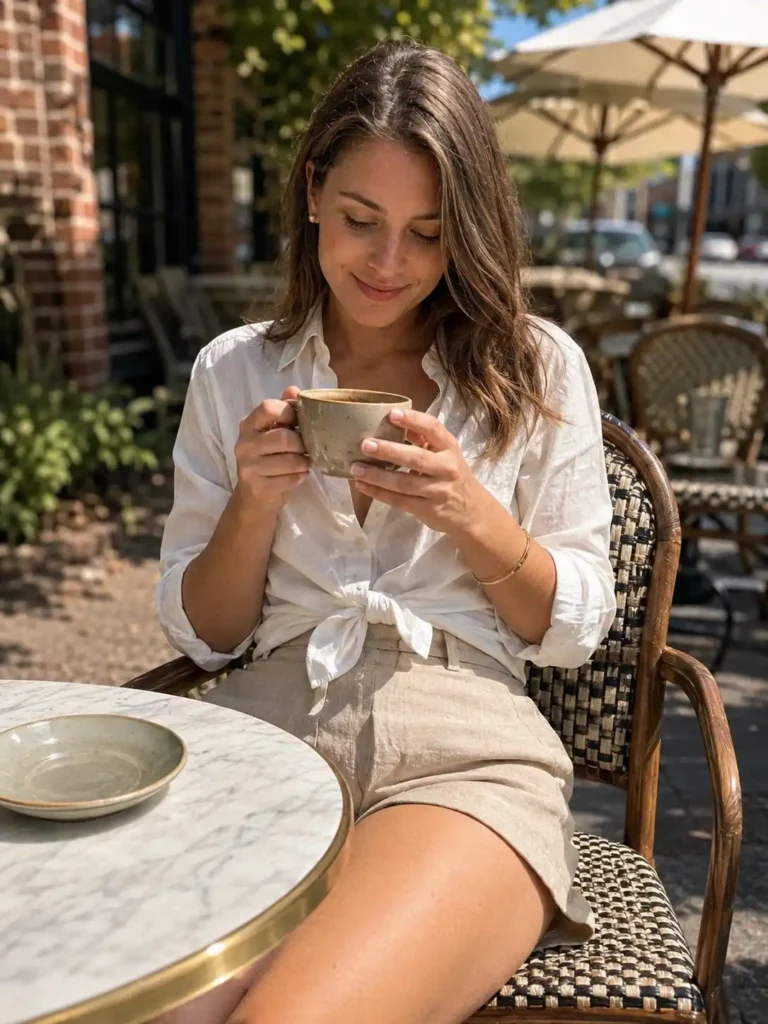
A properly fitted white or cream button-down is probably doing more heavy lifting in the old money wardrobe than any other single piece.
Wear it tucked, half-tucked, open over a swimsuit, or knotted at the waist. The versatility is almost annoying.
Look for Oxford cloth or poplin. Ralph Lauren, Charles Tyrwhitt, and Uniqlo’s premium linen range all have solid options at very different price points, and honestly the Uniqlo one holds up just as well in photos.
3. Tailored shorts that actually hit the right length
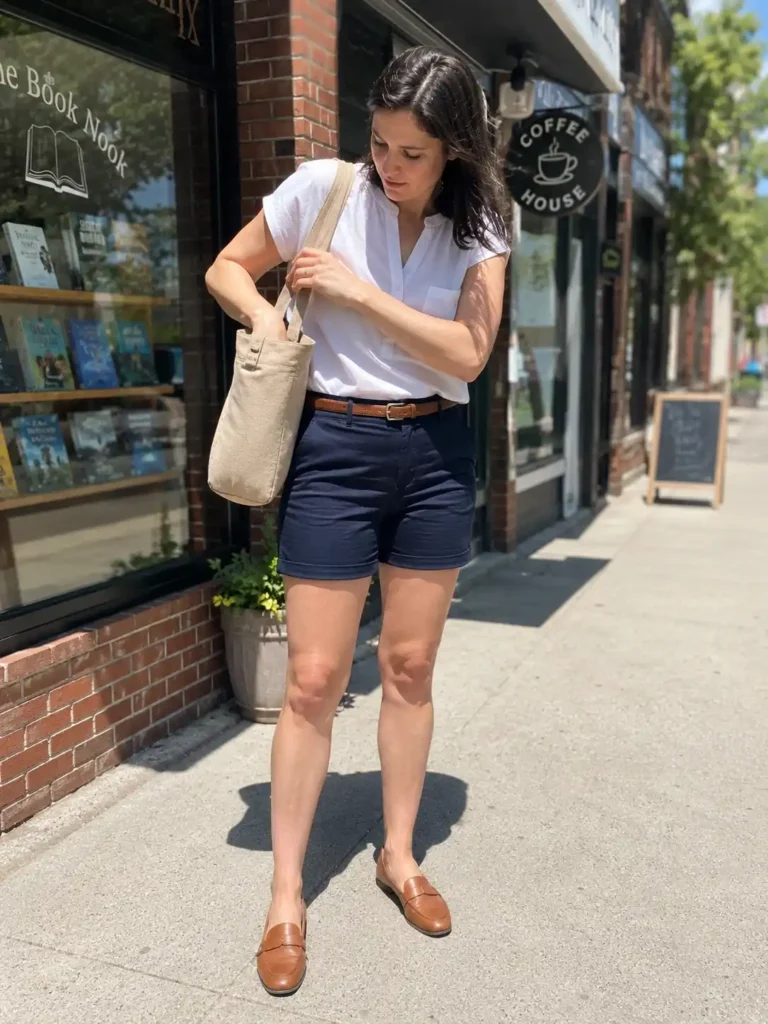
Cargo shorts and board shorts are firmly off the table. Old money summer calls for tailored shorts that sit 2-3 inches above the knee, in chino fabric or linen.
Preferably in navy, khaki, stone, or forest green.
The fit matters more than the brand here. A well-cut pair from a mid-range brand looks more expensive than a baggy pair from somewhere prestigious.
4. Polo shirts, but worn properly
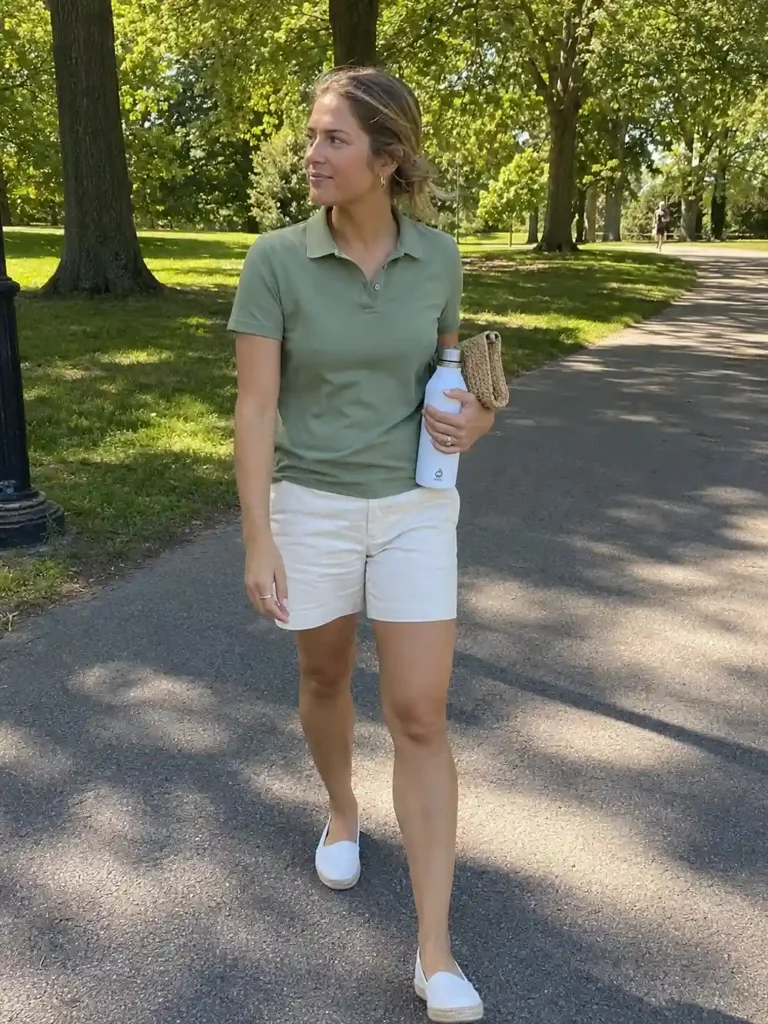
The polo shirt has been in old money closets since the 1920s, when it actually came from polo players (hence the name, obviously).
But there’s a version of the polo that looks fresh and a version that looks like you’re about to hand out flyers at a car dealership.
The difference is fit and colour. Go for a fitted but not tight cut. Colours like sage, dusty rose, navy, or butter yellow.
Avoid loud stripes and definitely avoid the ones with logos the size of your fist. Lacoste’s core range and Fred Perry both nail this when you size correctly.
5. A straw or raffia hat
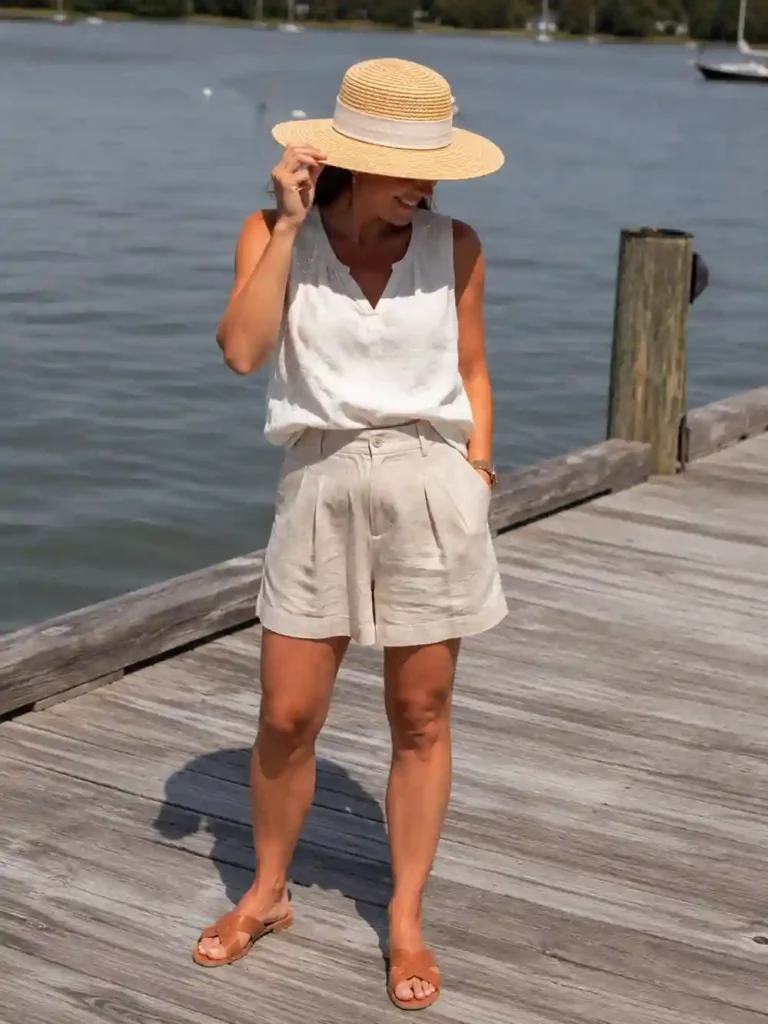
I think the straw hat is probably the most underused piece in most summer wardrobes, and I can’t explain why.
A good panama hat or a wide-brimmed raffia style does something almost unfair to an outfit.
It also protects you from the sun, which is genuinely useful information and not the reason anyone actually buys one, but still.
6. Espadrilles and loafers over sneakers
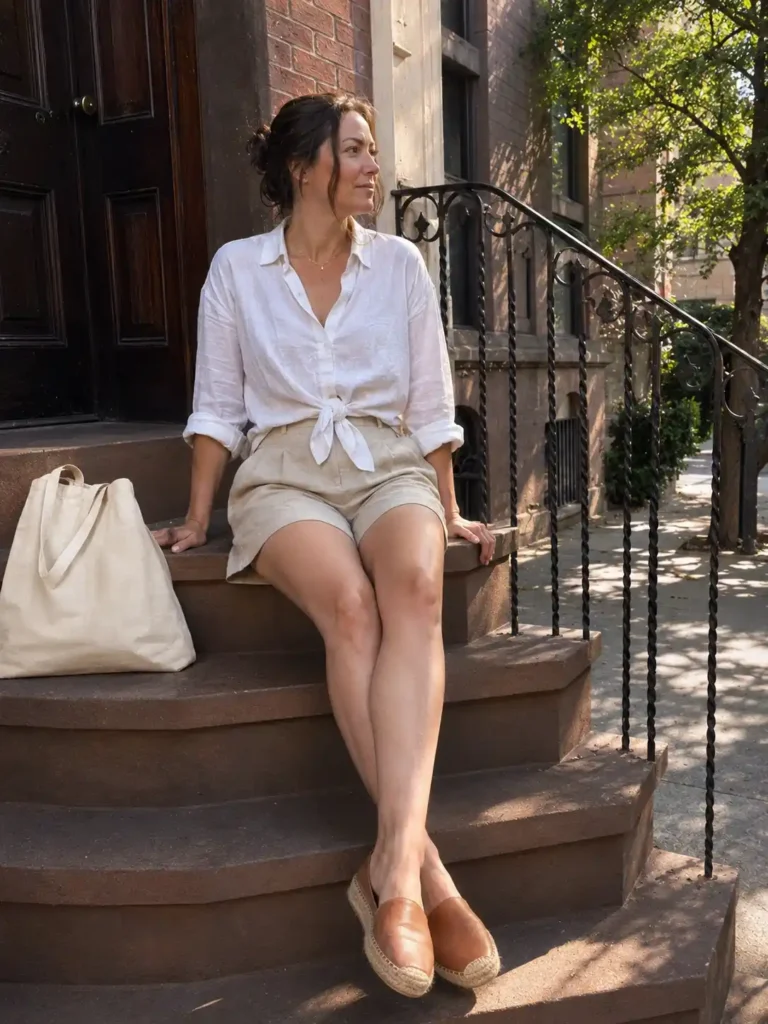
Sneakers are fine. But if you want that old money summer feeling, you swap them out for espadrilles, leather loafers, or woven mules. Worn without socks, naturally.
The no-socks thing is load-bearing to the entire aesthetic.
I can’t explain it scientifically, but something about bare ankles just reads as “I summer somewhere nice.”
Castaner makes excellent espadrilles. Tods and G.H. Bass have great loafers. And honestly? A lot of the Amazon dupes for both are embarrassingly good.
7. Sailing-adjacent pieces
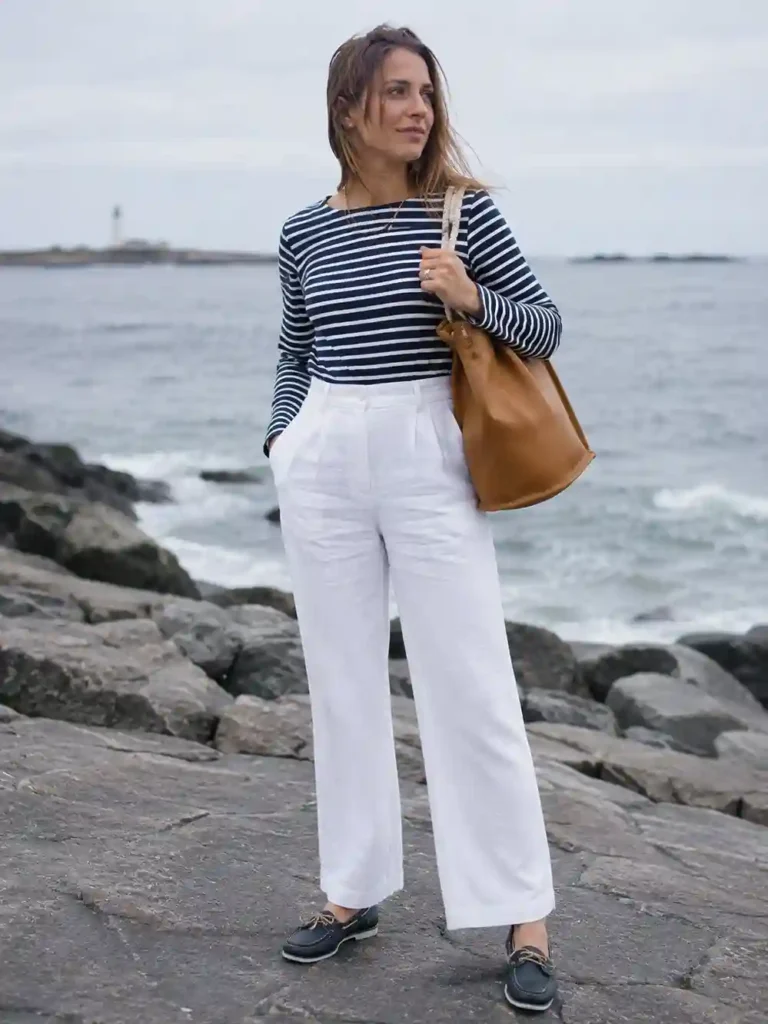
Here’s a small confession: I’ve never actually sailed.
But I’ve owned a Breton stripe top since 2019 and I wear it constantly every summer, so I’m clearly committed to the nautical bit regardless.
Breton stripes, deck shoes, rope-detail accessories, and navy anything all tap into the sailing world that old money families have historically loved.
It’s an aesthetic shortcut that somehow never feels costume-y when done with a light hand.
Saint James makes the original Breton top if you want the real thing. It’s worth the price.
8. Simple, minimalist jewellery

Gold signet rings. A thin chain. A simple pearl stud. That’s the formula, and it requires almost zero thought once you’ve got it sorted.
Old money jewellery is quiet. It doesn’t announce itself.
A chunky stack of silver rings from a fast-fashion brand reads completely differently to a single slim gold band, even if the gold one cost less.
9. A quality sun dress in a solid colour or subtle print
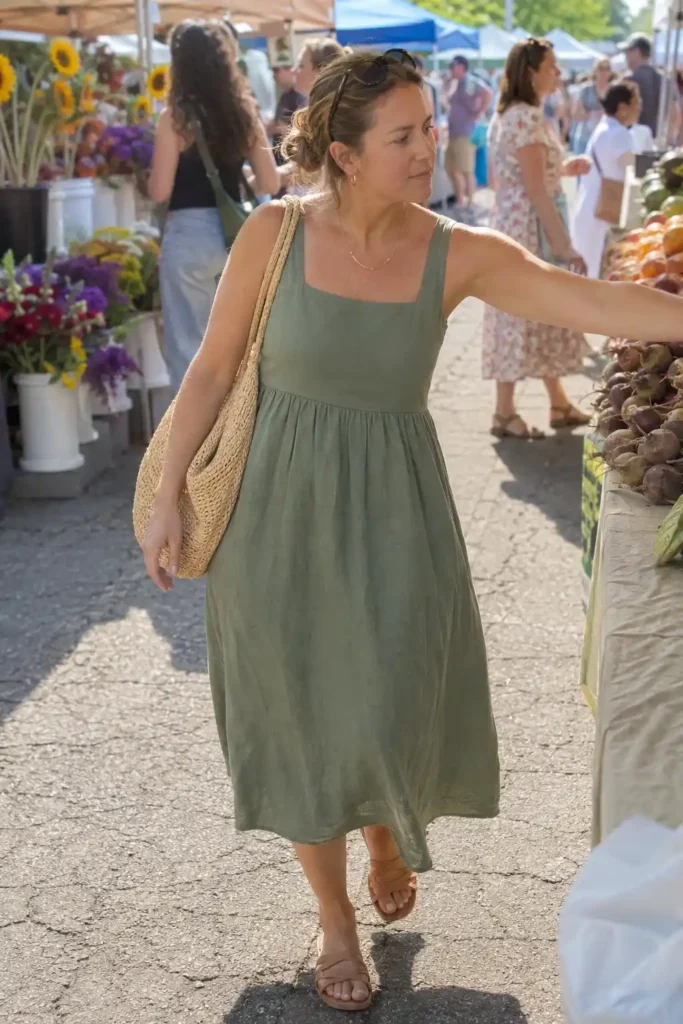
For anyone who wears dresses: the old money summer dress is midi length, a solid block colour or a small Liberty-style floral, and made from something that drapes rather than clings.
Brands like Posse, Faithfull the Brand, and Reformation consistently nail this.
If you’re shopping vintage, look for linen or silk and pay more attention to condition than label.
10. The structured tote bag
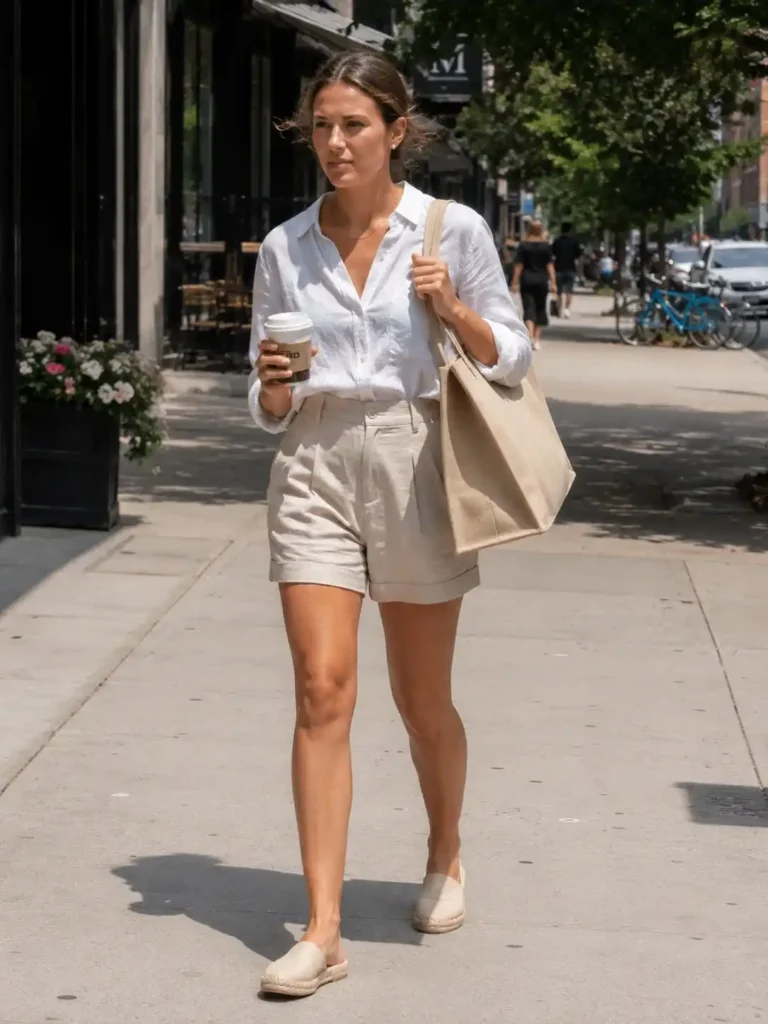
A massive logo canvas bag from a heritage brand is technically old money.
But so is a well-made, clean structured tote in canvas, leather, or raffia, and the latter costs about 95% less.
The bag should be big enough to carry sunscreen, a book, and whatever else you drag to the beach.
A market bag from a French épicerie or a simple canvas tote from L.L. Bean both work. The key is that it doesn’t look fussy.
11. Understated swimwear
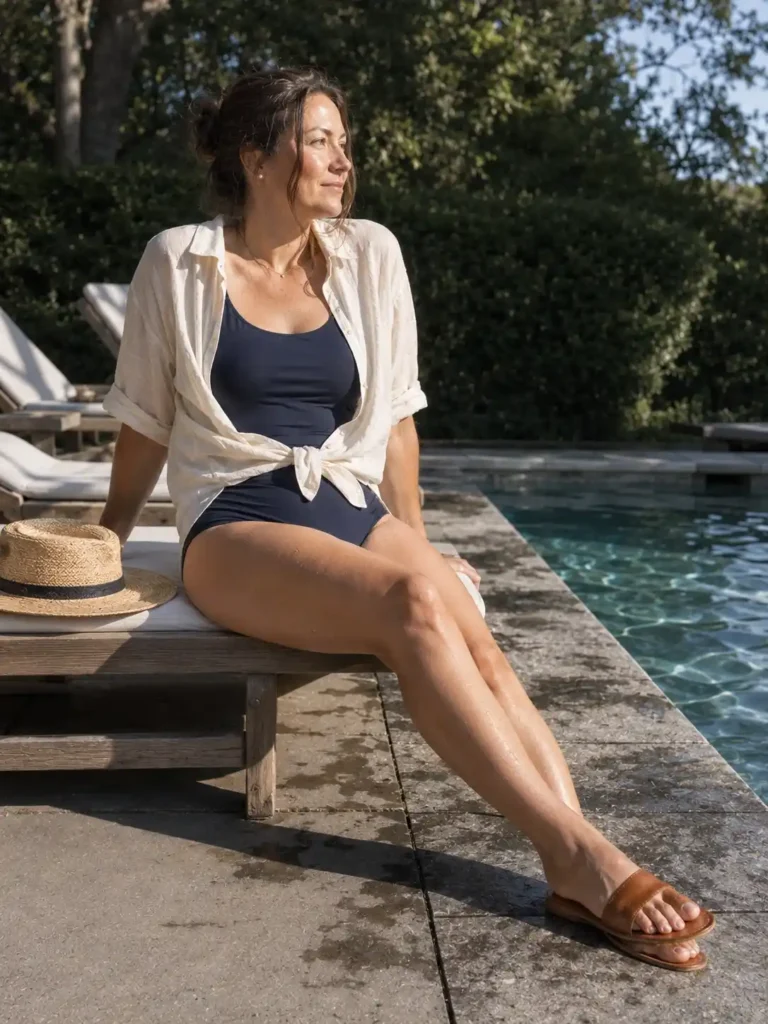
This is where a lot of people slip up. Old money swimwear is one solid colour or a classic stripe, well-fitted, and from a brand that prioritises construction over trend.
Vilebrequin is the obvious choice for swim shorts. Eres and Onia for one-pieces.
But again, a plain navy Speedo or a solid-colour bikini from Asos does the same visual job when the rest of your outfit is sorted.
12. A lightweight sweater tied around the shoulders
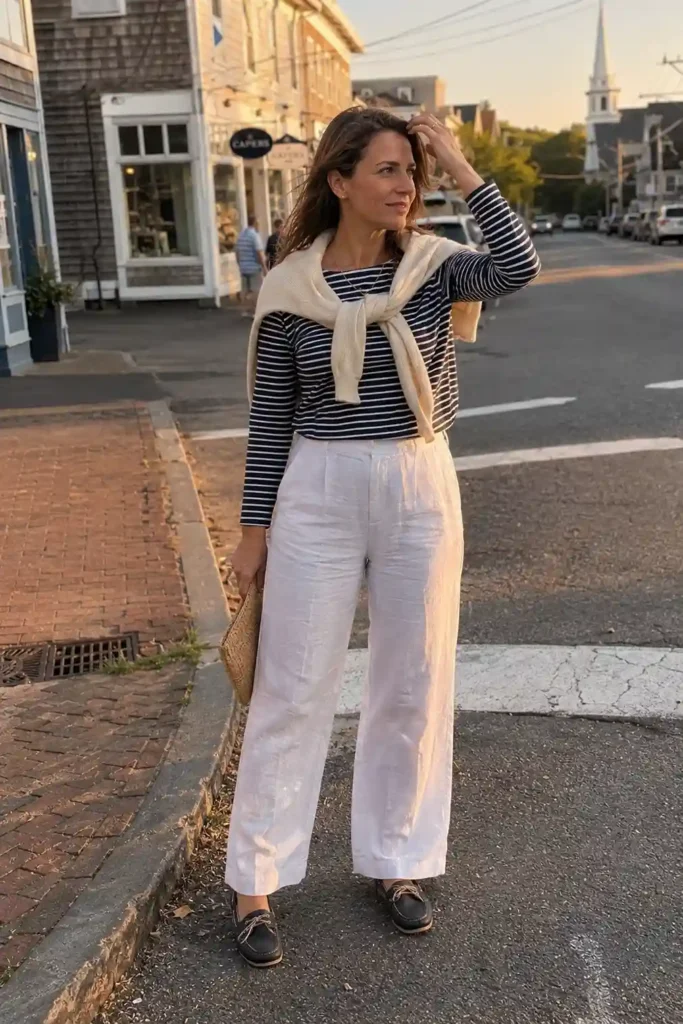
Yes, it’s a cliché. Yes, it looks amazing.
A cream or navy cashmere or merino sweater tied loosely over your shoulders is shorthand for “I went to a school that had a rowing team” and I say that with nothing but affection.
It also works practically when coastal evenings get cold, which they always do. So the sweater-tied-around-shoulders move is both aesthetic and genuinely useful. A win.
Old money summer: a quick at-a-glance reference
| Category | Old money pick | What to avoid |
|---|---|---|
| Fabric | Linen, cotton, light wool | Polyester, synthetic blends |
| Colour | Neutrals, navy, sage, ivory | Neon, heavy logo prints |
| Footwear | Loafers, espadrilles, sandals | Chunky trainers, rubber slides |
| Jewellery | Simple gold, pearls, signet | Loud layered stacks |
13. Sunglasses with classic frames
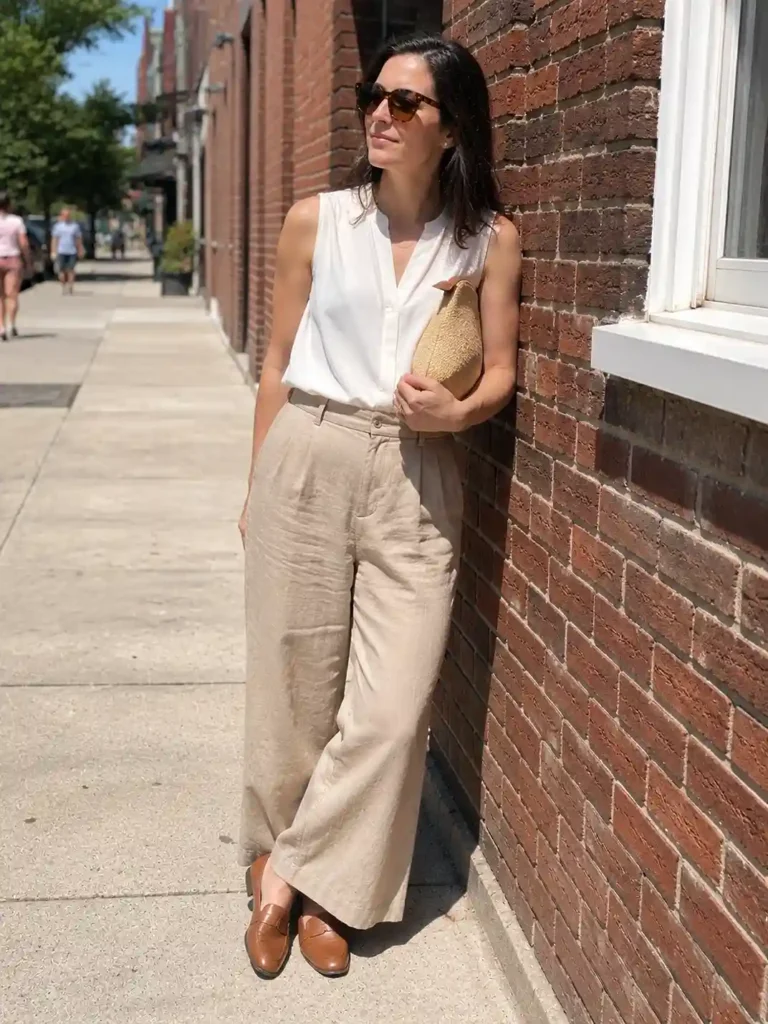
A pair of tortoiseshell wayfarers or simple gold-rimmed round frames does more for a summer outfit than almost any other accessory.
Ray-Ban, Garrett Leight, and Oliver Peoples are the reference points here, though for most people a well-chosen Quay or similar brand reads just as well.
The key is: classic shape, nothing too trendy, and UV protection that’s actually real (not just tinted plastic, which I learned the hard way in 2022 and my optician had things to say about it).
14. Invest in one really good pair of summer trousers
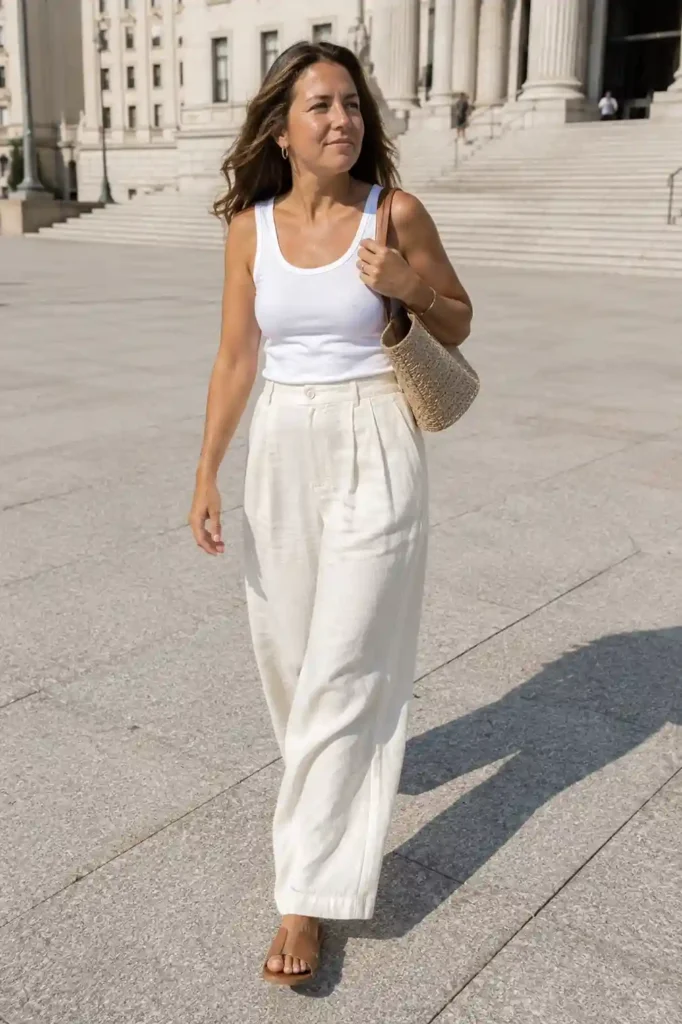
Wide-leg linen trousers in white, cream, or navy are probably the most photographed item in old money Pinterest boards, and for good reason.
They’re genuinely comfortable, they look polished with almost nothing, and a good pair lasts years if you wash them properly (cold water, air dry).
Zara has a surprisingly decent version every summer. Arket consistently delivers.
And if you’re willing to spend more, Margaret Howell’s linen trousers are the kind of thing you hand down eventually.
15. The overall philosophy: less, but considered
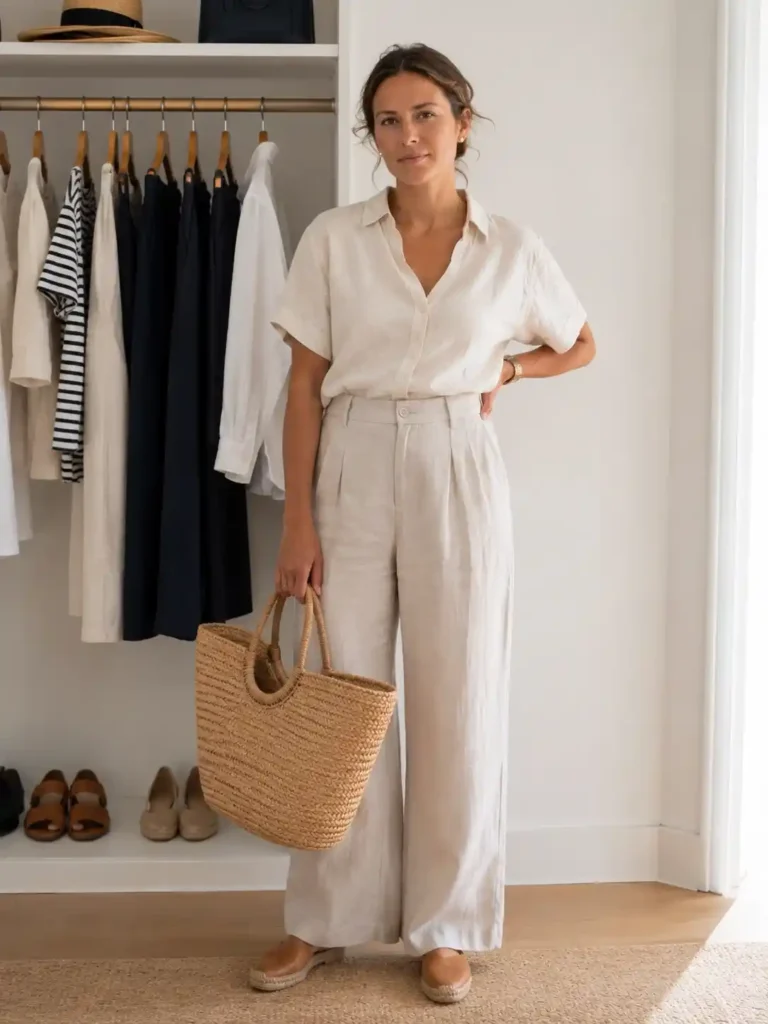
IMO, this is where old money style differs most noticeably from regular “looking put-together.” The old money aesthetic is built on restraint: fewer things, worn more often, kept in better condition.
A capsule of maybe 12-15 summer pieces that all work together, rather than a wardrobe of 60 things that sort of clash.
FYI, this also makes getting dressed in the morning genuinely easier, which might be the real luxury here.
If you want a starting point for building a proper old money summer wardrobe, the Who What Wear guide on quiet luxury dressing covers some solid foundational principles, and
The Sartorialist’s archive has years of reference images from real people doing this naturally.
FAQs
Q: Do I need to spend a lot of money to dress old money? A: Genuinely no. The core pieces, linen shirts, tailored shorts, simple jewellery, are available at every price point. Uniqlo, Zara, and H&M’s premium lines cover most of the basics. The key is buying less and buying things that fit well.
Q: What’s the single easiest old money update for summer? A: Swap your shoes. Trade out sneakers for loafers or espadrilles and lose the socks. That change alone shifts an outfit significantly, and a decent pair of espadrilles costs about £30-40.
Q: Can men and women both do old money summer style? A: The aesthetic translates completely across genders. Linen trousers, Breton stripes, polo shirts, straw hats, simple jewellery, these work for everyone. The silhouettes and specific cuts differ, but the underlying formula (neutral colours, quality fabrics, minimal fuss) is the same.
Which of these pieces are already in your wardrobe, and which ones are you going to add first? Drop it in the comments, I’m genuinely curious whether the linen convert thing is as universal as I suspect it is.
