Quick note before we start: senior here does not mean senior citizen. We’re talking about high school seniors, the last-year-of-school kind, the ones painting jeans in a friend’s garage the week before homecoming.
If you clicked expecting elastic-waist denim for retirees, this isn’t that article. Stick around anyway, though. This one’s more fun.
I found out about senior spirit jeans the way most parents do: my kid came home from a Friday night game with paint on her hands and asked to borrow every craft supply in the house.
Two years later, I’ve helped decorate four pairs, ruined one good paintbrush, and learned more about fabric paint than I ever expected to know.
So this guide comes from actual trial and error, not a Google search skimmed five minutes before publishing.
15 Senior Jeans Ideas For High School Seniors That Dont Require An Art Degree
Click Here →What senior spirit jeans actually are
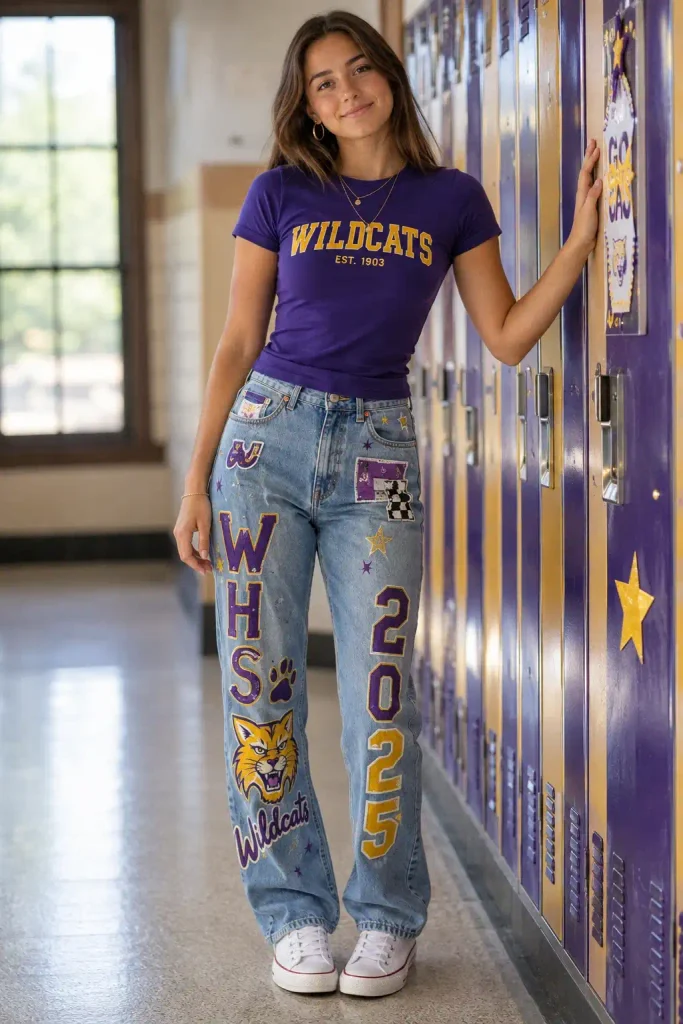
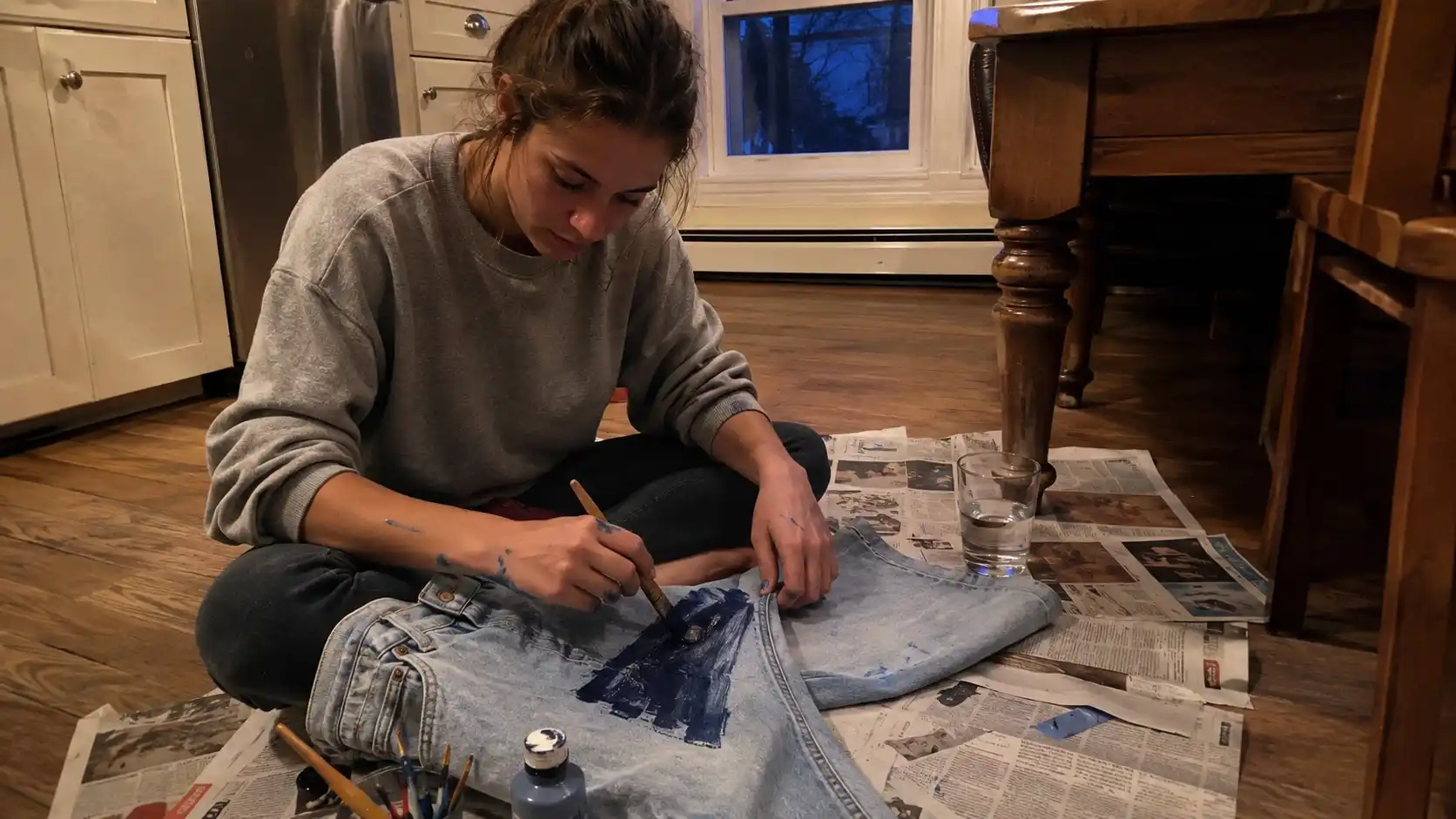
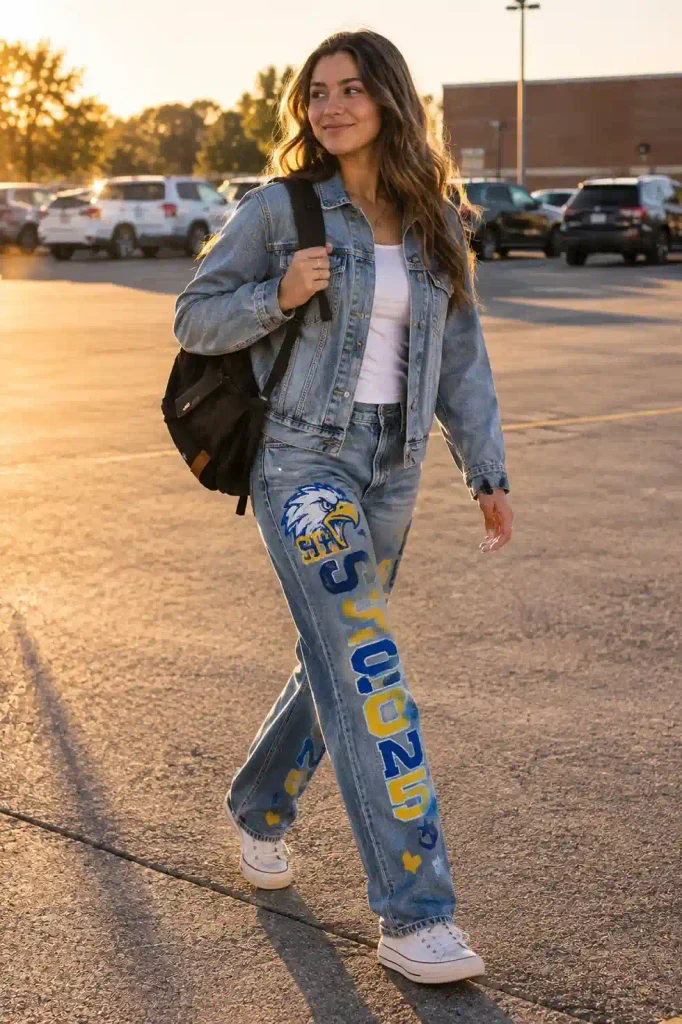
Senior jeans (some schools say senior pants, some say senior denim) are a pair of jeans a graduating senior decorates by hand and wears to football games, pep rallies, homecoming, and spirit week.
Paint, iron-on letters, patches, ribbons, buttons, dangling charms, all of it goes on. Every school does it a little differently, but the goal stays the same: wear your last year loud and proud.
The tradition isn’t new, either. It traces back to college campuses in Indiana in the early 1900s, when students there started decorating corduroy pants before the idea spread and eventually landed on denim.
A recent writeup on the origins of the senior jeans tradition traces it to a group of students who spotted a pair in a store window and decided to make their own versions, then traded ideas with friends at nearby schools.
Over a century later, it’s a full-blown Pinterest category.
Why the tradition sticks around
Ask any senior why they bother spending a whole Saturday hunched over a pair of jeans with a paintbrush, and you’ll get some version of the same answer:
because senior year only happens once. That’s it. That’s the whole reason.
A few things make the tradition worth the mess:
- It’s one of the few school traditions that’s fully personal. Nobody assigns your design. You choose it.
- It builds community. Jean-painting parties are basically mandatory at this point, and they double as a genuinely good excuse to hang out before everyone scatters after graduation.
- It photographs well. Say what you want about that, but a closet full of memories you can actually wear beats a shoebox of ticket stubs.
One student quoted in a school paper put it simply: doing something for spirit week that year “felt right” after skipping it for three years straight, because senior year was her last shot at it.
That sentiment shows up in nearly every article I read while researching this piece. It’s less about the denim and more about not wanting to look back with regret.
Choosing the right base jeans (fit and comfort actually matter here)
Here’s where most guides skip the practical stuff and go straight to glitter. Don’t do that.
You’re going to wear these jeans for hours, standing in bleachers, walking around a stadium, maybe sitting on cold metal seats in October.
Comfort matters more than people admit.
A few fit questions worth answering before you buy:
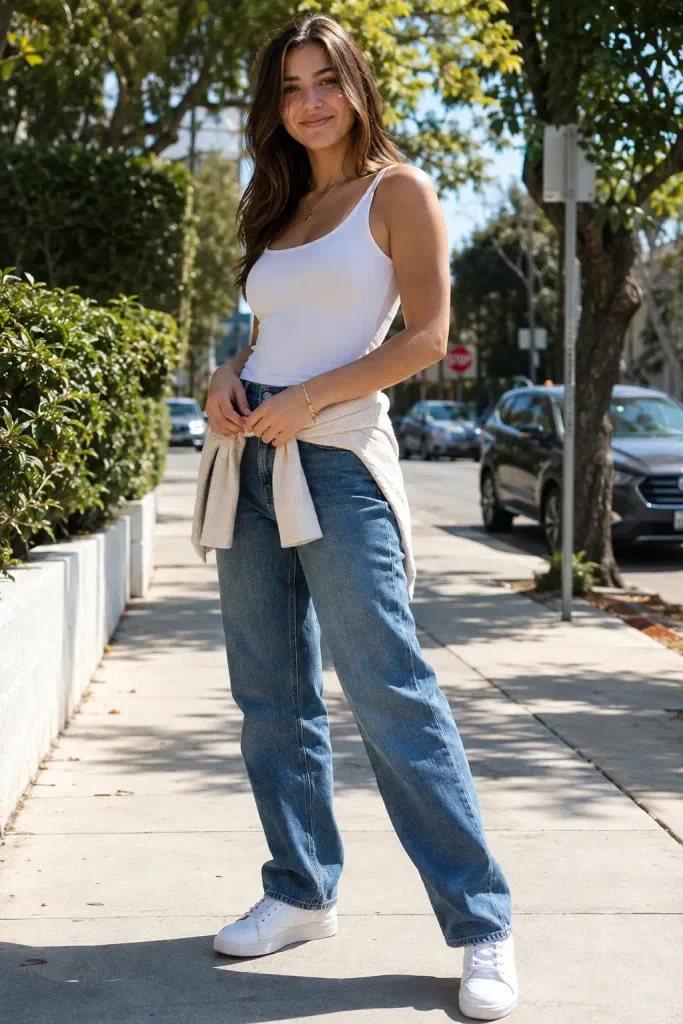
- Will you be standing for most of the game, or sitting? Straight-leg and relaxed fits move easier if you’re on your feet cheering. Skinny jeans look sharp in photos but get uncomfortable fast in a crowd.
- Does your school do a color theme? If so, buy your base jeans in a shade that won’t fight with your paint colors. White or light denim shows paint more vividly; dark denim hides mistakes better but mutes bright colors.
- How’s the weather where you live? A thick, standard-weight denim holds up better through a full football season than something thin and stretchy, which tends to crack paint faster at the knees and hips.
I’ll be honest, my daughter’s first pair was skinny jeans, and by the third quarter of her first game she was miserable.
We went with a relaxed straight-leg for the second pair, and it made a real difference.
Lesson learned the hard way, but at least you don’t have to learn it that way too.
Denim type, stretch level, best for, comfort note Rigid straight-leg, low stretch, standing all game, holds paint well, less give at the knee Relaxed straight-leg, low to moderate stretch, standing and walking, best all-around pick for most seniors Skinny/slim, moderate to high stretch, sitting more than standing, paint can crack over time at stress points Wide-leg or flare, low stretch, dramatic photo moments, roomy and breathable, less flattering for close-up detail work
That’s a rough guide, not gospel. Every body is different, and what feels comfortable to one senior might feel restrictive to another.
Try them on, sit down in them, walk around the store in them if the staff will let you.
Design ideas that actually hold up
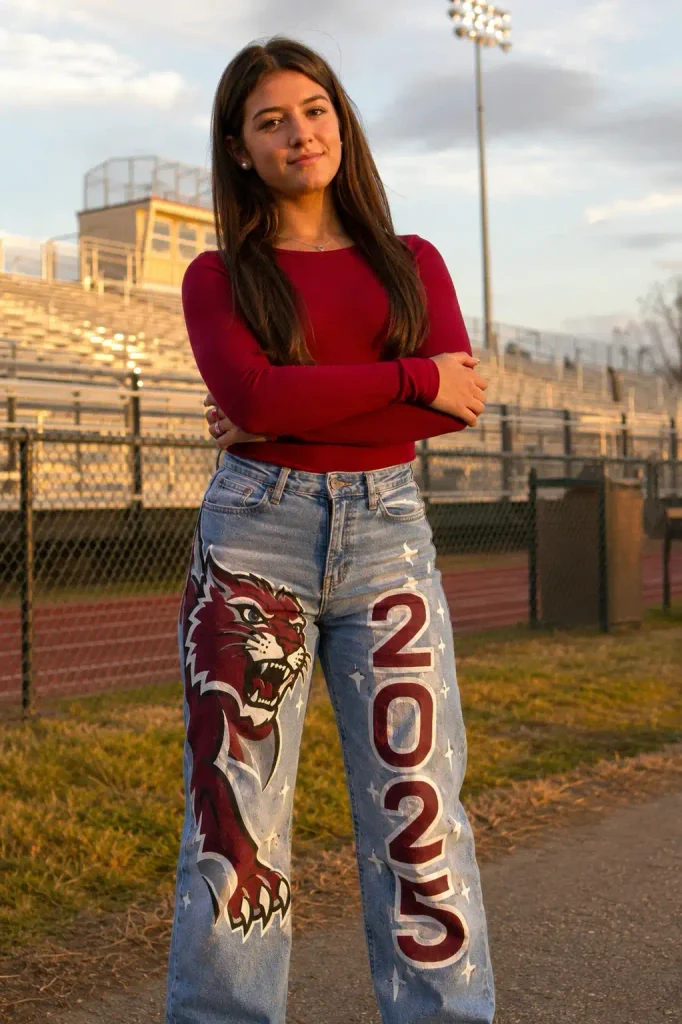
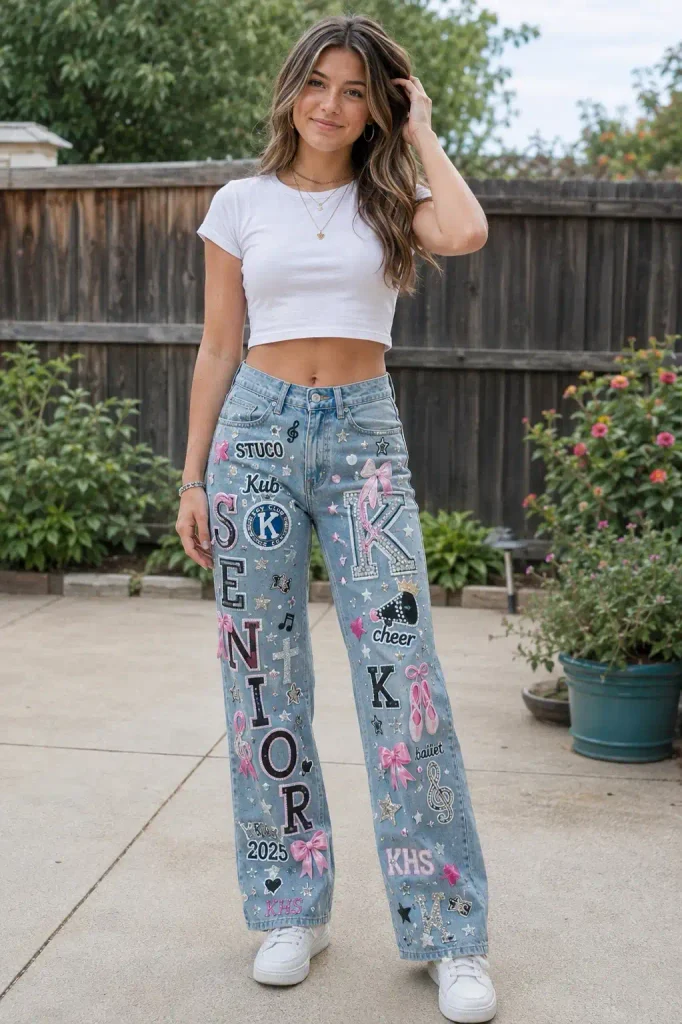
This is the part everyone actually wants, so let’s get into it. Design choices split into a few categories: mascot-and-year, collage-style, monogram, and theme-based.
Mascot-and-year is the classic. Your school’s mascot painted large on one thigh, graduation year on the other.
Simple, recognizable from the stands, and honestly the safest bet if you’re not confident with a paintbrush.
Collage-style covers the whole leg with smaller elements: club logos, sports you played, inside jokes, initials of your closest friends.
This one takes longer and looks busier in photos, but it tells more of a story. IMO it’s the more meaningful option if you’ve been involved in a lot of activities, since it doubles as a scrapbook you wear.
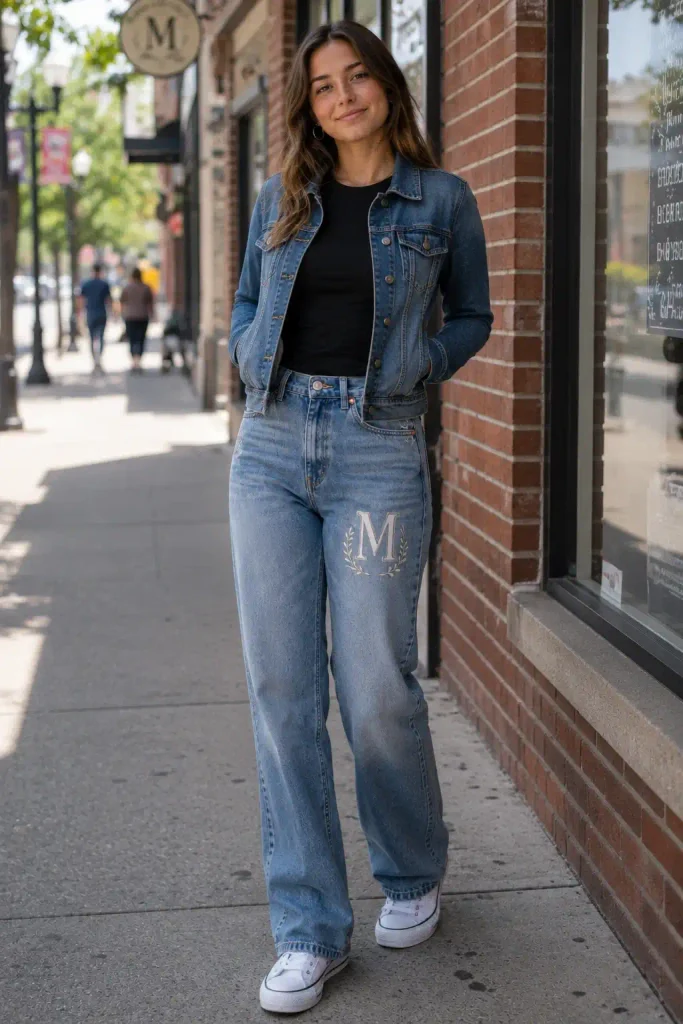
Monogram and minimalist designs skip the chaos entirely. Just your name, your number if you play a sport, maybe one small graphic.
Works well if you want something you’d actually wear again after graduation, which, let’s be real, most decorated jeans never get worn again once they’re covered edge to edge in paint.
A few things I’d genuinely recommend, based on watching four pairs get made:
- Sketch the whole design on paper first, to scale, before touching the jeans. Skipping this step is how you end up with a lopsided mascot.
- Leave breathing room. Packing every inch of denim with something looks cluttered from a distance, even if it looks great up close.
- Ask a friend who’s good at lettering to do the text. Freehand cursive on fabric is harder than it looks, and shaky letters are the one thing that reads as unfinished in photos.
Materials that won’t crack, peel, or bleed
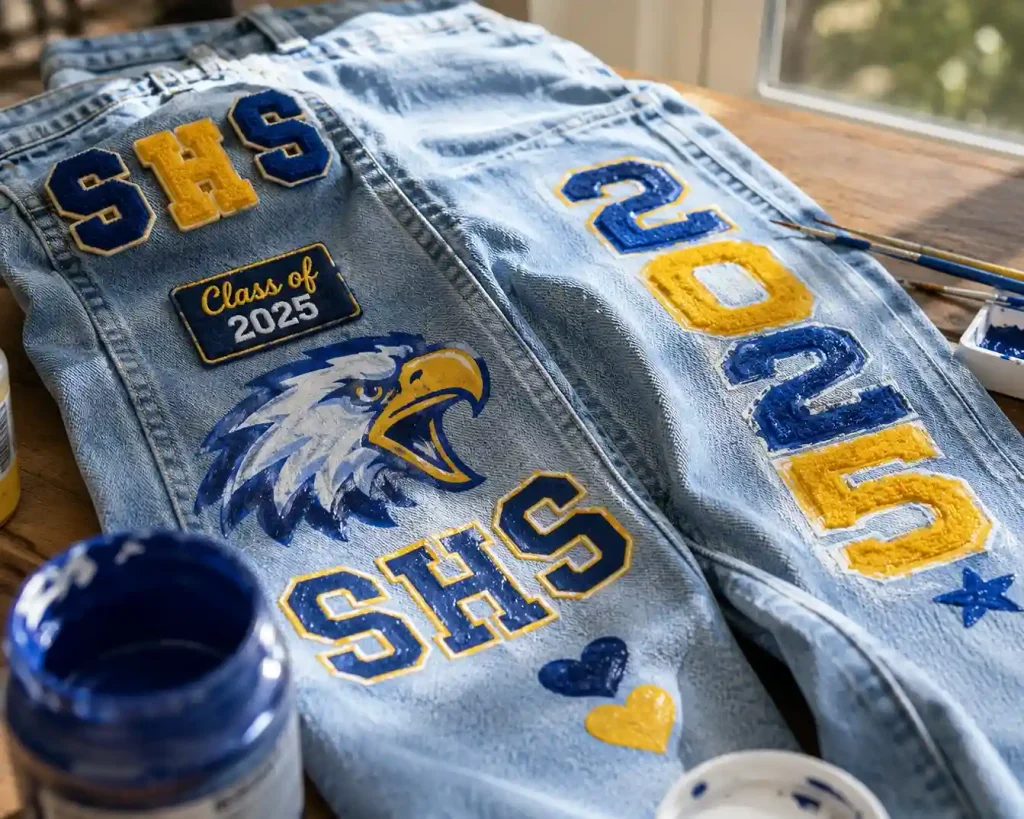
Fabric paint beats regular acrylic paint, full stop, but you knew that already if you’ve done any research. What people skip is the sealing step.
A light layer of fabric medium mixed into acrylic paint, or a proper fabric paint sealant sprayed on after everything dries, is the difference between jeans that survive one wash and jeans that survive a whole season.
Iron-on letters and patches go on before paint, not after, so paint can layer around the edges and blend everything together instead of looking stuck on.
Rhinestones and glued embellishments go on last, once paint is fully cured, usually 24 to 48 hours depending on how thick you applied it.
Chains, ribbons, and dangling charms are the finishing touch most people forget about, and they’re what actually catch light in photos.
A few safety-pinned ribbons in school colors along a belt loop costs almost nothing and adds a surprising amount of polish.
Staying comfortable through a full game day
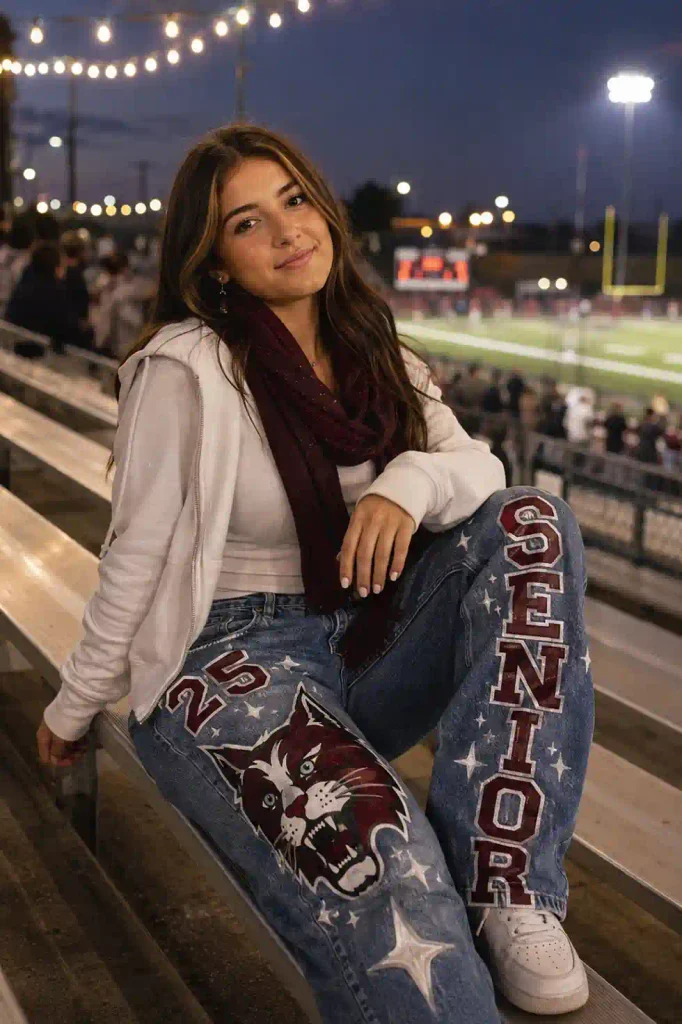
Nobody talks about this part enough. You’ve got a beautifully decorated pair of jeans, and now you’re standing in a stadium for three hours. A few practical tips:
- Layer a breathable base underneath if it’s warm out. Painted denim doesn’t breathe as well as plain denim once fabric paint stiffens the fibers.
- Bring a light jacket for later innings or quarters. Stadium seating gets cold fast once the sun goes down, especially in October and November.
- Skip a tight waistband if you know you’ll be sitting on bleachers for long stretches. A little room at the waist saves you from that squirmy, uncomfortable feeling by halftime.
Wow, does that sound obvious written out. But I’ve watched seniors show up in jeans two sizes too tight because the fit looked better in the mirror at home, then spend the whole game adjusting.
Comfort wins over a slightly snugger silhouette every single time you’re standing for hours.
Where to find blank jeans worth decorating
You don’t need designer denim for this. Most seniors use budget straight-leg jeans from wherever’s convenient, since they’re getting fully covered anyway.
White Dickies work too, if your school leans toward a painted-canvas look rather than classic blue denim.
A helpful roundup on DIY senior jeans styling ideas covers a range of design directions if you want more visual inspiration before you commit to a look.
Budget matters here more than people admit. Spending less on the base jeans means more room in the budget for good fabric paint, sealant, and embellishments, which is where quality actually shows up in the final result.
A quick, honestly kind of random thought: it’s funny how a tradition built around individuality ends up looking so similar from school to school.
Paint, patches, chains, mascot, repeat. Maybe that’s the point, though. Everyone’s telling roughly the same story in their own handwriting.
Planning a jean-painting party without it turning into chaos
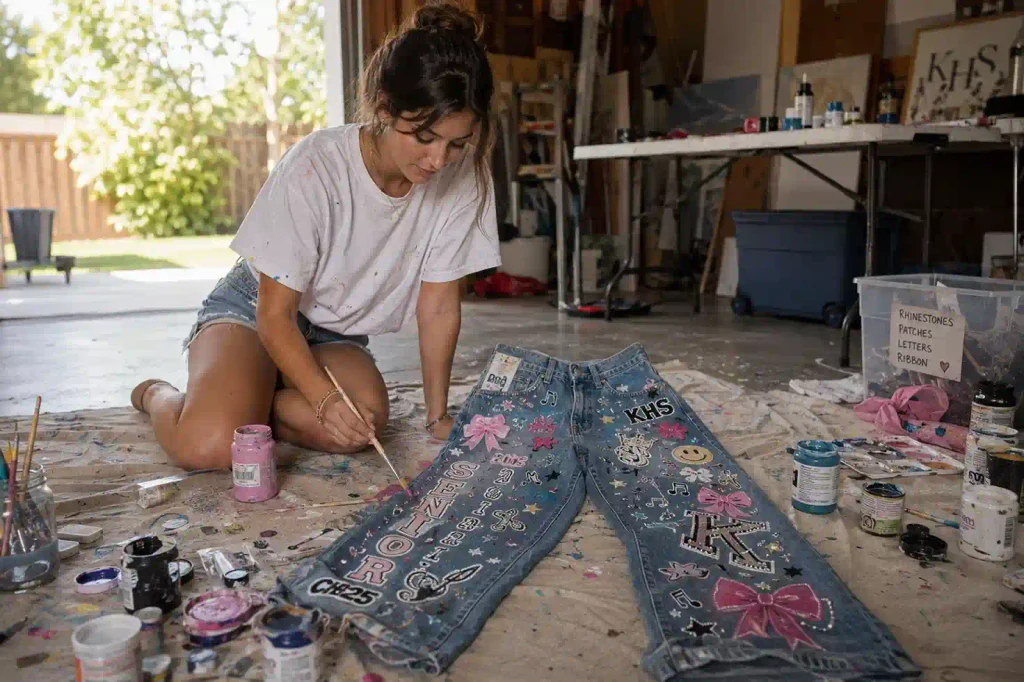
If you’re doing this with a group, and most seniors do, a little planning saves you from a garage floor covered in three colors of paint that won’t come out of the concrete.
A few things that helped us:
- Cover every surface before anyone opens a paint jar. Old bedsheets, a tarp, cardboard, whatever you’ve got. Fabric paint stains concrete more than people expect.
- Set out separate cups of water for rinsing brushes between colors, one per person if you can manage it. Sharing one cup turns every color muddy by the second design.
- Have everyone bring their own base jeans already washed once, since new denim sometimes has a light coating that keeps paint from soaking in properly.
- Snacks. This sounds unrelated, but a four-hour painting session runs a lot smoother with pizza in the mix. Ask me how I know.
Group sessions also solve the biggest weakness of doing this alone: perspective. It’s easy to lose sight of how a design looks from a distance when you’re three inches away from the fabric with a tiny brush.
Having a friend step back and tell you the mascot’s eye is crooked before the paint dries beats finding out after.
Fabric paint versus other options, and which one’s worth the extra cost
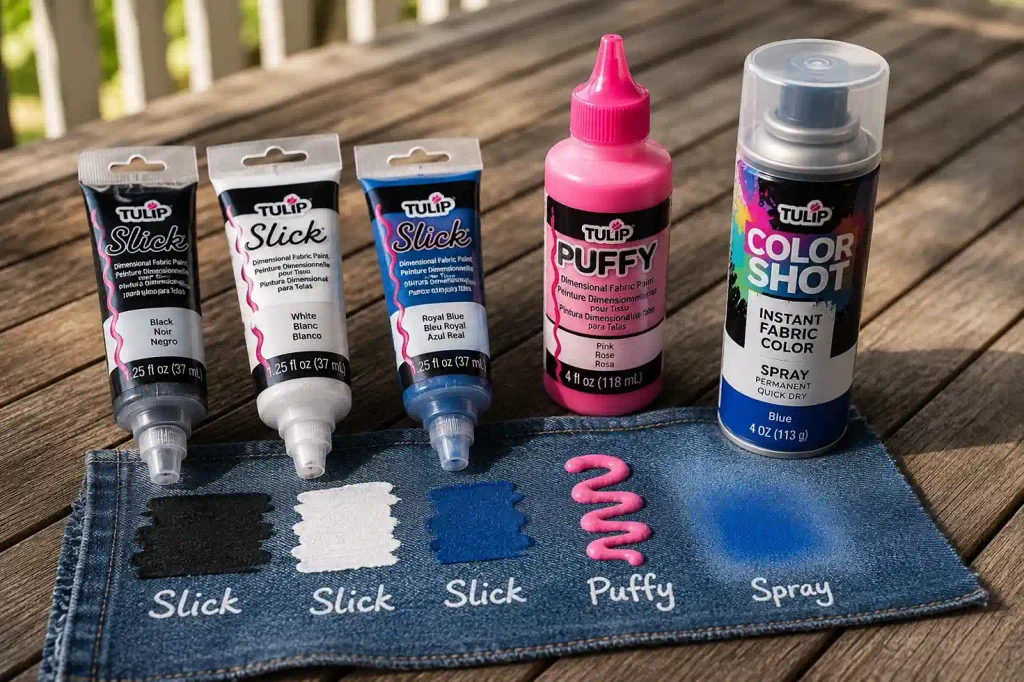
Not all paint behaves the same on denim, and this is where a lot of first-timers waste money.
Regular craft acrylic paint works in a pinch, but it sits on top of the fabric rather than soaking in, which means it cracks and flakes faster, especially at stress points like the knee or thigh crease.
Dedicated fabric paint, or acrylic mixed with a fabric medium, bonds with the fibers instead of just coating them, and it holds up through a lot more wear.
Puffy paint gives a raised, dimensional look that photographs well for lettering and small details, but it’s not great for covering large areas since it can crack if the denim flexes too much underneath it.
Spray fabric paint covers ground fast for background colors but needs stencils or careful masking to avoid overspray on areas you wanted to stay plain.
My honest take, after going through all four types across multiple pairs: fabric paint mixed with a bit of fabric medium is the best value for the actual painted sections, puffy paint is worth it for names and small text, and spray paint is only worth the mess if you’re doing a big solid-color background block.
Skip regular acrylic entirely if you can afford not to; it’s the one that disappointed us the most after a few washes.
Budgeting the whole project without overspending
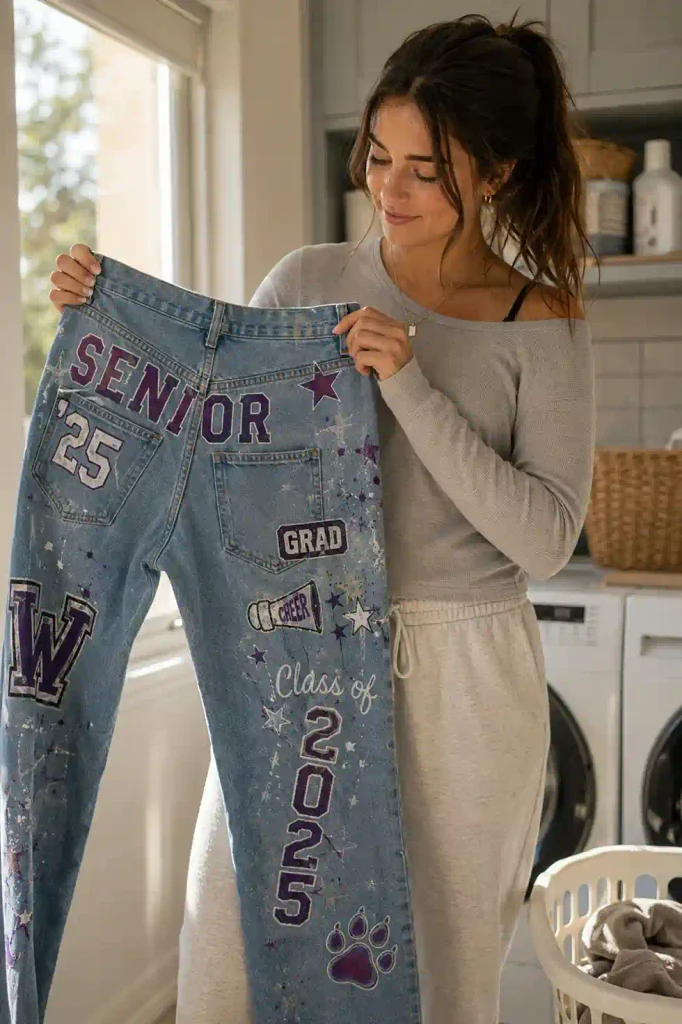
A realistic budget breakdown for a single pair looks something like this: 15 to 25 dollars for the base jeans, 15 to 20 dollars for fabric paint in a handful of colors, 5 to 10 dollars for iron-on letters or a graduation year set, and another 10 to 15 dollars if you’re adding rhinestones, patches, or chains.
That lands most seniors somewhere in the 45 to 70 dollar range for one really well-done pair, though plenty of people spend less by sharing supplies across a group.
Buying paint and iron-on letters in bulk with three or four friends cuts costs noticeably, since craft stores often price small multi-packs cheaper per unit than single tubes.
It’s also just more fun to shop for this stuff together than to do it solo, in my experience.
Keeping decorated jeans looking good all season
Wash them inside out, in cold water, on a gentle cycle, and skip the dryer if you can hang dry instead.
Heat is the fastest way to crack fabric paint that took a whole weekend to apply.
If you’re washing between games, spot clean instead of a full wash whenever possible, since fewer wash cycles means the paint lasts longer.
Store them flat or on a wide hanger rather than folded, especially if there’s heavy paint or embellishments near the fold lines.
Folding creates crease points where paint tends to crack first.

Frequently asked questions
Do senior jeans have to be blue denim? No. Plenty of schools use white Dickies or white jeans instead, since lighter fabric shows paint colors more vividly.
It really comes down to your school’s tradition and what colors you’re working with.
How much does a pair of decorated senior jeans typically cost to make?
Most seniors spend somewhere between 30 and 60 dollars total, factoring in the jeans themselves, fabric paint, iron-on letters, and any patches or embellishments.
Buying supplies in bulk with a group of friends usually brings that number down.
Can you wear senior jeans more than once? Absolutely, and most seniors do.
They come out for the first day of school, spirit week, every home game, homecoming, and often graduation week too. Some schools treat it as a year-long thing rather than a one-time event.
Final thought
Senior spirit jeans aren’t really about the jeans. They’re about spending a Saturday with your closest friends, paint under your fingernails, arguing over whether the mascot’s ear looks right, and ending up with something you’ll actually want to look at years from now.
So grab a plain pair of denim, a friend who’s better at lettering than you are, and get started this weekend. What’s your design going to say about your senior year?
