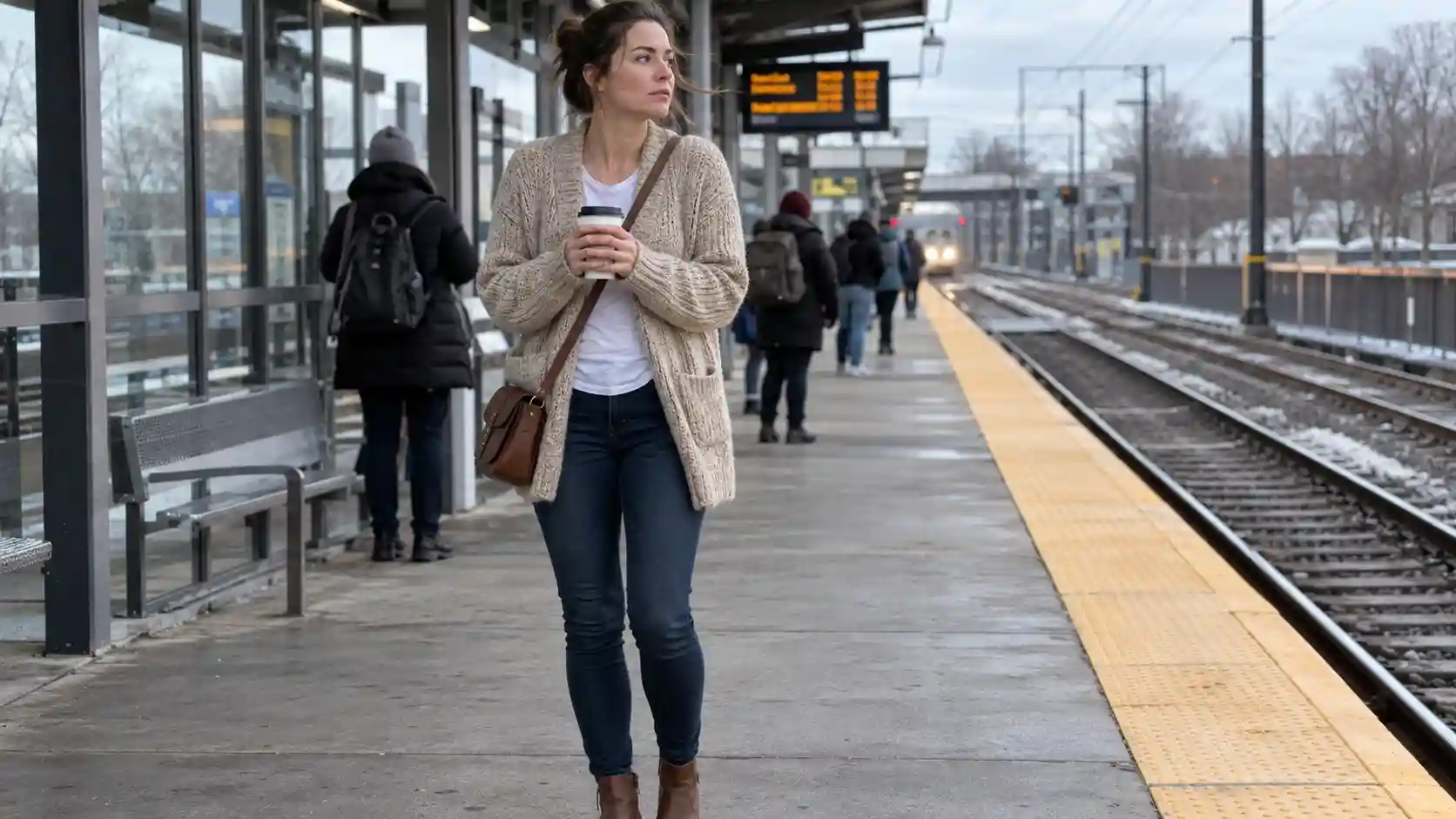
Last January I stood on a train platform in 14°F wind, wearing a gorgeous chunky cardigan over a thin cotton tee. I looked great on Pinterest terms. I felt like a popsicle with a style board.
That day taught me something. A jeans and cardigan outfit looks cozy in photos, but it only works in real cold if you build it from the skin out.
So here’s everything I’ve learned since, plus the combinations I’ve pinned, tested, and worn until the elbows pilled
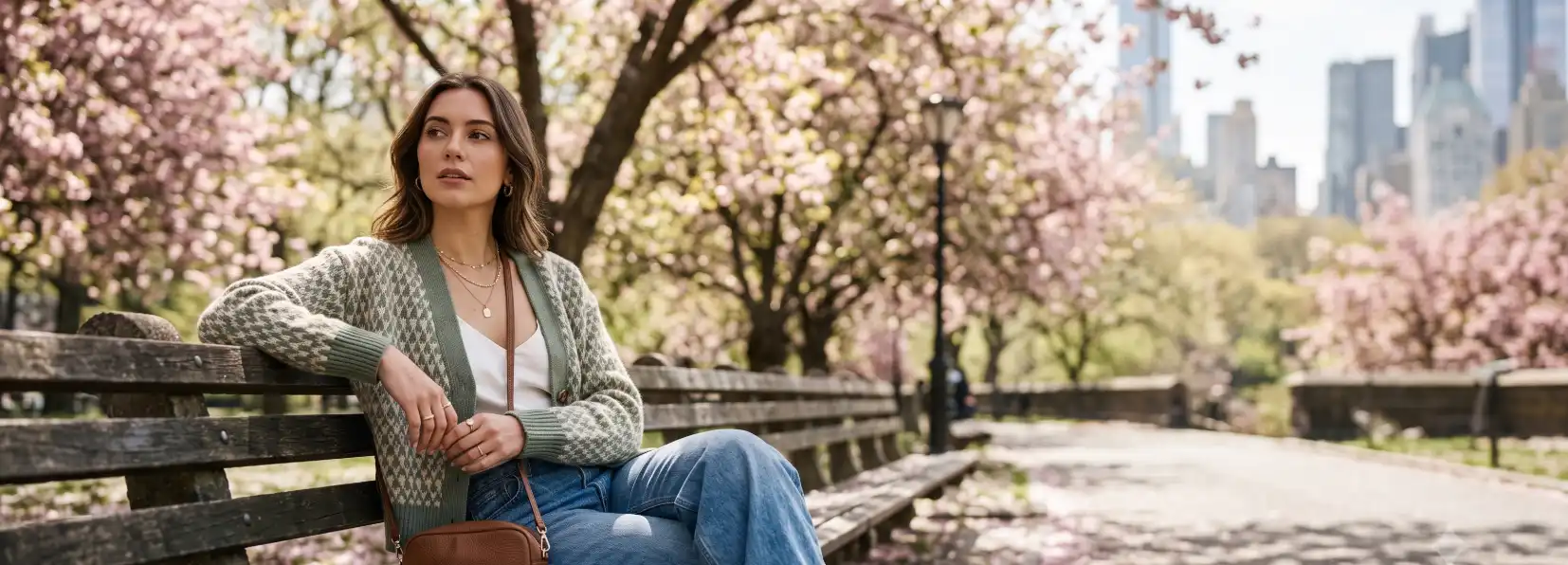
Cardigan And Jeans Outfit Women 20 Stylish Ways To Wear This Classic Combo
Discover More →Why jeans and cardigan outfits dominate winter boards
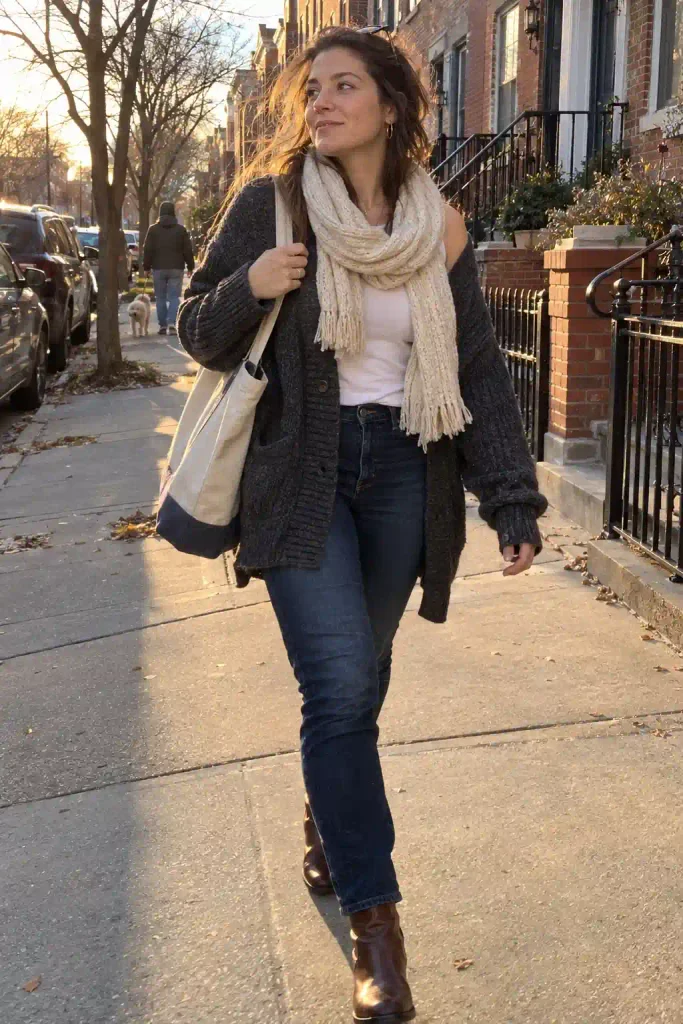
Scroll any fall or winter Pinterest board and you’ll see the same pairing again and again. Dark jeans, a slouchy knit, a scarf, boots.
It photographs well because the shapes contrast: a structured denim leg against a soft, drapey top.
It also works in real life. A cardigan opens and closes, so you adjust to the temperature without taking the whole outfit apart.
A heated office, a freezing bus stop, a restaurant with one drafty window: the cardigan handles all of them.
Ever wonder why this combo never g
oes out of style? I think it’s because nobody has to try hard to look pulled together in it. You throw it on and you look like you planned it.
The three jobs every layer does
Cold weather dressing falls apart when people treat layers as decoration. Each layer has a job, and the cardigan usually holds the middle one.
Base layer: moves moisture away
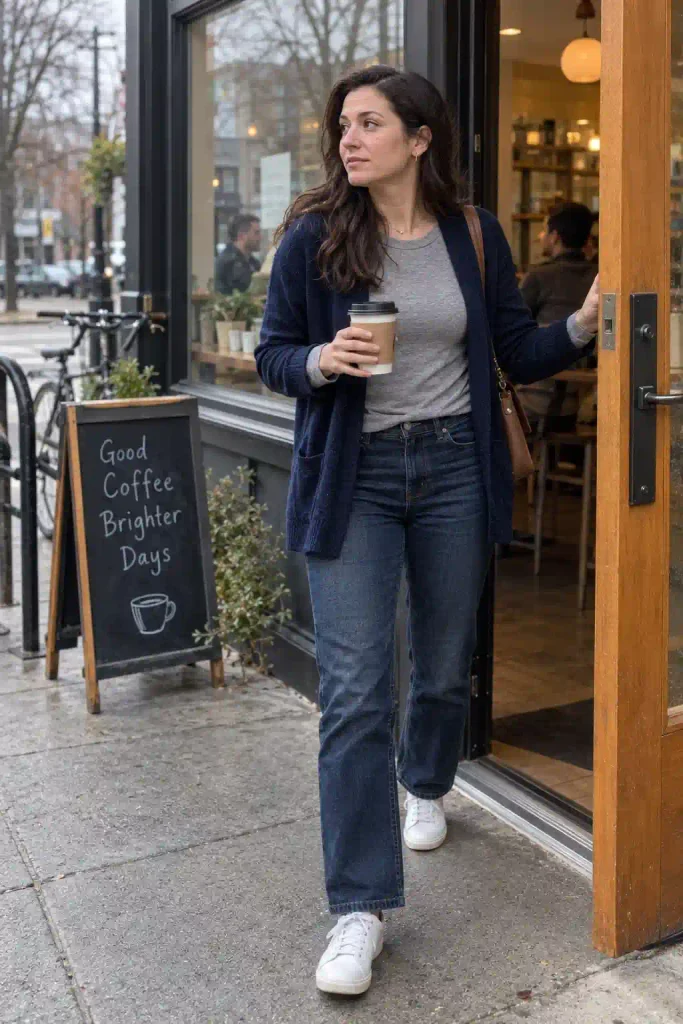
Your base layer sits against your skin. It should pull sweat off you and stay thin.
Merino wool and quality synthetic blends do this well, while plain cotton holds moisture and chills you fast.
I wear a thin merino long sleeve under almost every winter cardigan now. The difference between that and a cotton tee is huge.
If you want the science, Woolmark explains how wool fibers handle moisture and temperature.
Mid layer: traps warm air
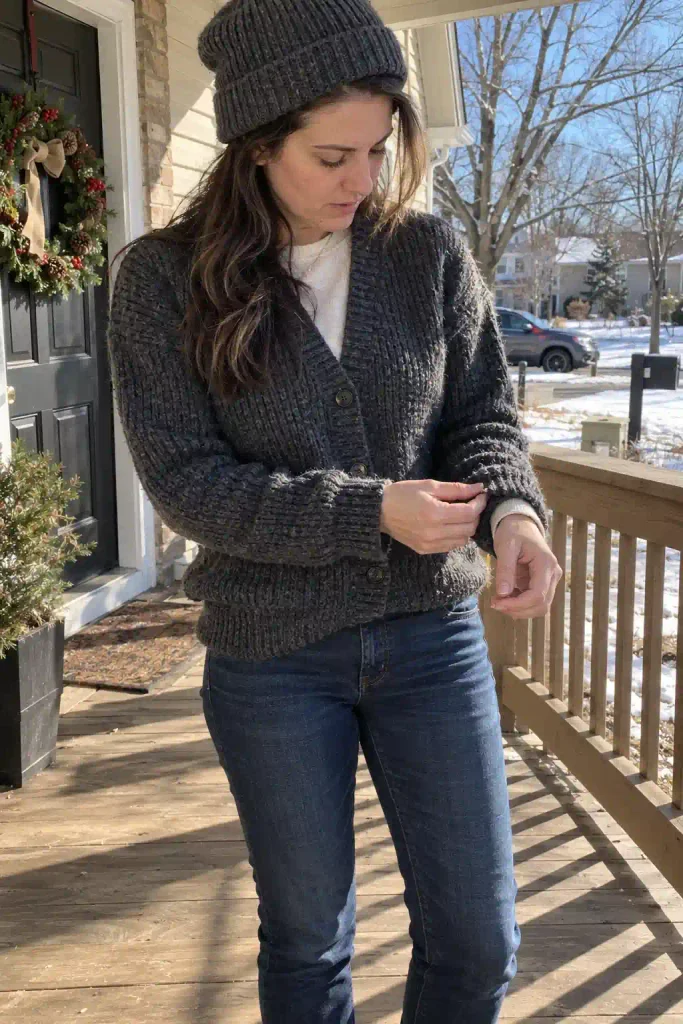
This is where your cardigan lives. A thick knit traps a pocket of warm air against your body, and that pocket does the actual heating. A flimsy cardigan lets that air escape.
Pick wool, a wool blend, or a dense cotton knit with some weight. Hold it up to a window. If you see a lot of light through the stitches, it won’t hold heat in a real freeze.
Outer layer: blocks wind and wet
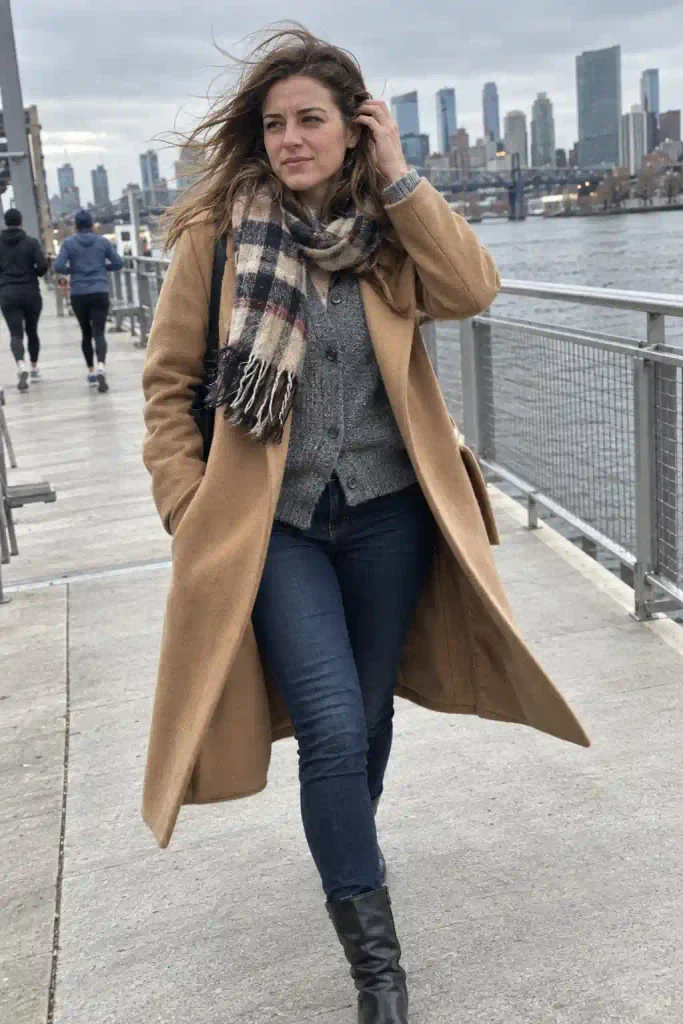
Wind strips heat off you faster than still cold air does. The National Weather Service publishes a wind chill chart that shows how brutal this gets. A 20°F day with a 20 mph wind feels closer to 4°F.
Your outer layer needs to stop that wind. A wool coat, a puffer, or a trench with a liner all work. The cardigan can’t do this job, so don’t ask it to.
Choosing the right cardigan for real cold
Not all cardigans earn a place in a winter outfit. I own about nine, and only four make it past December.
Fabric matters more than style
Here’s how the common fabrics perform when the temperature drops.
| Fabric | Warmth | Breathability | Best for |
|---|---|---|---|
| Merino wool | High | High | Daily wear, long commutes |
| Cashmere | High | Medium | Dressy days, office |
| Cotton knit | Low | High | Mild days, indoor layering |
| Acrylic blend | Medium | Low | Budget buys, casual days |
Merino wins for me. Cashmere feels incredible, but I snagged my first one on a door handle within a week, and I still think about it. Acrylic looks fine on a hanger and then makes you sweat in a heated room.
Fit and length

Pick a cardigan with enough room to fit a base layer underneath. Too tight, and you squash the trapped air that keeps you warm.
Length changes the whole look. A cropped cardigan with high-rise jeans gives you that clean, balanced Pinterest proportion.
A longline cardigan, hitting mid-thigh, adds warmth over your hips and looks great with slim or straight jeans.
Button style and neckline
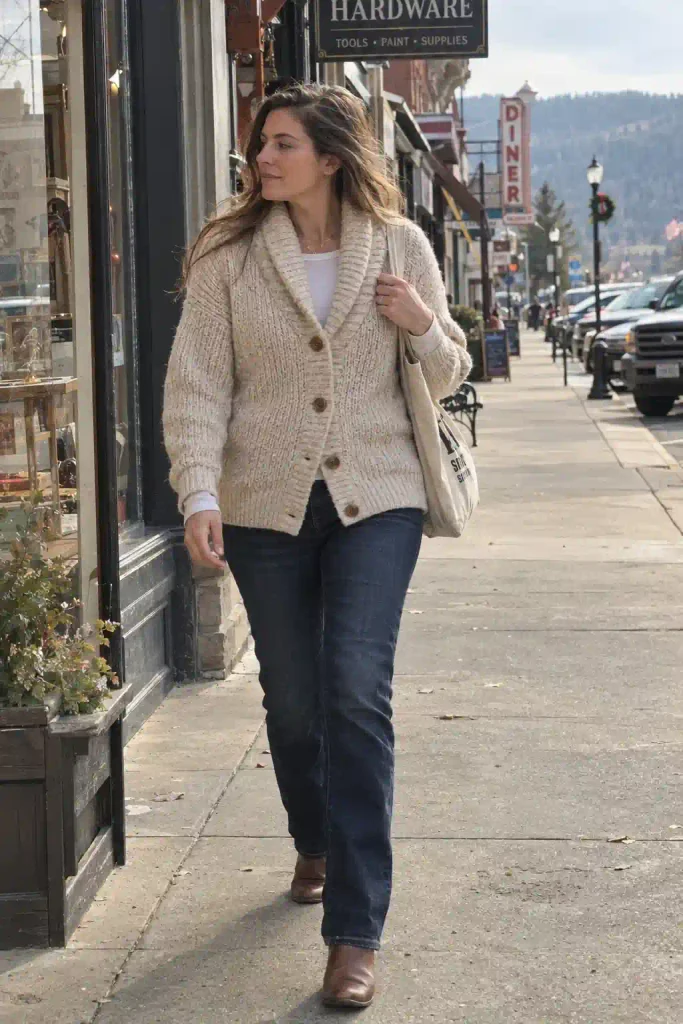
Chunky shawl collars protect your neck better than a V-neck.
Big buttons close tighter than tiny ones, and a belted wrap cardigan seals out drafts best of all. I button mine to the second button from the top and call it done.
Picking jeans that survive freezing weather
Jeans get ignored in most winter style guides, which seems odd, since they cover half your body. Thin denim in 20°F weather feels like wearing a wet paper bag.
Weight and lining
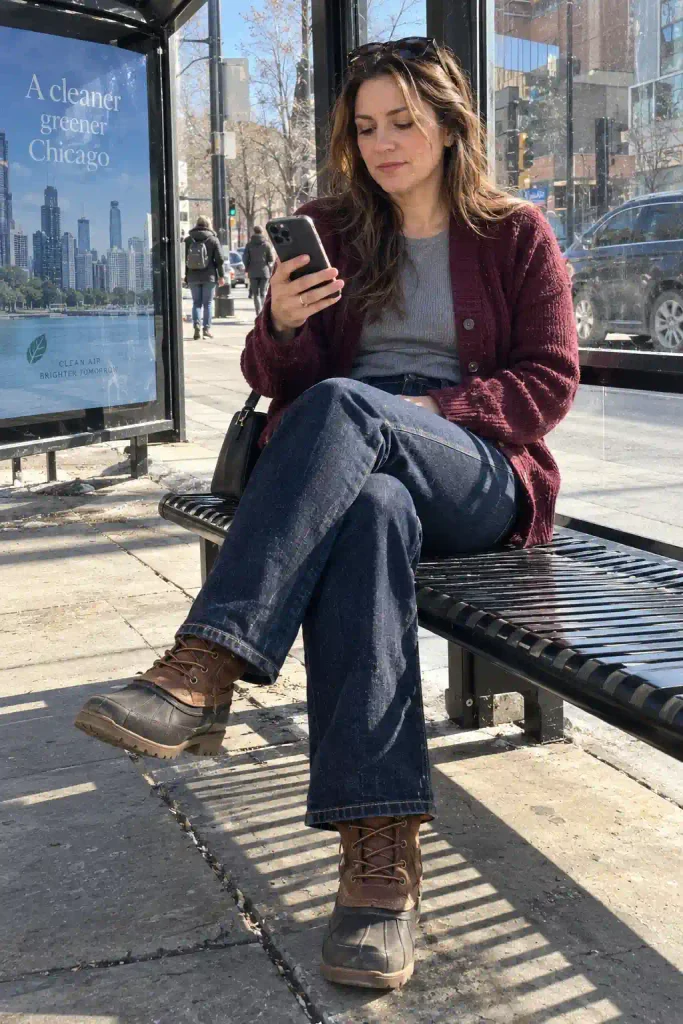
Look for heavyweight denim (12 oz or more) if you walk outside a lot. Fleece-lined jeans exist, and honestly, I resisted them for years because I assumed they’d look bulky. They don’t. Good ones look like regular jeans and feel like a hug.
Fit that works with layers
Straight leg and wide leg jeans leave room for thermal leggings underneath.
Skinny jeans work too, but you’ll need a thinner base layer, because stacking thick leggings under tight denim cuts your circulation, and cold feet follow.
A slight bootcut or straight leg also fits over ankle boots without bunching, which matters if you like clean lines in your outfit photos.
Color choices that photograph well

Dark indigo and black jeans pair with nearly any cardigan color. Light wash denim looks fresh against cream and oatmeal knits, but shows slush and salt stains fast.
I learned that the hard way after one trip through a parking lot.
Real outfit formulas to save
These are the combinations I come back to every season. Each one works at a different temperature range.
Formula 1: The commuter (30°F to 40°F)
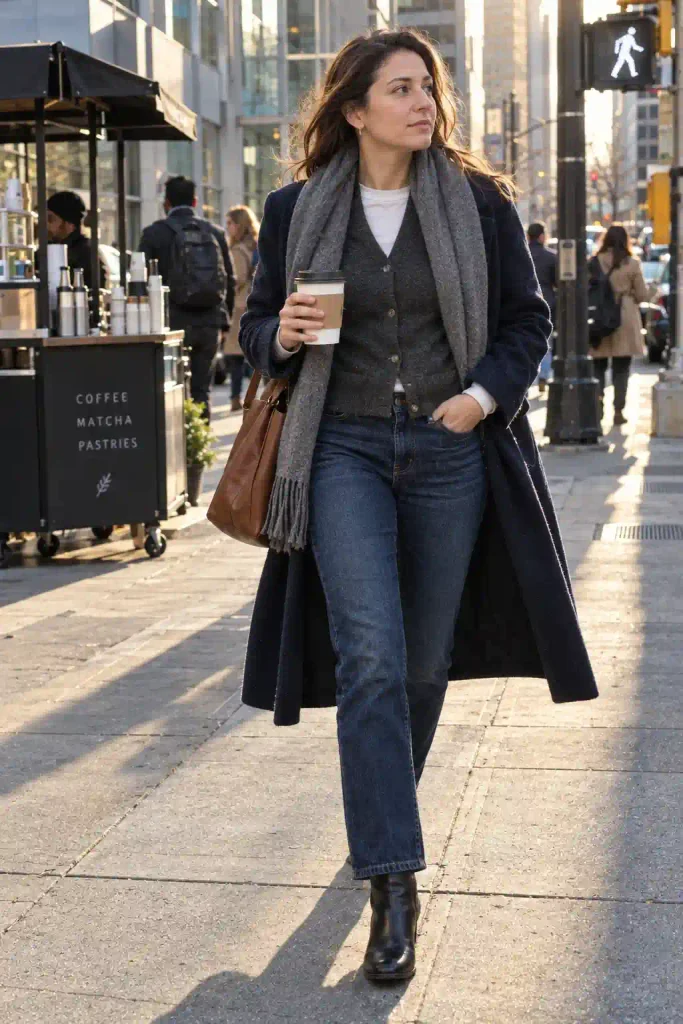
- Thin merino long sleeve in white or gray
- Mid-weight charcoal cardigan, buttoned
- Dark straight leg jeans
- Wool coat, scarf, ankle boots
This is my default. It looks polished, and it keeps me warm from the front door to the office.
Formula 2: The weekend wanderer (20°F to 30°F)
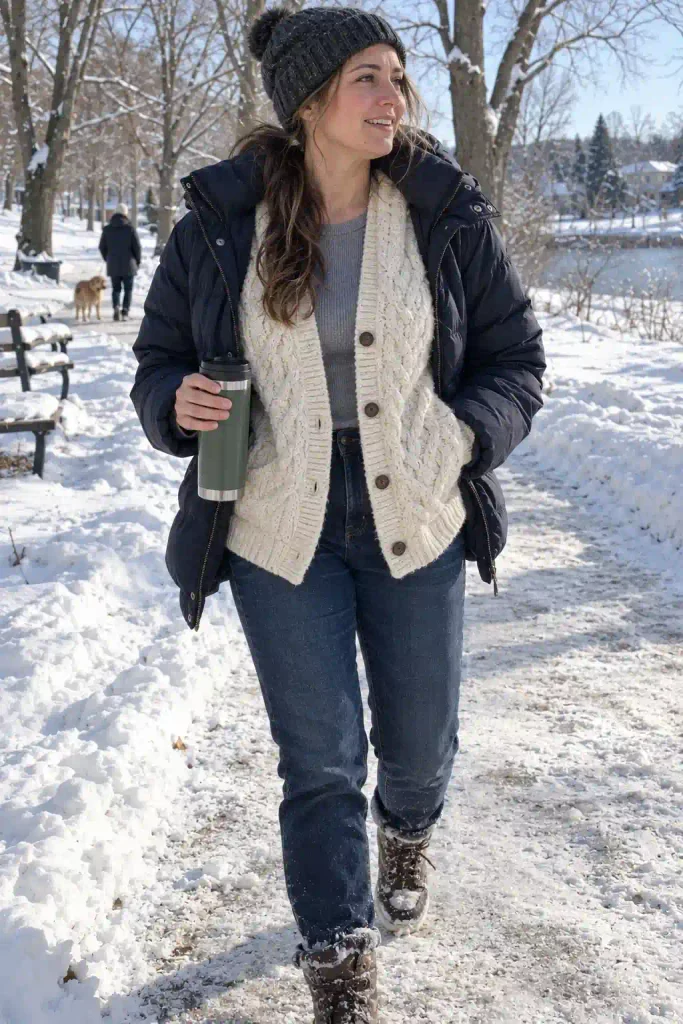
- Fitted thermal top
- Oversized cream cable knit cardigan
- Fleece-lined jeans
- Puffer jacket, beanie, waterproof boots
IMO this is the best Pinterest-ready look on the list. The cream cardigan against a dark puffer photographs beautifully in snow.
Formula 3: The deep freeze (below 20°F)
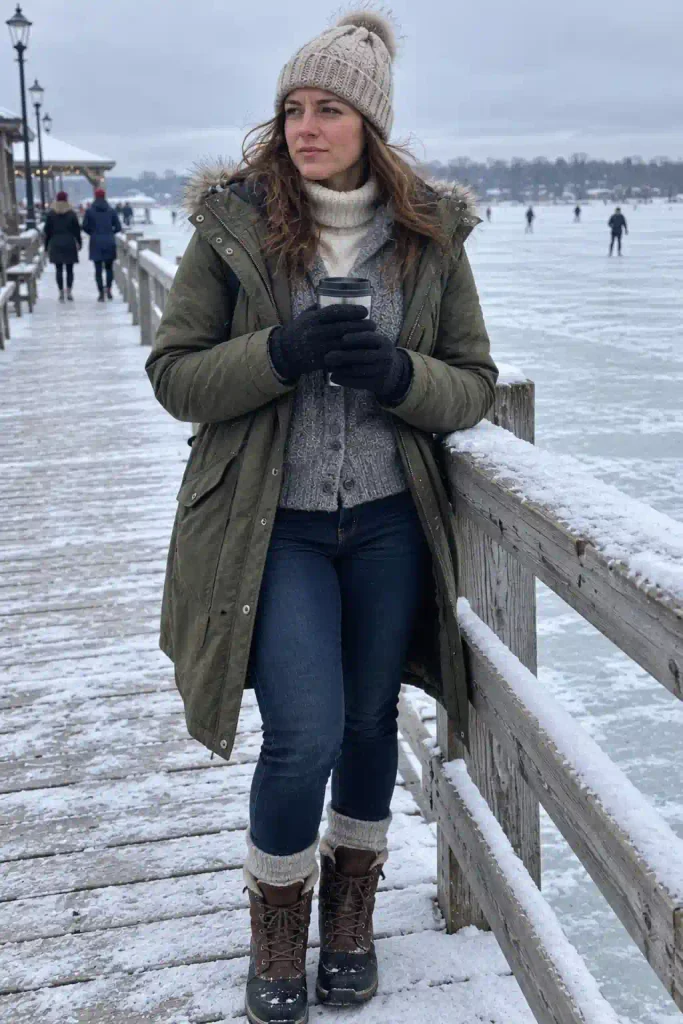
- Merino base layer, long sleeve
- Wool turtleneck
- Chunky cardigan over the top
- Thermal leggings under heavyweight jeans
- Long parka, wool socks, insulated boots
Yes, it looks like a lot. It’s also the only version that keeps me comfortable when the wind picks up.
Wow, the first time I wore all of it, I wondered why I’d suffered through so many cold winters before.
Colors and textures that look good together
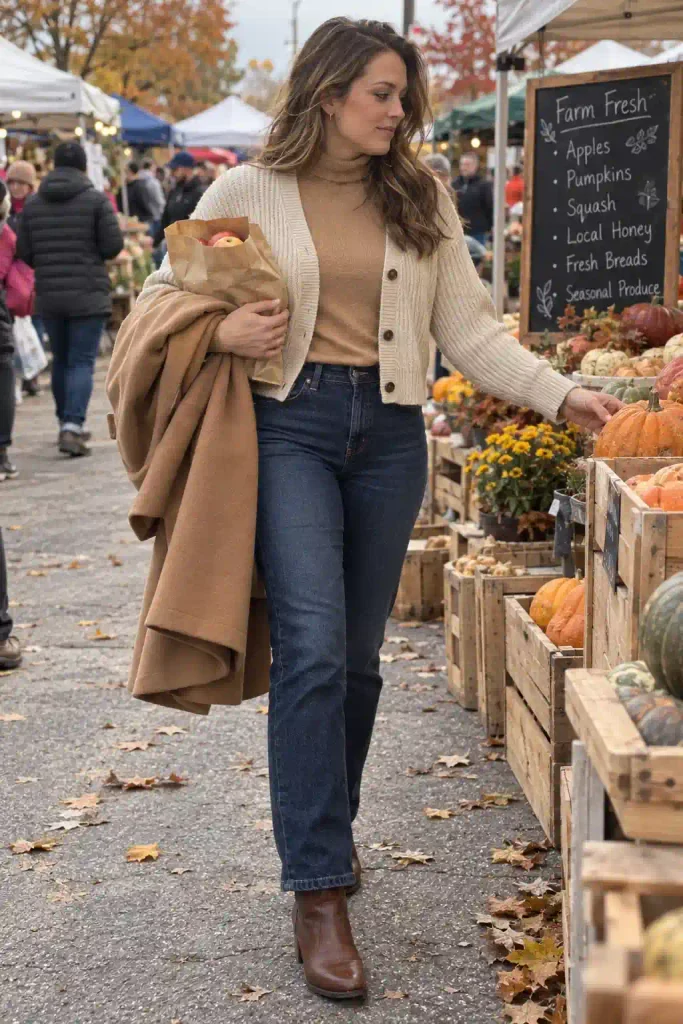
Pinterest rewards tonal outfits, and I get why. A palette of oatmeal, camel, and chocolate brown looks calm and expensive.
Add a black or navy anchor piece, such as your jeans or boots, and it grounds everything.
Texture adds depth without adding color. Mix a smooth wool coat with a ribbed cardigan and a flat denim. The eye picks up the contrast, even when the colors match.
Bright colors work too. A mustard or forest green cardigan against dark denim looks great on a gray, flat winter day.
I wear my rust cardigan more than any other, mostly because it cheers me up.
Accessories that pull the look together
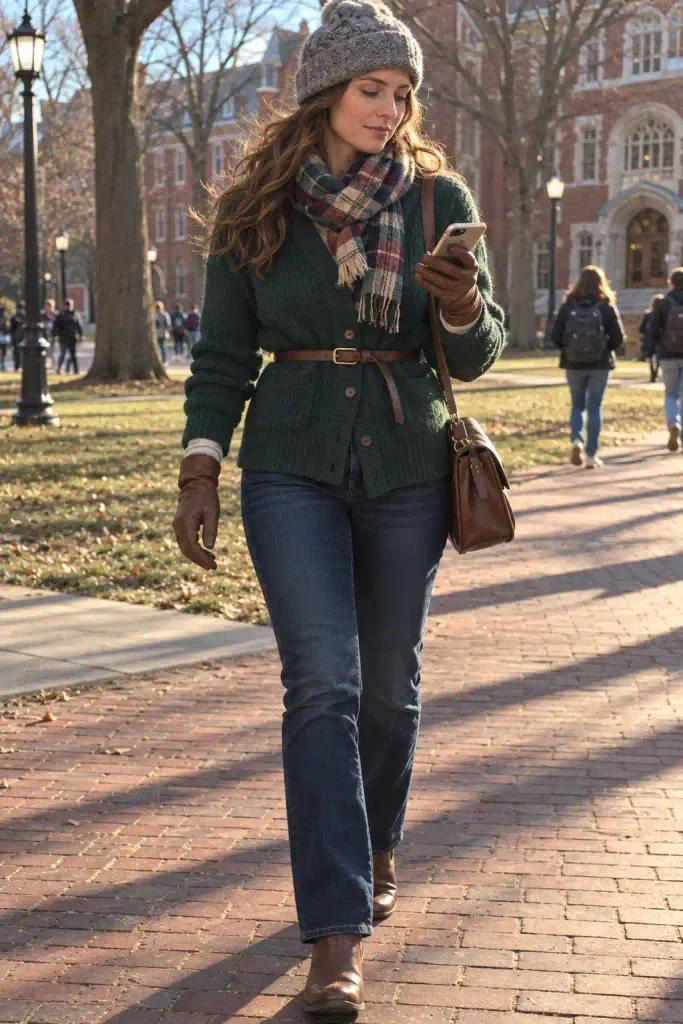
A good scarf adds warmth and breaks up the neckline. A beanie or wool hat keeps your head warm, since heat escapes through it.
Leather gloves, a belt over the cardigan, and a structured bag finish things off.
A quick aside about hot drinks
This has nothing to do with layering, but I can’t write about winter outfits without mentioning that a thermos changes your whole relationship with cold weather.
I carry one everywhere from November to March.
Holding something hot warms your hands, and your core follows. Okay, back to clothes.
Common mistakes that leave you cold
I’ve made all of these, so no judgment here.
- Wearing cotton against your skin. It soaks up sweat and chills you. Switch to wool or a synthetic blend.
- Skipping the wind layer. A cardigan alone won’t stop a gust. Add a coat.
- Buying too tight. Compressed layers lose their insulating air. Size up a little.
- Forgetting your feet. Cold toes ruin the whole day. Wool socks and insulated boots matter more than another sweater.
- Layering for the walk, not the destination. You’ll overheat indoors. Choose a cardigan you can peel off in a heated room without ruining the outfit underneath.
The last one bites me every time. I still wear one layer too many on days that start cold and end warm :/
Quick reference table
This table sums up what to wear at different temperatures.
| Temp range | Base layer | Mid layer | Outer layer |
|---|---|---|---|
| 35–45°F | Cotton tee | Light cardigan | Trench or jacket |
| 25–35°F | Thin merino | Wool cardigan | Wool coat |
| 15–25°F | Merino + tee | Chunky cardigan | Puffer or parka |
| Below 15°F | Thermal set | Turtleneck + knit | Insulated parka |
Save this one to your phone. I screenshot it every year and forget I own it.
Frequently asked questions
Can I wear a cardigan as my only top layer in winter?
Only on mild days, around 40°F or above, and only if it’s heavy wool. Below that, you need a coat over it. A cardigan traps warmth but doesn’t block wind.
What’s the best color cardigan for dark jeans?
Cream, camel, and gray all work well, and they photograph nicely too. If you want some color, try forest green, burgundy, or rust. Black on black looks sleek but can read flat in photos.
How do I stop my cardigan from pilling?
Wash it inside out on a gentle cycle, or hand wash it. Dry it flat, and use a fabric shaver once or twice per season. Wool blends pill less than pure acrylic, in my experience.
Final thoughts
A jeans and cardigan outfit works in real cold when you respect the layers.
start with a base that moves moisture, add a heavy knit that traps warm air, and finish with a coat that blocks wind.
Do that, and you’ll look as good as any pin on your board, and you won’t freeze on the train platform like I did.
If you want more reading on the fundamentals, REI’s layering guide covers the technical side in depth.
