Yes, you can wear a trench coat in July. No, you won’t melt. I know how that sounds. Every July, my group chat fills with the same eye-roll emoji when I pull my beige trench off the hook.
But I’ve worn one through 34°C city afternoons, a humid weekend in Lisbon, and more rooftop dinners than I can count, and I’m still here and still dry-ish.
The trick is picking the right coat and building the right outfit around it.
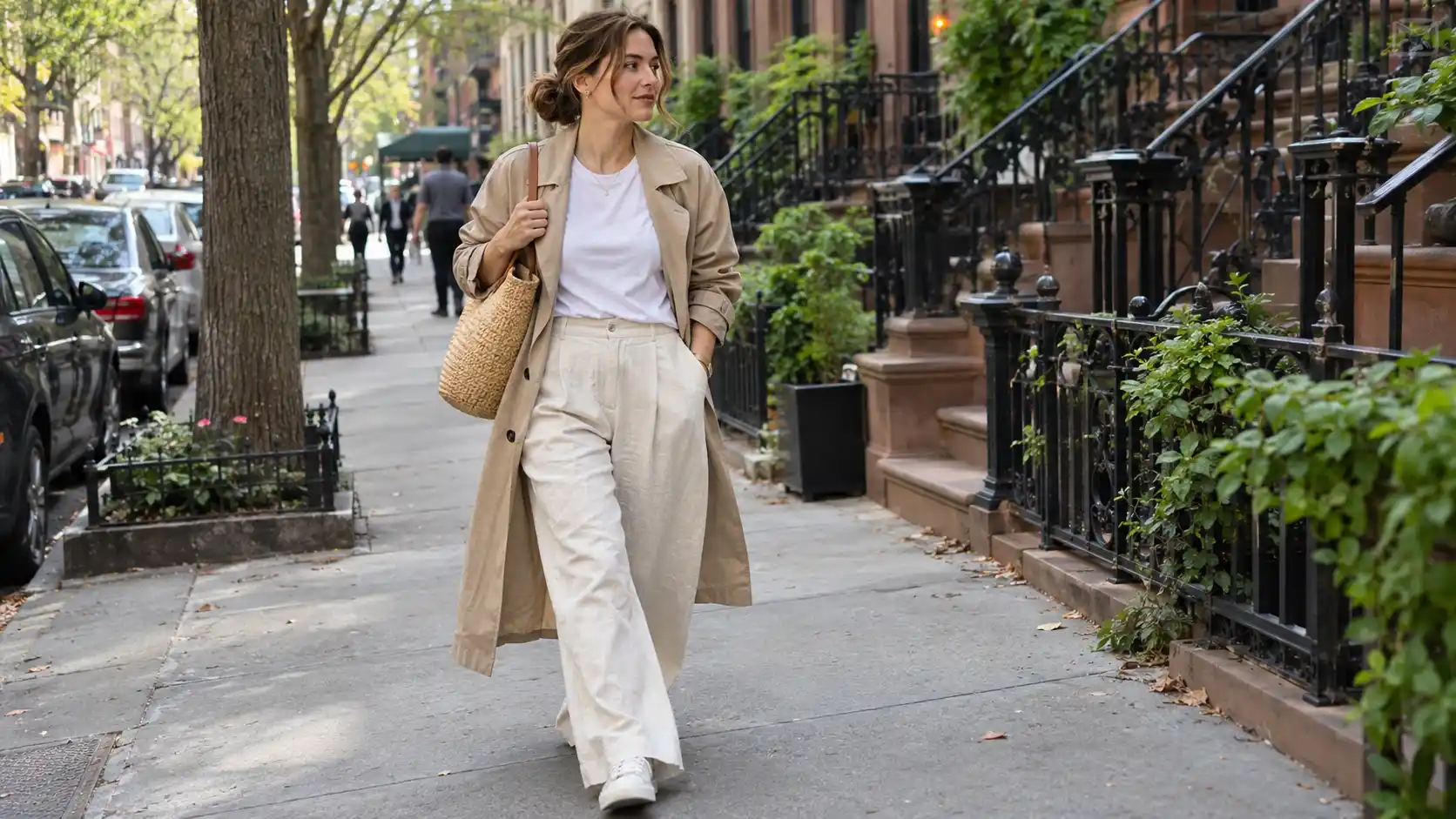
If you scroll Pinterest for summer trench coat outfits, you’ve seen the look: a soft, slouchy coat over a white tee, wide-leg linen trousers, a straw bag, and that “I just woke up like this” confidence.
This guide shows you how to copy it without wilting. We’ll cover fabrics, cuts, layering, six outfit formulas, color choices, and a few heat tricks I learned the sweaty way.
Why a trench coat in summer makes more sense than you think
A trench coat started life as a practical piece of outerwear. The trench coat has military roots, and the original designs earned their reputation by shrugging off rain and wind.
That history matters for summer, because a coat built to handle weather also handles surprise weather.
Think of a cool evening, an air-conditioned office, a sudden downpour, or a long flight.
Here’s the thing about summer dressing that nobody on a fashion forum admits: the temperature swings more than the forecast suggests.
You step out at 8 a.m. in a breeze, bake at noon, then freeze in a restaurant with the AC set to “arctic research station.” A light trench handles all three.
I’d argue it works harder than a denim jacket and looks better doing it.
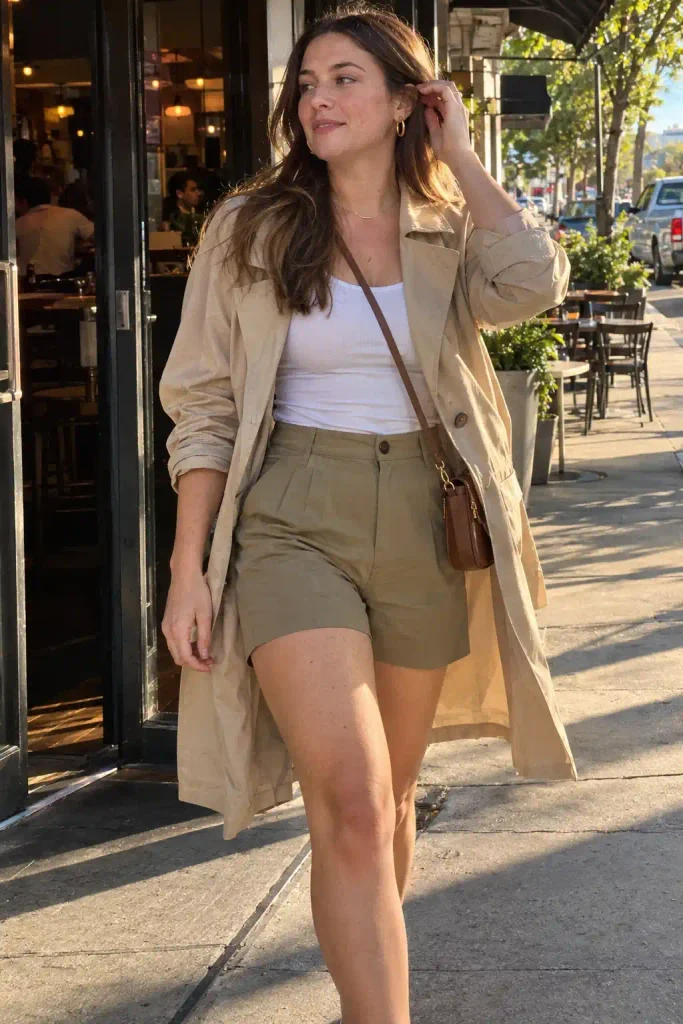
There’s also the visual payoff. A trench adds structure to a relaxed summer outfit. A tank top and shorts look fine; the same tank top and shorts under an open, lightweight trench look like a deliberate choice.
Pinterest boards prove this over and over, which is probably why searches for summer trench looks keep climbing every year.
So the question isn’t whether a trench coat belongs in summer. The question is which one, and how you wear it.
Pick the right fabric first
Fabric decides everything. A heavy cotton-twill trench that works in October will make you miserable at 28°C, no matter how cute your sandals are.
I learned this at a street market in Delhi with a borrowed coat and a very bad idea.
The fabrics that work
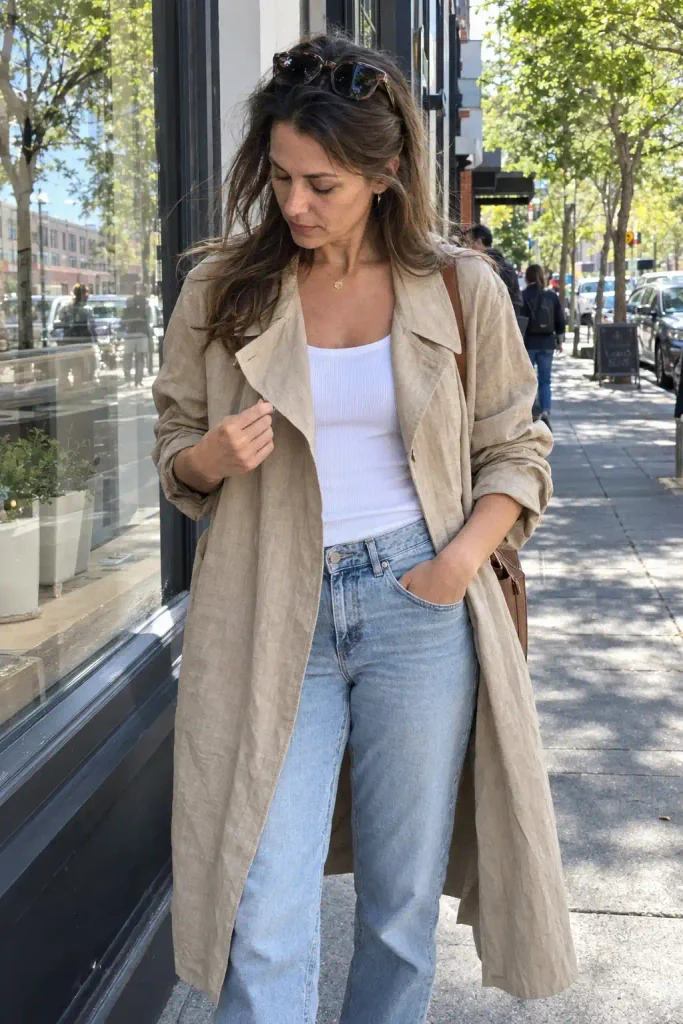
Linen and linen blends are my first pick. Linen breathes, dries fast, and wrinkles in a way that looks intentional rather than sloppy.
A linen trench in sand or stone is the most convincing summer coat I’ve owned. Pure linen creases hard, so I lean toward a linen-cotton or linen-viscose mix, which keeps the airy feel with fewer folds.
Lightweight cotton poplin or gabardine comes next. It holds a crisper shape than linen and still lets air through if the weave is thin.
Hold the fabric up to a window. If you can almost see light through it, it will probably feel fine in warm weather.
Tencel (lyocell) and viscose give you a drapey, silky feel. These coats hang beautifully and feel cool against bare arms.
They wrinkle less than linen, which makes them a good travel option. The downside is that viscose can cling when you sweat, so I wear it only on dry-heat days.
The fabrics to skip
Polyester gabardine with a full lining traps heat like a thermos. Same goes for anything with a quilted lining, a wool blend, or a storm flap that stacks three layers across the shoulders.
IMO, if the tag says “water-repellent finish,” expect a sauna.
Quick fabric comparison
| Fabric | Breathability | Wrinkle level | Best summer use |
|---|---|---|---|
| Linen blend | High | Medium-high | Hot, dry days |
| Light cotton poplin | Medium-high | Medium | City errands, office |
| Tencel or viscose | Medium | Low | Travel, evenings |
| Polyester gabardine | Low | Low | Rainy, cool days only |
I wore a polyester one for a whole week in June once. My skin never forgave me. Ever wonder why some people look cool in a coat while you feel like a baked potato? Usually the answer is the fabric tag.
Pick the right cut and length
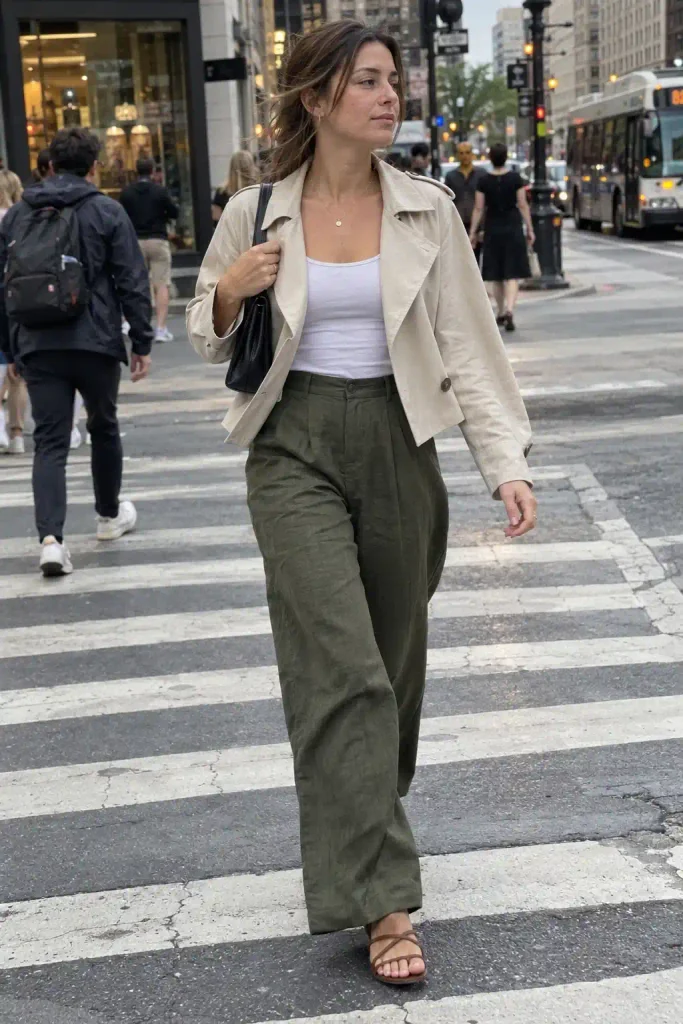
Once the fabric passes the window test, look at the cut. A summer trench should skim your body rather than grip it.
Tight sleeves and a cinched waist trap heat against your skin, while looser shapes let air move.
Length
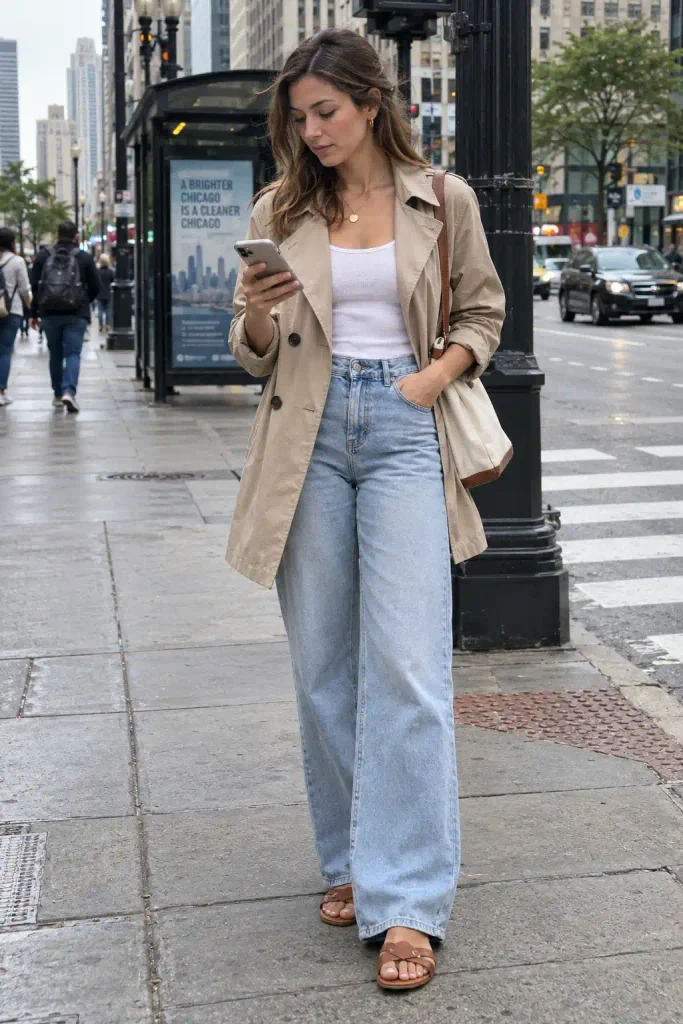
Three lengths work in summer, and each does a different job:
- Cropped (hip length): Shows off high-waisted bottoms and keeps your torso cooler. I find these hard to layer over longer tops, so I wear mine with fitted tanks.
- Mid-thigh: The sweet spot for me. It covers enough to feel like a real trench and leaves your legs free to breathe.
- Knee or midi length: The most dramatic option on Pinterest and the hottest in real life. It looks incredible with a slip skirt, and I’d only wear it in the evening.
Sleeves and collars
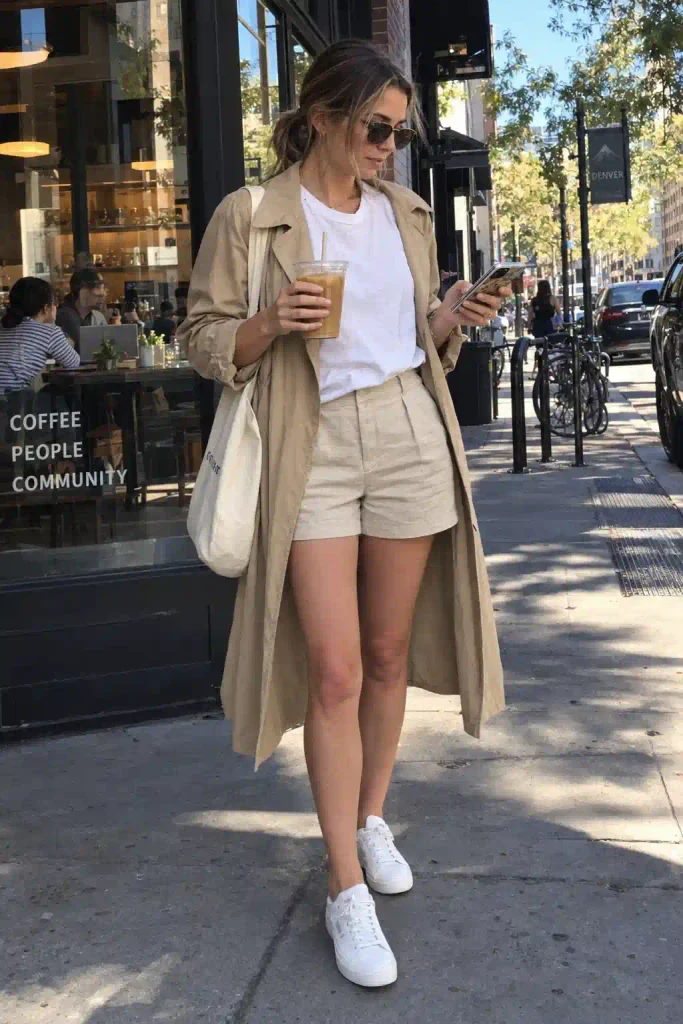
Short-sleeve or three-quarter-sleeve trenches exist, and I own one. It looks a little unusual at first, but it saved me during a 31°C afternoon in London last summer.
If you find one, buy it. Otherwise, roll the sleeves to your elbow and pin them with the built-in tab. Those little sleeve straps have a purpose after all.
Skip the big epaulettes and the heavy storm flap if you have the choice. Extra fabric at the shoulders adds weight, and weight adds heat.
A clean, simple collar looks better with relaxed summer outfits anyway.
Wear it open, draped, or tied
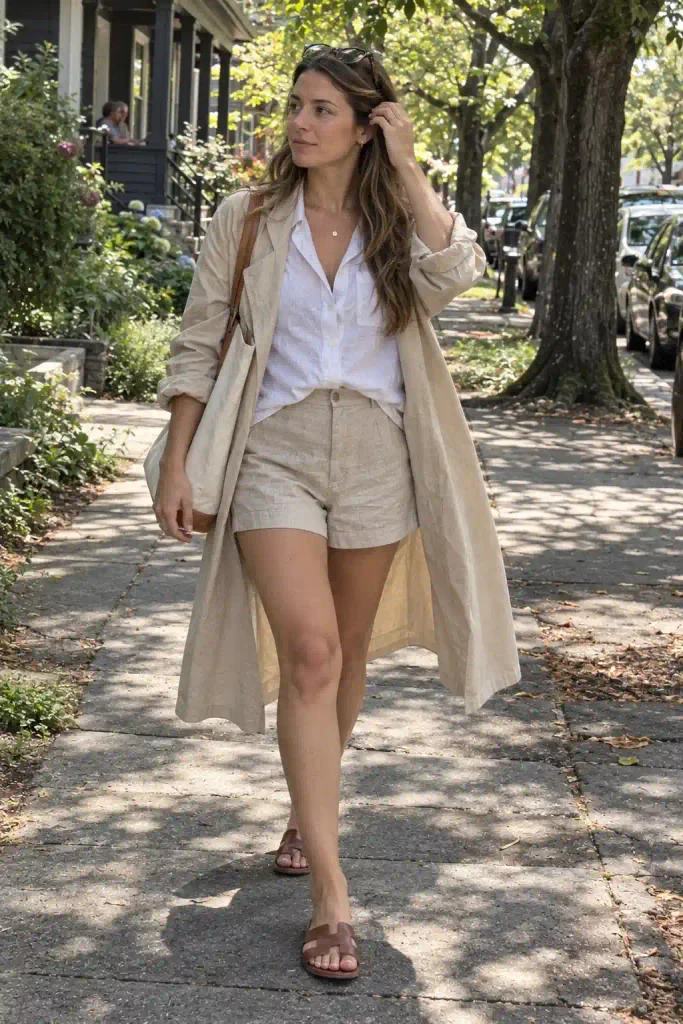
How you wear the coat matters almost as much as what it’s made of. I rarely button mine in summer, and I never fasten the belt in the usual way.
Open and loose
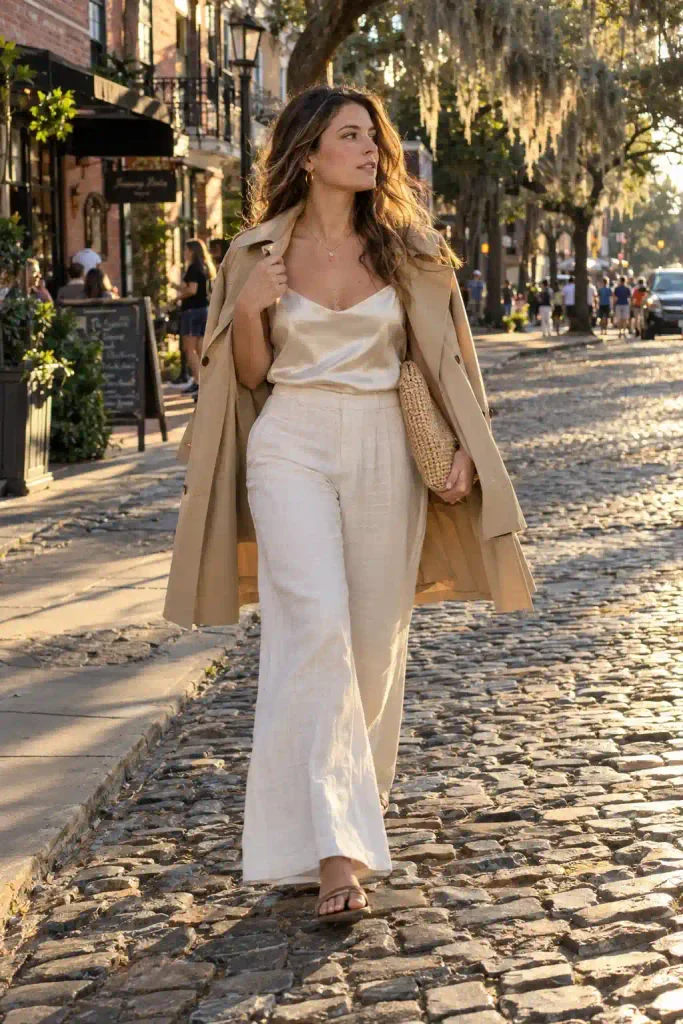
Leave it fully open and let it hang. Air moves through the front, and the coat frames your outfit like a long cardigan.
This is the look in about 70% of the summer trench photos I save.
Draped over the shoulders
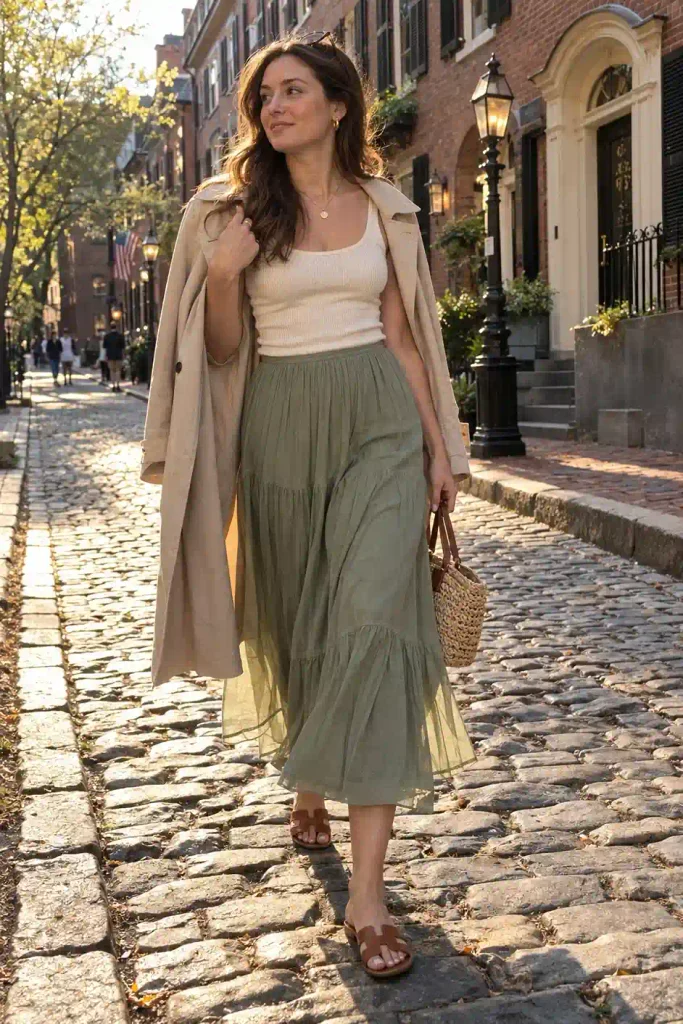
Drape it over your shoulders without using the sleeves. It looks polished and keeps your arms bare.
The only catch is that it slides off if you walk fast, so I hook one finger through the collar loop. Wow, does this look expensive on a cobblestone street.
Belt tied behind or at the waist
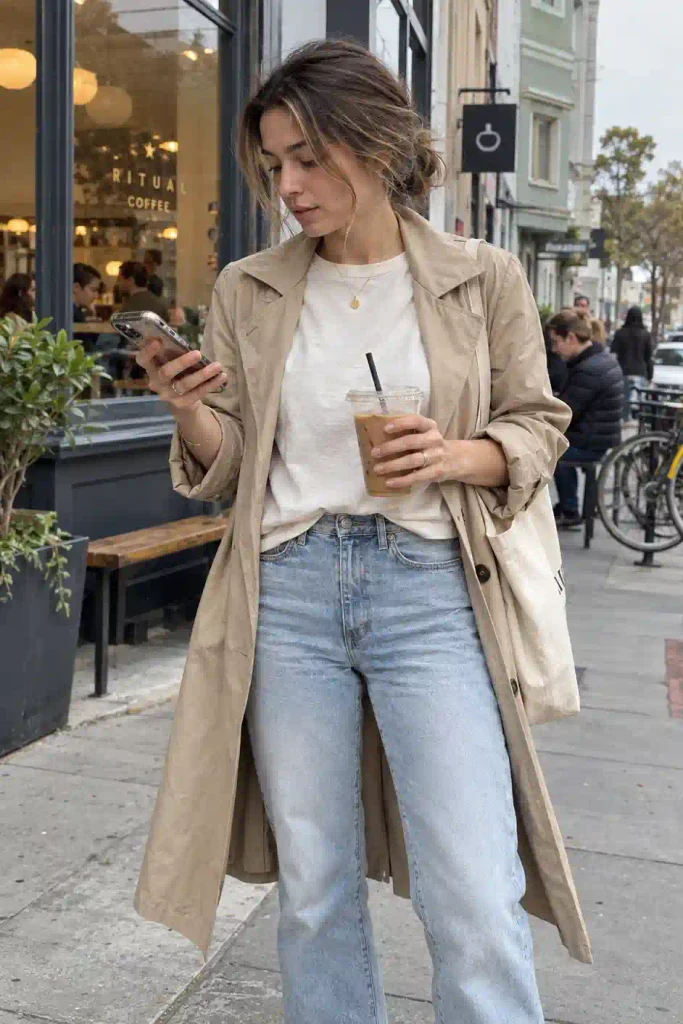
Tie the belt in a loose knot at the back, or thread it through the loops and knot it at the front without cinching.
This gives you shape without squeezing. I tie mine behind me when I want my hands free for coffee and a phone.
Tossed over your arm or bag

On the hottest days, carry the coat. Fold it over your forearm or hang it from your tote handle.
You still get the look in photos and the benefit once the sun goes down. Sure, it feels slightly silly in the middle of the afternoon. The evening version of you will feel very smart.
What to wear underneath
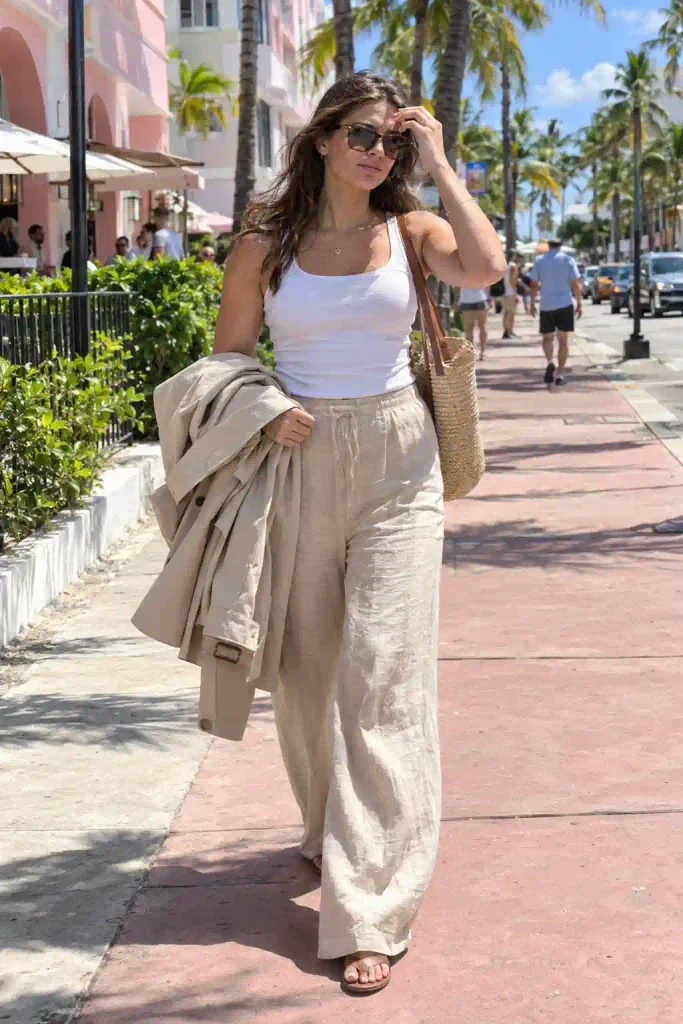
Under the coat, the rule is simple: wear less than you think you need. The trench provides the structure, so the pieces under it can stay light.
Tops
My go-to tops for hot days:
- A fitted cotton tank or ribbed singlet in white, cream, or black
- A loose linen button-up with the sleeves rolled
- A soft, boxy tee in pima cotton (it stays cooler than polyester blends)
- A silk or satin camisole for dressier evenings
Dark, heavy tops soak up sun and heat. Light colors reflect it. I swapped my black tees for off-white ones last year and noticed the difference within a week.
Bottoms
Wide-leg linen trousers are the star of my summer closet. They let air circulate around your legs, and they pair with a trench like peanut butter pairs with jam.
Bike shorts and tailored shorts also work if you want a youthful, sporty edge. Midi skirts in flowy fabrics like cotton voile or rayon challenge the whole “heavy coat” idea in the best way.
Skinny jeans are a hard no for me in summer. They hold heat, they stick, and they make the trench look stiff. If you love denim, pick a light-wash straight leg or a wide-leg cut in a thin cotton weave.
Six summer casual trench coat outfits to save to your board
Here are the formulas I return to again and again. Each one works with a lightweight trench in a neutral tone.
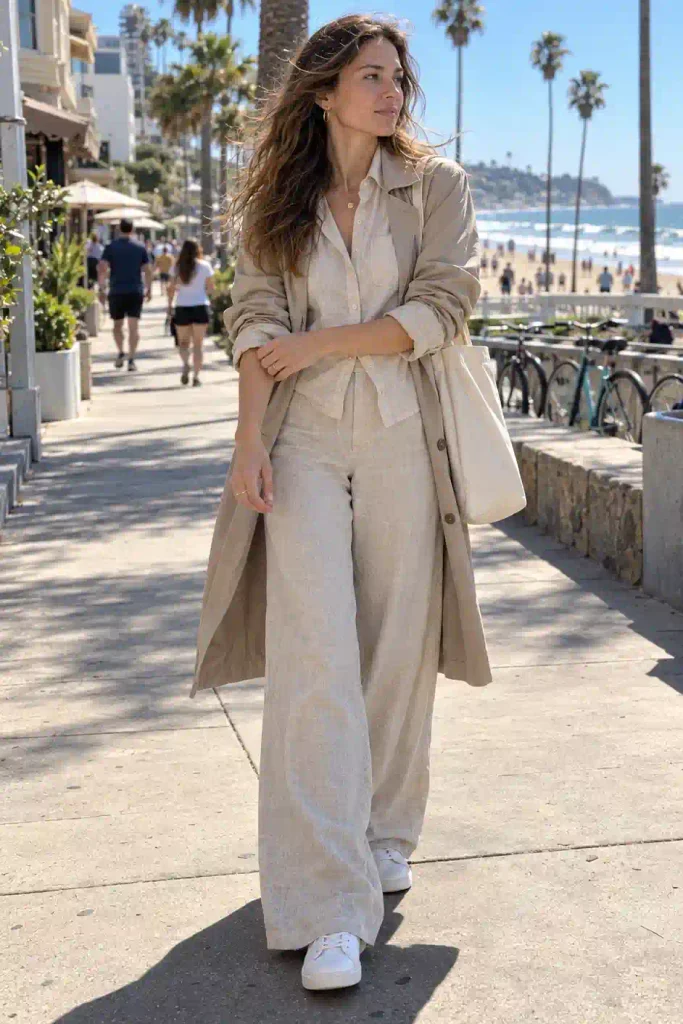
- The linen set. Wear a matching linen shirt and wide-leg trousers under an open stone trench. Add white sneakers and a canvas tote. This one looks like a vacation and feels like pajamas.
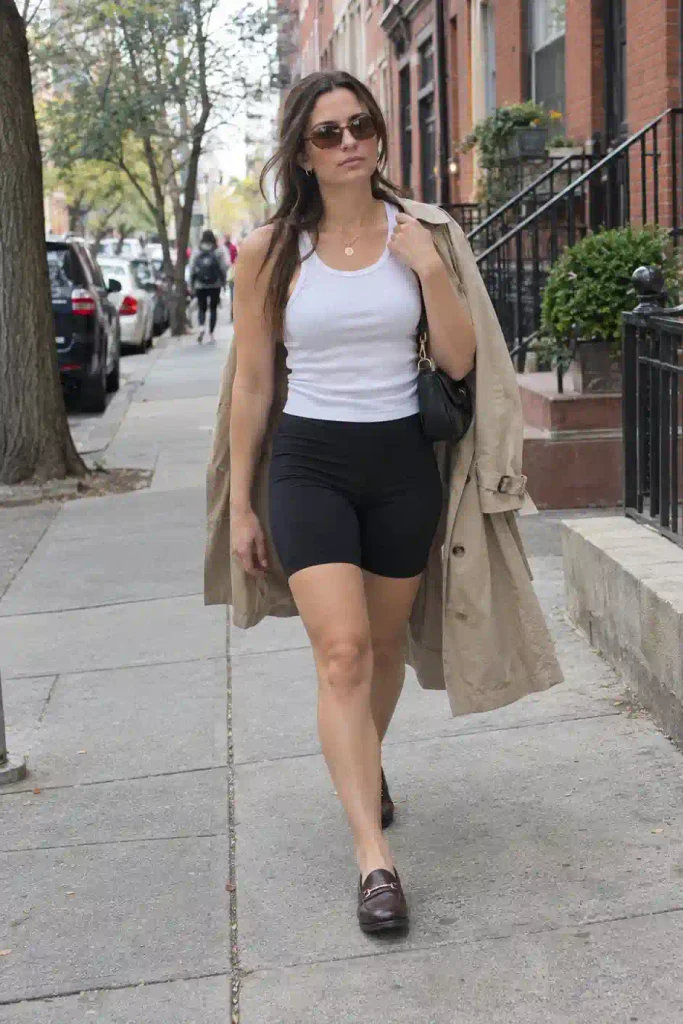
- Tank and bike shorts. Pair a ribbed white tank with tailored black bike shorts, loafers, and a draped beige trench.
I think this is the coolest looking option on a warm day, because your legs stay bare and the coat does the heavy lifting.
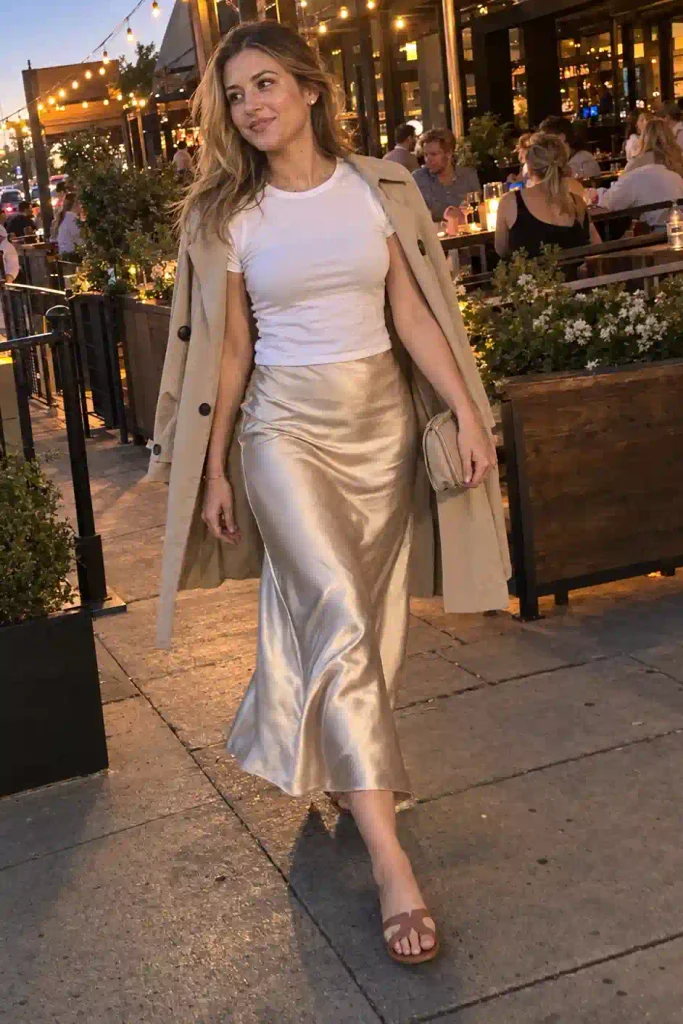
- Slip skirt and tee. Wear a satin midi skirt, a fitted baby tee, and flat sandals. Throw the trench over your shoulders. My honest opinion: this beats any dress for a summer dinner.
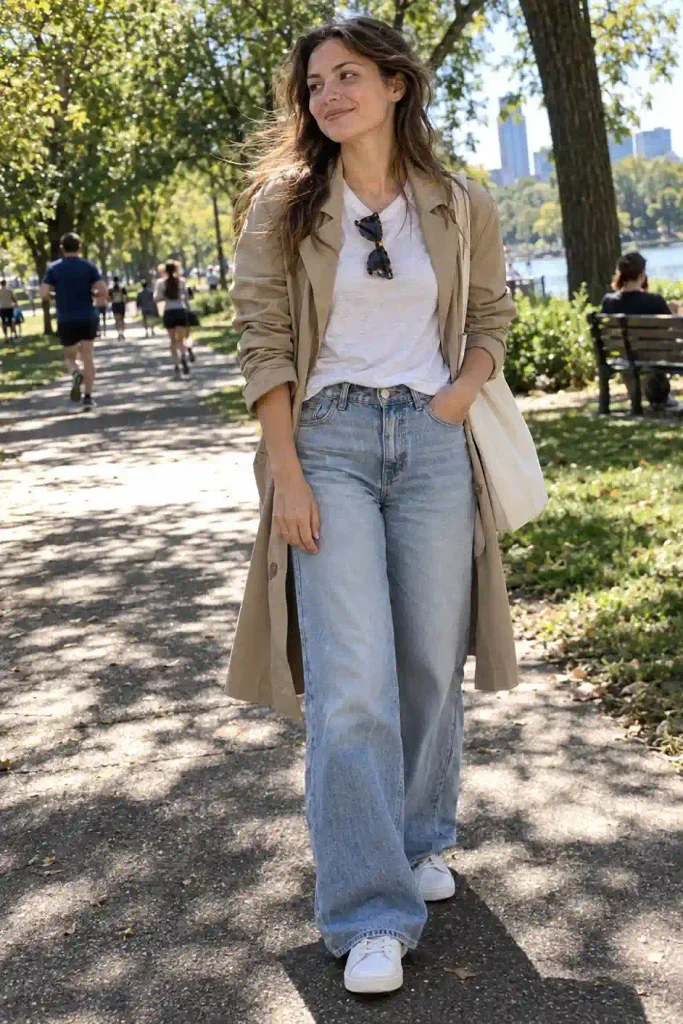
- Denim and white. Combine light-wash wide-leg jeans, a white tee, and a khaki trench with the sleeves pushed up.
It’s the easiest outfit on this list, and you probably own most of it already.
- Sundress and sneakers. Layer a short cotton sundress under an open trench, then wear clean sneakers. The coat breaks up the sweetness of the dress and adds a little attitude.
- Airport mode. Wear a soft jersey tank, relaxed joggers in a thin fabric, slip-on sneakers, and a trench you can fold into your carry-on. I do this on every flight, and the coat doubles as a blanket.
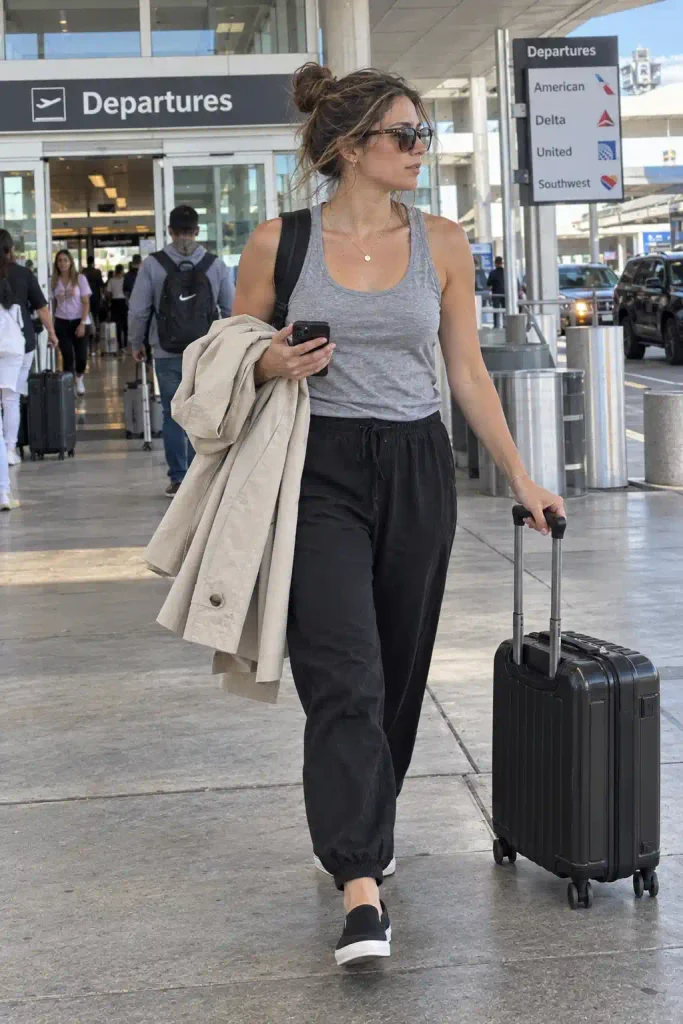
Number 2 is my favorite, and number 6 is my laziest. Which one would you pin first?
Color palettes that look cooler
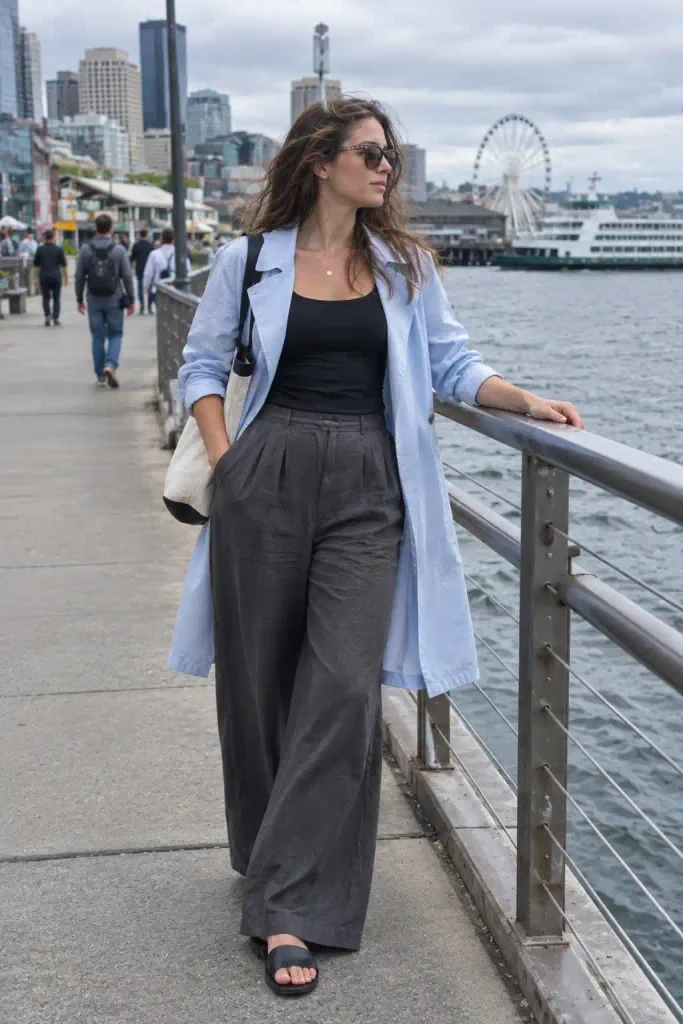
Color changes how hot you feel and how an outfit photographs. On Pinterest, the summer trench pins that perform best lean on soft, sunbaked neutrals.
- Stone, sand, and oatmeal: These feel warm in tone but light in weight. They reflect heat and match nearly everything.
- White and ivory: A white trench looks fresh and crisp, though it shows every coffee spill. I own one and regret nothing (okay, I regret one iced latte).
- Pale blue or sage: Cool-toned pastels look refreshing in the heat and stand out in a sea of beige.
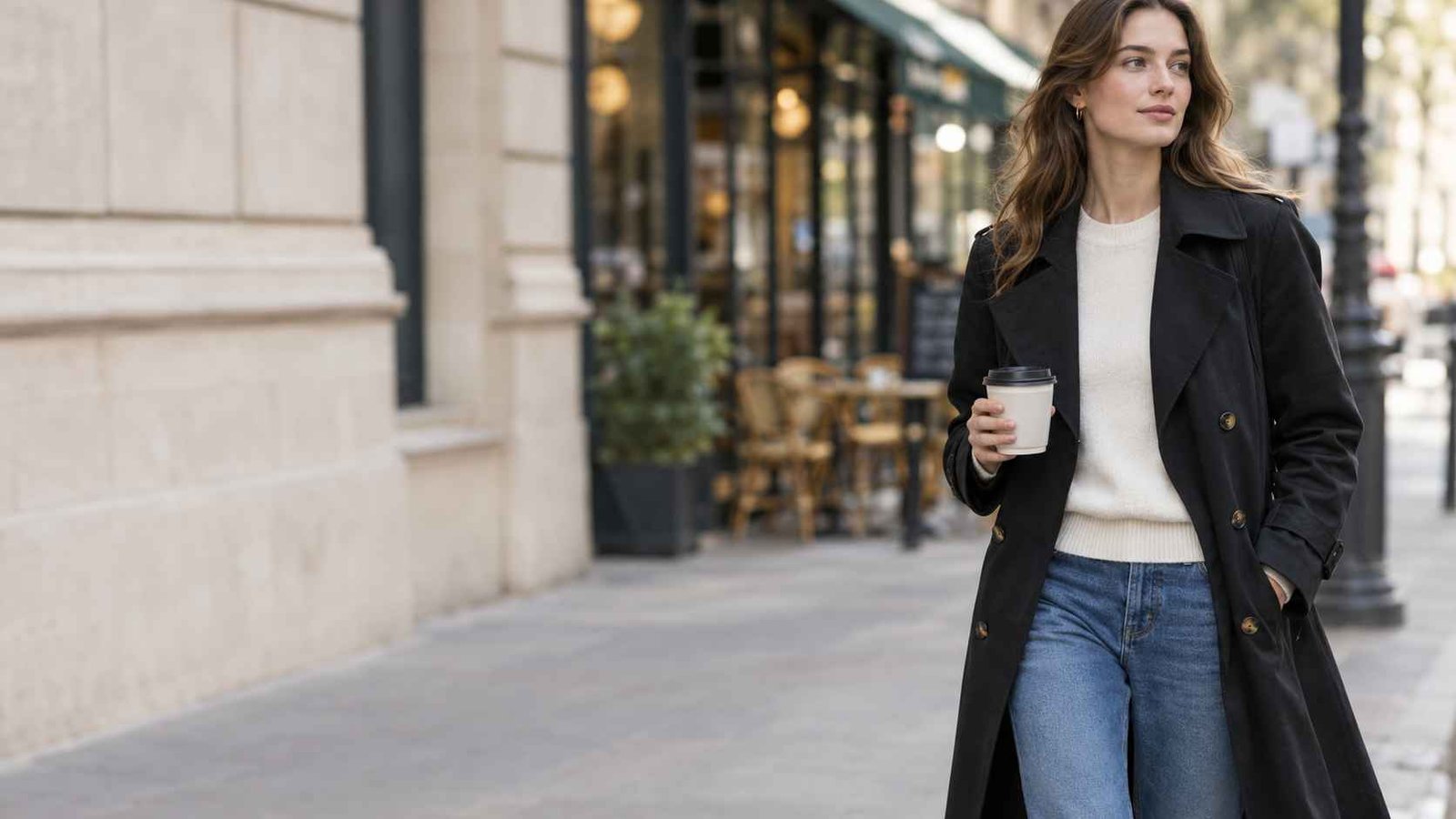
- Black: It absorbs heat, yes. Still, a thin black trench worn only in the evening looks sharp and stays practical.
If you want a rule, keep the coat lighter than 50% of the outfit’s colors. A pale trench over a dark base looks balanced and keeps the heat down.
A small tangent about trench coat colors and my grandmother
My grandmother wore a pale camel trench every monsoon season, and she folded it into a tiny square after every rain.
I swear that coat lasted 30 years. I’m not sure she cared about fashion, but she cared about a good coat, and I think that attitude explains why I buy fewer and better pieces now.
Shoes and bags
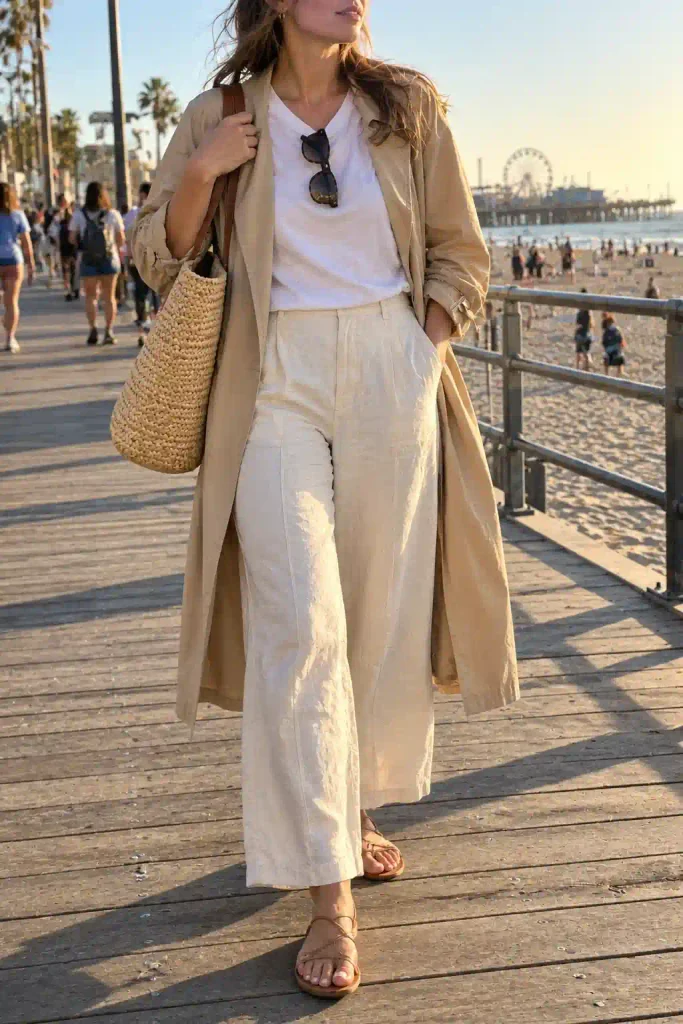
Footwear can shift an outfit from “sweating through it” to “put together.” For summer trench looks, I reach for open or airy shoes.
Flat sandals (leather slides, thin-strap sandals) keep your feet cool and pair well with long, drapey coats.
Loafers without socks give a polished, slightly preppy edge. Canvas or leather sneakers keep things casual, and espadrilles match the beachy feel of linen.
Heavy boots and chunky platforms add heat and weight, so save them for fall.
For bags, I like a straw tote or a soft canvas shoulder bag. A structured leather bag works too, but a woven option makes the whole look feel seasonal.
Keep the bag small if the coat is long, since too much volume makes the outfit look busy.
Add a pair of sunglasses and you’re done. Honestly, nothing else matters once you have good sunglasses.
Heat management tricks that actually work

Style tells you how to look cool. These habits tell you how to feel cool.
Dress for the time of day
Wear the trench for the morning commute and the evening, then carry it between 12 and 4. This sounds obvious, but I forget it every single summer.
A coat on your arm costs nothing; a coat on your back at 2 p.m. costs you your mood.
Use the right accessories
A small clip-on fan, a cooling towel, or even a damp scarf around your neck makes a larger difference than you’d expect.
I keep a thin cotton scarf in my bag and wet it at a water fountain when things get rough.
Hydrate and watch for warning signs
Fashion matters, but your body matters more. Drink water before you head out, and pay attention if you feel dizzy, nauseous, or unusually tired.
The NHS guidance on heat exhaustion and heatstroke lists the symptoms clearly, and the CDC’s heat health resources give practical tips for staying safe in high temperatures.
I’m not a medical professional, so check those sources if you plan to spend hours outside in serious heat.
Know your limit
If the forecast says 38°C and humid, skip the trench. No outfit deserves that kind of suffering.
A coat works best in the 18°C to 30°C range, where it adds style and a little shelter without cooking you.
Common mistakes to avoid
I’ve made nearly all of these. Learn from my sweat.
- Buying for the fabric’s label, not its feel. “Lightweight” on a product page sometimes means “lighter than our winter coat.” I now pinch the fabric in store or check reviews for the word “breathable.”
- Skipping the fit check with your arms raised. A coat that feels fine standing still can pull and bunch when you reach for a subway pole.
- Over-layering underneath. A coat plus a cardigan plus a scarf in July is a cry for help. Pick one extra layer at most.
- Ignoring wrinkles. Linen creases. Accept it, or steam it in the bathroom while you shower. I hang mine on the door and let the steam do the work.
- Matching everything. A beige coat, beige pants, and a beige bag can look chic or can look like a paper bag. Add one contrasting piece, like a white tee or a brown belt, to break it up.
How to find fresh trench coat inspiration on Pinterest
If you haven’t built a summer trench board yet, now is the time. Search for phrases like “linen trench summer outfit,” “beige trench casual,” and “trench coat with shorts,” then save the pins that show real movement, not only stiff studio shots.
Pinterest rewards boards that stay focused, so keep one board just for trench looks and another for accessories.
When I save a pin, I ask myself two questions: can I rebuild this with what I own, and would I wear it on a hot day?
If the answer to both is yes, I pin it. If the answer is no, I move on. This habit cut my “someday outfits” board in half.
You can start browsing on Pinterest and look at how creators style trenches in warm cities like Barcelona, Miami, and Sydney. Those pins show what people actually wear in real heat.
Quick FAQ
Can I really wear a trench coat when it’s above 30°C?
You can, but only for short stretches and only in a thin linen or cotton blend. I’d carry the coat during the hottest hours and wear it in the evening. Above 35°C, I’d leave it at home.
What is the best color for a summer trench coat?
Stone, sand, ivory, and pale blue stay coolest and match the most outfits. Darker shades absorb heat, so I’d save those for cooler evenings.
How do I stop a linen trench from looking messy?
Steam it, hang it right after wearing, and choose a linen-cotton blend with fewer creases. A little wrinkling looks relaxed, but deep folds across the back look careless.
Final thoughts
A summer trench coat outfit comes down to a few decisions: a light fabric, a loose cut, a clever way of wearing it, and a pale, breathable outfit underneath.
Add sandals, a straw tote, and a plan to carry the coat when the sun peaks, and you’ve got a look that photographs well and feels fine in real life.
I wear mine more in summer than in winter now, and my group chat has stopped sending the eye-roll emoji. Mostly.
So which outfit formula will you try first, and what’s the one trench coat piece you’d pin to your board today? Tell me in the comments, because I’m always looking for new ways to wear mine 🙂
