What do you wear when the gondola line sits at 12°F, the sun hits like a camera flash, and the lunch deck doubles as a runway? Aspen asks all three questions before 10 a.m.
Most ski towns want you warm. Aspen wants you warm and photographed, so packing takes more thought than grabbing a puffer and hoping.
A tight set of layers, a few smart colour choices, and one or two statement pieces cover nearly everything from first chair to a late dinner in town.
Below you’ll find the layering system, the fabrics that earn their price, nine outfit ideas built for Pinterest boards, a full packing list, and the small accessories that decide whether your day ends at 3 p.m. or 4:30.
Every outfit lists exact pieces, colours, a fit or fabric tip, and the occasion it suits.
Why Aspen dressing works differently
Aspen town sits near 7,900 feet. Aspen Mountain’s summit tops 11,000 feet, and temperatures drop roughly 3.5°F for every 1,000 feet you climb.
Dawn in town often reads in the single digits during January, and the top of the mountain feels colder once wind joins in.
Check the National Weather Service forecast for the Aspen area before you pack, because a cold snap and a warm spell call for different suitcases.
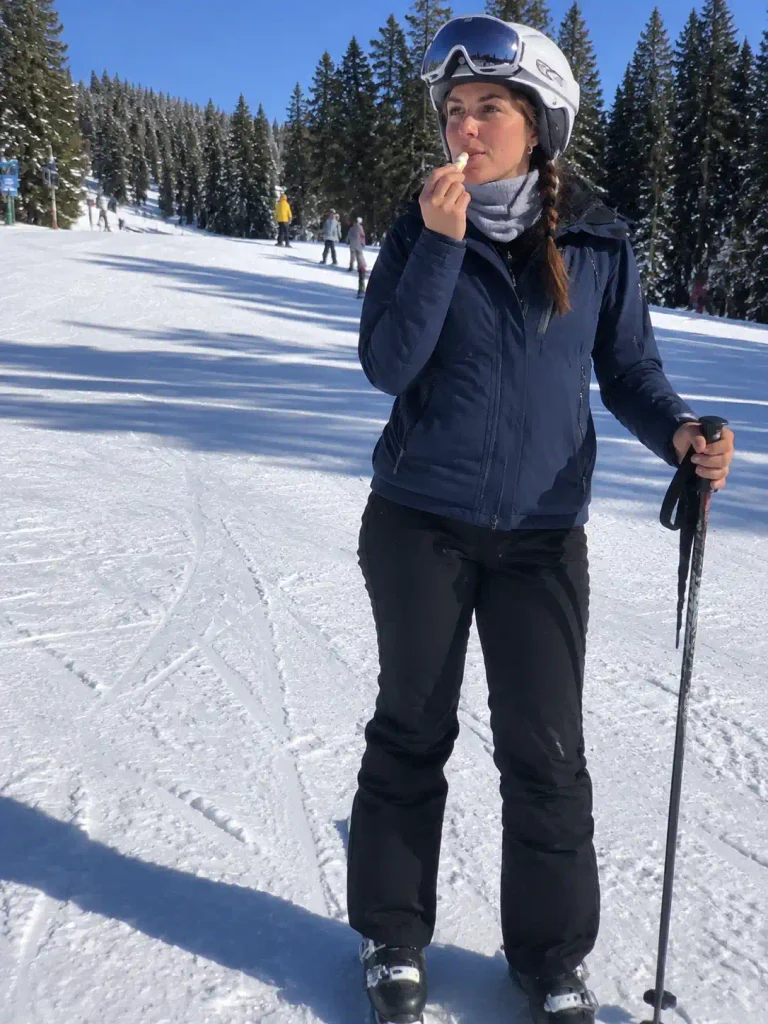
The sun deserves equal respect. Ultraviolet exposure climbs with altitude, and fresh snow bounces much of it back at your face. The Skin Cancer Foundation recommends broad-spectrum SPF 30 or higher, and I’d add that lip balm with SPF belongs in every jacket pocket.
Then there’s the social layer. The mountain, the gondola plaza, and the restaurants a few blocks away all share one crowd, so many people wear slope pieces that already look dinner-ready.
That’s why Aspen outfits lean toward clean silhouettes, rich neutrals, and one confident accent.
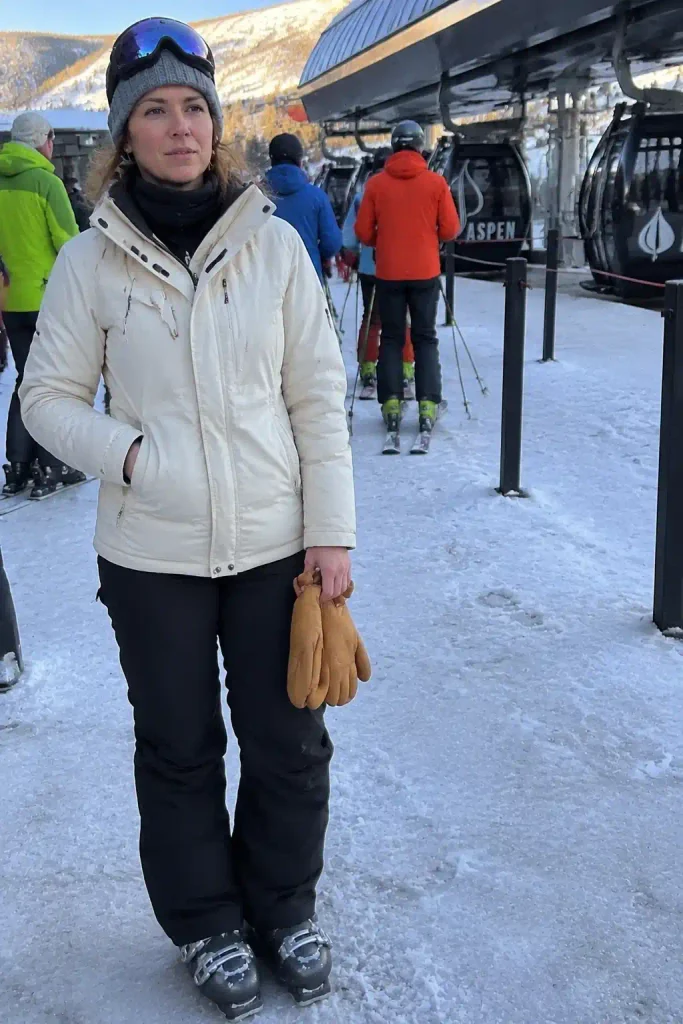
Here’s a quick map of how a typical day feels and what handles it.
| Zone | Typical feel | Dress for it with |
|---|---|---|
| Town at 8 a.m. | Cold and still | Long puffer or wool coat over base layers |
| Upper mountain | Windy, much colder than town | Shell, insulated mid layer, neck gaiter |
| Sunny midday run | Warm in sun, cold in shade | Vented shell, thin merino base |
| Après and dinner | Mild but icy underfoot | Shearling or faux fur, grippy boots |
The layering system that actually works
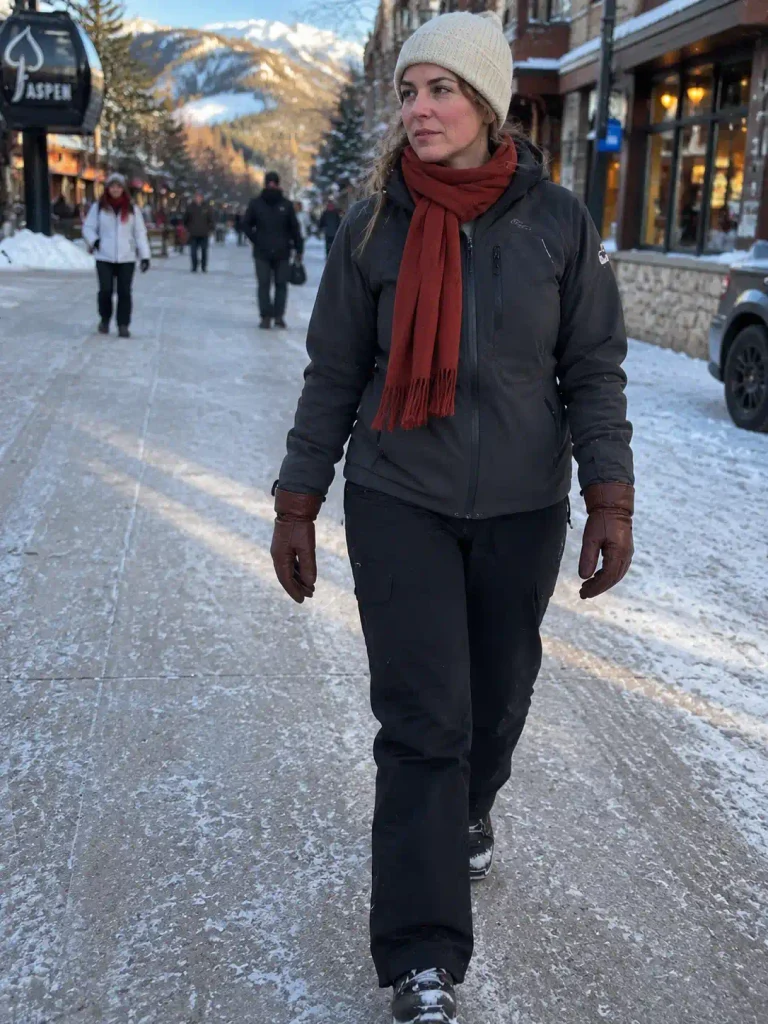
Layering sounds like a chore until you feel the alternative: one giant parka that cooks you on the lift and leaves you shivering when you take it off. Three layers with different jobs solve that.
Each one moves moisture out, holds heat in, or blocks weather, and none of them does the others’ work well.
Base layer: the one against your skin
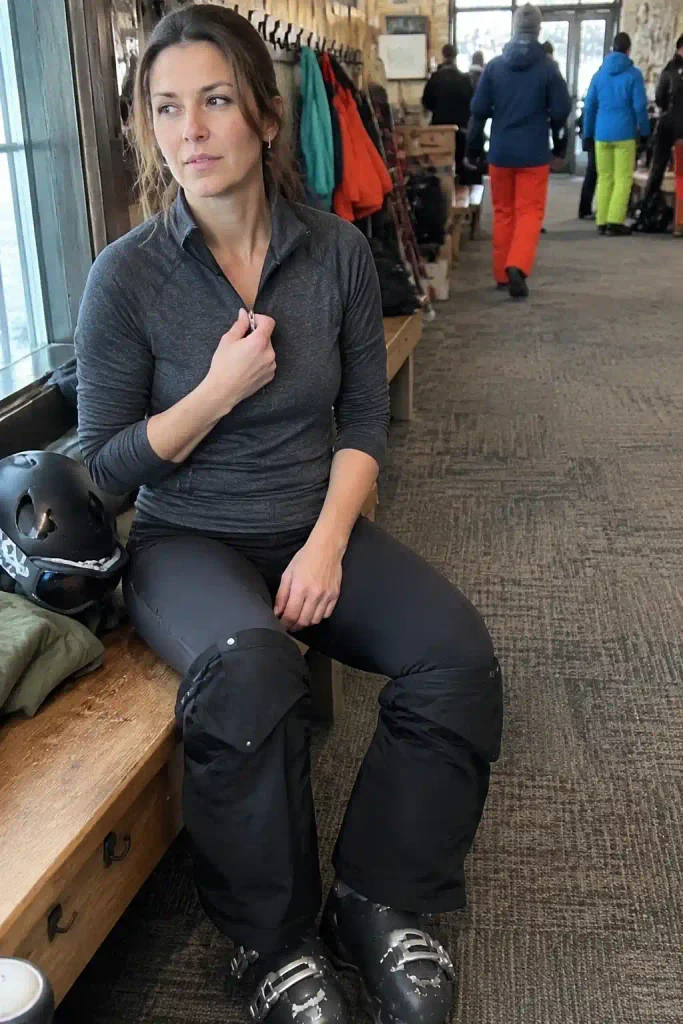
Your base layer pulls sweat off your body. Wet fabric steals heat fast, so this layer decides whether you stay comfortable at minute 20 or shake through lunch.
Pick merino wool or a synthetic blend, and skip cotton entirely.
- Merino (150 to 250 g/m²) resists odour for days, which matters on a five-day trip with one suitcase.
- Synthetic polyester dries faster and costs less, though it smells sooner.
- Fit: snug but not compressive. Air gaps defeat the purpose.
- My pick: a mid-weight merino half-zip. The zip lets you vent on the lift without peeling anything off.
- My second pick: thin silk or merino leggings under ski pants on any day below 15°F. Nobody has ever regretted them.
Mid layer: the heater
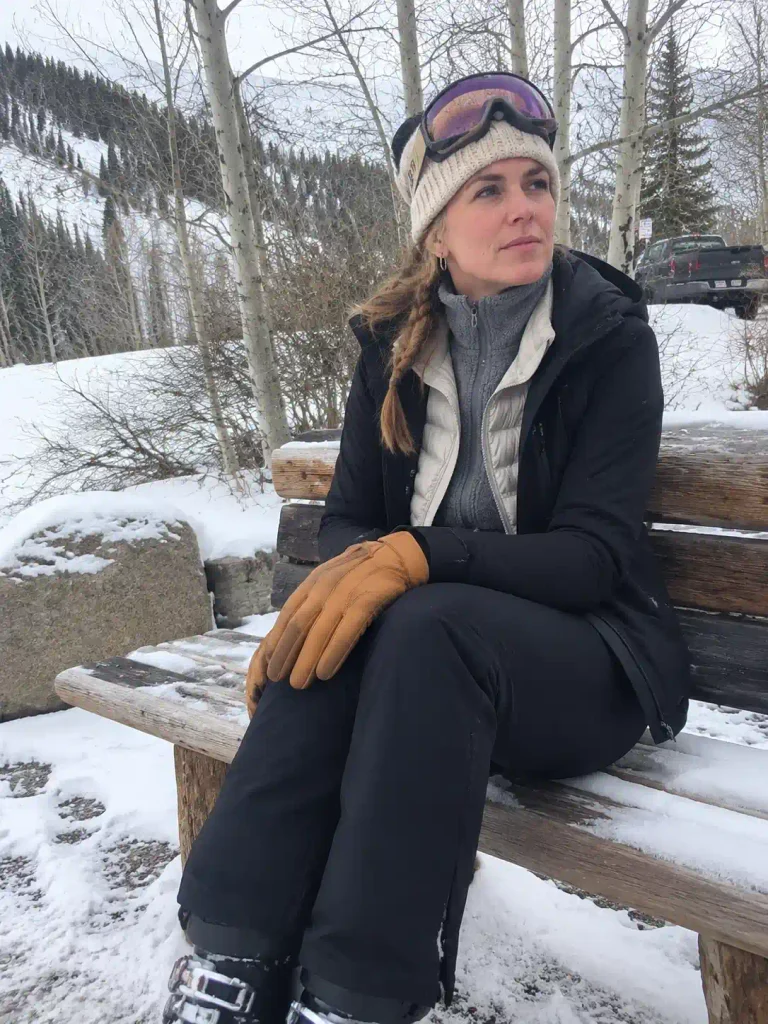
The mid layer traps warm air. Fleece, a light down vest, or a synthetic insulated pullover all work.
Choose by temperature: thin grid fleece for spring, a 60 to 100 g synthetic jacket for deep winter.
Synthetic insulation keeps warming you when it gets damp, which down does not.
If you run hot, a vest keeps your core warm and your arms free. I prefer a fleece with a high collar, because it shows at the neckline of a shell and makes the whole outfit look planned.
Outer shell: the wal
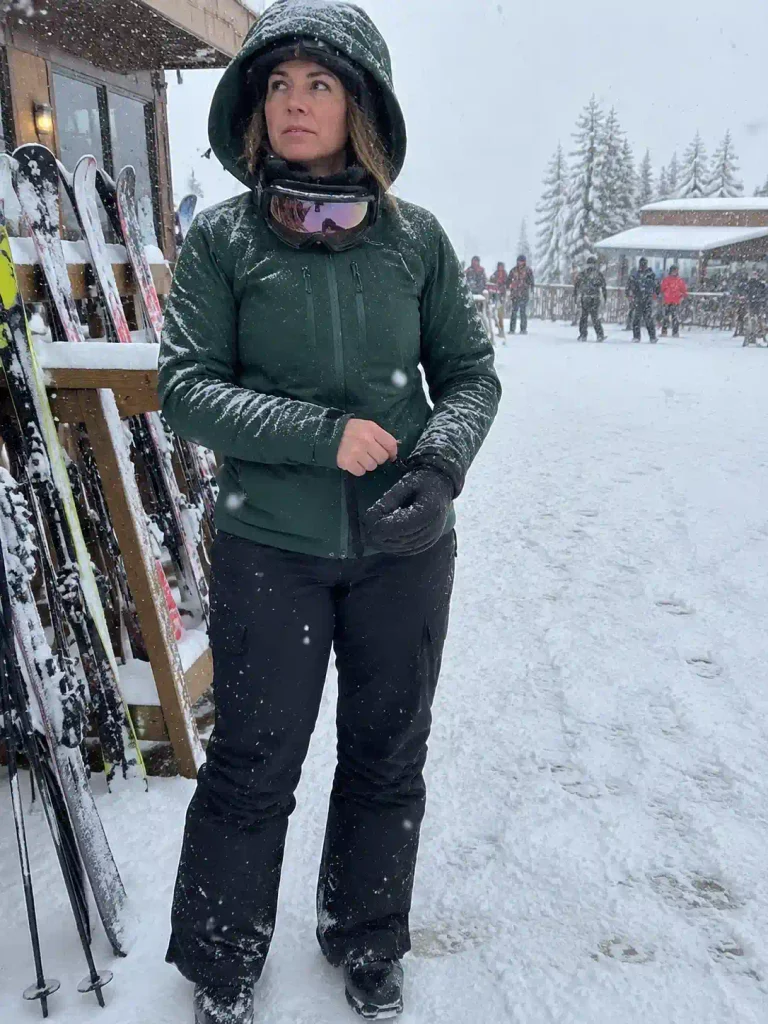
The shell blocks wind, snow, and wet lifts. Look for waterproofing of at least 10,000 mm and a breathable membrane, plus pit zips or vents.
Insulated jackets suit people who run cold, and uninsulated shells suit people who like to adjust with the mid layer.
Fixed hoods look sleek, but a hood that fits over a helmet earns its keep on a storm day. Taped seams matter more than most people think, since the seams leak first.
Adjusting through the day
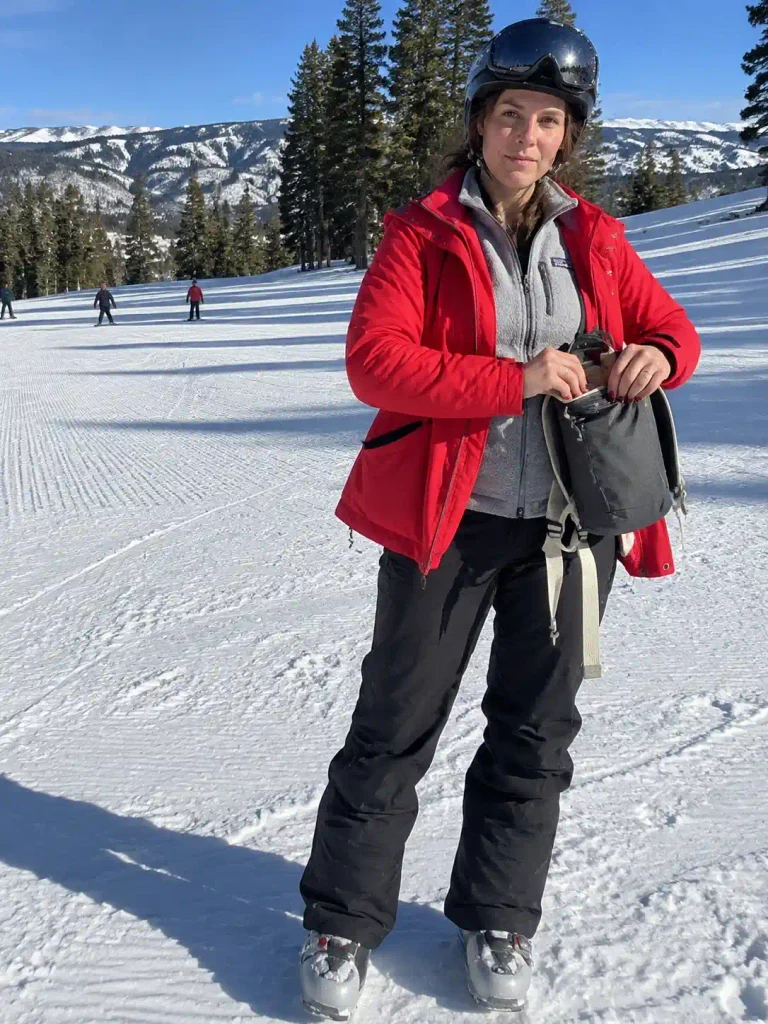
Start slightly cold at the top of the first run. You’ll warm up within five minutes, and overdressing at the start leads to sweat, which leads to chills by noon.
Keep the mid layer in a small pack or wear a vest you can shed.
Open pit zips on sunny groomers, close them on the lift. Swap damp gloves at lunch, and keep a spare pair of socks in your bag.
These tiny habits do more than any expensive jacket.
Fabric guide: what earns its price
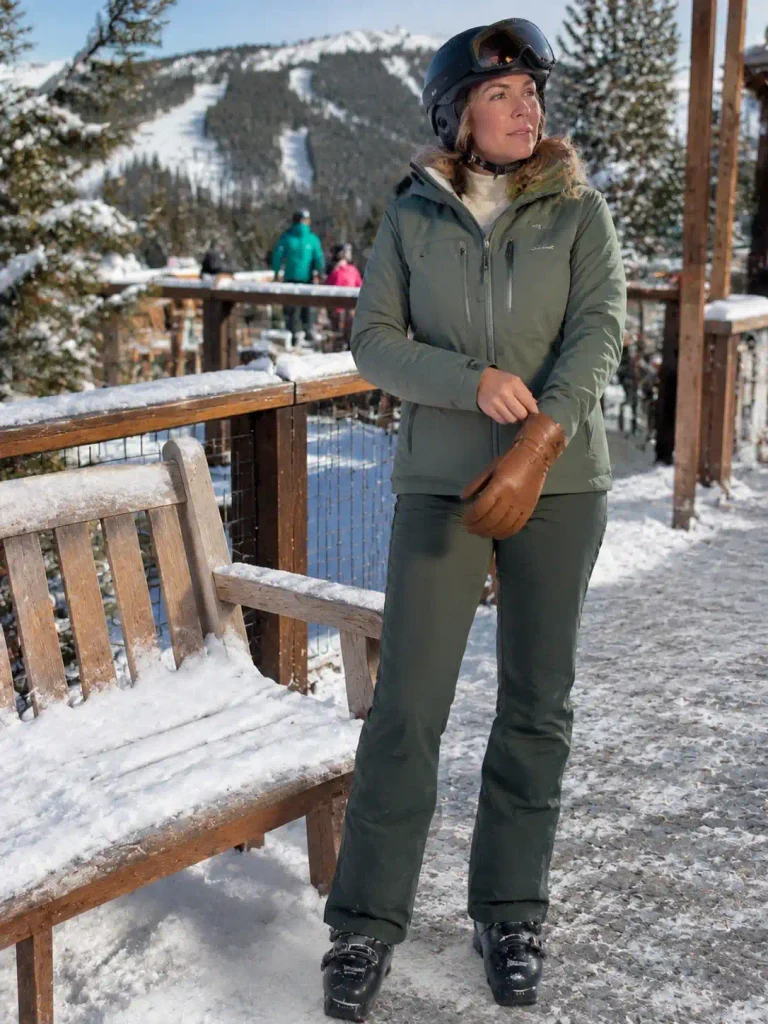
Fabric choices change how a look photographs and how it feels at 3 p.m.
Here’s what I’d spend on and what I’d skip.
- Merino wool: worth the money for base layers and socks.
- Gore-Tex or similar membrane shells: worth it for jackets, optional for pants if you ski mostly on dry days.
- Fleece: cheap, warm, and easy to wash. Buy it without guilt.
- Faux fur and shearling: après only. They soak up snow and take forever to dry on the slopes.
- Cotton: leave it at home. Jeans freeze and hoodies hold sweat.
- Matte softshell: gives a clean line, stretches, and looks great in photos.
Aspen outfit ideas for your Pinterest board
These nine looks cover different weather, budgets, and moods. Each lists exact pieces, colours, one fit or fabric tip, and the occasion. Pin the ones that match your trip dates, then build your packing list around them.
1. Fresh powder white
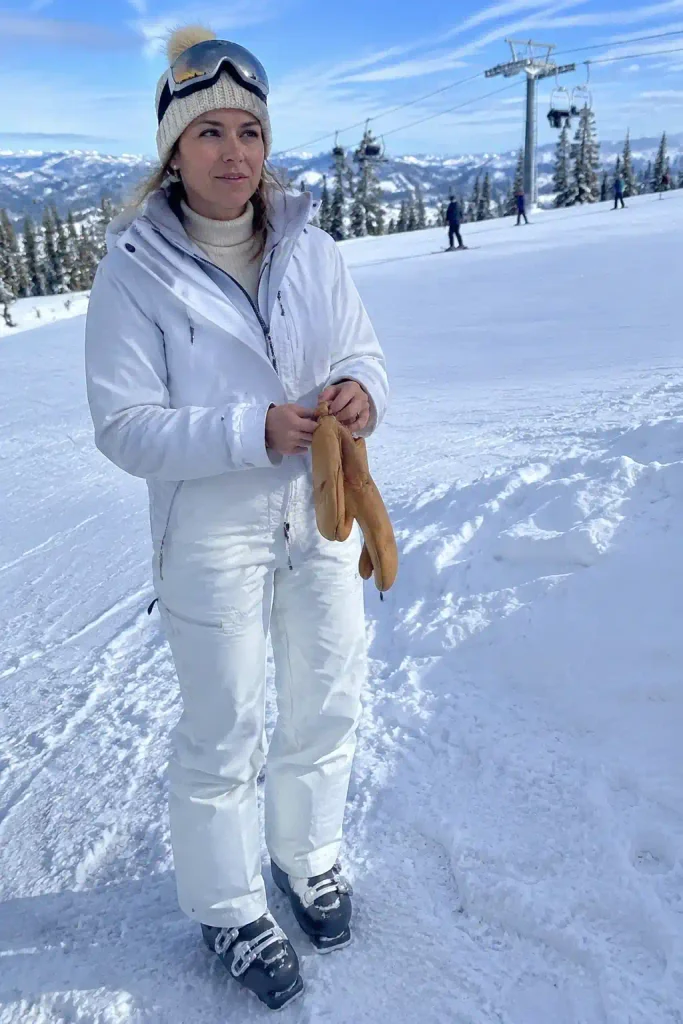
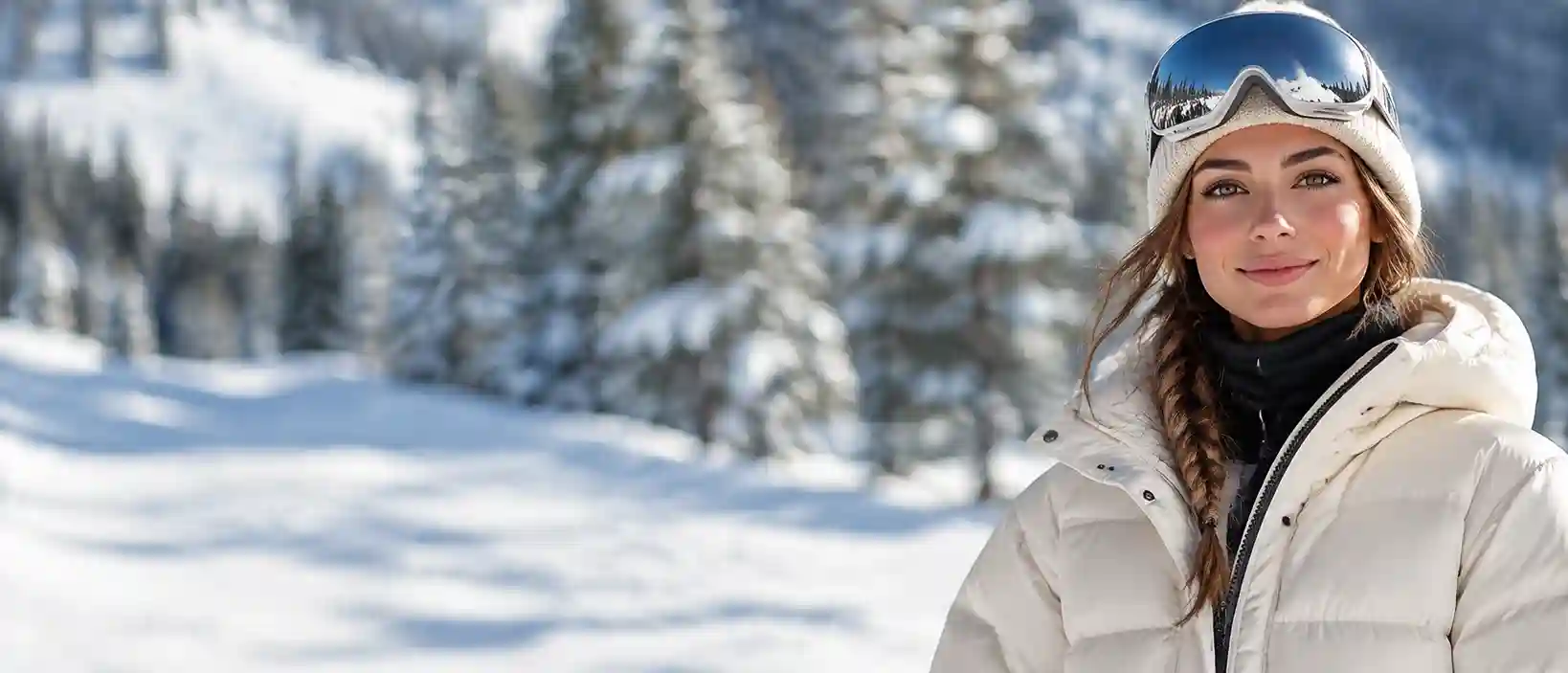
Pieces: white insulated ski jacket with fixed hood, white bib pants, cream merino turtleneck base layer, ivory knit beanie with faux fur pom, silver mirrored goggles, tan leather mittens.
Colours: white, cream, tan, silver.
Fit and fabric tip: pick a matte, brushed-face fabric over shiny nylon. Matte reads as snow in photos, and shiny reads as plastic. Wear bibs so no gap opens at your lower back when you bend.
Occasion: bluebird morning after fresh snowfall, first chair photos.
2. Black and camel slope-to-lunch
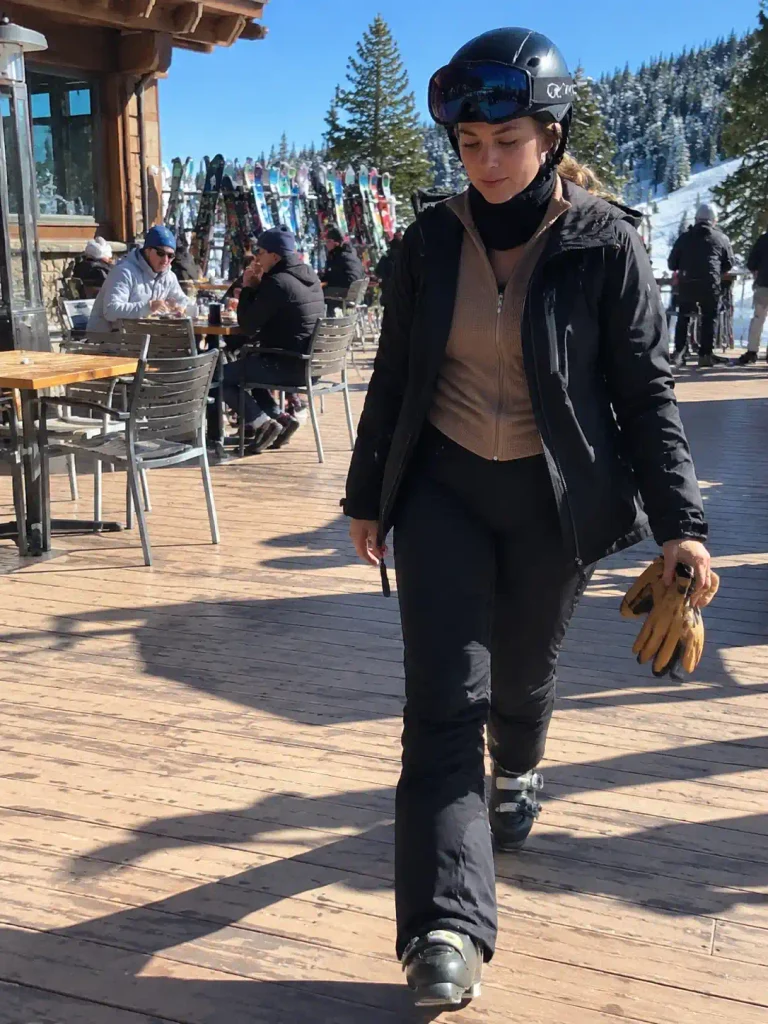
Pieces: black slim-cut shell jacket, black stretch ski pants, camel fleece quarter-zip, black matte helmet, camel leather-palm gloves, black neck gaiter.
Colours: black, camel, charcoal.
Fit and fabric tip: keep the torso slim and leave room across the shoulders for pole planting. Choose a thin grid fleece over a chunky knit, since knits bunch under a shell.
Occasion: a long day on Aspen Mountain that ends with lunch on a sunny deck.
3. Seventies colour-block
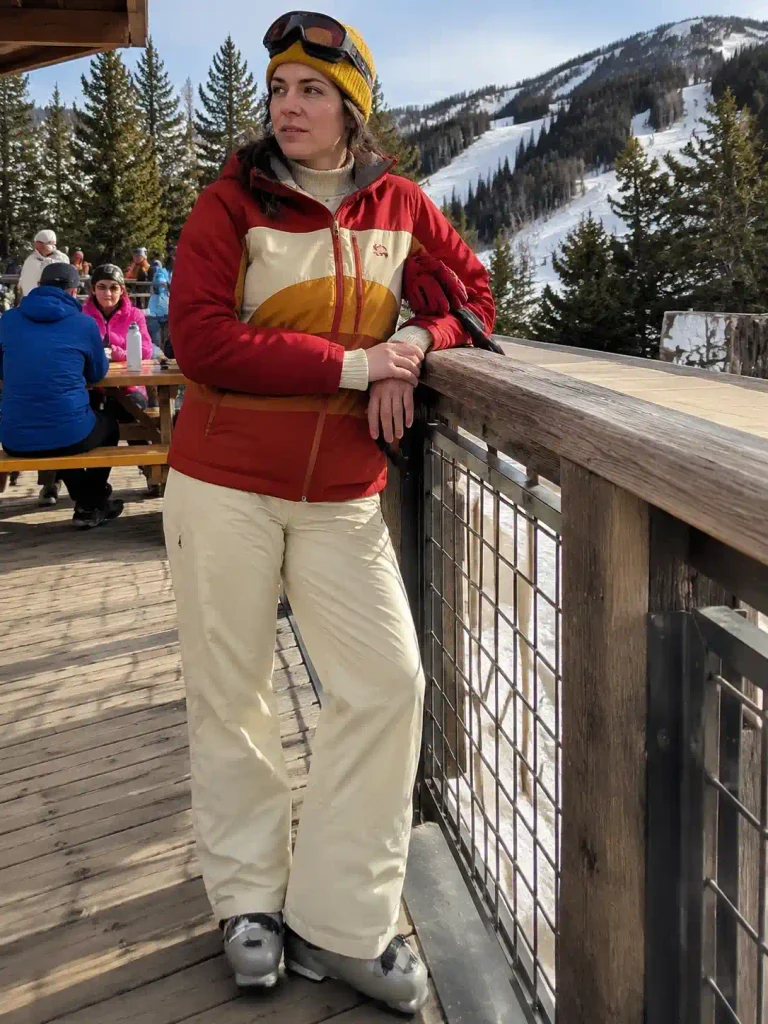
Pieces: red shell jacket with cream and mustard chest panel, cream straight-leg ski pants, mustard ribbed beanie, amber-tinted goggles, red gloves, cream base layer.
Colours: red, cream, mustard, brown.
Fit and fabric tip: retro cuts run wide, so test the pant leg over your ski boots before you travel. The hem should cover the boot cuff without bunching at the ankle.
Occasion: group photo on a lunch deck, or a spring skiing weekend.
4. Cobalt statement shell
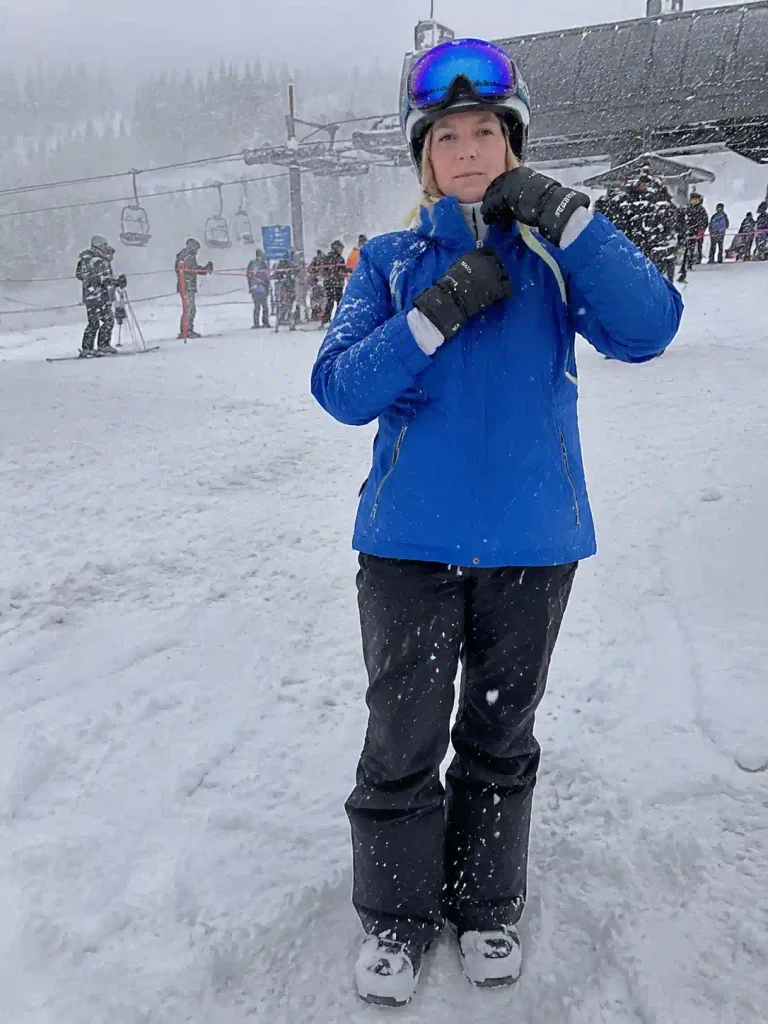
Pieces: cobalt blue three-layer shell jacket, black ski pants, white merino base layer, white helmet, blue mirrored goggles, black insulated gloves.
Colours: cobalt, black, white.
Fit and fabric tip: a saturated colour shows up in flat light, which helps friends spot you in a whiteout.
Pick a shell with a stiff collar that stands up against wind.
Occasion: storm days and low visibility, plus any skier who wants one loud piece and nothing else loud.
5. Forest green monochrome
Pieces: olive-green shell jacket, forest-green ski pants, charcoal merino base layer, grey fleece mid layer, black balaclava, brown leather mittens.
Colours: olive, forest green, charcoal, brown.
Fit and fabric tip: pick a two-way stretch fabric so the monochrome look doesn’t read stiff. Tone-on-tone works best when the greens differ by two shades, never match exactly.
Occasion: cold snap mornings at Aspen Highlands, when you want maximum coverage and a calm palette.
6. Après faux fur
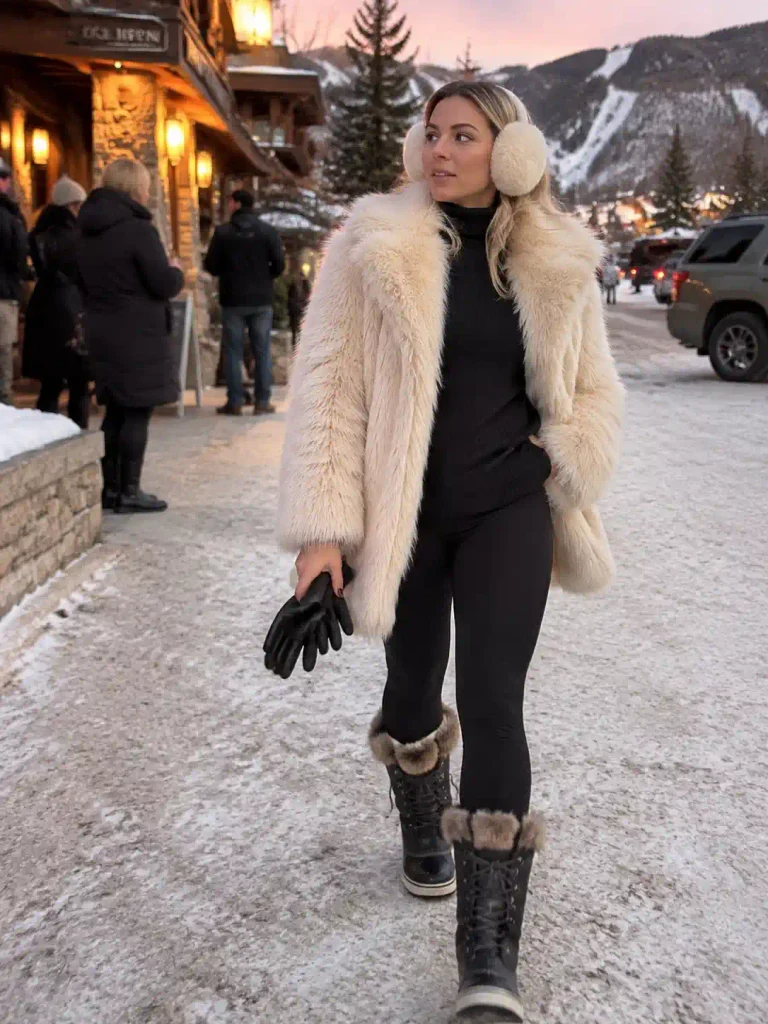
Pieces: cream faux-fur coat, black ribbed knit sweater, black fleece-lined leggings, tall winter boots with rubber lug soles, faux-fur earmuffs, black leather gloves.
Colours: cream, black, charcoal.
Fit and fabric tip: choose faux fur with a dense pile and a fully fleece-lined interior. Thin fur looks great for ten minutes and then lets the cold straight through. Wool socks matter more than the coat.
Occasion: drinks at the base after the lifts close.
7. Gondola-to-dinner
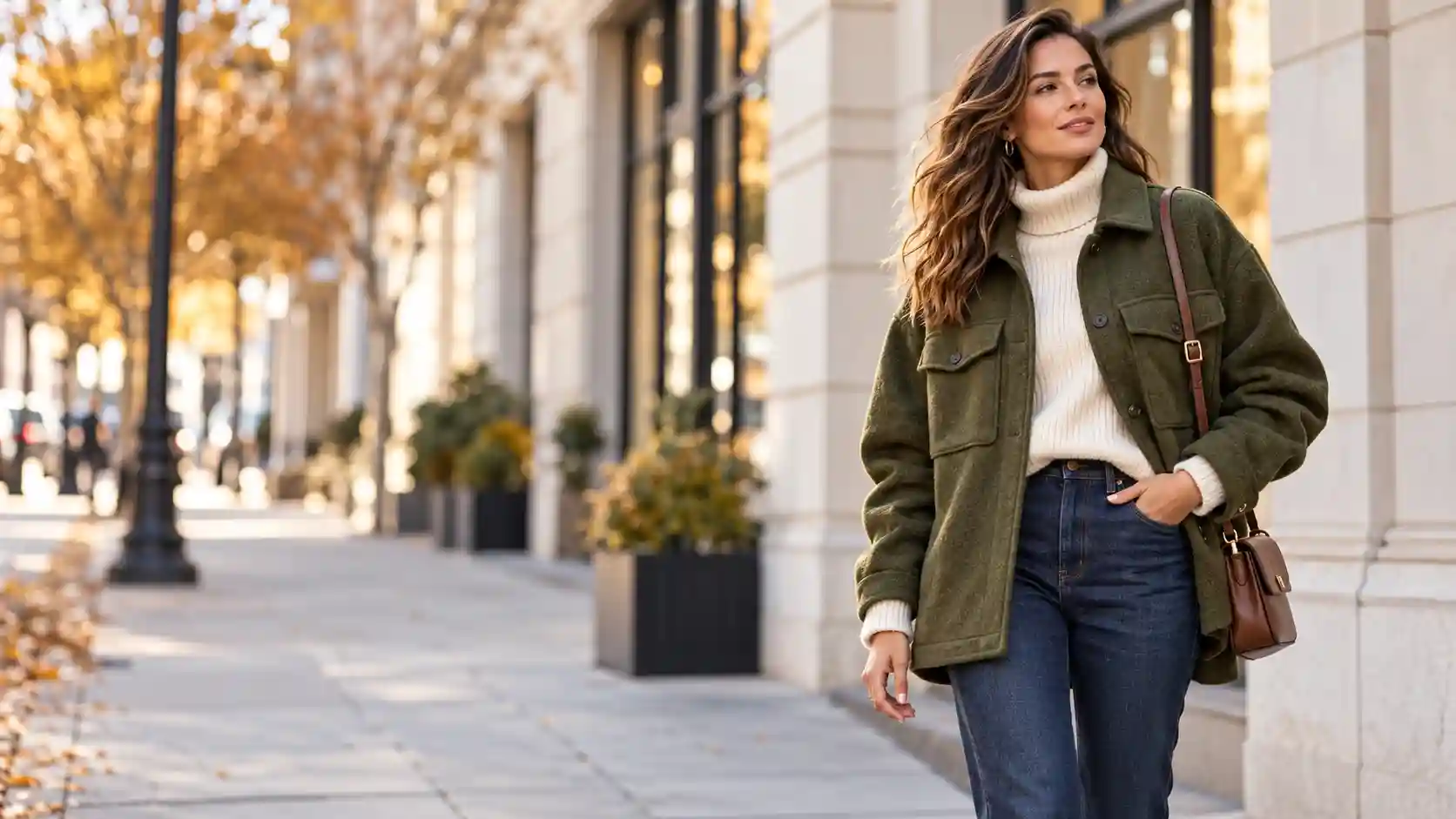
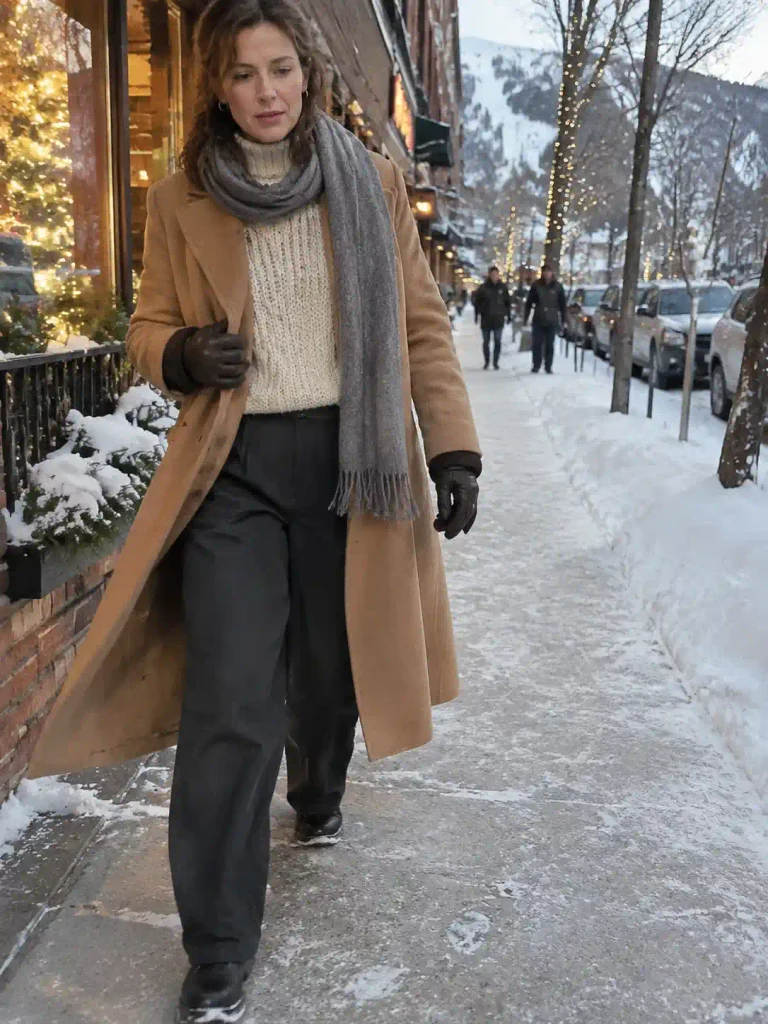
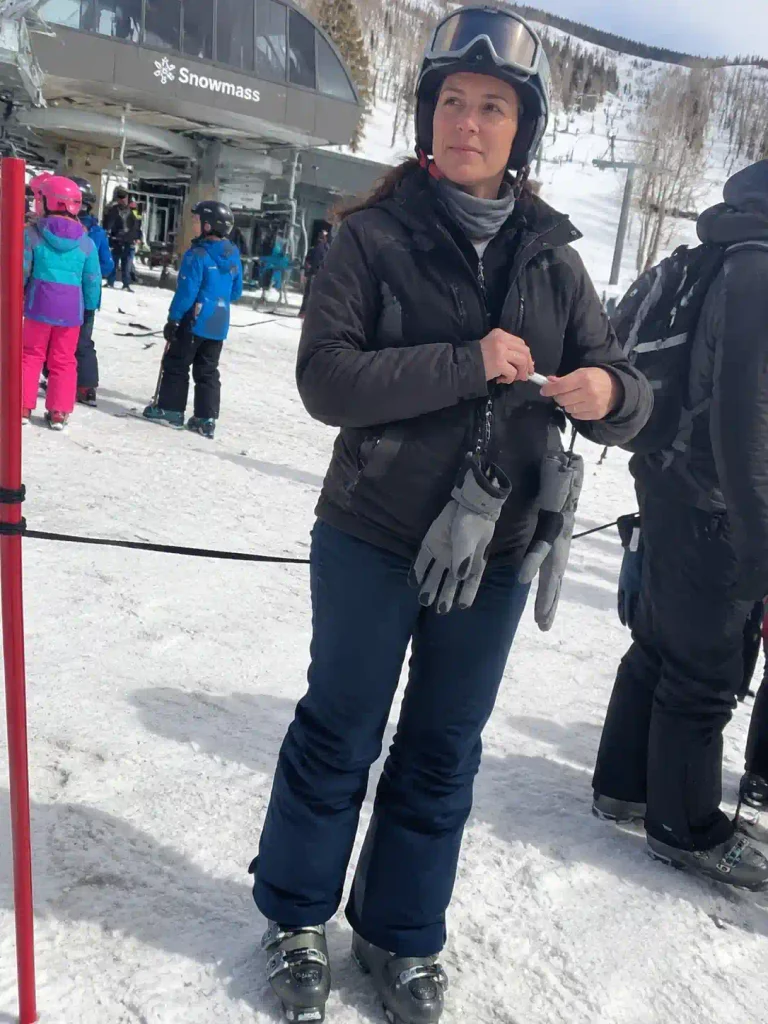
Pieces: camel wool coat or knee-length puffer, chunky cream knit sweater, dark wool trousers, thermal tights underneath, waterproof leather boots with lug soles, cashmere-lined leather gloves, grey wool scarf.
Colours: camel, cream, charcoal, grey.
Fit and fabric tip: wear thermal tights under trousers and choose boots with real traction. Aspen sidewalks glaze over after sunset, and slick-soled boots turn dinner into a stunt show.
Occasion: a December dinner in town after a ski day.
8. Spring pastel
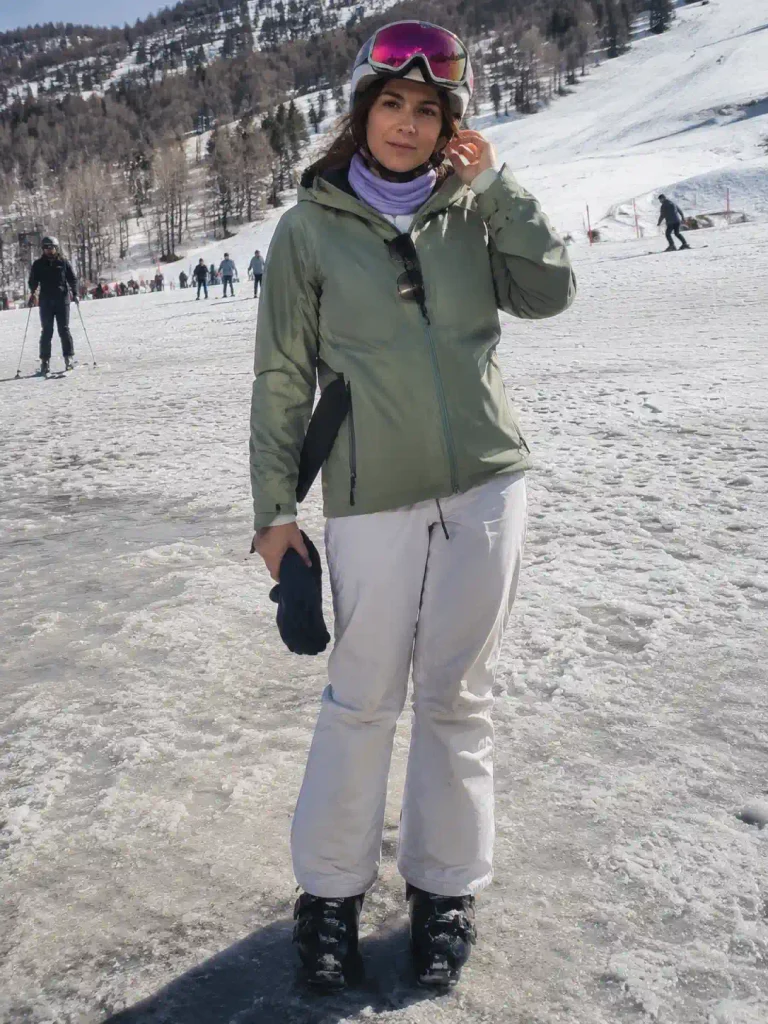
Pieces: sage-green vented shell, white ski pants, thin merino 150 base layer, lavender neck gaiter, rose-lens goggles, sunglasses for lunch.
Colours: sage, white, lavender, rose.
Fit and fabric tip: choose a shell with large pit zips, since March slush days swing from 20°F in shade to 45°F on a sunny face. A lightweight base layer lets you strip down fast.
Occasion: spring skiing in late March or April.
9. Charcoal and navy, unisex
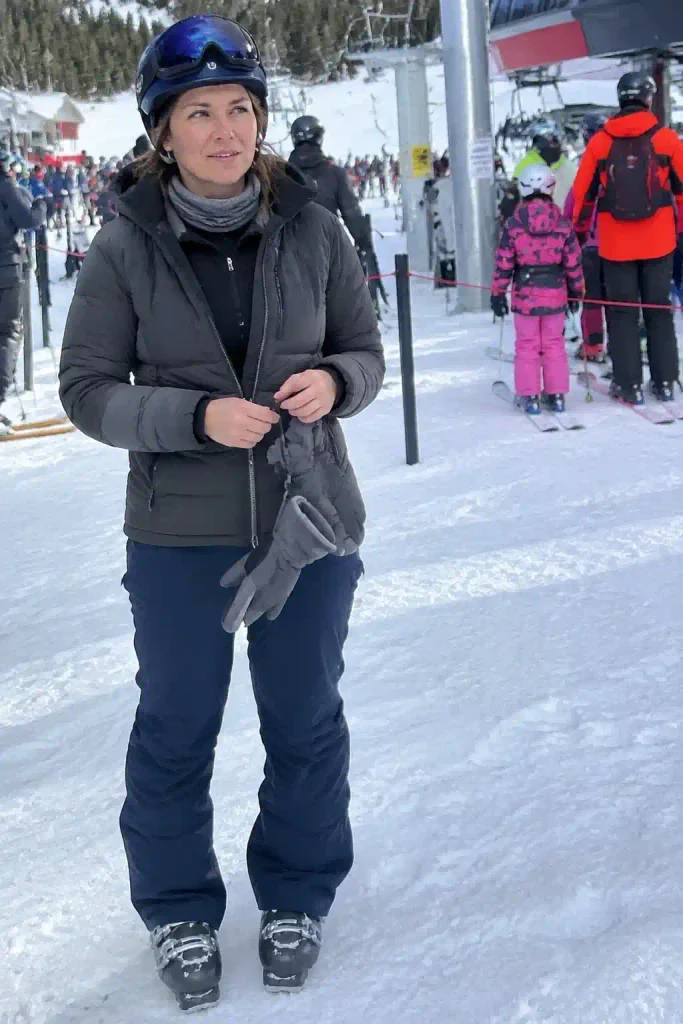
Pieces: charcoal insulated jacket, navy ski pants, black merino quarter-zip, navy helmet, grey gloves with wrist leashes, grey neck gaiter.
Colours: charcoal, navy, grey, black.
Fit and fabric tip: choose articulated knees and a gusseted crotch so the pants move when you lift a small skier out of a snowbank. Dark colours hide lift grease and juice spills.
Occasion: a full family ski day with a long lift-and-lunch schedule.
Building a Pinterest-ready ski look
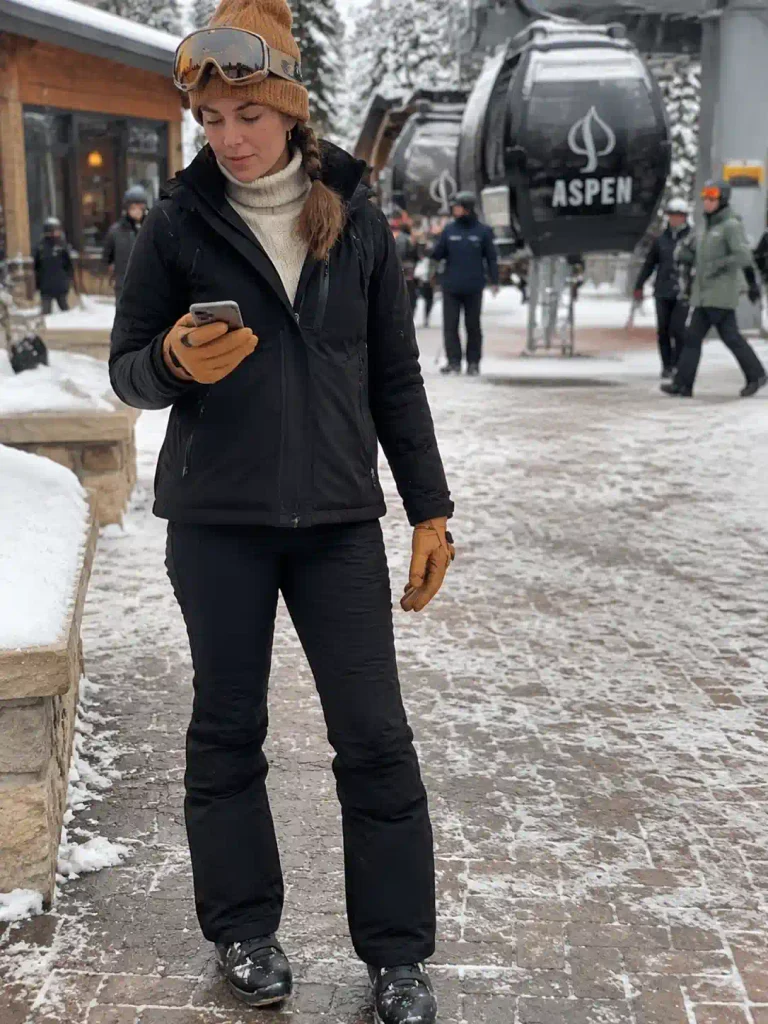
Pinterest rewards clear colour stories. Pick two base colours and one accent, then repeat the accent in two places, such as goggle strap and gloves.
Vertical photos work best, so shoot full-length with some snow in the frame.
Light changes everything. Midmorning gives soft shadows, and noon flattens colour. If you want that glow, shoot within an hour of sunrise or sunset, and avoid shiny fabrics, which pick up glare.
Here’s the tangent I promised. I think every mountain town should hand out free lip balm at the ticket window, preferably in a flavour that doesn’t taste like sunscreen. Somebody in Colorado should start that.
Back to clothes. A neutral palette photographs better than neon, and it mixes across five days.
That’s why the black, camel, and cream combinations keep showing up on boards year after year.
The Aspen packing list
Pack for five ski days and two town evenings. This list assumes you’ve booked lodging with laundry access or can wash once mid-trip.
Slope layers
- 3 base layer tops, mid-weight merino
- 2 base layer bottoms
- 2 mid layers (one thin fleece, one insulated vest or jacket)
- 1 shell jacket with hood
- 1 pair shell pants or bibs
- 4 to 5 pairs of ski socks, wool blend
- 2 neck gaiters or one balaclava
- 2 pairs of gloves, plus a mitten backup for cold snaps
Town and après
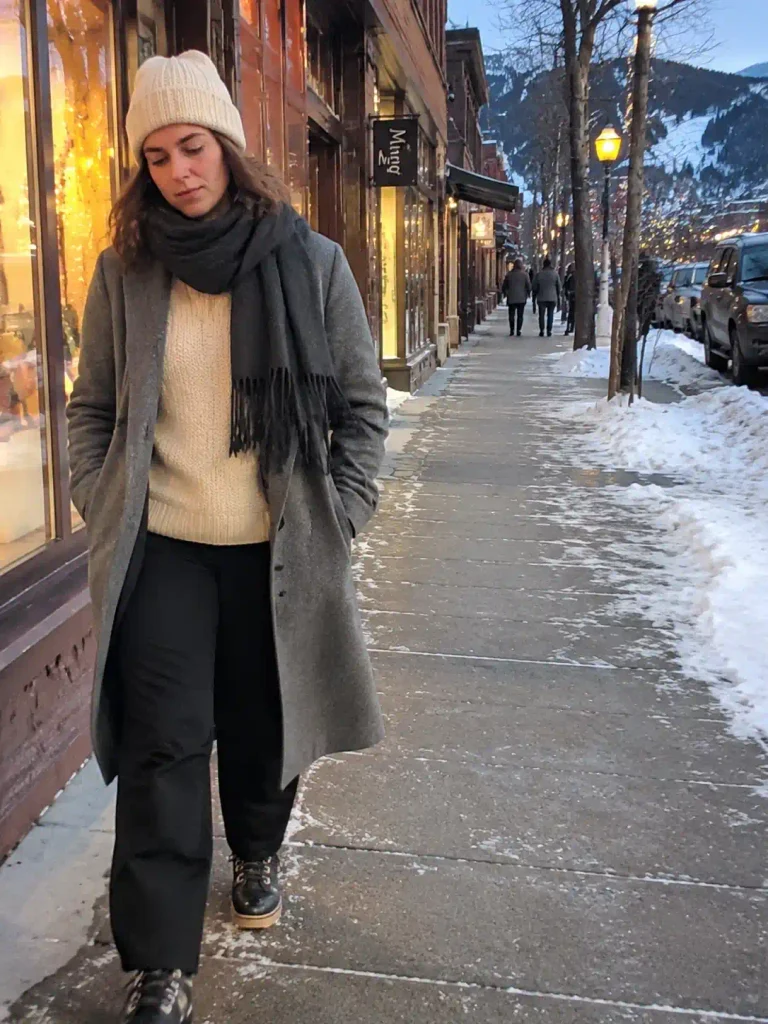
- 1 warm coat (wool, long puffer, or shearling)
- 2 sweaters in neutral tones
- 1 pair of lined trousers or thick leggings
- 1 pair of winter boots with a lugged sole
- Wool scarf and a beanie
Gear and extras
- Helmet and goggles with 2 lenses, one bright-light and one low-light
- Sunglasses for lunch and walking in town
- Mineral or chemical sunscreen, SPF 30 or higher
- SPF lip balm
- Small backpack for extra layers and a water bottle
Travel tips
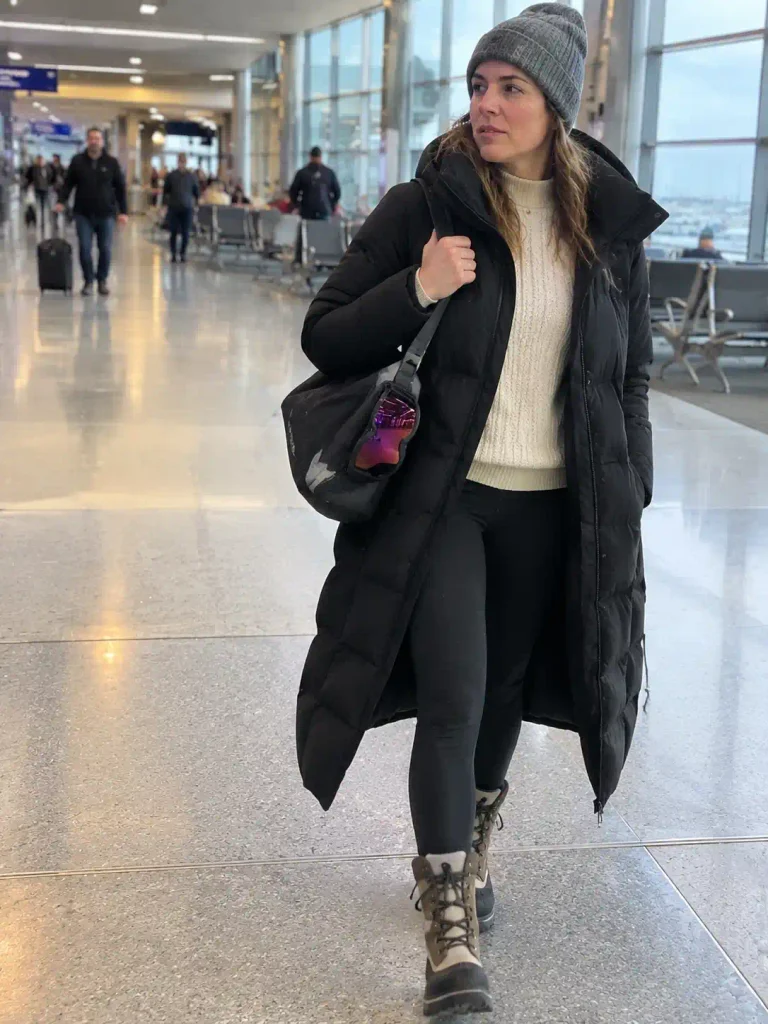
Wear your heaviest boots on the plane. Checked bags get lost, and replacing boots at a resort costs a lot more than a spare pair of socks. Pack your goggles and gloves in your carry-on for the same reason.
Rolling clothes saves space, and compression bags help with puffers. Keep the packing list tight, because Aspen has plenty of boutiques if you forget a scarf.
Prices run high, and I’d rather spend that money on lunch.
Accessories that make or break the day
Gear decisions don’t look glamorous, but they separate a good day from a cut-short one.
Goggles and helmets
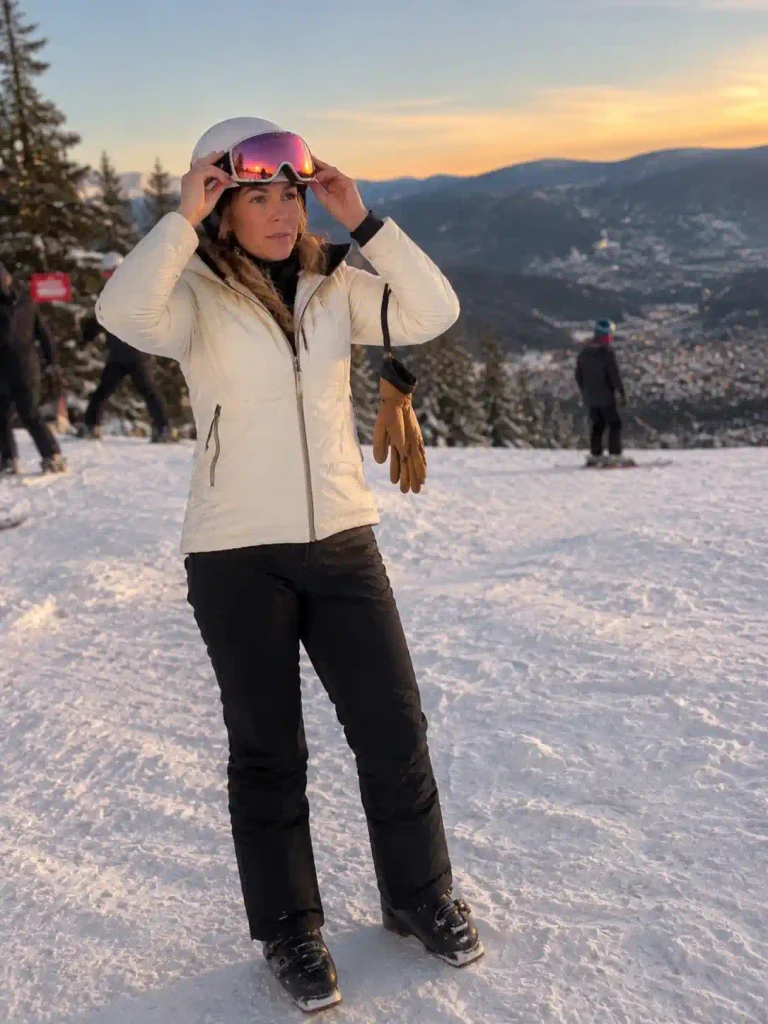
Goggle lens colour changes what you see. Rose and amber lenses sharpen contrast on cloudy days, while mirrored dark lenses cut glare on sunny ones.
A helmet should fit snugly without a pressure point, and it should sit level, with the goggle strap resting on the helmet back.
Gloves versus mittens
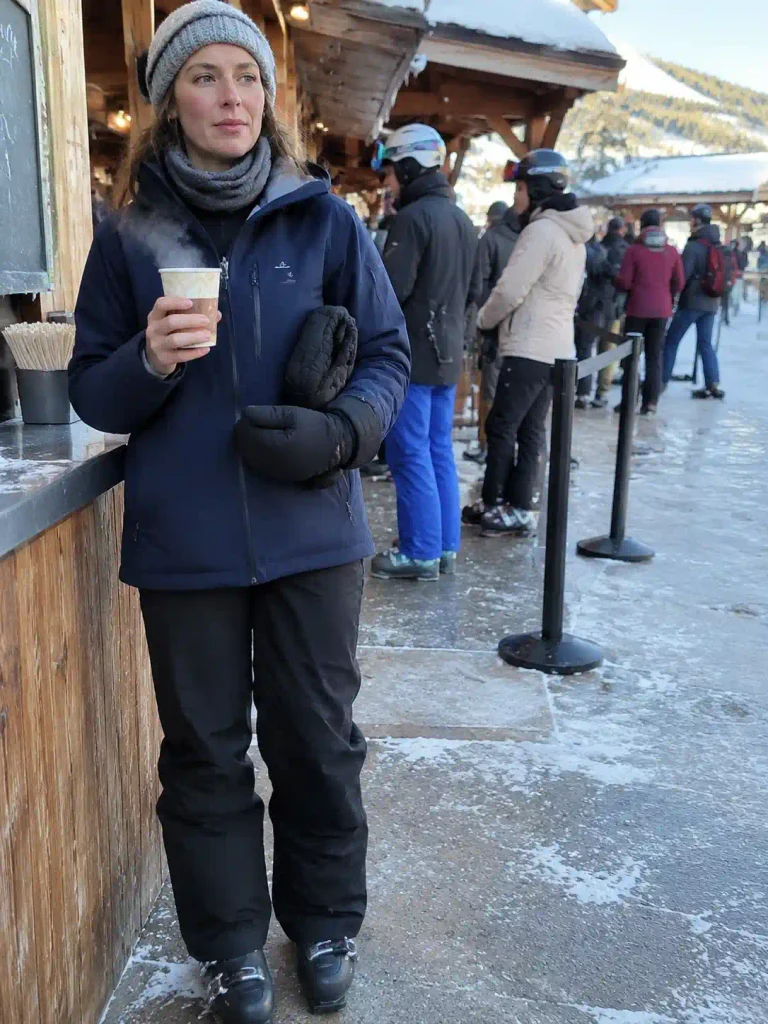
Mittens keep fingers together, so they stay warmer. Gloves give dexterity for zippers and phones.
If you ski hard in single-digit temperatures, mittens win, and a thin liner glove lets you handle small tasks without exposing bare skin.
Socks and boots
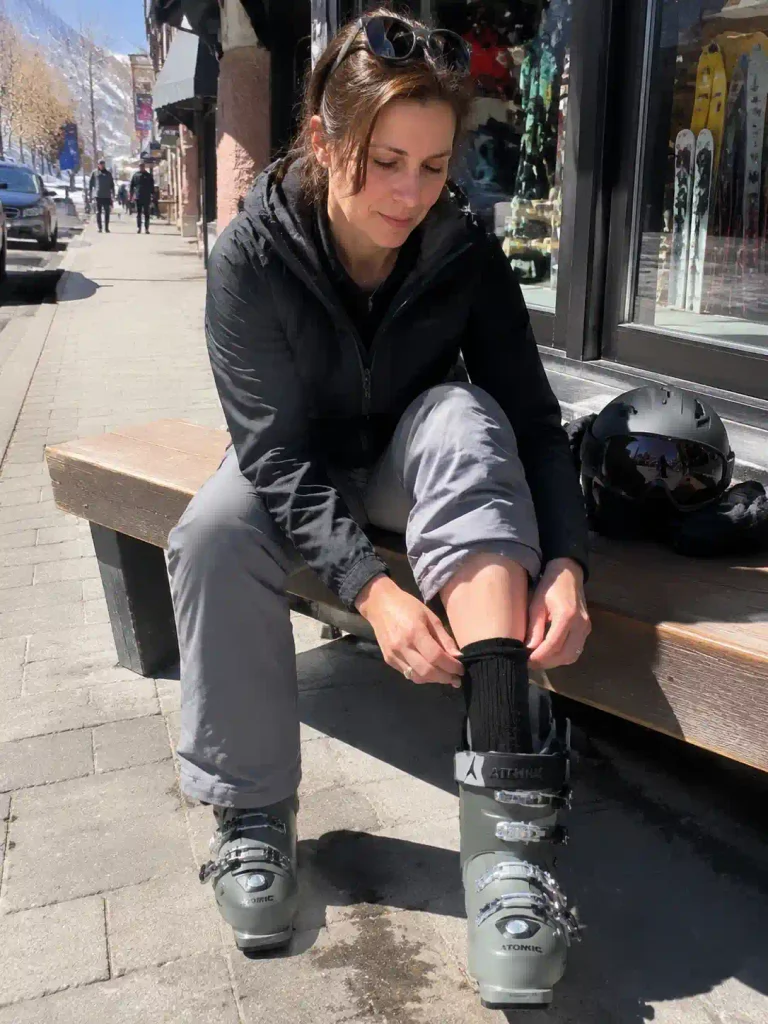
One thin pair of merino ski socks beats two pairs of thick ones, which squeeze circulation and cause cold toes.
Pull your socks up smooth with no wrinkles. Boot fit matters more than any other piece of gear, and a rental shop can tune it in minutes.
Neck and face coverage
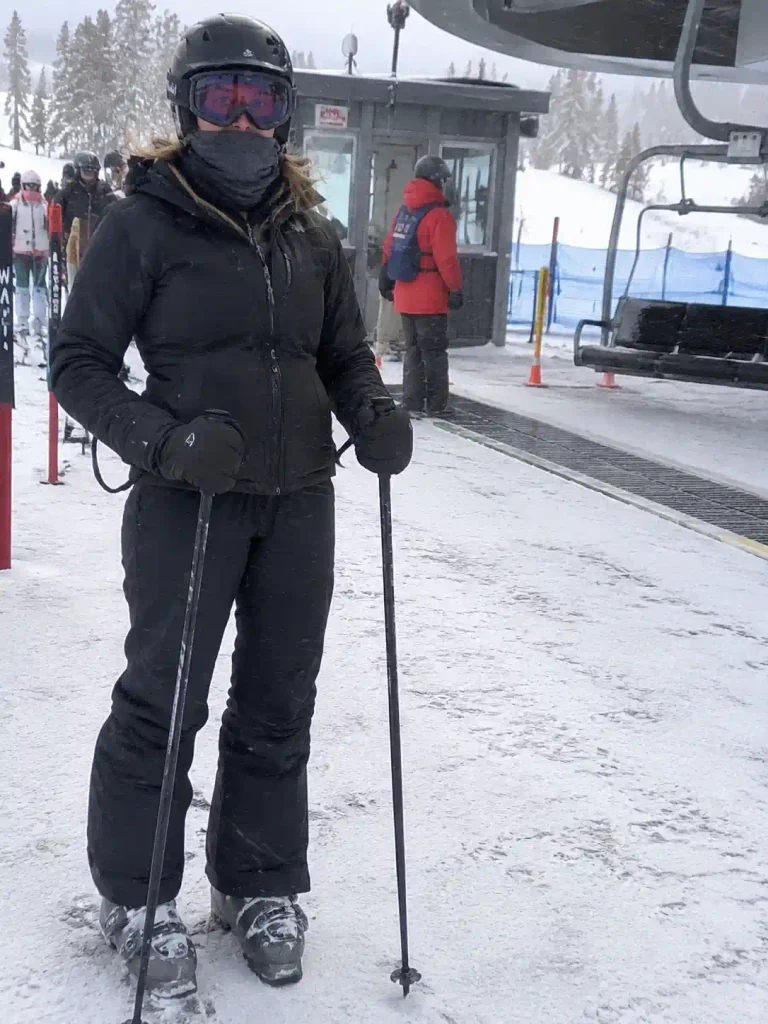
A neck gaiter seals the gap between your collar and goggles. On windy lifts it makes a bigger difference than an extra jacket layer.
Pull it over your nose when you hit the chairlift and lower it when you ski.
Layering by conditions
The same wardrobe flexes across weather with small swaps. Use this as a quick reference.
Deep cold, 10°F or colder
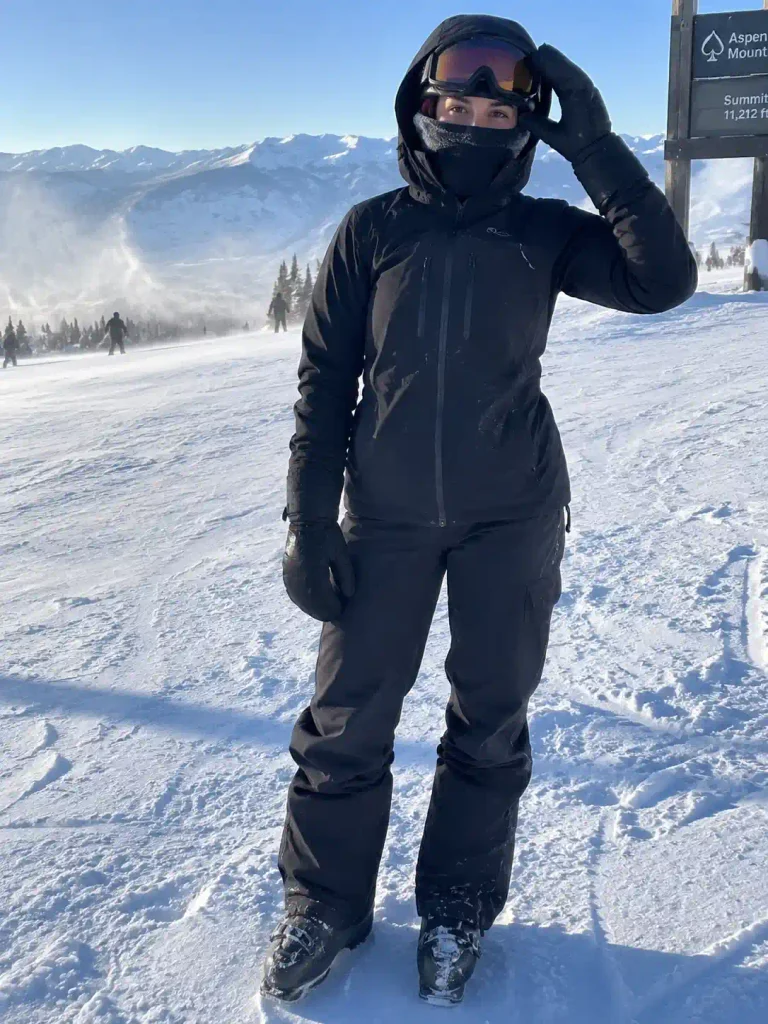
Add thermal bottoms, a heavier mid layer, mittens, and a balaclava. Cover every patch of skin.
Frostbite sets in faster than most people expect when wind picks up, and the CDC’s winter weather guidance lists the warning signs of frostbite and hypothermia worth knowing before you go.
Storm days
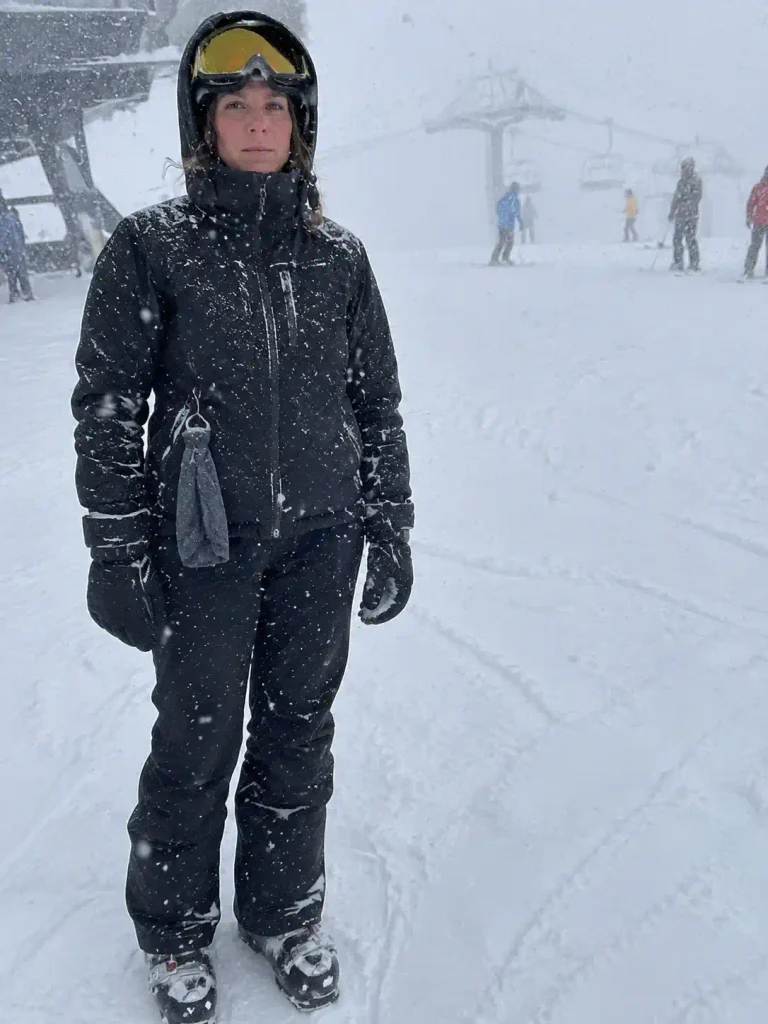
Wear the best shell you own, tuck your base layer in, and close every vent. Goggles with a low-light lens help, and a hood over your helmet cuts spindrift. Pack a dry neck gaiter for the afternoon.
Sunny spring days
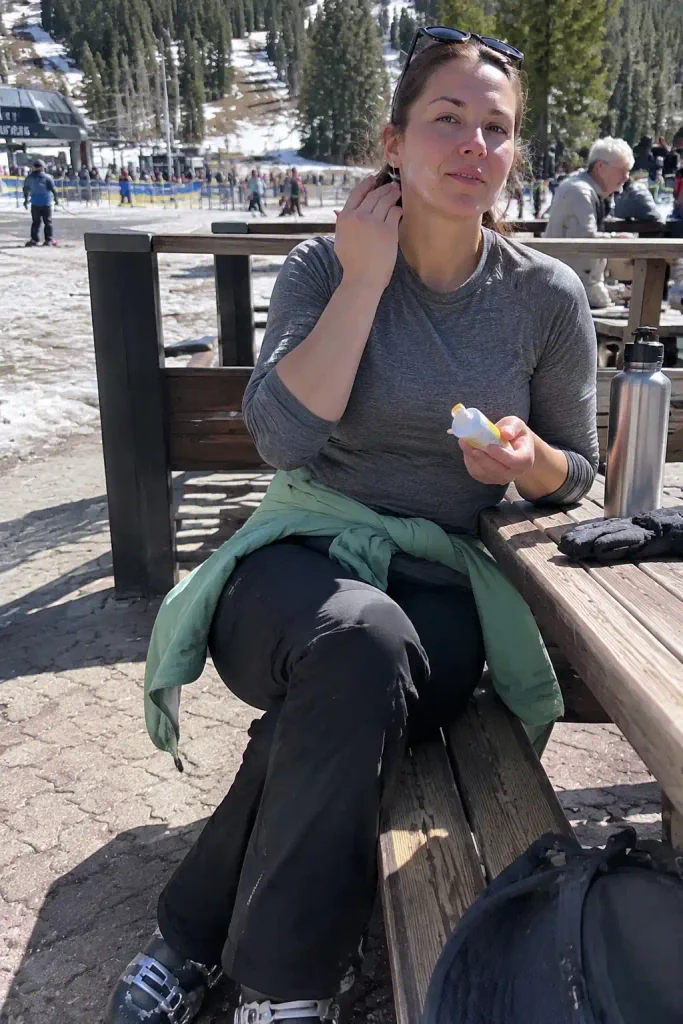
Drop to thin merino, an unlined shell, and a lighter glove. Wear sunscreen on your ears and under your chin, because snow reflects UV upward. Carry a spare layer in a pack for the chairlift.
Backcountry-adjacent days
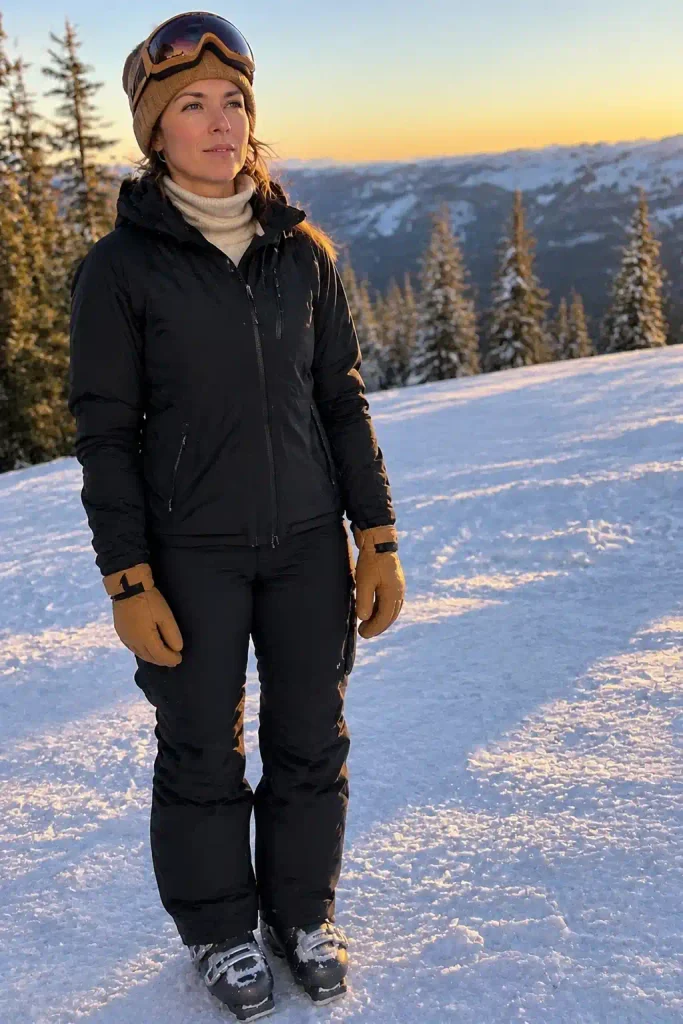
If you plan to leave the resort boundary, check the Colorado Avalanche Information Center before you go, carry the right safety gear, and ski with someone who knows how to use it. Clothing does not replace avalanche training.
Mistakes that ruin a ski outfit
Most trips go sideways because of small errors. These ones show up again and again.
- Cotton under a shell. It holds sweat and chills you fast.
- Too many layers at the start. You’ll overheat on the first run and spend the day damp.
- Tight boots. Cold feet usually come from restricted blood flow, so loosen the buckles.
- Wrong goggle lens. Dark lenses on a cloudy day make bumps hard to read.
- Skipping sunscreen. Altitude plus snow reflection burns faster than beach sun.
- Slick town boots. Wear the lugged soles, and save leather loafers for the lobby.
I’ll add an opinion: buying one great shell and two good base layers beats buying five mediocre jackets. The shell does most of the work, so spend there first.
Renting versus buying
First-time visitors often wonder whether to buy gear. Rent skis, boots, and poles if you ski fewer than ten days a year.
Buy your own base layers, socks, gloves, and goggles, since those touch your body and fit personally.
Helmets split the difference. Rentals work, but a helmet you own fits better and gives you more peace of mind.
Check the Aspen Snowmass website for current rental options and lift information, and the Aspen Chamber Resort Association for lodging and town events.
Prices, shop inventory, and resort operations change from season to season, so confirm details with the source before you book anything.
FAQs
What should I wear skiing in Aspen in January?
Wear a merino base layer, an insulated mid layer, and a waterproof shell with a hood. Add thermal bottoms, mittens, a neck gaiter, and goggles.
January mornings often sit in the single digits, so cover all exposed skin and carry a spare layer.
Can I wear jeans for ski day?
Skip them. Denim absorbs moisture, freezes, and loses all insulating value when wet. Wear ski pants or bibs instead, and save the jeans for the après hour, preferably under a long coat.
What colours photograph best on snow?
Saturated colours such as cobalt, red, and emerald pop against white snow, and neutral tones like camel and charcoal give a refined look.
White on white blends in, so add a dark accent like goggles or gloves to give the frame an anchor.
Final thoughts
Aspen rewards people who plan three things: layers that handle a 30-degree swing, one colour story, and boots that grip. Get those right and the rest feels easy, from the first lift to the last glass of wine.
