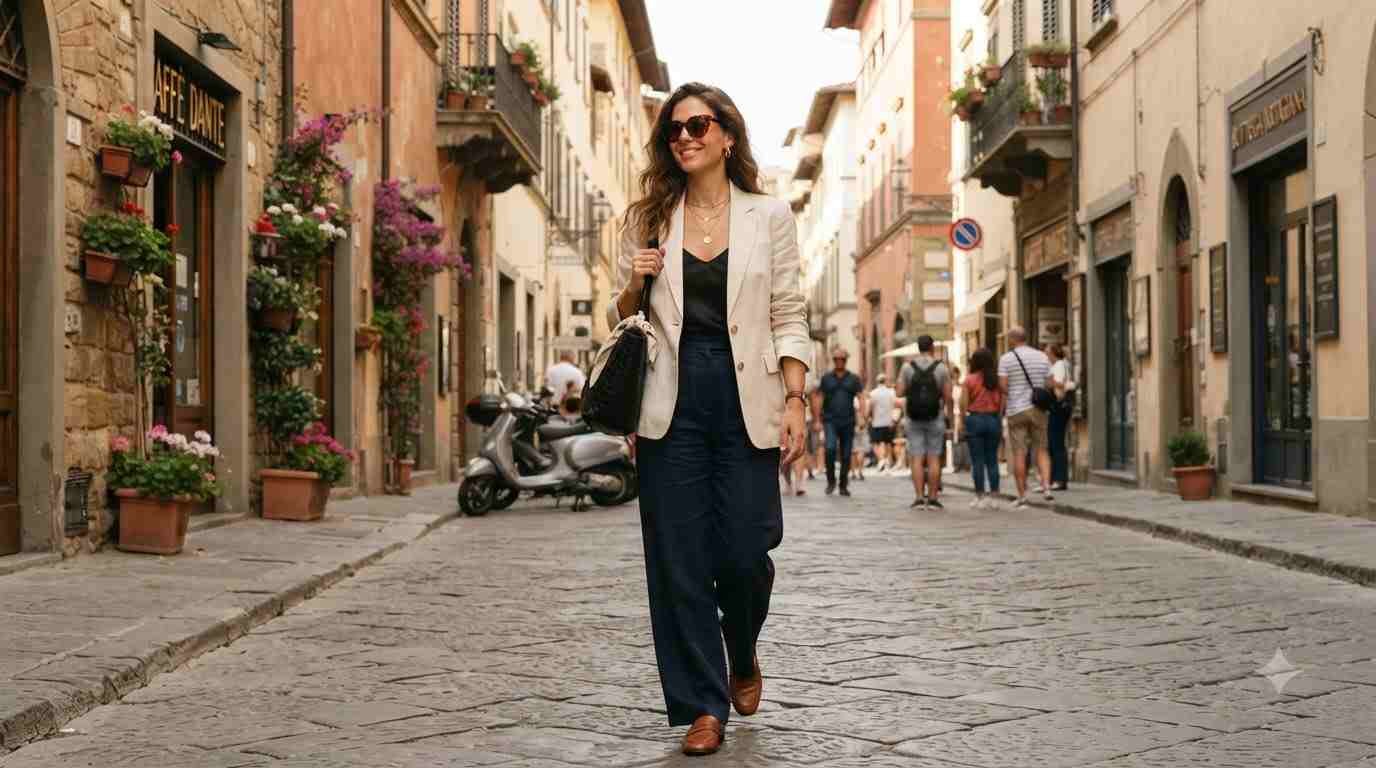
I spent a week in Florence three years ago with one carry-on bag and zero business being that underpacked.
And somehow I still remember exactly what three different women wore on the same street corner near Piazza della Repubblica.
That’s the thing about Italian style. It doesn’t shout. It just sticks in your memory.
If you’ve ever scrolled Pinterest at midnight, saving outfit after outfit tagged “Italian street style,” you already know the pull.
It’s not about buying a whole new wardrobe. It’s about learning a handful of habits that Italian women seem to absorb before they can walk.
Fit, fabric, restraint, and a little bit of nerve.
Here are 12 ways to bring that energy into your own closet, minus the plane ticket.
1. Start with tailoring, not trends
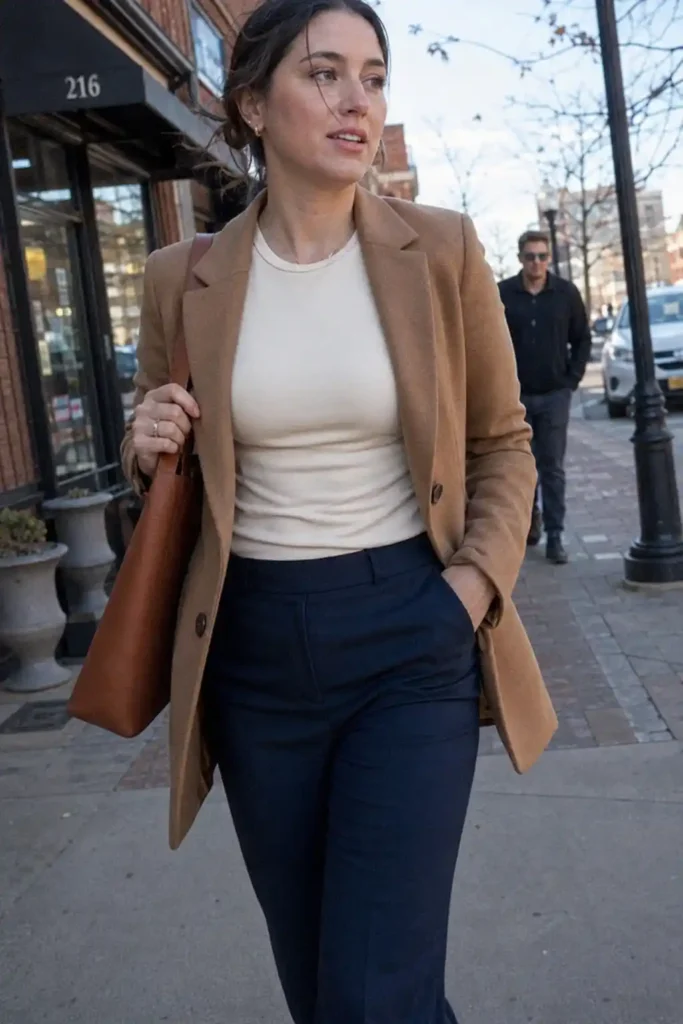
Italian style leans on structure. A blazer that actually fits your shoulders. Trousers that skim instead of pool. This is the foundation everything else sits on.
I used to buy blazers a size up “for comfort.” Big mistake.
A properly tailored jacket changes your whole silhouette, and most tailors will adjust one for under 30 dollars. That’s cheaper than a dinner out, and it lasts years.
Look for natural fabrics like wool and cotton twill over stiff polyester blends. The drape matters more than the label.
2. Neutral palette, loud confidence
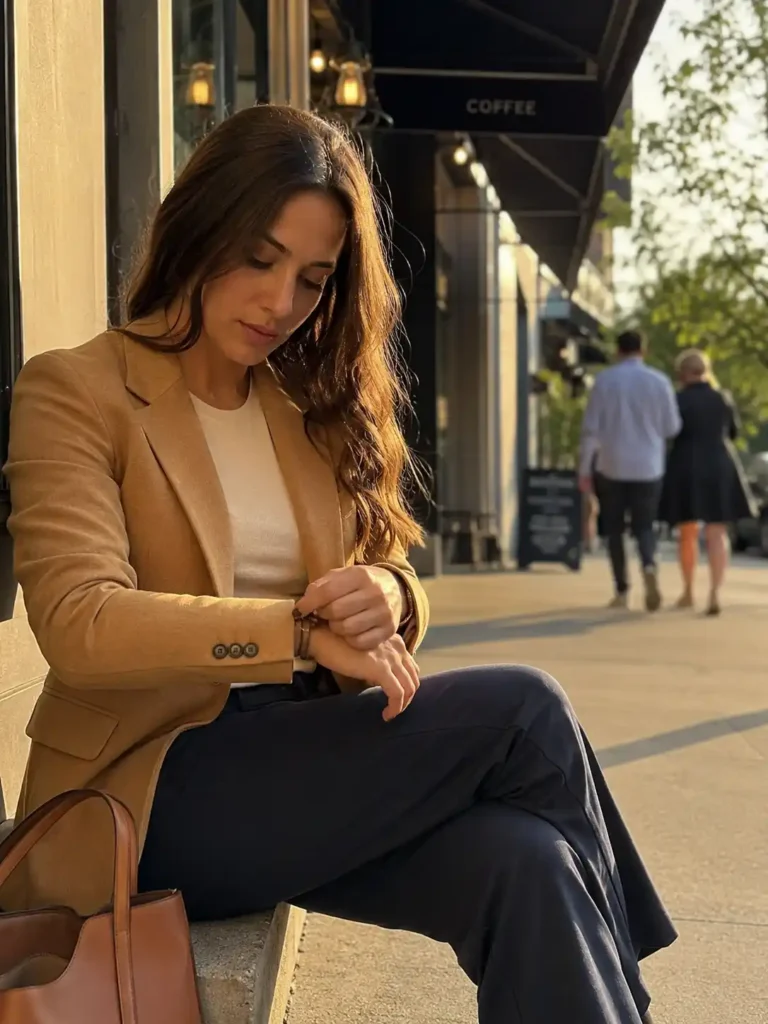
Walk through Milan and you’ll see camel, navy, cream, black, and the occasional burst of red.
Rarely anything neon. The colors stay quiet so the person wearing them doesn’t have to.
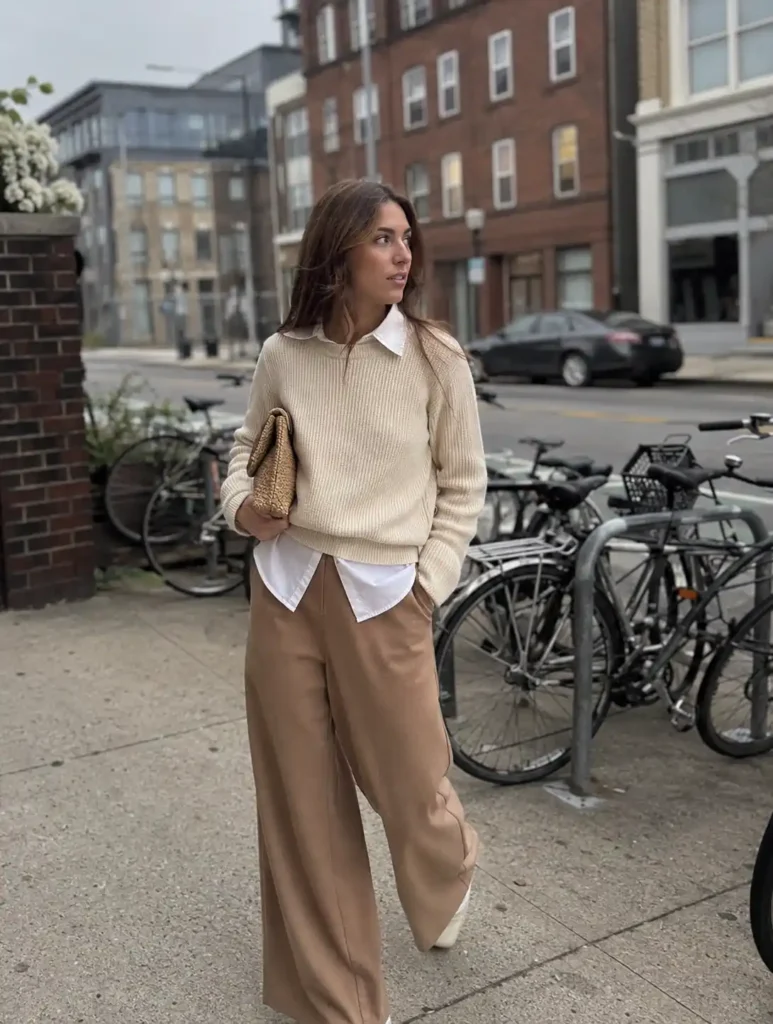
Building a capsule around five or six neutrals means everything mixes with everything.
IMO this is the single easiest style upgrade for anyone tired of decision fatigue every morning.
3. Invest in leather, actually invest
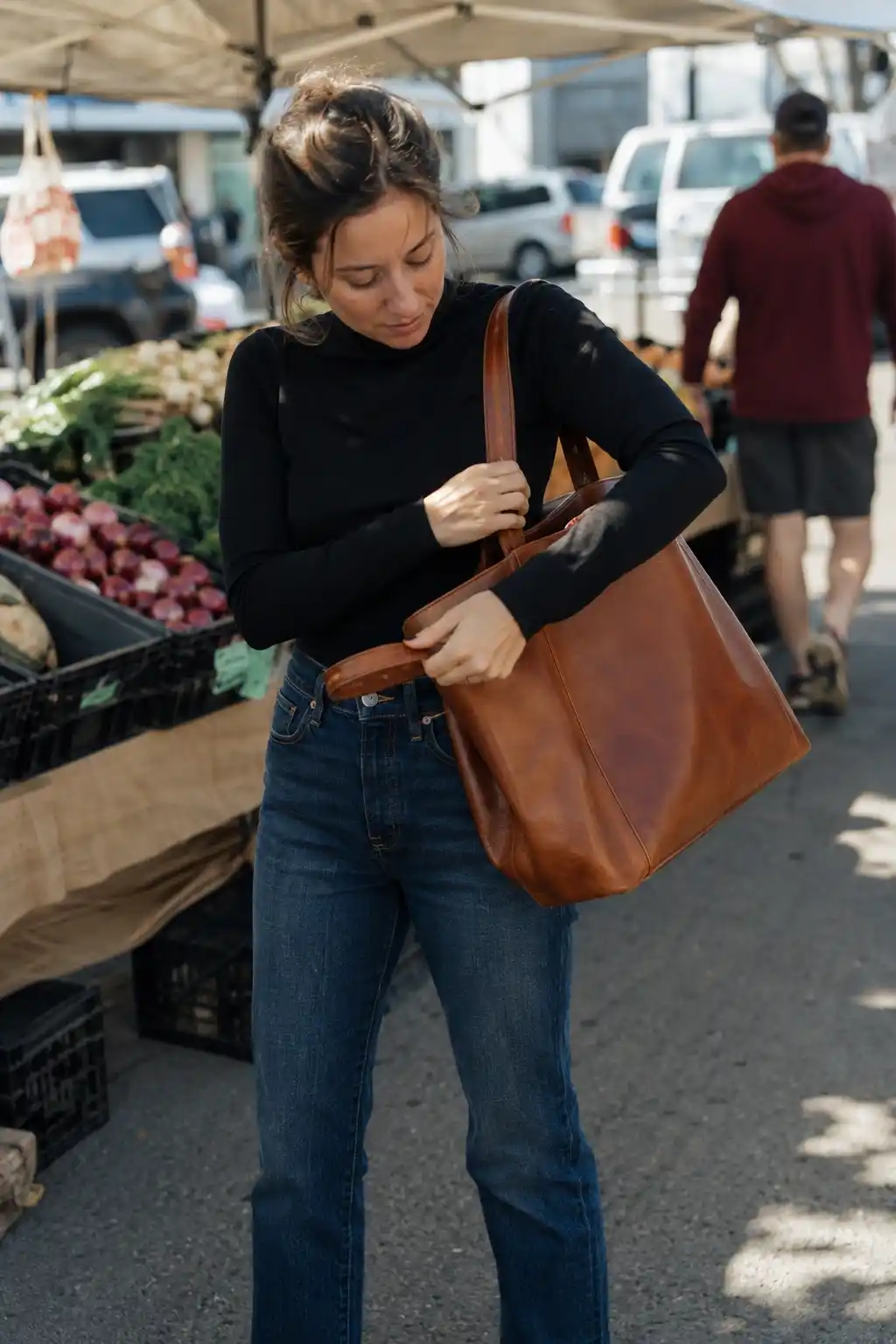
A good leather bag or a pair of leather loafers is not an impulse buy in Italy. It’s a plan.
Brands like Bottega Veneta built entire identities around leather craftsmanship, and you can see why the moment you touch a well-made piece.
You don’t need designer prices to get this right. Look for:
- Full-grain leather over “genuine leather” (that label usually means lower quality)
- Stitching that’s even and tight
- A weight that feels substantial, not hollow
I bought a mid-range Italian leather tote in 2019. It’s still my daily bag. The zipper has never once stuck.
4. Scarves are not optional accessories
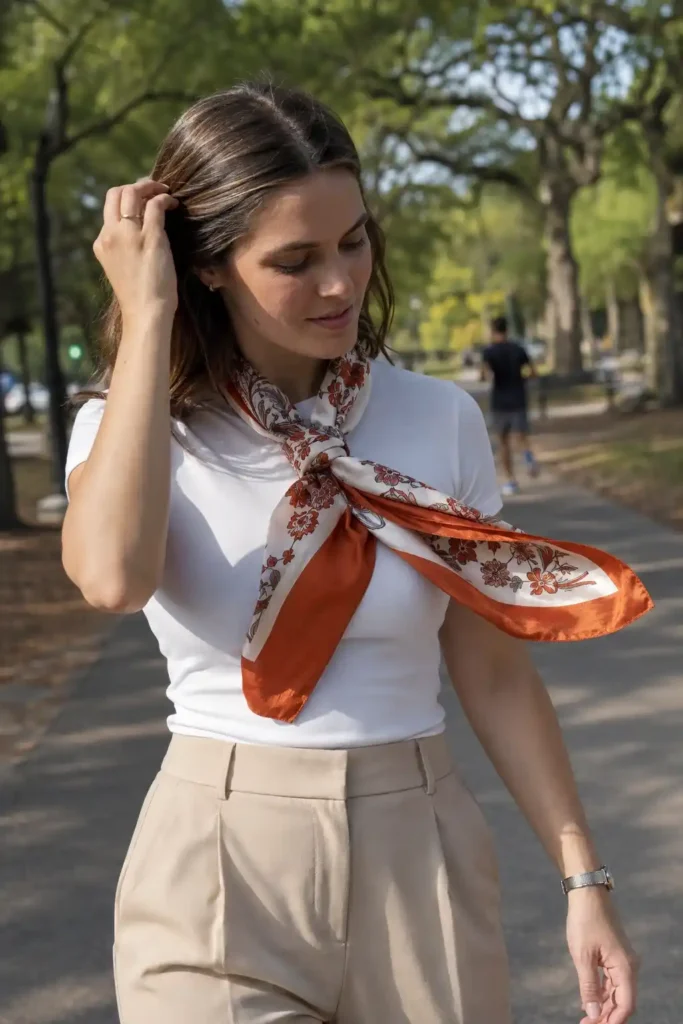
An Italian woman does not leave the house in spring without a silk scarf somewhere on her body.
Neck, bag handle, ponytail, doesn’t matter. It’s the accessory that does the most work for the least effort.
Pick one in a print you’d actually wear on repeat. A single good scarf styled five different ways reads as more intentional than five cheap ones worn once each.
5. Sunglasses as a personality trait
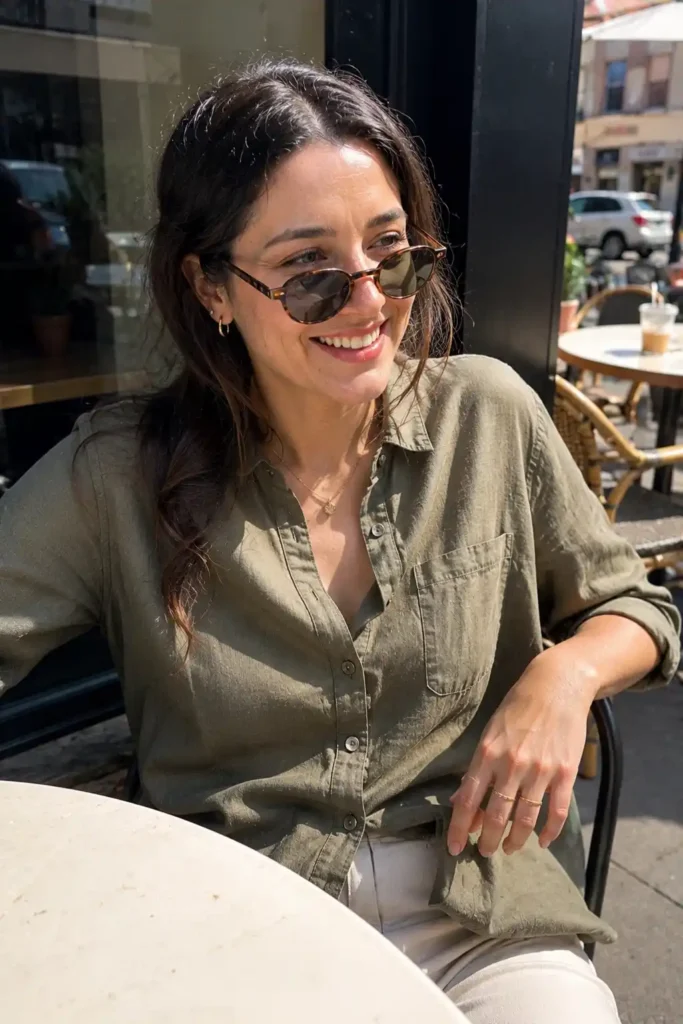
This one’s fun. Italian eyewear brands turned sunglasses into a mood rather than a squint-blocker.
Persol has been doing this since the 1930s, and honestly, once you own a pair of well-made sunglasses, the drugstore ones feel like a downgrade you can’t unfeel.
Round, cat-eye, aviator, it doesn’t matter which shape. What matters is that they fit your face and don’t look like they came free with a magazine.
6. The art of the effortless top knot
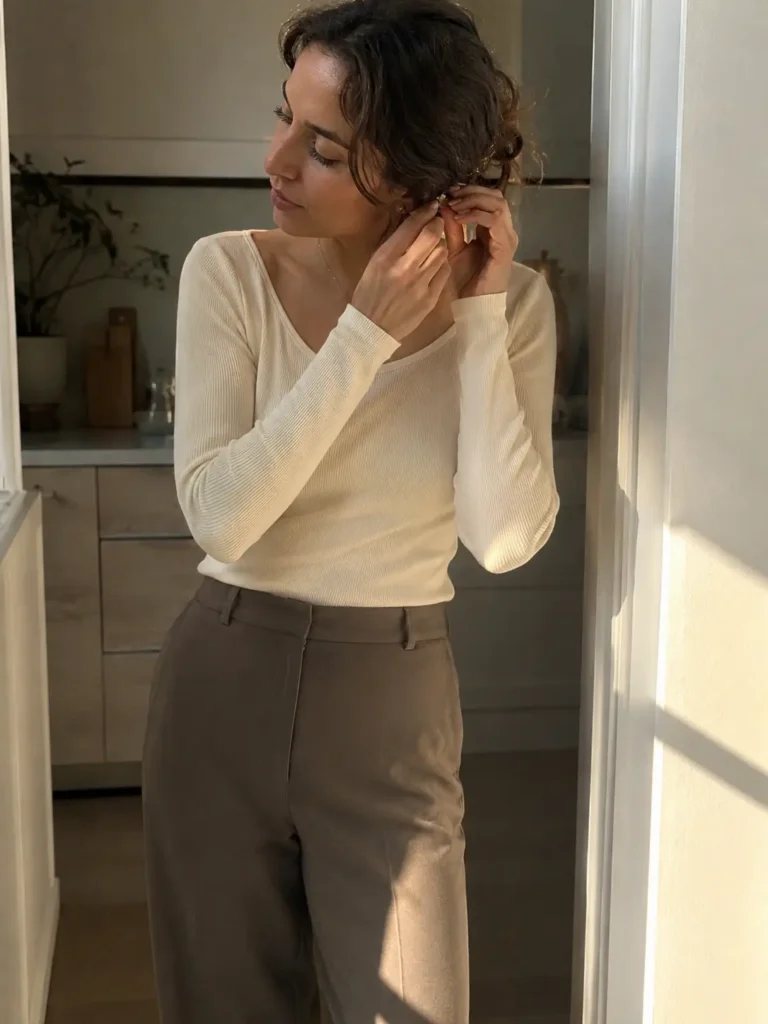
Not every Italian woman has a salon blowout every morning. A lot of the “effortless” hair you see is a low bun, twisted fast, pinned in ten seconds.
It works because the rest of the outfit is doing the talking.
This one took me embarrassingly long to learn. I used to think polished meant elaborate. It usually means the opposite.
7. Layer with intention, not bulk
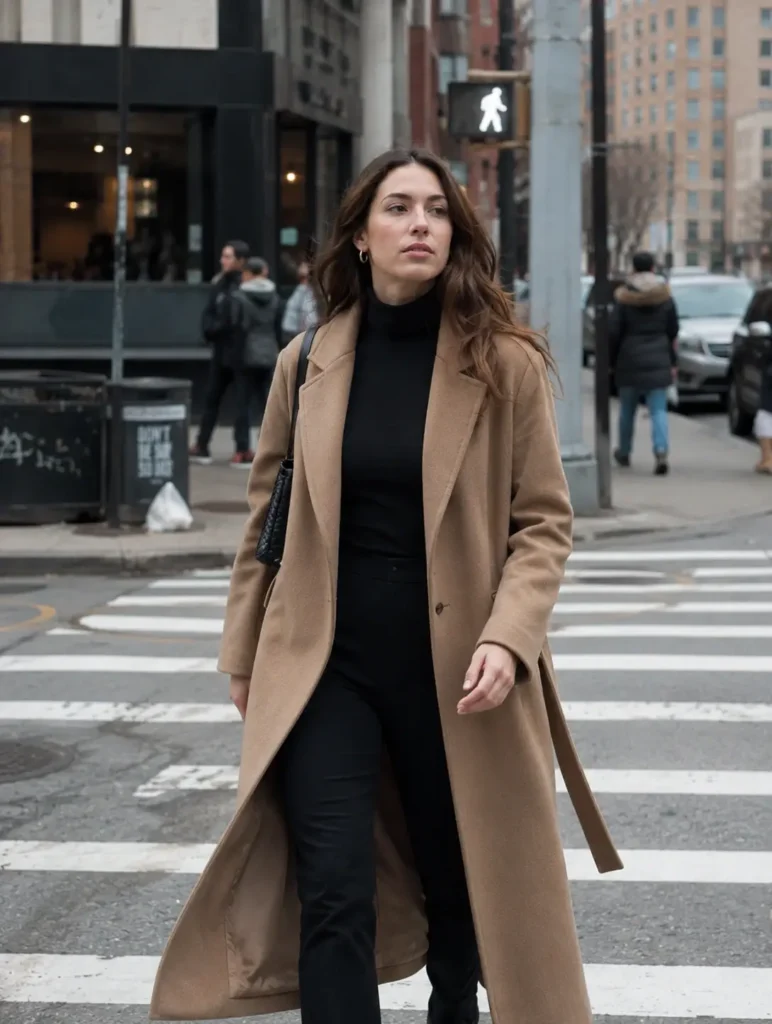
Italian layering is about proportion. A fitted turtleneck under an oversized coat. A slim trouser under a boxy blazer. One loose piece, one fitted piece, always.
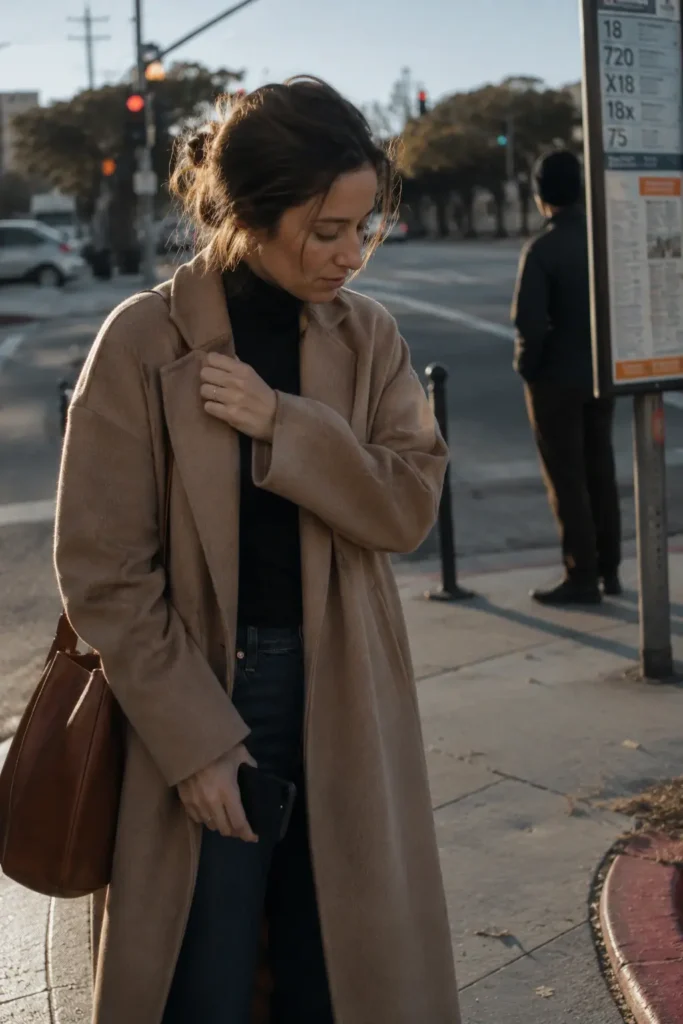
Compare that to the layering trend where three baggy pieces stack on top of each other and the whole shape disappears.
Which one photographs better for your Pinterest board? You already know.
8. Statement jewelry, minimal quantity
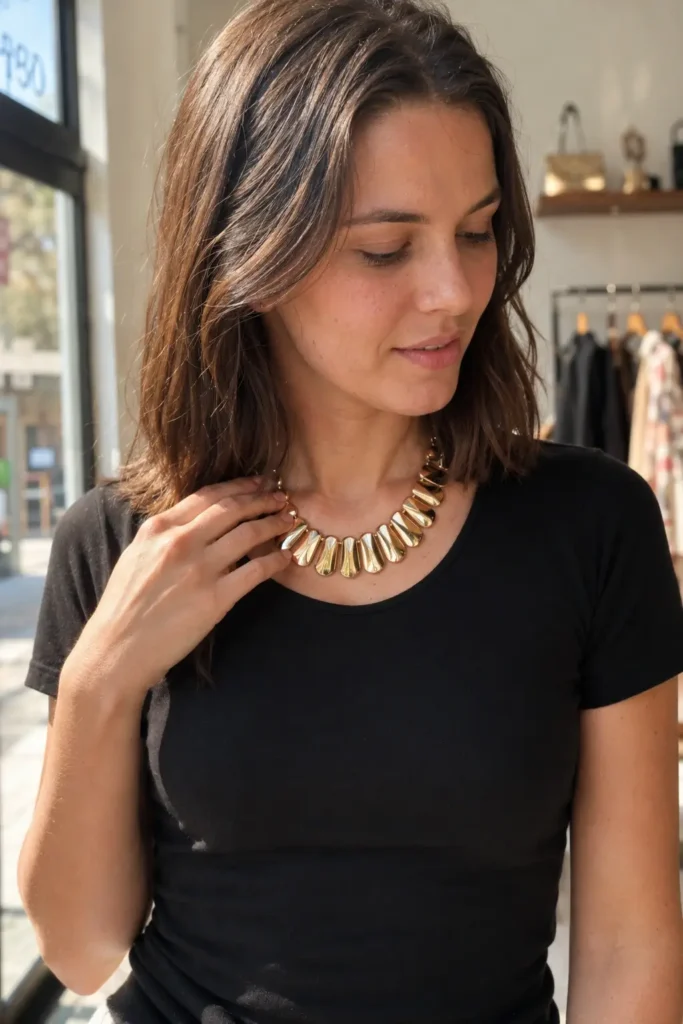
One great necklace beats five delicate ones fighting for attention.
Italian jewelry design, think brands like Bulgari, often centers on a single bold piece rather than a stack.
If you’re building a Pinterest inspiration board around this look, save images where the jewelry has room to breathe.
That’s usually the tell of a well-styled photo versus a cluttered one.
9. Denim, but make it structured
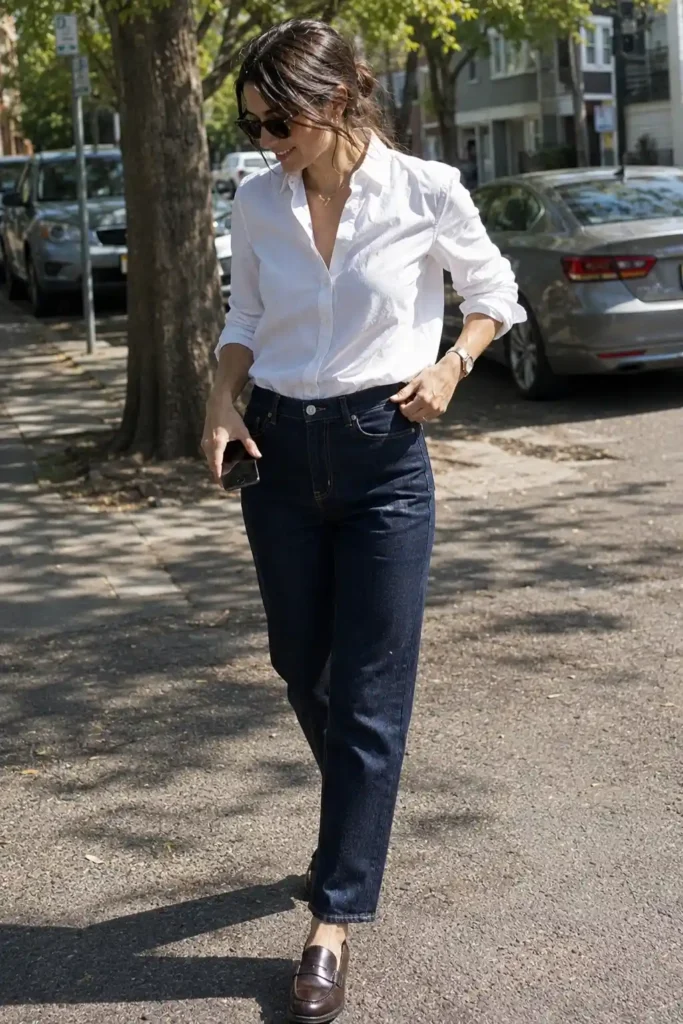
Skip the ultra-distressed, super-stretchy jeans for a week and try a stiffer, straight-leg denim instead.
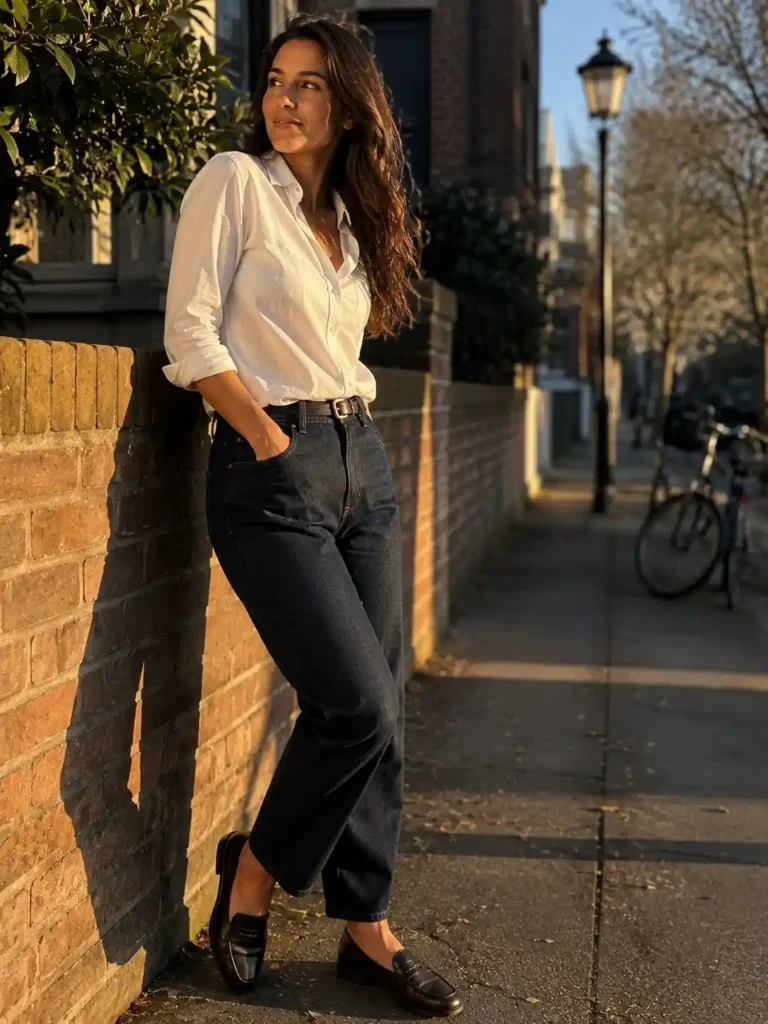
Italian casualwear treats denim like a trouser, not gym wear. Pair it with a crisp shirt and loafers and suddenly jeans look like an outfit instead of a default.
I was skeptical the first time a friend told me to size up my jeans for a straighter fit.
Wow, what a difference. Stretchy denim clings in places you don’t necessarily want clung to.
10. Espadrilles and loafers over sneakers
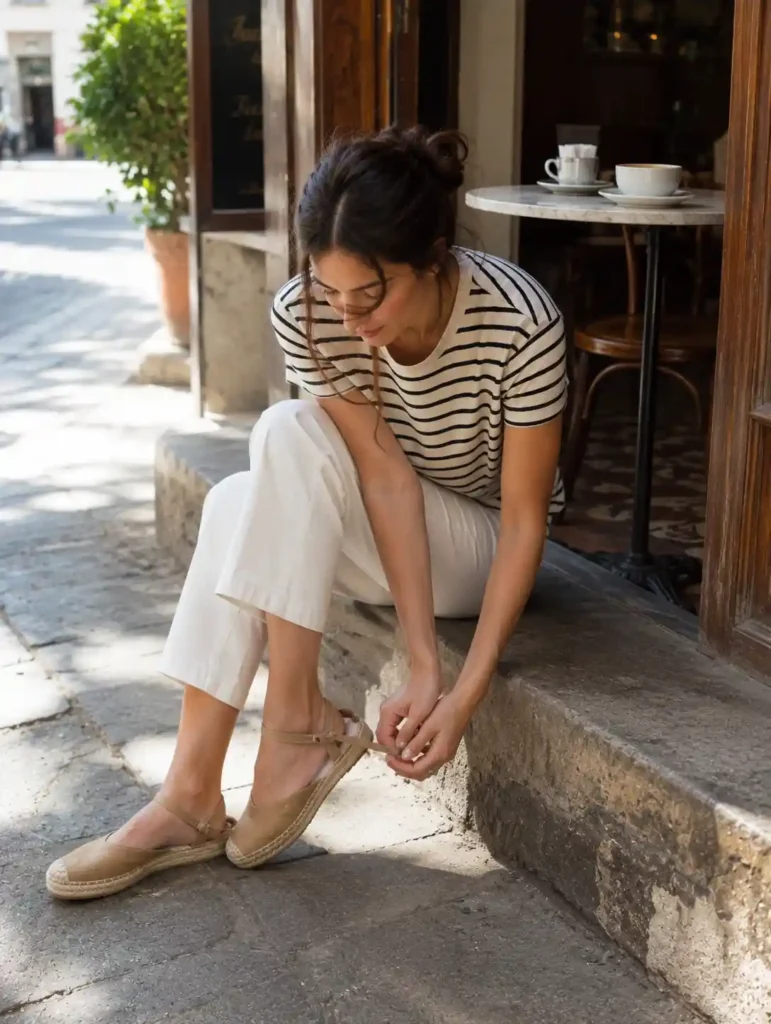
Sneakers have their place, sure, but Italian summer style leans hard into espadrilles, loafers, and low block heels.
Comfortable enough for cobblestones, polished enough for lunch.
| Shoe style | Best for | Comfort level |
|---|---|---|
| Leather loafers | Office, brunch, travel | High |
| Espadrilles | Beach towns, casual lunch | High |
| Block-heel sandals | Dinner, evening out | Medium |
| Ballet flats | Sightseeing, errands | Very high |
Honestly, a solid pair of loafers has replaced 80% of my sneaker rotation over the last two years.
11. Sunday-best mentality, every day
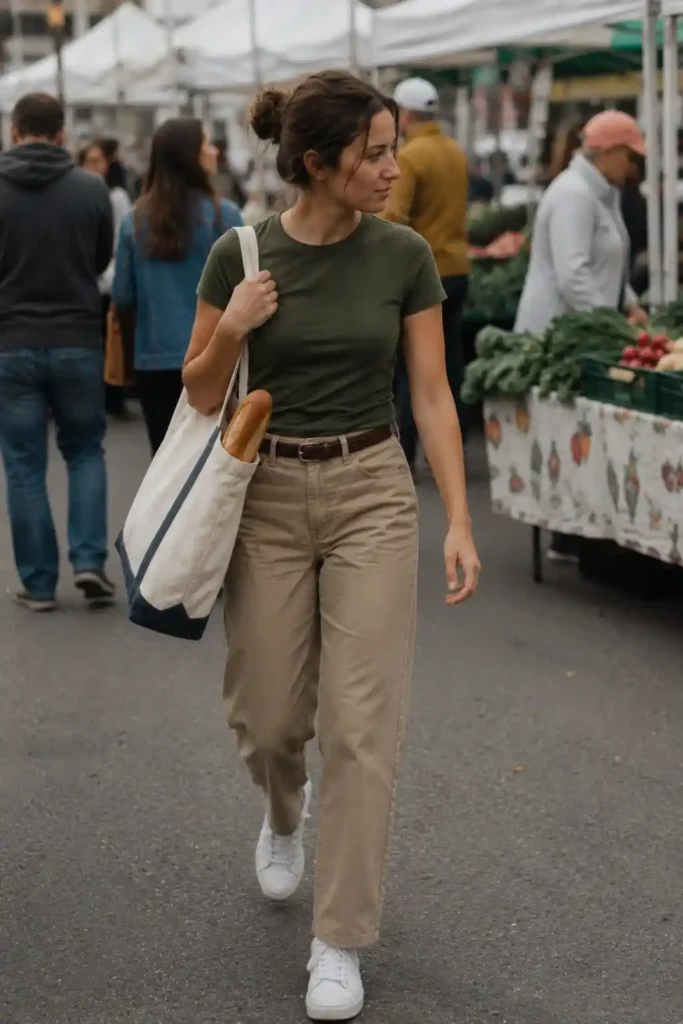
Here’s a small tangent, unrelated to fashion technically, but stay with me. Italians treat everyday grocery runs with a level of care that Americans usually reserve for date night.
That mindset bleeds into the clothes. Nobody’s “just running out real quick” in sweatpants.
You don’t need to overhaul your whole life to borrow this.
Just ask yourself before you leave the house: would I be embarrassed if I ran into an ex right now? If the answer’s yes, change your shirt.
12. A signature scent, worn consistently
This isn’t clothing, but it belongs on the list anyway. Italian style extends past what you see, into what lingers after someone walks past you.
Choosing one or two signature scents and wearing them consistently is part of building a recognizable personal style, the same way a favorite blazer or bag becomes part of your identity.
If you want a deeper dive into Italian fragrance houses, Acqua di Parma’s history is a good rabbit hole to fall into on a slow afternoon.
Building your own Pinterest board

If you’re pinning any of this for later, group your saves by category instead of dumping everything into one board.
Try separate boards for “tailoring,” “accessories,” and “color palettes.” It makes shopping off your own board so much easier six months from now when you’ve forgotten why you saved half of it.
For more visual references, Vogue’s Milan Fashion Week street style coverage is one of the better free resources for spotting real outfits on real bodies, not just runway looks.
Frequently asked questions
Do I need designer brands to get an Italian style look? No. The look relies on fit, fabric, and restraint more than logos.
A well-tailored blazer from a mid-range store often reads more polished than an ill-fitting designer piece.
What’s the easiest place to start if I’m overwhelmed? Start with one thing: get an existing blazer or trousers tailored properly.
That single change tends to make the biggest visible difference for the least cost.
Is this style too formal for everyday errands? Not at all. Italian everyday style still includes jeans, loafers, and simple tops.
The formality comes from intention, not from dressing up constantly.
Final thought
None of this requires a shopping spree or a trip to Florence, though honestly, go if you can, it’s worth it.
Pick two or three ideas from this list, actually use them for a month, and see what sticks.
Which one are you trying first: the tailored blazer, the signature scent, or finally retiring those old sneakers?
Save this post, come back to it, and let me know how the closet edit goes.
