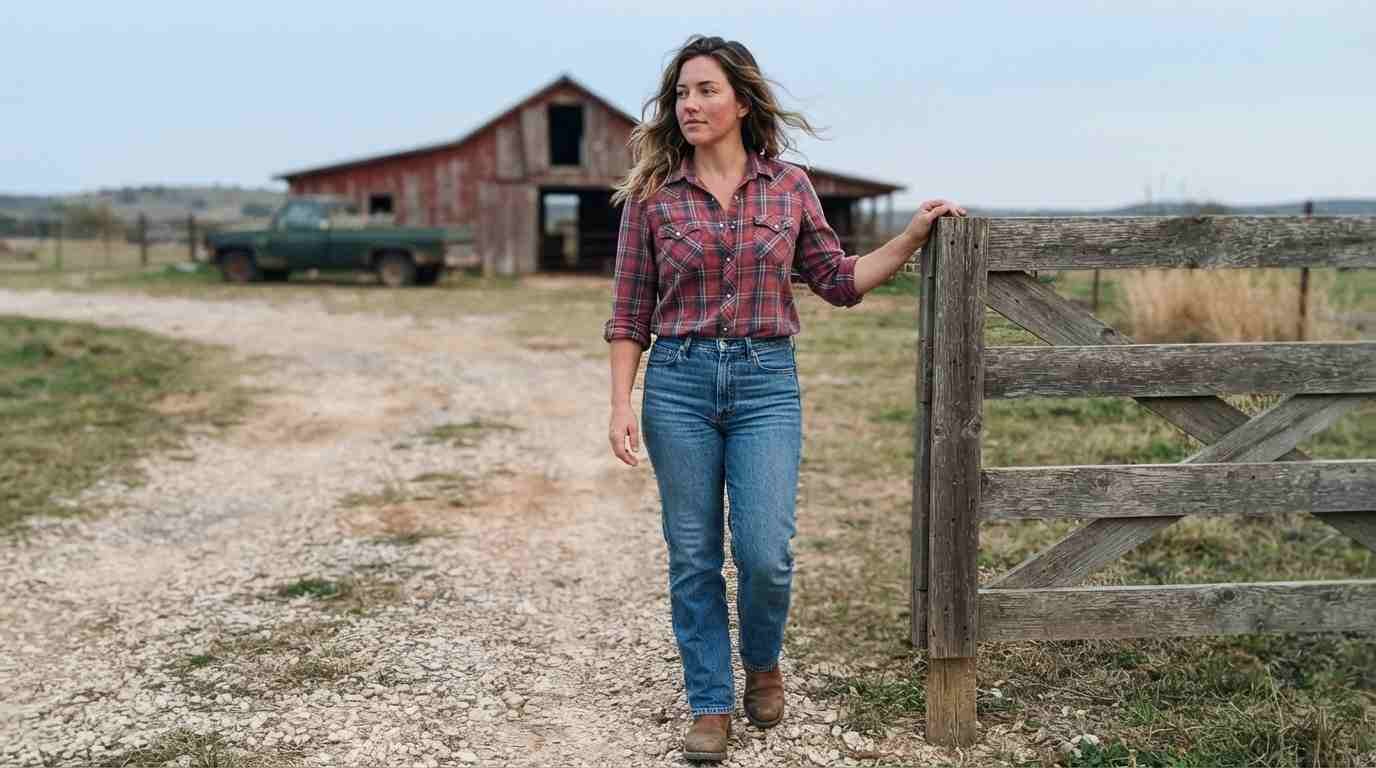
Your closet is full of clothes and somehow you still have nothing to wear on a ranch, at a barn, or to that “casual western” event your friend keeps texting you about.
I get it. I spent two years working part-time at a feed store in Texas, and I learned the hard way that “cute” and “functional” don’t always show up in the same outfit.
This list fixes that. It’s 20 ideas I’ve actually worn, tested, or watched a coworker pull off better than I ever could.
No fluff, no filler, just real western workwear that holds up whether you’re hauling hay bales or just want that effortless prairie-meets-office look.
What actually counts as western work wear
Western workwear isn’t a costume.
It’s clothing built for movement, weather, and long days, dressed up with details borrowed from ranch culture: yoke seams, pearl snaps, sturdy denim, and boots that mean business.
The best pieces do double duty. A good chore coat works over coveralls in the barn and over a sweater at brunch. That’s the whole point.
You’re not buying a Halloween outfit, you’re building a wardrobe that survives real work and still looks put together.
Denim and base layers that carry the whole outfit
Denim is the backbone here. Skip the ultra-distressed stuff for actual work days; it looks tired fast and offers zero protection.
- High-rise straight leg jeans. They move with you when you bend, squat, or climb into a truck bed.
- I own three pairs in the same cut because once you find one that fits right, you don’t mess with it.

- Bootcut work denim. Wide enough at the hem to sit over boots without bunching. Bunched denim inside a boot is miserable by hour three, trust me on this one.
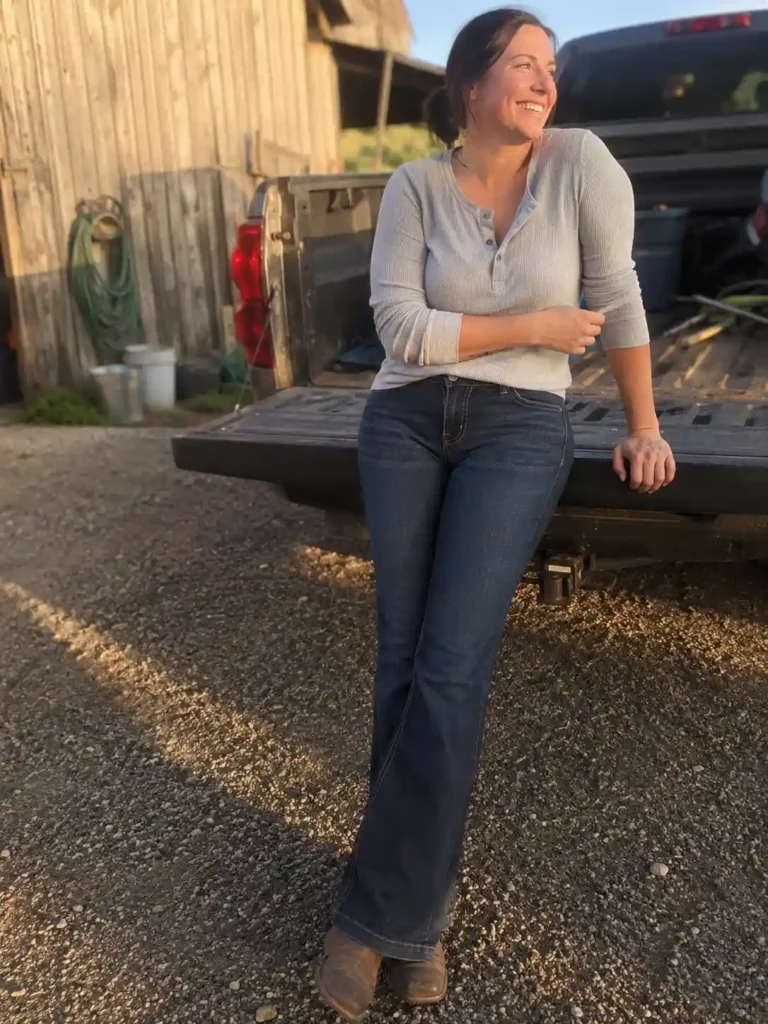
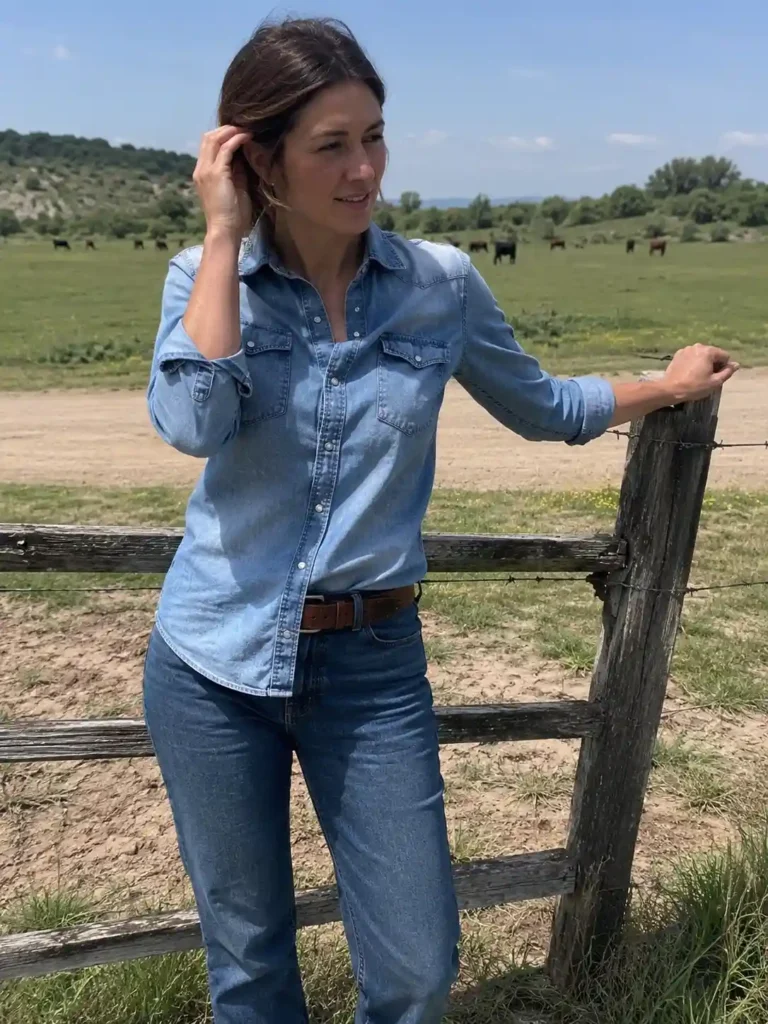
- A snap-front western shirt. Snaps pop open if fabric catches on a fence or gate latch instead of tearing.
- That’s not a style choice, that’s a safety feature that happens to look great.
- A ribbed thermal henley. Layer it under a chore coat in fall. It’s not glamorous, but it’s the piece I reach for more than anything else in my drawer.

- A pearl-snap flannel. IMO this is the most underrated piece in western fashion. It’s warm, it’s soft, and it photographs beautifully for anyone who cares about that sort of thing.
Outerwear that earns its keep
Nobody wants to be cold and stylish is a myth. You can have both, but outerwear is where quality actually matters.
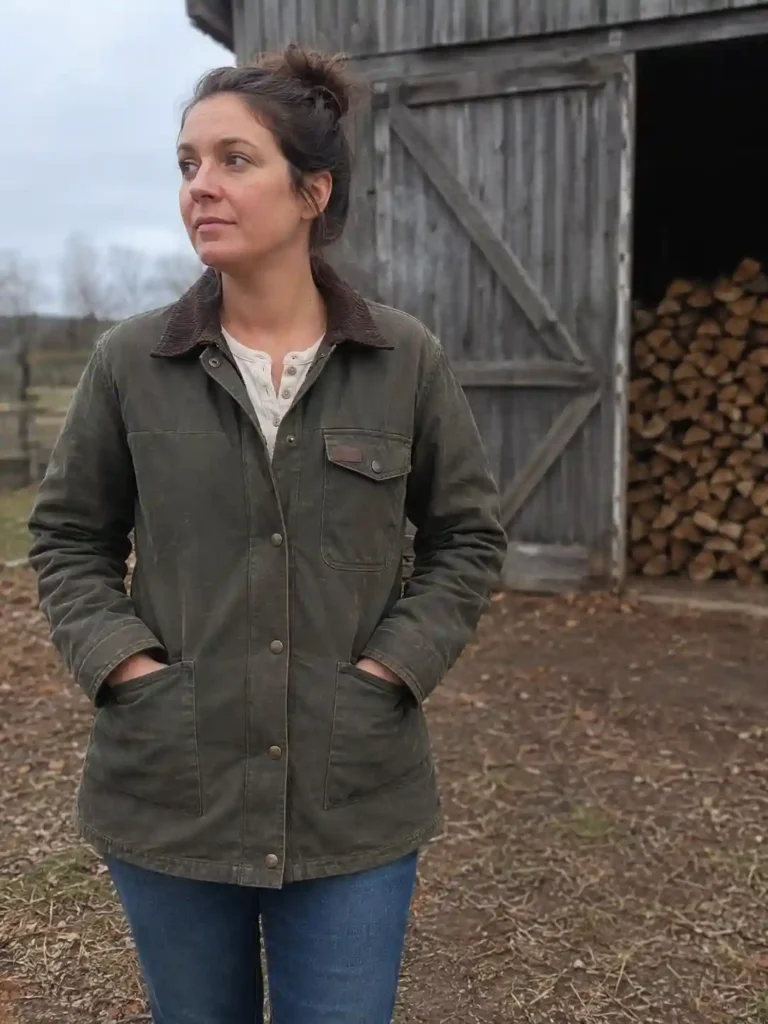
Look for canvas duck fabric, corduroy collars, and a cut that lets you raise your arms overhead without the jacket riding up.
Cheap outerwear rips at the shoulder seam within a season. I learned that lesson with a $30 jacket that didn’t survive one Colorado winter.
- A waxed canvas chore coat. Water-resistant, tough, and it gets better looking the more beat up it gets.
- A shearling-lined denim jacket. Warm without the bulk of a puffer. Great for mornings that start cold and end warm.

- A quilted vest. Free up your arms while keeping your core warm. Underrated for anyone doing repetitive lifting or reaching.
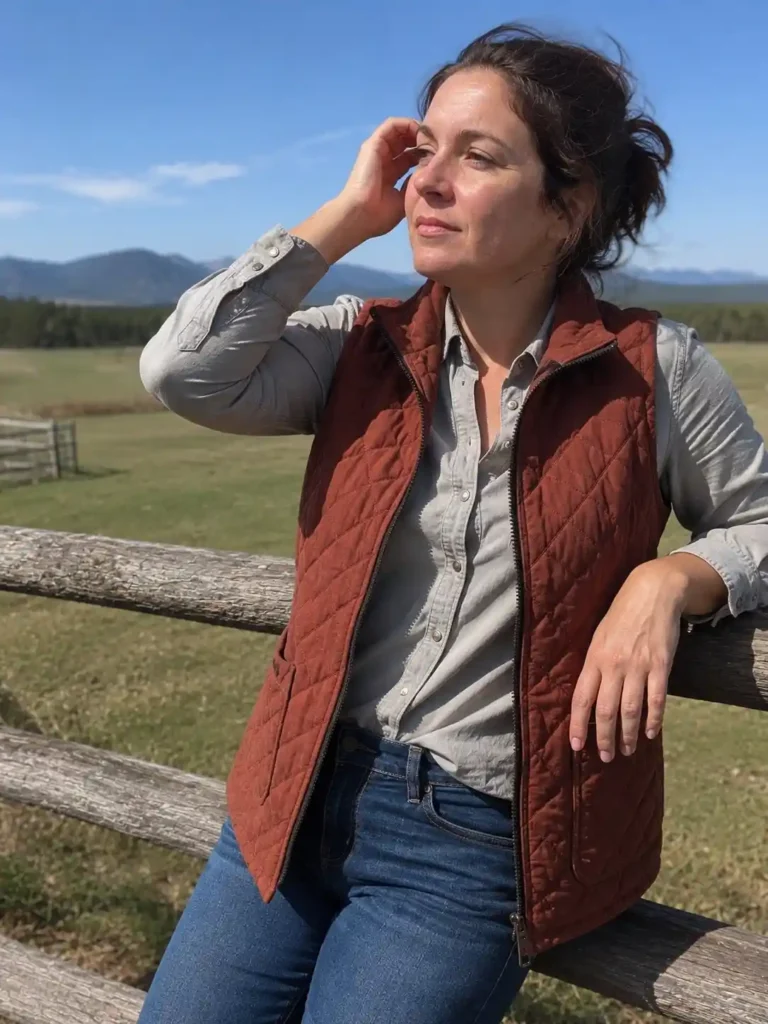
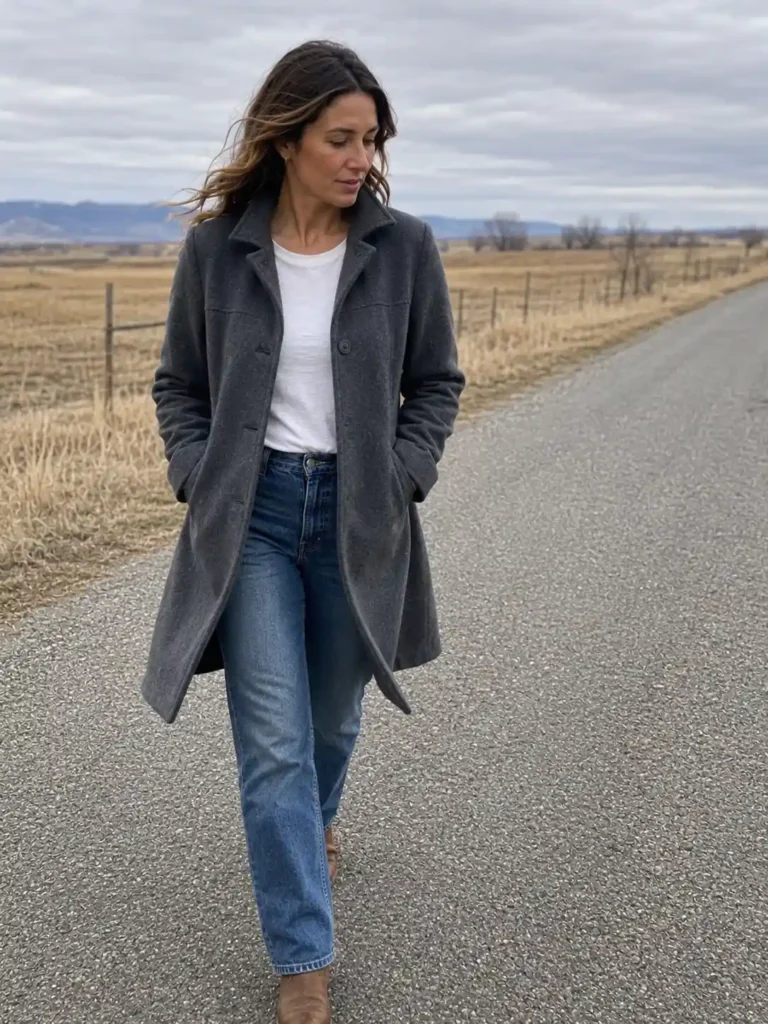
- A wool-blend ranch coat. Longer length, block wind better, and honestly look incredible with jeans and boots.
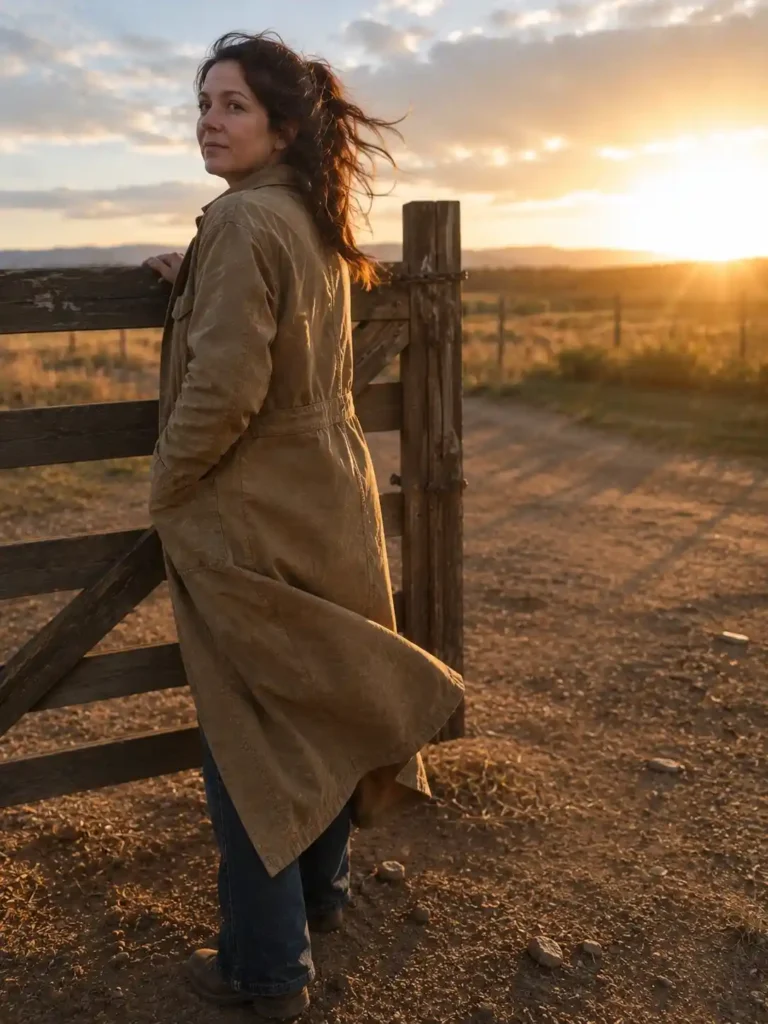
- A duster coat for layering. This one’s more statement than function, but slide it over any outfit and the whole thing reads as intentional.
Boots, socks, and the stuff people forget
Here’s a random thought that has nothing to do with fashion: why do work boot commercials always show someone chopping wood? Nobody I know chops wood for a living anymore, yet every ad acts like that’s the primary use case. Anyway, boots matter more than almost anything else on this list.
- Round-toe western work boots. More stable than pointed toes for standing all day. Pointed toes look sharp, but your feet will file a complaint by 3pm.
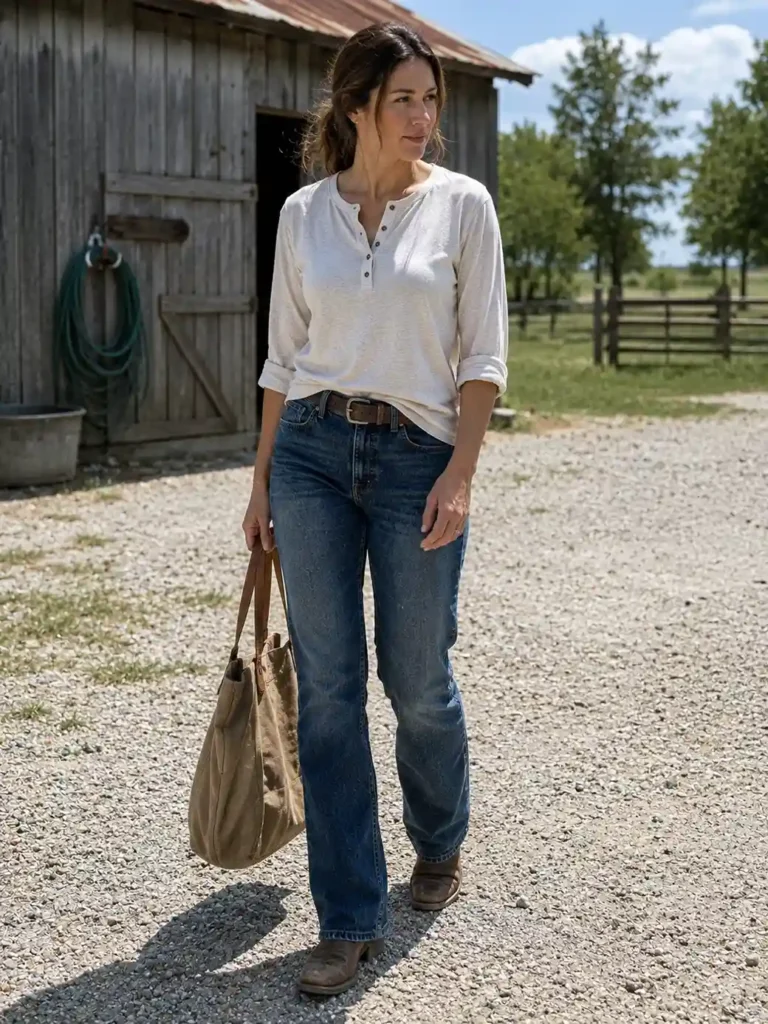
- Waterproof leather boots. Non-negotiable if you’re near mud, water troughs, or anything remotely wet. I ruined one good pair learning this.
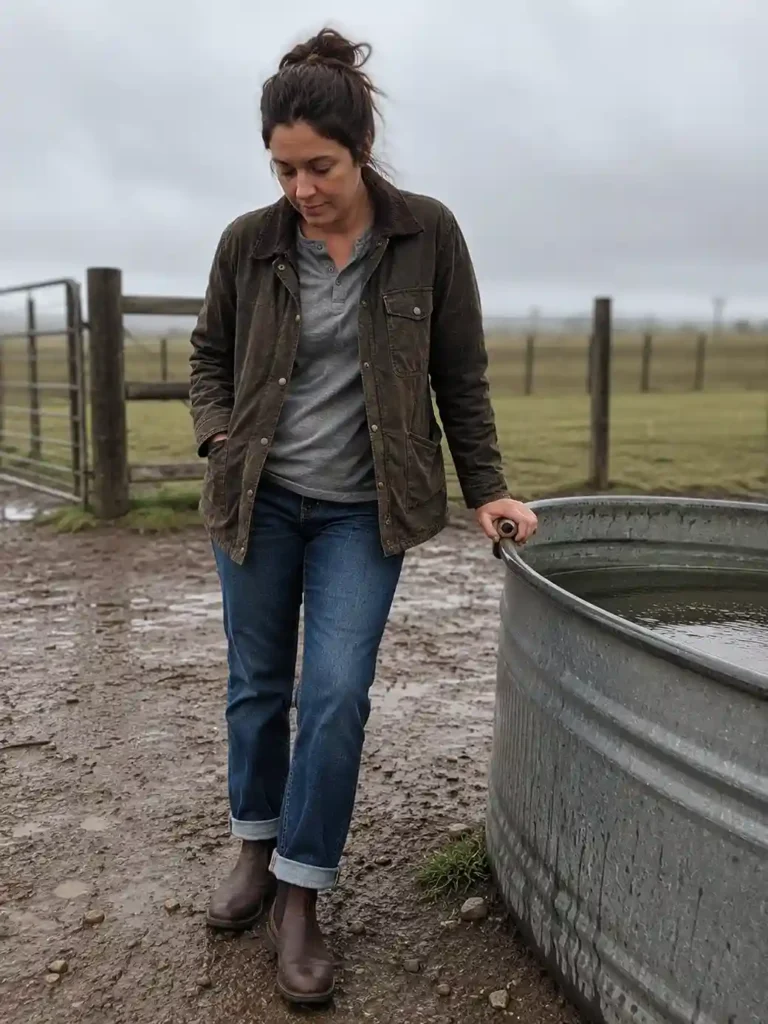
- Merino wool boot socks. Wick moisture, resist odor, last for years. Cheap cotton socks bunch up and cause blisters, full stop.
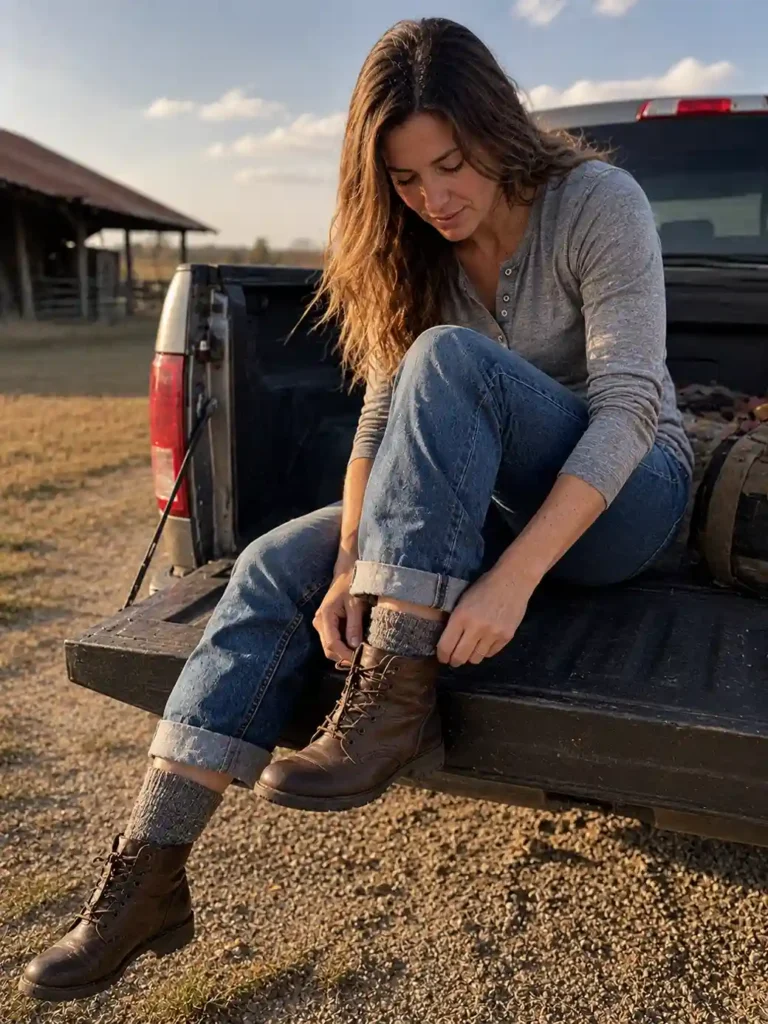
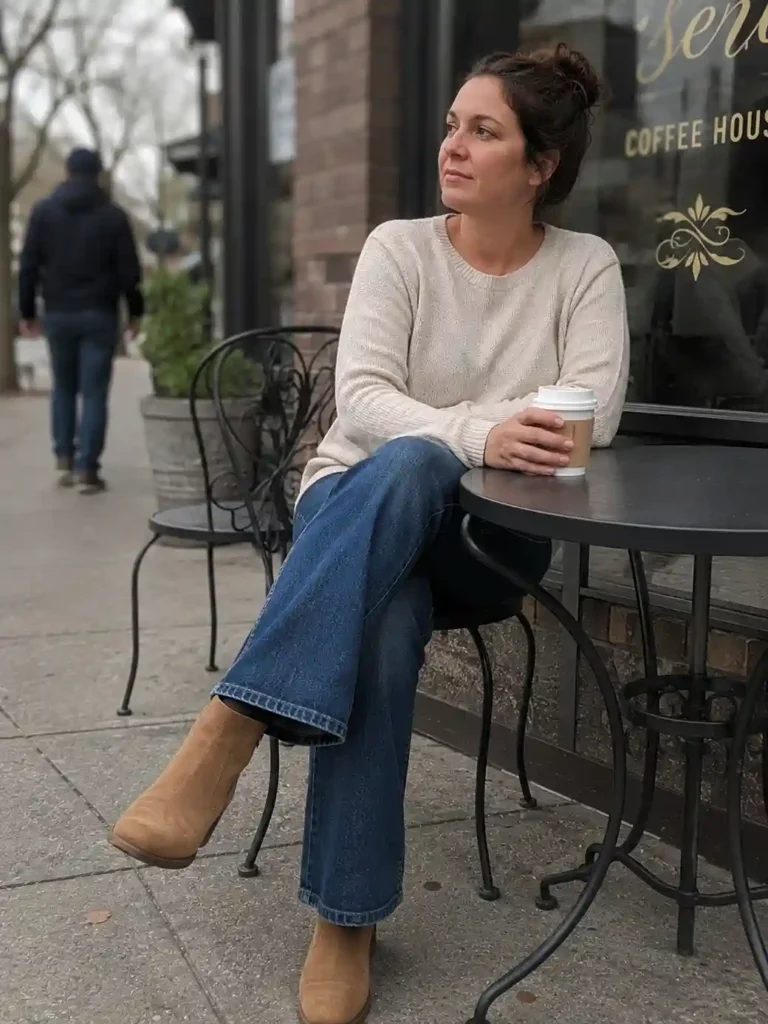
- A low block-heel boot for lighter days. Comfortable enough for a full shift, sturdy enough that you’re not wobbling on gravel.
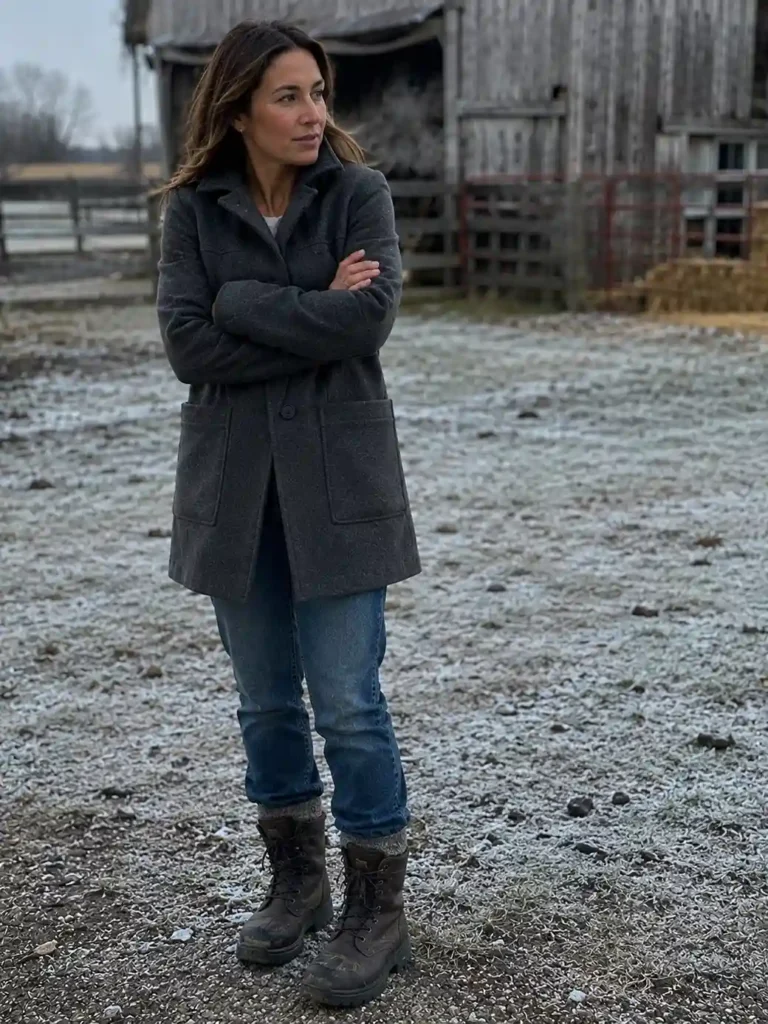
- Insulated boots for cold months. If you’ve never worn insulated boots in January, you don’t know real comfort yet.
For sizing and break-in advice, Ariat’s boot fit guide is genuinely worth reading before you buy your first pair, since western boots fit differently than sneakers do.
Most people size down half a size from their usual sneaker fit, which surprises almost everyone the first time.
Accessories and the finishing touches
This is where personality shows up. Function first, always, but a few small choices make an outfit feel like yours instead of a uniform.
- A leather work belt. Skip decorative belts for daily wear. You want something that holds tools or a phone without stretching out.
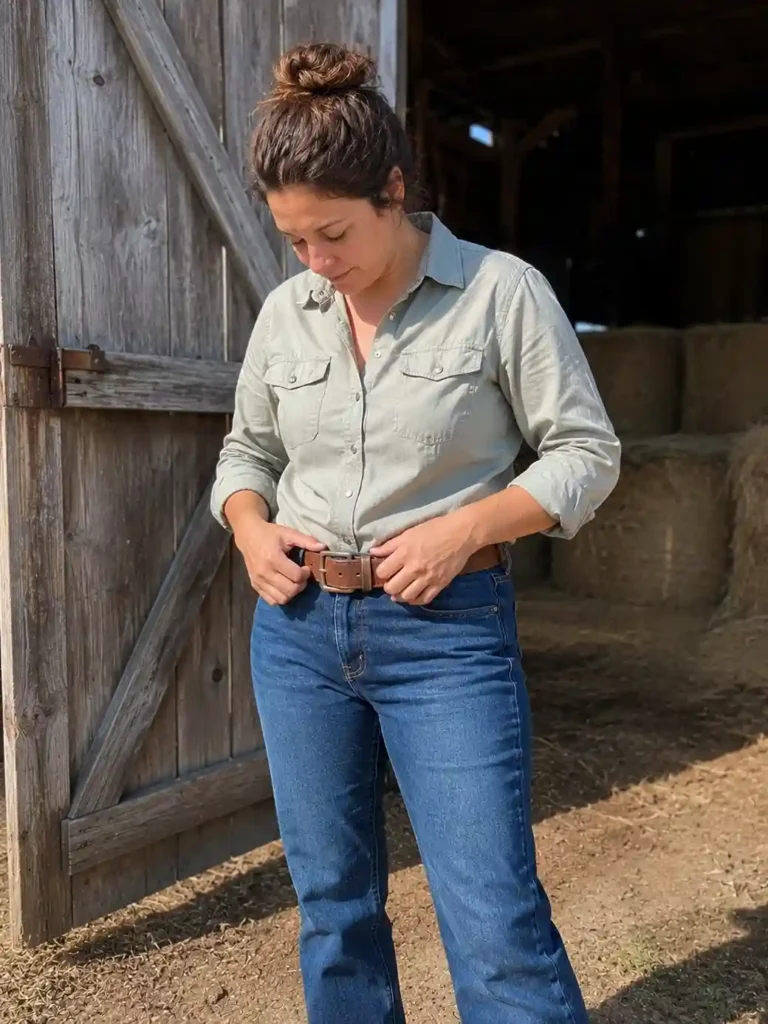
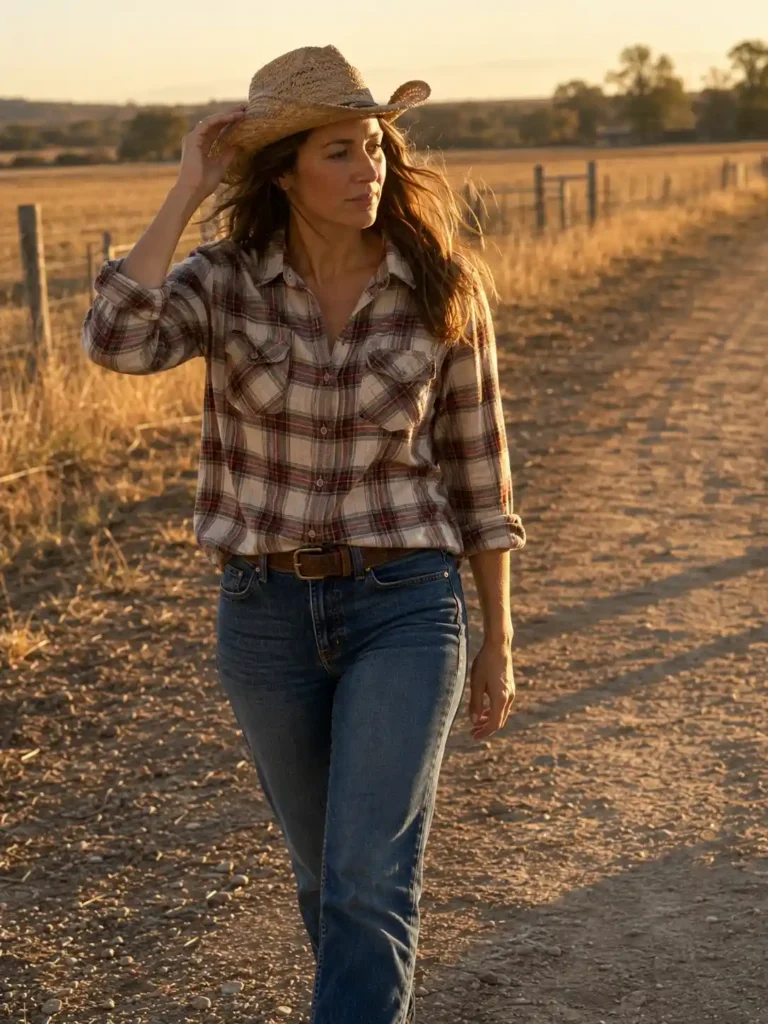
- A wide-brim felt or straw hat, matched to season. Sun protection matters more than people admit, and a good hat saves your skin over years of outdoor work.
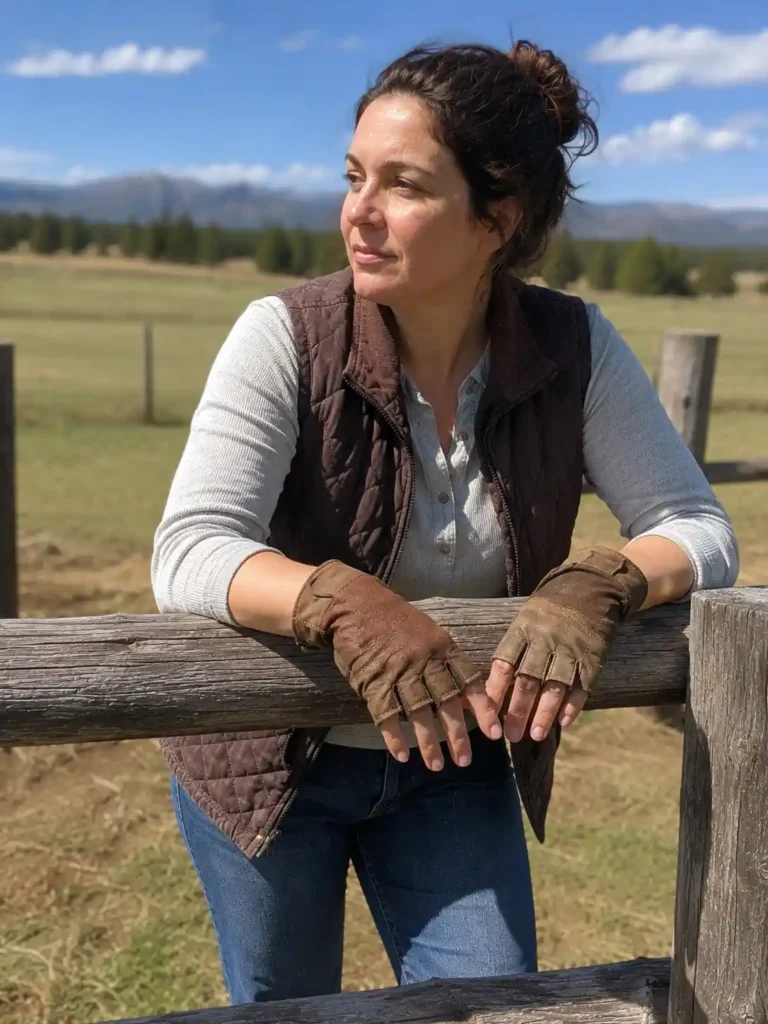
- Fingerless work gloves. Grip without losing dexterity for smaller tasks. I resisted these for years thinking they looked silly. Wow, was I wrong.
- They’re a game for anyone doing hands-on work.
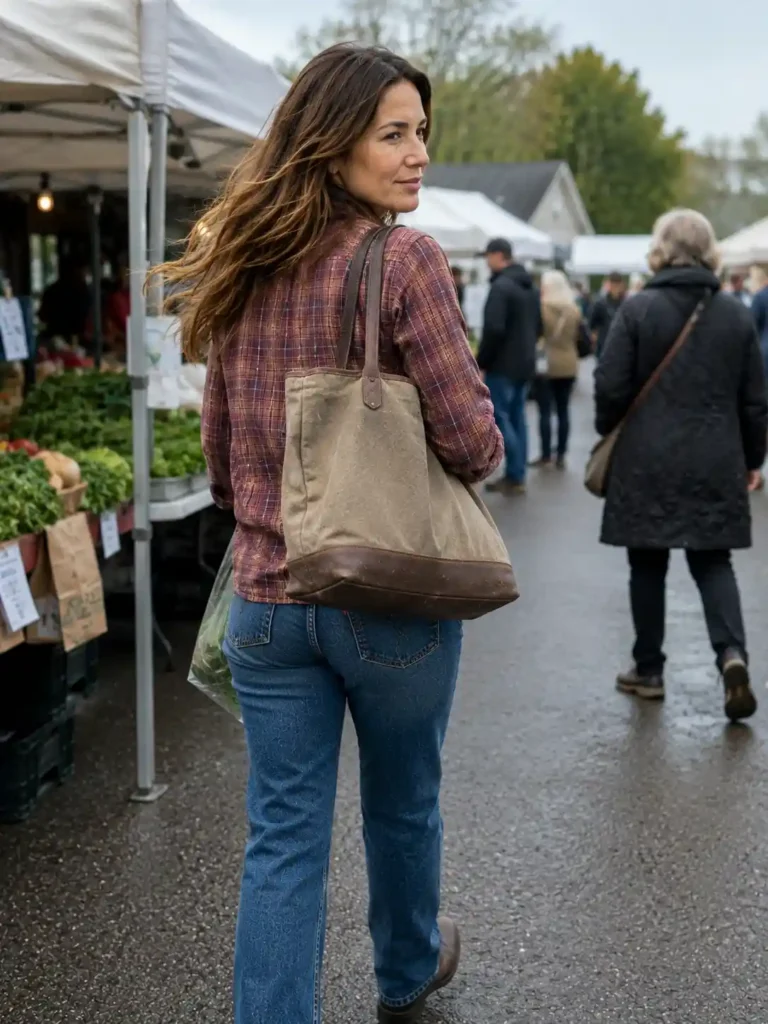
- A canvas or leather tote for hauling gear. Ditch the flimsy tote bags. You want something with a flat bottom that stands up on its own.
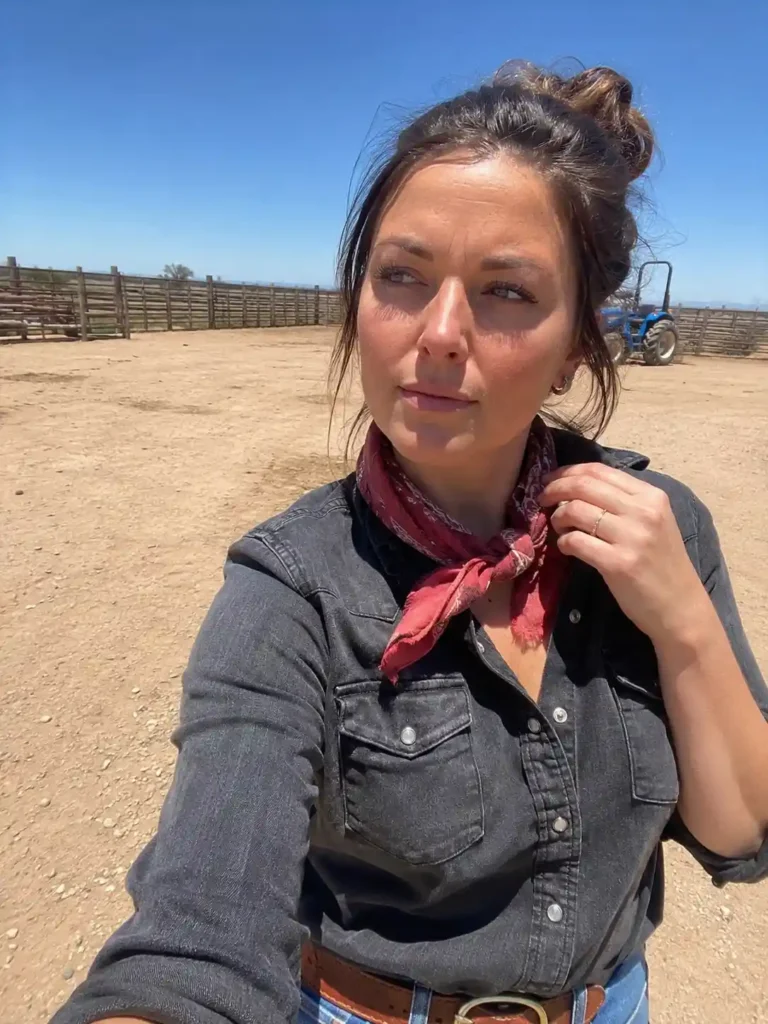
- A bandana, worn practically. Dust protection, sweat control, sun cover for your neck. Simple, cheap, and it works every single time.
Quick pick guide
| Need | Best pick | Why it works |
|---|---|---|
| All-day standing | Round-toe boots | Stable base, less foot fatigue |
| Wet or muddy conditions | Waterproof leather boots | Keeps feet dry through long shifts |
| Cold mornings, warm afternoons | Shearling denim jacket | Layers off easily as it warms up |
| Budget-friendly staple | Snap-front shirt | Durable, versatile, holds up to washing |
Dressing for the actual season, not just the aesthetic
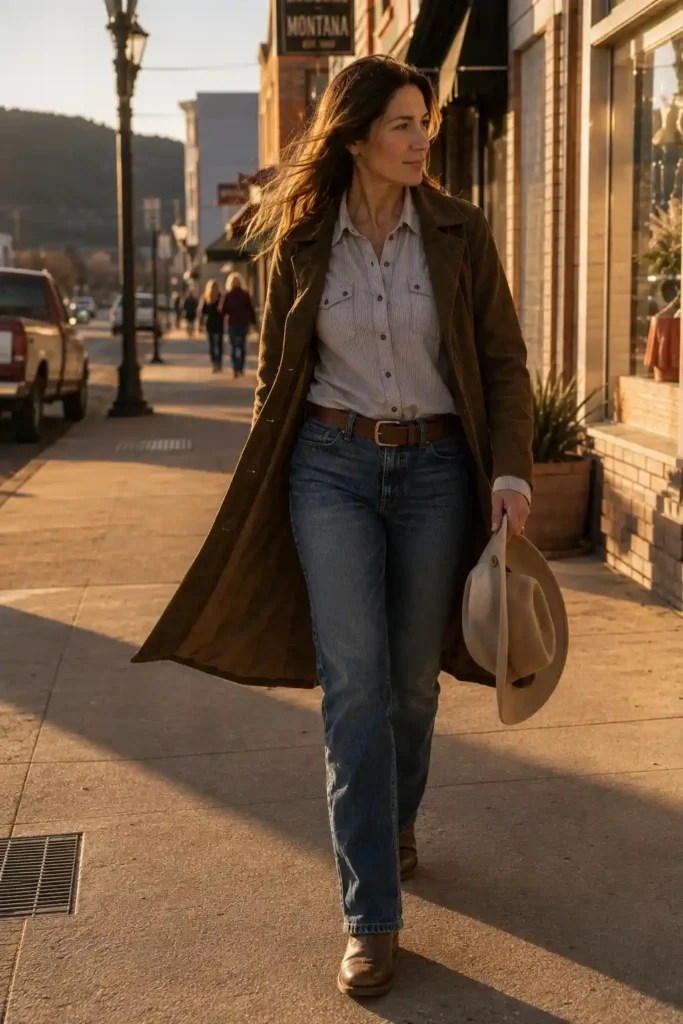
A lot of western style content shows the same outfit year-round, and that’s just not realistic if you’re actually outside working.
What keeps you comfortable in March will roast you alive by July.
Spring calls for layers you can shed fast. Mornings start near freezing in a lot of ranch country, then climb 30 degrees by noon.
A light flannel under a vest beats a heavy coat every time, because you can tie the flannel around your waist once the sun’s up.
Summer is about breathable fabric and sun coverage, oddly at the same time. Lightweight denim, a straw hat, and a bandana handle most of it.
Skip anything dark and heavy unless you enjoy sweating through your shirt by 10am, which, no thank you.
Fall is peak chore-coat season, honestly the best few months for this whole aesthetic.
Cool mornings, mild afternoons, and just enough chill to justify layering three or four pieces from this list at once.
Winter means insulated boots, wool socks, and real outerwear, not just a denim jacket pretending to be enough.
This is where people cheap out and regret it. I did exactly that my first winter working outside, and I spent more on hand warmers than I would’ve spent on a decent coat upfront.
Common mistakes people make with this look
Even with good pieces, a few habits ruin the whole effect. IMO these are the ones that trip people up most often.
- Buying everything brand new and stiff. Raw denim and unbroken boots look uncomfortable because they are uncomfortable. Break pieces in before you need them for a full day.
- Going too matchy. One denim piece per outfit is plenty. Denim on denim on denim starts looking like a costume rather than an outfit.
- Ignoring fit for the sake of a trend. Oversized everything looks great in photos and gets caught on literally everything in real life. I’ve snagged a loose sleeve on a gate latch more times than I’d like to admit.
- Skipping the accessories entirely. A hat or belt pulls a plain outfit together in about five seconds. Don’t skip this step just because it feels optional.
- Forgetting the practical side. This style started as workwear for a reason. If a piece can’t survive actual movement, bending, and weather, it’s costume, not clothing.
Mixing pieces for actual outfits
Don’t buy all 20 items and throw them on at once. That’s how you end up looking like you raided a costume rack instead of dressing for the day.
Pick one statement piece, like a duster or a wide-brim hat, and build around it with simple basics.
A snap-front shirt, straight-leg denim, and round-toe boots covers 80% of what most people need for a full week of work.
Add the coat or vest depending on weather, then rotate accessories to keep things feeling fresh without buying anything new.
Wrangler’s seasonal lookbooks show real outfit pairings rather than single items on a hanger, which honestly helps more than scrolling through a hundred product pages one at a time trying to picture how things go together.
Care tips that actually extend the life of these pieces
Good western workwear isn’t cheap, so treat it right.
- Air-dry denim instead of tumble drying to keep the fit and color longer.
- Condition leather boots every few months, not just when they look dry.
- Store hats brim-up on a shelf, never crushed in a bag.
- Spot clean canvas jackets rather than washing the whole thing every week.
I skipped boot conditioning for almost a year once. The leather cracked at the crease line and no amount of polish fixed it. Don’t be me.
FAQs
Is western workwear only for people who actually work outdoors? No. Plenty of people wear these pieces purely for style, and that’s completely fine. The clothing just happens to also handle real work if you need it to.
What’s the one piece worth spending more on? Boots, every time. A cheap jacket just looks a little worn. Cheap boots hurt, and they usually fall apart within a season anyway.
Can these pieces work for an office with a casual dress code? Absolutely. Swap the chore coat for the shearling denim jacket, keep the boots low-heeled, and you’ve got a look that reads polished without trying too hard.
Final thought
Western workwear rewards people who buy fewer, better pieces instead of chasing every trend that pops up on Pinterest.
Start with boots and denim, add outerwear for your climate, then layer in accessories as you find pieces that actually fit your life.
Which one of these are you adding to your closet first, the duster coat or the shearling jacket? Save this list, pin your favorites, and come back to it next time you’re staring at your closet wondering what to wear.
