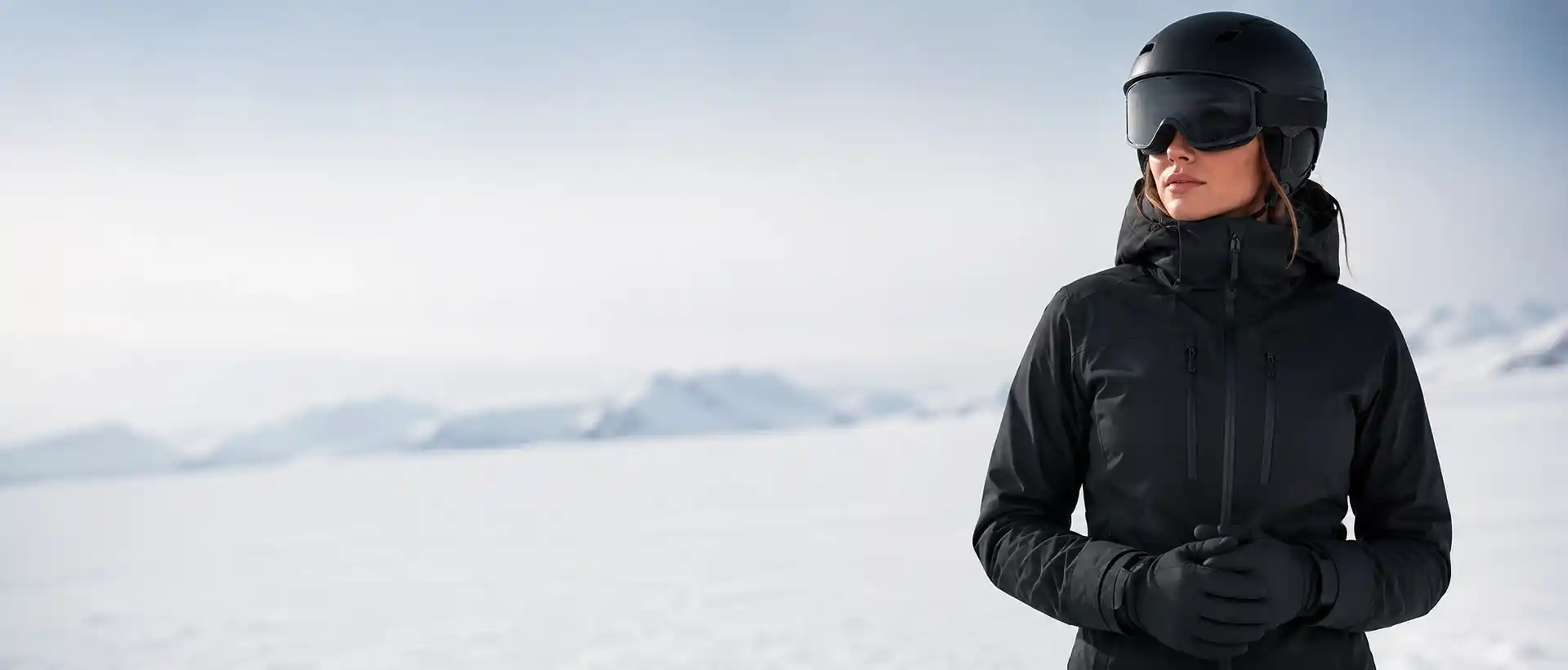
Black on the slopes isn’t just a color choice. It’s a whole mood.I switched to an all-black kit three seasons ago, mostly because I got tired of matching my helmet to my jacket to my gloves like I was solving a puzzle every morning.
Turns out, going monochrome solved more than my sock-drawer chaos.
It made getting dressed faster, my photos looked sharper against the snow, and I never once worried about clashing colors again.
If you’ve been scrolling Pinterest for hours trying to figure out how to make black work in a sea of neon jackets and pastel bibs, you’re in the right place.
This guide walks through real outfit combinations, fabric picks, and the small styling details that separate a “just okay” look from one that actually turns heads on the chairlift.
No fluff, no generic “just wear a black jacket” advice. Just what’s actually worked for me across a handful of resorts, plus a few things I’d do differently if I were starting from scratch.
Why an all-black ski outfit actually works
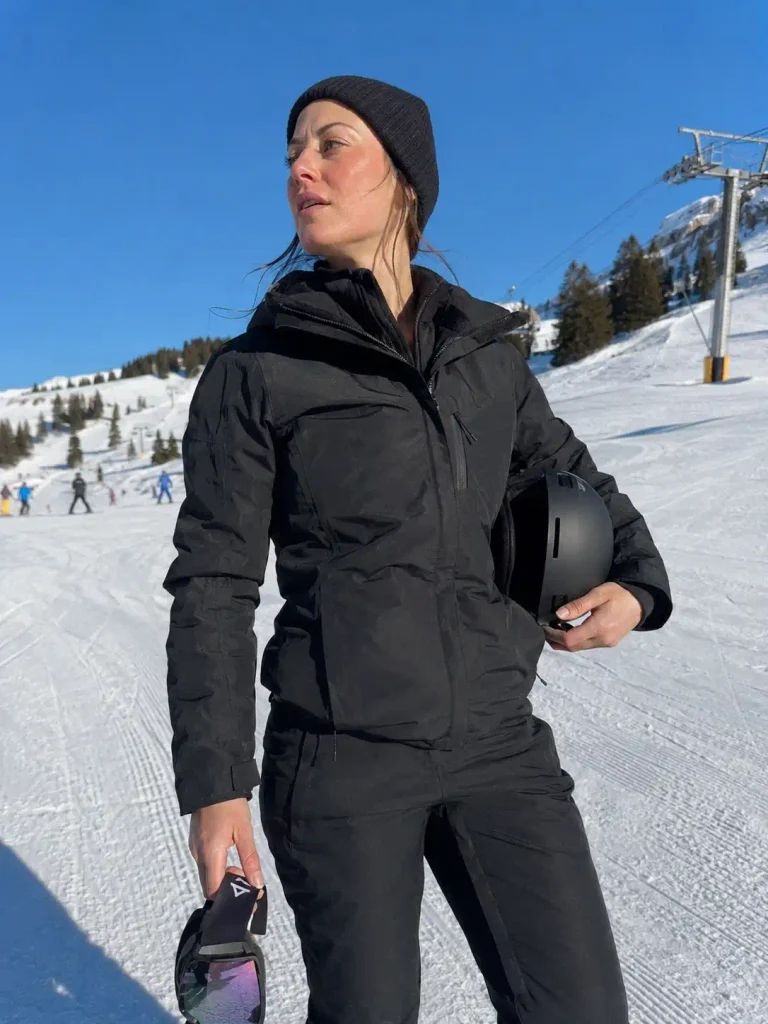
Black reads as intentional. When everything from your beanie to your boots sits in the same tonal family, your outfit looks planned instead of thrown together.
There’s a reason so many ski brands, from Arc’teryx to Bogner, build entire seasonal lines around black and charcoal pieces.
There’s also a practical side to this. Black absorbs more heat from sunlight than lighter colors, which can work in your favor on cold, sunny days.
On the flip side, it can make you a little warmer than you’d like during spring skiing, so layering choices matter more when you go this route.
I learned that the hard way during a bluebird day in Park City.
I wore a heavyweight black shell over a mid-layer built for single-digit temps, and by noon I was sweating through my base layer while everyone in lighter colors looked perfectly comfortable.
Lesson learned: black looks great, but you still need to dress for the actual weather, not just the aesthetic.
Building the base: layers that actually keep you warm
Before we get to the fun part (accessories, texture, styling), let’s talk function. A cute outfit means nothing if you’re shivering by lunchtime.
REI’s own guide on what to wear skiing and snowboarding breaks the system down into three parts, and it’s the same structure I use every single trip:
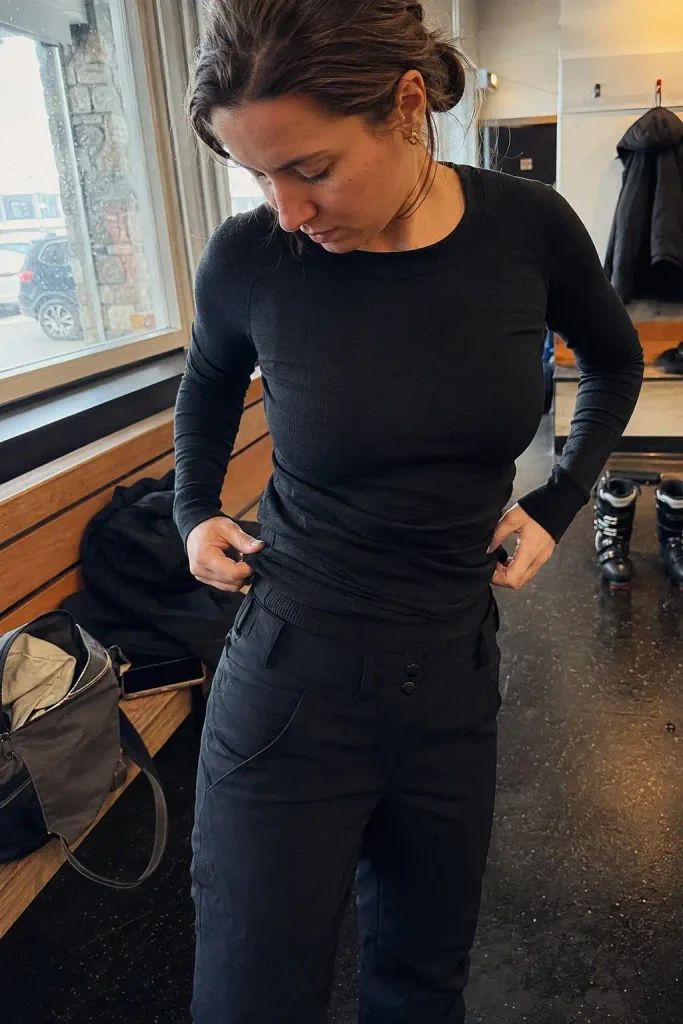
- Base layer: A moisture-wicking top and bottom in merino wool or a synthetic blend. Skip cotton entirely. It holds moisture and turns into a cold, damp mess the second you start sweating.
- Mid layer: A fleece or lightweight puffy in black or charcoal. This is your insulation, so don’t skimp here even if the piece feels bulky in the store.
- Outer layer: A waterproof, windproof shell jacket and pants. This is where most of your “look” comes from, so pick a silhouette you actually like.
For a deeper dive into how these three layers interact, REI’s layering guide gets into the material science side of things, which honestly made me rethink a few pieces I owned that looked warm but weren’t doing their job.
My personal base layer pick
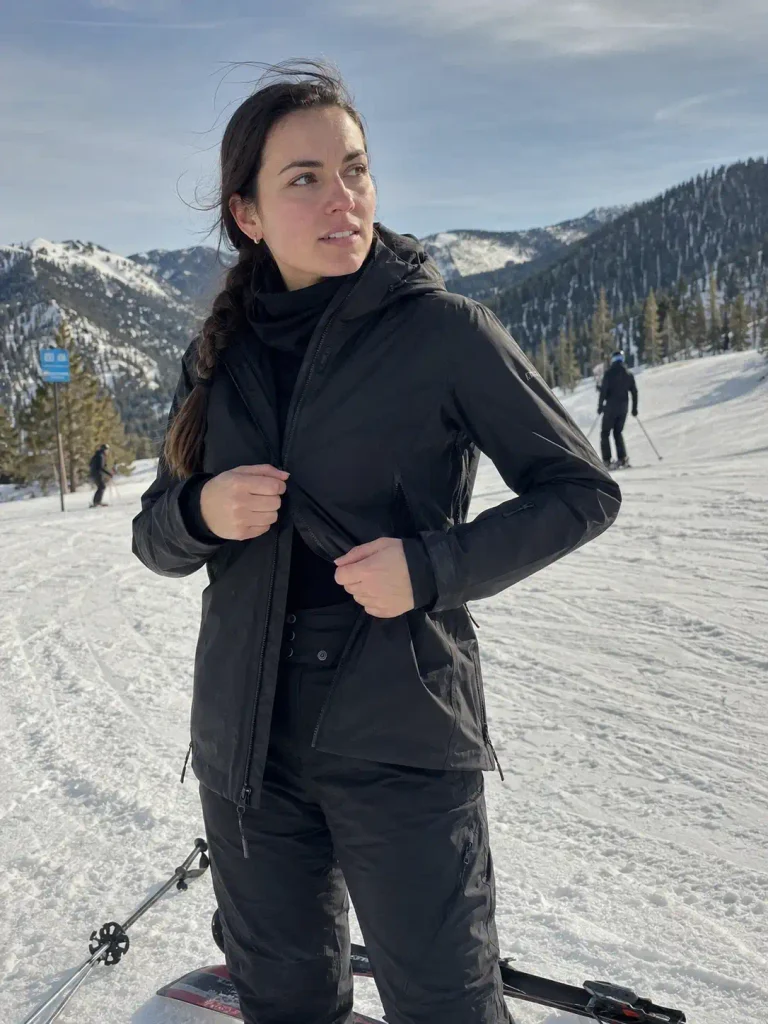
IMO, merino wool wins every time over synthetic base layers for actual ski days.
It regulates temperature better and doesn’t hold onto smell after a long weekend trip (your ski buddies will thank you).
Synthetic is fine for a budget option, just wash it more often than you think you need to.
The all-black jacket: your outfit’s anchor piece
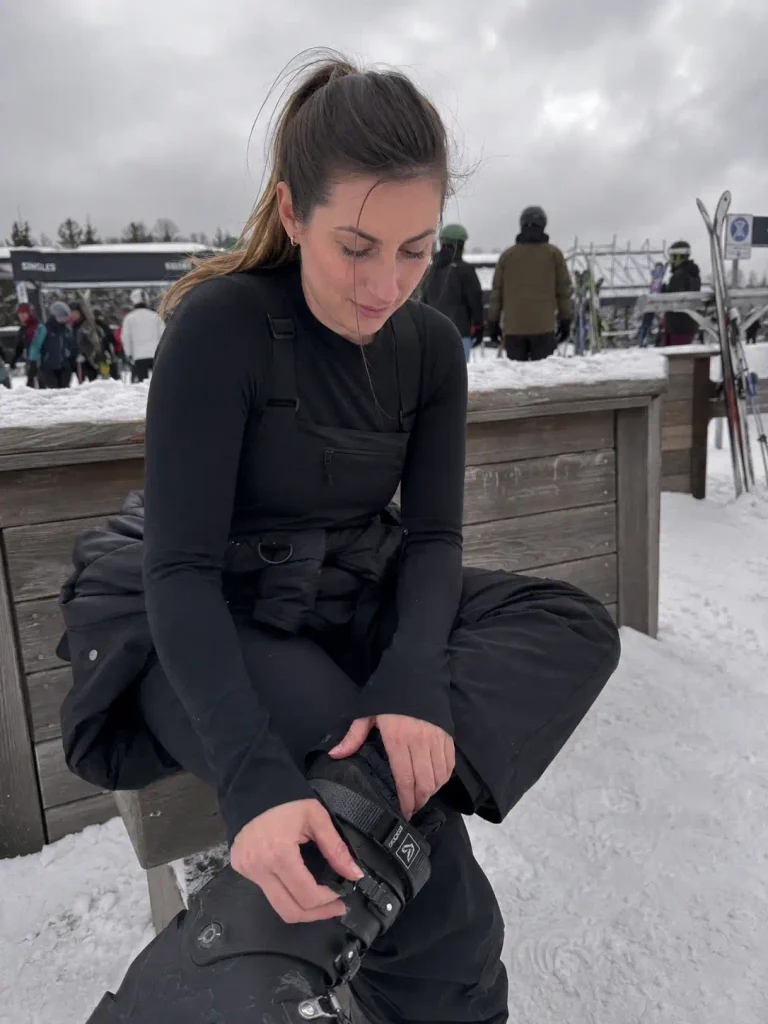
Your jacket carries the whole look. Get this piece right and everything else falls into place easier.
Look for a shell with these features:
- A fitted-but-not-tight cut. Boxy jackets can swallow your frame and look sloppy in photos.
- Waterproof rating of at least 10k/10k (waterproofing and breathability) for resort skiing.
- A powder skirt to keep snow out during falls (and yes, you will fall, we all do).
- Pit zips so you can vent heat without taking the whole jacket off.
Ever wondered why some jackets look expensive even when they’re not? It’s usually the fabric finish.
A matte, slightly technical-looking black fabric photographs better than a shiny one, which tends to wash out under bright snow glare.
Pants and bibs: don’t sleep on this piece
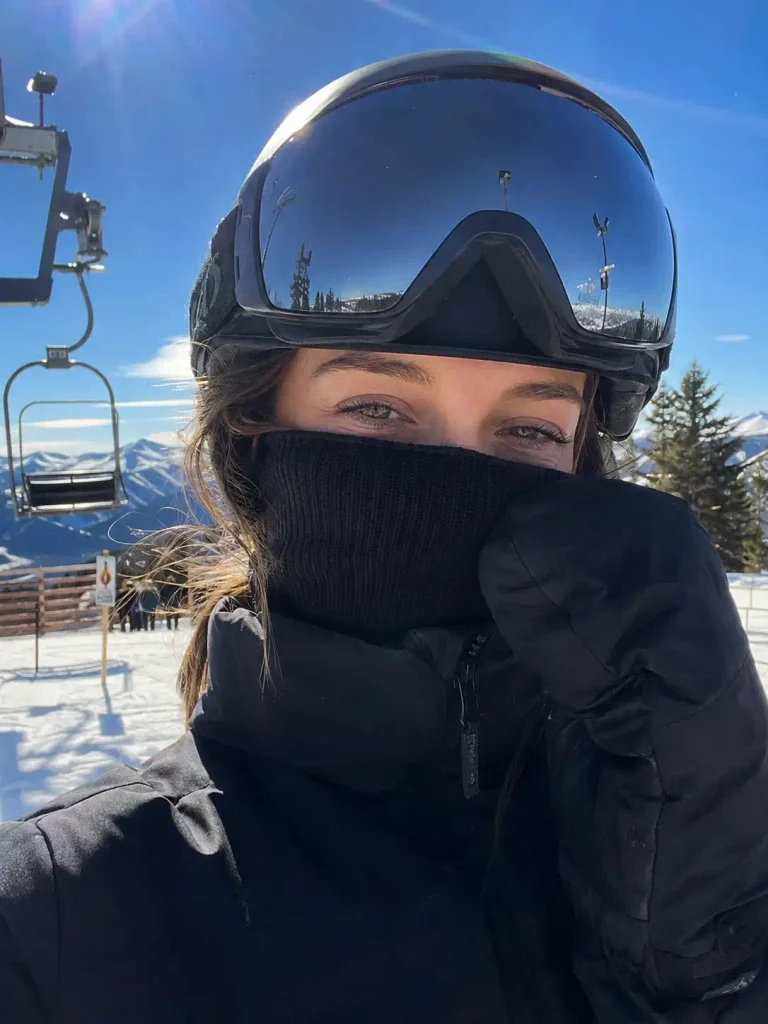
People obsess over jackets and treat pants as an afterthought.
Big mistake. A pair of black bibs with a slightly relaxed fit is one of the most flattering things you can wear on snow, full stop… okay, I said I wouldn’t use that phrase, but it’s genuinely one of my favorite pieces in my closet.
Bibs also solve the age-old problem of snow sneaking down your back when you sit in the lift line.
If you haven’t tried them, honestly, this is insane how much of a difference they make on a powder day.
If bibs aren’t your thing, a straight or slightly tapered black pant works too.
Just make sure there’s enough room to layer a base layer underneath without feeling restricted.
Accessories that pull the whole outfit together
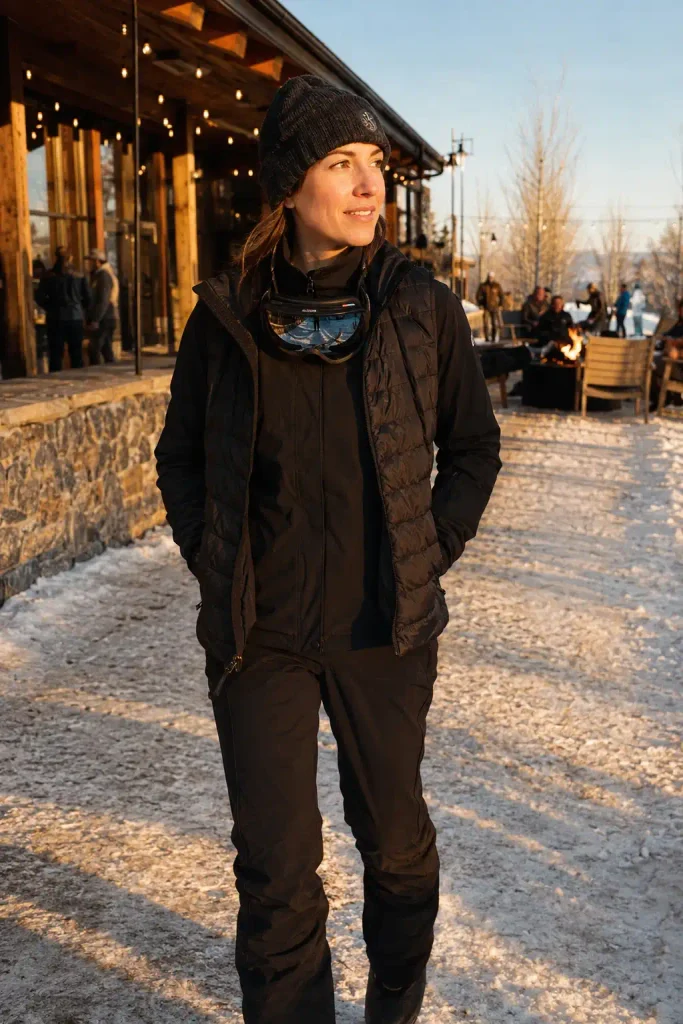
This is where the outfit either looks styled or looks like you grabbed whatever was on top of the pile.
Helmet: A matte black helmet with a slim profile looks cleaner than a glossy one. Add a small sticker or two if you want personality without breaking the monochrome theme.
Goggles: Black frames with a mirrored or gradient lens add contrast without introducing another color into the mix.
This is honestly my favorite detail because the lens catches light in photos in a way flat lenses just don’t.
Gloves or mittens: Mittens tend to look chunkier and more editorial in photos, if that’s the vibe you’re after. Gloves give you more dexterity for zippers and phone use on the chair.
Neck gaiter or balaclava: A ribbed black gaiter does double duty as face protection and a styling piece.
Pull it up over your nose on windy runs, let it sit around your neck for lift rides.
Boots: Most ski boots run black or dark gray anyway, so you’re probably already covered here. Small win.
Socks: This one’s easy to forget since nobody sees them, but a good pair of tall, cushioned ski socks in black or charcoal keeps the whole under-layer system consistent.
Skip the cotton crew socks from your regular sock drawer. They bunch up inside boots and cause blisters faster than you’d think.
Backpack or hip pack: If you carry water or snacks on the mountain, a slim black pack keeps the outfit from getting visually busy.
A bright red pack against an all-black kit can look intentional if it’s your one pop of color, but two accent colors (say, a red pack and blue water bottle) starts to look cluttered fast.
A quick comparison table
| Piece | Budget-friendly pick | Splurge pick | Best for |
|---|---|---|---|
| Jacket | Entry-level insulated shell | 3-layer Gore-Tex shell | Cold, snowy resort days |
| Bibs | Basic insulated bib | Recycled shell fabric bib | Powder days, deep snow |
| Base layer | Synthetic thermal set | Merino wool set | Multi-day trips |
| Goggles | Standard mirrored lens | Interchangeable lens system | Variable weather conditions |
Styling tips for a Pinterest-worthy black ski fit
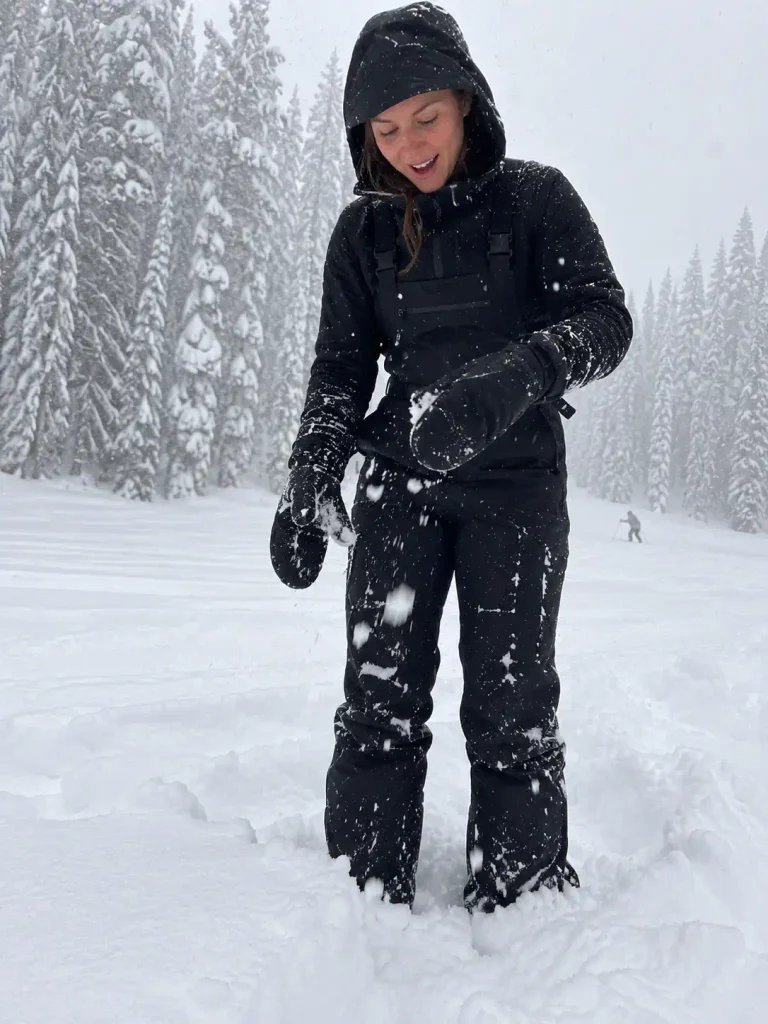
A few small tricks make the difference between “nice outfit” and “wait, screenshot this.”
- Add one texture contrast. A quilted vest over a smooth shell, or a knit beanie against a technical jacket, keeps the look from feeling flat.
- Play with sheen. Mix one matte piece with one slightly glossy piece (think a matte jacket with glossy goggles) so the eye has something to catch.
- Keep hardware consistent. Silver zippers everywhere, or black-on-black hardware everywhere. Mixing gold and silver accents on an all-black fit reads as unintentional.
- Let one accessory pop, if you want. A single red lip or a colorful lift ticket holder can be the one intentional break from black, and it usually looks better than adding a second black-plus-one-color piece.
Random thought, but this reminds me of how a good all-black outfit in general (not even ski-specific) works the same way: one statement piece, everything else quiet. Same rule applies whether you’re at a coffee shop or 8,000 feet up a mountain.
Three black outfit ideas for different days on the mountain
Not every ski day calls for the same outfit. Here’s how I break mine down depending on what’s actually happening on the mountain that day.
The powder day fit
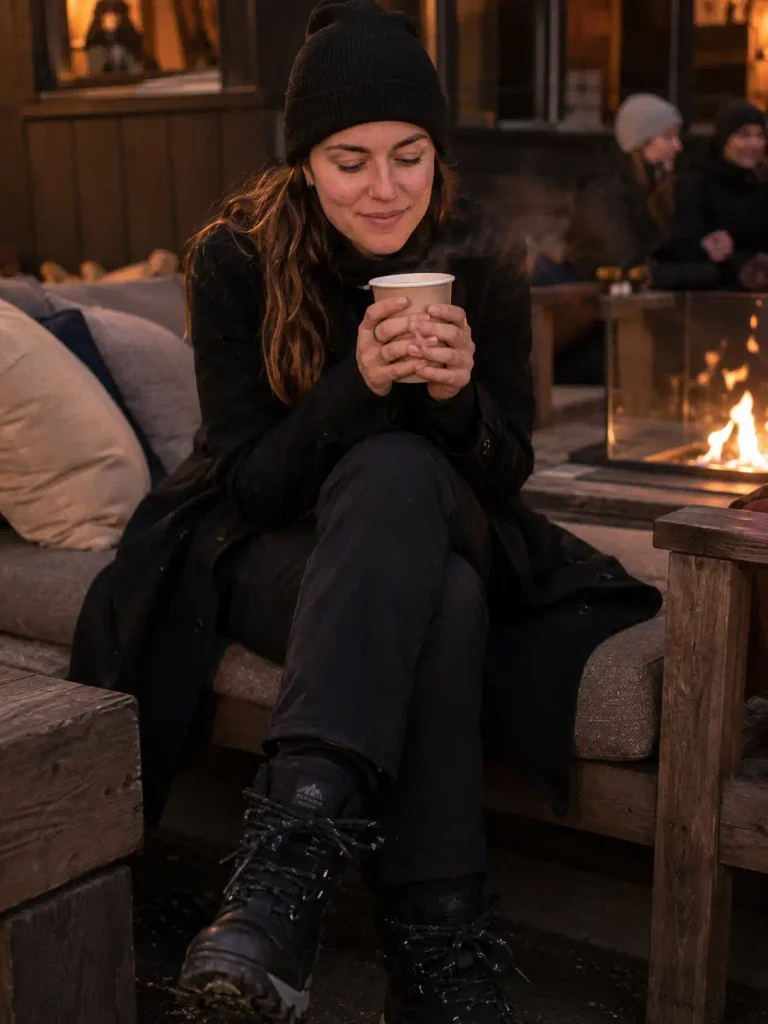
Deep snow means you want coverage first, style second (though you can still have both).
Go for a black bib over a thicker mid-layer, tall gaiters if your pants don’t have built-in powder cuffs, and mittens instead of gloves.
Mittens keep your fingers warmer since they share body heat, and on a genuine dump day, that matters more than dexterity.
I still remember a powder morning in Jackson Hole where I underestimated how much snow would end up down my jacket.
Bibs would have saved me an hour of drying out at lunch. Wow, did I learn that lesson fast.
The bluebird resort day fit
Sunny, mild, groomed runs. This is where you can lighten up the mid-layer and let your jacket do more of the visual work.
A lighter black softshell instead of a heavy insulated parka keeps you from overheating, and it’s a great excuse to bring out reflective goggles since the light will actually hit them.
The apres-ski fit
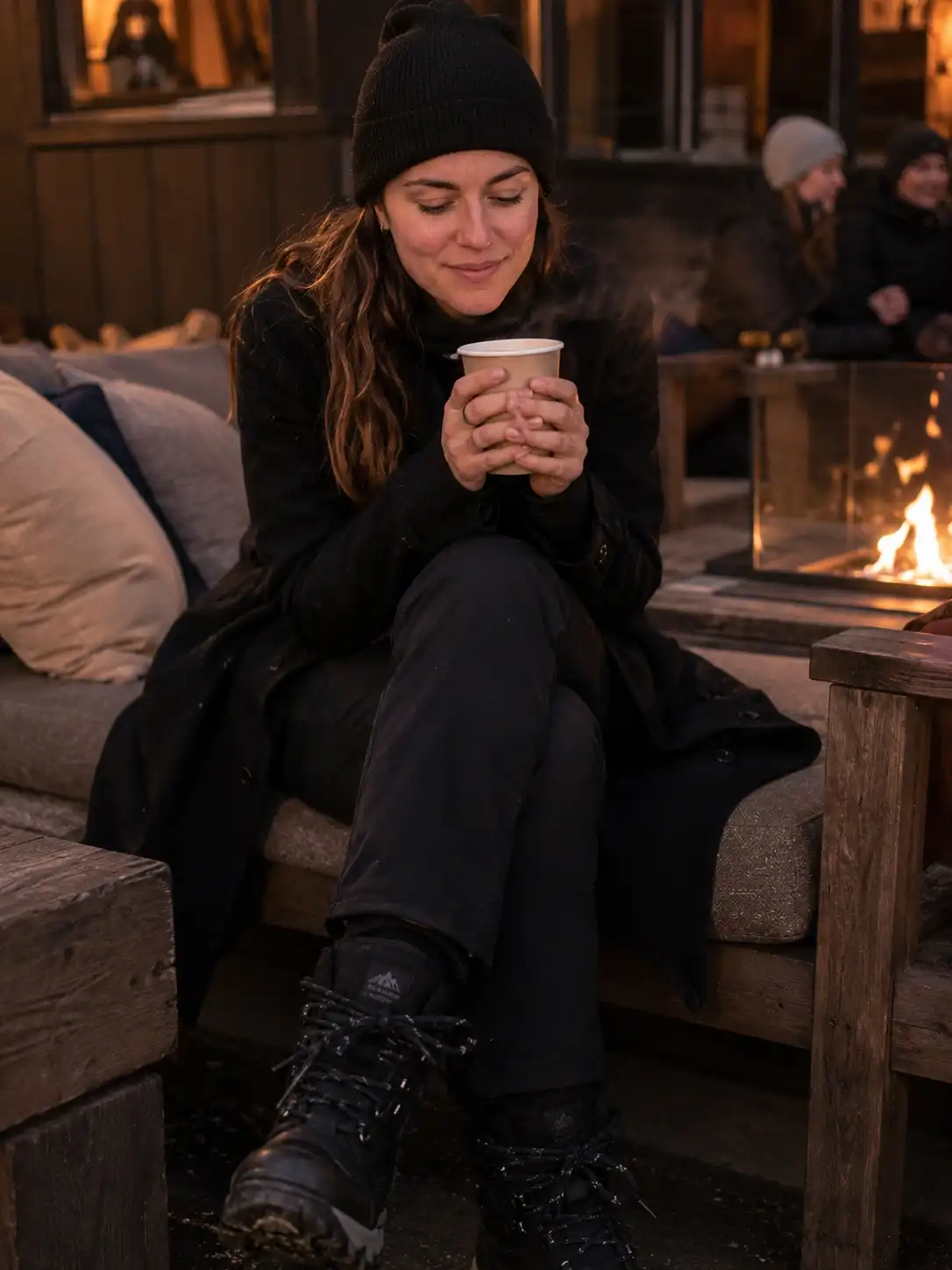
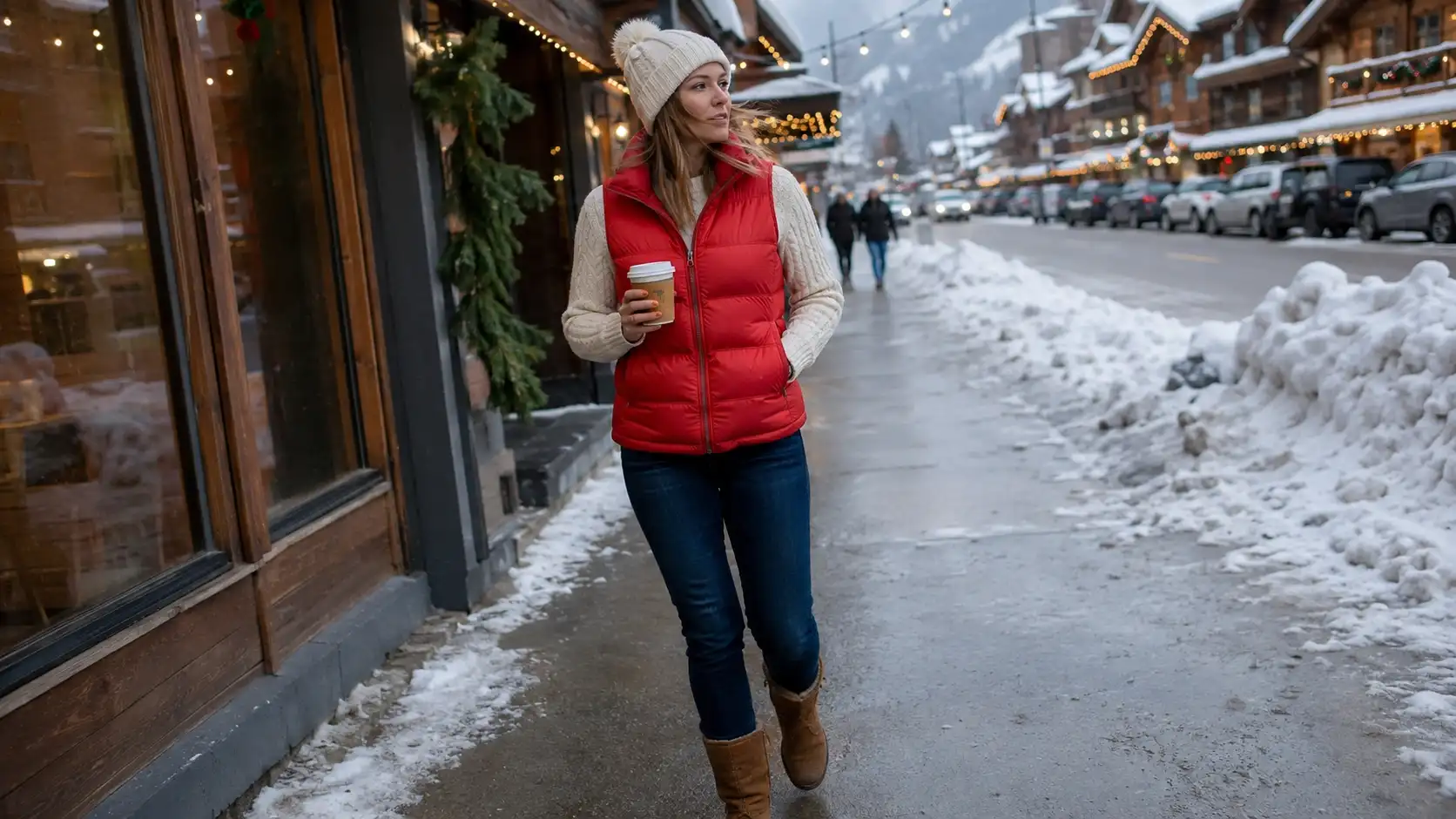
Once the lifts close, the outfit shifts. Swap your ski boots for black snow boots, keep the beanie, and layer a wool coat or puffer over your base layers if you’re heading straight to a fire pit or a lodge patio.
IMO this is the most underrated part of a ski trip wardrobe.
People plan the on-mountain look for weeks and then throw on whatever’s left for apres, which is a shame since the photos from that part of the day usually turn out just as good, if not better.
Shopping smart: where black ski gear tends to sell out first
Black and charcoal colorways are consistently the first sizes to disappear from ski brand websites each fall.
I’ve watched this happen three years running with a few mid-size brands, and it’s not a coincidence.
Neutral colorways sell to a wider range of shoppers since they pair with everything else in a closet.
A few practical tips if you’re outfit shopping ahead of a trip:
- Shop early season (September through November) if you have a specific brand or cut in mind. Popular black pieces sell out well before the snow actually falls in most regions.
- Check outlet sites for last season’s colors. Ski brands don’t change their black pieces as dramatically year to year compared to bold colorways, so last season’s black jacket often looks nearly identical to this year’s.
- Try before you commit to bibs. Fit varies a lot between brands, and a bib that looks great on a mannequin can sit strangely on your actual torso. If you can try one on in a store first, do it.
- Read the fabric specs, not just the photos. A jacket can look identical to another one online and have a completely different waterproof rating. This one bit me once when I bought a “shell” jacket that turned out to be closer to a windbreaker.
A word on sustainability and buying less, more intentionally
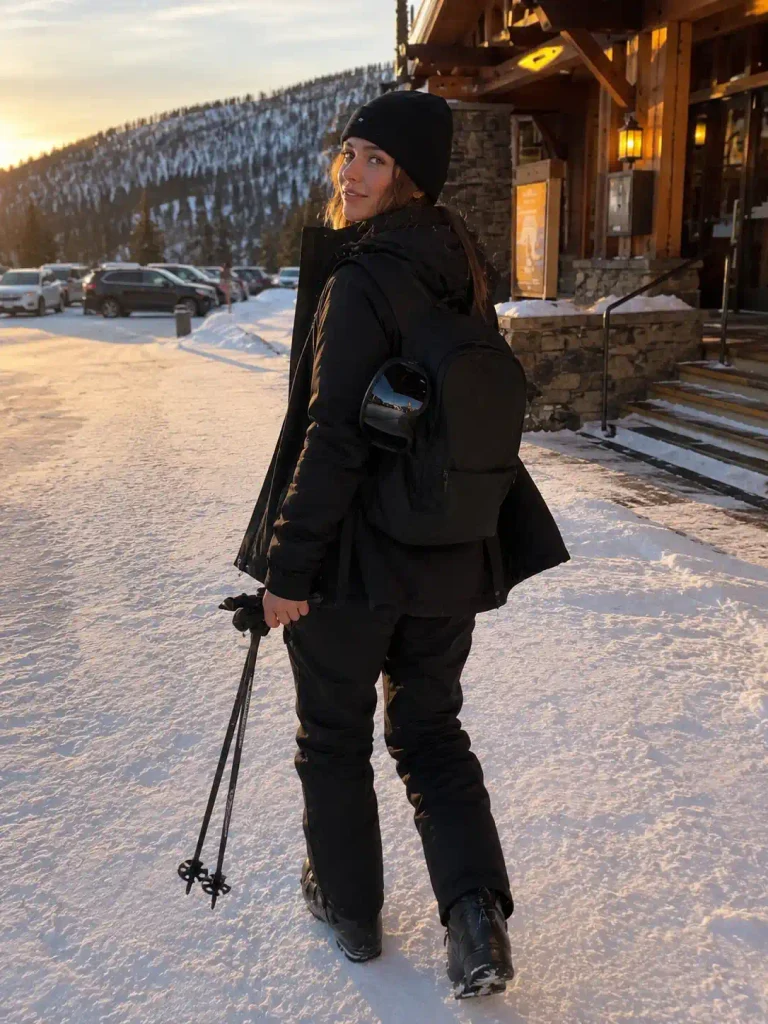
Here’s a slightly off-topic thought, but stick with me. Ski gear is expensive, and it’s tempting to buy a new colorway every season because social media makes it feel like everyone has a fresh kit every winter.
They don’t. Most people you see on the hill are rewearing gear from two or three seasons ago; it just doesn’t show as obviously because the pieces are versatile.
Going all-black is actually one of the more sustainable choices you can make in ski fashion, ironically enough, because it ages well and mixes with almost anything you buy afterward.
A black jacket from four years ago still looks current next to a black jacket bought last month. Try that with a neon orange one.
Common mistakes people make with monochrome ski outfits
I’ve made most of these myself, so consider this the “learn from my mistakes” section.
- Mismatched blacks. Not all black fabric looks the same. Faded black next to true black looks like a mistake, not a style choice. Try to shop pieces in-person or check close-up photos before buying online.
- Forgetting sun protection. Dark colors trap heat, and snow reflects UV light aggressively. Sunscreen and UV-protective goggles matter even more on an all-black day.
- Overheating. As I mentioned earlier, black absorbs heat. Bring a packable layer you can shed if the sun comes out.
- Skipping texture. An all-black outfit with zero texture variation can look flat in photos. A cable-knit beanie or a quilted vest adds visual interest instantly.
A short FAQ on black ski outfits
Does wearing black make you colder or warmer while skiing? Black tends to run warmer in direct sun since it absorbs more light than lighter colors. On overcast or very cold days, this can actually work in your favor.
On bright spring days, plan for extra ventilation or a lighter mid-layer.
Is an all-black ski outfit hard to find in stores? Not anymore. Most major ski brands now carry black or charcoal versions of their core jacket and bib styles each season, since the monochrome look has stayed popular for a few years running.
Can I mix black with other neutrals like gray or white? Definitely. Charcoal, white, and even a deep olive pair well with black without breaking the cohesive look. Just try to keep it to one accent neutral rather than three or four competing tones.
Final thought
An all-black ski outfit is one of those rare combinations that looks good on the mountain and photographs even better once you’re back at the lodge scrolling through your camera roll.
Start with function (real layers, real waterproofing), then build the styling on top of that foundation.
What’s your go-to black piece for the slopes this season, a bib, a bold goggle lens, or something else entirely? Drop it in the comments or save this for your next mountain trip.
