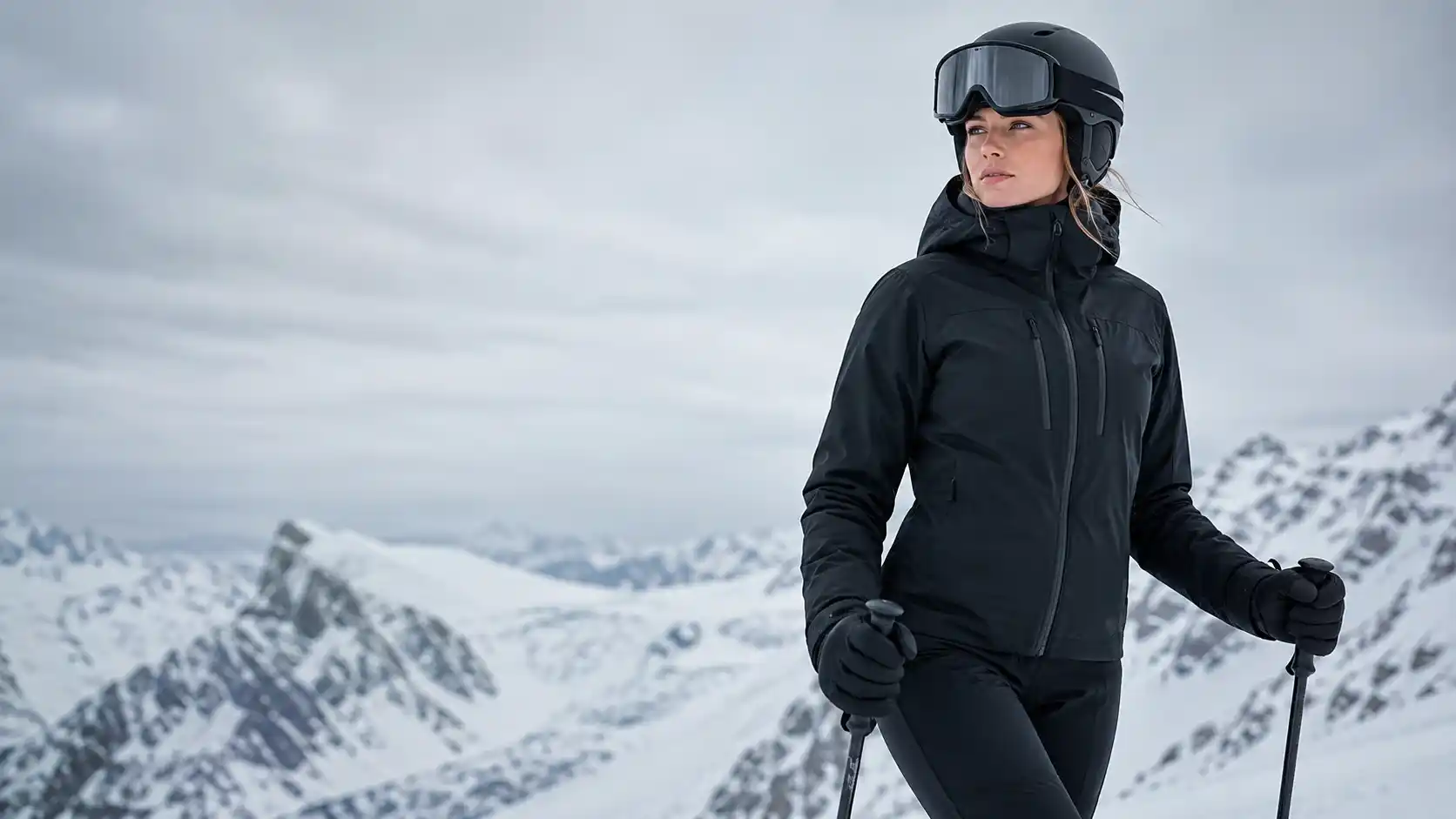
I own six ski jackets. Four of them are black. That’s not an accident.Black hides the inevitable coffee stain from the lodge, it photographs better against snow than almost any other color, and it never clashes with whatever base layer you grabbed at 6 a.m. before a dawn patrol.
If you’ve been scrolling Pinterest for an hour trying to figure out how to make an all-black kit look intentional instead of like you raided a funeral home, I’ve been there.
This is the list I wish someone had handed me before my first season working ski patrol in Colorado.
Below are 15 outfits I’ve actually worn, borrowed from friends, or watched crush it on the mountain. Pin the ones that fit your vibe, skip the rest.
A quick note before we get into it: I’m not a stylist by trade.
I got into ski fashion the same way most people do, by standing in a lift line freezing in the wrong jacket and promising myself I’d figure this out properly.
Three seasons of trial, error, and a few genuinely bad purchases later, this list is the result.
Take it as advice from a friend who’s made the mistakes so you don’t have to, not gospel from some editorial team that’s never actually stood in negative 10 degree wind chill.
Why black works so well on snow
Black isn’t just a “safe” choice. It’s a strategic one.
Against white snow and blue sky, black reads as sharp and put together, almost like the outfit was styled rather than just layered for warmth.
It also means you can mix pieces from three different brands and nothing looks mismatched, because black plus black is always going to work.
The one thing to watch for: matte versus shiny black fabrics photograph very differently, and mixing a few textures (a shell jacket with a fleece mid-layer, for instance) keeps the whole look from feeling flat.
If you want a deeper technical breakdown of how insulation and shell fabrics interact in cold weather, REI’s layering guide is one of the better free resources out there, and it’s where I sent my little sister before her first trip to Whistler.
There’s also a practical, slightly less glamorous reason black stays popular: resale value.
Ski gear is expensive, and a lot of people buy a full kit for one trip and then sell it secondhand a year later on marketplaces like Facebook or Poshmark.
Black gear tends to hold its resale value better than trend colors because it never really goes out of style.
I’ve sold two old jackets this way, and the black ones always moved faster than the neon ones sitting next to them.
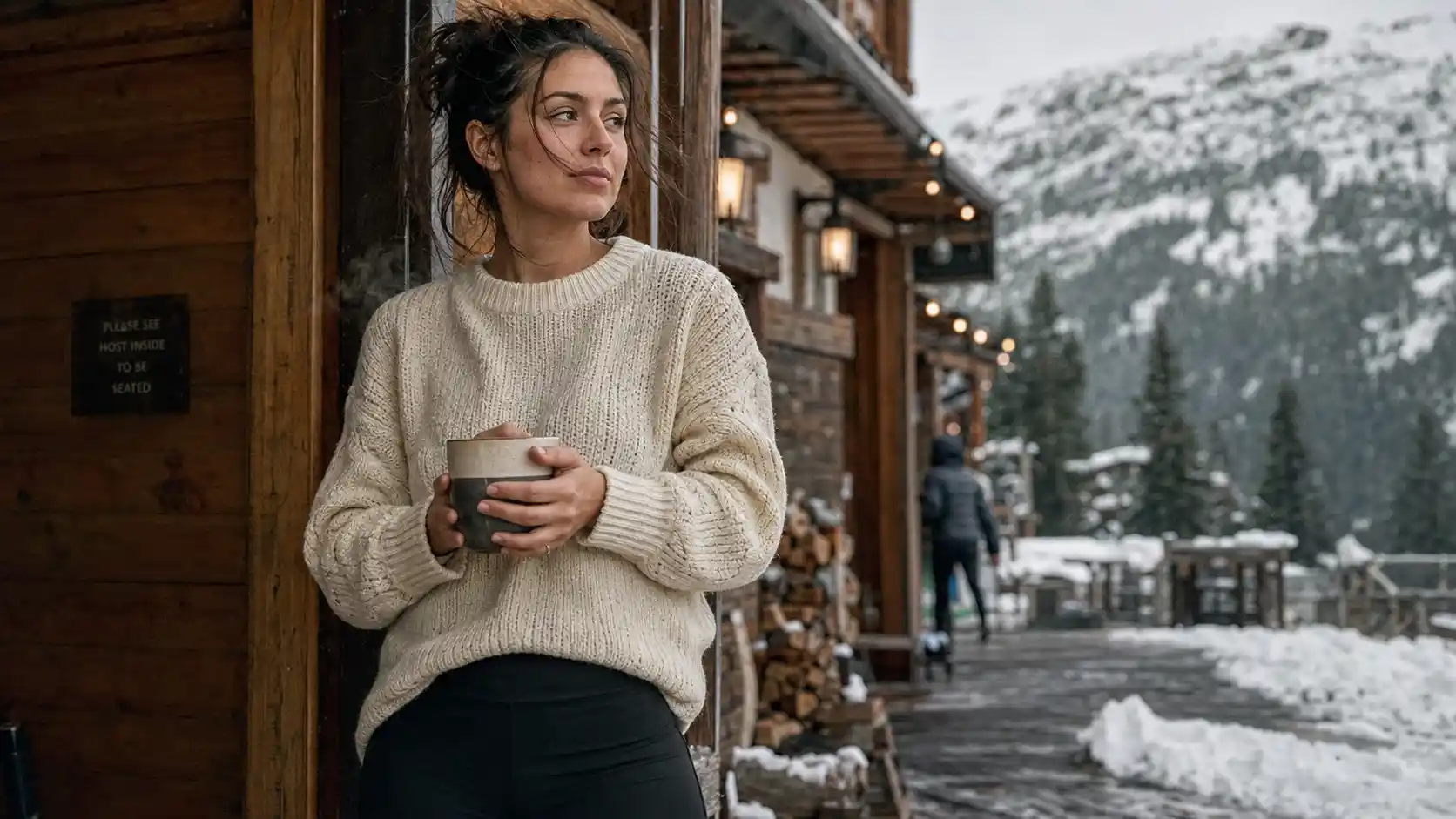
1. The all-black shell and bib combo
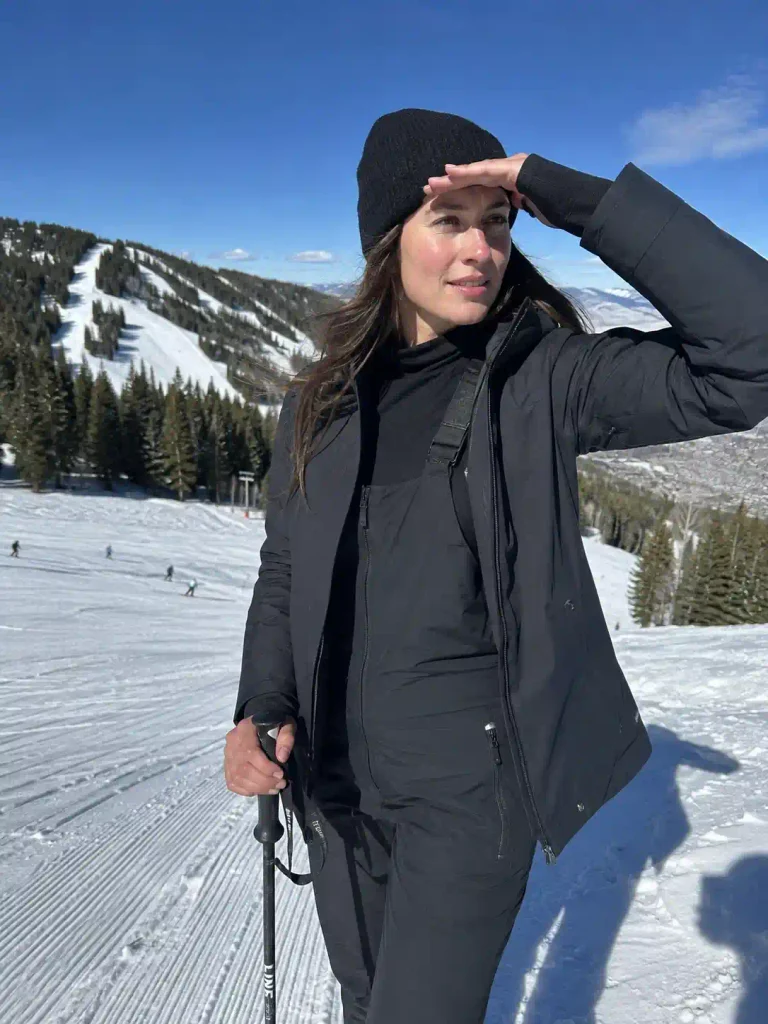
This is the look that started my black-on-black obsession.
A matte black shell jacket over black bib pants reads as borderline professional, even if you’re only an intermediate skier.
Pair it with a black beanie and you’re basically cosplaying as a ski instructor, which, honestly, no complaints there.
I wore a version of this on my second-ever season and had three separate strangers ask me for trail recommendations, assuming I worked at the resort.
I did not. I was falling on blue runs just like everyone else.
The outfit does a lot of heavy lifting here, and that’s kind of the point of this whole list.
2. Black puffer with contrast zipper pulls
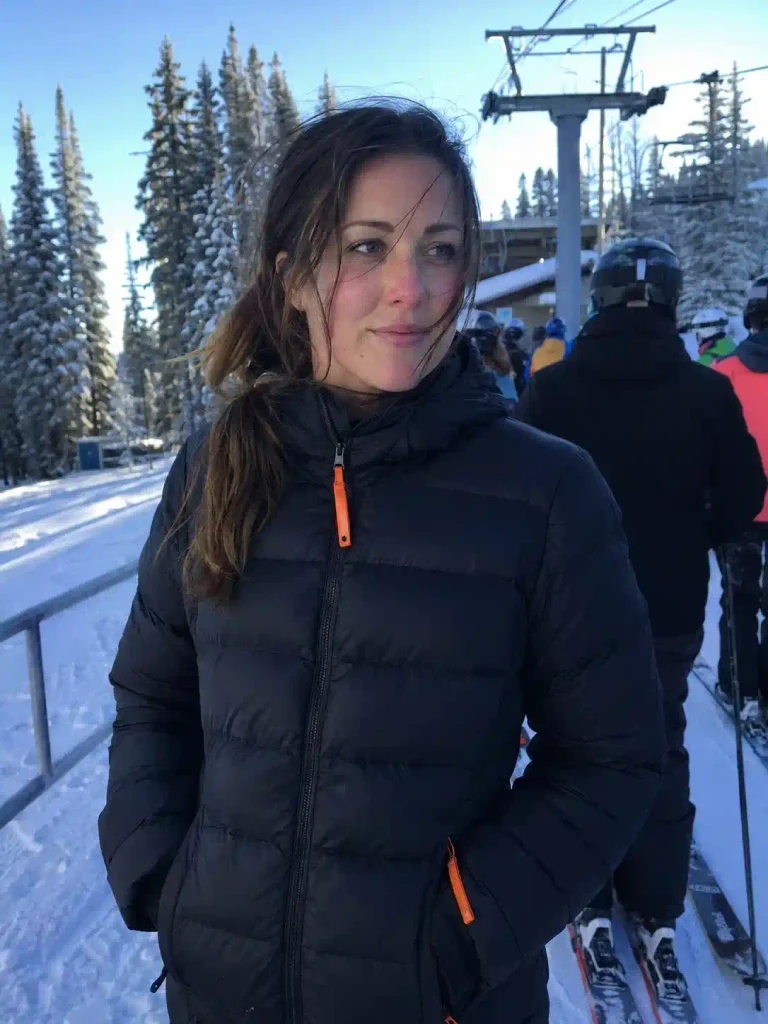
A straight black puffer jacket can look a little flat on its own. Look for one with colored zipper pulls or a subtle logo in a bright shade.
It adds just enough visual interest without breaking the monochrome theme.
3. Black one-piece snowsuit
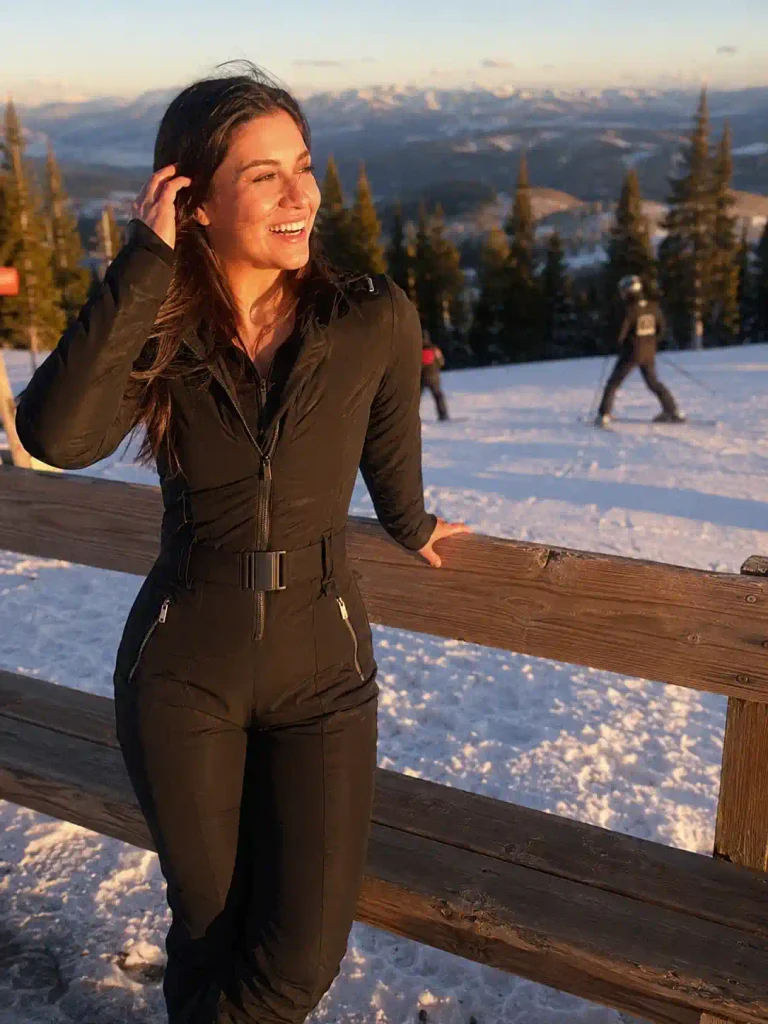
One-pieces are having a real moment again, and a black one-piece with a slightly cropped or fitted cut is genuinely one of the most flattering options on snow.
IMO this is the single most photogenic option on this whole list if you’re building a Pinterest board around aesthetic over function.
The catch: bathroom trips become a whole event. Every one-piece owner I know has a story about wrestling a snowsuit off in a tiny mountain restroom stall, so factor that in before you commit to wearing one for a full eight-hour day.
For a half-day trip or an après photo op, it’s perfect. For a marathon powder day, maybe bring bibs as a backup.
4. Black jacket, tan or cream pants
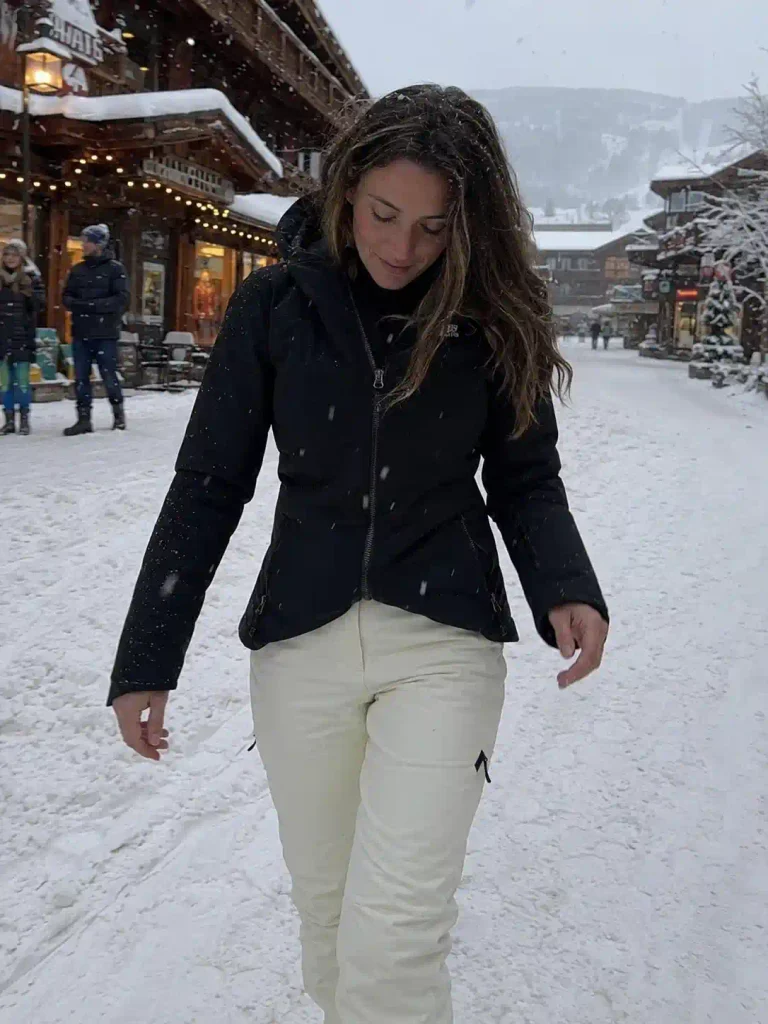
Breaking up all-black with a warm neutral on the bottom half keeps things from feeling heavy.
Cream or camel-toned pants against a black jacket is a combination that’s shown up on runway ski capsules from brands like Moncler for a reason: it just works.
5. Black base layer under a clear or translucent shell
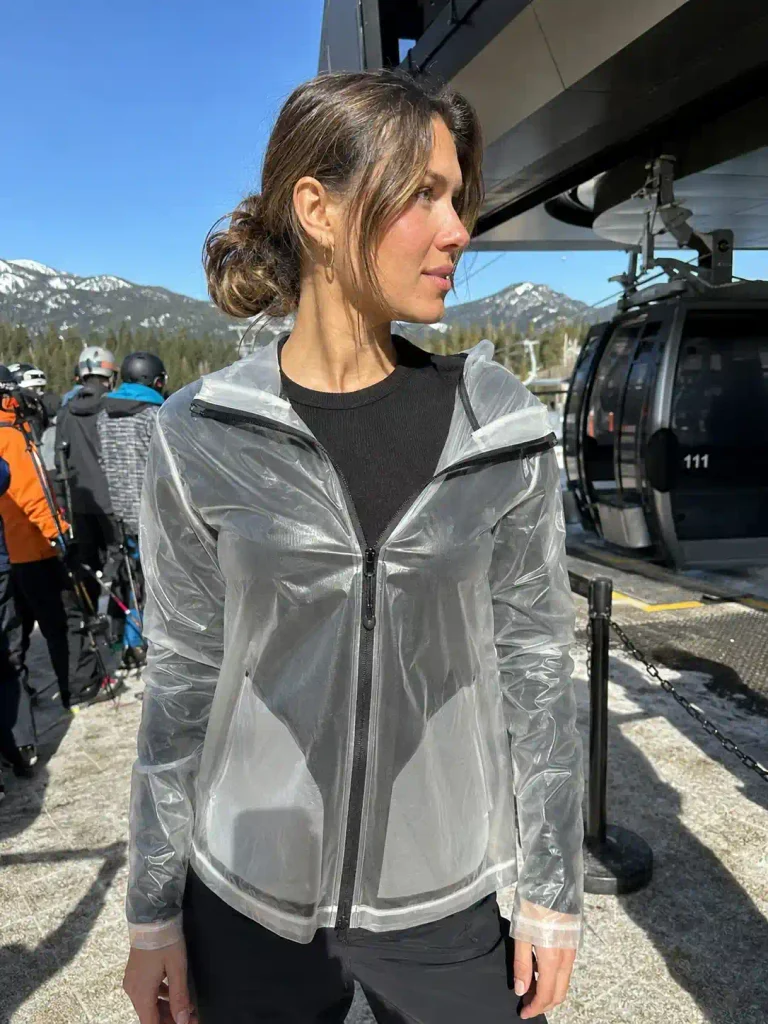
This one’s for the fashion-forward skiers. A sheer or frosted shell over an all-black base layer creates a layered, almost architectural look.
It’s not the warmest setup on its own, so add an extra thermal layer underneath if temps drop below freezing.
I tried this at a resort in the French Alps and got more compliments in one lift ride than I had all season.
Fair warning though: translucent shells are harder to find secondhand and tend to sit at a higher price point, so this is more of a special-occasion outfit than an everyday kit.
6. Matte black jacket with a faux fur trim hood
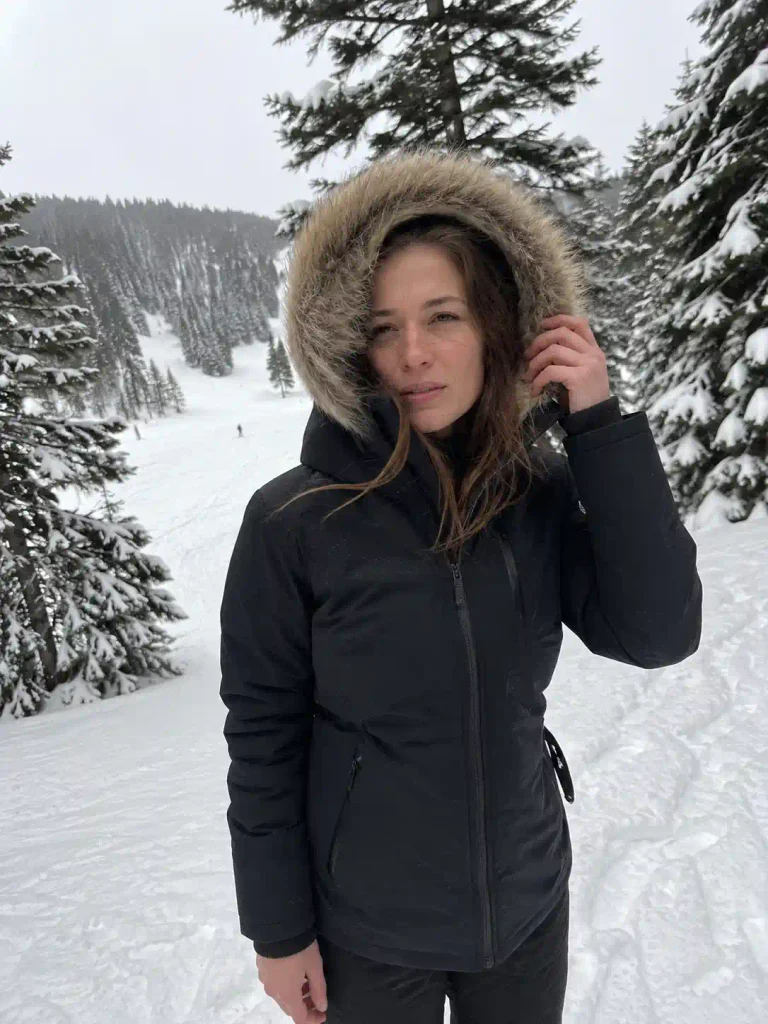
Faux fur trim softens an otherwise stark black outfit.
It also happens to be genuinely useful for blocking wind on your face during a lift ride, so this one’s a case of form meeting function.
7. Black ski pants with an oversized colored jacket
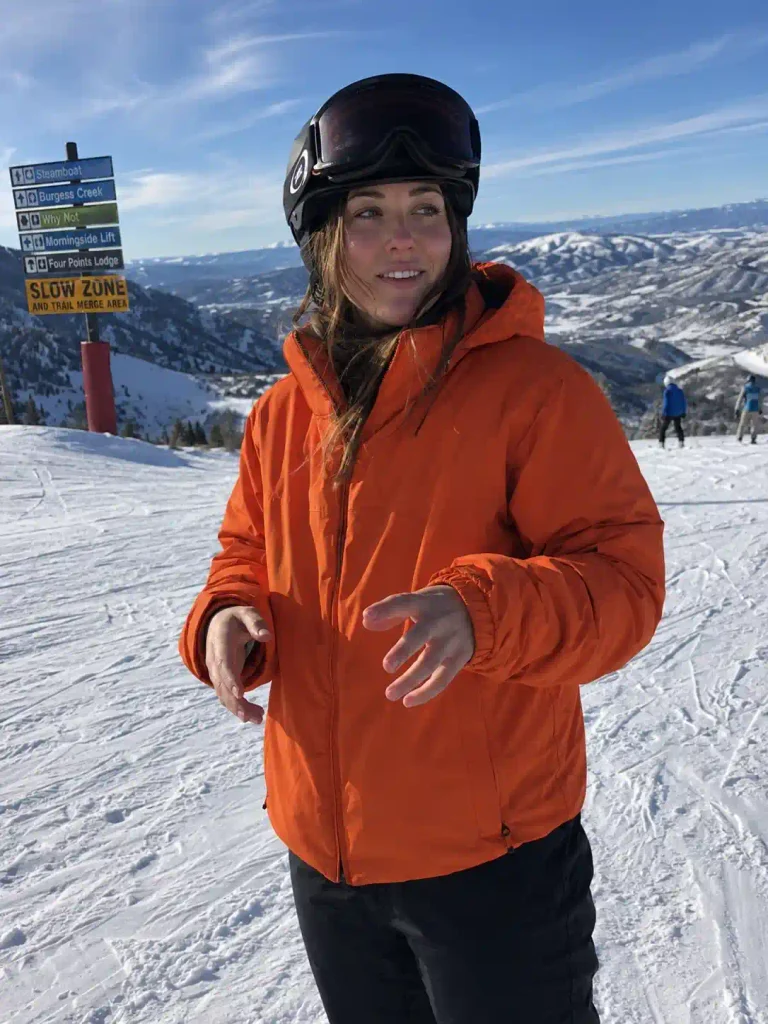
If you want to wear a statement color, keep the bottoms black and let the jacket do the talking.
A bright orange or cobalt jacket over black pants photographs beautifully and still keeps that grounded, intentional feel.
8. All-black with metallic accessories
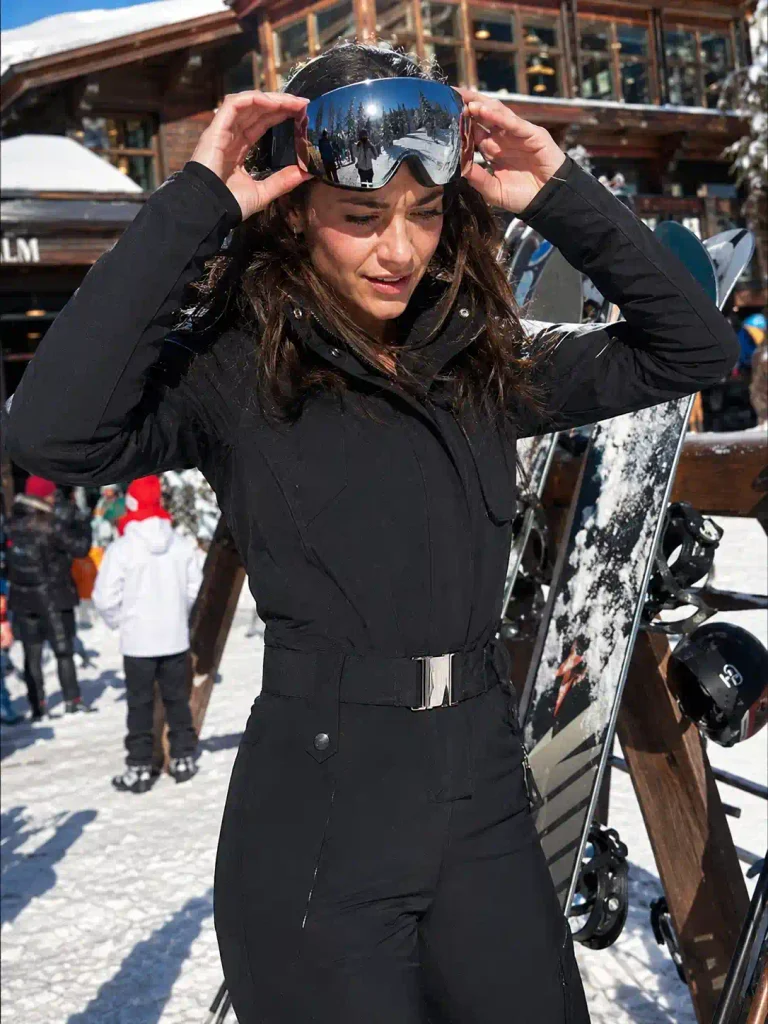
Silver goggles, a metallic buckle belt, or reflective goggle straps against all-black gear looks expensive without actually being expensive.
This is a favorite budget hack among the ski instructors I’ve worked alongside.
A pair of chrome-mirrored goggles runs about $30 to $60 depending on the brand, and it single-handedly upgrades a plain black outfit more than almost any other purchase on this list.
If you’re working with a tight budget this season, buy the goggles before you buy a new jacket.
9. Black thermal leggings under a skirt-style ski pant
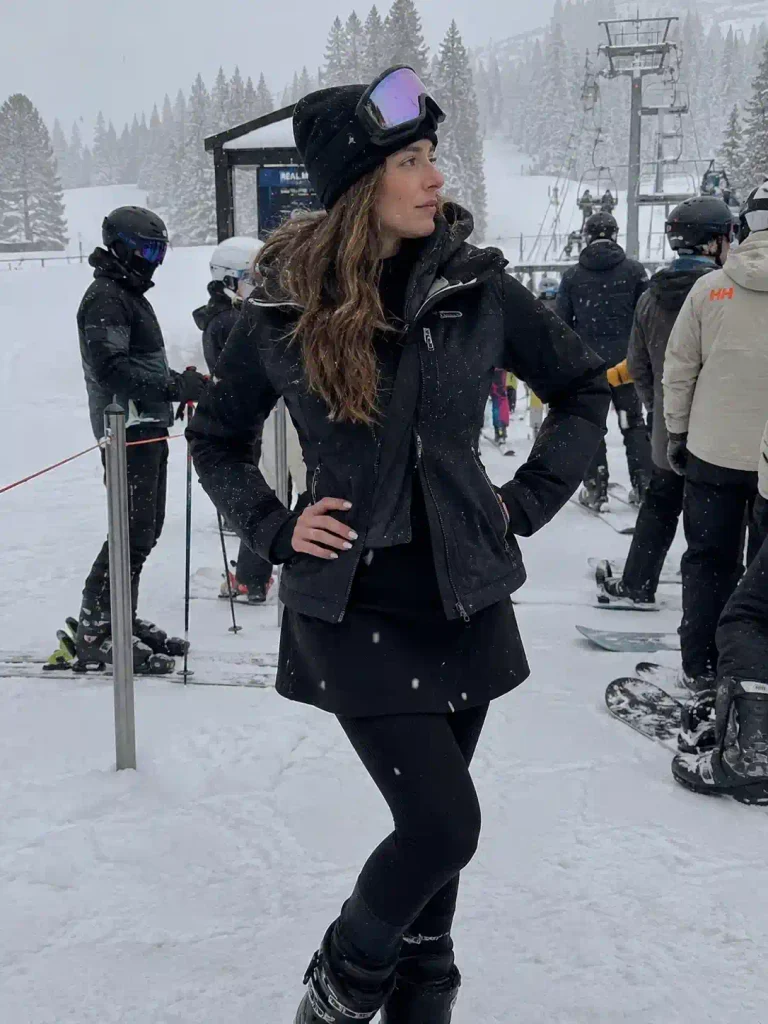
Ski skirts (yes, they exist, and they’re warmer than they sound) paired with black thermal leggings underneath give off a retro, almost ’70s Alpine look.
Not for everyone, but if you want to stand out in lift lines, this does it.
10. Head-to-toe technical black with neon laces or straps
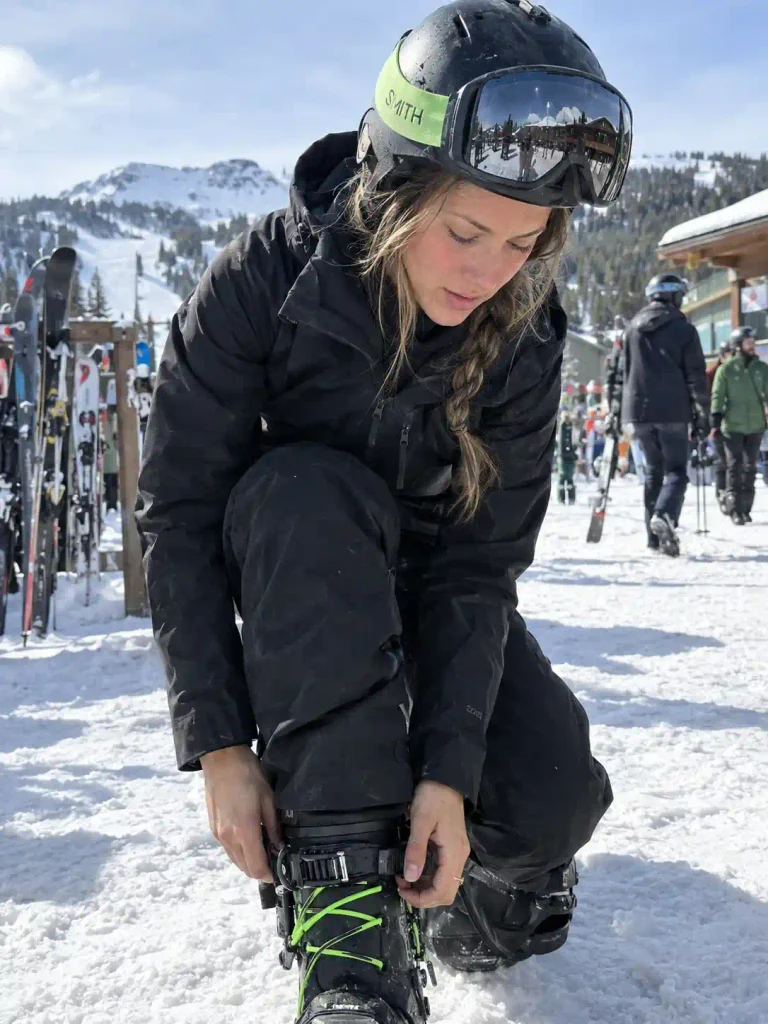
Function-focused skiers will appreciate this one.
Keep the whole kit black and technical, then add a single neon detail, like boot laces or a helmet strap, for visibility and a small pop of personality.
11. Black cropped jacket with high-waisted bibs
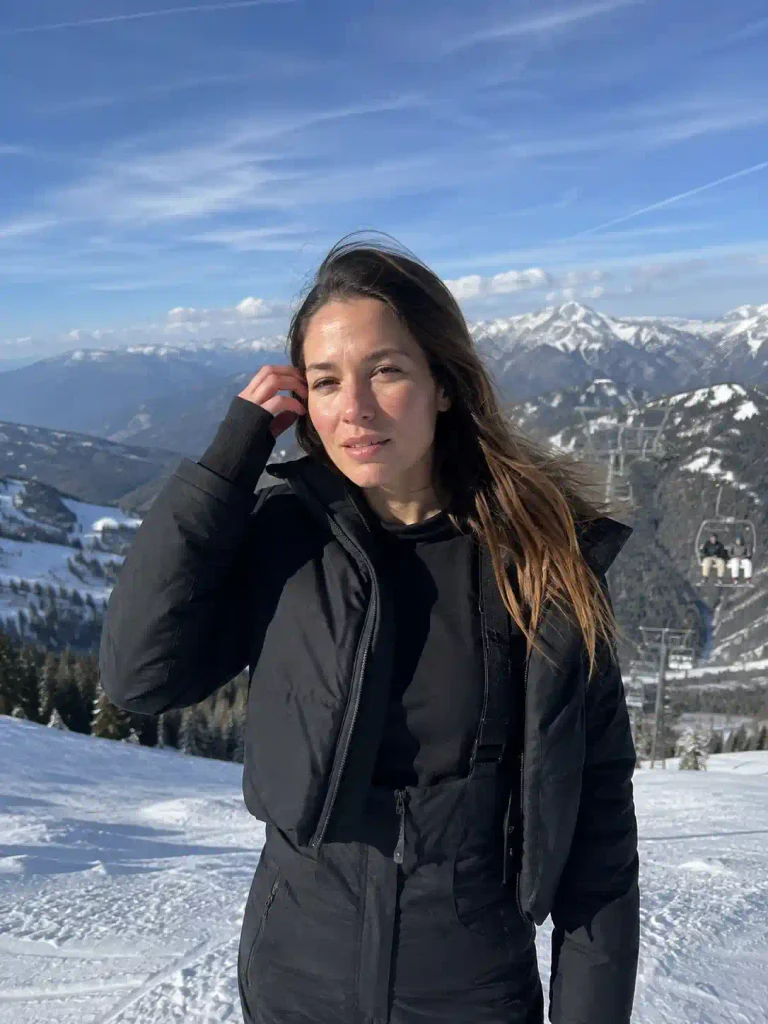
The cropped jacket trend made its way from streetwear straight onto the slopes.
Paired with high-waisted black bibs, it creates a flattering silhouette and, unlike a lot of ski trends, it actually stays practical because the bibs keep your core covered.
This is genuinely my go-to combo for photos at the top of a run.
It looks styled without sacrificing warmth, since the bibs cover the gap a cropped jacket would normally leave at your lower back, which matters more than people expect once the wind picks up.
12. Black quilted jacket with faux leather pants
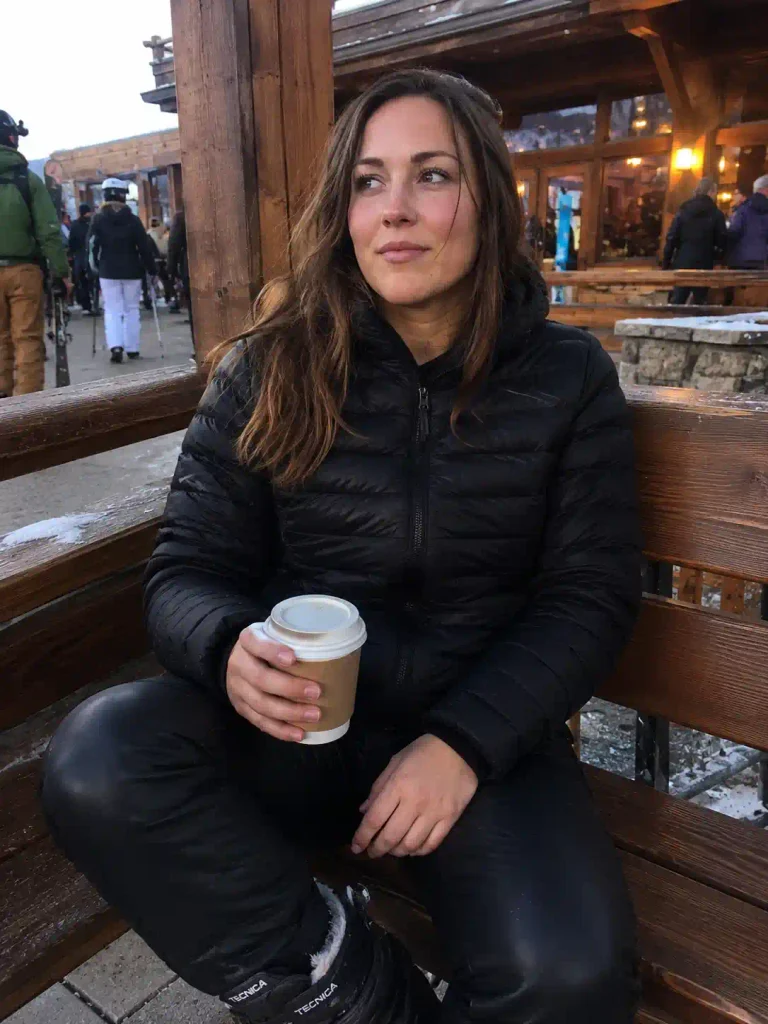
This is peak après-ski energy, more suited to the lodge or a low-key resort day than an aggressive black diamond run.
Faux leather ski pants exist and they look incredible in photos, though I’ll admit they’re not my first pick for an actual powder day.
13. Black-on-black with a colorful base layer peeking through
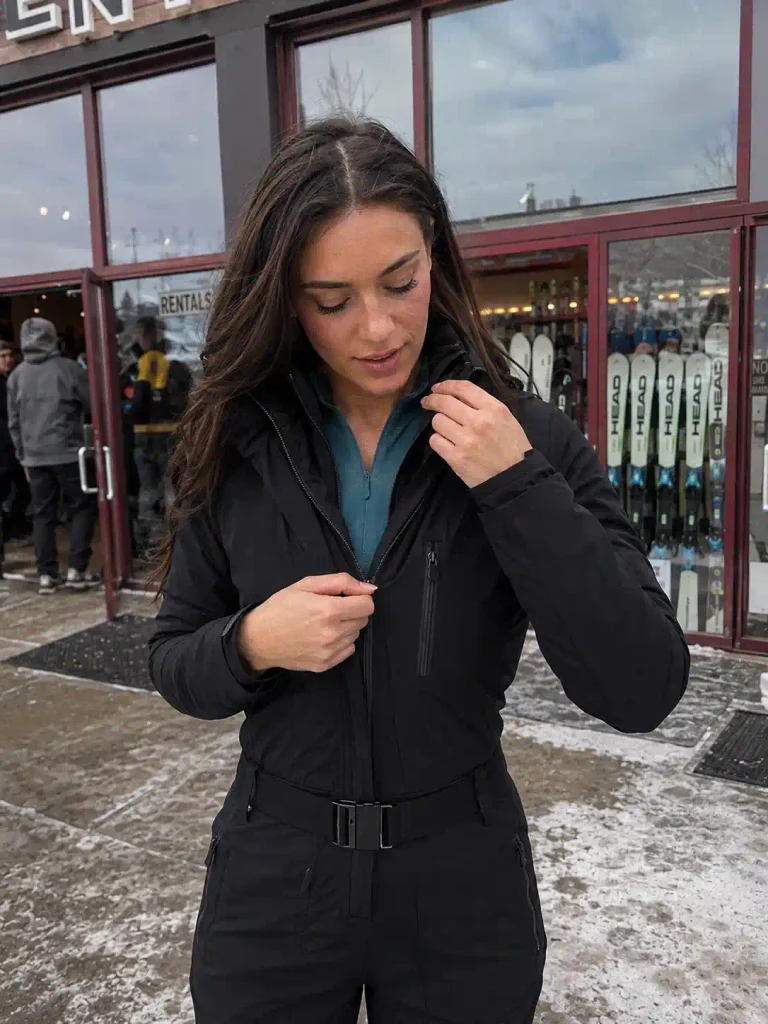
Unzip your jacket slightly at the neck to let a bright base layer peek out.
It’s a small detail, but it keeps the outfit from reading as one flat block of color, and it gives you flexibility to swap the “pop” color depending on your mood.
14. Vintage-inspired black one-piece with retro goggles
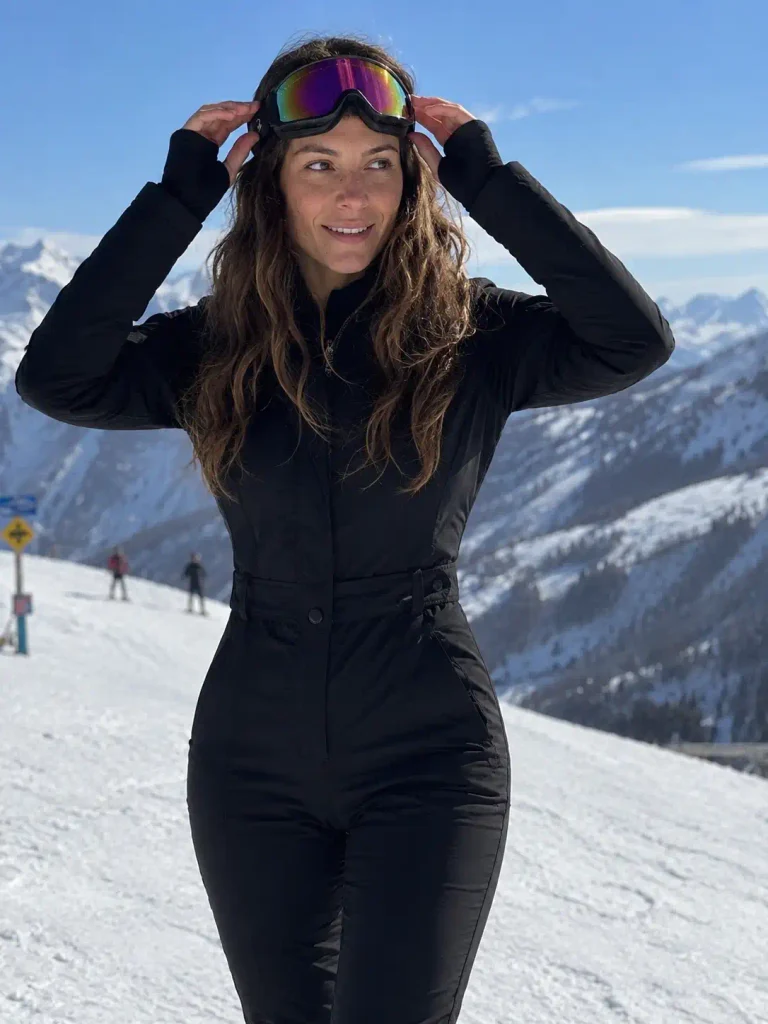
Round, colorful retro goggles against a sleek black one-piece is a combination I see all over ski towns like Aspen and Chamonix.
Ever wondered why this pairing shows up in basically every “cool girl skiing” photo on the internet?
It’s because the contrast between old-school goggles and a modern silhouette just works.
15. Minimalist black kit with a single designer logo
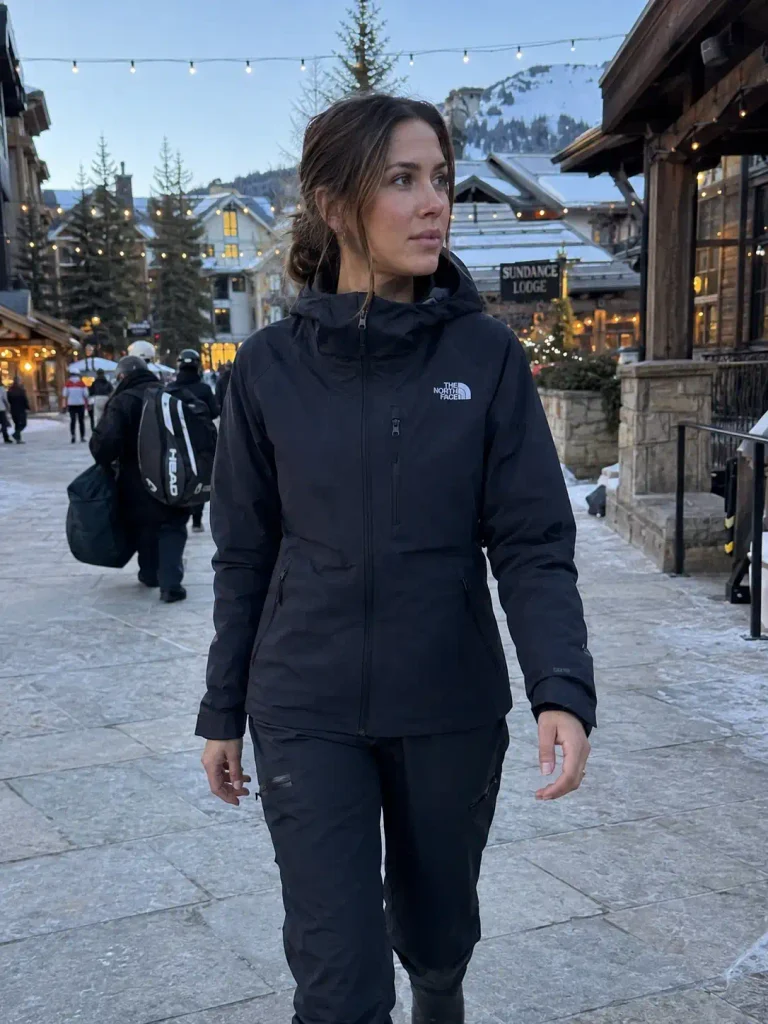
Sometimes less really is more. A clean black jacket and pants set with one small, recognizable logo (think Moncler,
The North Face, or Arc’teryx) reads as effortlessly put together.
This is the look for people who want to seem like they didn’t try, even though we all know how much thought went into it.
A quick comparison table for planning your outfit
Here’s a simple breakdown to help you decide which black ski look fits your trip:
| Outfit style | Best for | Warmth level | Vibe |
|---|---|---|---|
| Shell and bib combo | Beginners, cold resorts | High | Sporty, professional |
| One-piece snowsuit | Photos, warmer days | Medium | Retro, fashion-forward |
| Cropped jacket and bibs | Intermediate skiers | Medium-high | Trendy, flattering |
| Minimalist logo kit | Weekend trips, après-ski | High | Clean, low-effort chic |
How to pick the right black for photos, not just in person
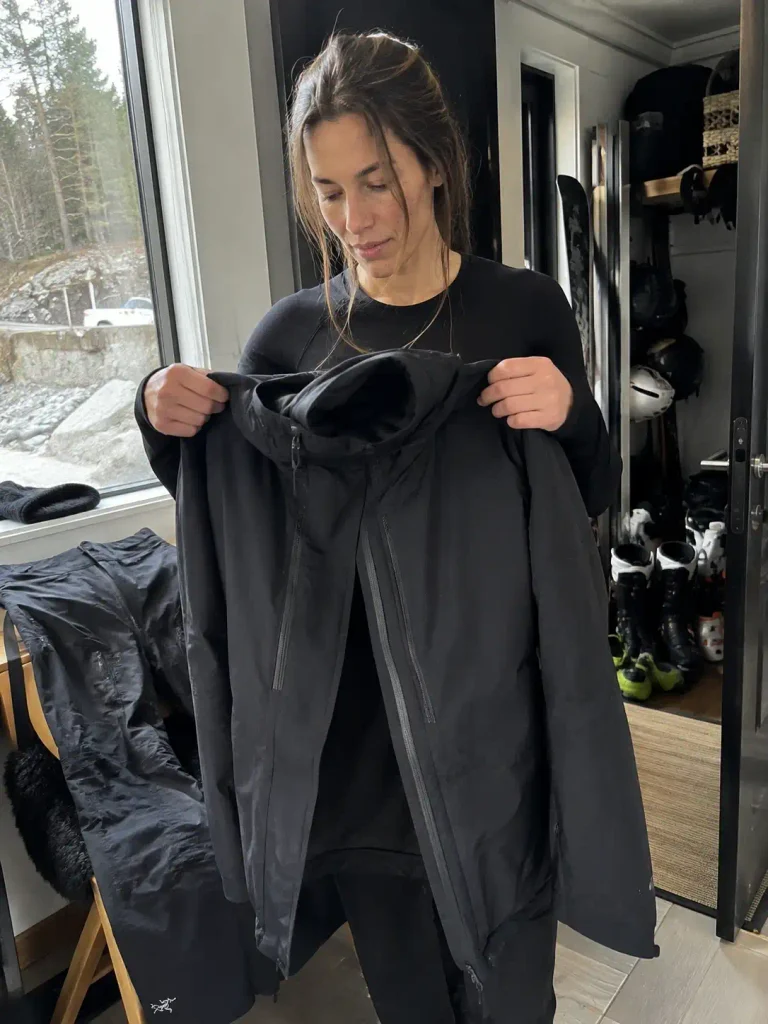
Here’s something almost nobody mentions when they talk about ski fashion: black behaves differently depending on the light.
On an overcast day, deep matte black can look almost navy in photos, while a slightly glossy black shell picks up more contrast and looks crisper against snow.
If your whole goal is a great Pinterest-worthy photo at the top of the mountain, glossy or slightly textured black fabrics (think ripstop nylon over basic polyester) tend to photograph better than flat matte finishes.
Lighting also matters more than people think. Late afternoon light, sometimes called golden hour by photographers, makes black gear look warmer and richer rather than harsh.
If you’re planning outfit photos specifically, aim for the last run of the day rather than high noon, when flat overhead light makes everything look a little washed out.
Building your own black ski outfit from scratch
If none of these 15 looks exactly matches what’s already in your closet, here’s how I’d approach building one from pieces you might already own or need to buy.
Start with your jacket, since it’s the piece everyone sees first in photos and in real life.
Then decide whether you want pants or bibs; bibs run warmer and keep snow out better, but pants are easier for bathroom breaks (a real consideration on an eight-hour lodge day, trust me).
Finally, add one accessory that isn’t black, whether that’s a colored buckle, patterned goggles, or a bright base layer, so the whole outfit doesn’t blur together in photos.
Budget matters here too, and it’s worth being realistic about it.
A full black ski kit, jacket, pants or bibs, base layers, gloves, and a helmet, can run anywhere from $300 for entry-level pieces to well over $1,500 for technical, high-end gear from brands like Arc’teryx.
My honest advice: spend the most money on your jacket and gloves, since those take the most abuse from wind and moisture, and save money on base layers, which do their job whether they cost $15 or $60.
A few honest opinions from someone who’s tested a lot of gear:
- Skip the faux leather pants if you’re actually skiing hard terrain. They look amazing but breathe terribly, and I learned that the hard way on a warmer spring day in Utah.
- Bibs are worth the slightly higher price tag if you fall a lot while learning. Wow, the number of times regular pants let snow sneak in during my first season is honestly embarrassing to admit.
- Don’t buy a designer one-piece as your very first ski outfit. Rent gear for your first trip or two, figure out what silhouette you actually like, then invest.
Slightly off topic, but I think black gear also just makes gear maintenance easier.
Stains, scuffs from the chairlift, and general wear show up so much less than they do on white or pastel gear, which matters if you’re only budgeting for one ski trip a year.
Where to shop for black ski wear
A few places worth checking based on my own shopping trips and what friends in the ski community recommend:
- Patagonia’s snow collection for durable, slightly more sustainable options
- Backcountry for a wide range of price points and brands in one place
- Arc’teryx if you want technical, higher-end pieces built for serious mountain days
Frequently asked questions
Is black ski gear too hot in direct sun? It can run slightly warmer than lighter colors on sunny days since dark fabric absorbs more heat, but modern technical shells are built with venting zippers specifically to manage this. In my experience, the difference is noticeable but not a dealbreaker.
Does black ski gear show snow and stains more or less than lighter colors? Less, generally. Black hides slush stains, lift grease, and general wear far better than white or pastel gear, which is one of the practical reasons it’s stayed popular season after season.
Can I mix black with other colors without it looking messy? Absolutely, and honestly it’s better if you do. One accent color, whether through goggles, a base layer, or an accessory, keeps an all-black outfit from looking flat in photos.
How many layers do I actually need under a black ski jacket? Most people do fine with a moisture-wicking base layer, a mid-layer fleece, and the shell jacket on top. On genuinely cold days, below about 15 degrees Fahrenheit, I add a thin down vest between the fleece and the shell, and it makes a bigger difference than people expect for very little added bulk.
One last thought before you go: don’t let the “perfect outfit” pressure keep you off the mountain. I spent my entire first season worrying about how I looked in photos instead of just enjoying the runs, and looking back, that was a waste of good snow days. Pin your favorites, plan your outfit, and then forget about it once you’re actually on the lift.
So which of these 15 looks is going on your Pinterest board first? Save your favorite, tag a ski buddy who needs to see it, and let me know in the comments which combo you’re planning to wear on your next trip up the mountain.
