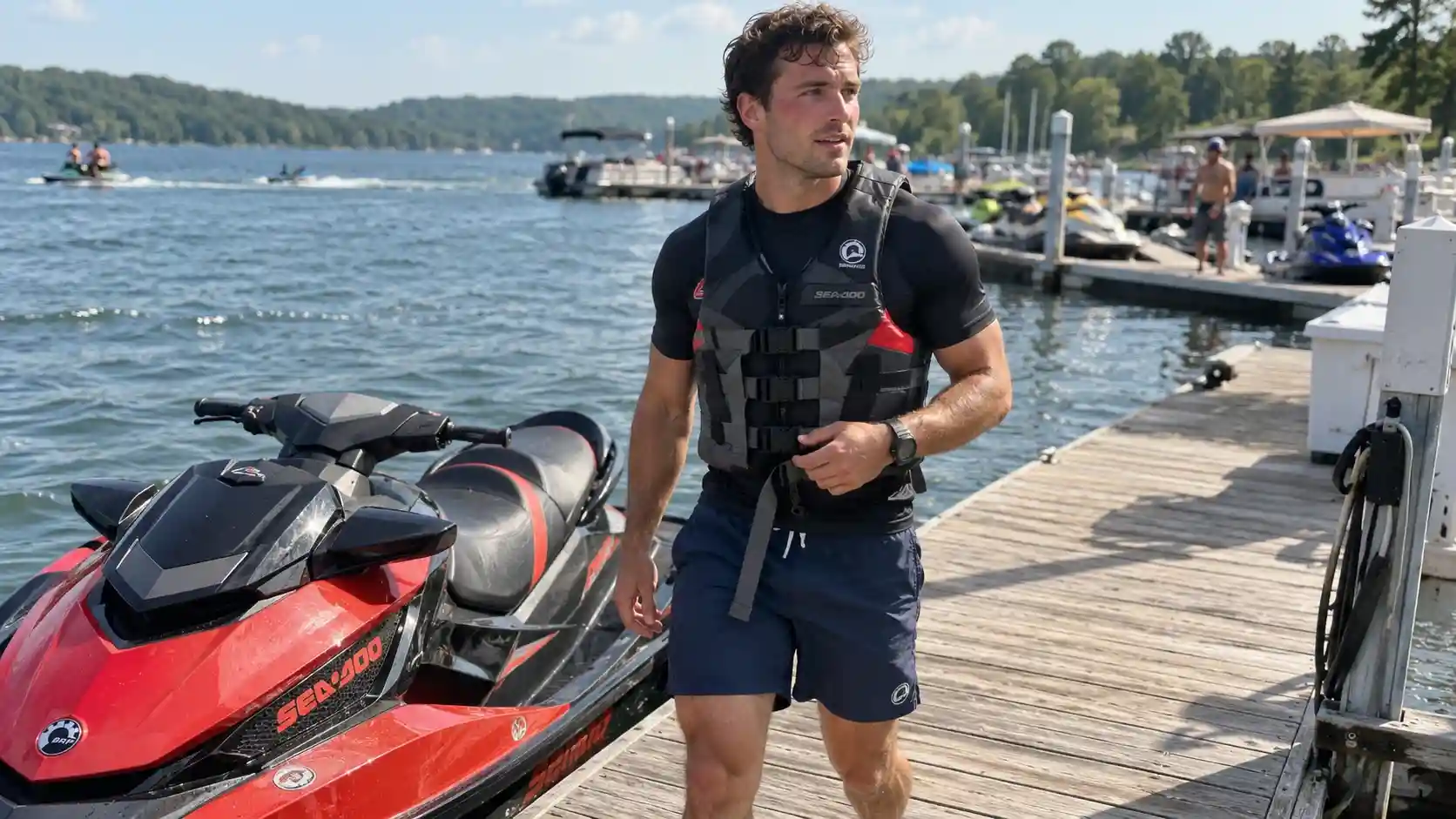
Nothing ruins a good ride faster than a wardrobe malfunction at 40 miles per hour. I learned that the hard way on a rental .
Sea-Doo in Lake Havasu, wearing cotton board shorts that turned into soggy sandbags the second I hit the water. Never again.
Picking a jet ski outfit isn’t about looking good for the dock photos, though that’s a nice bonus.
It’s about staying on the machine, staying warm enough (or cool enough), and not walking off the water with skin that looks like it lost a fight with a cheese grater.
Ever wonder why some guys look completely at ease on a PWC while others are constantly adjusting, shivering, or wincing? It usually comes down to three things: fabric, fit, and footwear.
This guide breaks down exactly what to wear on a jet ski, what to skip, and why your gear choices matter more than you’d think.

Why your jet ski outfit actually matters

A jet ski isn’t a lazy pontoon cruise. You’re bouncing over wake, getting sprayed constantly, and sitting in a position that puts real
pressure on your thighs and backside. The wrong clothes turn a fun afternoon into an uncomfortable one fast.
Here’s the thing most first-timers don’t think about: you’re going to get soaked whether you plan for it or not.
Every outfit decision should start from that assumption, not from “I’ll probably stay mostly dry.”
Comfort, sun exposure, and safety all ride on the same choices. Get the layering right and you barely think about your clothes.
Get it wrong and you’re picking wet fabric out of uncomfortable places for the rest of the day.
The one non-negotiable: your life jacket
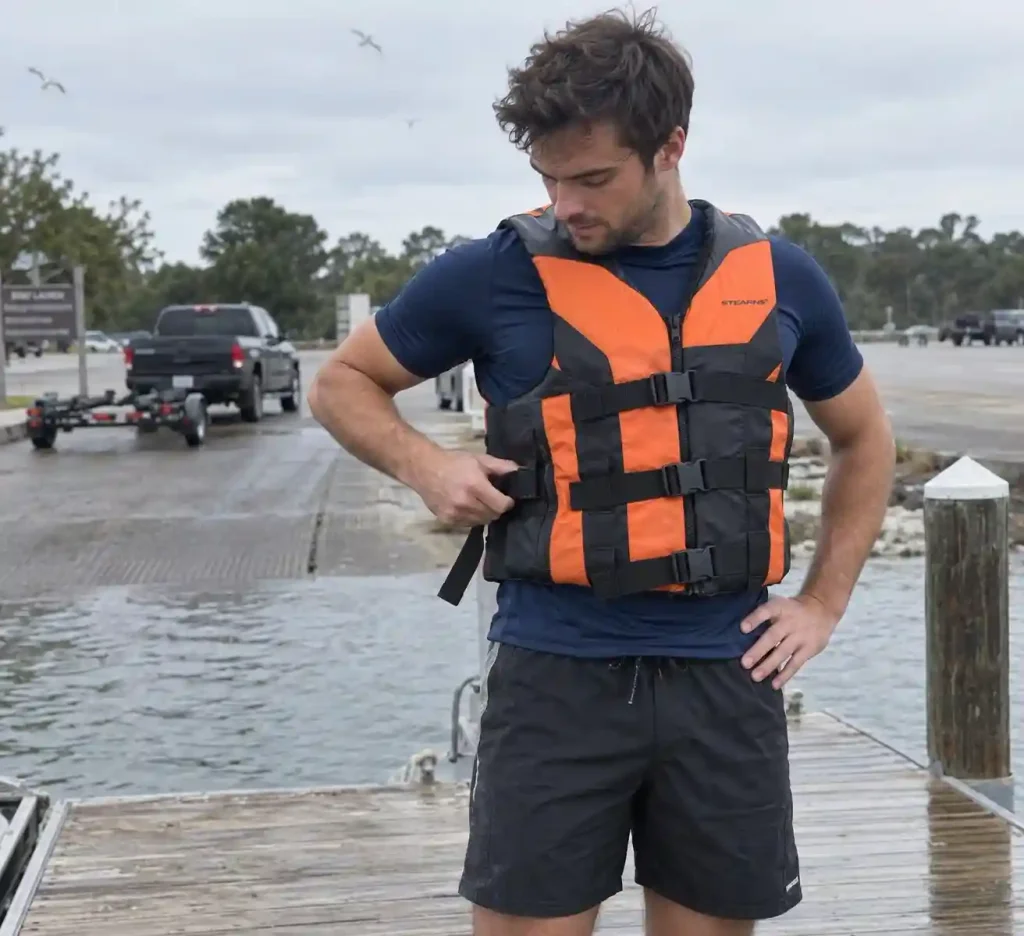
Before we talk style, let’s talk law. Every state requires PWC riders to wear a Coast Guard-approved life jacket, full stop, no exceptions for “good swimmers.”
Inflatable PFDs don’t count here either, since inflatable life jackets aren’t permitted for personal watercraft use in most states. Safe Boating America
Look for a Type III PFD designed specifically for personal watercraft or impact sports.
These sit snugger than the bulky orange horseshoe types you remember from summer camp, and they’re built to survive being launched off the seat if things go sideways.
You can check your state’s exact requirements through the U.S. Coast Guard’s boating safety resources, since some states add extra rules around children, night riding, and towed watersports.
IMO, buy your own PFD instead of relying on rental gear. Rental vests get passed around all day and rarely fit right. A properly fitted one won’t ride up around your ears when you hit the water.
Base layer: the rash guard debate
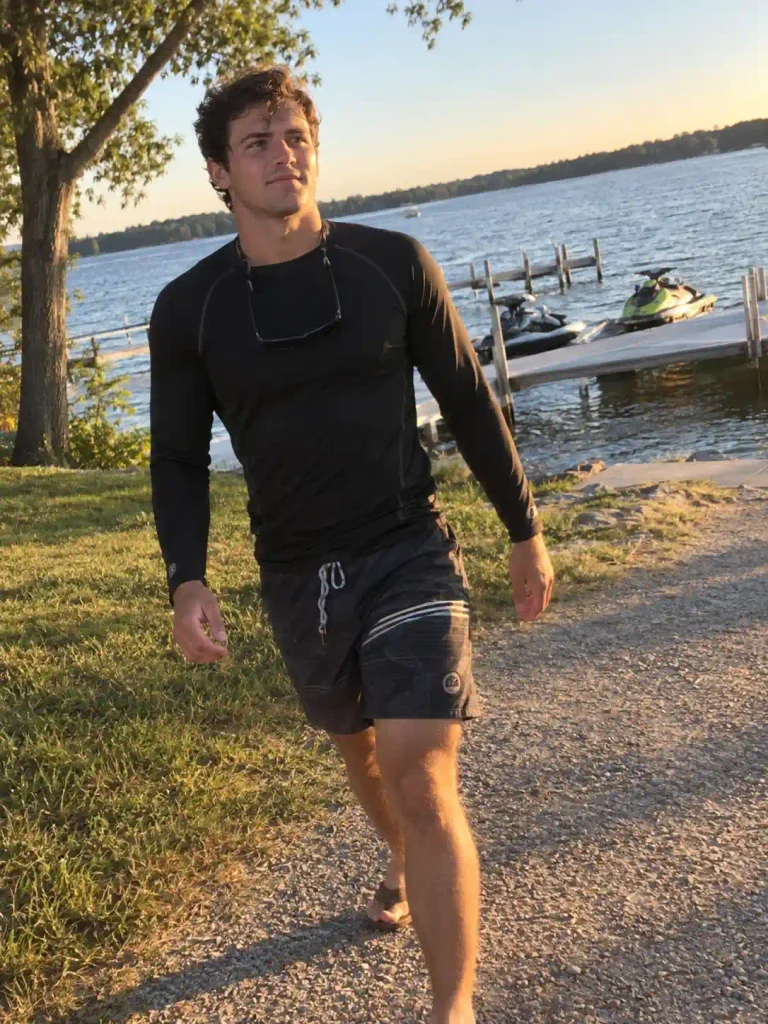
A rash guard isn’t optional if you’re planning more than a quick 20-minute spin. This snug,
quick-dry shirt sits against your skin and stops the two things that ruin a jet ski day: sunburn and chafing.
Quality matters here. Cheap rash guards bunch up, ride up your torso, and basically stop doing their job the moment you sit down hard.
Look for ones with flatlock seams, since flatlock stitching means the seams sit flat against the body instead of overlapping, which eliminates one of the biggest sources of chafing during long sessions. SwimOutlet
Long sleeve or short sleeve? Depends on your skin tolerance and how long you’re out there:
- Long sleeve: better for all-day trips, pale skin, or riders who burn even through sunscreen
- Short sleeve: fine for shorter rides, warmer water, and guys who run hot
- Sleeveless/compression tank: good if you’re layering under a life jacket and don’t want extra bulk at the shoulders
Skip the cotton undershirt. I know it’s tempting to just throw on whatever’s in your drawer, but wet cotton stays wet,
gets heavy, and rubs against your skin for hours. It’s basically the opposite of what you want.
Bottoms: board shorts vs. swim trunks vs. compression shorts
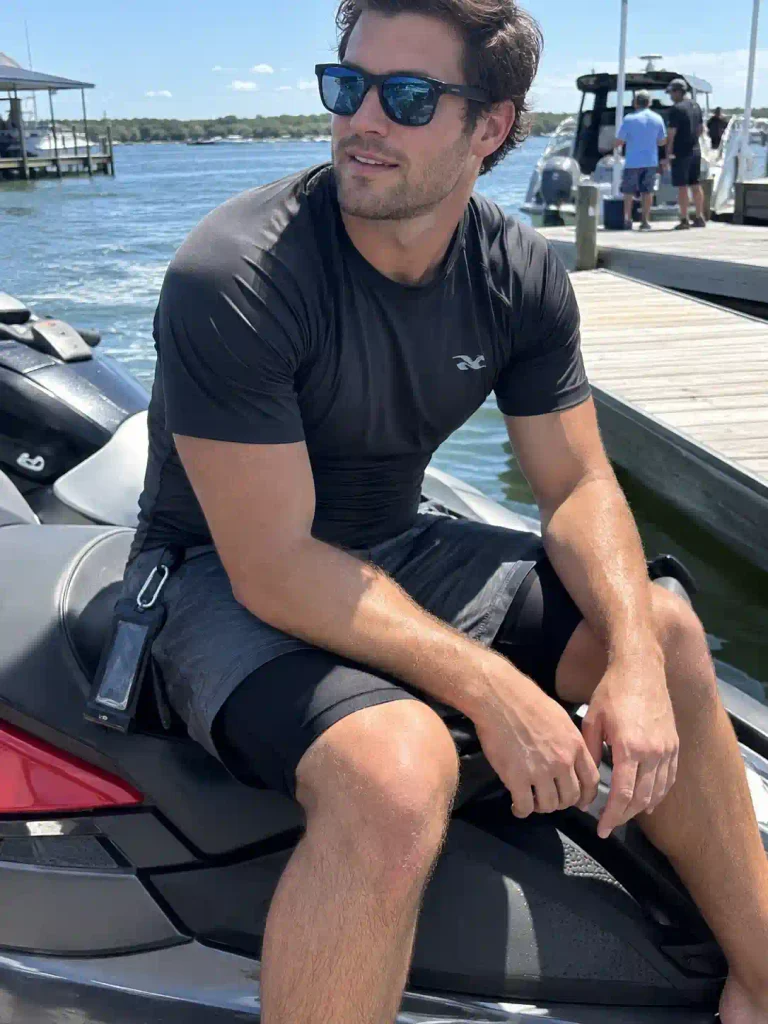
This is where most of the chafing complaints come from, so pay attention. Loose swim trunks with mesh liners look fine standing on the dock and feel awful after 45 minutes of bouncing on a seat.
Board shorts with a snug waistband and shorter inseam work best for most riders. Long, baggy trunks catch water, add drag when you fall (and you will fall), and bunch up uncomfortably under the seat.
Some riders go one step further and wear compression shorts underneath their board shorts.
It sounds excessive until you’ve done a two-hour ride and realized your inner thighs have zero complaints while your buddy is walking like he just got off a horse.
Whatever you choose, avoid anything with a rough inner seam, a drawstring that digs in when wet, or pockets loaded with keys and phones.
That stuff either bruises you or ends up on the lake floor.
Footwear: don’t ride barefoot
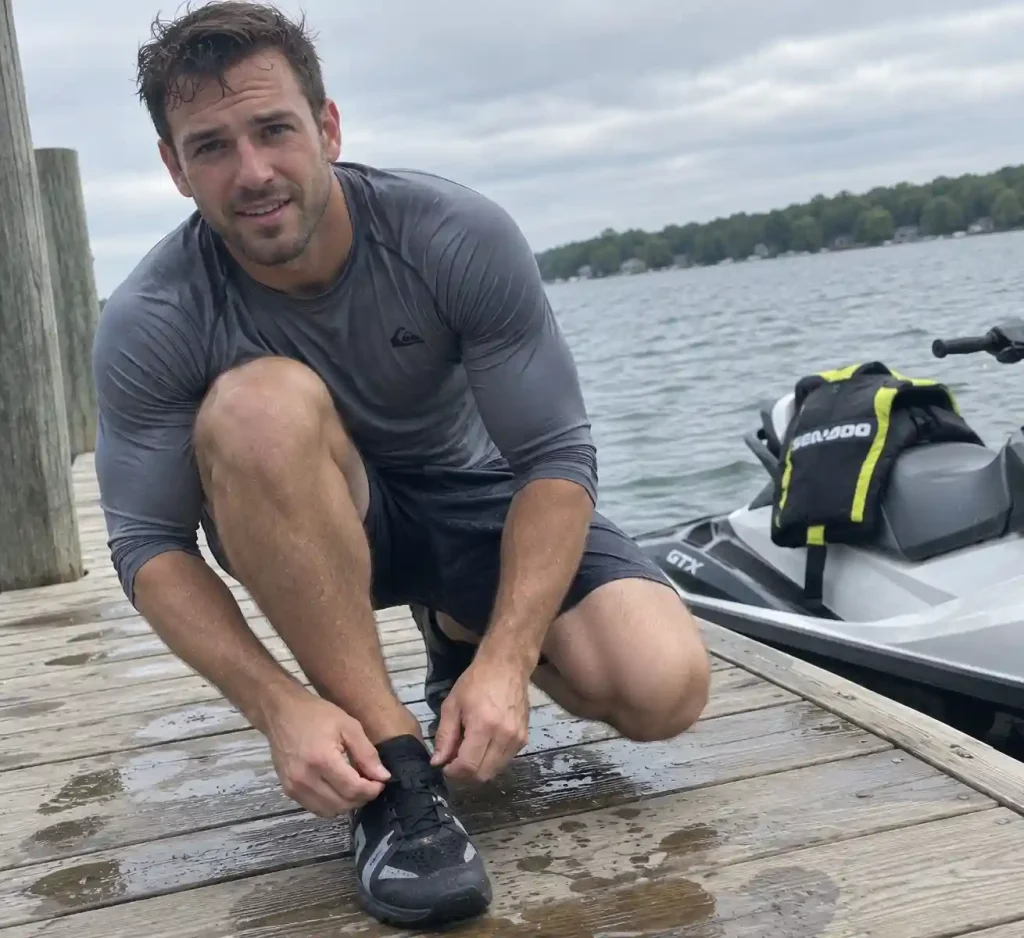
Riding barefoot feels breezy right up until you’re stepping on a hot dock, a rocky shoreline, or a stray fishing hook
someone left behind. Water shoes with a rubber sole solve this without adding much bulk.
Look for shoes with drainage holes, a snug ankle fit, and enough grip to keep you steady when you’re climbing back onto a bouncing PWC after a fall.
Flip-flops are a hard no. They fly off the second you hit any wake, and now you’re one shoe short for the rest of the trip.
Sun protection beyond the rash guard
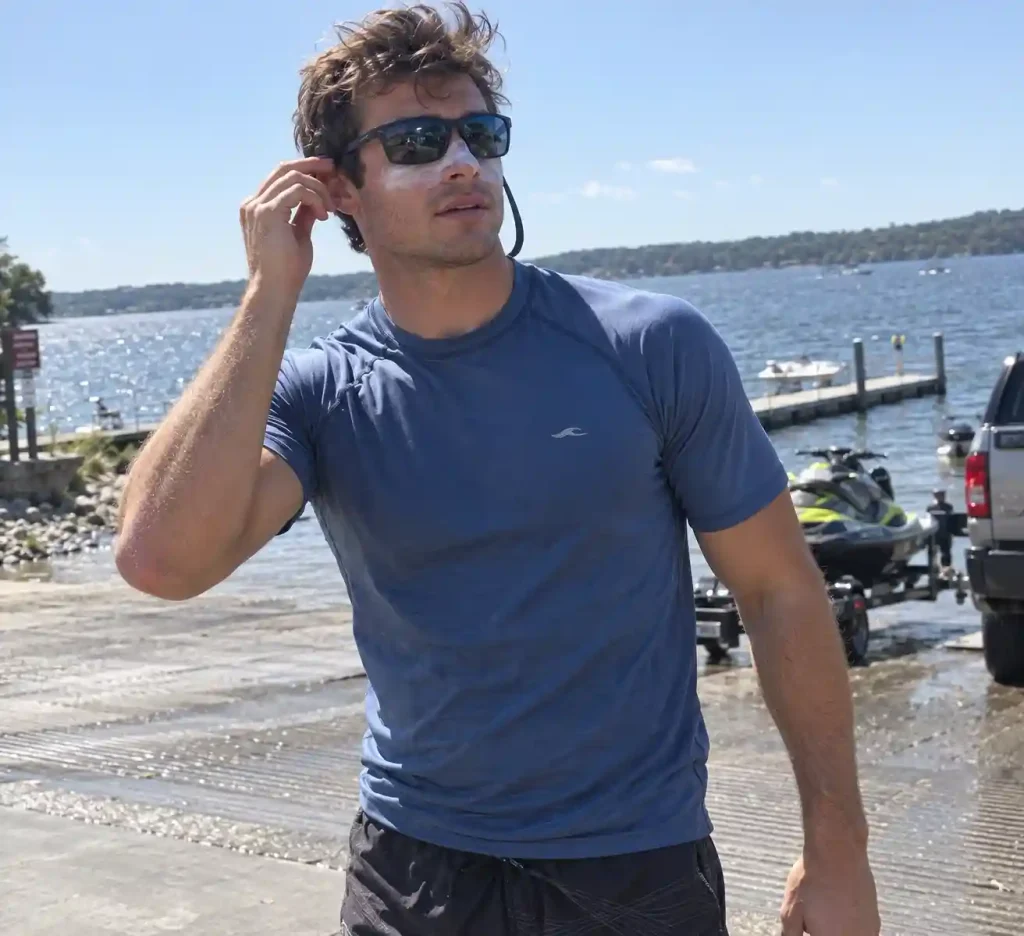
Sunscreen alone doesn’t cut it on the water. Between the reflection off the lake and the constant spray washing it off, you’ll burn faster than you would on land.
UPF-rated clothing does the heavy lifting here, since it doesn’t wash off and doesn’t need reapplying every hour.
A UPF 50+ rash guard blocks a large chunk of UV exposure automatically, and it’s honestly one of the more underrated pieces of jet ski gear.
A few extras worth packing:
- Polarized sunglasses with a retention strap (regular sunglasses last about five minutes before the lake claims them)
- A wide-brim hat only for the ride to the launch, since it won’t survive actual riding speeds
- Zinc stick or sport sunscreen for your face, ears, and the back of your neck
Random thought while we’re on the topic: I’ve genuinely never understood why sunglasses companies don’t sell more of them with built-in floaters. Feels like an obvious product gap. Anyway, back to the outfit.
When you need a wetsuit instead
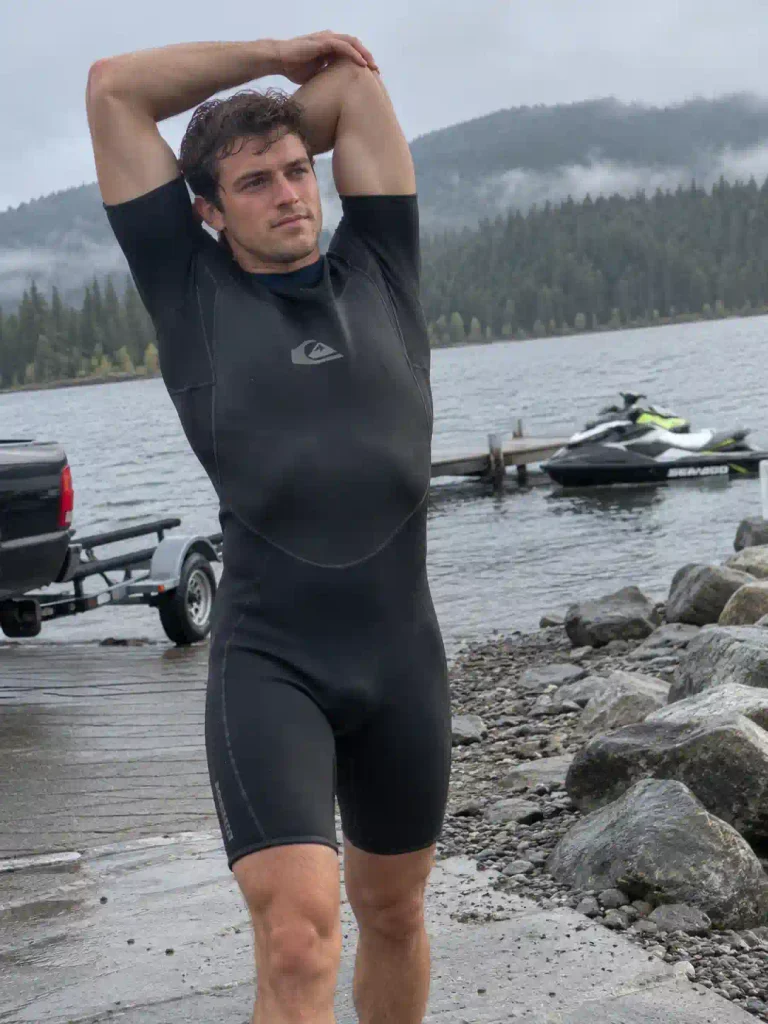
If you’re riding somewhere the water temperature dips below 70°F, a rash guard alone won’t keep you comfortable.
Cold water plus wind chill from the ride adds up fast, and shivering through your whole session isn’t exactly the Pinterest-worthy day you had planned.
A 2mm or 3mm shorty wetsuit works for most moderately cool conditions. Anything colder, and you’ll want a fuller wetsuit with more coverage.
Wearing a rash guard underneath still helps here too, since it makes the wetsuit easier to pull on and adds a thin layer against the seams.
What to avoid completely
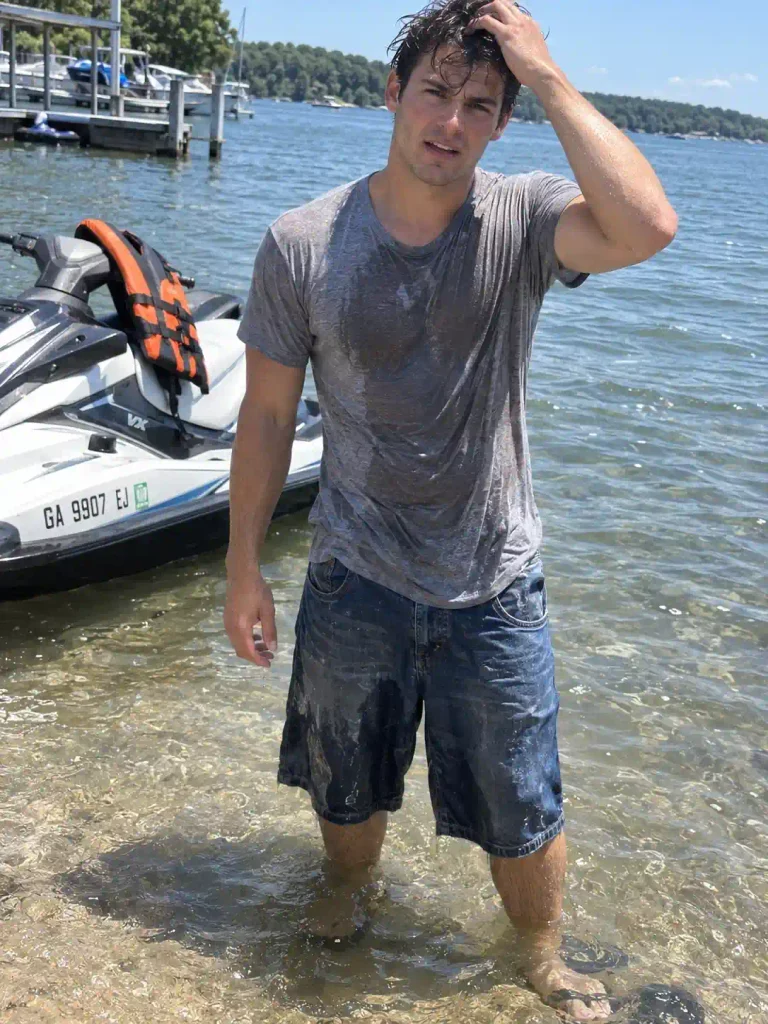
Let’s talk about the outfit choices that sound fine in theory and go wrong fast:
- Cotton anything: shirts, shorts, socks. It absorbs water, stays heavy, and takes forever to dry.
- Loose, baggy swim trunks: they create drag, bunch up, and increase chafing risk.
- Jewelry: rings, chains, and watches either get lost in the water or dig into your skin on impact.
- Regular street sunglasses: no retention strap means they’re gone the first time you hit a wake wrong.
- Flip-flops or slides: they won’t stay on your feet once you’re moving.
- Denim of any kind: this feels obvious, but yes, people still try it. Wow, does that end badly.
Quick reference: what to wear by ride length
| Ride length | Top | Bottom | Extras |
|---|---|---|---|
| Short (under 30 min) | Short sleeve rash guard | Snug board shorts | Water shoes, strapped sunglasses |
| Half day | Long sleeve rash guard | Board shorts + compression shorts | UPF hat for launch, zinc sunscreen |
| Cold water / early season | Rash guard + shorty wetsuit | Wetsuit bottoms | Neoprene booties, gloves |

FAQs
Do I really need a rash guard if I’m just doing a quick 15-minute ride?
For a short spin, you can get away with a regular swim shirt. But if you’re renting for an
Hour or more, a proper rash guard makes a noticeable difference by the time you’re back at the dock.
Can I wear a regular life jacket instead of a PWC-specific one?
Legally, most Type I, II, or III PFDs meet the requirement, but PWC-specific vests fit tighter and move less during falls. If you’re riding regularly, it’s worth the upgrade.
What should I do with my phone and wallet while riding?
Leave them in a locked storage compartment if your jet ski has one, or use a fully waterproof pouch with a strap. Pockets alone are basically a donation to the lake.
Final thought
Dialing in your jet ski outfit isn’t complicated once you know what actually matters: snug fit,
quick-dry fabric, real footwear, and a life jacket you’d actually want to wear all day. Skip the guesswork, skip the chafing, and just enjoy the ride.
What’s your go-to jet ski outfit? Drop a comment below and let me know what’s worked for you on the water.
