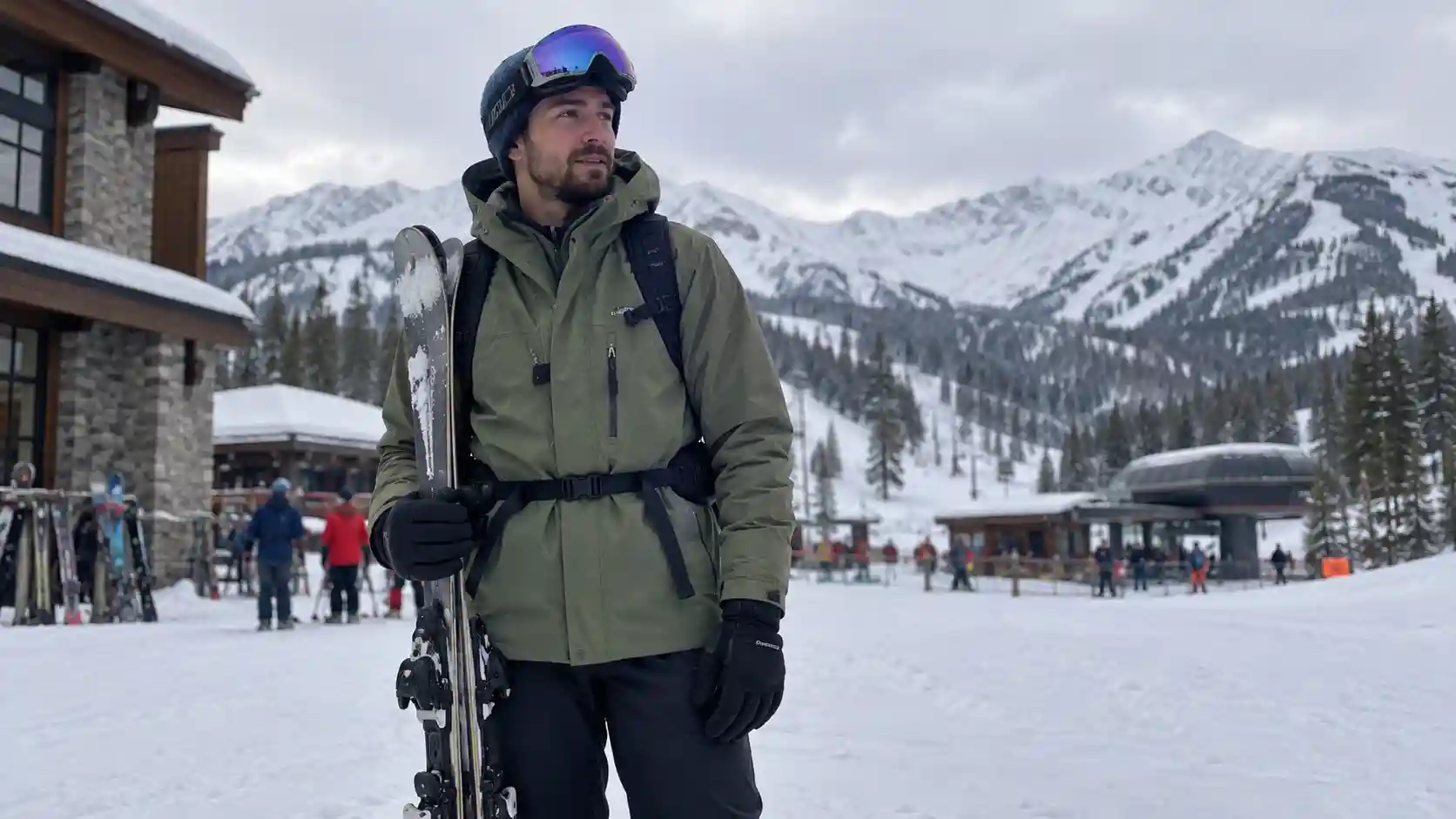
I’ve shown up to the lift line looking like a Michelin Man reject more times than I’d like to admit. Puffy jacket over a puffy vest over a puffy sweater, barely able to bend my elbows, sweating by chairlift three.
That’s the outfit failure mode nobody warns you about: dressing for cold instead of dressing for movement.
Skiing burns through layers fast. You’re cold at the top, sweating on the run, freezing again in the lodge line.
Getting your outfit right isn’t about looking like a catalog model (though, sure, that’s a nice bonus). It’s about staying warm without turning into a walking sauna.
I’ve spent a dozen seasons figuring this out through trial and a lot of error. Below are 20 outfit combos that actually work on the mountain, plus the gear logic behind each one. Ready?
Why your ski outfit actually matters
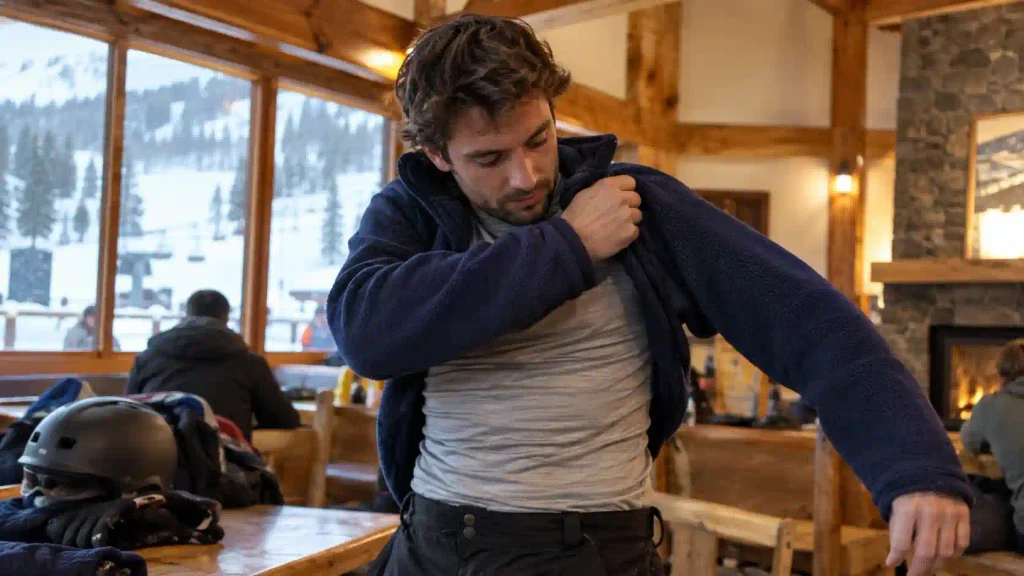
Cotton kills. That’s not me being dramatic, it’s basically gospel among anyone who’s spent real time on snow.
Cotton holds moisture against your skin, and wet fabric plus wind chill equals miserable, fast.
The fix is layering: a base layer that wicks sweat, a mid layer that traps heat, and an outer shell that blocks wind and snow. REI’s expert layering guide breaks this down well if you want the technical deep cut, but here’s the quick version.
Layering cheat sheet
| Layer | Job | Example piece |
|---|---|---|
| Base | Wicks sweat off skin | Merino wool or synthetic long-sleeve |
| Mid | Traps body heat | Fleece pullover or light down |
| Outer | Blocks wind, snow, water | Waterproof shell jacket |
Once that system clicks, everything else is just styling on top of function. Onto the outfits.
1. The classic three-layer system
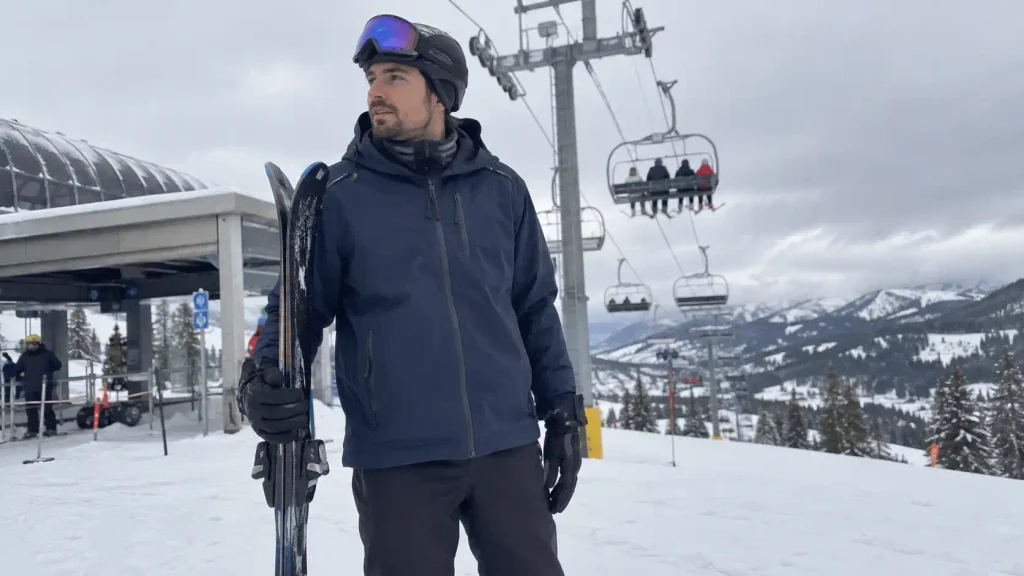
You can’t go wrong starting here. Merino base layer, fleece quarter-zip, waterproof shell. It’s the outfit equivalent of a firm handshake: reliable, no surprises.
Pair it with a solid-colored shell in navy or forest green and you’ll look put together without trying.
This is my go-to on variable-weather days when I don’t know if it’s going to be sunny or dumping snow by noon.
2. Monochrome black-on-black
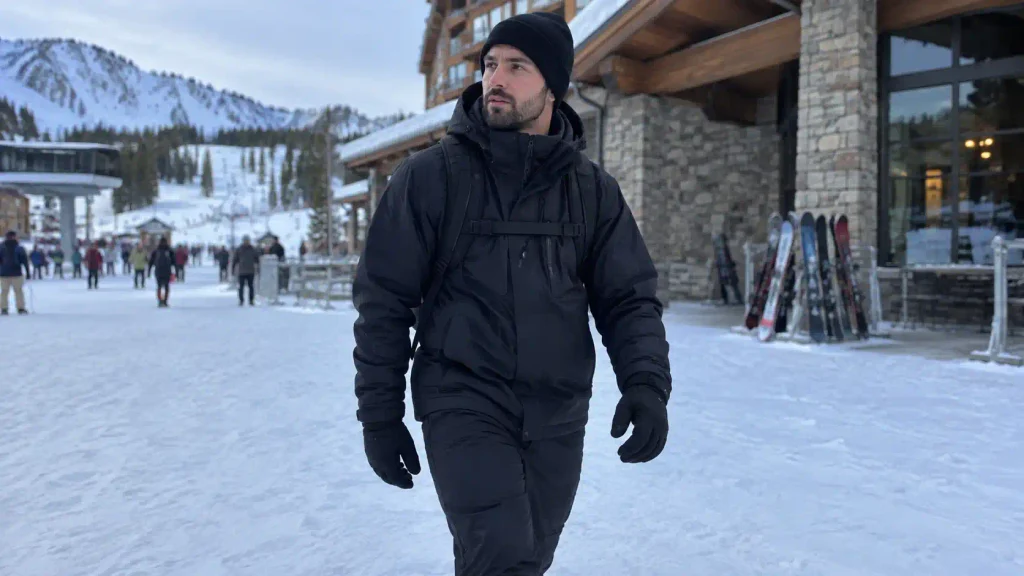
Black jacket, black pants, black beanie. IMO this is the most underrated look on the mountain because it photographs incredibly well against white snow.
Break it up with one color pop, like burnt orange gloves or a red buff. Otherwise you risk looking like you’re headed to a funeral, not a groomer run.
3. Retro ’90s neon shell
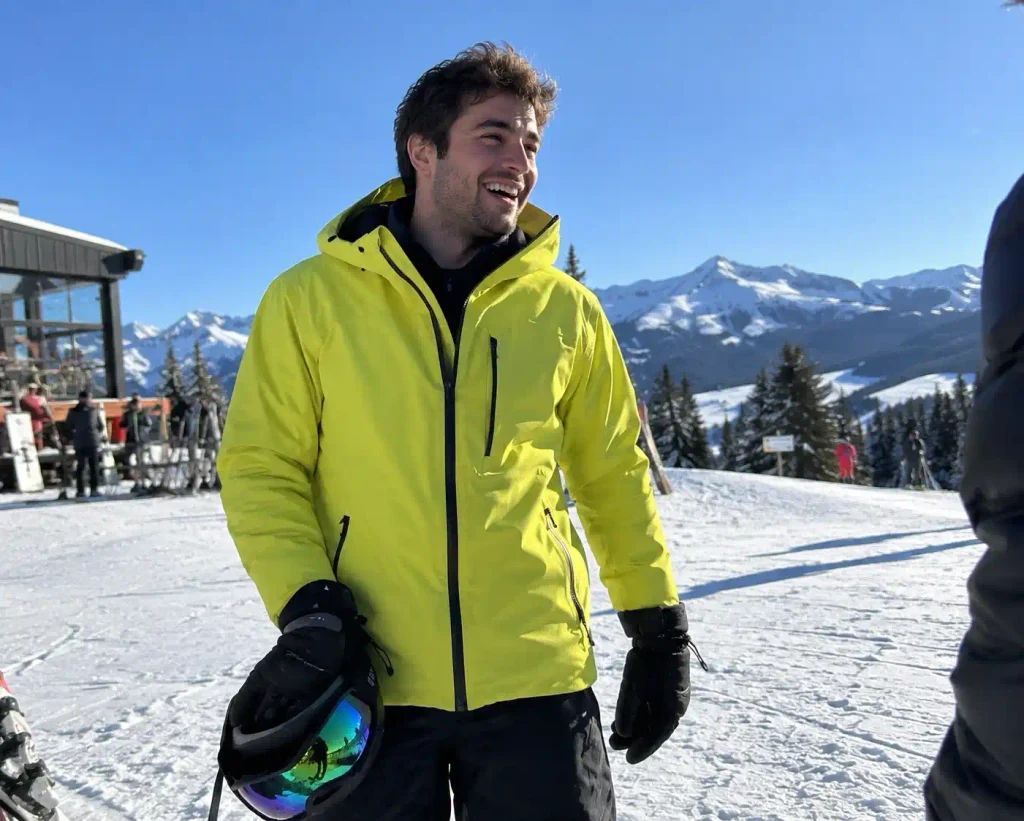
Bright colorblocked jackets are back, and honestly, they never should’ve left. A neon yellow or cobalt blue shell paired with plain black pants keeps it from feeling costume-y.
This one’s for the guy who wants to be spotted from the chairlift. Ever notice how the loudest jackets always belong to the best skiers? Coincidence? Probably. Fun theory anyway.
4. Insulated bibs and a technical jacket
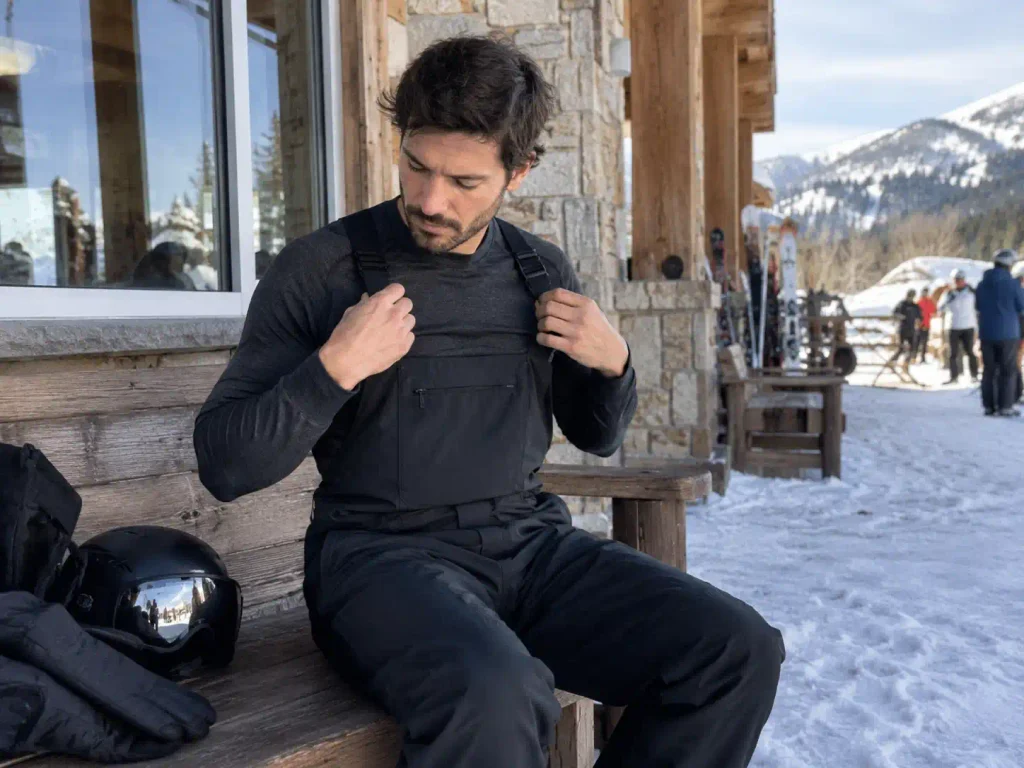
Bibs solve the eternal problem of snow sneaking down your back when you fall.
A bib and jacket combo with matching or contrasting colors gives serious backcountry energy even if you’re staying firmly on groomed runs.
Look for bibs with reinforced knees if you’re someone who spends a lot of time getting back up after face-plants. No judgment, we’ve all been there.
5. Heritage plaid flannel mid layer
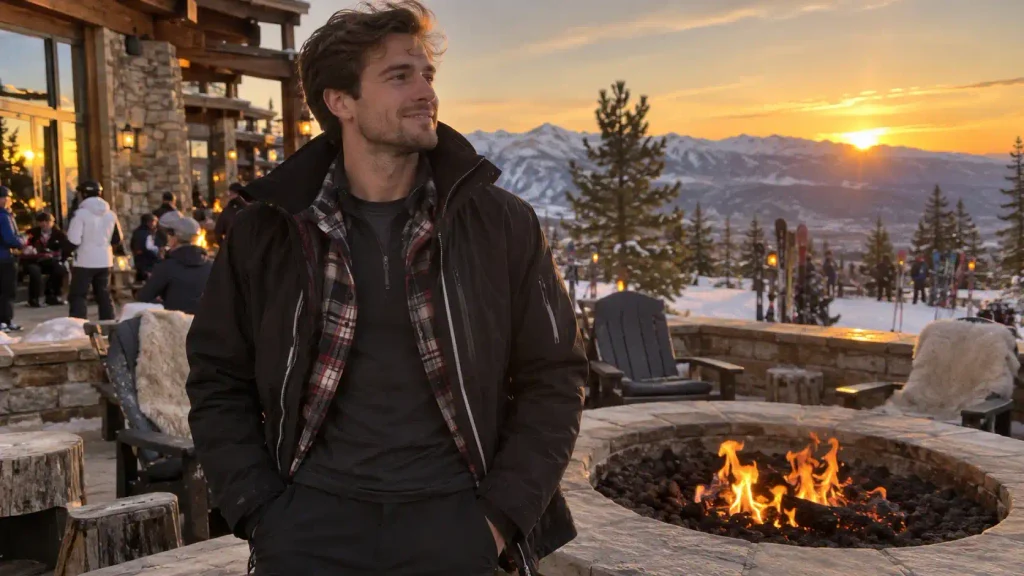
Swap the standard fleece for a flannel-lined mid layer under your shell. It adds a cabin-core vibe that looks great in lodge photos once the jacket comes off.
Just make sure it’s a technical flannel blend, not actual cotton flannel. Real cotton under a shell defeats the whole moisture-wicking point we just talked about.
6. All-white winter camo
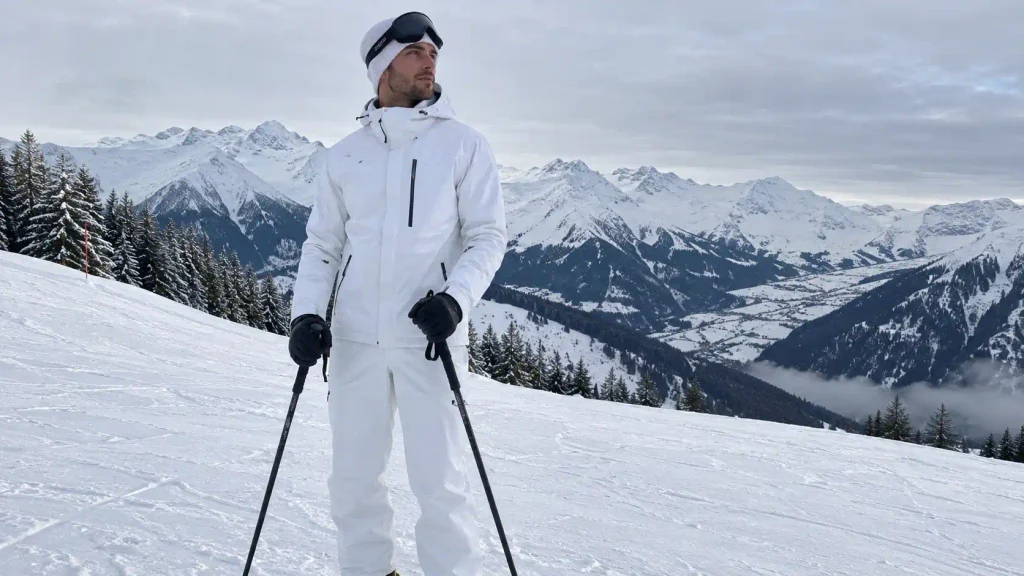
A white or light gray shell with matching pants creates a clean, almost tactical look.
All-white kits are having a real moment right now on Pinterest boards and gear forums alike.
The catch: you need a colored helmet or goggles strap so ski patrol can actually spot you against the snow. Safety first, aesthetics second, always.
7. Utility jacket with cargo pockets
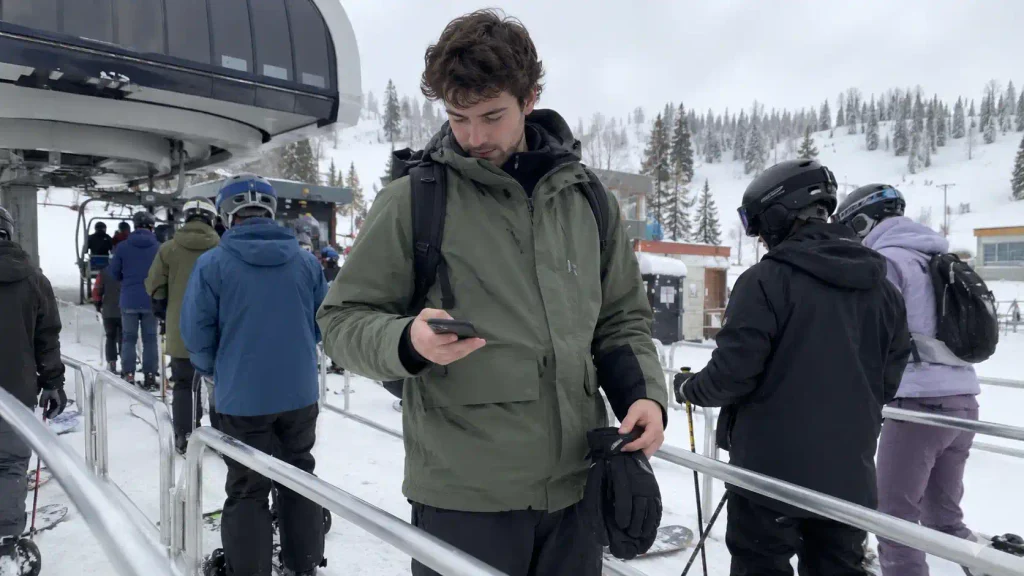
Function-forward guys will love this one. A shell with multiple exterior pockets for phone, snacks, lip balm, and lift pass means you’re not digging through an inner layer at the chairlift every five minutes.
I switched to a cargo-style shell two seasons ago and it genuinely changed how I pack for a day on the hill. Small thing, big difference.
8. Softshell for spring skiing
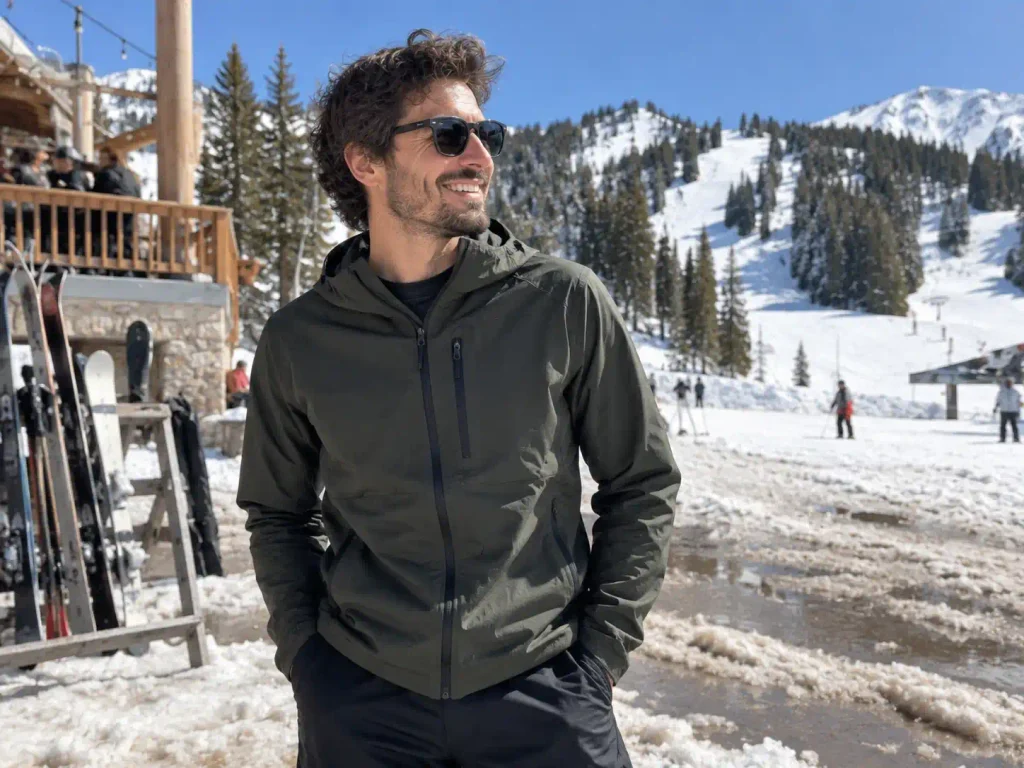
Warmer late-season days don’t need a full hardshell. A softshell jacket breathes better and moves more freely,
which matters when the snow’s slushy and you’re working harder to hold an edge.
Pair with a lightweight base layer only, skip the mid layer entirely. You’ll thank yourself by lunchtime.
9. Two-tone jacket and pants combo
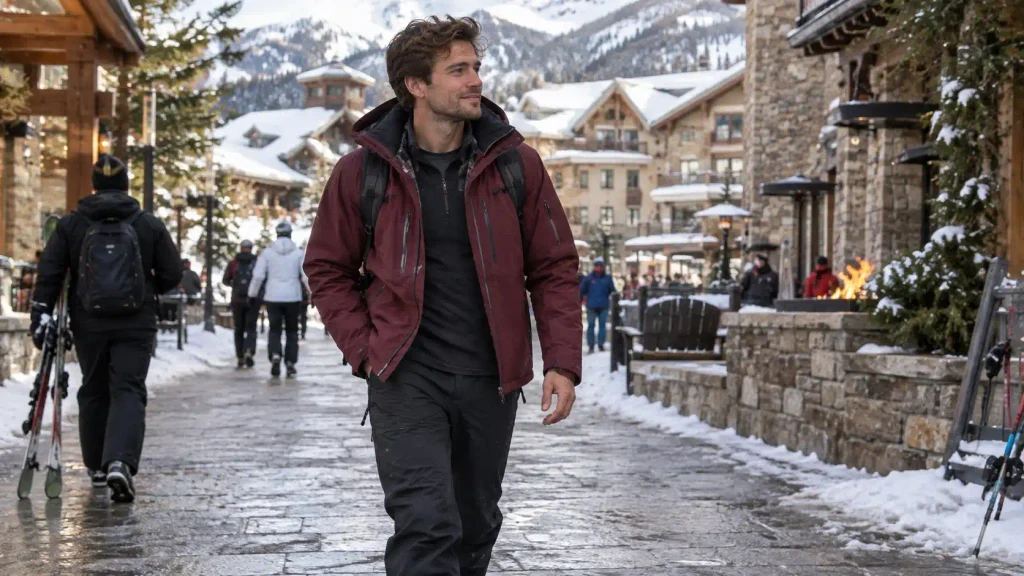
Mismatched colors done intentionally look sharp. Think a burgundy jacket with charcoal pants, or olive green with tan.
Coordinated but not matching is the sweet spot between put-together and boring.
Add a beanie in one of the two tones to tie the whole thing together visually.
10. Down puffy under a shell
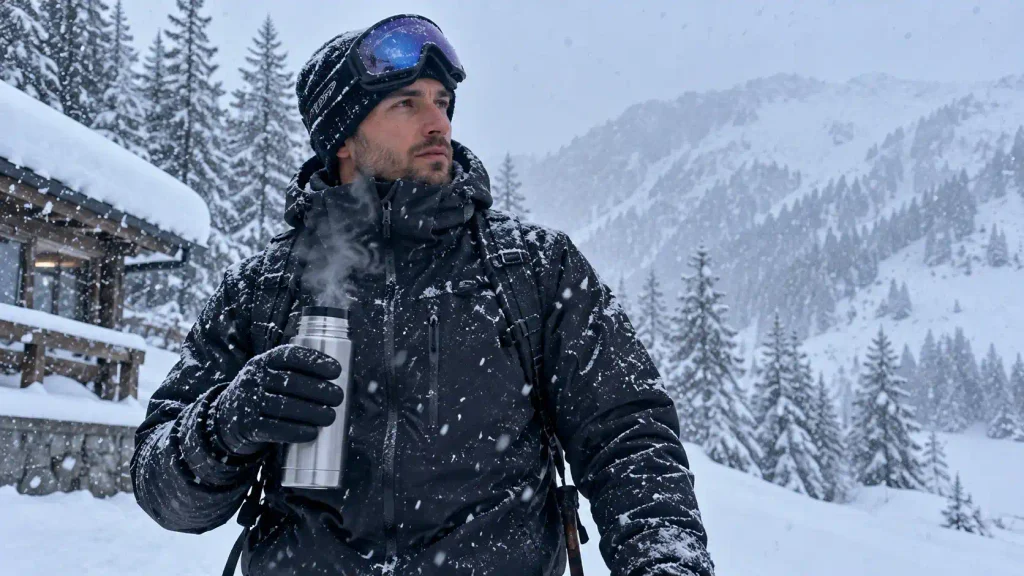
For genuinely brutal cold days, swap fleece for a compressible down mid layer. A thin puffy under your shell traps way more heat per ounce than fleece does.
Quick tangent: I once wore a down mid layer on a 15-degree day in Colorado and forgot how warm it was until my thermos of coffee actually stayed hot longer than usual too.
Not related to the jacket, obviously, just one of those weird winter observations you file away.
11. Streetwear-inspired ski fit
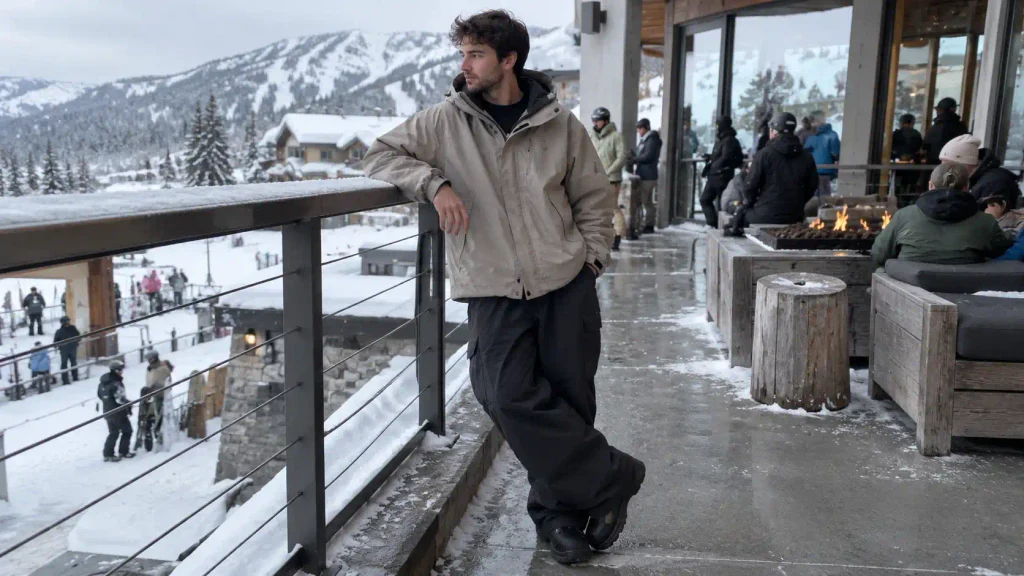
Oversized shells, wide-leg pants, chunky boots. The streetwear ski aesthetic has genuinely taken over resort parking lots the last few seasons, and it photographs beautifully for content.
Brands like Picture Organic and Airblaster lean hard into this look if you want a starting reference point.
12. Tailored, slim-cut technical wear
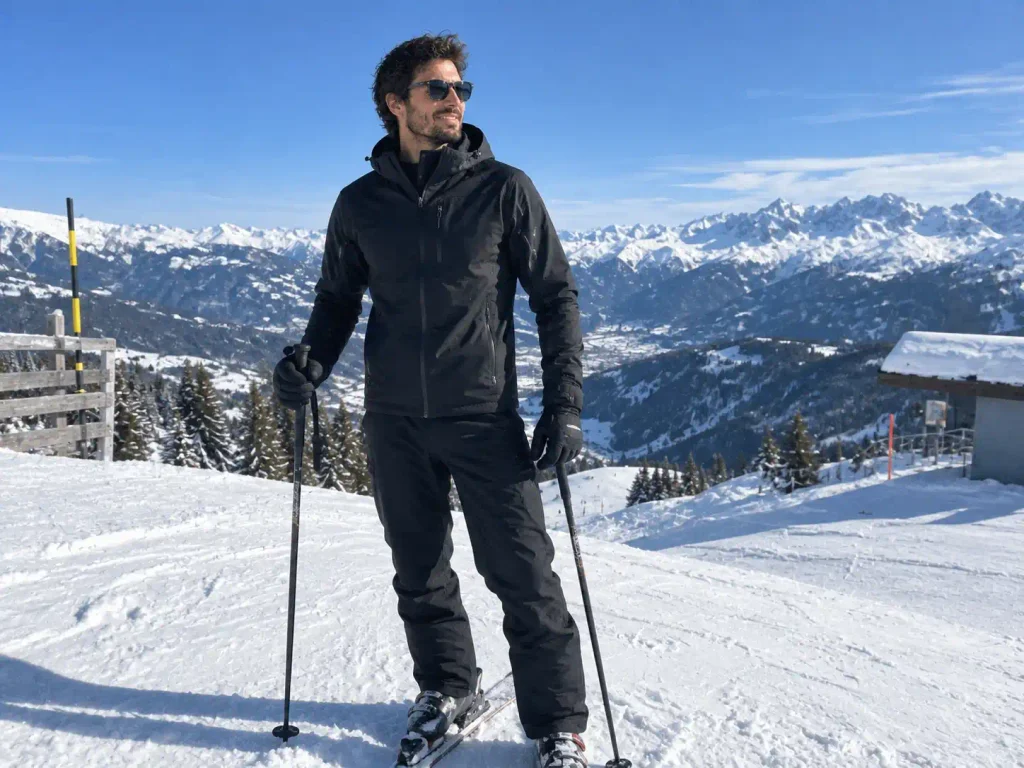
Not everyone wants the baggy look. A slim, athletic-cut jacket and pant reads more European, more racer-inspired.
This works especially well on guys who ski aggressively and don’t want extra fabric flapping around.
Brands like Bogner and Fusalp specialize in this silhouette if you want to see it done right.
13. Statement beanie and matching gloves
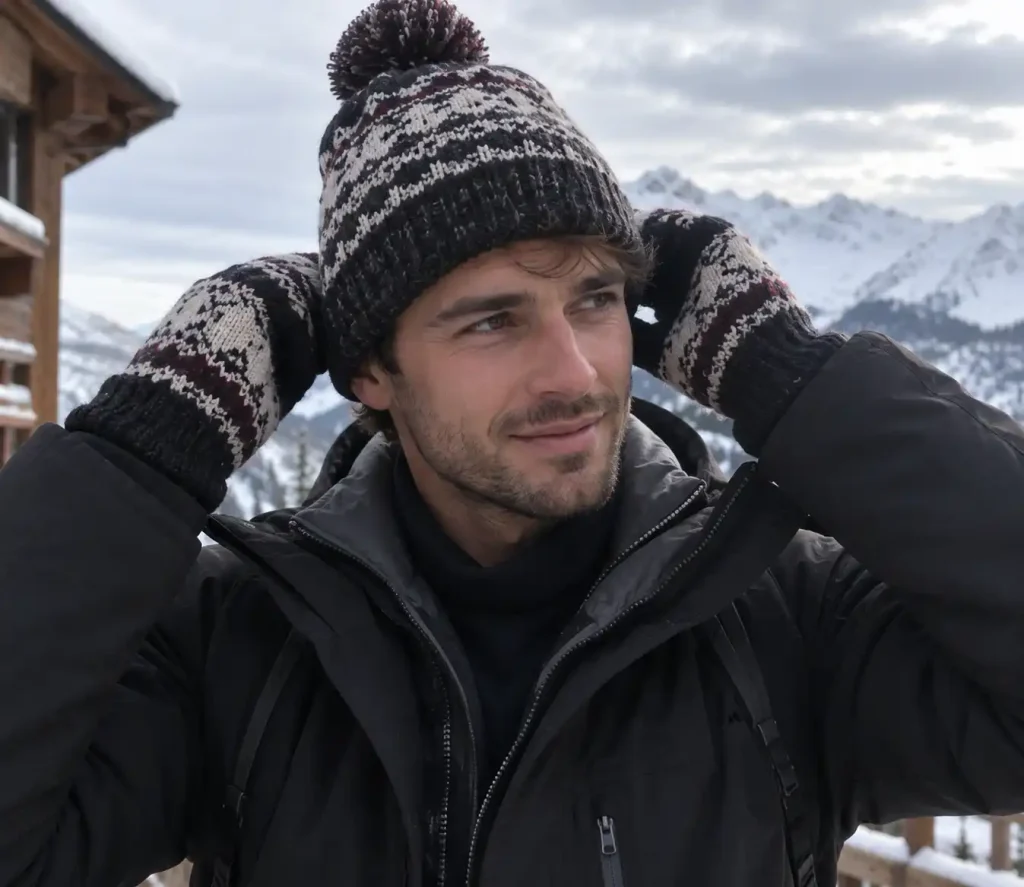
Sometimes the outfit is 90% about the accessories. A bold patterned beanie paired with matching gloves instantly elevates an otherwise plain jacket-and-pants combo.
This is the cheapest way to refresh your kit season to season without buying a whole new outerwear set.
14. Vest-layered look for milder days
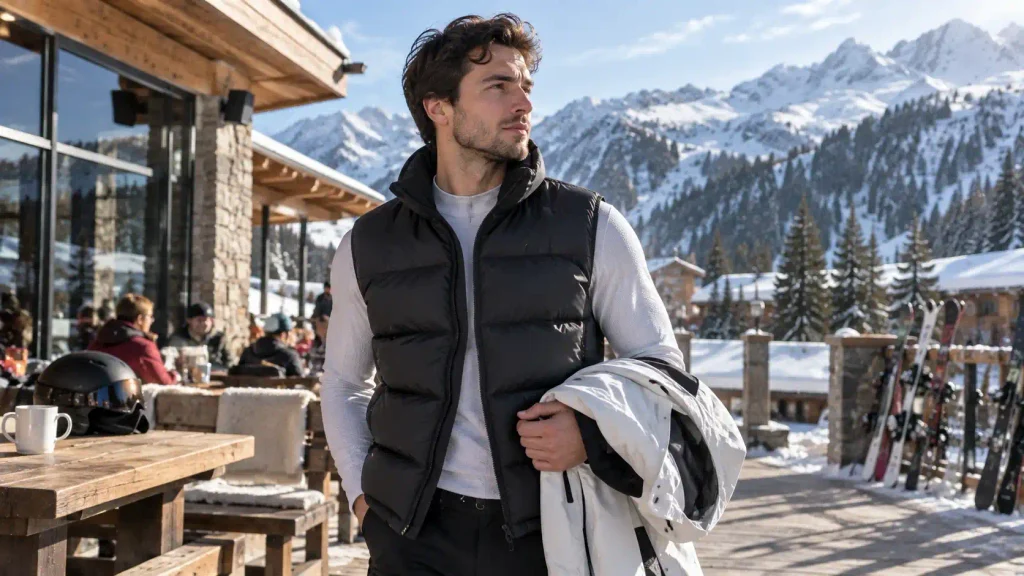
A puffy or fleece vest over your base layer, under your shell, adds core warmth without bulking up your arms.
Vests are the most underrated mid layer for guys who run warm or ski hard enough to generate their own heat.
Good for shoulder-season days when a full mid layer would leave you overheating by run two.
15. Matching family or crew set
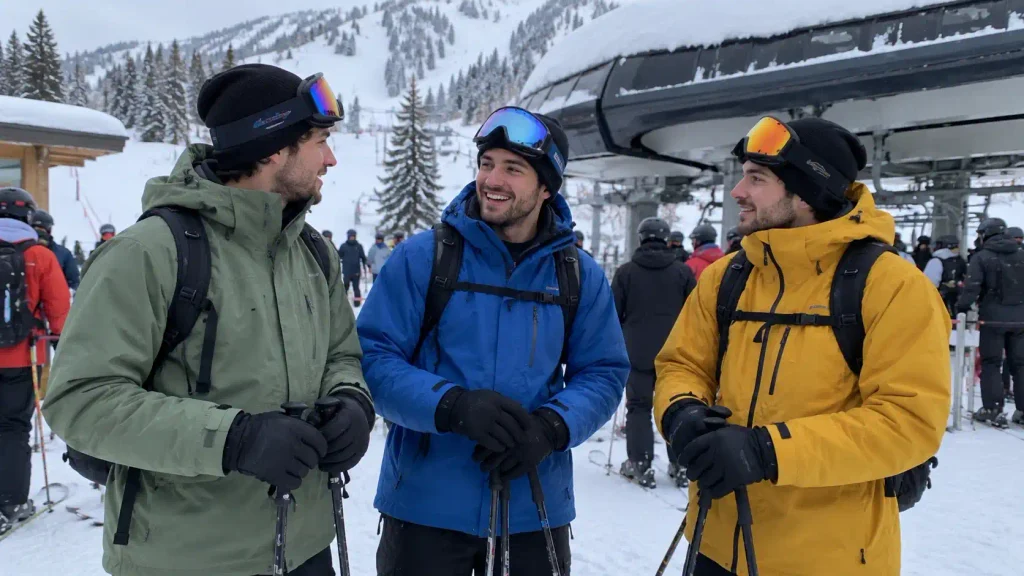
If you’re skiing with buddies or kids, coordinated jackets in the same color family make for genuinely great lift photos.
A shared color palette across the group looks intentional, not accidental.
This isn’t just aesthetics either. Bright matching colors make it way easier to spot your group in a crowded lodge or busy lift line.
16. Heated jacket for extreme cold days
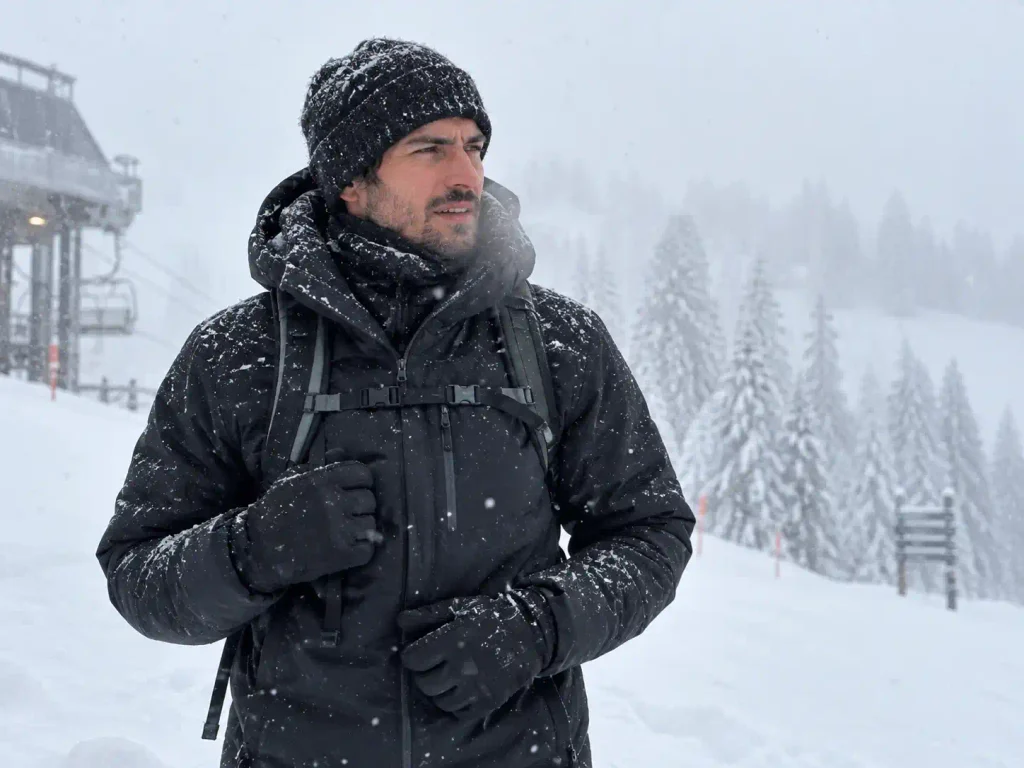
Battery-heated liners have gotten seriously good. A heated base or mid layer is worth the investment if you ski cold climates regularly, or if you just run cold in general.
Wow, the jump in battery life on these things over the last few years is honestly kind of insane. My first heated vest barely lasted two hours. Current models push six or more.
17. Earth-tone, sustainable fabric fit
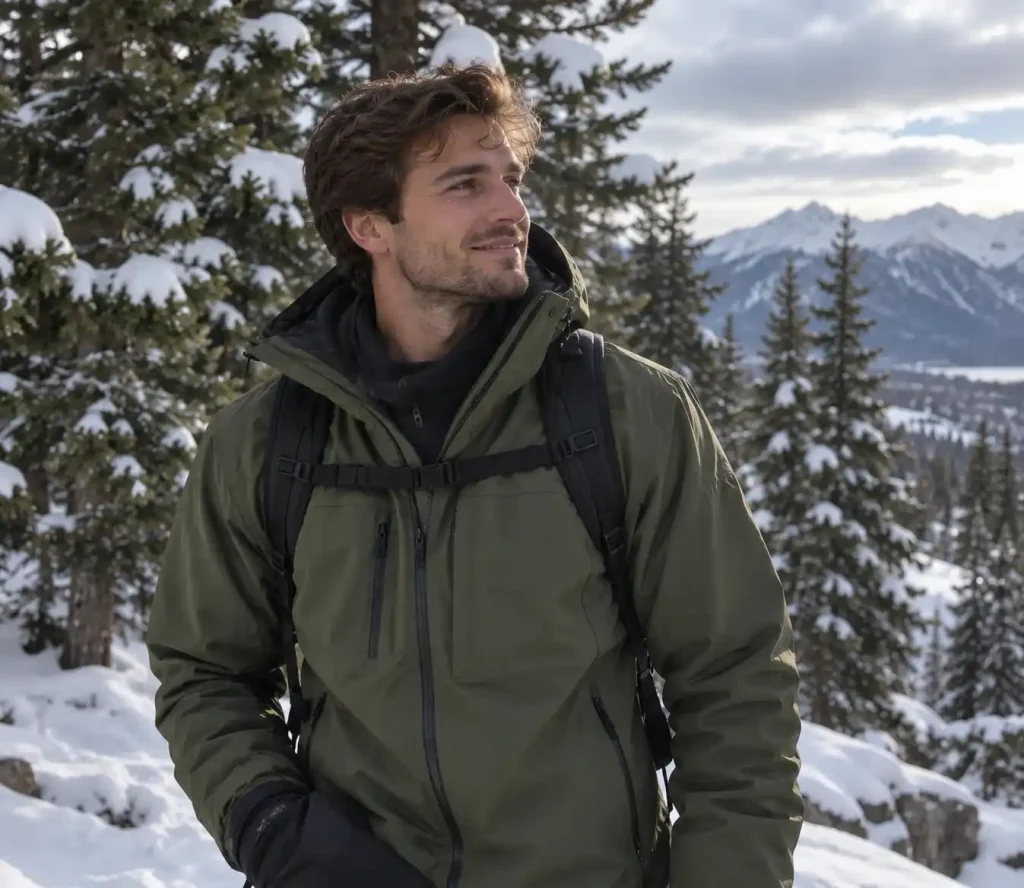
Brands are pushing recycled and bluesign-certified materials hard right now. An olive, rust, or sand-colored shell made from recycled nylon gives an outdoorsy, grounded look that stands apart from typical bright ski colors.
Patagonia and Norrøna both do this palette well, FYI, if you want a place to start browsing.
18. Full tech-wear black setup with harness accents
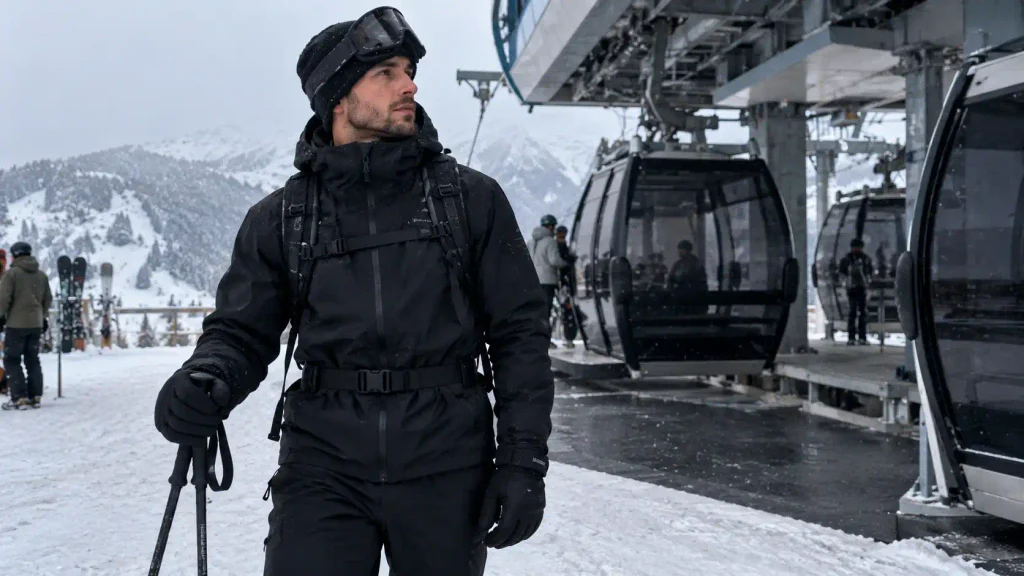
Think urban tactical gear meets alpine functionality. Black-on-black with visible strapping and harness details is a niche look, but it’s growing fast among younger freeride skiers.
Pair with a low-profile helmet rather than a bulky one to keep the silhouette clean.
19. Classic Scandinavian knit sweater over base layer
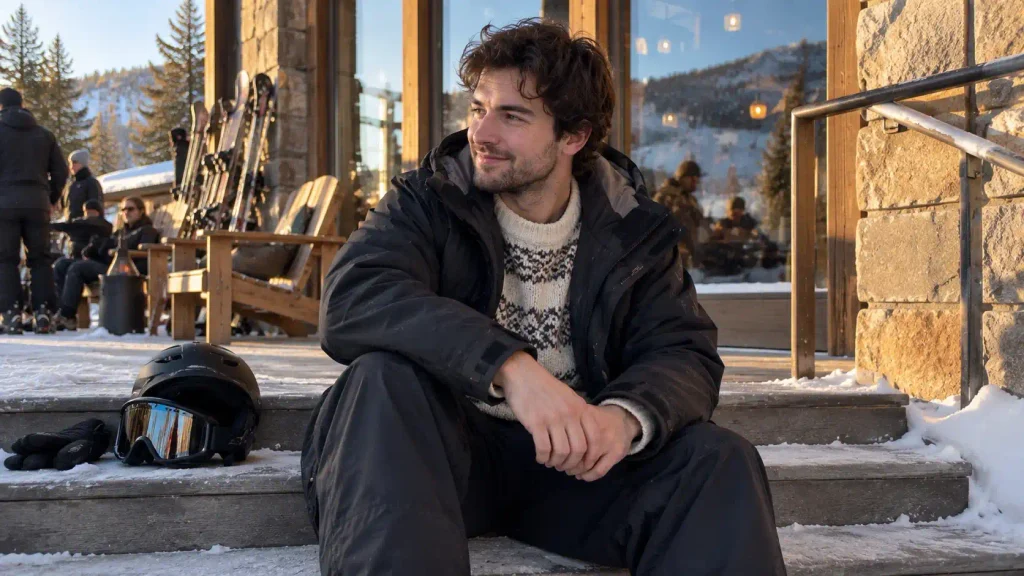
Skip the fleece mid layer for a chunky wool knit sweater worn under your shell. It’s warmer than it looks and gives serious après-ski energy the second that outer jacket comes off.
Norwegian brands practically built an entire aesthetic around this look, and it holds up.
20. Budget-friendly layered basics
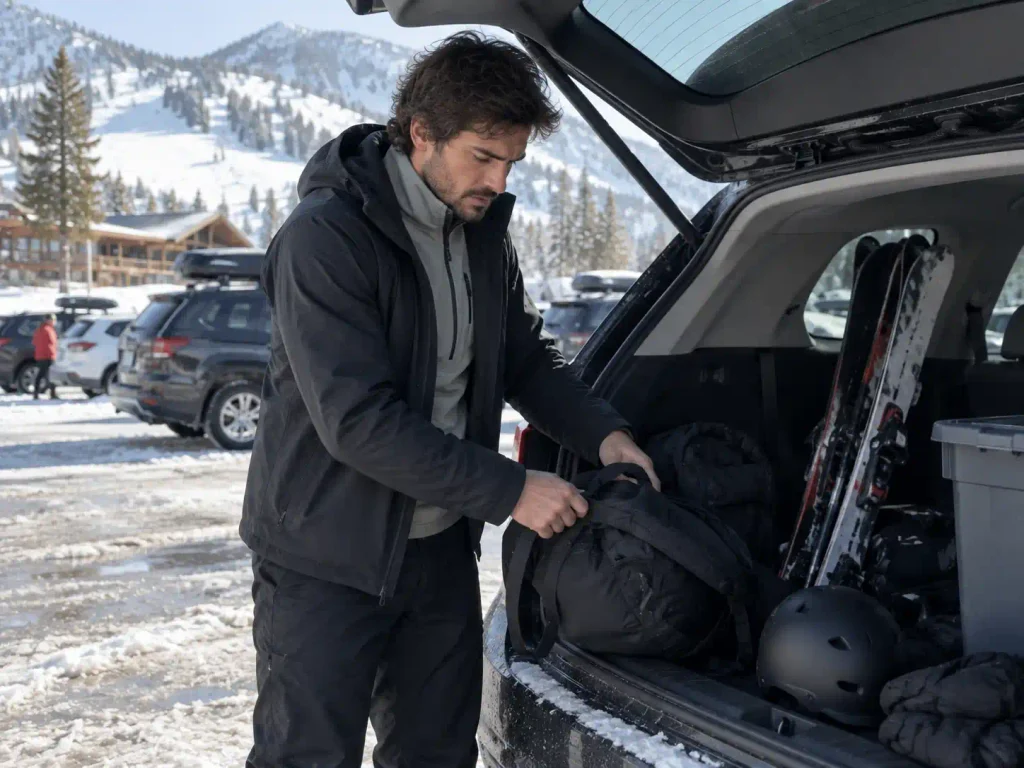
You don’t need $800 in gear to look and stay warm. A synthetic base layer, thrifted fleece, and a solid mid-range shell from brands like Columbia or REI Co-op will get you through most resort days just fine.
Check REI’s men’s base layer selection if you’re building a kit from scratch on a budget. You genuinely don’t need top-shelf everything to stay warm and look decent doing it.
A quick word on goggles and gloves
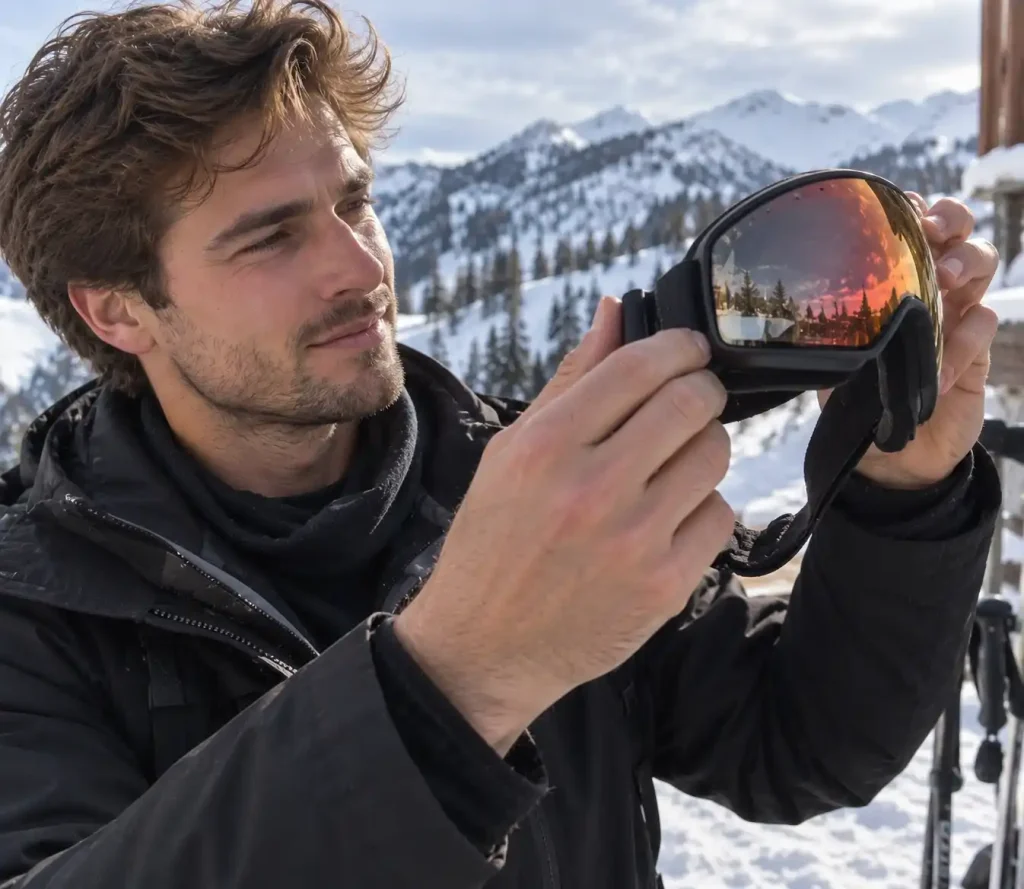
Your outfit isn’t complete without the accessories, and this is where a lot of guys cheap out and regret it.
Goggles with the wrong lens tint for the day’s light conditions are miserable to ski in.
I’d point you to REI’s own breakdown on choosing the right goggles if lens VLT and tint options sound like a foreign language right now. It clears things up fast.
For gloves, mittens run warmer than gloves but sacrifice dexterity for buckles and zippers. I keep both in my bag depending on the day.
FAQ
Do I really need separate ski pants, or can I wear regular snow pants?
Regular snow pants work for casual sledding, but real ski pants have reinforced cuffs, better waterproofing, and articulated knees built for the motion of skiing.
If you’re hitting the slopes more than once or twice a season, dedicated ski pants are worth it.
Can I wear jeans under my ski pants for extra warmth?
Skip it. Jeans are cotton, they trap moisture, and they’ll leave you cold and damp fast. A proper base layer does the job jeans can’t.
How many layers do I actually need on a mild 35-degree day?
Usually just a base layer and shell, no mid layer required. Overdressing on a warmer day is honestly the more common mistake I see.
Final thought
Your outfit should work as hard as you do on the mountain, not fight against you. Pick a combo from this list, adjust it to your climate and skiing style, and you’ll spend less time shivering in the lift line and more time actually enjoying your runs.
