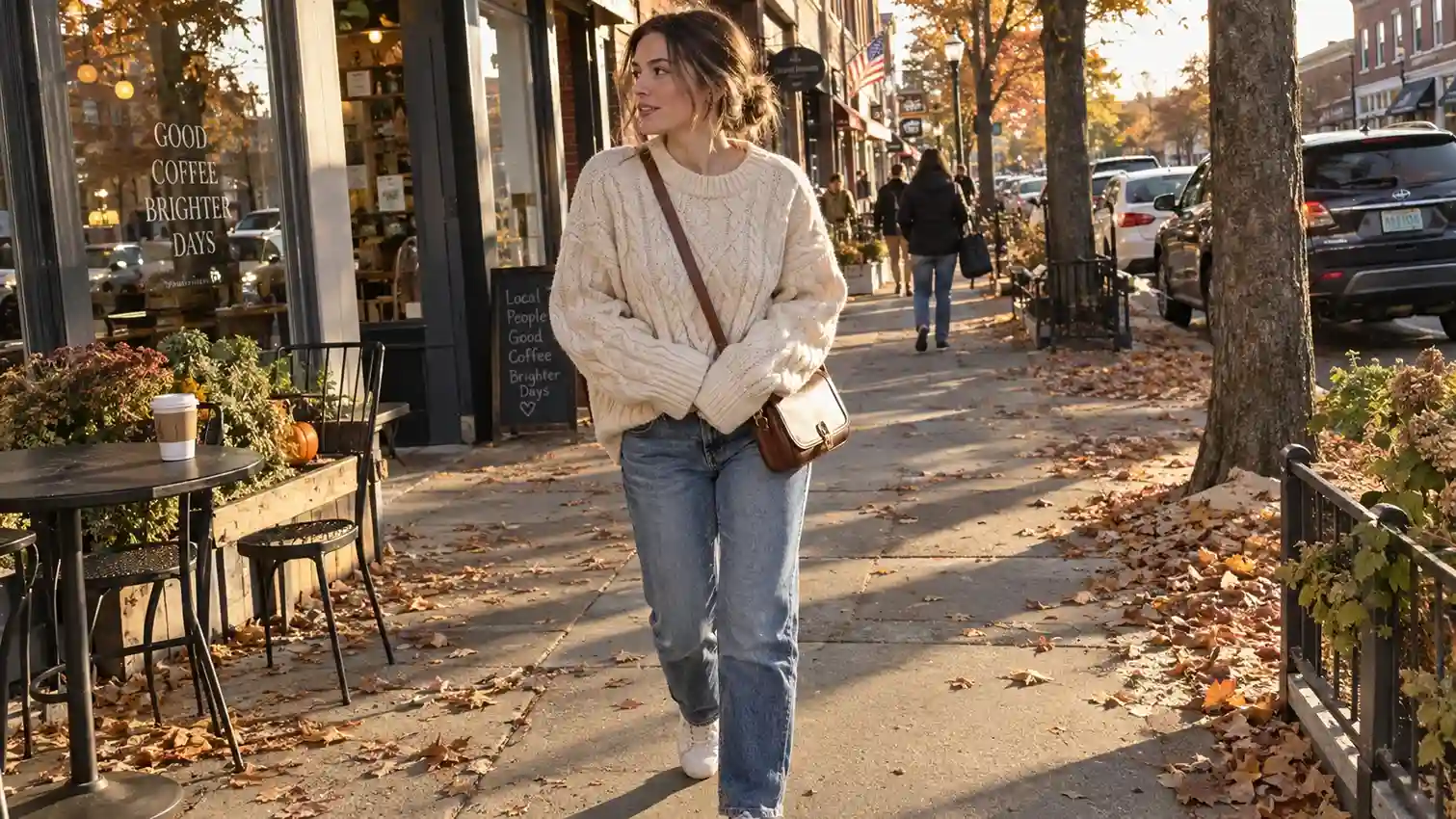
You pull on your favorite chunky sweater, grab your go-to jeans, glance in the mirror, and something’s off.
Not bad exactly. Just… shapeless. Like you borrowed your outfit from a much larger, much less interested version of yourself.
I’ve had that exact moment more times than I’d like to admit. Fall sweater weather should feel cozy and put-together, but somewhere between “cute knit” and “actual outfit,” things go sideways.
IMO, it’s rarely the sweater’s fault. It’s almost always a proportions problem, and proportions problems have fast fixes.
Here’s every mistake I see (and have personally made) with the sweater-and-jeans combo, plus exactly how to fix each one without buying a whole new wardrobe.
I’ve pinned enough “cozy fall outfit” boards to know the gap between the photo and the fitting room mirror, and most of that gap comes down to a handful of small, fixable habits.
Mistake 1: Going oversized on top and bottom
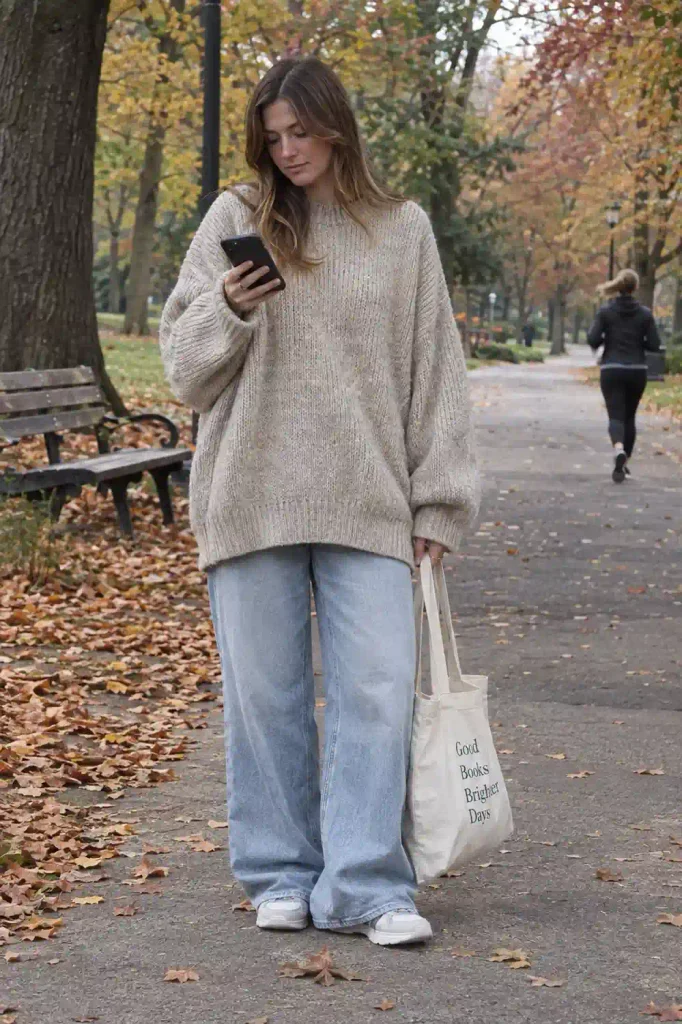
An oversized sweater is comfortable. An oversized sweater over baggy, wide-leg jeans is a fabric avalanche.
When both pieces are loose, your body disappears into the middle of the outfit and nobody, including you, can tell where you start and end.
I made this mistake constantly in my first “cozy era.” I thought more volume meant more comfort meant more style.
Instead I just looked like I was wearing a very soft tent, and a friend actually asked me once if I’d borrowed the sweater from my dad.
I hadn’t. It was mine. That’s how you know it’s time to rethink the pairing.
The fix: pick one loose piece and one fitted piece. If the sweater is chunky and oversized, pair it with slim, straight, or tapered jeans. If your jeans are wide-leg or a barrel cut, go for a slim or regular-fit sweater instead.
One source (see this guide on styling oversized sweaters) calls this “creating balance,” which is a fancy way of saying: don’t drown twice.
This rule holds even when you swap out individual pieces.
A cropped, boxy sweater over wide-leg jeans can actually work, because the crop takes away one layer of bulk and gives your waist somewhere to show.
It’s the double-loose, full-length combination that causes trouble, not looseness on its own.
Mistake 2: Skipping waist definition entirely
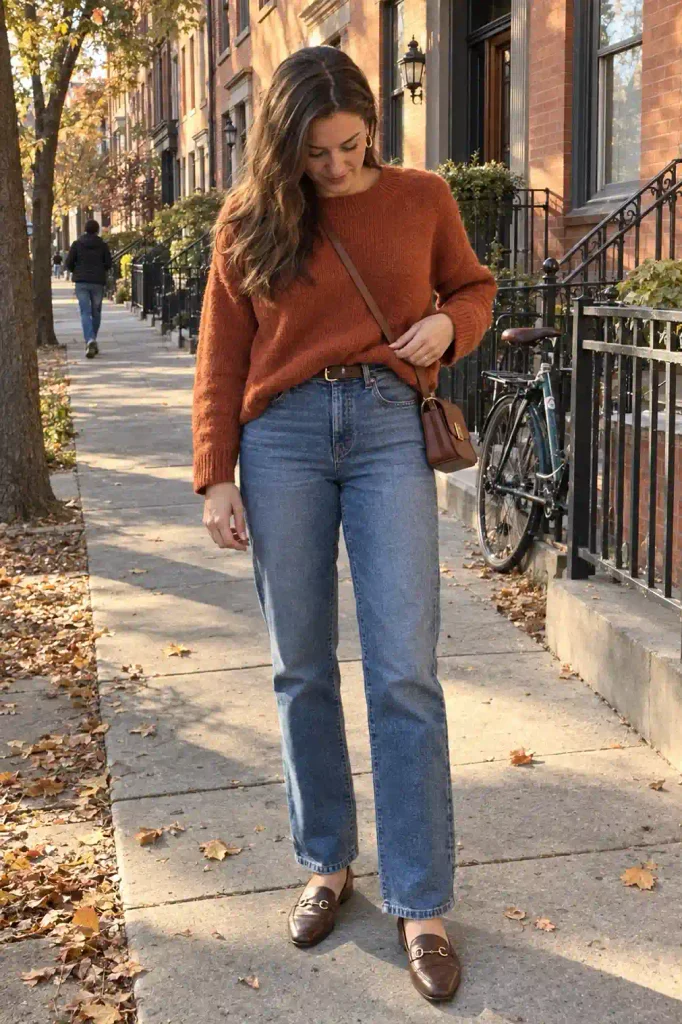
This one’s sneaky. You can wear the right sweater and the right jeans and still look frumpy if there’s zero shape at the waist.
A boxy sweater left completely untucked over jeans reads as one long rectangle from shoulders to hips.
Ever wondered why the same sweater looks totally different on a friend who tucks it versus one who doesn’t? That’s the waist definition talking.
The fix: try the French tuck. Grab a small section of the front hem and tuck it loosely into your waistband, letting the rest of the sweater hang naturally.
Takes ten seconds. Changes everything. A belt over the sweater (or cinched at the waist under an open cardigan) works the same magic if tucking feels fussy.
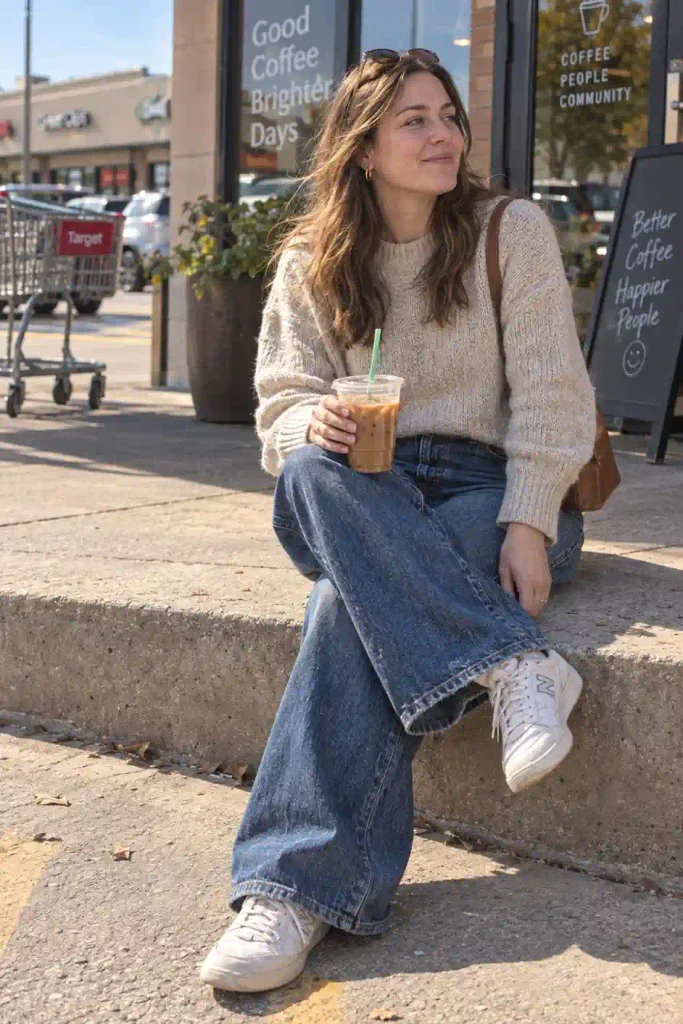
I resisted the French tuck for years because it felt like an extra step for something that should just, you know, hang.
Turns out that resistance cost me a lot of shapeless outfit photos. Once I started doing it automatically, getting dressed didn’t take longer, but the outfit looked like I’d actually planned it.
Some sweaters are too thick to tuck without adding bulk at the waistband. For those, a thin belt worn over the sweater does the same job without the fabric bunching.
Aim for a belt that sits at your natural waist, not your hips, since that’s the spot that actually creates a visible shape change.
Quick ways to add waist shape
- Front-tuck just the center few inches of the sweater
- Add a thin belt over the sweater, resting at the natural waist
- Half-tuck one side for a more casual, undone look
- Choose a cropped or hip-length sweater instead of tucking at all
Mistake 3: Wearing the wrong jean length or rise for your sweater
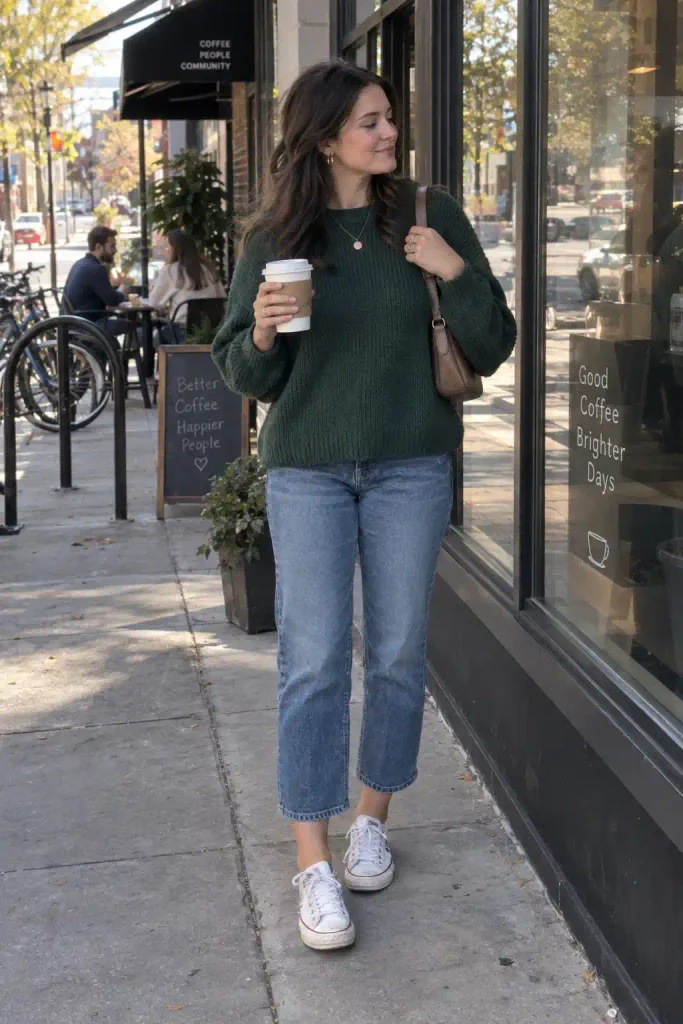
Jeans that pool at the ankle under a long sweater create a messy, unfinished bottom half.
Jeans that hit too high with a cropped sweater can expose more midriff than intended. Length and rise aren’t just fit details, they’re the whole foundation of the outfit.
I learned this the hard way at a coffee shop once, catching my reflection in the window and realizing my jeans were bunched up around my ankles like a sad accordion. Not my finest fashion moment.
The fix: match rise to sweater length. Longer, hip-covering sweaters pair well with a mid or high rise.
Cropped sweaters need jeans that sit at or above the natural waist so there’s no gap.
For length, ankle-length or slightly cropped jeans work best under most sweaters since they show a bit of ankle and avoid pooling.
If you want a deeper dive on rise and cut, Stitch Fix’s jeans-for-your-body-shape guide breaks down rise by shape pretty well.

Boot cut and flare jeans deserve a special mention here. They’re built to be worn with a heel or a thicker-soled shoe, and when you wear them flat, the extra fabric at the hem drags and pools exactly like a too-long pair.
If flares are your go-to, keep a pair of ankle boots or block heels in rotation specifically for them. It’s a small adjustment, but it’s the one that stops the whole leg line from looking sloppy.
Mistake 4: All-neutral everything, all the time
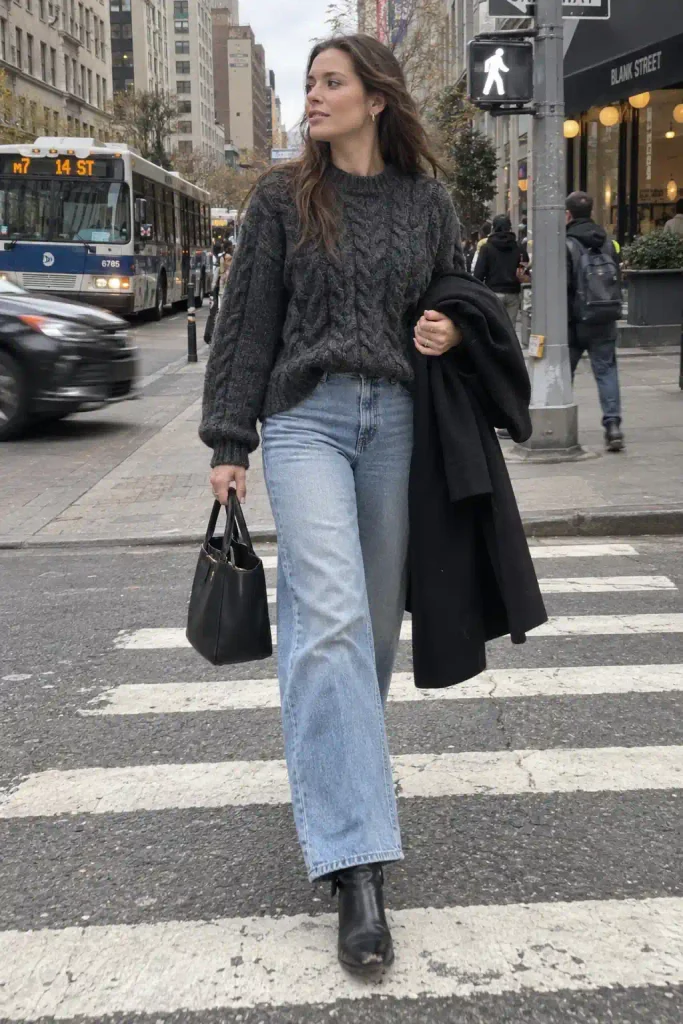
Beige sweater, blue jeans, brown boots. Comfortable? Sure. Memorable? Not really.
There’s nothing wrong with neutrals, I wear them constantly, but an outfit built entirely from “safe” colors with zero contrast tends to fade into the background, and fading into the background is basically the definition of frumpy.
The fix: pick one point of contrast. That could be a darker wash of denim against a cream sweater, a pop of color in a scarf or bag, or even just swapping your usual brown boots for black ones to sharpen the line of the outfit.
You don’t need to go bold. You need one deliberate choice.
Rust, burgundy, olive, and mustard are the classic fall colors for a reason: they read as seasonal without clashing with denim.
Even a small dose, a beanie, a pair of socks that peek out over your boots, a manicure in a warm tone, can be the one contrast point your outfit was missing.
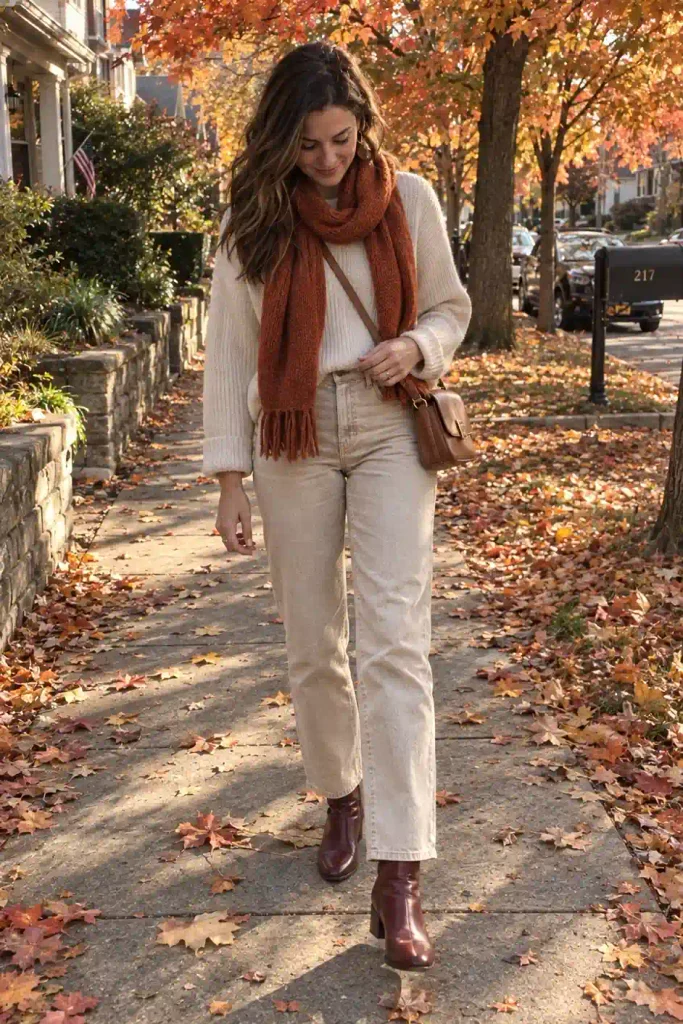
This is genuinely one of my favorite parts of fall dressing. Wow, does a single burnt-orange scarf do a lot of heavy lifting.
| Outfit Element | Frumpy Version | Easy Fix |
|---|---|---|
| Sweater fit | Oversized on oversized jeans | Pair loose with fitted, not loose with loose |
| Waistline | No shape, fully untucked | French tuck or thin belt |
| Color palette | All beige, all the time | One contrast piece (dark denim, bold shoe, scarf) |
| Footwear | Bulky sneakers with wide-leg jeans | Ankle boots or sleek sneakers for a cleaner line |
Mistake 5: Pairing the wrong shoes with the wrong jean cut

Shoes finish an outfit, and honestly, they can make or break the whole thing faster than anything else on this list.
Chunky sneakers under wide-leg jeans add bulk right where you don’t need it. Delicate flats under a heavy chunky knit can look mismatched, like your top half and bottom half didn’t get the memo.
The fix: think weight balance. Heavier sweaters and wider jeans do well with a sleeker shoe, think ankle boots, loafers, or pointed-toe flats, to keep the silhouette from ballooning.
Slimmer jeans have more room to play, so chunkier boots or sneakers actually add nice contrast there instead of extra bulk.

I keep three shoe categories on rotation every fall specifically for this reason: a sleek ankle boot for bulky-on-bulky days,
A chunky sneaker for slim jeans and simple sweaters, and one pair of loafers that somehow works with almost everything.
Three pairs sounds like a lot until you realize how much heavier lifting they do than an entire extra sweater would.
Mistake 6: Ignoring proportions when layering
Layering is where fall outfits get interesting, but it’s also where frump sneaks in fastest.
A long cardigan over an already-long sweater over jeans creates a shapeless middle with no visible waist and no clear silhouette line.
Add a puffer jacket on top and you’ve got three layers all competing for the same real estate.
I love layering, don’t get me wrong, but I had to learn that more pieces isn’t automatically more style. It’s more math, and the math has to add up to a shape, not a blob.
The fix: vary your lengths. If your sweater hits mid-hip, choose a jacket that’s either cropped above it or long enough to hit mid-thigh, skip anything that lands at almost the exact same length.
And if you’re layering three pieces, let one be fitted. Sweater loose, jacket loose, jeans loose is a formula for looking bigger than you are.
A structured blazer or a fitted denim jacket over a soft, slouchy sweater does more for the outfit than another soft layer ever could.
The contrast between crisp and cozy is what makes the whole thing look put-together instead of thrown-on, and honestly, it photographs really well too, which matters if you’re saving the look for later.
Mistake 7: Forgetting accessories entirely
A sweater and jeans on their own, no matter how well-fitted, can look unfinished. It’s not that the outfit is wrong, it’s that it stops one step too early.
Accessories are the difference between “I got dressed” and “I got dressed on purpose.”
The fix: add one statement piece. A structured crossbody bag, a chunky necklace layered outside the collar, a pair of hoop earrings, or a scarf tucked into the neckline all pull an outfit together in seconds.
You genuinely do not need five accessories. One well-chosen piece does more work than an entire jewelry box dumped onto your outfit.
Mistake 9: Choosing a neckline that fights your layers
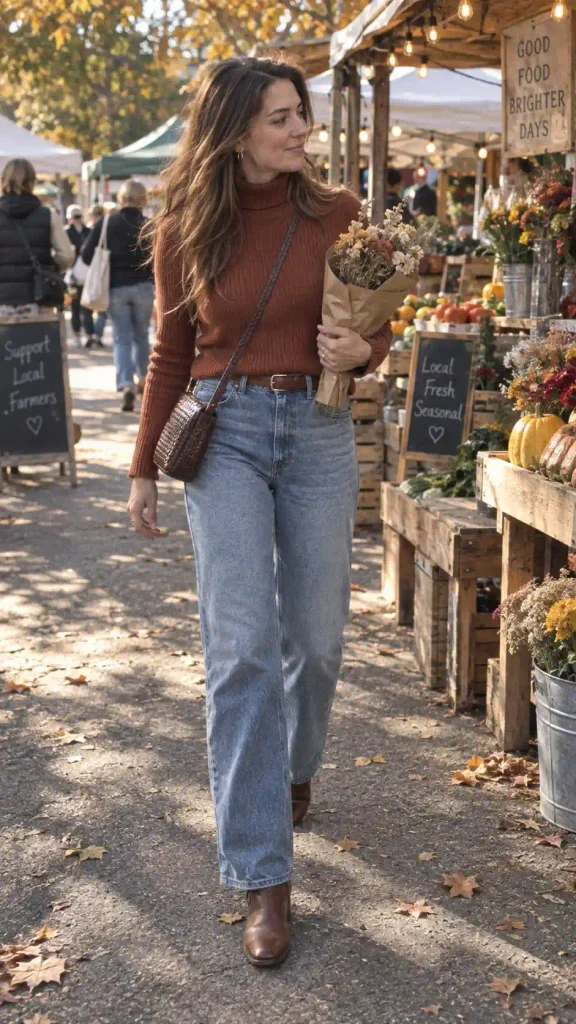
Turtlenecks are everywhere in fall lookbooks, and they’re gorgeous on their own. Layer a bulky scarf, a chunky necklace, and a hood from a jacket underneath, though, and you’ve built a neck situation with way too much going on.
The same goes for crewnecks worn with a collared shirt underneath that gets bunched and lost in the fabric.
The fix: decide on one focal point at the neck and let everything else stay simple.
Wearing a turtleneck? Skip the statement necklace and save it for a crewneck day instead.
Layering a collared shirt under your sweater? Let the collar peek out cleanly rather than stuffing it under a scarf too.
It’s a small detail, but necklines are one of the first things people notice, even if they can’t say exactly why an outfit looks a little busy.
A quick note on fabric and quality
This one’s slightly off-topic but I think about it every fall: cheap, thin knitwear pills and loses shape within a season, and once a sweater loses its shape, no styling trick saves it.
I’ve thrown out more fast-fashion sweaters than I care to count, all because the fabric gave up after a handful of wears.
Investing in two or three well-made sweaters, even at a slightly higher price, tends to outperform a drawer full of ones that stretch out by November.
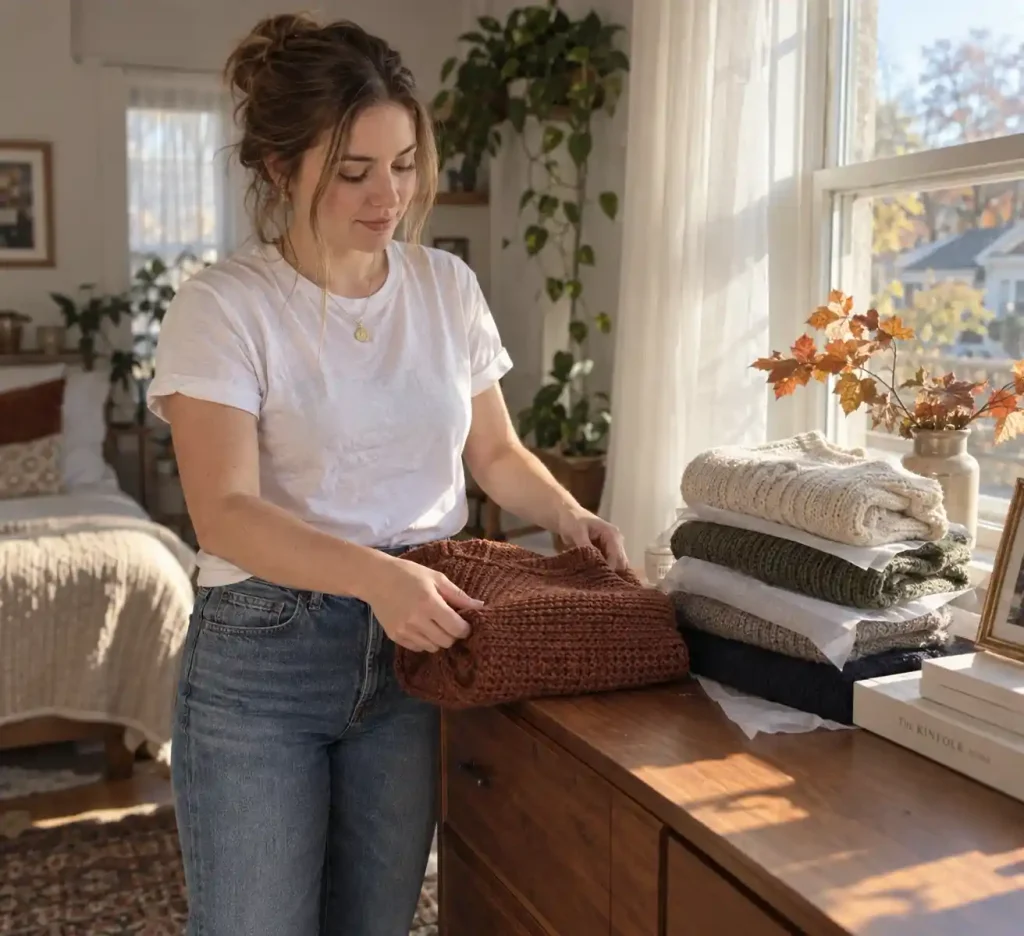
Storage matters too, and this is the part almost nobody mentions. Hanging a heavy knit stretches the shoulders out of shape within weeks.
Folding it, ideally with tissue paper between layers if you’re precious about it, keeps the shoulder seams intact and the whole sweater looking newer for longer.
This is insane how much of a difference it makes for something that costs nothing to fix.
Mistake 8: Choosing jeans by trend instead of fit
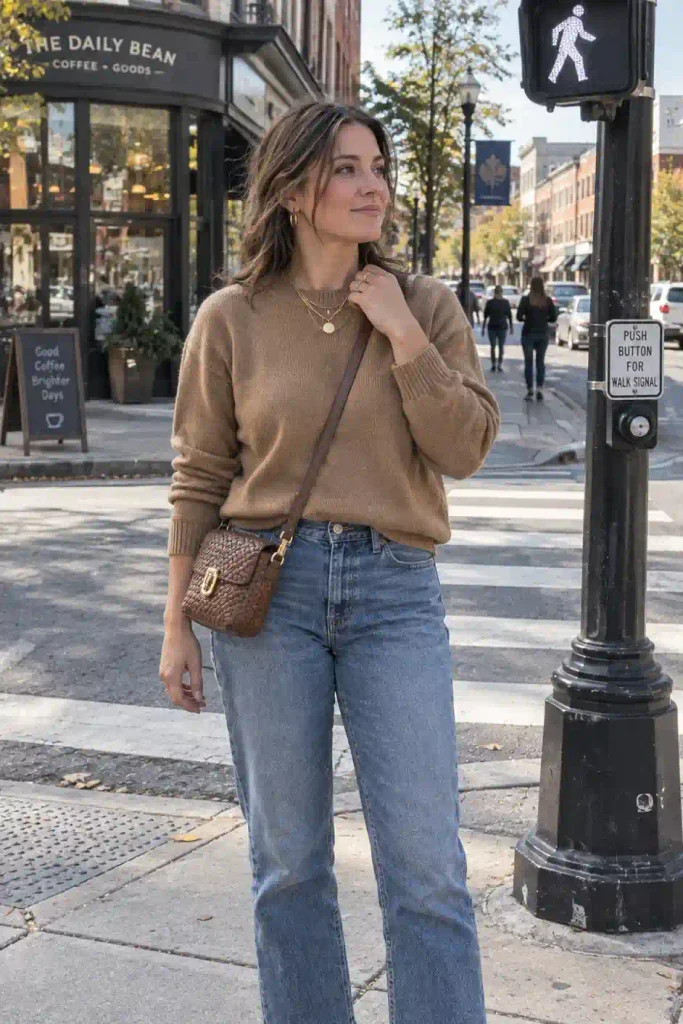
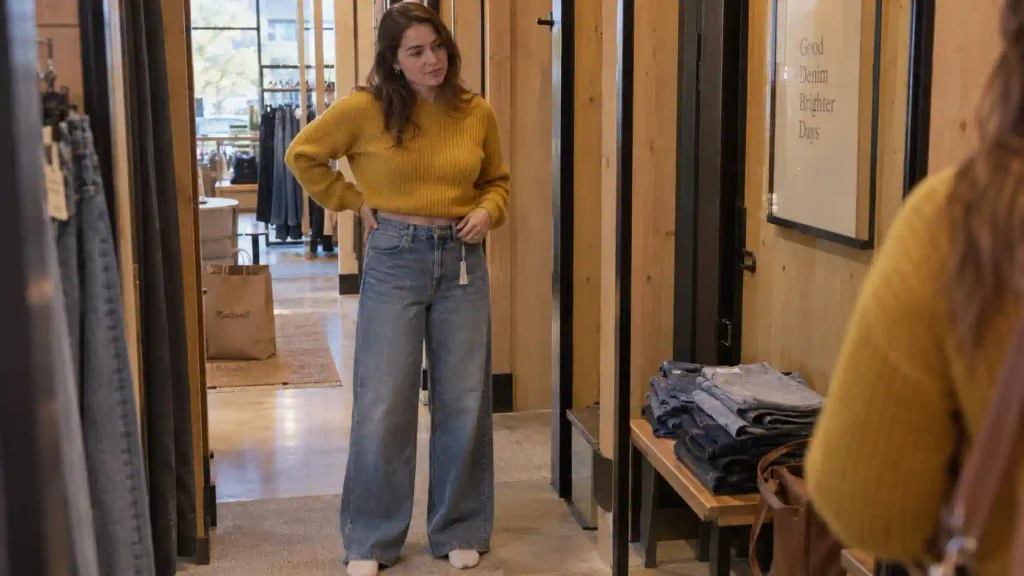
Wide-leg jeans are everywhere on Pinterest right now, and they’re gorgeous on the right frame.
That doesn’t mean they’re gorgeous on every frame, or with every sweater. Chasing a trend without checking whether it actually suits your proportions is one of the fastest routes to a frumpy outfit, even when every individual piece is “in.”
The fix: know your go-to rise and leg shape before you shop trends. If straight-leg, mid-rise jeans are what consistently look good on you, that’s your foundation.
Layer trend pieces (a specific wash, a new sweater silhouette) on top of that foundation instead of overhauling everything at once. Böhme’s guide to jeans by body type is worth a look if you’re not sure what your foundation even is yet.
Putting it all together for Pinterest-worthy fall looks
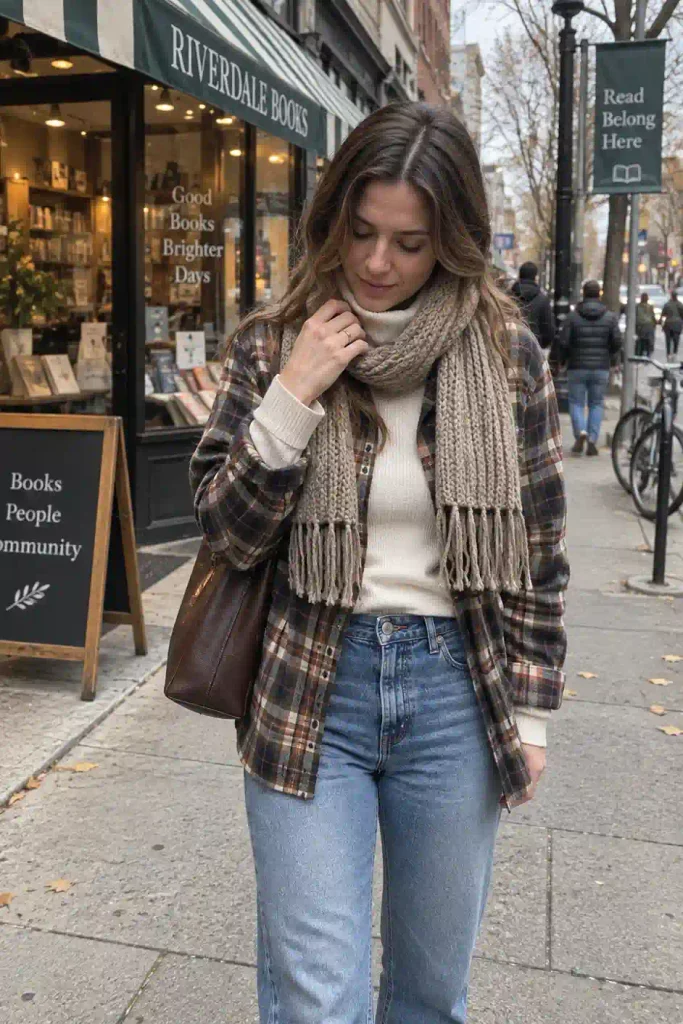
If you’re building out a fall board, here’s the shorthand: one fitted piece, one loose piece, one moment of waist definition, one point of color contrast, and one accessory.
That’s it. That’s the whole formula, and it photographs just as well in a mirror selfie as it does on a moodboard.
Save outfits that follow this pattern when you’re scrolling for inspiration, and you’ll start noticing it everywhere once you know what to look for. This is honestly a little bit addicting once it clicks.
Pin a few, try them on with pieces you already own, and adjust from there instead of trying to recreate an outfit piece for piece.
FAQs
Do I need to buy new clothes to fix a frumpy sweater outfit? Not usually. Most of these fixes (tucking, belting, swapping shoes, adding one accessory) work with clothes already in your closet. Fit and proportion matter more than having brand-new pieces.
What’s the single easiest fix if I only have five minutes to get dressed? The French tuck. It takes seconds, adds instant waist definition, and works with almost any sweater-and-jeans combination you already own.
Are oversized sweaters actually still a good choice, or should I avoid them? Oversized sweaters are fine, even great, as long as you balance them with something fitted below, like slim or straight jeans, and add one point of waist definition. The sweater isn’t the problem. The pairing is.
How do I know if my jeans are the wrong rise for a specific sweater? Try the outfit in front of a full-length mirror and check for gaps or bunching at the waistband.
If you see a strip of skin or shirt peeking out when you raise your arms, size up in rise or choose a longer sweater. If the waistband digs in or rolls under a tucked sweater, size down or go with a slightly lower rise instead.
Final thought
Frumpy fall outfits usually come down to one missing element, not a wardrobe failure. A tuck here, a swap there, one accessory added at the last minute, and the whole look shifts from shapeless to intentional. Which mistake on this list is your most common one, and which fix are you trying first this week?
