
A shacket can make you look like you borrowed your partner’s jacket in a hurry. It can also look like the sharpest layer in the building. The difference comes down to about five inches of fabric and a few small decisions.
This guide gives you 12 workwear combinations built for saving to a Pinterest board, plus the fit rules that make each one work.
Every idea names exact pieces, colours, one fabric or fit tip, and one occasion. Each also has an alt text line you can paste straight into your pin descriptions.
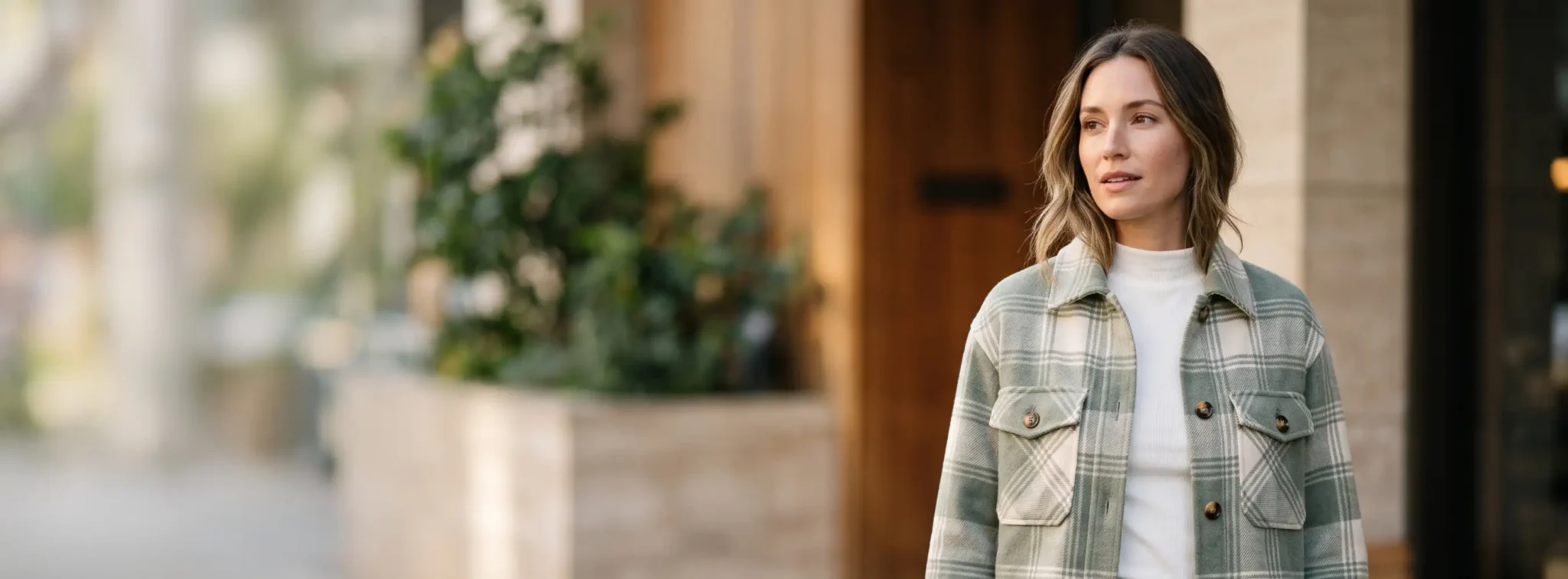
What actually makes a shacket look oversized
A shacket sits between a shirt and a jacket, so it has no tailoring to hide behind. A blazer has structure that forgives a lot. A shacket just hangs, so every proportion shows.
Three things cause the sloppy look: shoulder seams that slide down your arm, a hem that lands mid-thigh, and fabric thick enough to bunch around the waist. Fix those and the rest falls into place.
The shoulder seam test
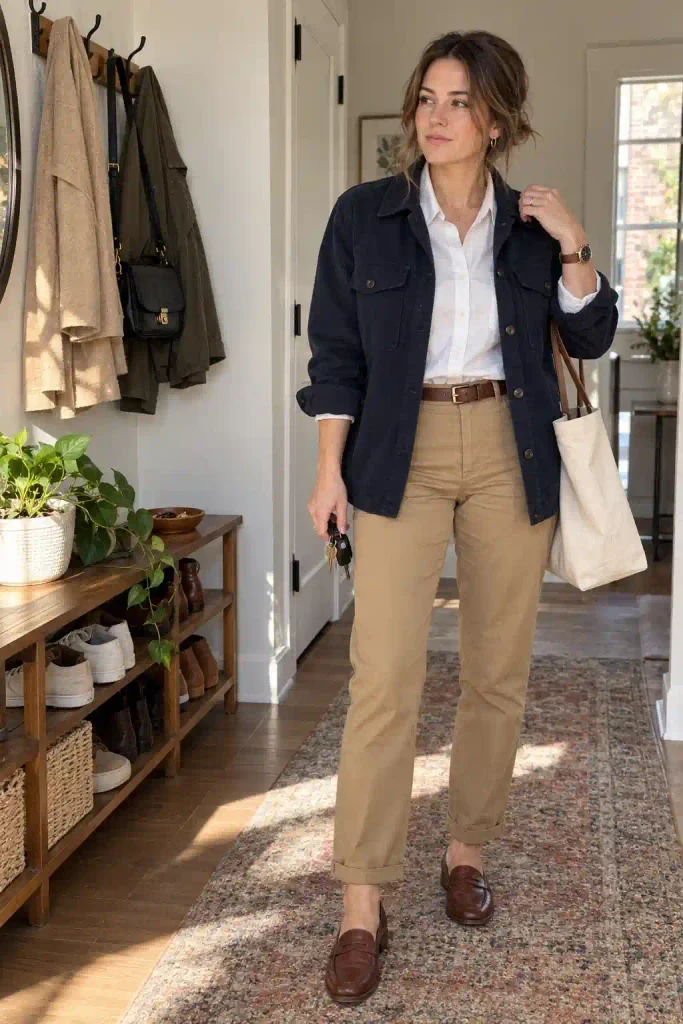
Stand in front of a mirror with your arms relaxed. The seam should sit right at the edge of your shoulder bone, or within about half an inch of it.
If the seam droops two inches down your arm, the shacket is a size too big for work. A slightly dropped shoulder reads as casual, which is fine on Saturday and a problem on Tuesday.
Hem length and sleeve length
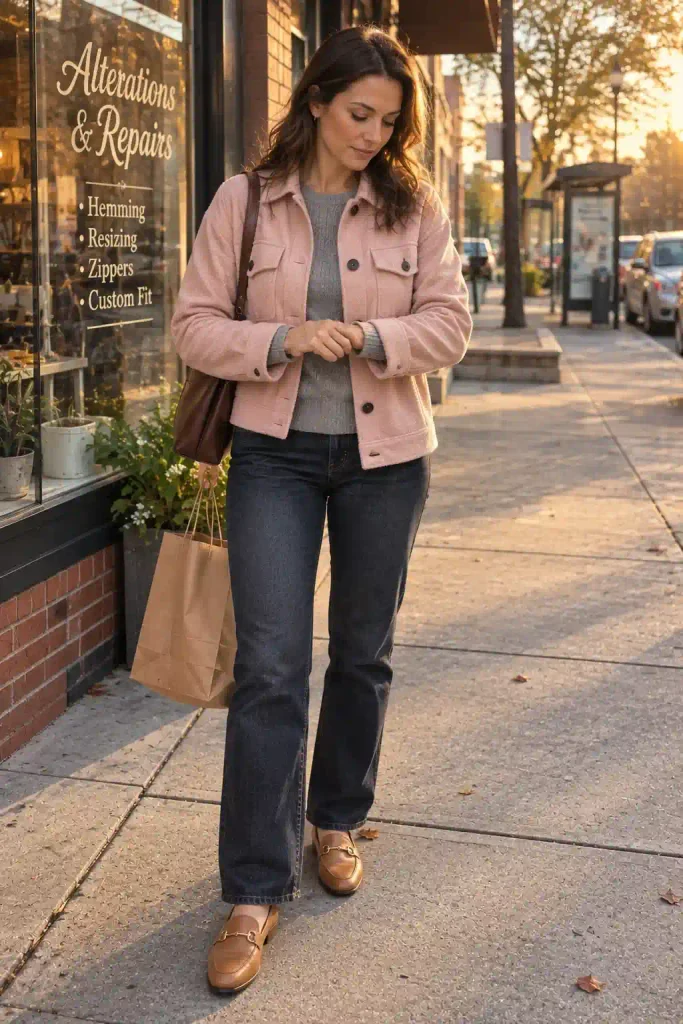
The most flattering hem for a work shacket lands between your hip bone and the top of your thigh. Longer than that and you need a very slim bottom half to balance it.
Sleeves should end at your wrist bone or just past it. Anything that covers your knuckles looks like a hand-me-down.
A cuff fold or a quick visit to a tailor, which usually costs a few pounds or dollars, fixes most sleeve issues.
Fabric weight
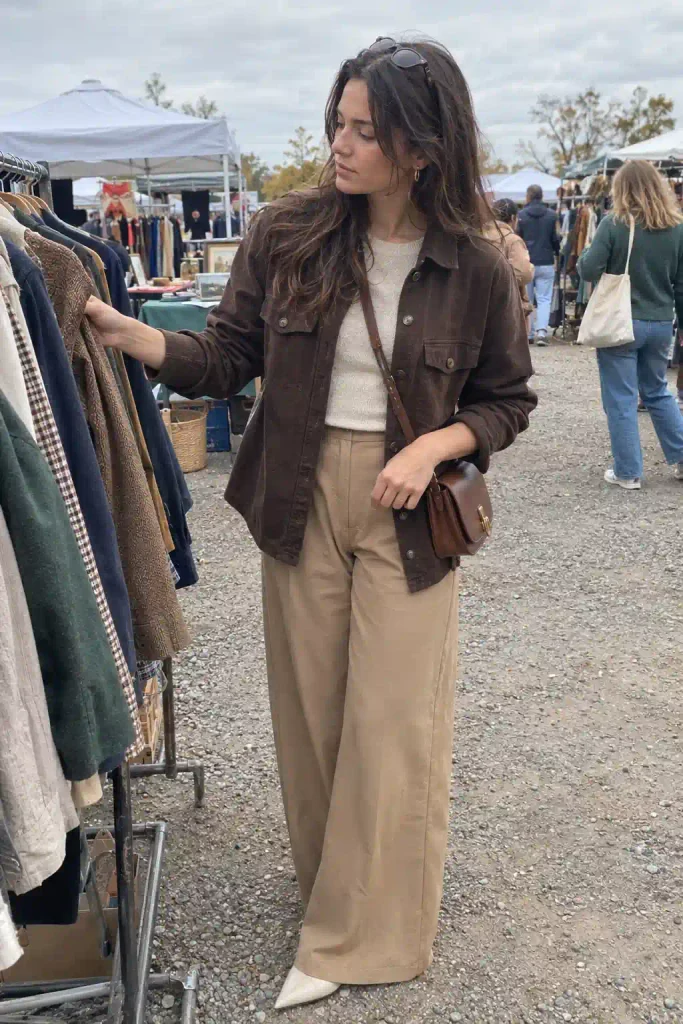
Thick, boxy fabrics add visual volume. A shacket in medium-weight twill or a wool blend with some drape will skim the body. A stiff, heavy canvas version stands away from it.
If you can pinch the fabric and it holds a sharp tent shape, it will look bigger on you than the size tag suggests.
Quick fabric reference
Here is a short table to keep in mind while you shop or scroll.
| Fabric | Best for | Watch for |
|---|---|---|
| Wool blend | Cold offices | Pilling at cuffs |
| Cotton twill | Most of the year | Creasing |
| Flannel | Casual Fridays | Bulk at the seams |
| Corduroy | Creative workplaces | Lint pickup |
For background on weaves, twill is a good one to understand, since it gives a shacket its diagonal texture and its ability to drape rather than stand stiff.
Flannel and corduroy each have their own care needs, so read the label before you commit to a colour you plan to wear weekly.
Three rules before you copy any outfit
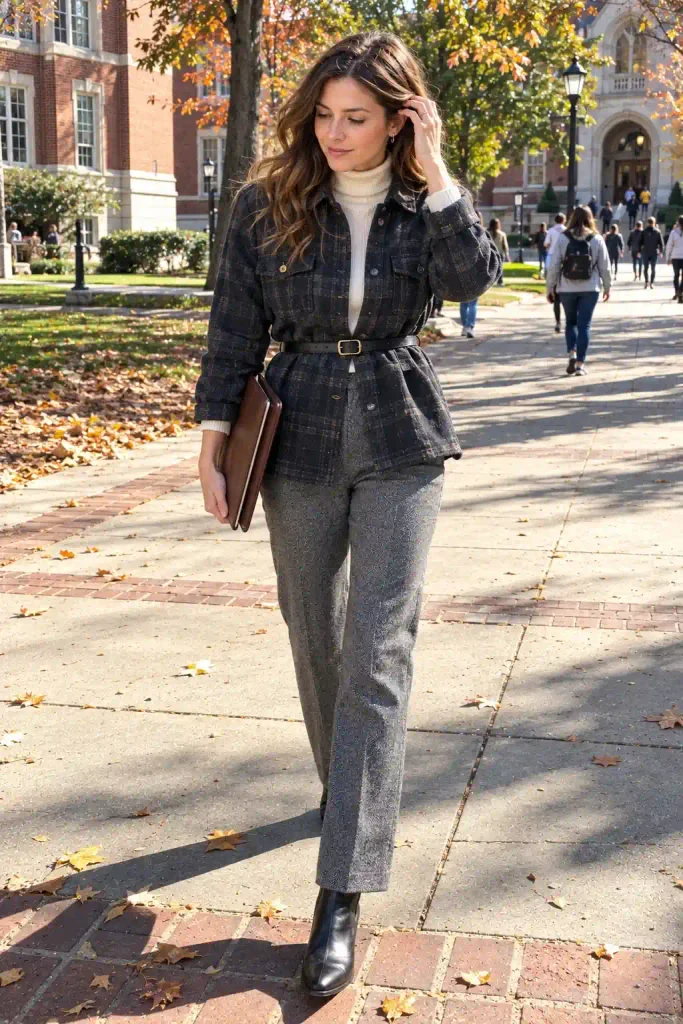
Rules sound dull, but these three save more outfits than any single piece of clothing.
- Keep one part of the outfit slim. If the shacket has volume, the trousers or skirt should skim the body or hang straight. Wide shacket plus wide trousers needs very careful balance.
- Tuck or define the waist. A tucked top, a thin belt, or a fitted knit underneath stops the shape from becoming a rectangle.
- Choose a tonal or two-colour palette. Fewer colours look deliberate. Four competing colours look like a laundry basket.
My own stance is that the belt is the most underused tool here. A thin leather belt worn over an open shacket looks odd to some people, but over a closed one it creates a waist in about five seconds.
12 shacket outfit ideas for work
Save the ones that suit your office dress code. Every idea includes an alt text line, so you can use it directly when you pin.
1. Camel wool shacket with a clean ivory base
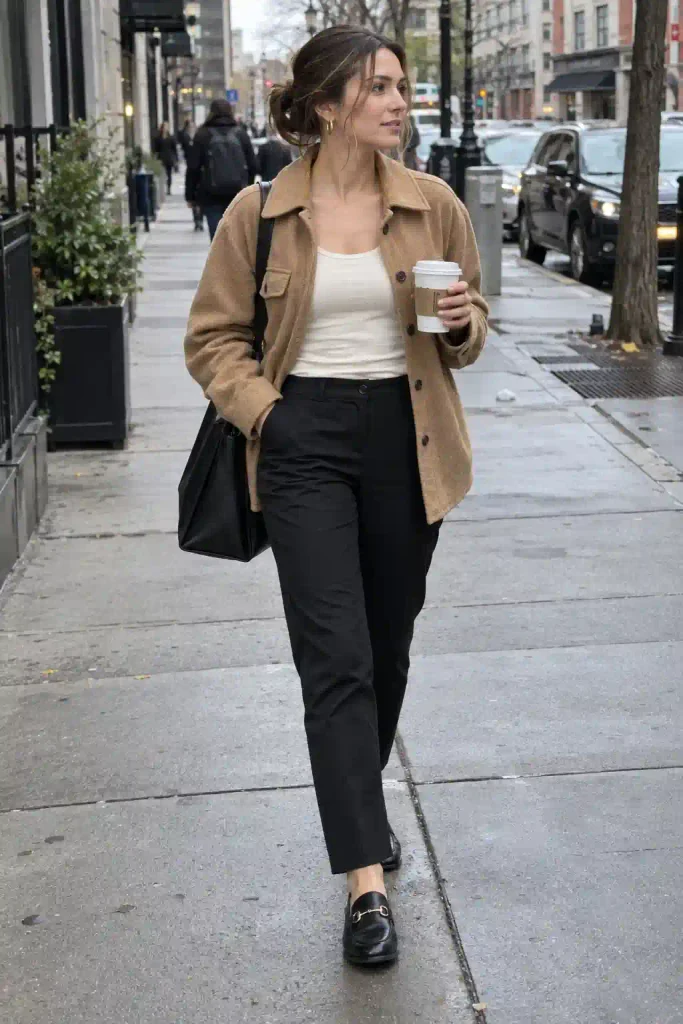
Pieces: Camel wool-blend shacket, ivory fitted tank, black slim-leg trousers, black leather loafers, small gold hoop earrings.
Colours: Camel, ivory, black.
Fit and fabric tip: Choose a wool blend with at least 60 percent wool, because it holds a soft line at the shoulder and does not cling to the tank underneath.
Occasion: A Monday team meeting where you want to look prepared without looking dressed up.
2. Charcoal flannel shacket with a cream turtleneck
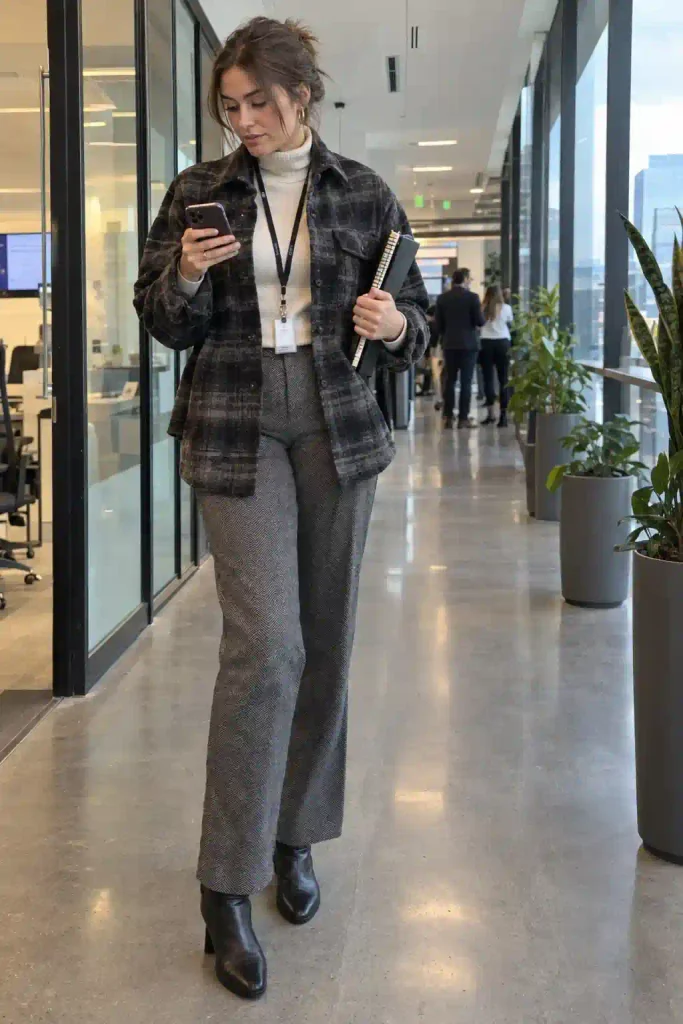
Pieces: Charcoal flannel shacket, cream fine-knit turtleneck, grey herringbone straight-leg trousers, black ankle boots with a low block heel.
Colours: Charcoal, cream, mid grey.
Fit and fabric tip: Flannel brushes soft, so pick a lightweight version. Heavy flannel makes bulky shoulders, and the fine-knit turtleneck underneath needs to stay thin enough to avoid a stuffed collar.
Occasion: A cold-weather day full of back-to-back calls.
3. Navy twill shacket with a crisp white shirt
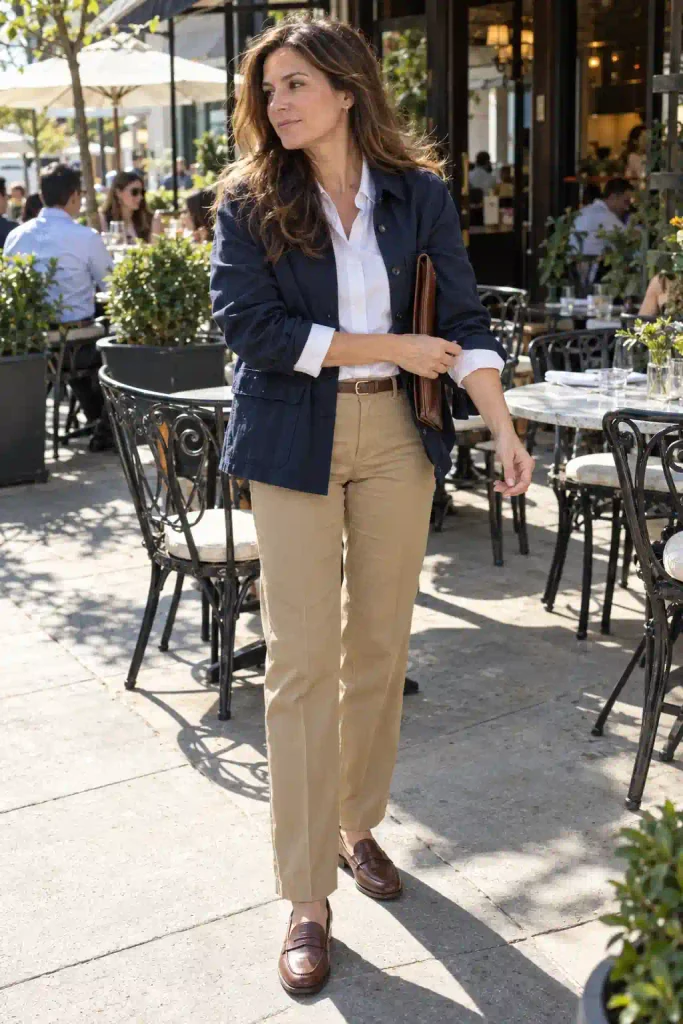
Pieces: Navy cotton-twill shacket, white poplin shirt tucked in, tan chinos with a pressed crease, brown leather penny loafers, thin brown belt.
Colours: Navy, white, tan, brown.
Fit and fabric tip: Wear the shacket open and push the sleeves up once so a clean inch of white cuff shows. That small detail makes the layering look planned.
Occasion: A client lunch where the restaurant is nicer than the office.
Alt text: Navy twill shacket open over white shirt with tan chinos
4. Black belted shacket over a knit midi dress
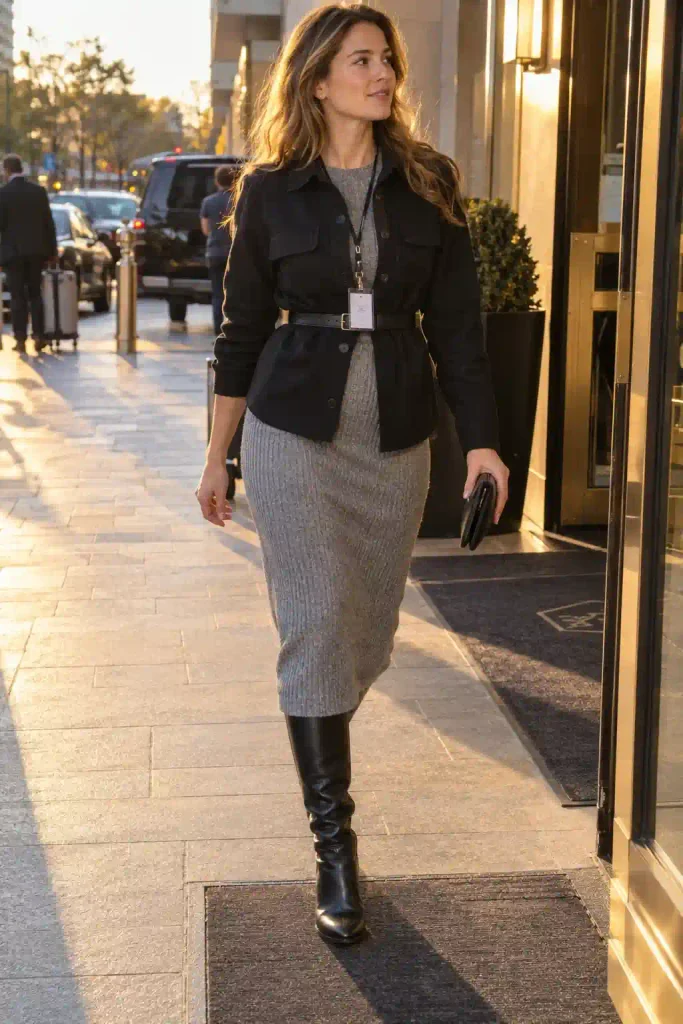
Pieces: Black twill shacket, grey ribbed knit midi dress, thin black leather belt worn over the shacket, black knee-high boots.
Colours: Black and heathered grey.
Fit and fabric tip: Button the shacket fully and cinch the belt at your natural waist. The belt does the tailoring, so the shacket can be a relaxed fit without swallowing you.
Occasion: An after-work networking event that starts before you can go home.
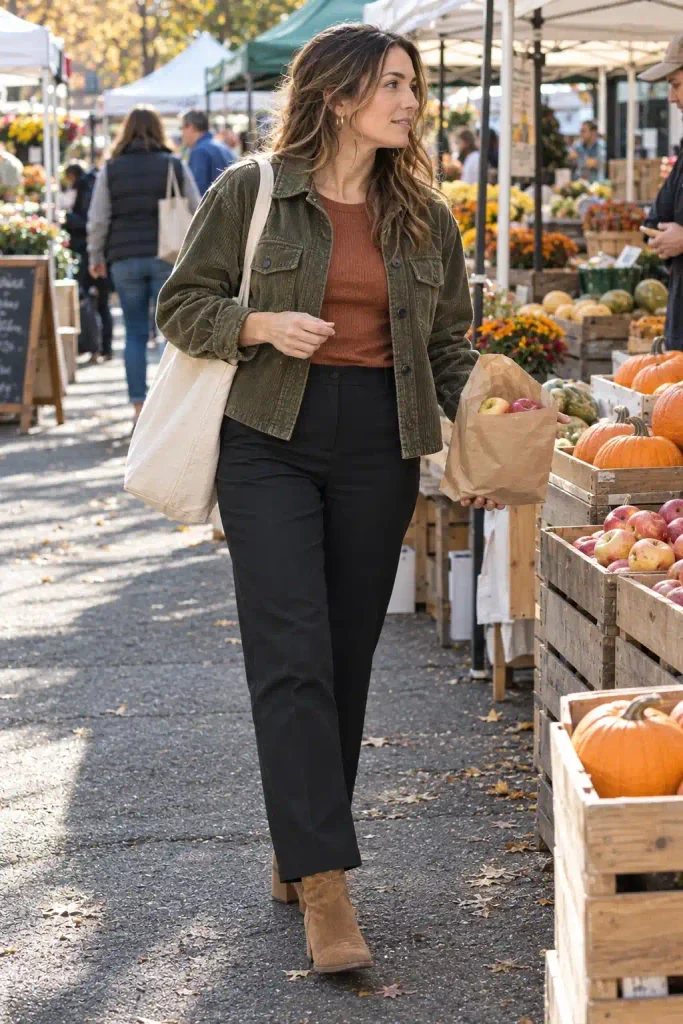
5. Olive corduroy shacket with rust tones
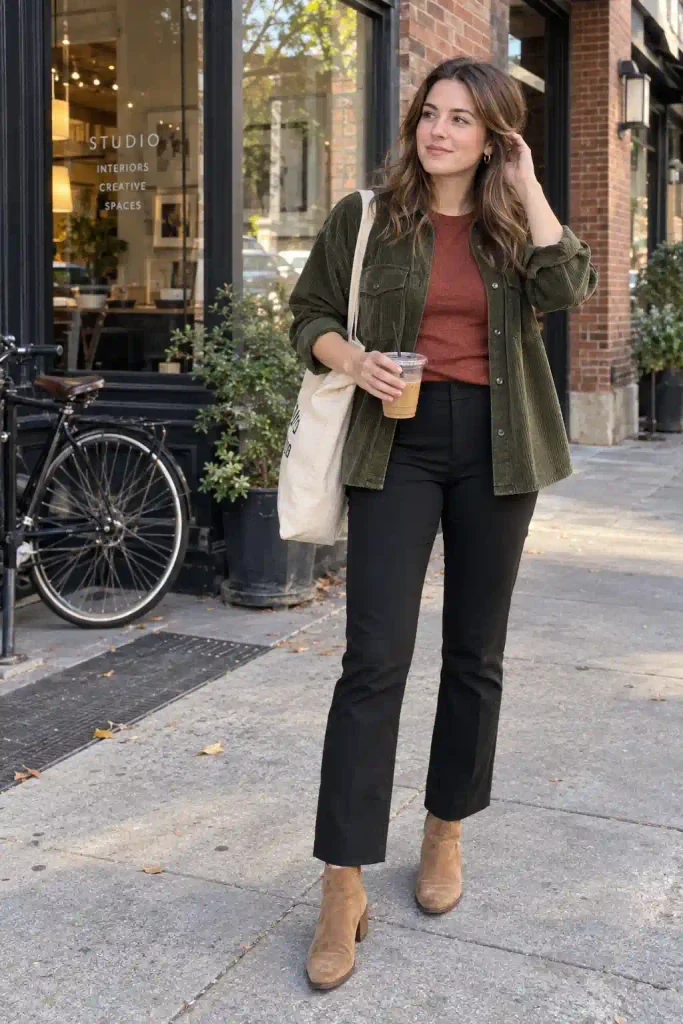
Pieces: Olive fine-wale corduroy shacket, rust knit tee, black ponte trousers, tan suede ankle boots.
Colours: Olive, rust, black, tan.
Fit and fabric tip: Fine-wale corduroy drapes better than wide-wale, which can look stiff and add width across the shoulders. Run a lint roller over it before you leave the house, because corduroy collects everything.
Occasion: Casual Friday at a design studio, a start-up, or any office that tolerates texture.
6. Ivory shacket with chocolate brown trousers
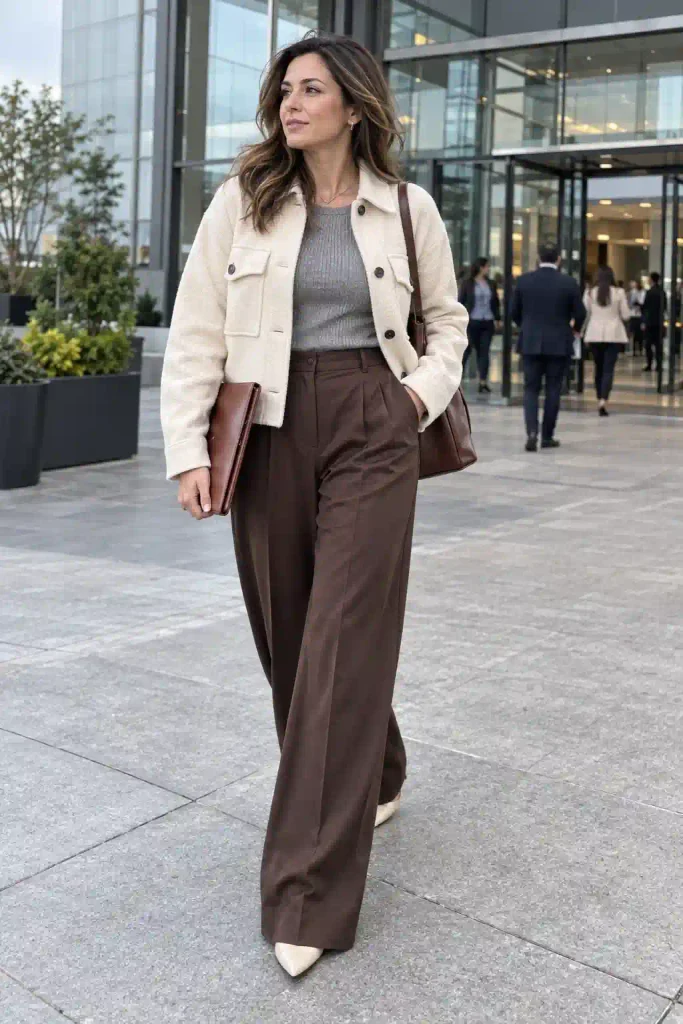
Pieces: Ivory wool-blend shacket, grey fitted knit shell, chocolate brown wide-leg trousers with a high waist, pointed-toe ivory flats.
Colours: Ivory, grey, chocolate.
Fit and fabric tip: This is the one outfit where wide trousers work, because the shacket is cropped to the hip bone and the fitted shell shows your waistline. Hem the trousers so they brush the floor in flats, and no further.
Occasion: Presentation day, when you want to look calm and organised.
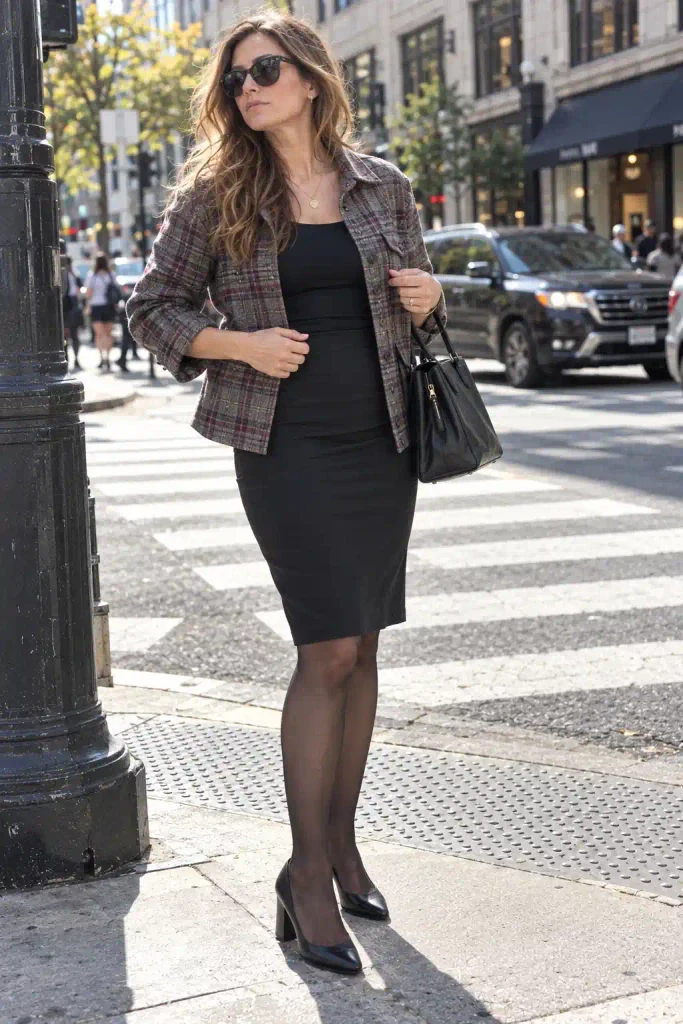
7. Grey and burgundy plaid with a pencil skirt
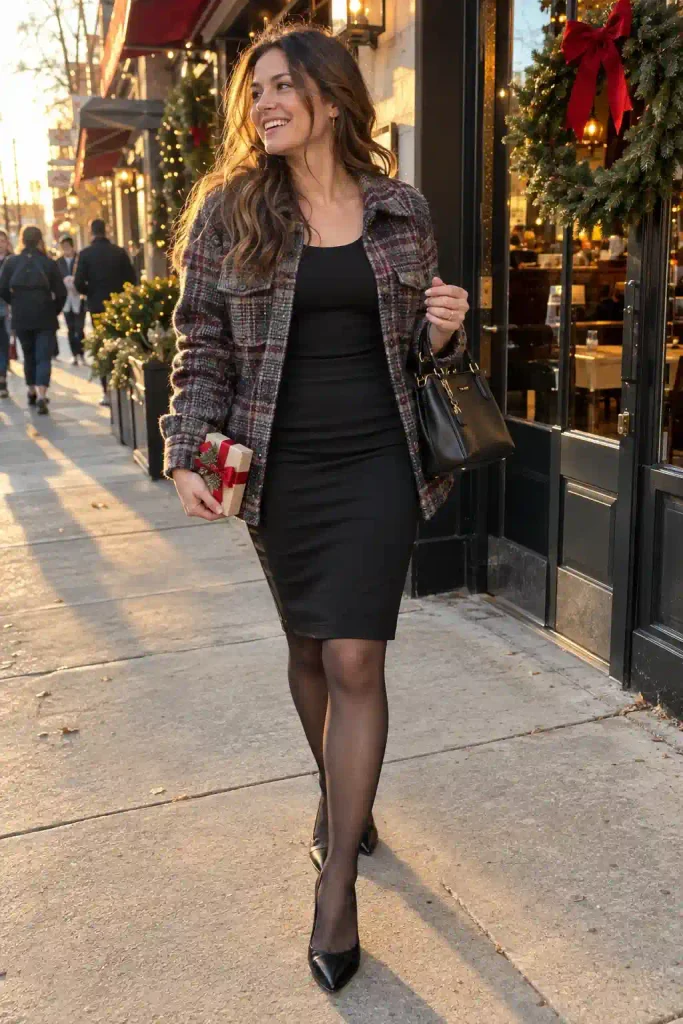
Pieces: Grey-and-burgundy plaid shacket, black fitted bodysuit, black knee-length pencil skirt, sheer black tights, black block-heel pumps.
Colours: Grey, burgundy, black.
Fit and fabric tip: Choose a small-scale plaid. Large checks add visual width, while a tighter pattern reads as a texture and keeps the silhouette narrow.
Occasion: An office holiday party that still counts as a work event.
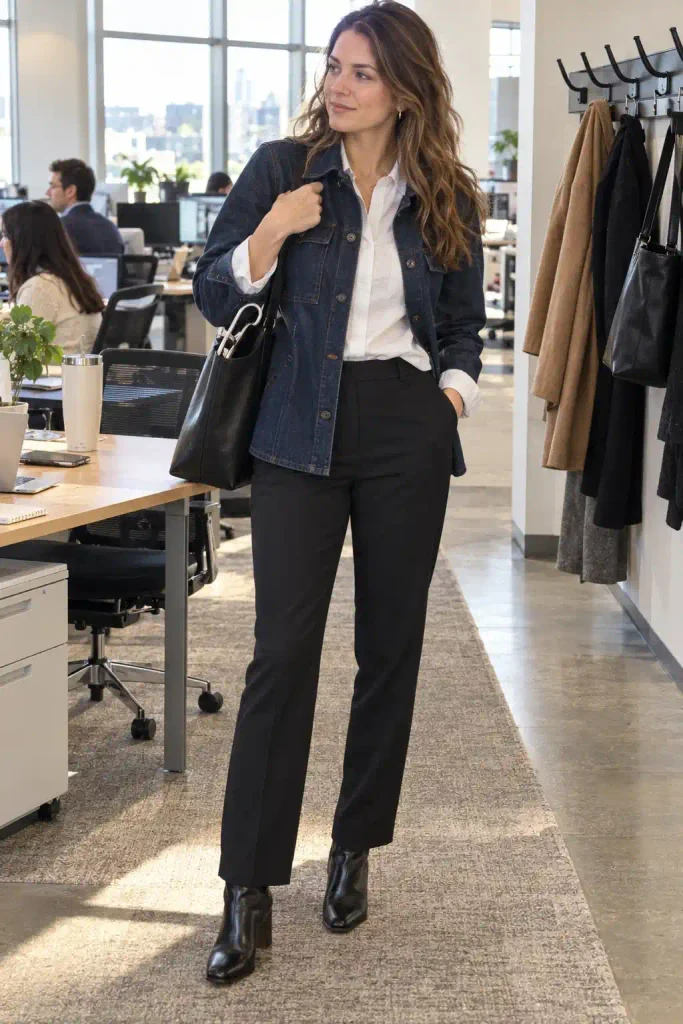
8. Dark indigo denim shacket, all tonal
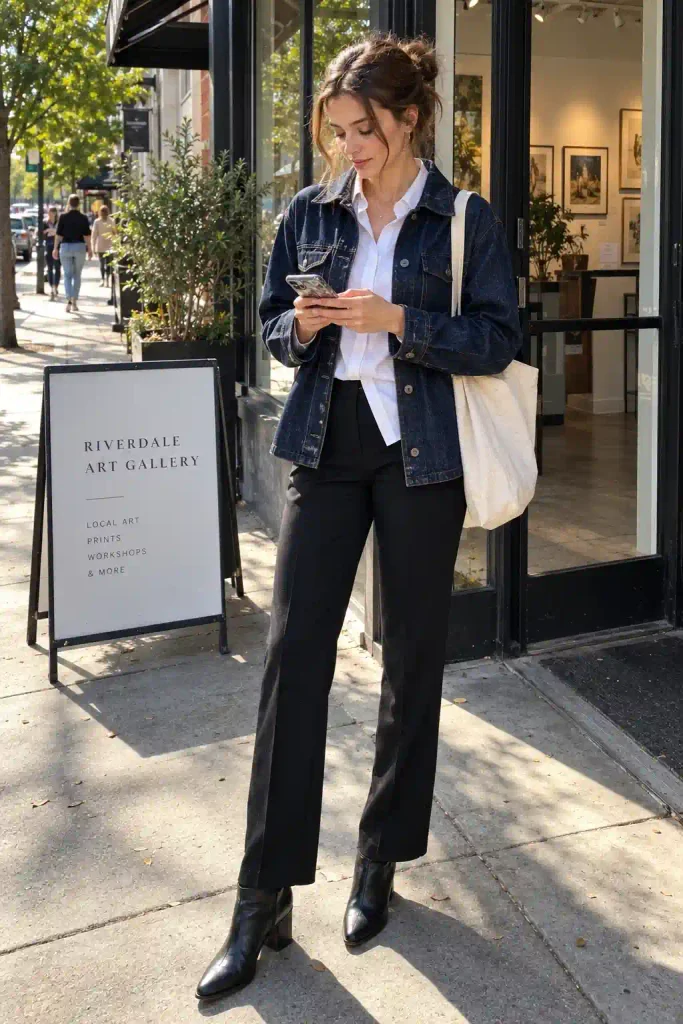
Pieces: Dark indigo denim shacket with no distressing, white button-up shirt, black tailored trousers, black leather ankle boots.
Colours: Indigo, white, black.
Fit and fabric tip: Pick denim with a bit of stretch and a dark, even wash. Faded or whiskered denim looks weekend casual, and the dark version reads closer to a work jacket.
Occasion: A creative day in a studio, a gallery, or a co-working space.
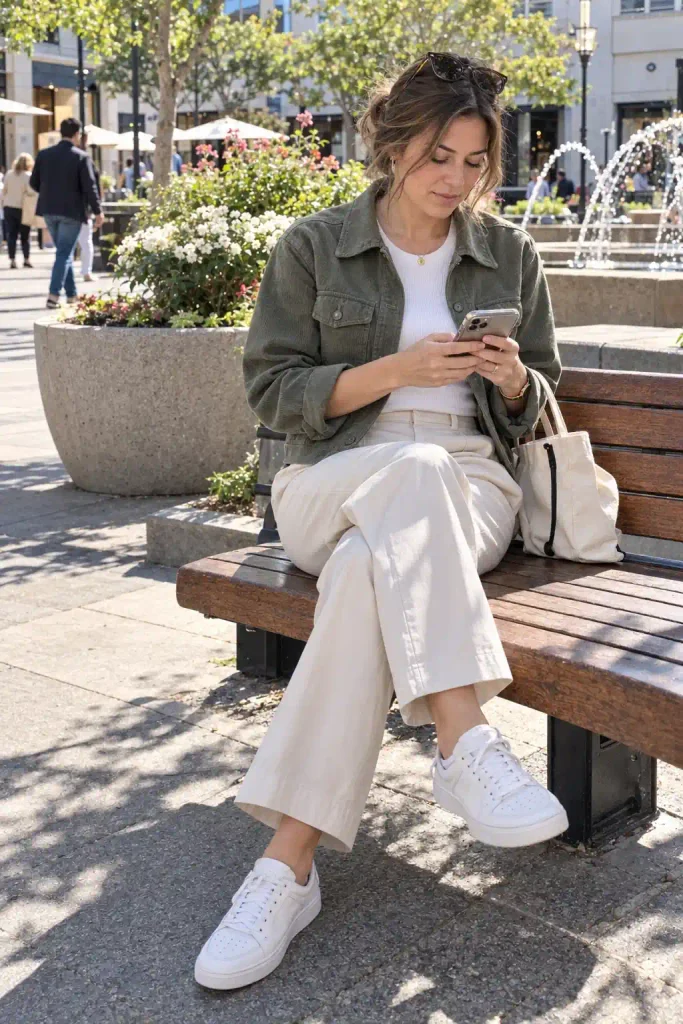
9. Sage cropped shacket with pleated trousers
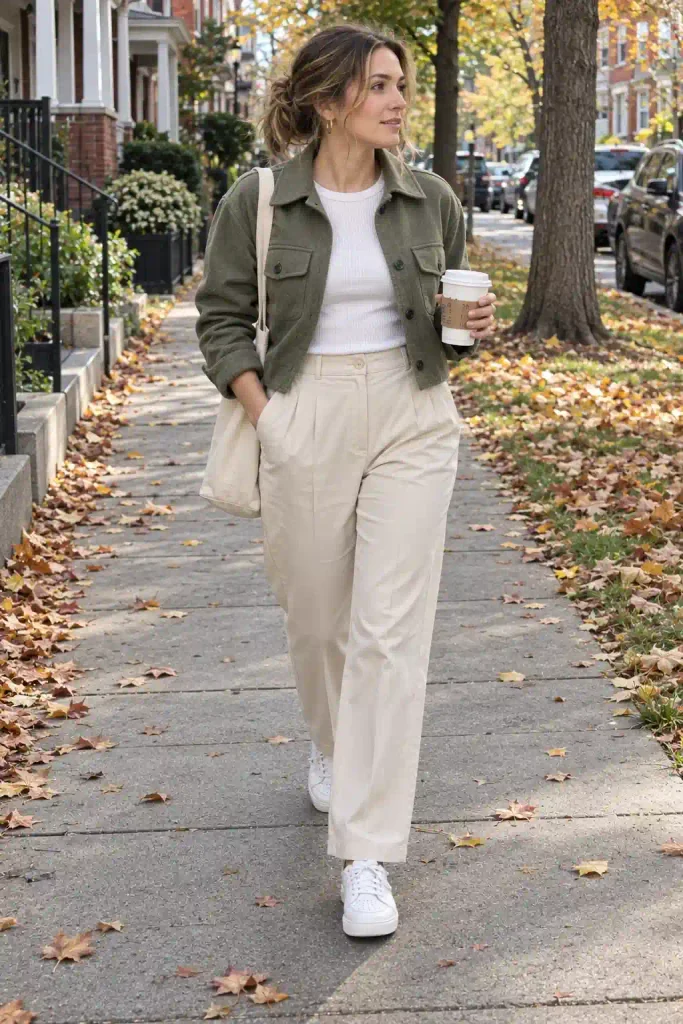
Pieces: Sage green cropped twill shacket, white rib-knit tee, cream pleated high-waist trousers, white leather sneakers (clean ones, please), small canvas tote.
Colours: Sage, white, cream.
Fit and fabric tip: A cropped shacket stops at the waistband, which lengthens the leg and removes any risk of hem bulk. Check that it still covers the top of your trousers when you lift your arms.
Occasion: A hybrid workday that moves from home to a quick in-person meeting.
10. Blush pink twill with straight dark jeans
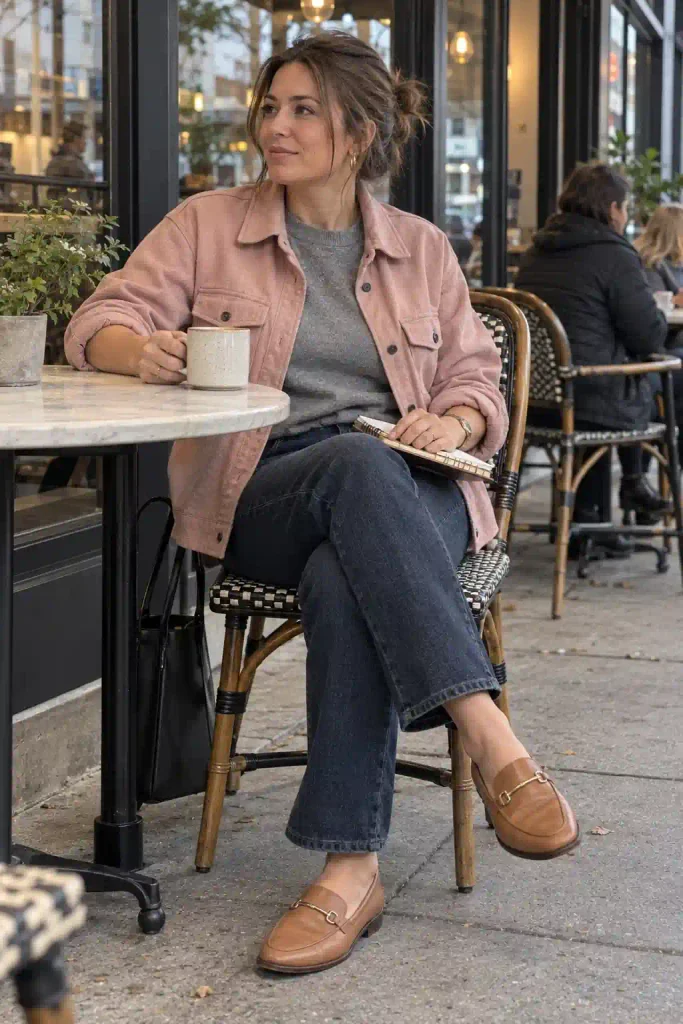
Pieces: Blush pink twill shacket, heather grey crewneck sweater, dark straight-leg jeans with no rips, tan leather loafers.
Colours: Blush, grey, dark blue, tan.
Fit and fabric tip: Roll the sleeves to just below the elbow for a neat finish. Wrinkled sleeves push the look toward “just woke up,” so steam the shacket the night before.
Occasion: A relaxed coffee meeting with a colleague or a new client.
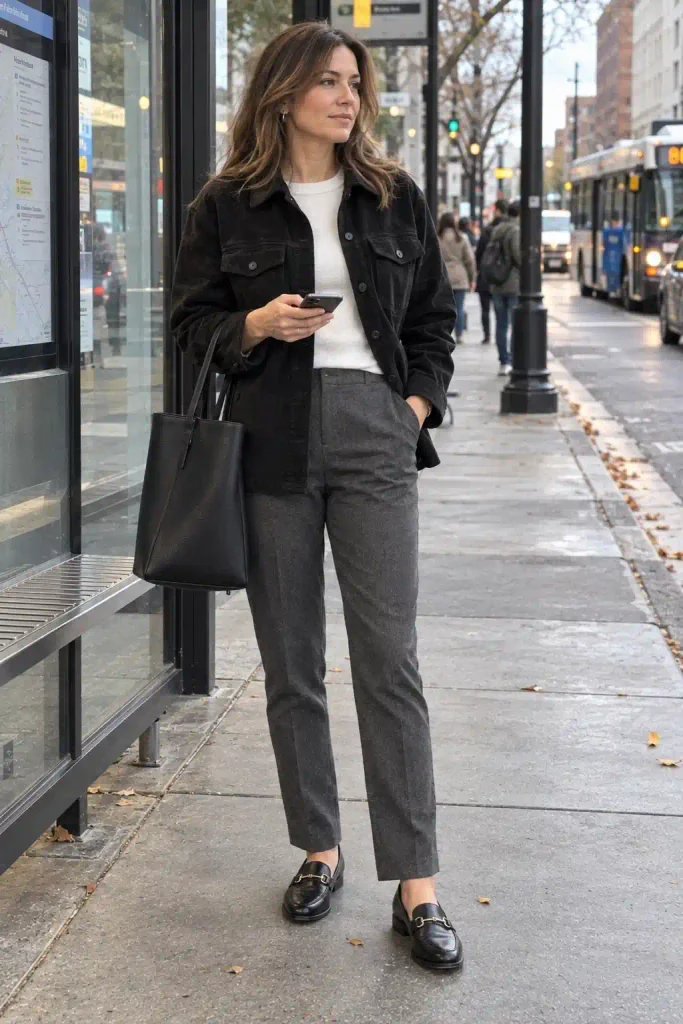
11. Black faux-suede shacket for travel days
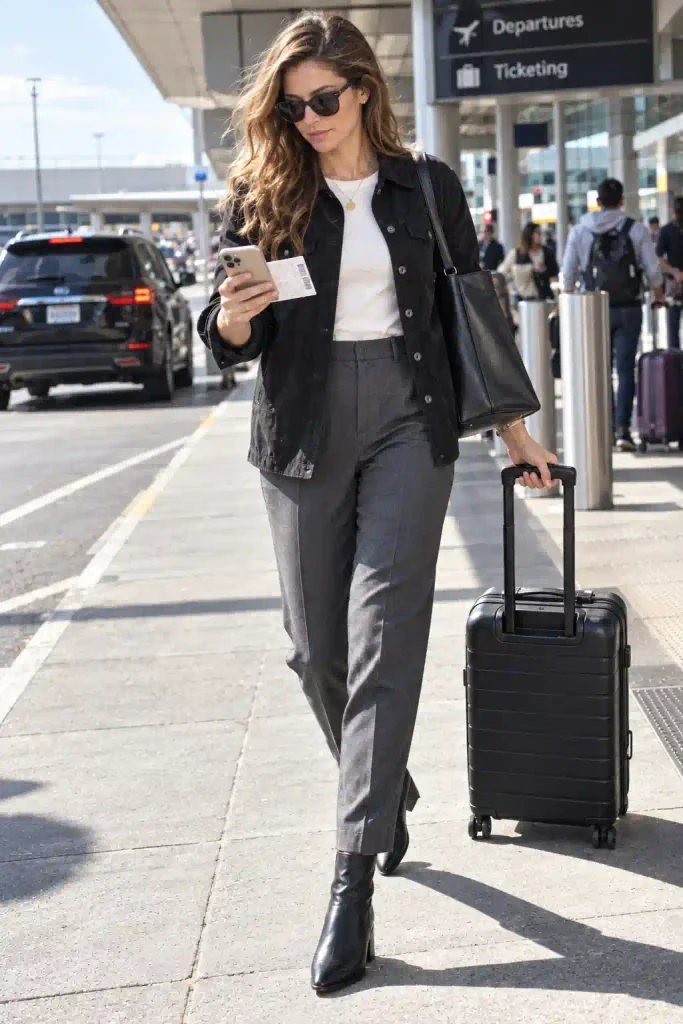
Pieces: Black faux-suede shacket, white fine-knit top, charcoal tapered trousers, black leather ankle boots, structured black tote.
Colours: Black, white, charcoal.
Fit and fabric tip: Faux suede has a built-in matte finish that looks expensive under office lighting, but it holds creases at the elbow. Hang it by the shoulders rather than folding it in a bag.
Occasion: A conference trip, when you want one jacket that works from the airport to the keynote.
12. Head-to-toe brown tones
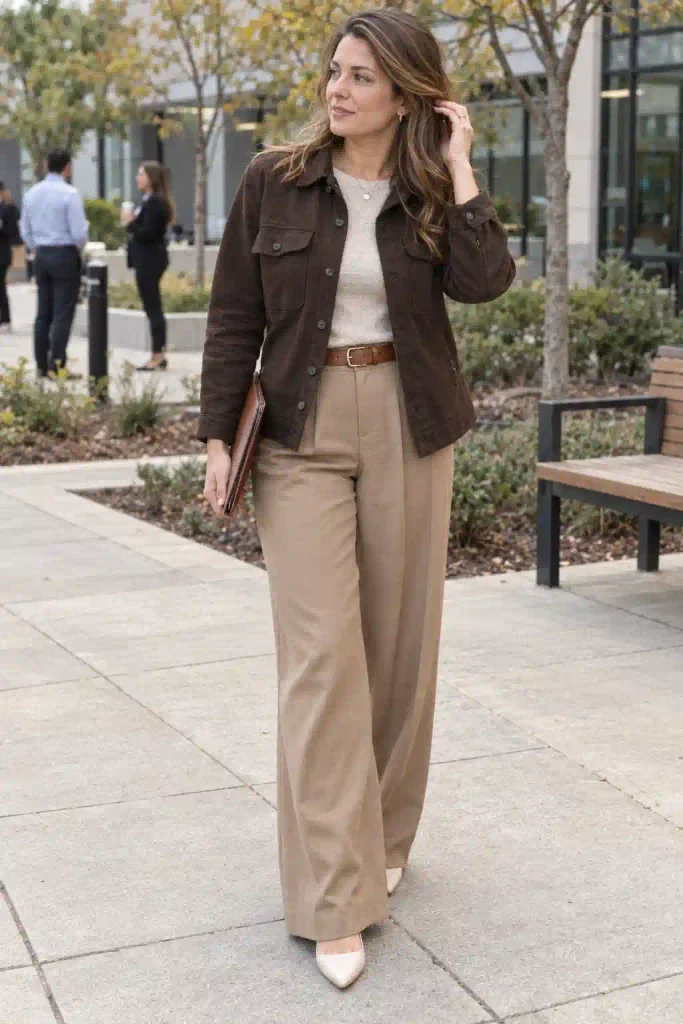
Pieces: Chocolate brown twill shacket, oatmeal knit top, tan wide-leg trousers, cognac leather belt, cream pointed flats.
Colours: Chocolate, oatmeal, tan, cognac.
Fit and fabric tip: Keep the shades within the same warm family, and vary the textures: twill, knit, and smooth leather. Texture does the work that colour contrast would usually do.
Occasion: A desk day with an in-person performance review.
A small tangent about coat hooks
Here is a thought that has nothing to do with outfits. Offices with no coat hooks are quietly ruining shackets everywhere.
A shacket slung over the back of a chair develops a permanent sag at the shoulder within about two weeks.
If your workplace has no hooks, a slim folding hanger in your bag or desk drawer costs very little and protects the seam line that does so much of the work.
Strange advice, but I’d take it over buying a new shacket every autumn.
Colour combinations that read as work-ready
Colour decides whether a shacket looks like office clothing or camp clothing.
These pairings work reliably.
- Camel and black: a clean, classic pair that suits nearly every dress code.
- Navy and cream: softer than black and white, and flattering on most skin tones.
- Olive and rust: warm and autumnal, ideal for corduroy.
- Grey and burgundy: a plaid-friendly combination that looks rich in low light.
- Chocolate and oatmeal: my personal favourite, because brown tones look more considered than the usual black.
In my opinion, bright red or royal blue shackets look best as an occasional piece rather than the main workwear layer.
They pull attention to the jacket and away from the person wearing it. That is a taste call, so ignore it if you love bold colour.
Shoes and bags that finish the look
Footwear changes the whole mood. A shacket with sneakers reads casual. The same shacket with loafers or a low heel moves into office territory.
Good options include:
- Loafers in black or brown: the easiest swap for any trouser-based outfit.
- Ankle boots with a low block heel: they sharpen a straight-leg trouser and add a bit of height.
- Pointed flats: a slim shape that balances a boxy upper half.
- Knee-high boots: best with a midi skirt or dress so no bare leg shows in between.
A structured tote or a mid-size leather bag keeps the polished feel. A slouchy oversized bag on top of an oversized shacket tips the whole thing into sloppiness, so keep one of the two firm.
Mistakes that bring back the oversized look
Most shacket problems come from the same small list of habits. Check yourself against these before you leave the house.
- Wearing it a size up “to be comfortable.” Comfort comes from fabric choice, not extra inches.
- Pairing it with baggy trousers and a baggy top. Three loose layers will always swallow you.
- Ignoring the neckline underneath. A stretched-out tee collar peeks out and ruins the finish.
- Leaving the hem uneven. If you tuck one side and not the other, make sure it looks deliberate.
- Skipping the steamer. Wrinkles in a twill shacket age you by about ten years, and yes, I am exaggerating.
I would say fit is about 70 percent of the outcome, and styling is the rest. A cheap shacket that fits well beats an expensive one that doesn’t, and I’ll defend that every time.
How to pin these outfits so they get saved
If you are building a Pinterest board, think about what a scroller sees first: a clear full-length shot, one dominant colour, and a short title that names the occasion.
“Camel shacket for Monday meetings” will outperform “cute fall outfit” because it tells people exactly when to wear it.
Use the alt text lines above as your image descriptions. They give search engines plain information about the outfit, and they help anyone using a screen reader understand the pin.
For more on how boards and pins surface in search, the Pinterest help centre explains how descriptions and board titles affect discovery.
A few small habits help a board feel like something people return to:
- Group by occasion, such as “client lunch” or “casual Friday,” rather than by colour alone.
- Keep photos in the same crop, ideally vertical.
- Add a fit note in the pin description, like “hem at hip bone” or “fine-wale corduroy.”
Care tips that keep a shacket sharp
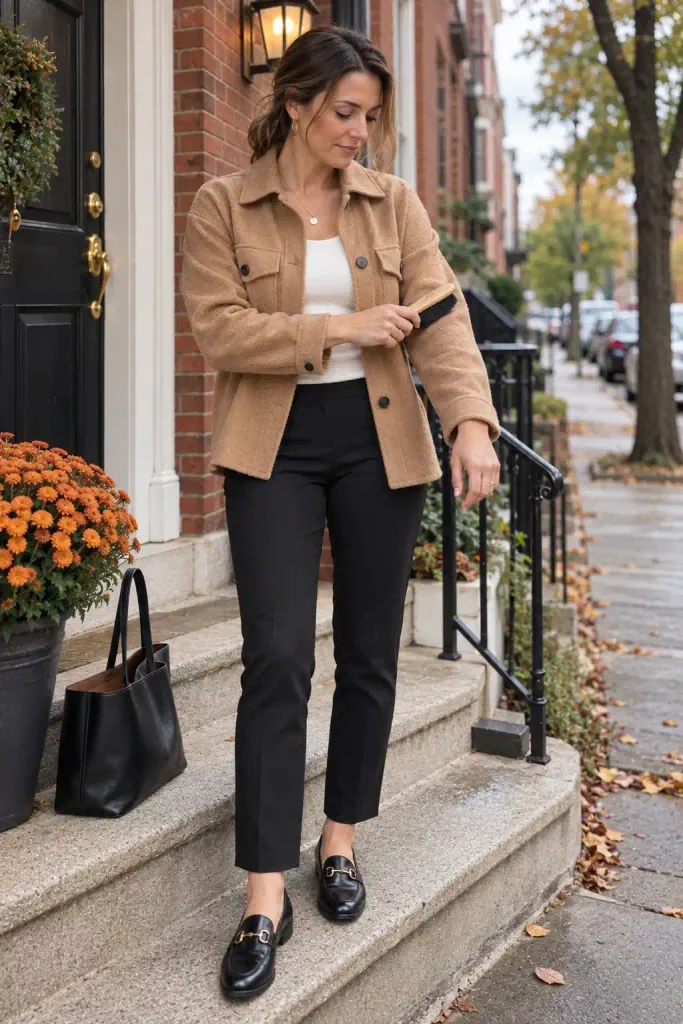
A shacket works hard, so it needs a little upkeep. Wool blends should be brushed with a soft clothes brush and aired between wears, rather than washed after every outing.
Cotton twill can usually go through a gentle machine cycle, but a cold wash protects the colour and keeps the fabric from shrinking in the shoulders.
Corduroy likes to be turned inside out before washing. Flannel pills at friction points, so a fabric shaver every few months keeps it smooth. And whatever the fabric, check the care label first, because blends vary a lot.
Store it on a wide-shouldered hanger. Thin wire hangers leave small dents at the shoulder tips, and those dents are exactly the spot your eye goes to when you look for fit.
FAQs
Can I wear a shacket to a formal office?
It depends on the dress code. In a strictly formal setting, a tailored blazer is safer. A shacket in wool or fine twill, worn with tailored trousers and polished shoes, works in business-casual offices and is usually fine in smart-casual ones.
When in doubt, choose a solid dark colour, avoid chunky pockets, and match the fit closely to your frame.
What size shacket should I buy so it doesn’t look oversized?
Buy your true size and judge it by the shoulder seam, not the number on the label. If you plan to layer a thin knit underneath, your regular size is correct.
Sizing up only makes sense when the cut runs small, and in that case check the sleeve length and hem before you pay.
Which colours look most professional?
Camel, navy, charcoal, black, olive, and chocolate brown look the most office-appropriate. Solid colours and small-scale patterns read as more polished than bold checks.
If you wear the shacket often, a neutral shade gives you more outfit combinations from the same piece.
Final thought
A shacket stops looking oversized the moment it fits at the shoulder, ends at the hip, and sits over one slim layer.
Everything else is colour, texture, and a pair of shoes that match the room you are walking into.
Pick one of the 12 outfits above and try it this week. Which one are you saving first, and what would you change to make it fit your office?
