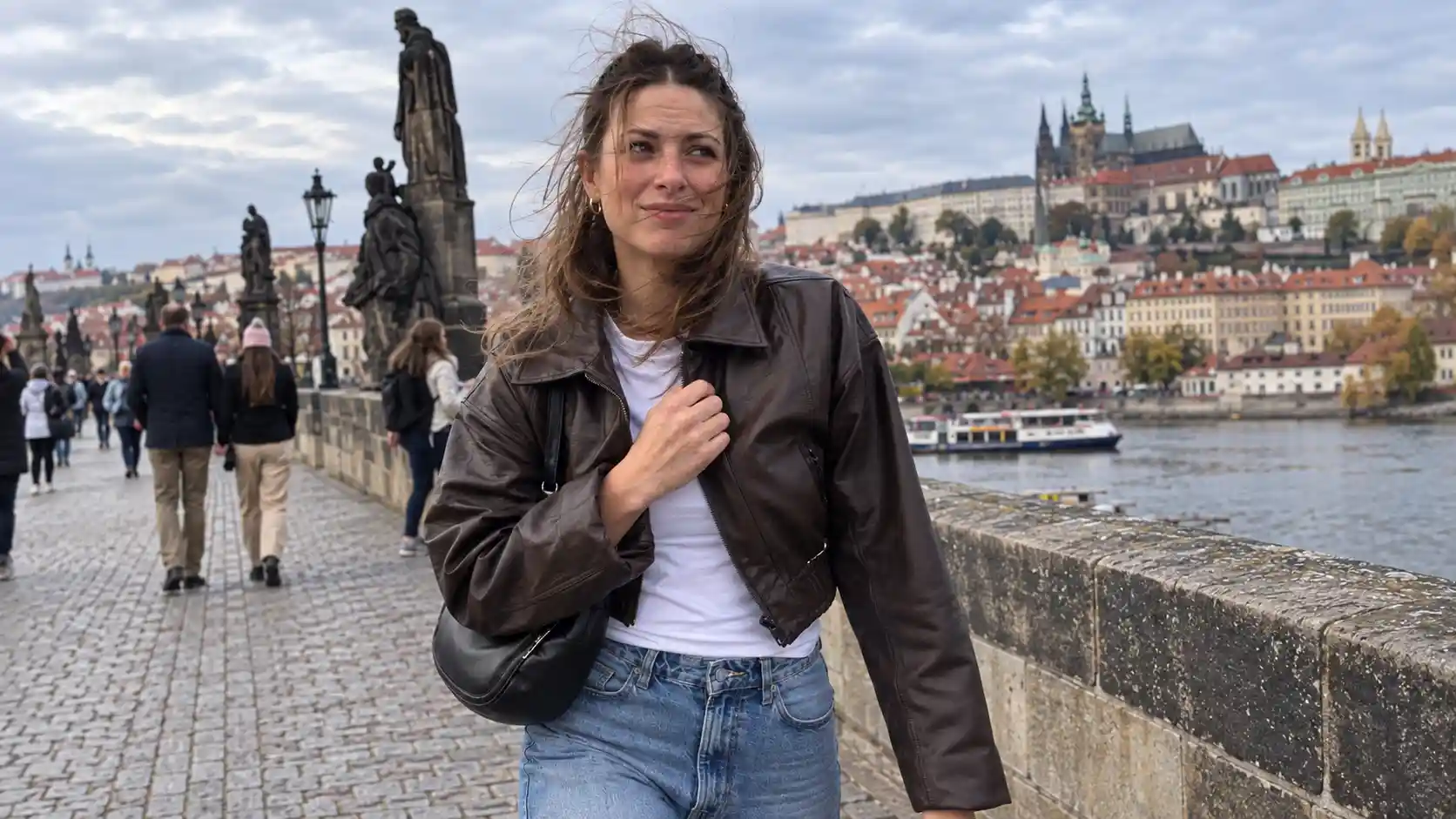
I landed in Prague three Octobers ago wearing a cropped jacket that looked incredible in my bedroom mirror and did absolutely nothing against the wind coming off the Vltava River.
I spent the next four days buying scarves out of pure desperation. Lesson learned the hard way: European fall does not care about your Pinterest board. It cares about layers.
Ever wondered why the women you see gliding through cobblestone streets in Paris or Vienna never look like they’re freezing, even in what appears to be a thin sweater? They’re not lucky.
They just know how to layer properly. Once you get the formula down, you stop overpacking, you stop underdressing, and you actually enjoy the walk instead of gritting your teeth through it.
This is the guide I wish someone had handed me before that Prague trip. Twenty real techniques, pulled from years of trial, error, and a few genuinely embarrassing outfit choices.
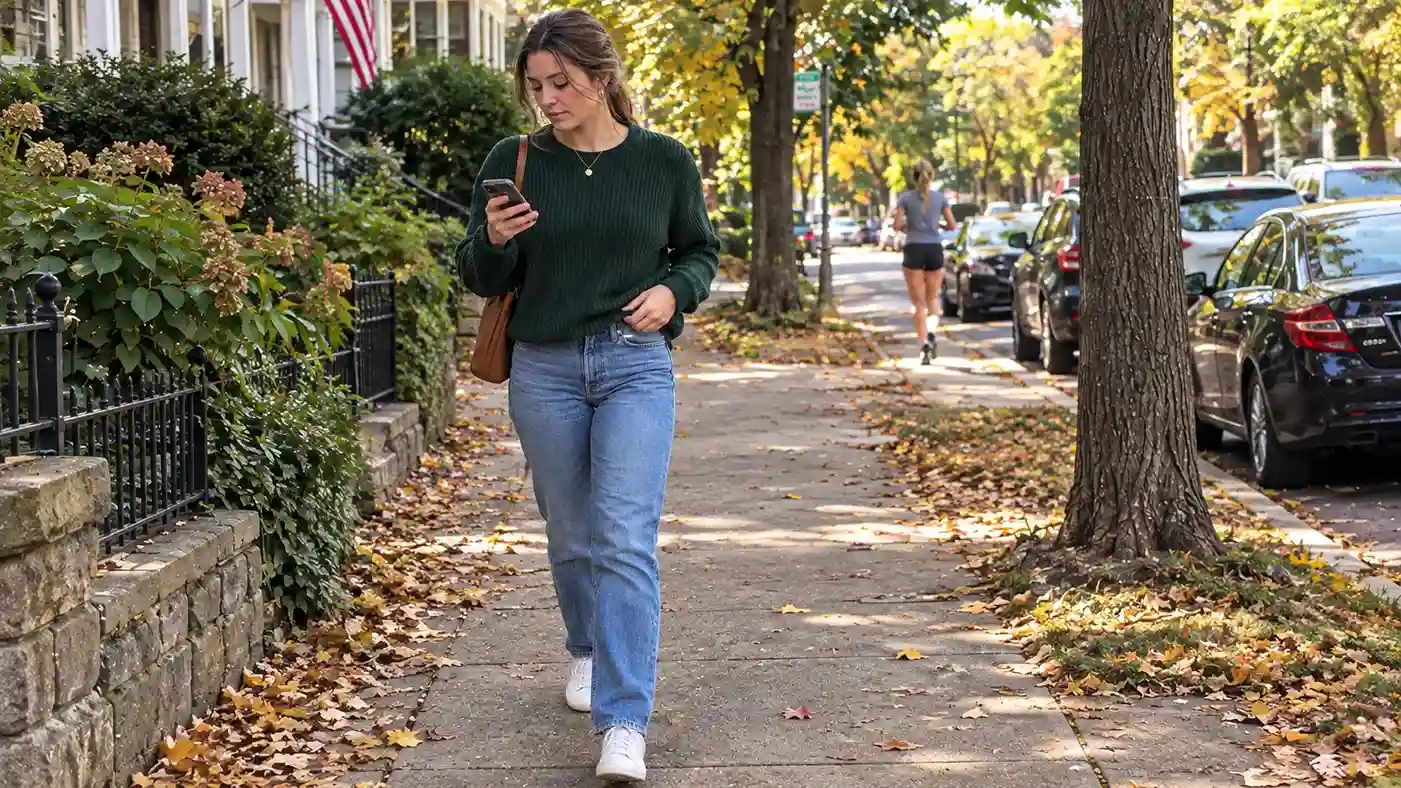
Jeans And Green Sweater Outfit Guide What Shoes And Accessories To Pair
Discover More →Why fall in Europe keeps you guessing
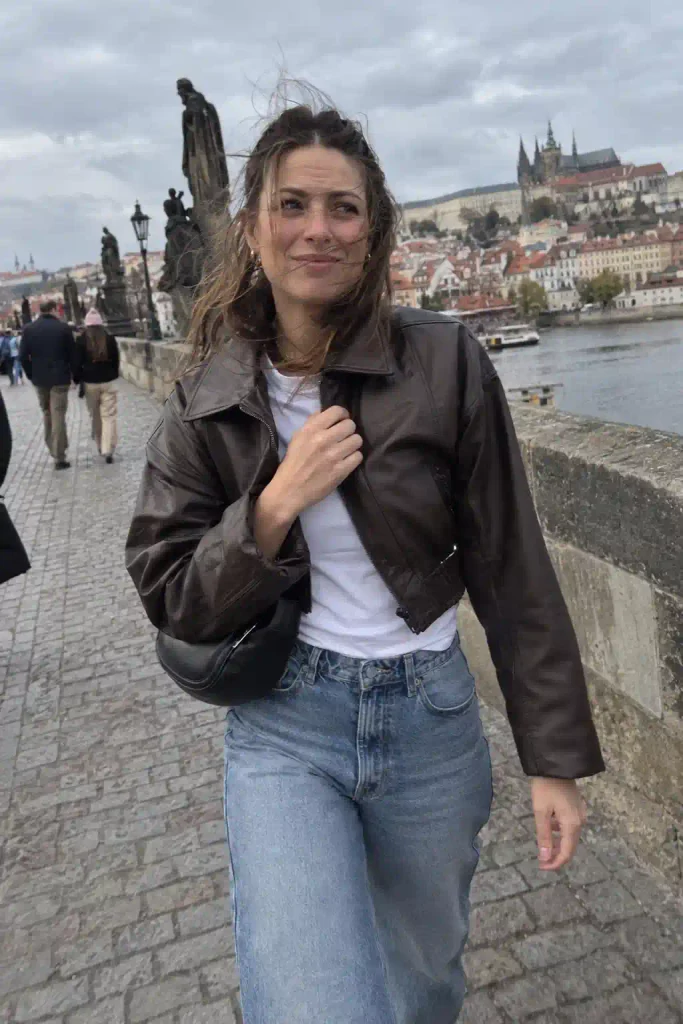
Fall in Europe is not one season. It’s about six seasons stacked on top of each other depending on where your train stops next.
Munich mornings can feel like the start of winter while the same afternoon in Bordeaux feels like late summer.
According to The Gap Decaders’ regional breakdown, cities like Munich and Vienna typically sit between 43 and 59°F in October, while Budapest and Kraków cool down even faster.
Meanwhile southern Italy and Spain can still hit the high 60s in the afternoon sun. That’s a massive swing to pack for, and it’s exactly why one heavy coat is never the answer.
IMO, the smarter move is always building a small system of layers you can add or peel off as the day changes.
Here’s a quick reference so you’re not guessing at the airport gate:
| Region | Typical fall temps | Smartest layering pick |
|---|---|---|
| Munich & Vienna | 43-59°F (6-15°C) | Wool sweater + structured wool coat |
| Budapest & Kraków | 45-61°F (7-16°C) | Insulated jacket + thermal tights |
| Paris & London | 46-59°F (8-15°C) | Trench coat over cotton base layers |
| Southern Spain & Italy | 55-68°F (13-20°C) | Light cardigan + denim jacket |
Save that table. It’s a small thing, but it will save you from either sweating through a museum or shivering through dinner.
The three-layer formula that never fails
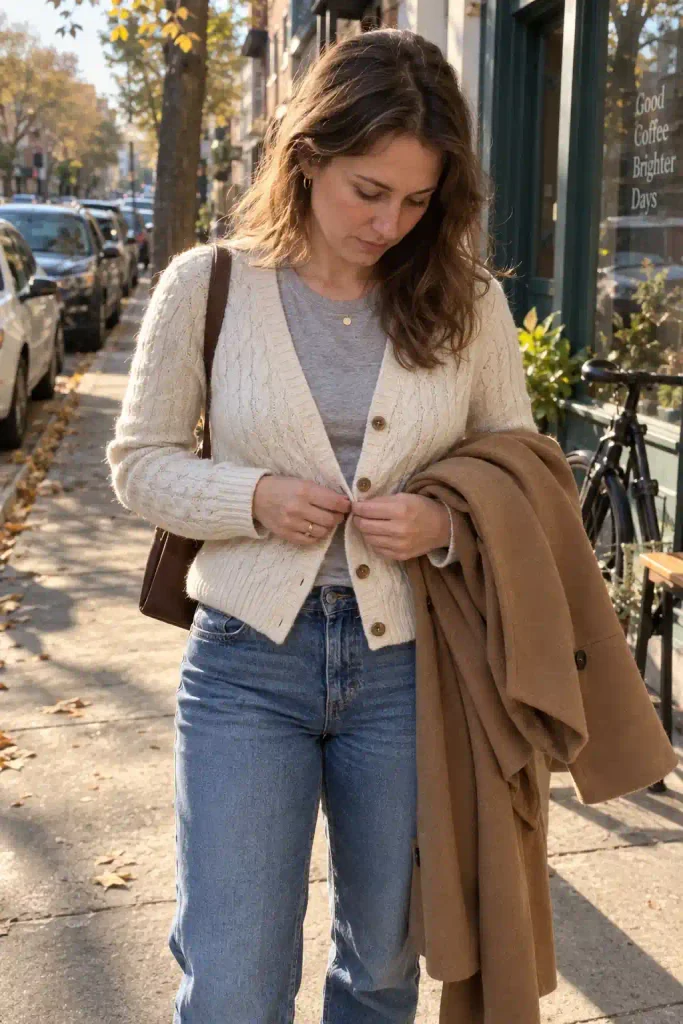
Before we get into the 20 techniques, you need the skeleton they all hang on.
Every good fall outfit, no matter the city or the occasion, comes down to three parts: base, mid, and outer.
Base layer
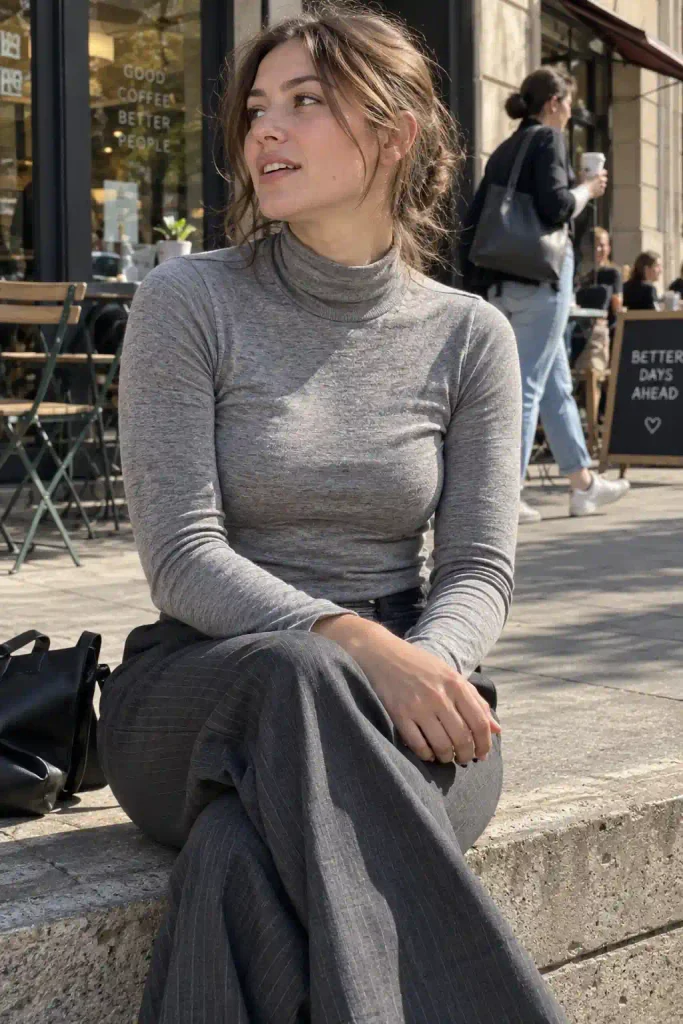
This sits right against your skin. Think fitted tees, thin turtlenecks, or a light long-sleeve top.
The Everygirl’s layering breakdown makes a good point here: a long-sleeve tee works alone on a mild afternoon and disappears seamlessly under heavier pieces once the temperature drops. That flexibility is the entire point.
Mid layer
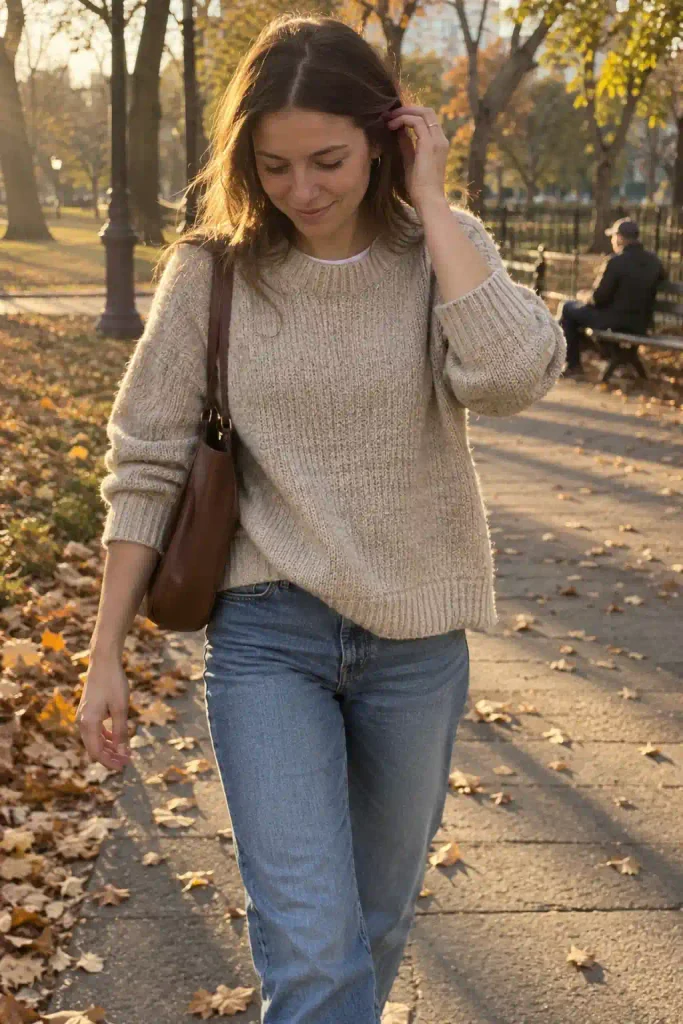
This is your sweater, cardigan, vest, or flannel. It adds the bulk of your warmth and, honestly, most of your personality too.
A chunky knit says something different than a slim ribbed turtleneck, and picking the right one changes the whole mood of the outfit.
Outer layer
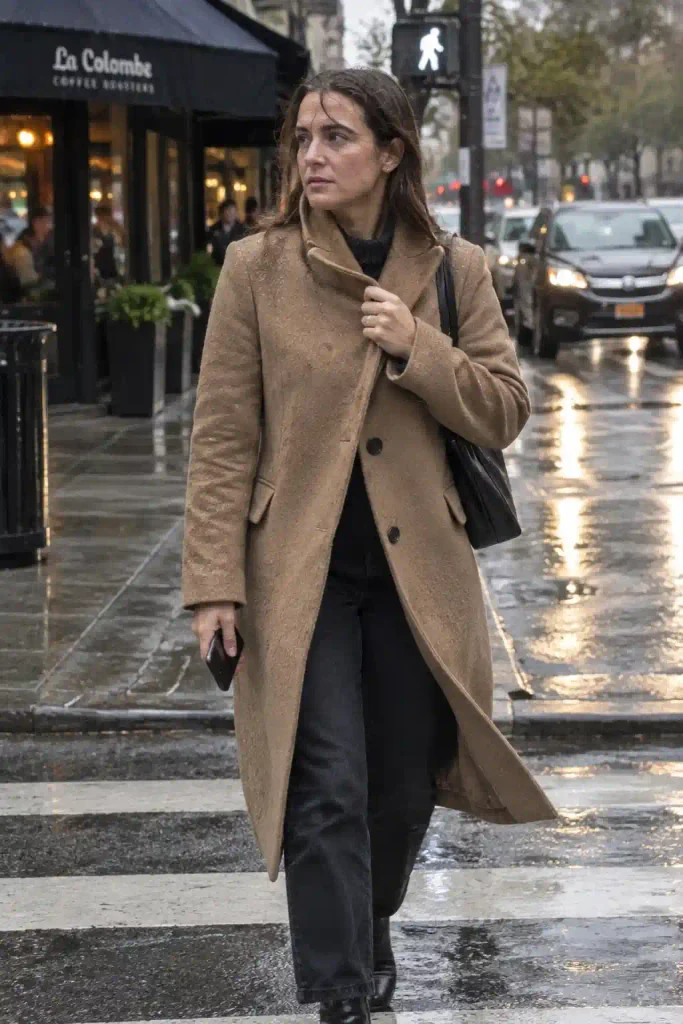
Coat, jacket, or trench. This is what battles the wind and the rain, so function actually matters more than looks here, even though it usually ends up being the piece everyone compliments.
Got that framework in your head? Good. Now let’s get into the actual techniques.
Foundational layering techniques (1-5)
1. Start thin, build up. Your first layer should be the thinnest piece you own. Fitted, breathable, almost invisible under everything else. If your base layer is bulky, every layer after it fights for space and nothing sits right.
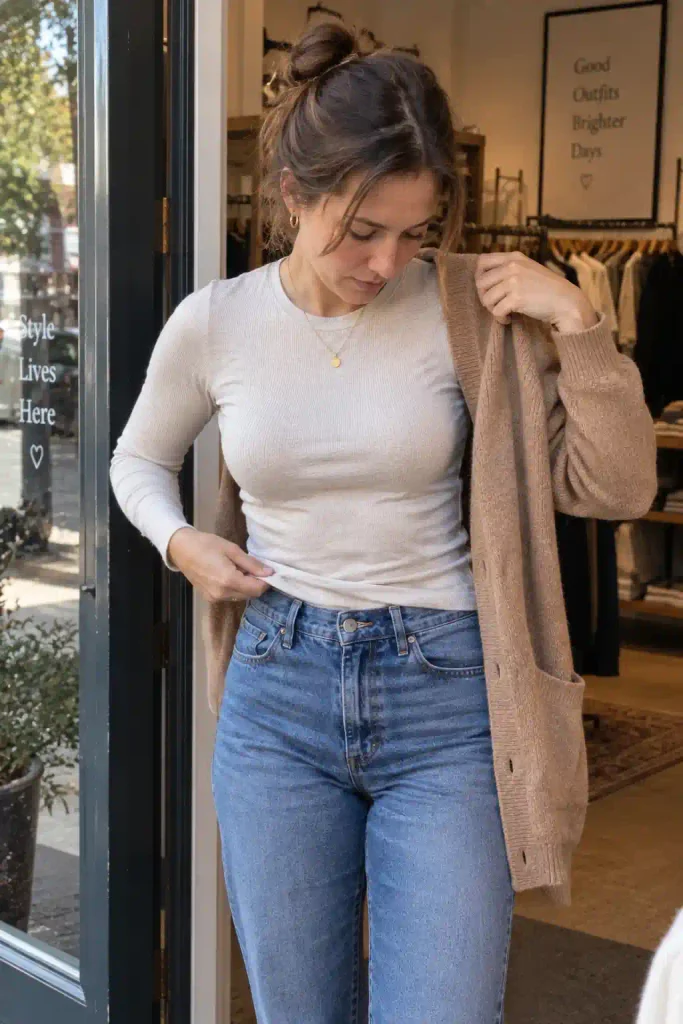
2. Match your bottom layer’s fit to your top layer. A loose sweater over a loose shirt reads sloppy fast.
Keep the layer closest to your body slightly more fitted than the one going over it. Small rule, huge visual difference.
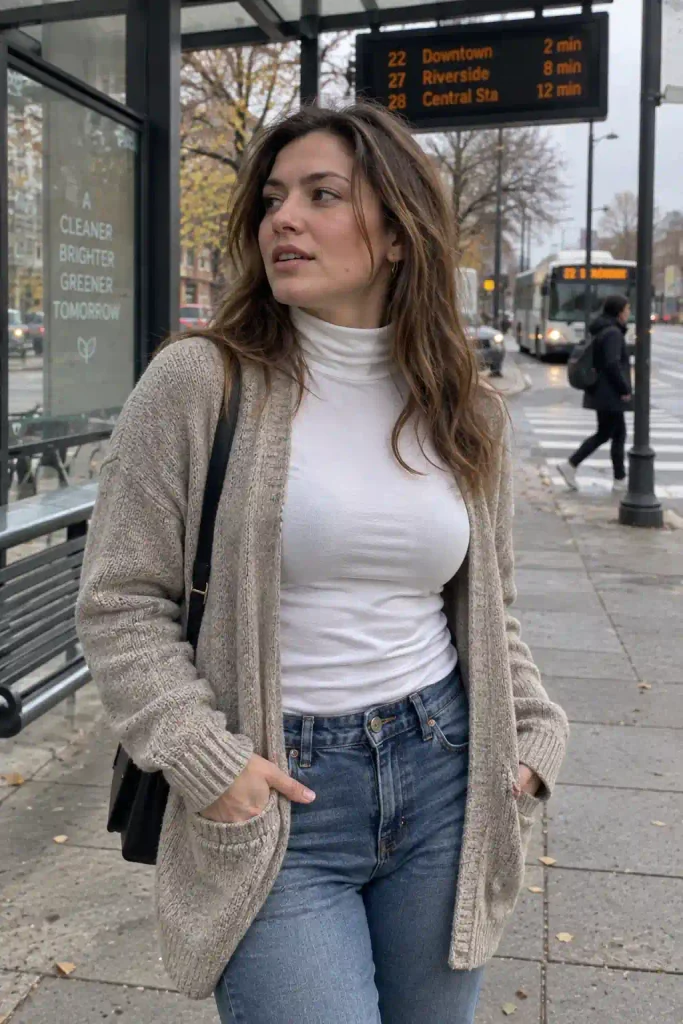
3. Leave room to peel off. Museums, trains, and cafés in Europe run warmer than you’d expect. Build every outfit so you can lose your outer coat and still look finished underneath.
This alone will save you from carrying an awkward bundle of clothing all afternoon.
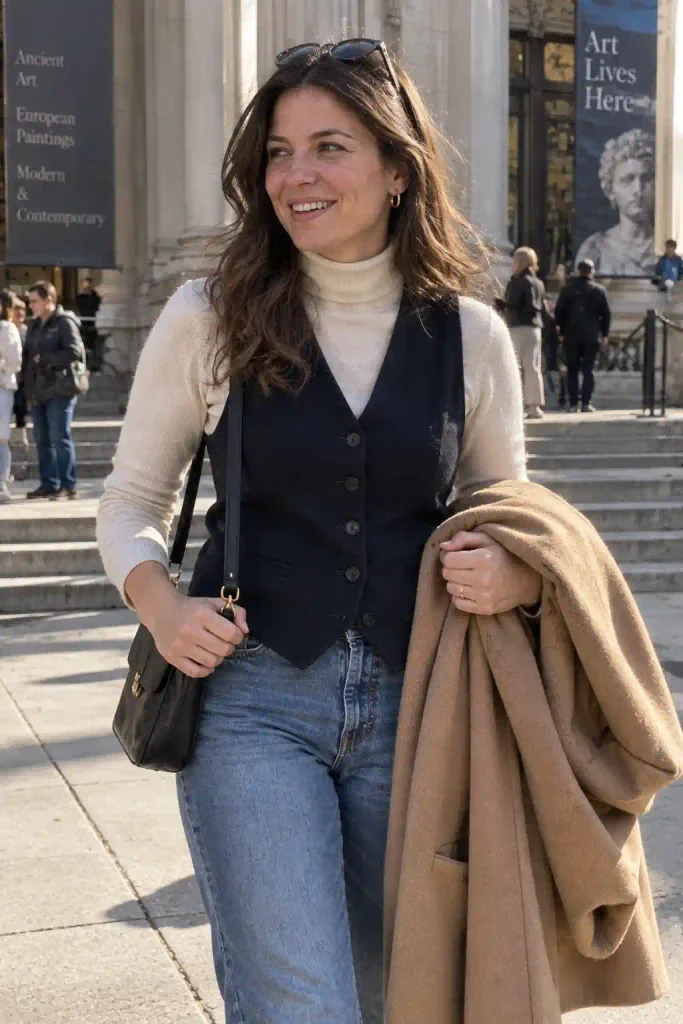
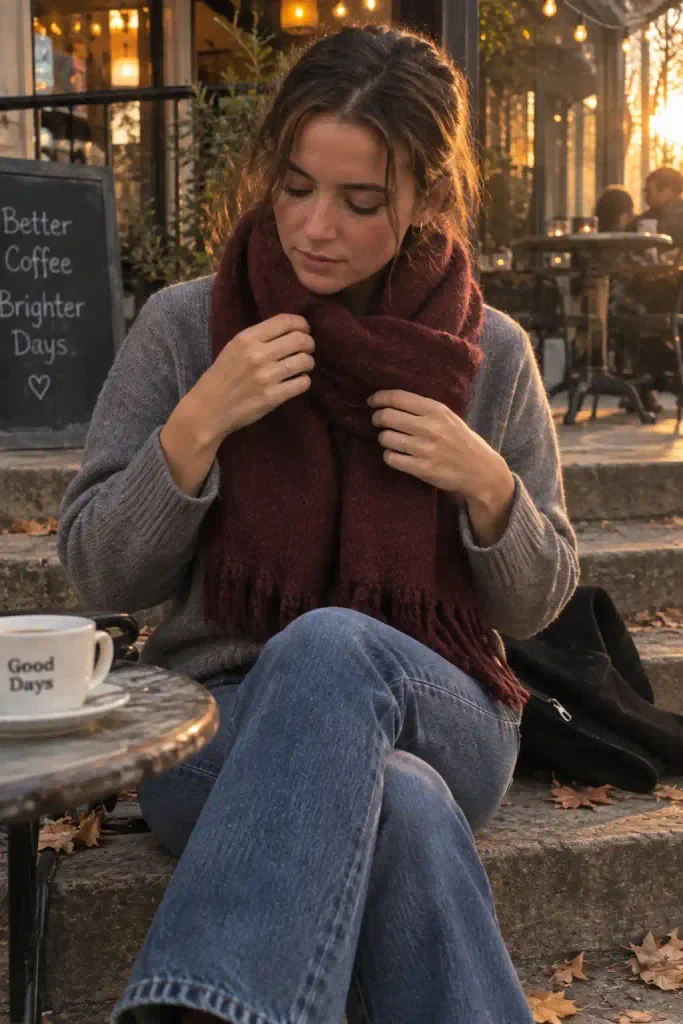
4. Use your scarf as a temperature dial, not just an accessory. A lightweight cotton scarf in the morning, swapped for a chunky wool one by evening, does more for comfort than adding an entire extra layer of clothing.
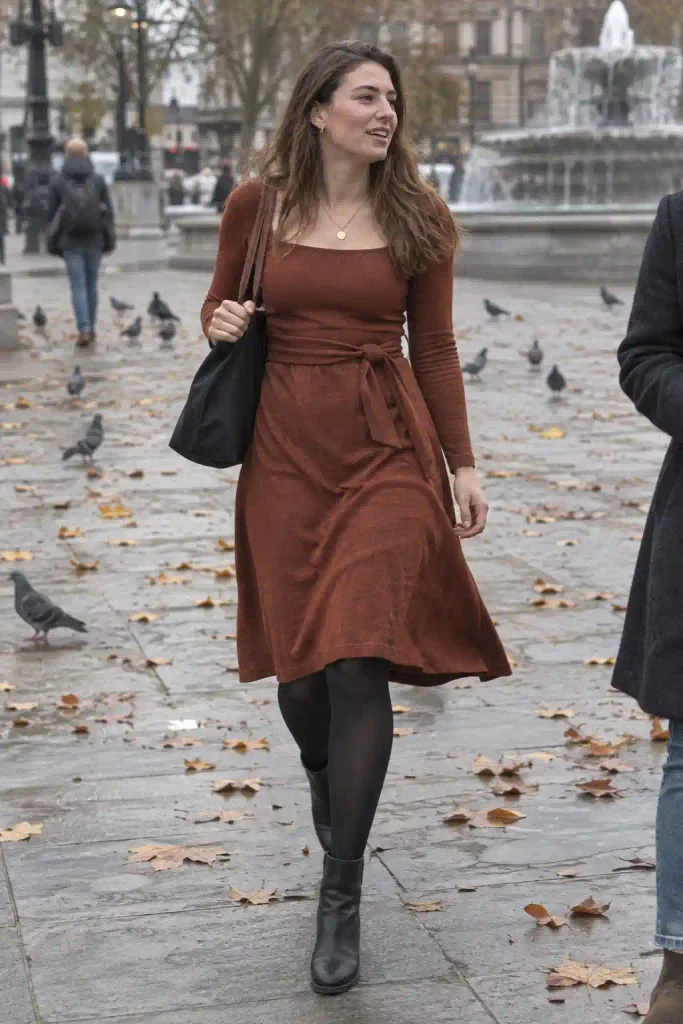
5. Never skip tights. I resisted tights for years, thinking they were too formal or too office-coded. I was wrong.
Opaque black tights under a midi skirt or dress extend your warm-weather pieces straight through November, and honestly they’ve become one of my favorite fall layering tricks.
Texture and fabric mixing (6-10)
6. Pair smooth with chunky. Silk blouse under a chunky cable knit. Satin slip dress under a wool cardigan.
The contrast in texture keeps an all-neutral outfit from looking flat or boring.
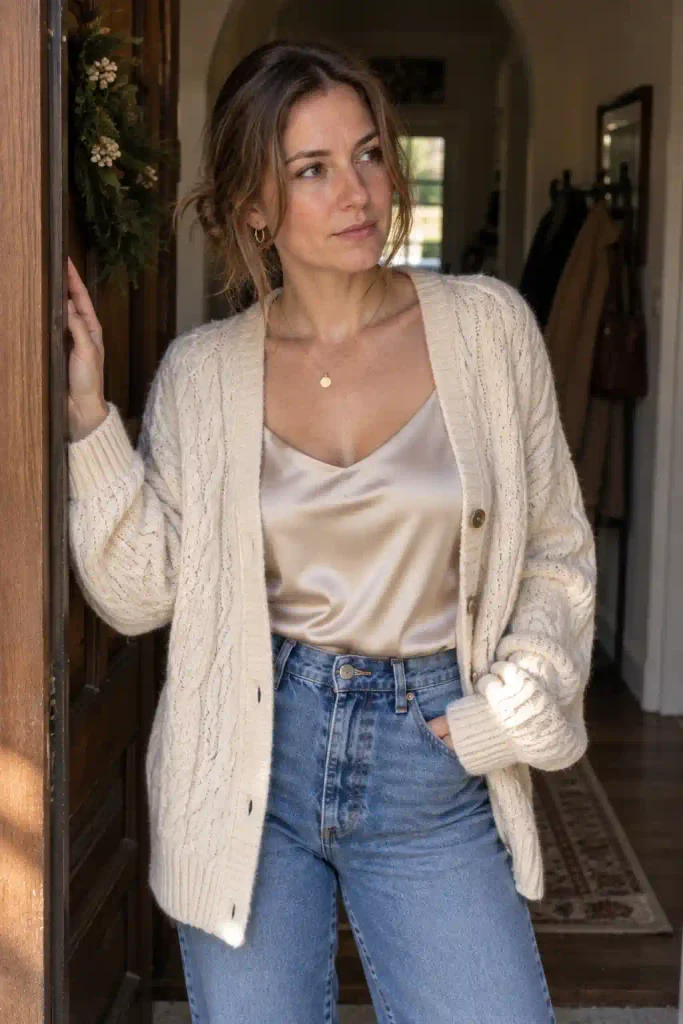
7. Mix matte and sheen sparingly. One shiny piece, like a leather jacket or a satin scarf, against a room full of matte wool or cotton reads as intentional.
Two shiny pieces together starts to look like a costume.
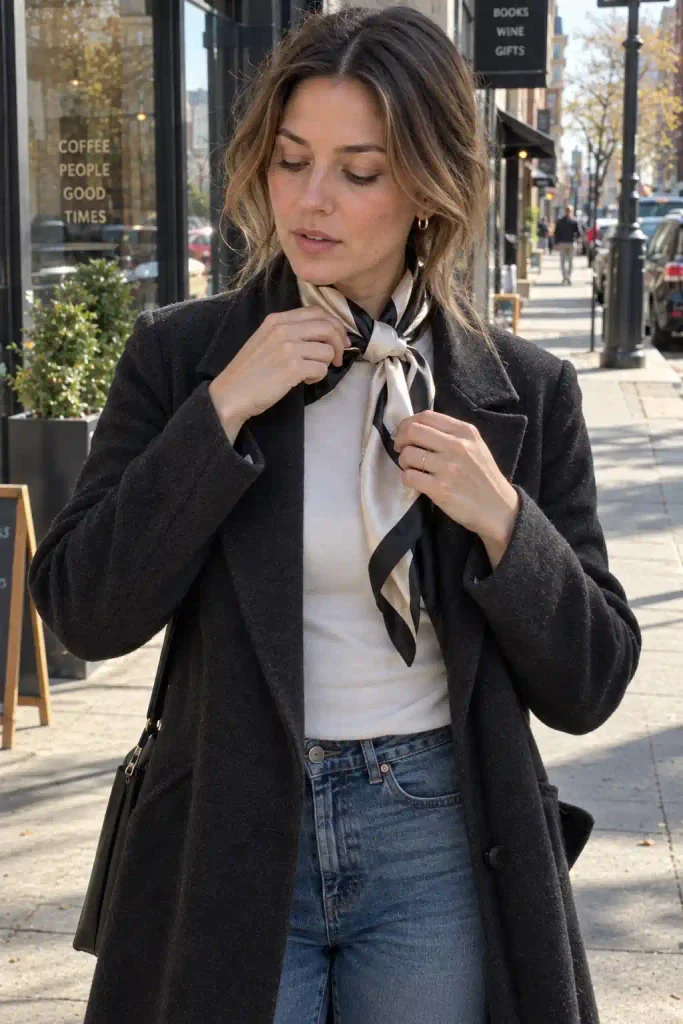
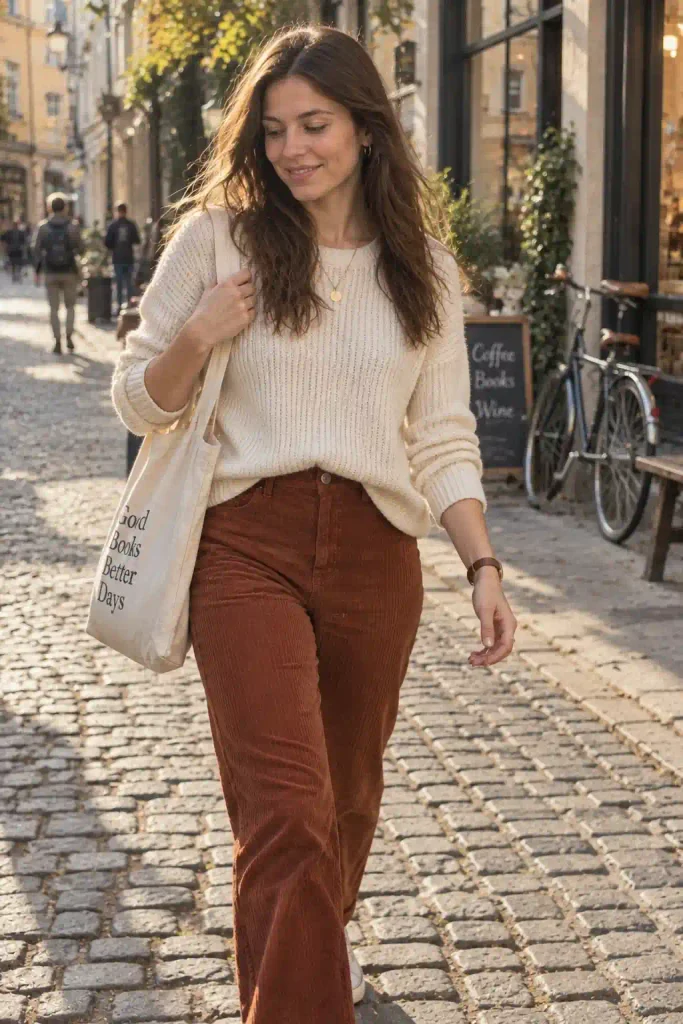
8. Corduroy is underrated. This is a personal opinion, but corduroy pants paired with a soft knit sweater might be the most European-coded outfit combination that exists.
It photographs beautifully against cobblestone streets, if that matters to you.
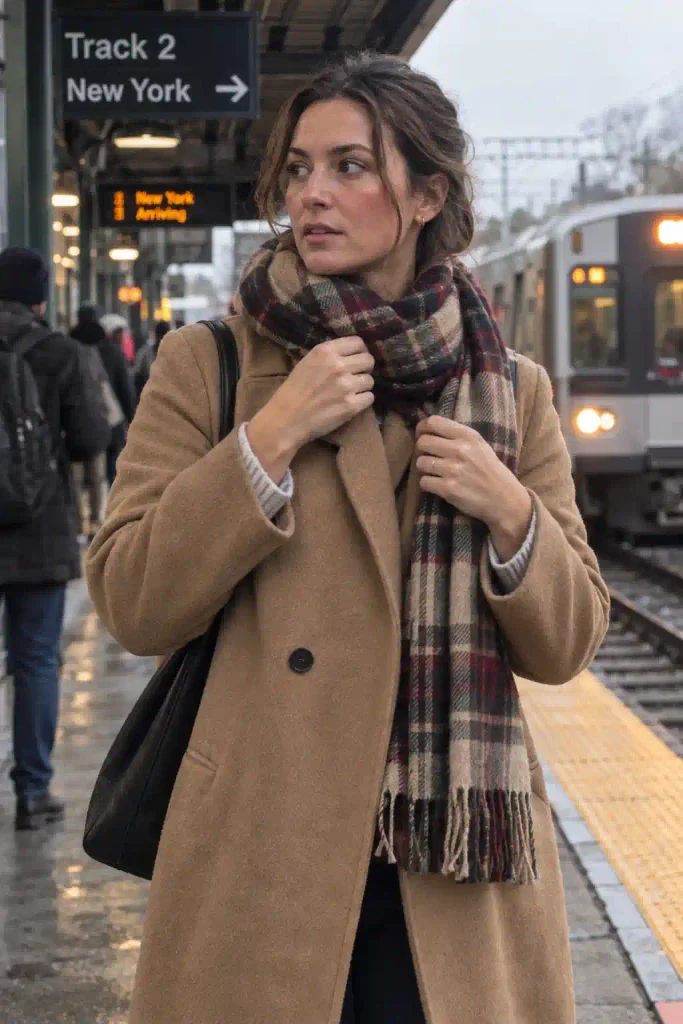
9. Keep pattern to one layer at a time. Plaid scarf with a solid coat. Striped shirt under a solid cardigan.
Two patterns fighting for attention in one outfit almost never works, no matter how confident you feel putting it together.
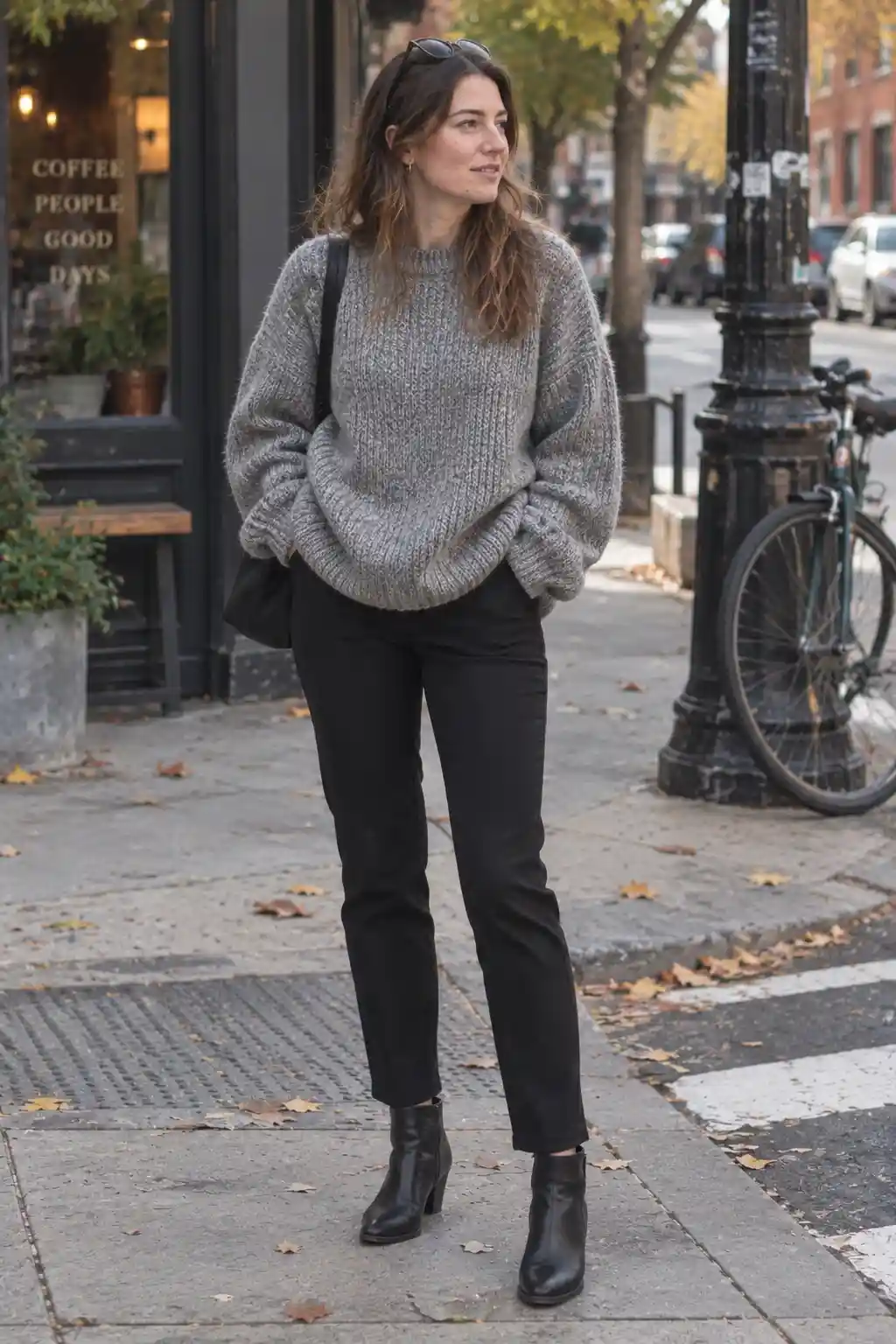
10. Balance thick with thin. If your sweater is oversized and heavy, keep your bottoms slim. If your coat is a big structured wool piece, let your base layer stay light and close to the body.
Proportion does more work than people give it credit for.
Random aside, because this is exactly the kind of thought that hits you mid-scroll: has anyone else noticed European café culture makes you want to order a hot drink you’d never touch at home?
I’ve become weirdly loyal to warm apple cider just because it feels correct while wearing a wool coat and sitting outside a café in Vienna. Anyway, back to layering.
Silhouette and proportion tricks (11-15)
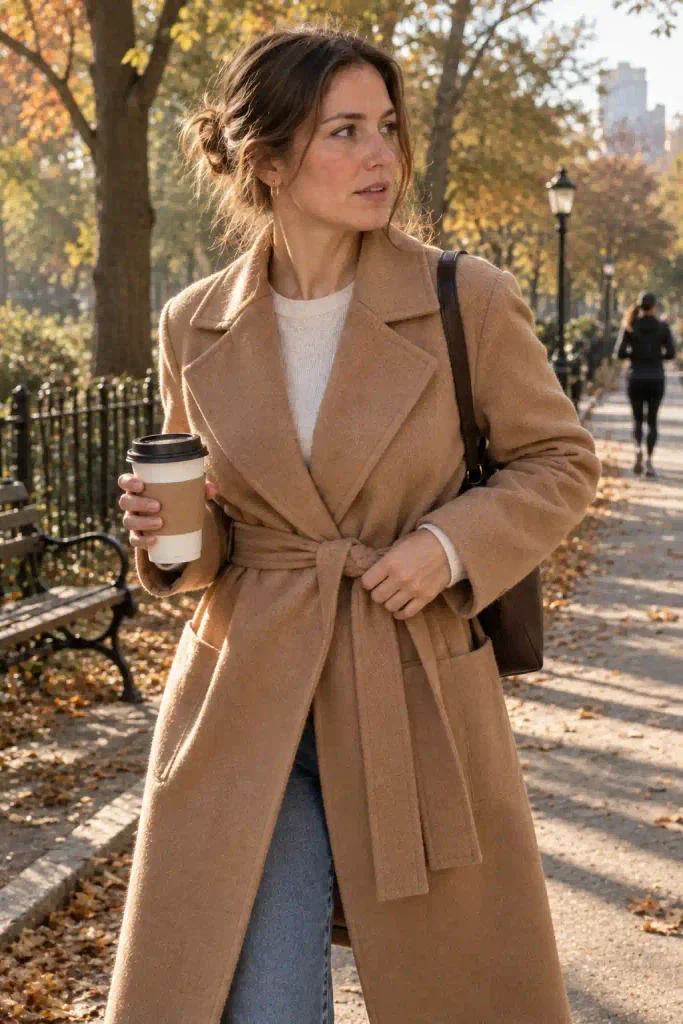
11. Belt your outer layer. A belted trench or wool coat instantly gives shape to bulky under-layers.
Without a belt, three layers can start looking like one shapeless blob. With one, suddenly it’s an outfit.
12. Tuck one layer, leave one loose. Tuck your base layer into your bottoms, then let your mid layer or cardigan hang open and loose.
This creates visual layers even from a distance, which matters more than you’d think for photos.

13. Layer dresses under sweaters. A slip dress or midi dress works as a base layer under an oversized sweater or belted coat.
It’s an easy way to stretch a warm-weather piece straight into cold months, and it looks far more put together than it actually is to execute.
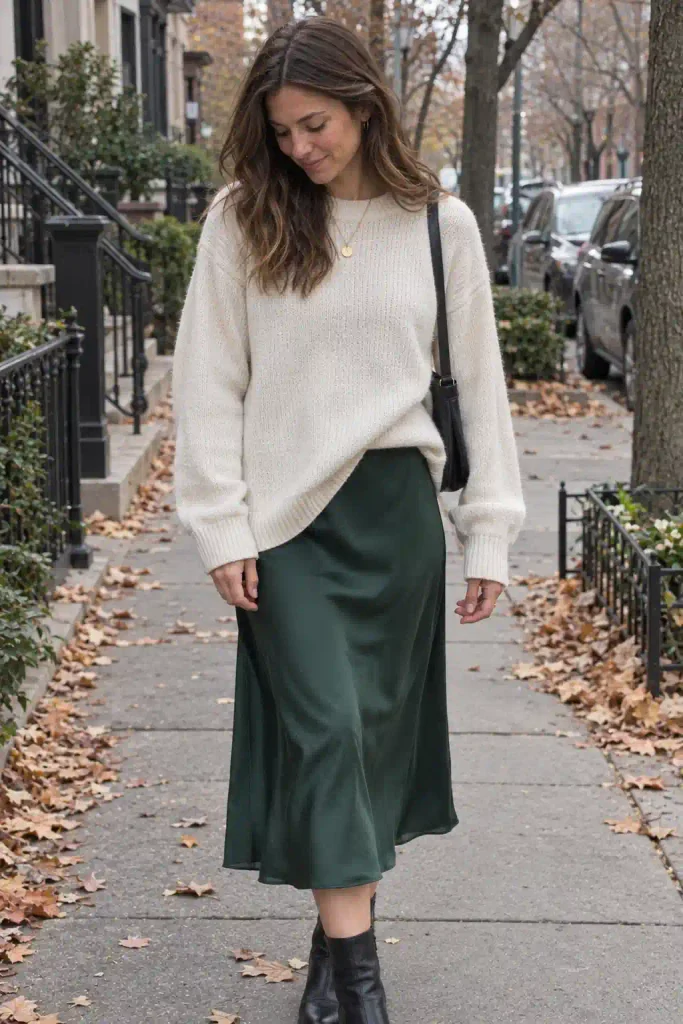
14. Watch your hemlines. If your sweater falls just below your coat, it looks unfinished.
Either let the sweater peek out a clear few inches, or tuck it so it disappears completely. There’s no in-between that photographs well.
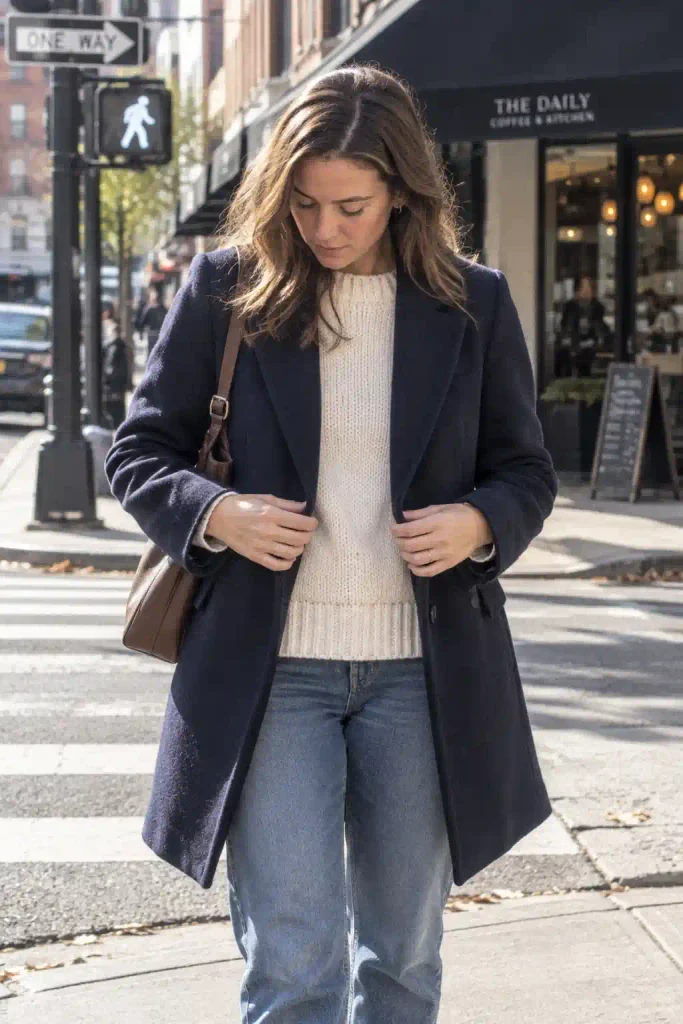
15. Roll up one sleeve, not two. This sounds oddly specific, but rolling the cuff of your outer layer to show a contrasting mid-layer sleeve underneath adds a small detail that makes an outfit look considered rather than thrown together.
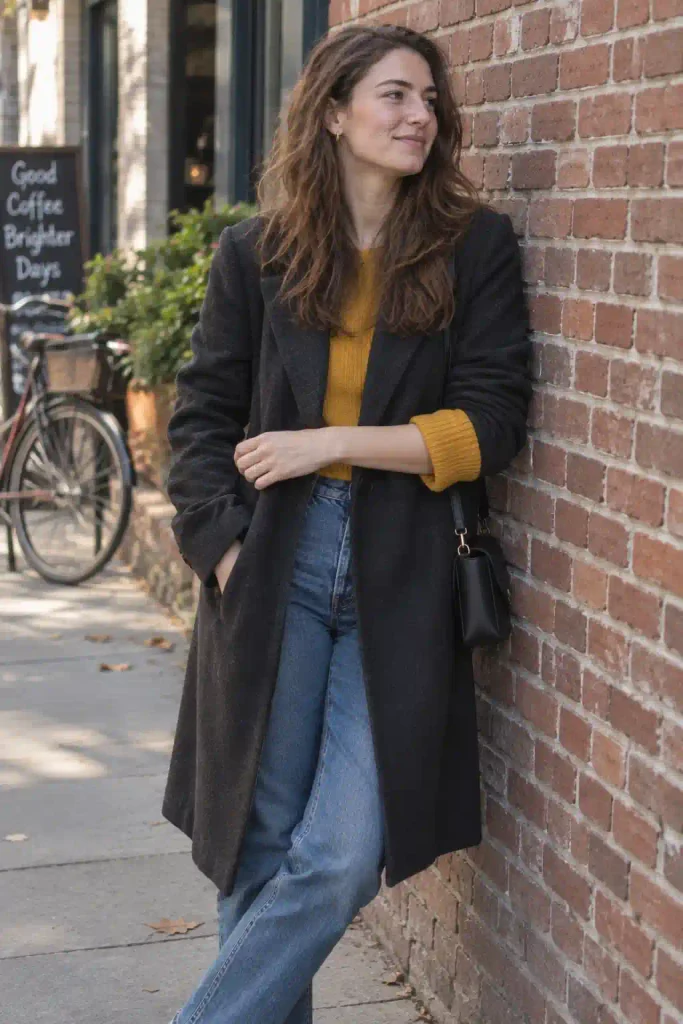
Accessory-based layering (16-20)
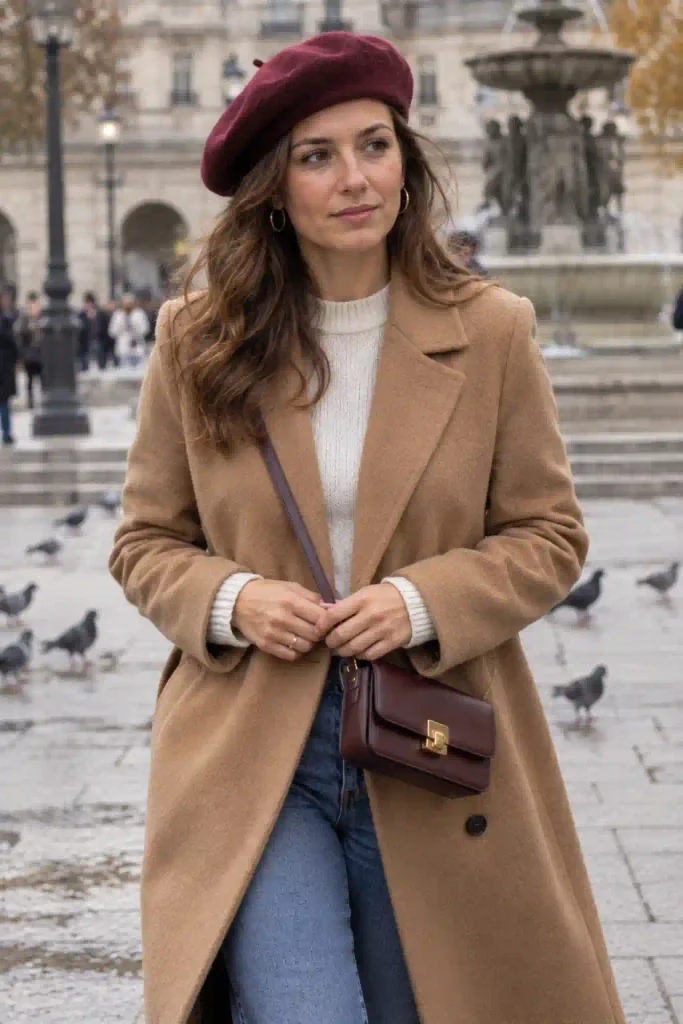
16. Hats do more than keep you warm. A wool beret or structured felt hat finishes an outfit the way a good haircut finishes a face.
Skip the hat and something feels slightly off, even if you can’t say exactly what.
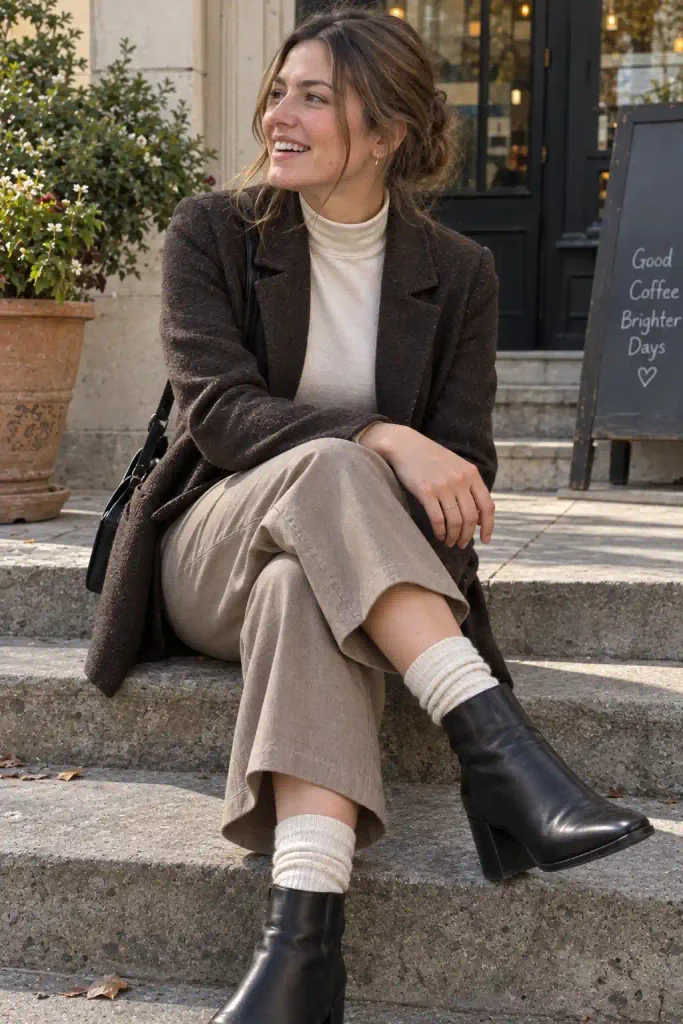
17. Layer your socks visibly. Cozy ribbed socks peeking out over ankle boots or under cropped pants is having a real moment, and honestly I’m here for it.
It’s a small styling move that adds texture without adding bulk.
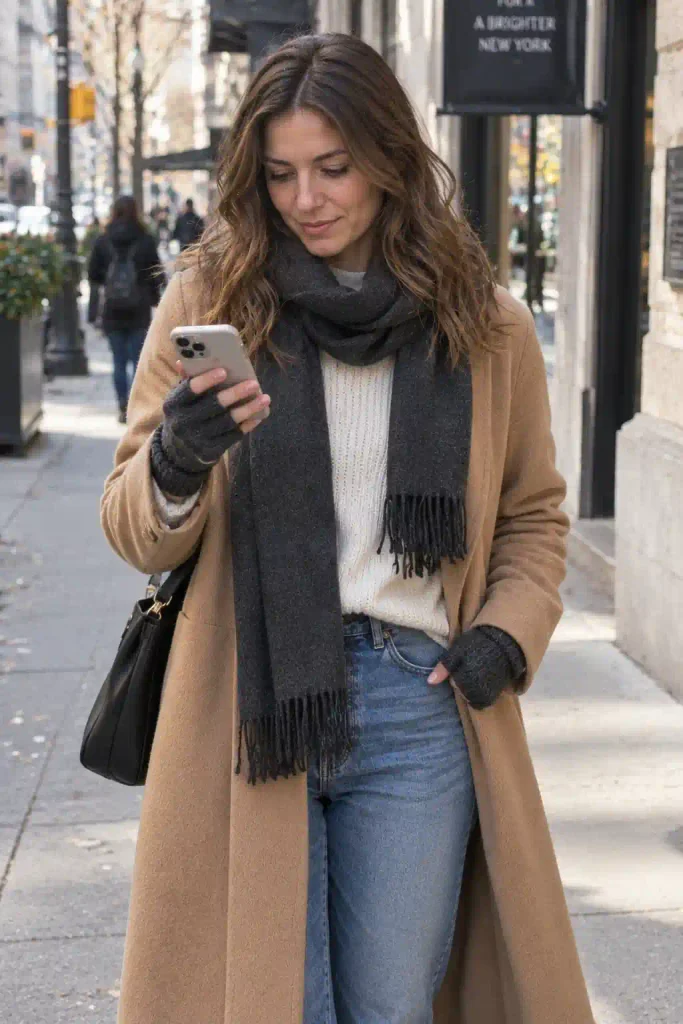
18. Gloves are not optional past mid-October. Fingerless gloves if you’re using your phone constantly for photos, full leather gloves if you’re not.
Either way, cold hands will ruin your mood faster than cold anything else.
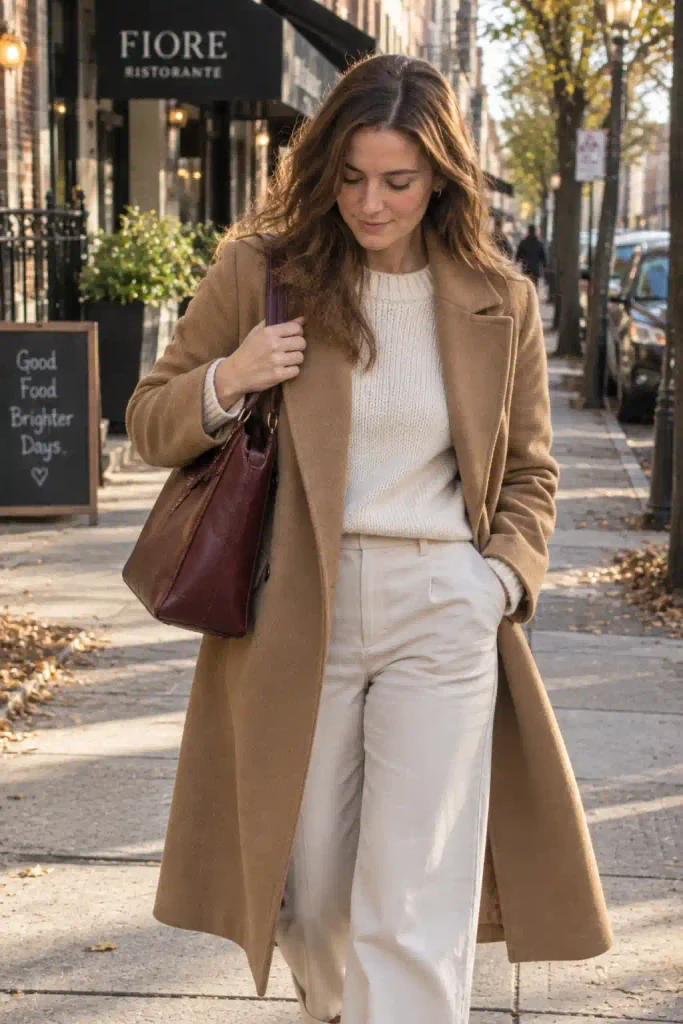
19. Use your bag as a color anchor. When your outfit is heavy on neutrals, which most good fall layering ends up being, a bag in a richer color like burgundy or forest green pulls the whole look together without adding another actual layer of clothing.
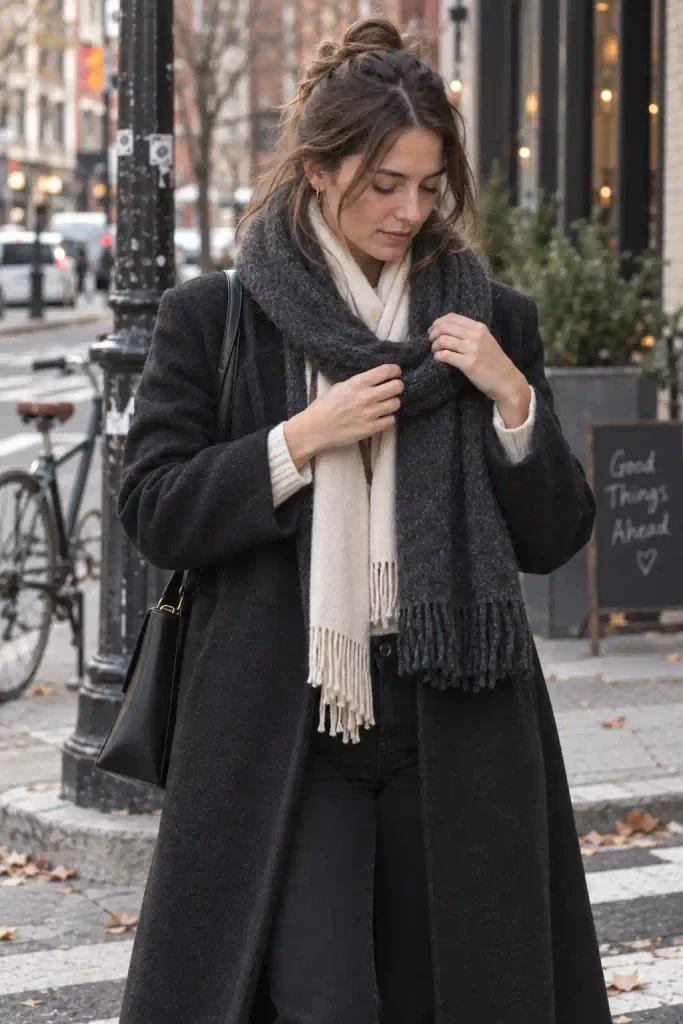
20. Double up on scarves for statement warmth. One thin scarf tucked inside your coat, one thicker one looped outside.
This is genuinely one of my favorite tricks because it reads as styled rather than just cold, and it works for basically every coat silhouette.
Wow, twenty techniques really does cover almost every scenario you’ll run into.
And the honest truth is you don’t need all twenty in a single outfit. Pick three or four that fit your personal style and repeat them across your trip.
hat’s how a small suitcase turns into what looks like an endless wardrobe in your photos.
Frequently asked questions
How many layering pieces should I actually pack for a two-week fall trip through Europe? Somewhere between eight and twelve mix-and-match pieces covers most trips comfortably.
Focus on two or three base layers, three or four mid layers like sweaters and cardigans, and one or two coats that work across different weather.
Is it too much to layer heavily for a nice dinner or evening out? Not at all, as long as you simplify the outer layer.
Swap your puffer or casual jacket for a tailored coat or blazer, keep the rest of your layers as they are, and the outfit reads polished instead of overdone.
What if my trip covers both warm southern Europe and cold Eastern Europe? Pack for the coldest city on your itinerary and plan to shed layers as you head south.
It’s far easier to carry a folded cardigan in your bag on a warm day than to be stuck without a coat on a cold one.
Final thought
Fall in Europe rewards people who plan their layers, not people who pack the most clothes.
My cropped jacket disaster in Prague taught me that the hard way, and honestly, I’m kind of grateful for it now. It pushed me to actually learn this stuff instead of guessing every single trip.
So, which of these twenty techniques are you trying first? Save this for your next European fall trip, and let me know which layering combo ends up becoming your go-to.
