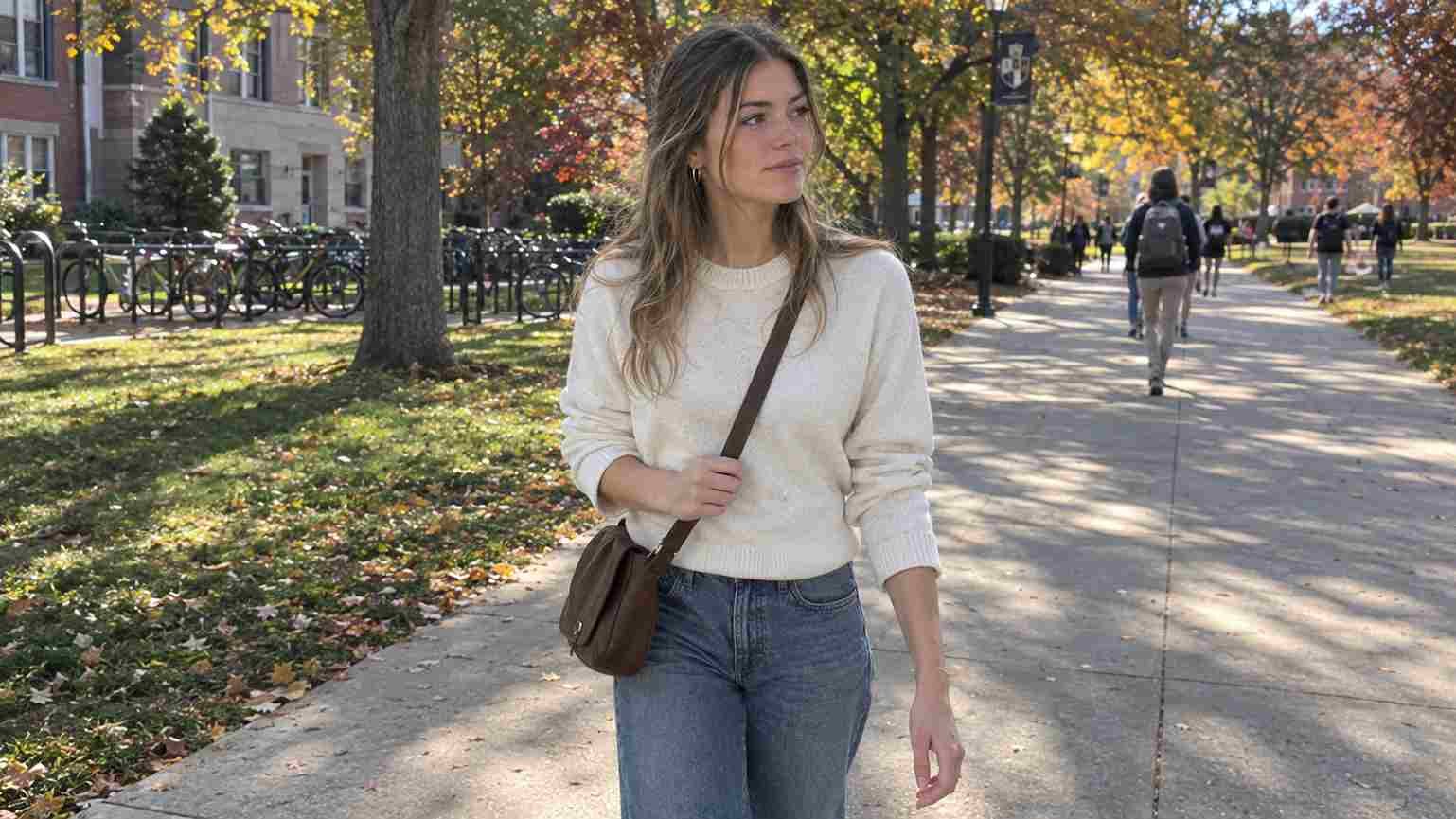
Freshman year, I packed four suitcases for a dorm room with two drawers and a closet the size of a phone booth.
By week three I was wearing the same six items on rotation anyway, buried under a pile of clothes I never touched.
That’s the year I learned what a capsule wardrobe actually does for you. A capsule wardrobe isn’t about owning less for the sake of owning less.
It’s about never standing in front of your closet at 7:40 AM wondering what goes with what.
By sophomore year, I’d cut my closet down to about a third of what I started with, and I genuinely wore more of it.
Wow, what a difference that made on move-in day too. Two duffel bags instead of four suitcases, and I still had more usable outfits than the year before.
If you’re building a fall wardrobe for campus, dorm storage, laundry day chaos, and walking to class in weather that changes its mind three times a day, this guide is for you.
I’m going to walk you through the actual pieces worth buying, then hand you 25 outfit combos you can screenshot, pin, or just copy outright.
No fluff, no 40-item shopping list you’ll never wear through, and no pretending you need designer everything to look put together on a college budget.
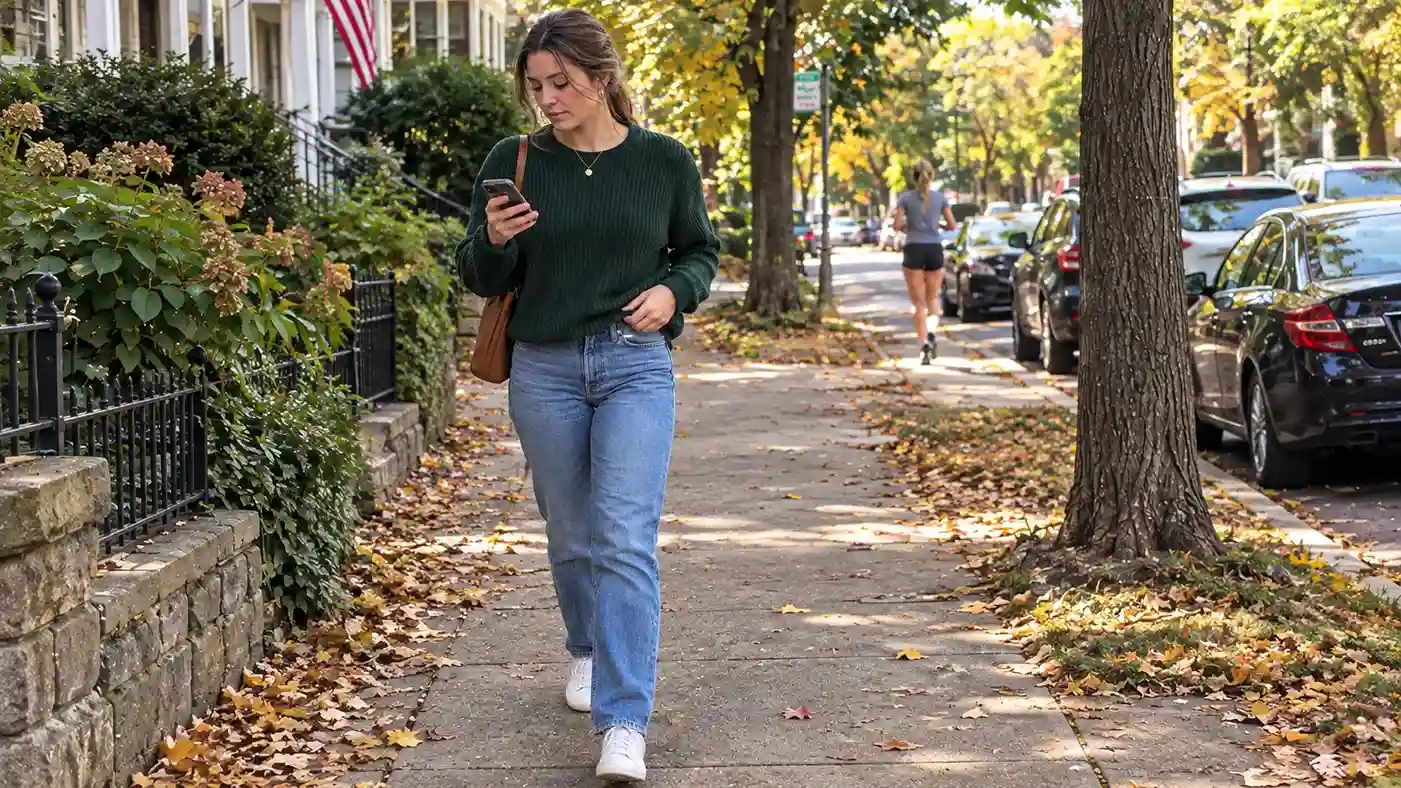
Jeans And Green Sweater Outfit Guide What Shoes And Accessories To Pair
Discover More →Why a fall capsule actually works for dorm life
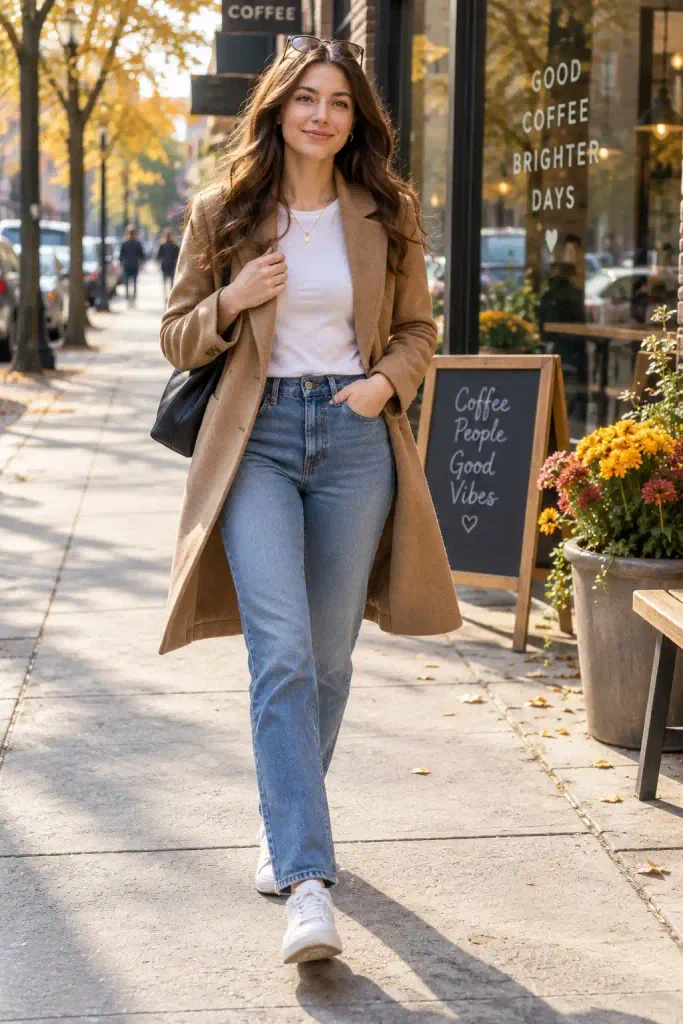
A capsule wardrobe is just a small set of pieces that all work together, so you can mix and match instead of needing a “new outfit” for every occasion.
The concept isn’t new. Susie Faux, a London boutique owner, coined the term in the 1970s to describe a handful of timeless staples you build seasonal pieces around.
Fifty years later, it’s basically the best system for dorm life that exists, and nobody at the time was thinking about shared closets.
Here’s why it matters more in college than anywhere else:
- Storage is limited. Most dorms give you one closet rod and maybe three drawers. A capsule fits.
- Laundry is a hassle. Shared machines, quarters, or an app that says the dryer is free when it’s very much not free. Fewer pieces means faster laundry days.
- Mornings are rushed. You have 8 AM classes and a wardrobe that already works together, so you’re not standing there overthinking a hoodie.
- Budget is real. Buying 10 versatile pieces beats buying 30 pieces that only work with themselves.
Ever notice how the people who always look put together aren’t actually spending more time getting dressed? They just built a system. That’s the whole trick.
There’s also a practical money angle here that nobody really talks about enough. When you buy fewer, better pieces, your cost per wear drops fast.
A $70 sweater you wear 30 times this fall costs you about $2.30 per wear. A $15 trend top you wear twice before it pills costs more per wear, even though the sticker price looks smaller.
IMO, that math changes how you shop once you actually sit with it for a minute.
How to shop your own closet before you shop a store
Before you open a single shopping app, dump every piece of clothing you own onto your bed.
Yes, all of it. This sounds dramatic, but it’s the fastest way to see what you actually have versus what you think you have.
Sort into three piles: pieces that still fit and feel like you, pieces that need a repair or a wash to be usable again, and pieces you haven’t touched in a year.
That last pile isn’t automatically trash.
Some of it just needs a new context, like a summer dress that works as a layering piece under a sweater once the weather turns.
A few questions I ask myself during this sort:
- Does this still fit the way I want it to fit right now, not the way it fit two years ago?
- Can I picture at least two other pieces I own that this works with?
- Would I buy this again today, at full price?
If the answer to that last one is no more than a handful of times, you’ve probably got some closet fatigue going on, and that’s exactly what a capsule fixes.
The building blocks: what actually goes into your capsule
I’m not going to tell you to buy a trench coat, three blazers, and a silk scarf collection. This is college. You need pieces that survive a library all-nighter, a football game, and a last-minute coffee date, sometimes all in the same day.
Here’s a quick breakdown of the core categories and roughly how many pieces I’d budget for each:
| Category | Piece count | Why this range works |
|---|---|---|
| Tops (tees, sweaters, button-downs) | 8 to 10 | Covers layering and daily wear without repeating too fast |
| Bottoms (jeans, trousers, skirts, leggings) | 5 to 6 | Enough variety, still fits in one drawer |
| Outerwear and layers | 4 to 5 | Jacket, cardigan, flannel, one statement coat |
| Shoes and accessories | 5 to 6 | One workhorse sneaker, one boot, plus bags and a scarf |
That’s roughly 22 to 27 pieces total, and they’ll generate way more outfits than the number suggests. IMO, that math is the whole point of a capsule: fewer pieces, more combinations.
Tops you’ll actually live in
- A few fitted long-sleeve tees in neutral colors (white, black, and one warm tone)
- A chunky knit sweater you’d wear to a bonfire without thinking twice
- A lightweight turtleneck for layering under things
- One or two graphic tees or band tees for personality
- A button-down flannel or oxford shirt that works tucked or open over a tee
Bottoms that pull double duty
- Straight-leg or wide-leg jeans (the workhorse of any fall closet)
- A pair of trousers or wide-leg pants for when jeans feel too casual
- A midi skirt, because it works with tights, boots, and a sweater
- Leggings, for the days you genuinely cannot deal with buttons
- One pair of shorts, if your campus still hits 70 degrees in September
Layers and outerwear
- A denim or utility jacket for that in-between weather
- A wool-blend coat for the real cold snaps
- A cardigan you can throw over anything
- A puffer or fleece vest for layering without bulk
Shoes and accessories that finish the outfit
- White sneakers (the unofficial college uniform, and there’s a reason for it)
- Ankle boots or combat boots
- A crossbody bag and a bigger tote for class days
- A scarf, a beanie, and simple gold or silver jewelry you don’t have to think about
This season’s colors, if you want to lean into the trends
You don’t need to chase trends to build a good capsule, but if you want your pieces to feel current, this year’s runway-approved fall palette leans warmer and more approachable than in past seasons.
According to Pantone’s fall 2026 color forecast, think dusty terracotta tones, deep olive green, and rich mahogany red, mixed with softer neutrals so nothing feels like a costume.
Pick one or two of these as accent colors (a sweater, a bag, a scarf) rather than rebuilding your whole closet around them.
That’s genuinely the easiest way to feel “on trend” without spending your whole textbook budget on clothes.
I’ll be honest, I was skeptical of the olive green push at first. It sounded like something that would age out by November.
But I picked up one sweater in that shade last month and it’s worked with almost every pair of bottoms I own, which is kind of the whole test for whether a trend color earns a spot in your capsule or not.
Fabric matters more than the label does
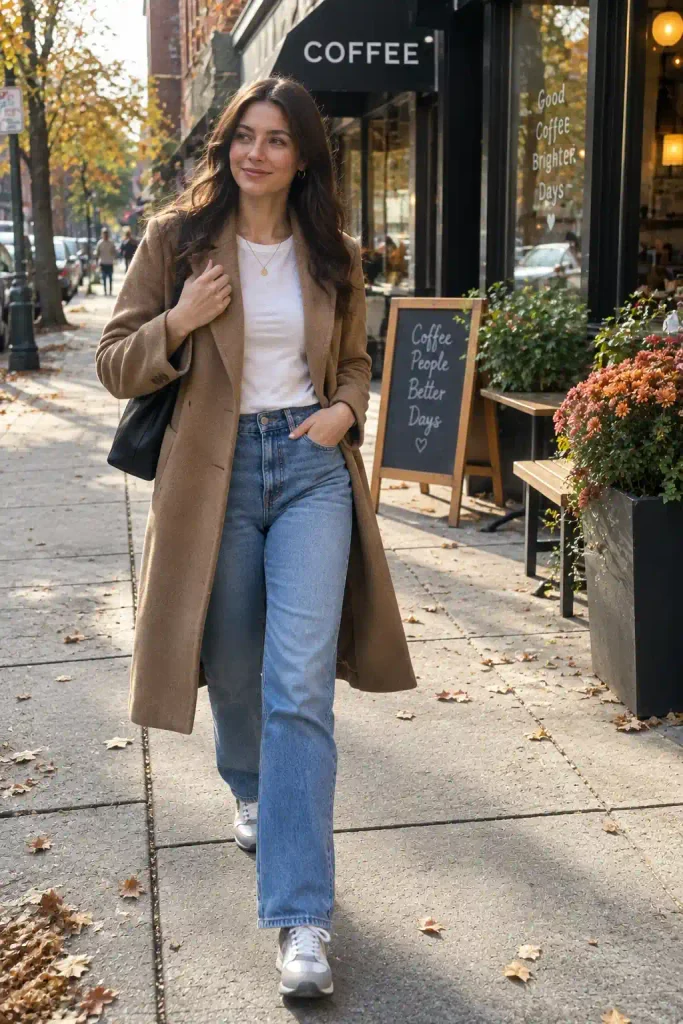
If you’re deciding where to spend a little extra, put it toward fabric quality on the pieces you’ll wear weekly, not the pieces you’ll wear twice a month.
A sweater in a wool or wool blend holds its shape and warmth far better than a fully synthetic one, and it won’t pill after three washes the way cheaper acrylic often does.
For jeans, look at the weight of the denim and how it feels when you stretch the fabric. Thinner, stretchier denim is comfortable at first but tends to bag out at the knees faster.
A slightly heavier denim with a bit less stretch will actually hold its shape through a full semester of sitting in lecture halls and walking across campus.
Cotton and cotton blends are your friend for tees and button-downs.
They breathe well for layering, which matters when you’re walking from a heated classroom into 45-degree air and back again five times a day.
24+ outfit combos to screenshot for your Pinterest board
This is the part you actually came for, so let’s get into it. I’ve grouped these by the kind of day you’re having, because “what should I wear” really depends on whether you’re headed to a 9 AM lecture or a Friday night thing.
Each one uses pieces from the same base capsule above, so nothing here requires a special trip to the mall.
Everyday class fits
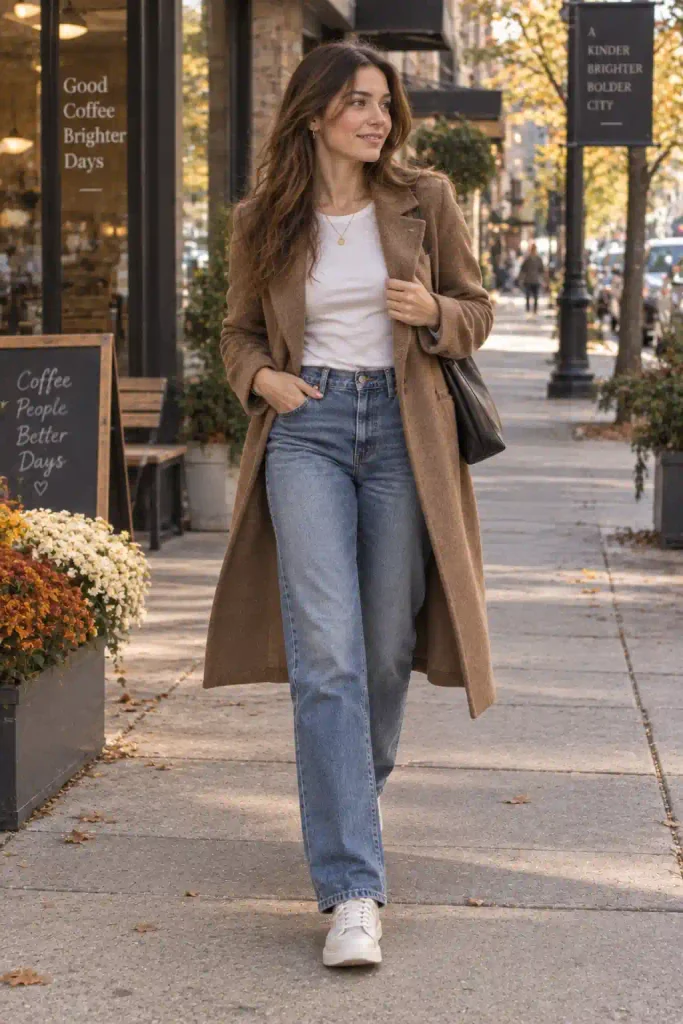
- White fitted tee, straight-leg jeans, denim jacket, white sneakers
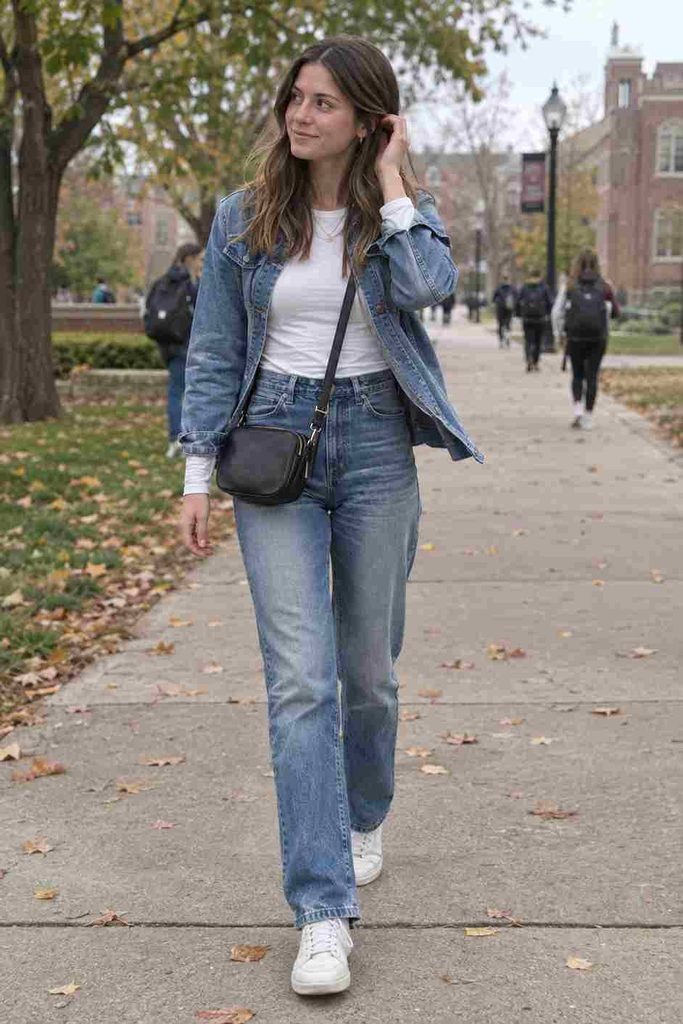
- Chunky knit sweater, wide-leg trousers, ankle boots, crossbody bag
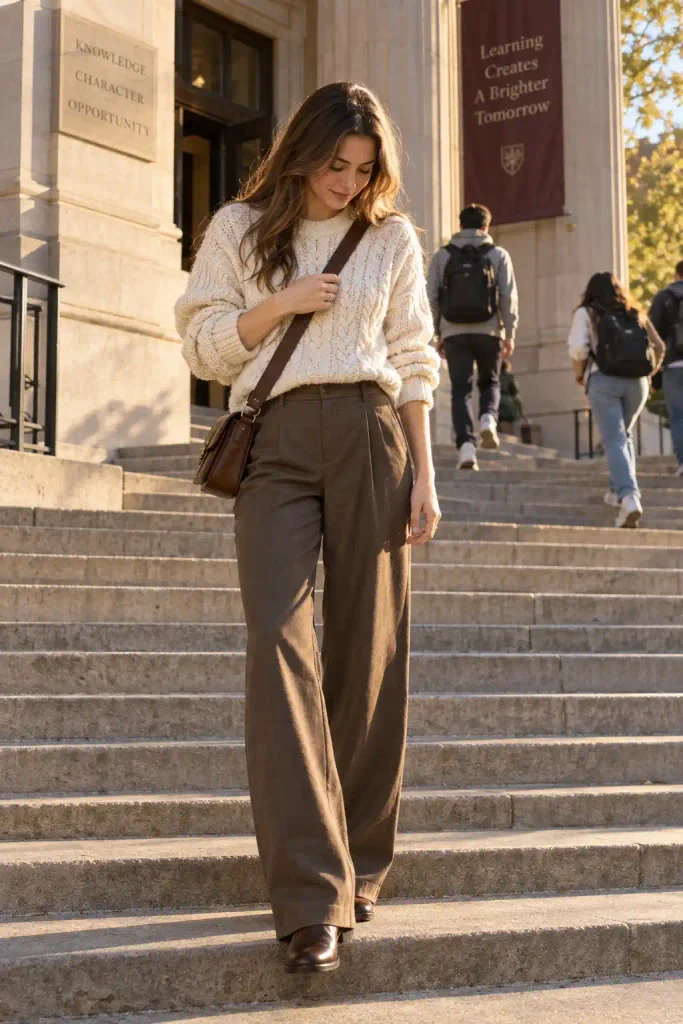
- Turtleneck under a flannel, leggings, sneakers, beanie
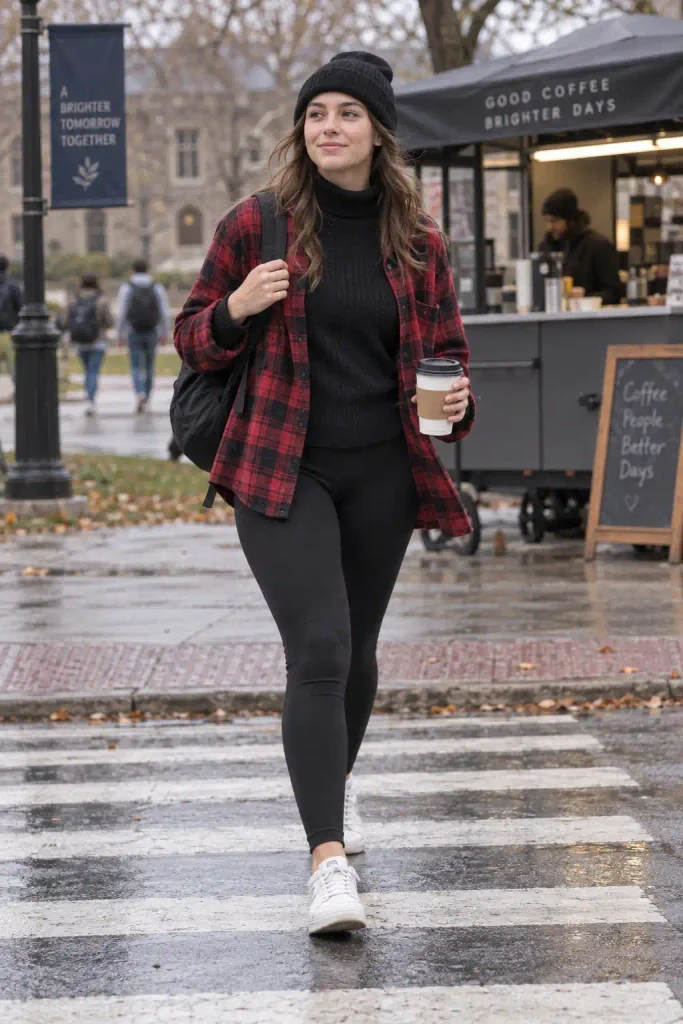
- Graphic tee, mom jeans, cardigan tied at the waist, white sneakers
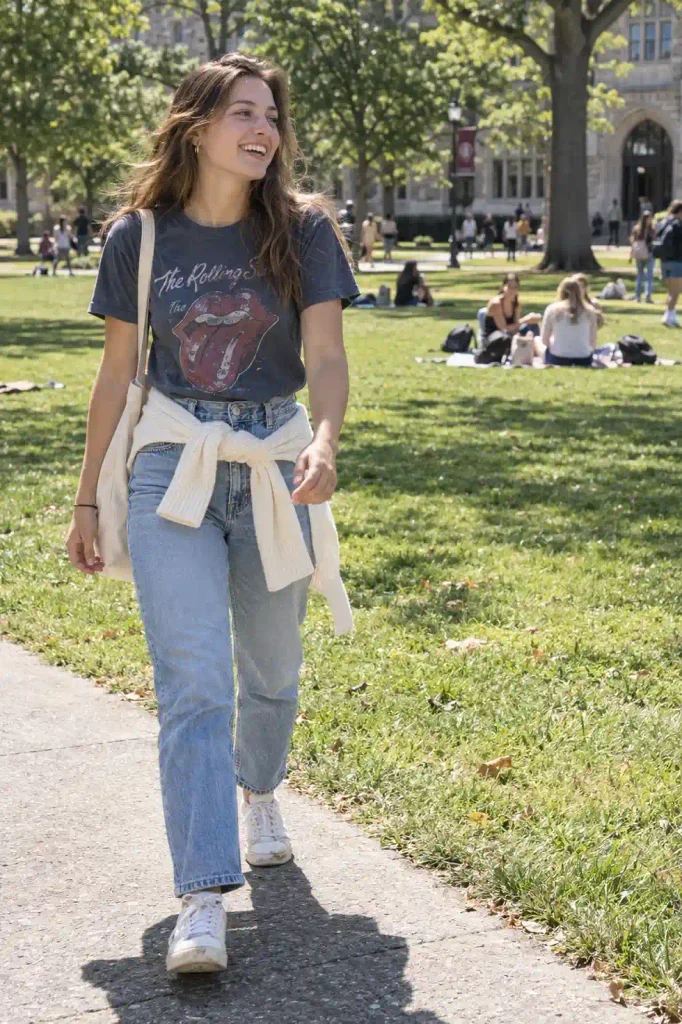
- Button-down shirt layered under a sweater, straight jeans, boots

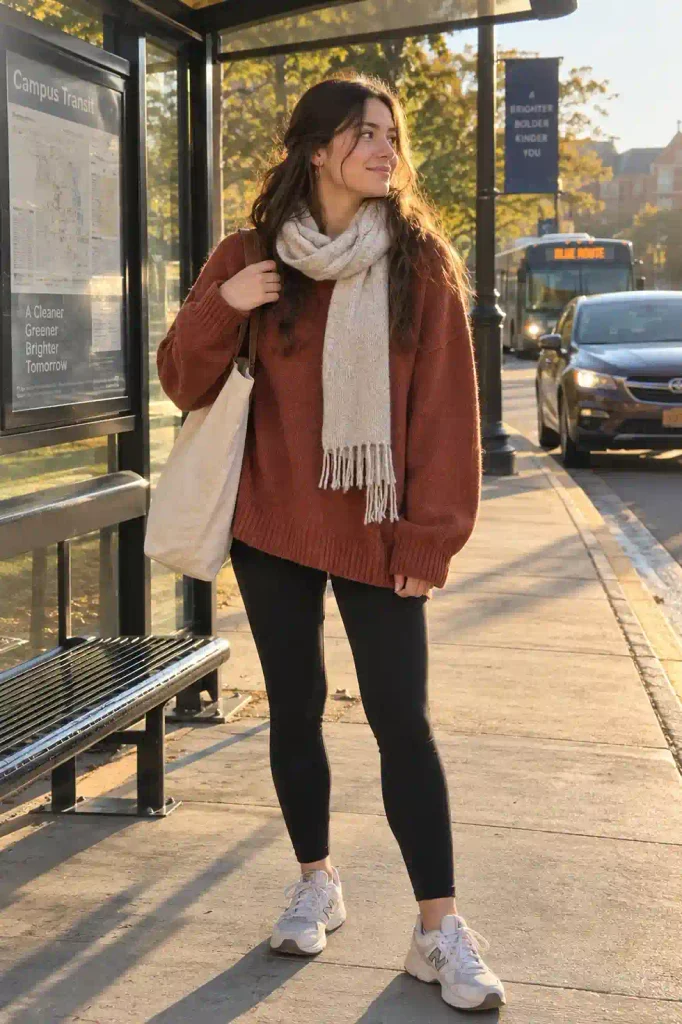
- Oversized sweater, leggings, tote bag, sneakers, scarf
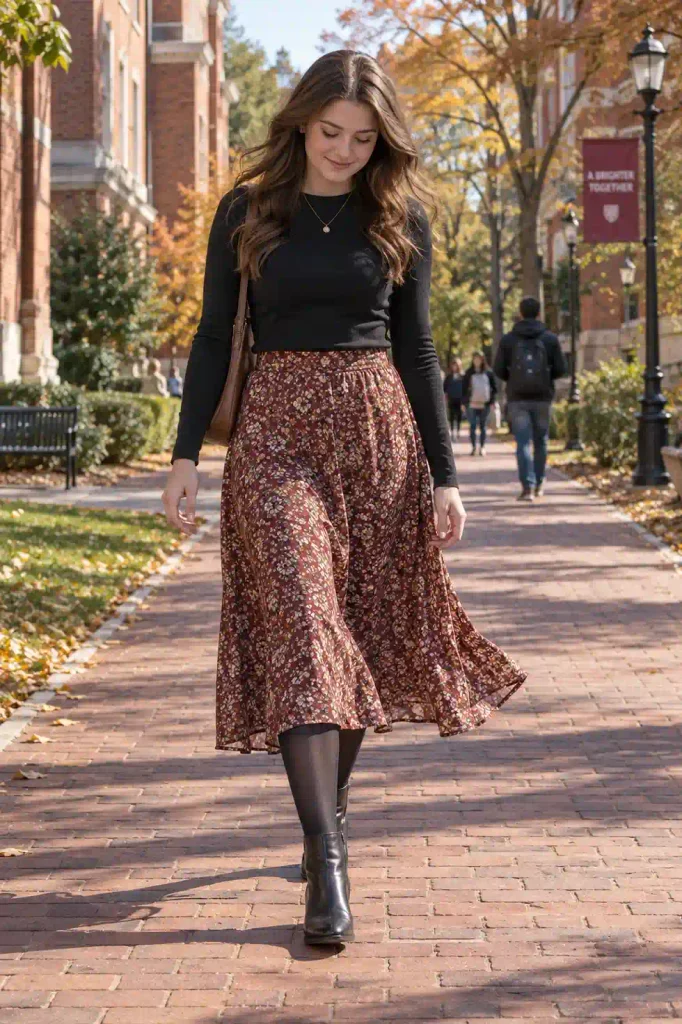
- Long-sleeve tee, midi skirt, tights, ankle boots
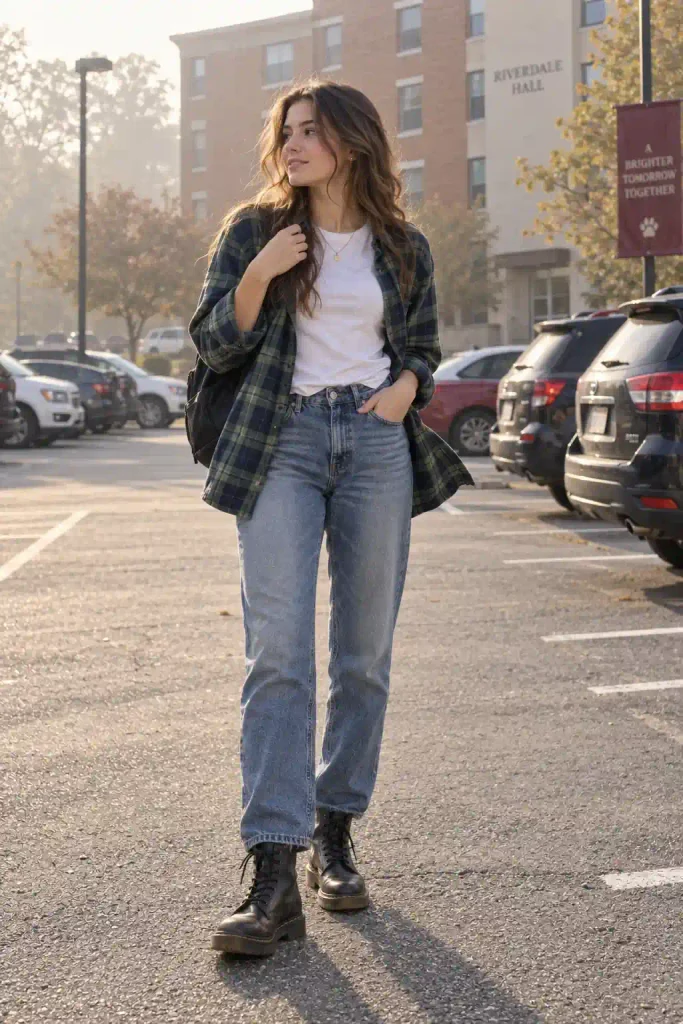
- Flannel worn open over a white tee, jeans, combat boots
Cozy weekend fits
- Sweatshirt (yours, not “borrowed” from anyone), leggings, sneakers, baseball cap

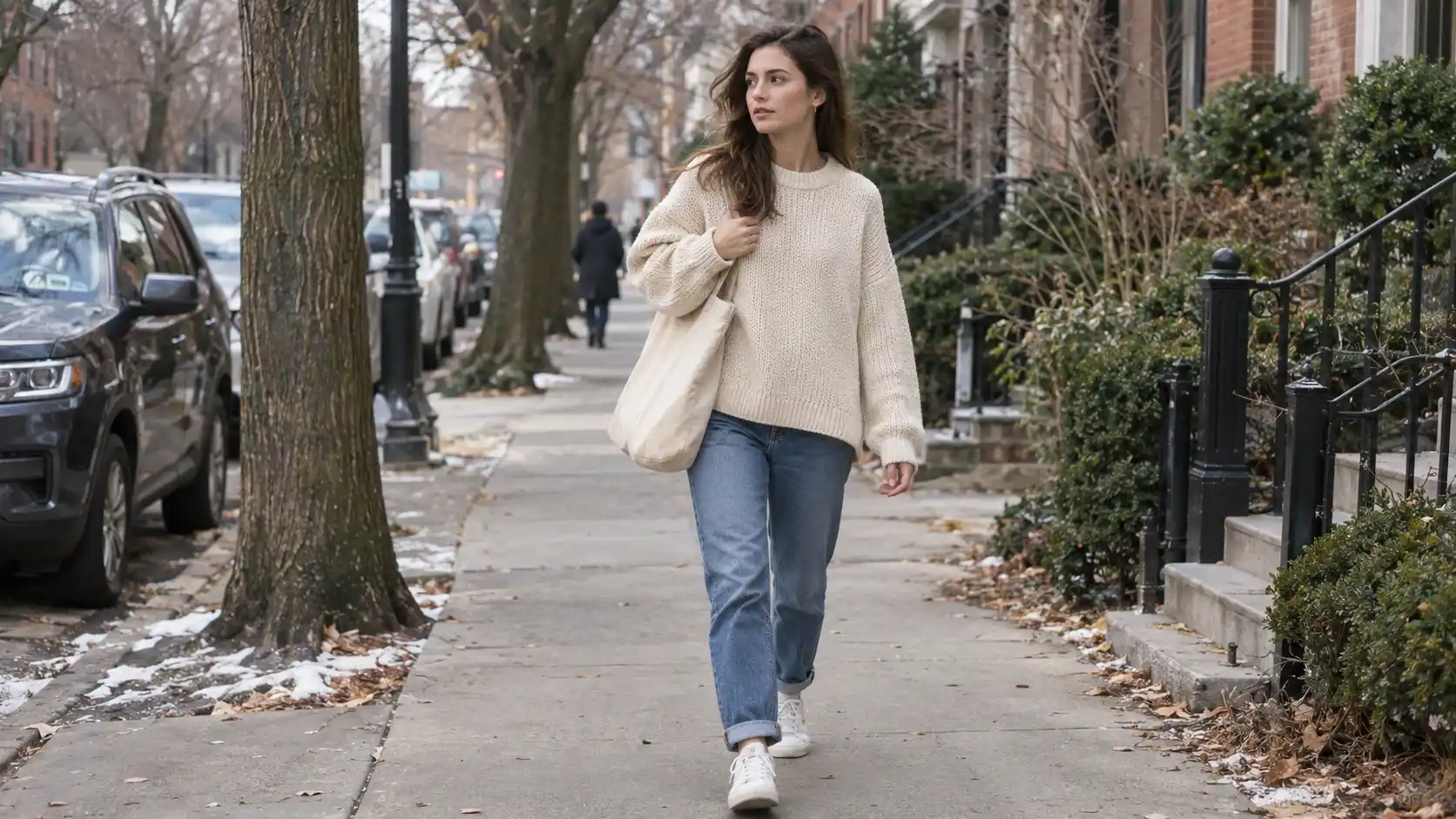
- Chunky sweater, straight jeans, boots, oversized tote

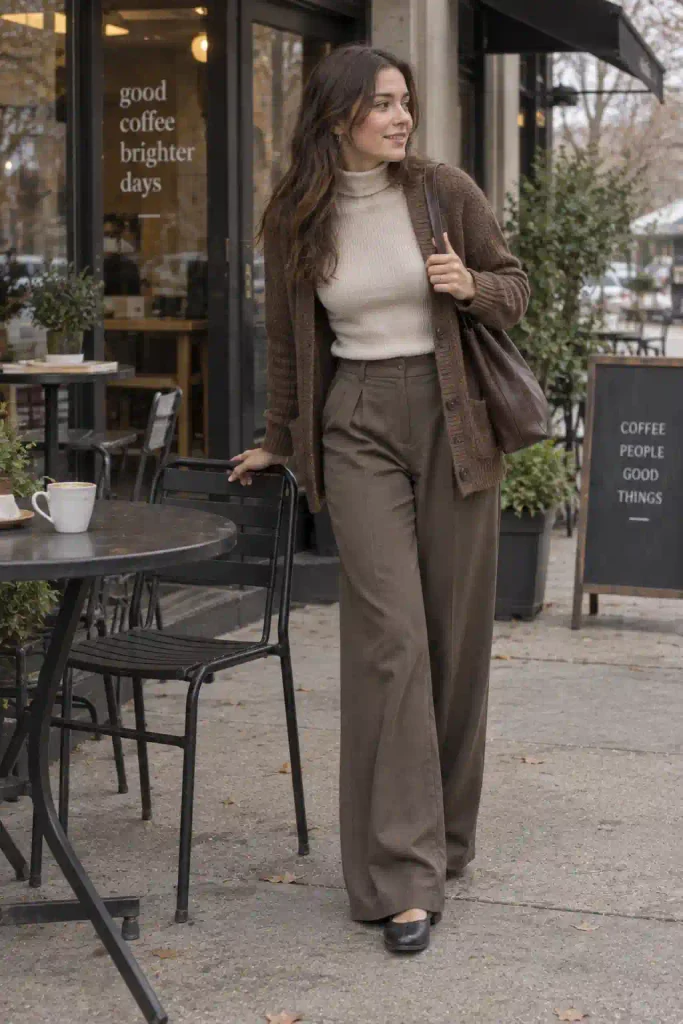
- Turtleneck, cardigan, wide-leg trousers, flats
- Flannel, graphic tee underneath, jeans, sneakers

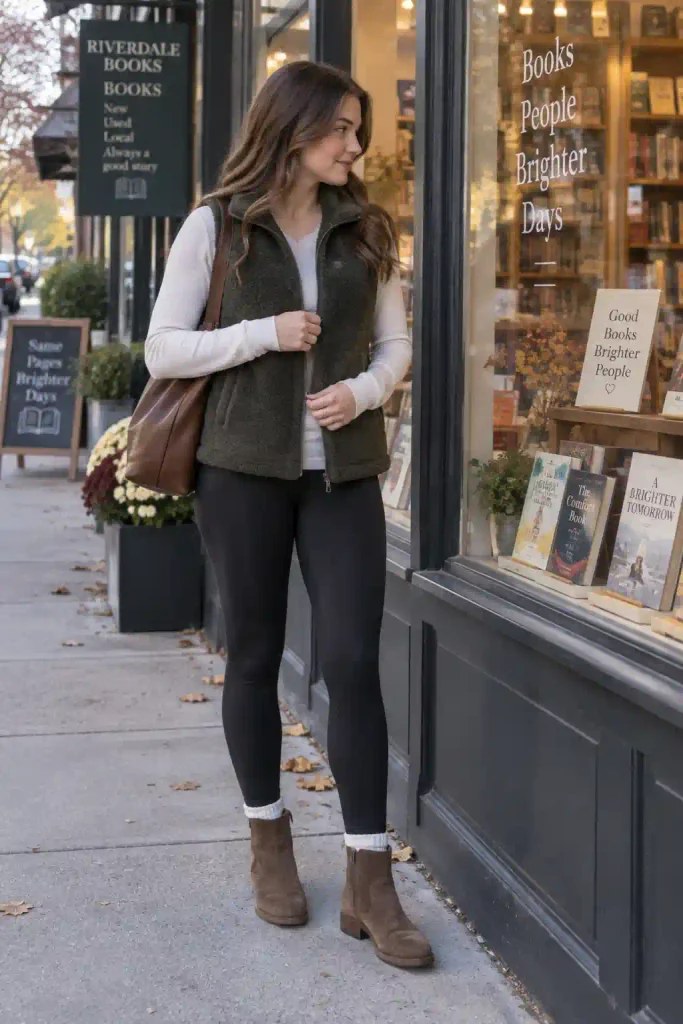
- Fleece vest over a long-sleeve tee, leggings, boots
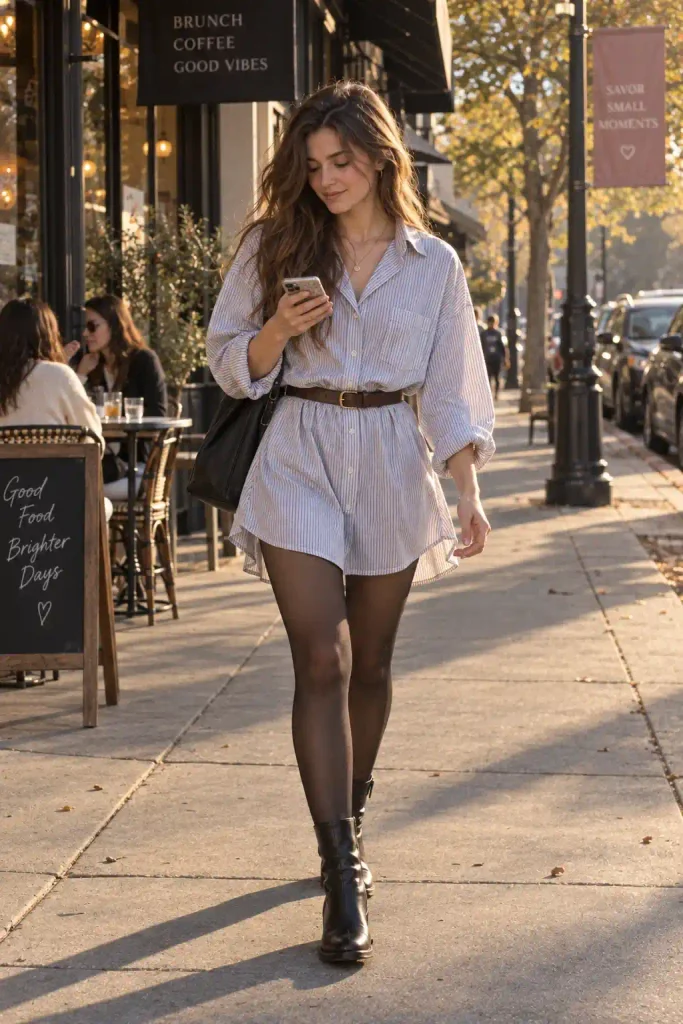
- Oversized button-down as a dress, tights, ankle boots, belt
Dressed-up fits for date nights or events
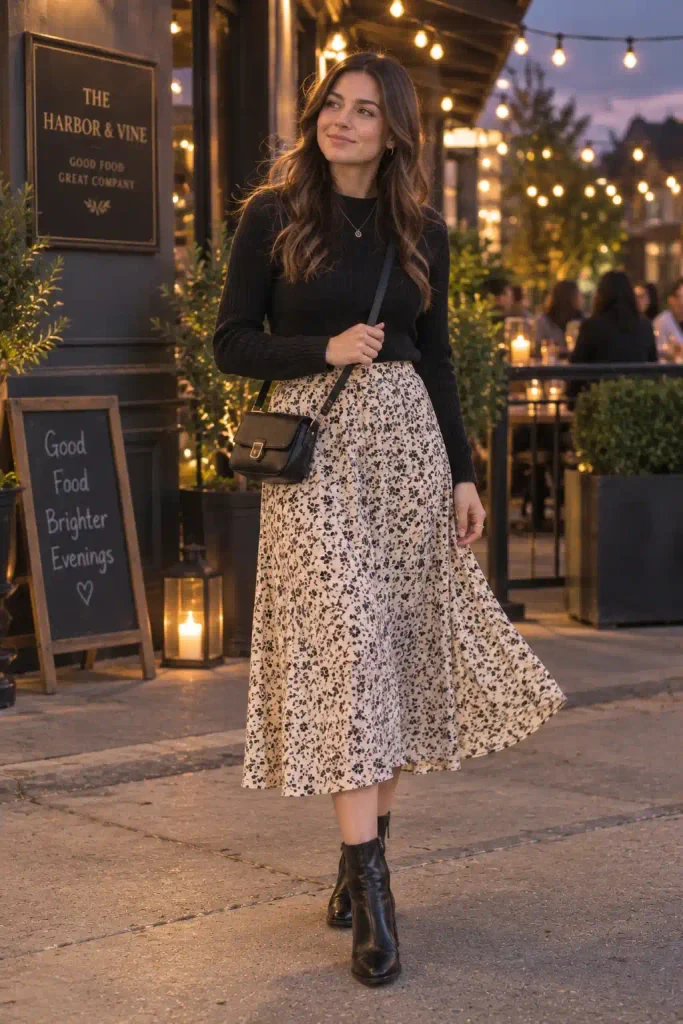
- Midi skirt, fitted sweater tucked in, ankle boots, small crossbody bag
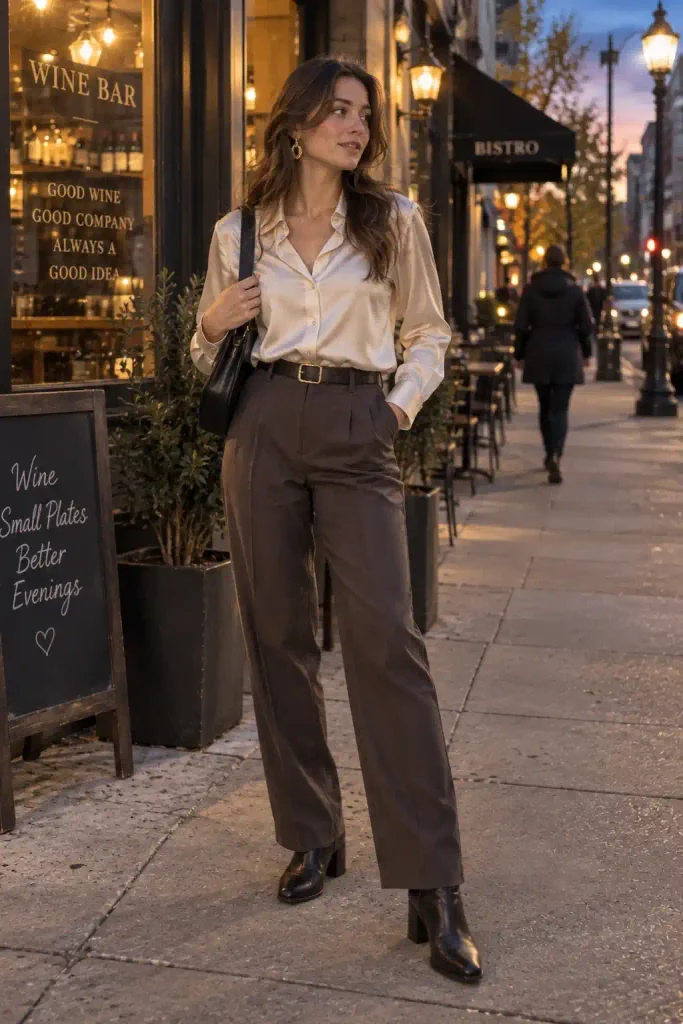
- Trousers, silk-feel button-down, statement earrings, heeled boots
- Sweater dress, tights, boots, wool coat

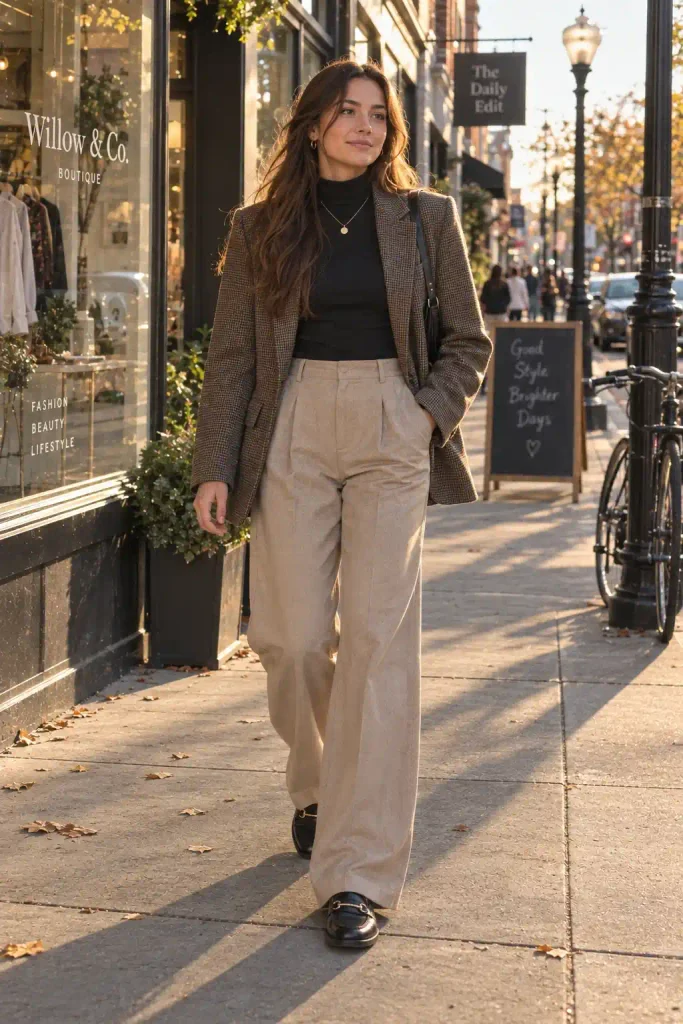
- Wide-leg trousers, fitted turtleneck, blazer-style jacket, loafers
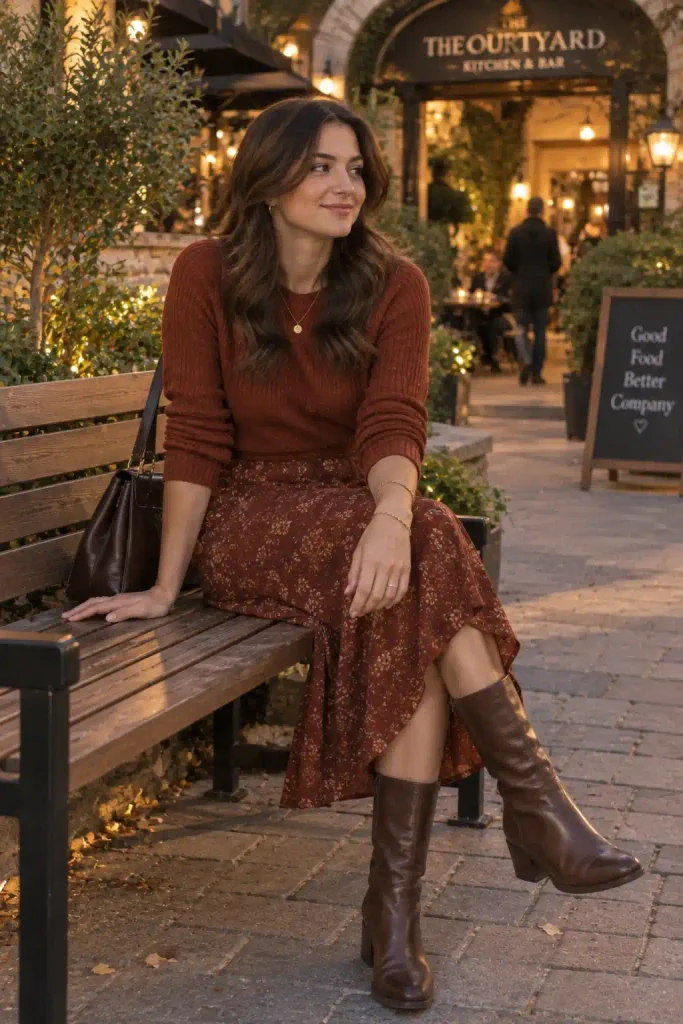
- Skirt and sweater combo in one of this season’s accent colors, gold jewelry
Rainy day and cold snap fits
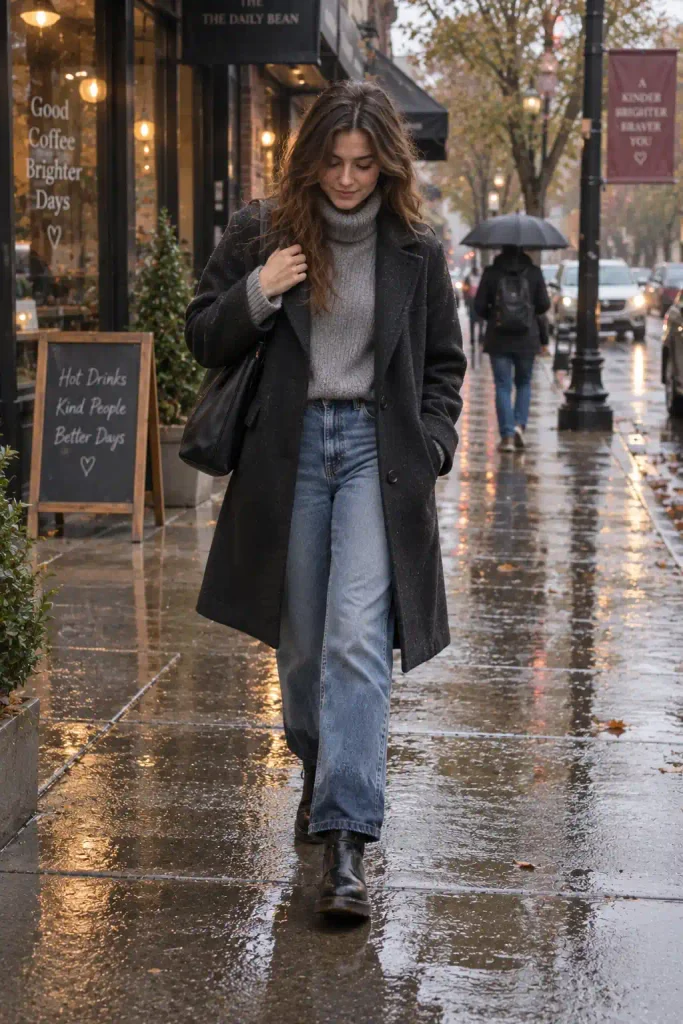
- Wool coat, turtleneck, straight jeans, waterproof boots
- Puffer vest over a chunky sweater, leggings, sneakers

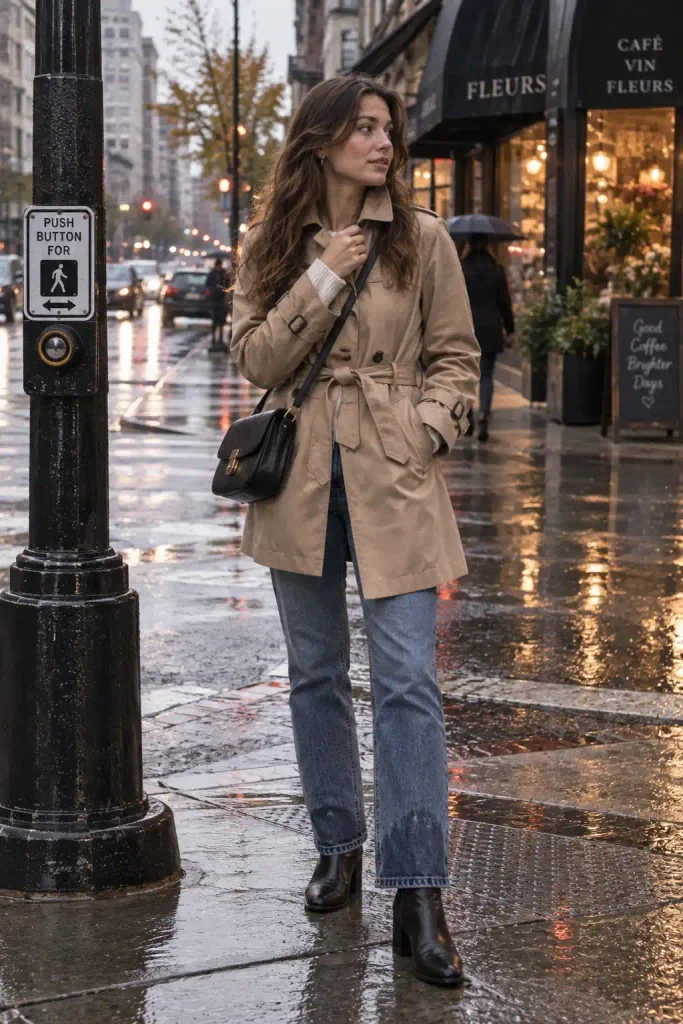
- Trench-style jacket, jeans, ankle boots, crossbody bag
- Layered flannel and sweater, wide-leg trousers, boots
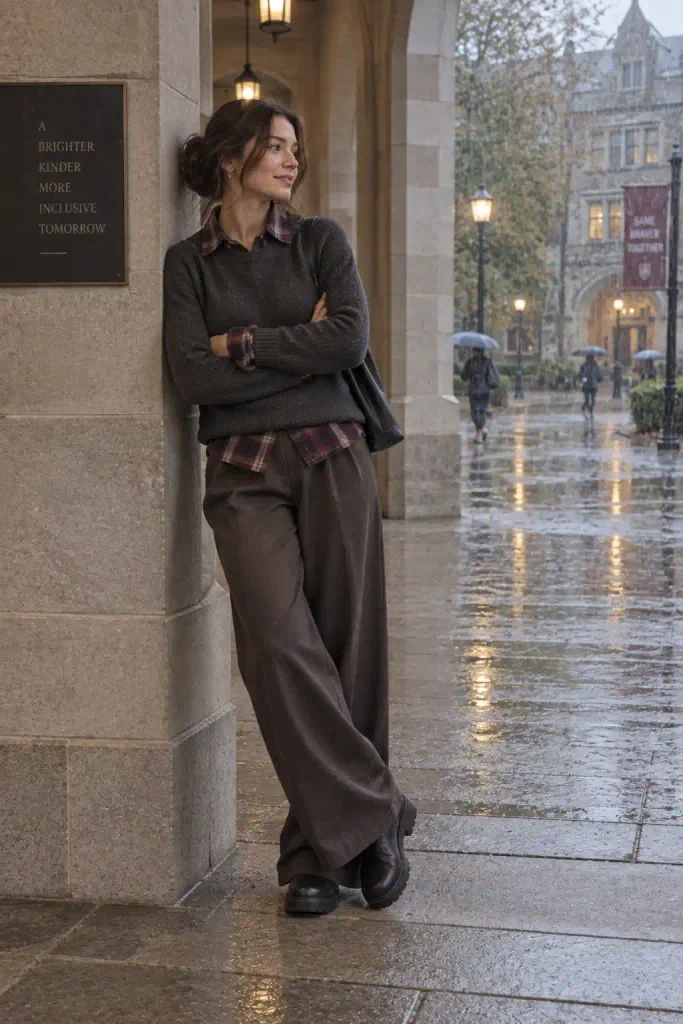
- Beanie, scarf, wool coat, turtleneck, jeans, boots (the full armor look for a genuine cold front)
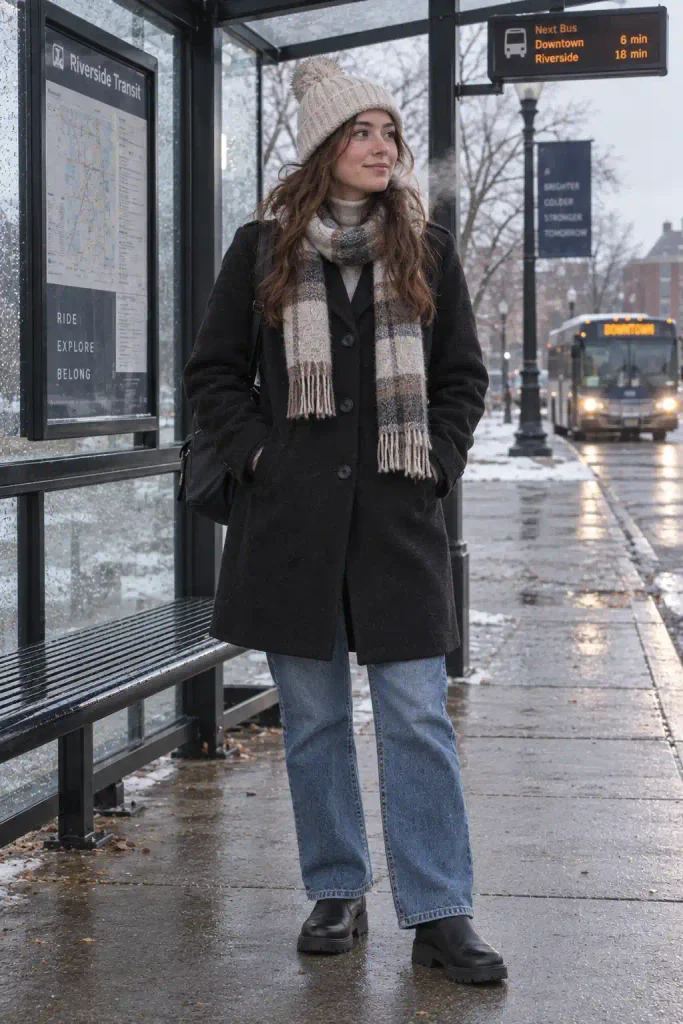
- Sweatshirt under your heaviest coat, leggings, waterproof sneakers, umbrella (non-negotiable)
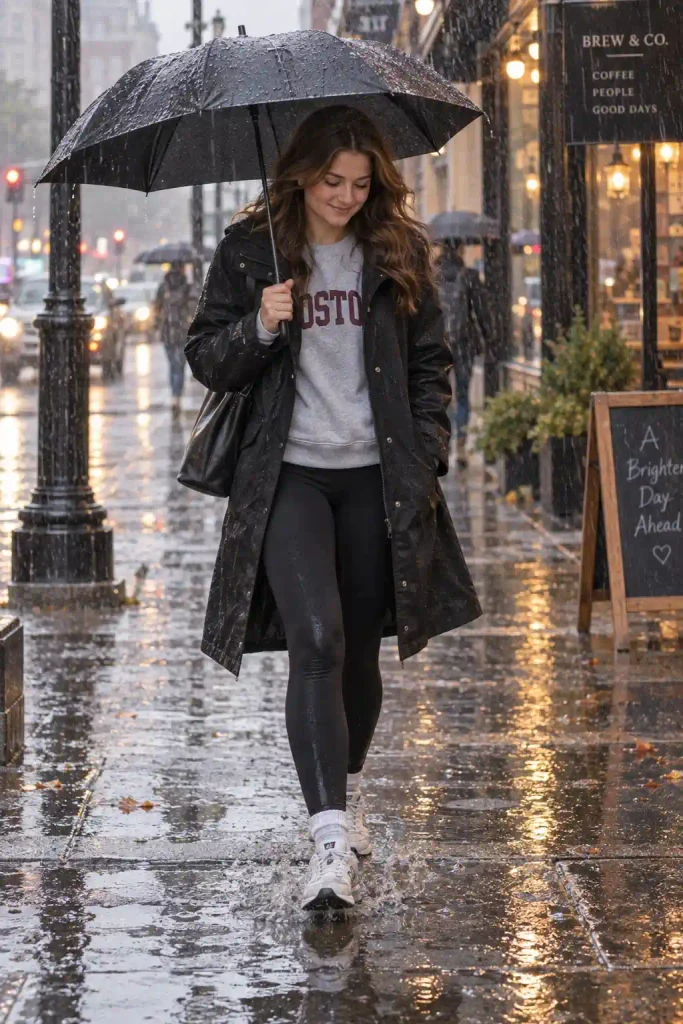
Twenty-five fits, all built from the same 22 to 27 pieces. That’s the entire promise of a capsule wardrobe in action, and honestly, once you see it laid out like this, it stops feeling like a system and starts feeling obvious.
A tip that took me way too long to figure out: keep a running note on your phone of which combos you actually reached for that week.
After a month, you’ll notice patterns, maybe you never touch the skirts but live in the trousers, or the graphic tees get more wear than the plain ones.
Use that to guide what you replace or add next, instead of guessing.
Quick aside, completely unrelated to outfits: does anyone else’s laundry room have exactly one dryer that actually works?
Every dorm I’ve ever lived in has had this exact issue, and I genuinely think it’s a universal law of college housing at this point.
Packing and laundry tips nobody tells freshmen

A capsule wardrobe only works if you actually take care of it, and dorm laundry has a way of destroying good intentions.
A few things I wish someone had told me before I ruined a perfectly good sweater in a dryer:
- Wash sweaters cold and lay them flat to dry. The dryer is where sweaters go to shrink. Trust me on this one.
- Buy a mesh laundry bag for delicates. It keeps bras, tights, and anything with buttons from getting tangled or torn.
- Do laundry on a weekday morning, not Sunday night. Everyone does laundry Sunday night. You will wait an hour for a machine.
- Pack a small sewing kit. Buttons fall off. A five-minute fix beats a wasted shirt.
- Steam, don’t iron, if your dorm allows it. A handheld steamer takes up almost no space and works on nearly everything in a capsule.
- Rotate your shoes. Wearing the same pair of sneakers every single day wears down the sole and the insole way faster than alternating between two pairs. Your boots deserve some rotation time too.
- Keep a lint roller by the door. Dorm carpets and communal furniture are lint and pet hair magnets, even in buildings with a strict no-pets policy. Somehow it finds its way in anyway.
- Use space-saving hangers or hooks for scarves and bags. Vertical storage on the back of a closet door frees up drawer space for the bulkier sweaters that don’t fold well.
None of this is complicated, but it’s the kind of thing that saves a $70 sweater from an early death, and that adds up over four years.
Mistakes I made building my first capsule (so you don’t have to)

- I bought too many statement pieces and not enough basics. A leopard-print coat is fun, but it only works with about three things you own. Basics are what make a capsule actually function.
- I skipped a good pair of boots because I thought sneakers would cover everything. They don’t. Rain and slush happen, and soggy sneakers are miserable by week two of October.
- I didn’t think about layering when I bought tops. A shirt that only works on its own is a shirt that sits in your drawer half the season.
- I underestimated how much one good coat changes everything. A well-fitted wool coat makes even a basic outfit look finished, with zero extra effort on my part.
- I bought sizes based on what I “usually wear” instead of trying things on, and half of it sat in my closet with tags still attached. If you’re shopping online, check the brand’s actual measurements instead of trusting the size label alone.
- I ignored my own campus’s actual weather patterns and packed for the fall I saw on Pinterest instead of the fall I was actually going to live through. Check your specific region’s average highs and lows for September through November before you buy a single coat. A campus in Georgia and a campus in Minnesota need very different capsules, even in the same season.
Accessorizing on repeat without anyone noticing
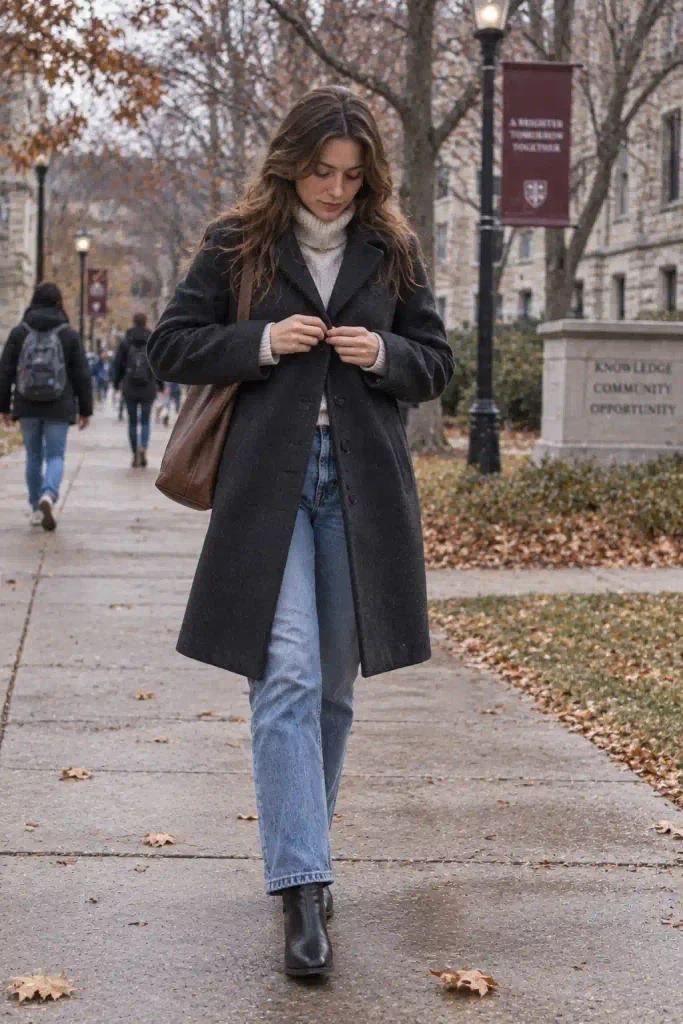
Accessories are the cheapest way to make the same base outfit feel new, and this is where a lot of students give up too early because they think they need a huge jewelry collection. You really don’t.
Two or three pairs of earrings, one simple necklace, and a couple of rings you don’t mind sleeping in on the nights you forget to take them off will cover most of your rotation.
Add a patterned scarf and a plain one, and suddenly your basic sweater-and-jeans combo has three or four different moods available depending on how you tie things.
Bags matter more than people give them credit for too.
A structured crossbody for class days reads more put together than a backpack stuffed with textbooks, even though the backpack is obviously more practical for actually carrying your stuff.
I keep both and swap depending on how heavy my day looks.
Quick questions about building a fall capsule wardrobe
How many pieces should a college capsule wardrobe actually have? Somewhere between 20 and 30 pieces tends to hit the sweet spot for dorm storage and outfit variety.
Fewer than that and you’ll run out of combinations fast. More than that and you’re back to a closet you can’t manage.
Do I need to buy everything new to start a capsule? No, and honestly you shouldn’t. Start by pulling out what you already own
that fits the neutral-plus-accent-color approach, then fill in the gaps using the closet sort from earlier in this guide.
Most students already own half a capsule without realizing it, they just haven’t organized it that way yet.
What if my campus stays warm well into October? Lean on lighter layers instead of heavy coats: a denim jacket, a light cardigan, and short-sleeve tops you can layer under a flannel.
You can always add a heavier coat to the mix once temperatures actually drop, and a solid capsule wardrobe checklist can help you figure out what to prioritize first if you’re building from scratch on a budget.
Final thought
Building a capsule wardrobe isn’t about restriction. It’s about spending less time deciding and more time actually living your semester, whether that’s sprinting to a 9 AM or meeting friends for coffee between classes.
Pick your base pieces, mix them using the combos above, and adjust as the weather shifts. What’s the first outfit from this list you’re building this week?
