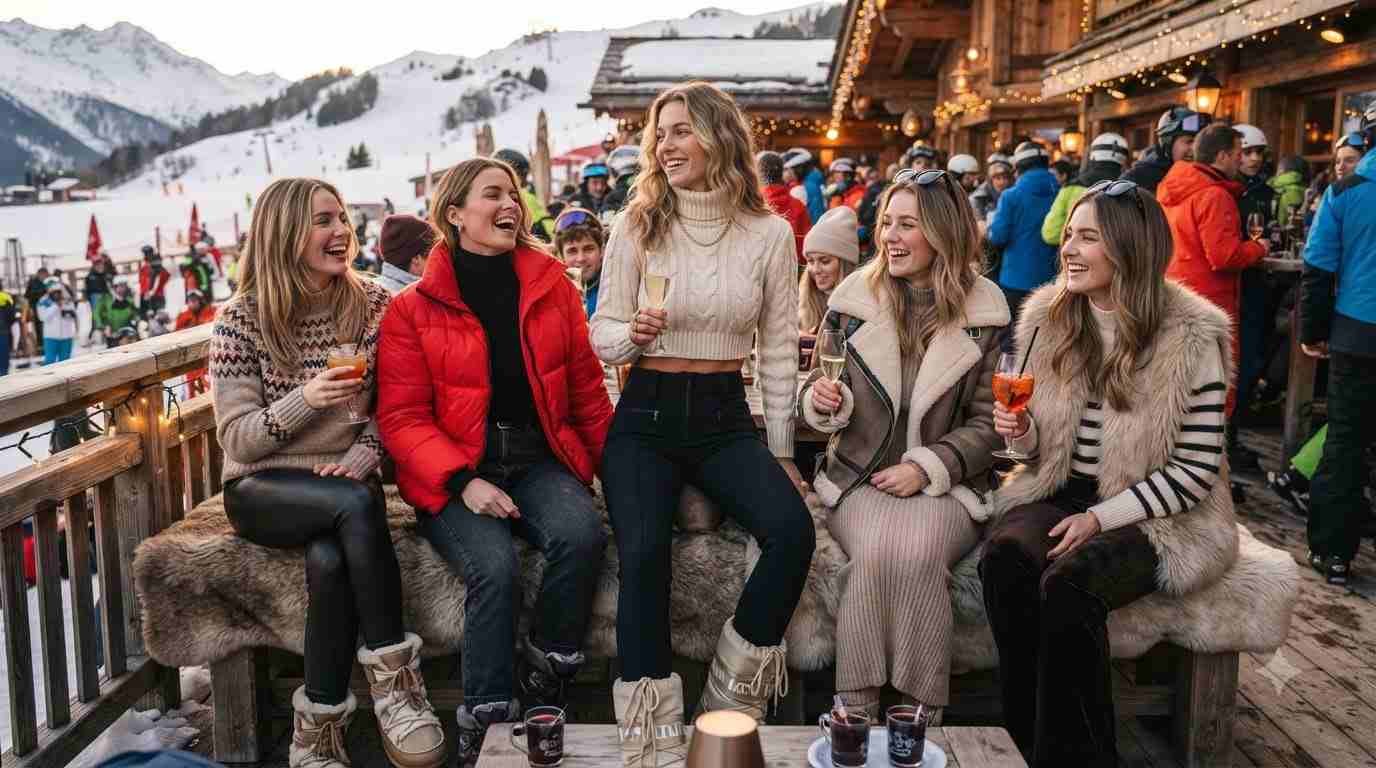
You skied all day. Your legs are wrecked, your face is wind-burned, and somehow you still have to look good at the lodge bar in two hours.
I get it. After-ski dressing is its own weird category, half practical, half performance, and most guides online treat it like a costume party instead of an actual outfit you have to survive the night in.
I’ve spent enough winters chasing powder days and fumbling through hotel closets to know what actually works once the boots come off.
This is a real breakdown, not a mood board pretending to be advice.
What “après-ski” actually means (and why it’s not just snow boots and a beanie)
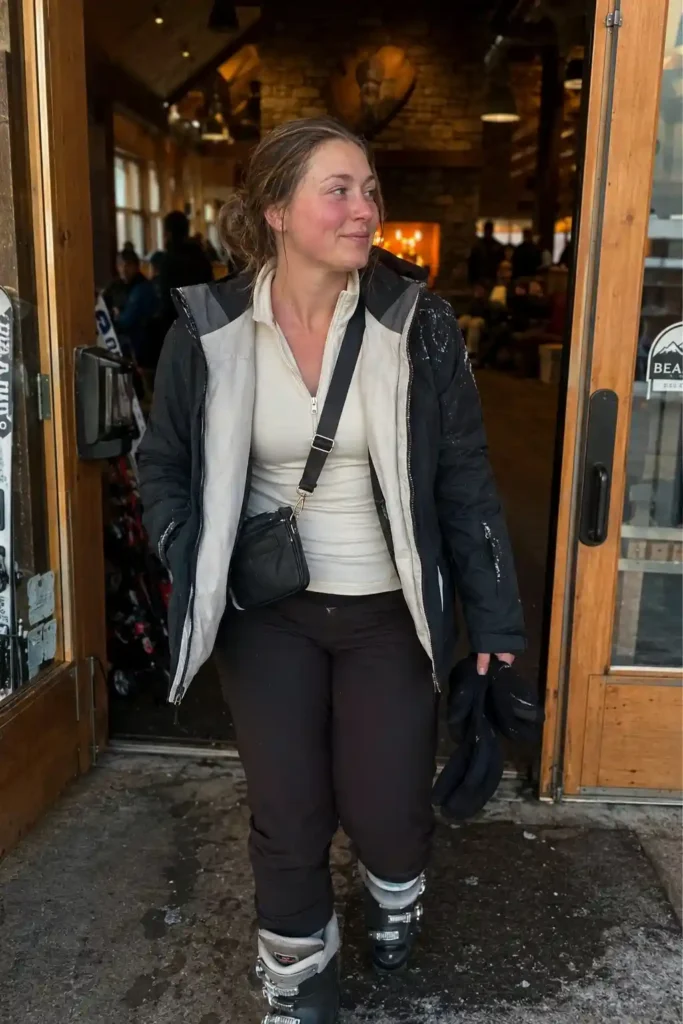
Après-ski started in the Alps as the ritual of drinks and dancing after a day on the slopes.
Somewhere along the way it turned into a whole aesthetic: cozy sweaters, fur-trimmed boots, a little bit of glam mixed with a lot of practicality.
Pinterest boards call it “cabincore” now, but the bones of it haven’t changed.
Here’s the thing people get wrong constantly. They dress like they’re still skiing.
Puffer jacket, ski pants, the whole rig, and then they wonder why they’re sweating by their second drink.
The lodge is heated. You don’t need three layers of Gore-Tex to walk from the slope to the bar.
Building the base: what to wear under everything
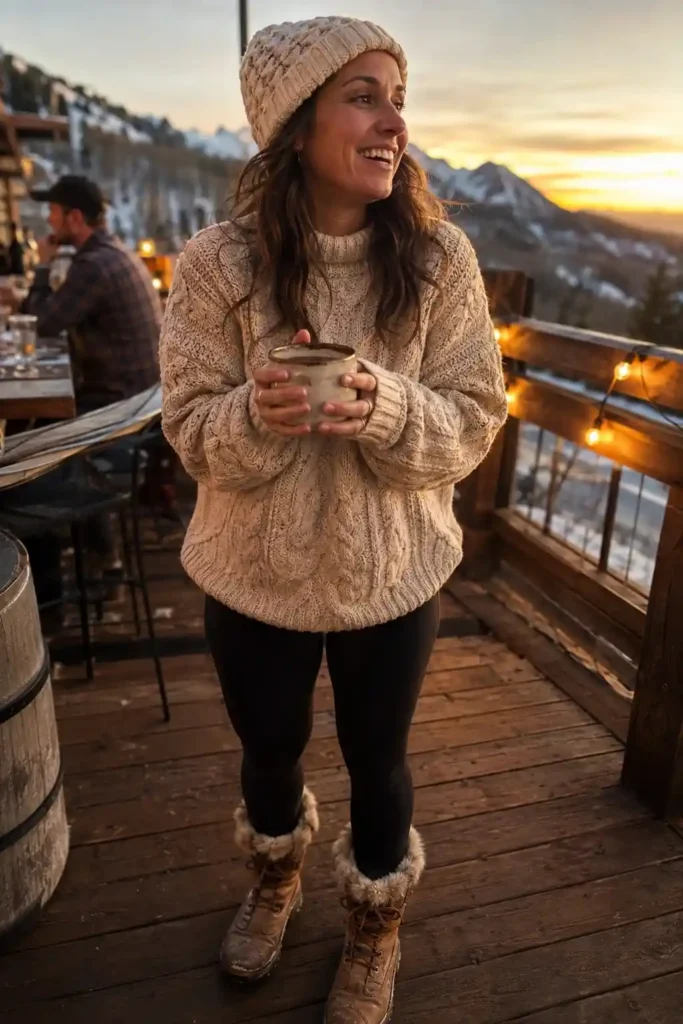
Layering is where most après outfits fall apart, honestly. Get the base wrong and nothing above it will save you.
Start with a fitted thermal top or a fine-knit turtleneck.
Thin merino wool works better than cotton because it doesn’t trap sweat, and if you’ve ever sat in a damp cotton shirt near a fireplace, you know exactly why that matters.
REI’s layering guide explains the base-mid-shell system well if you want the technical version, but the short version is this: your base layer should feel almost too light on its own.
A few things I’d actually recommend from experience:
- Merino wool base layers hold up over a whole weekend without smelling like a locker room. Worth the extra cost, in my opinion.
- Fleece-lined leggings under a skirt or wide-leg pants give you warmth without bulk, and they don’t show under most fabrics.
- Skip anything with a high cotton percentage close to your skin. It sounds picky, but cotton against sweat in cold air is how people end up chilled by 9 p.m.
The outerwear layer: cute doesn’t mean cold
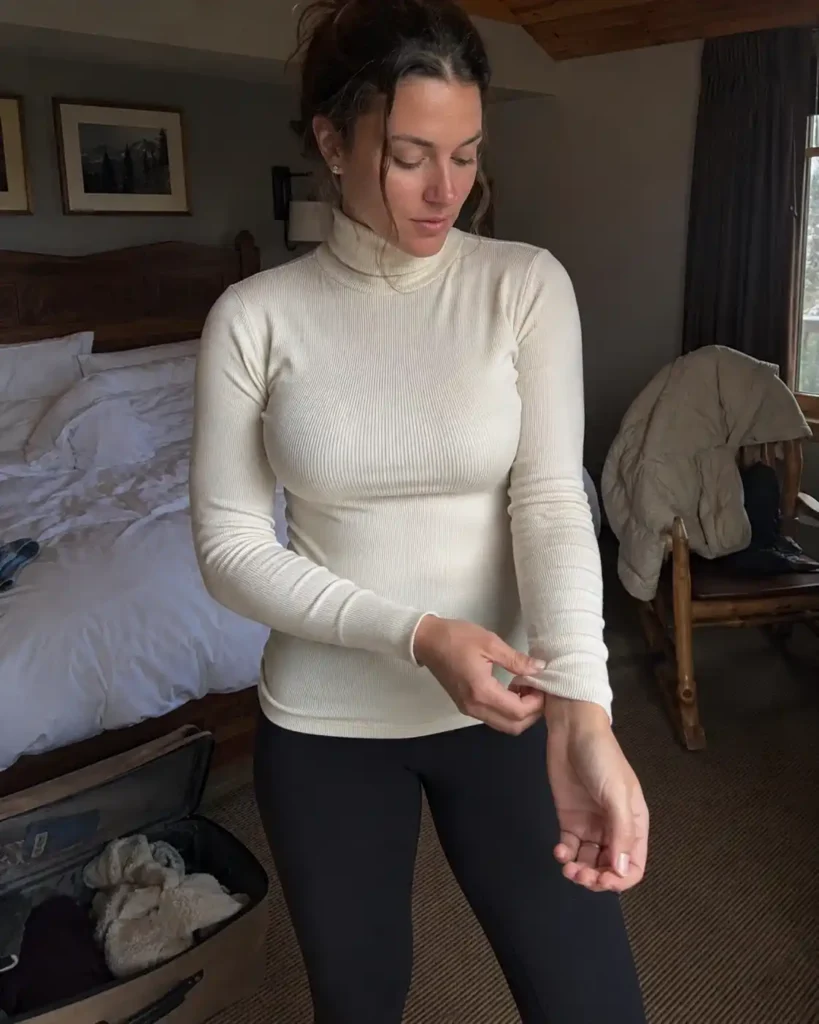
This is where most of the visual inspiration lives, and it’s also where people overthink things.
A cropped shearling jacket or a wool coat with a belt does more work than a technical parka once you’re indoors or under a heated patio.
I own both, and the shearling gets more compliments, but the wool coat is the one I actually reach for because it layers better over a sweater dress.
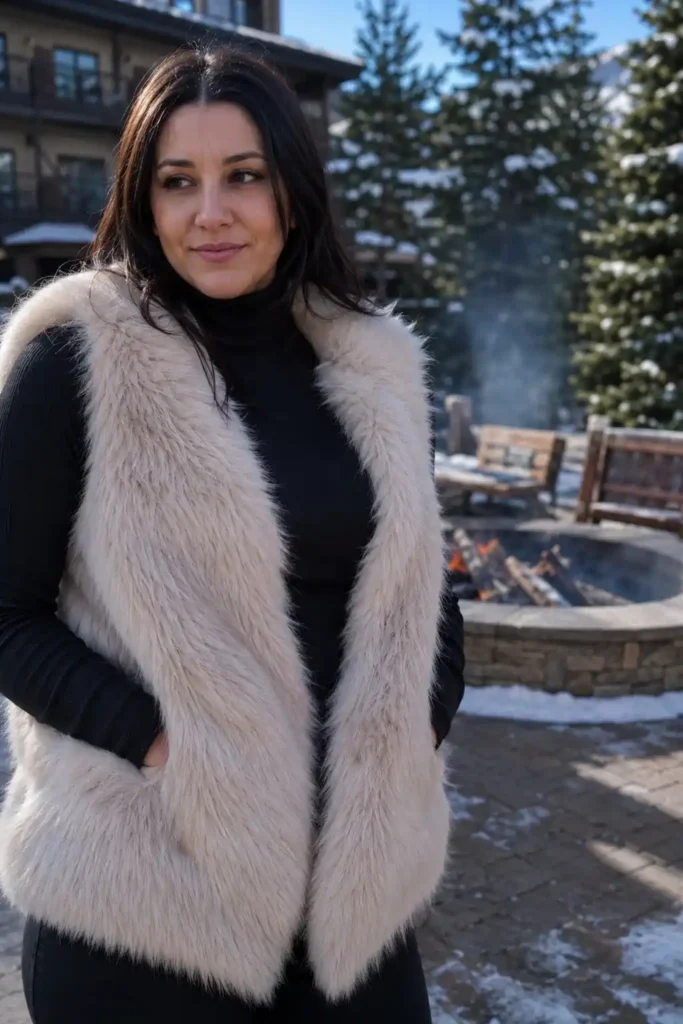
Faux fur is having a real moment again this season, and honestly, it photographs beautifully against snow.
If you’re building a Pinterest board around this look, a cream or camel faux fur vest over a black turtleneck is close to foolproof.
It works for almost every body type and every skin tone, which is rare for a single piece of outerwear.
Quick comparison: outerwear by setting
| Setting | Best pick | Skip this |
|---|---|---|
| Indoor lodge bar | Chunky knit cardigan | Full ski parka |
| Outdoor fire pit | Wool coat or shearling jacket | Thin blazer alone |
| Dinner reservation | Faux fur vest over a dress | Anything still snow-crusted |
| Casual après hangout | Fleece or puffer vest | Formal outerwear |
Bottoms that don’t make you choose between warm and stylish
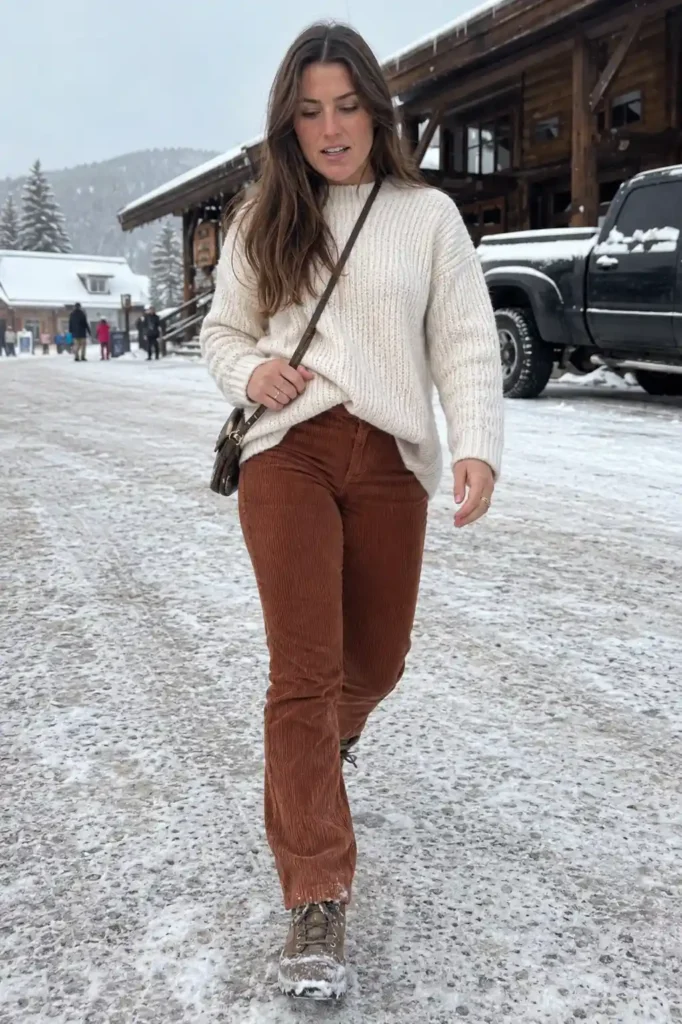
I used to think this category was a lost cause. Either you’re warm and look like you’re heading to a job site, or you’re cute and freezing.
Turns out there’s a middle ground, and it’s mostly about fabric weight, not cut.
Corduroy pants have become an unexpected favorite of mine for après settings.
They’re thick enough to block wind, they photograph well, and they don’t scream “technical gear” the way ski pants do.
Wide-leg wool trousers do something similar if you want a slightly dressier line.
For the skirt-and-tights crowd, a midi skirt in wool or a heavier knit works, paired with fleece-lined tights underneath.
Just don’t go shorter than midi unless you’re staying entirely indoors near a fire. I learned that one the hard way at a rooftop bar in Aspen, and it was not cute.
Footwear: the detail that decides whether your night actually works
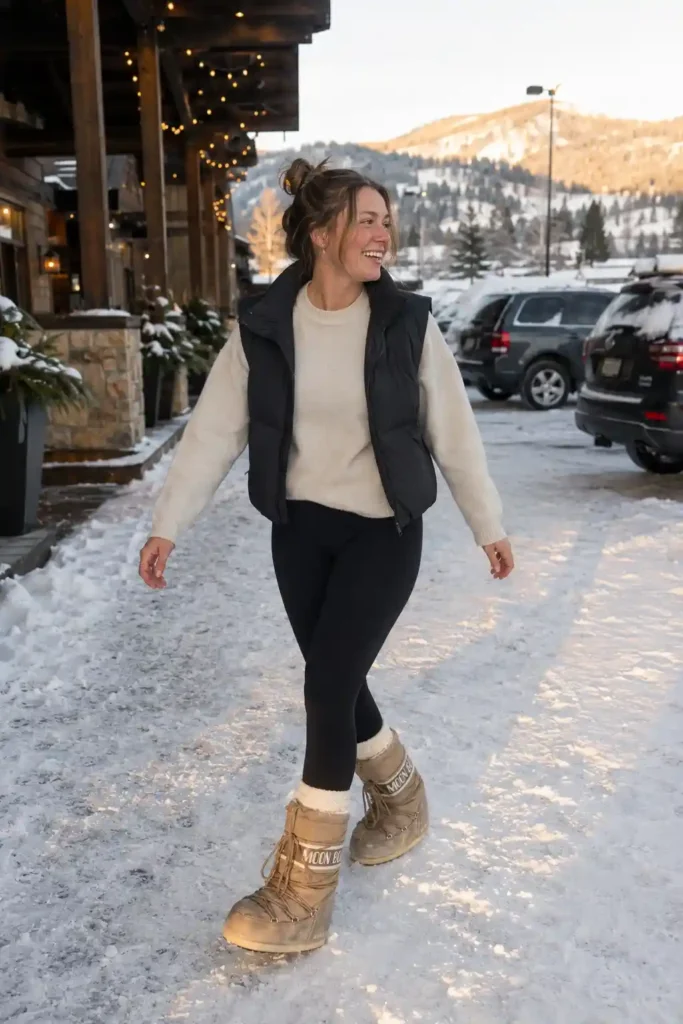
Ever wondered why so many otherwise perfect outfits get ruined by the shoes? It’s almost always the footwear.
Snow boots with actual traction matter more than anything else on this list.
A cute pair of suede boots with a flat, smooth sole is how people end up on their backs in the parking lot. Not a great look, no matter how good the jacket is.
Brands like Sorel and Moon Boot have leaned into the fashion side without sacrificing grip, and honestly, the Moon Boot silhouette has become something of a Pinterest staple this season for good reason.
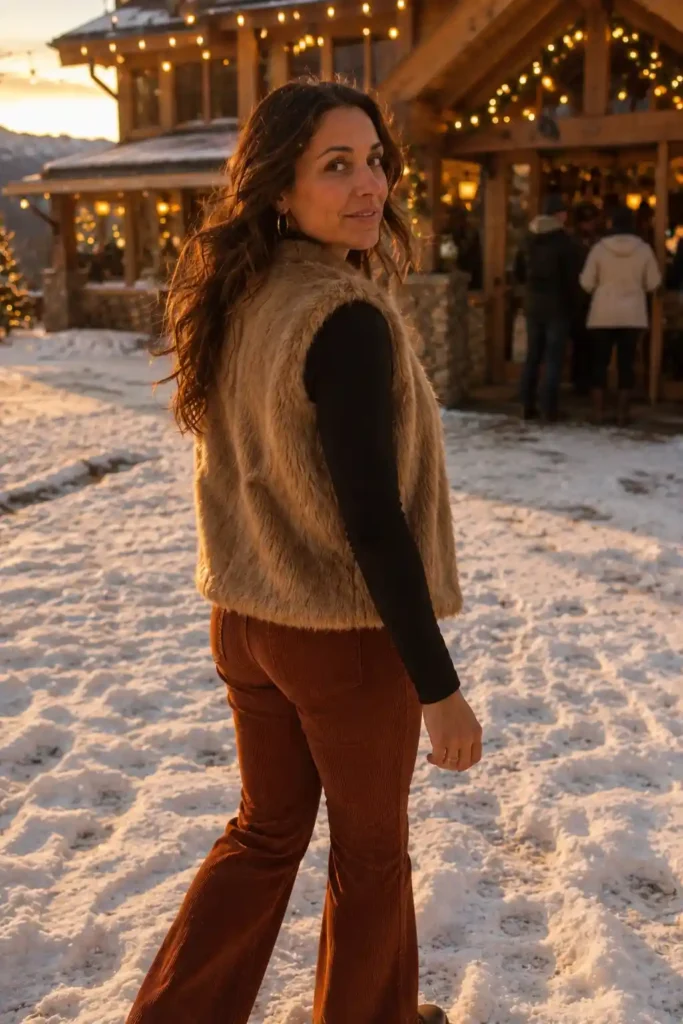
It’s bulky, it’s a little silly, and it works with almost everything from leggings to a party dress.
A quick, slightly off-topic thought here: I once watched someone try to walk across an icy parking lot in stiletto boots to get to an après party, and the whole group ended up late because we had to half-carry her the last twenty feet. Wear the boots.
Change into the cute shoes once you’re inside if you must, but wear the boots to get there.
Accessories that pull the whole look together
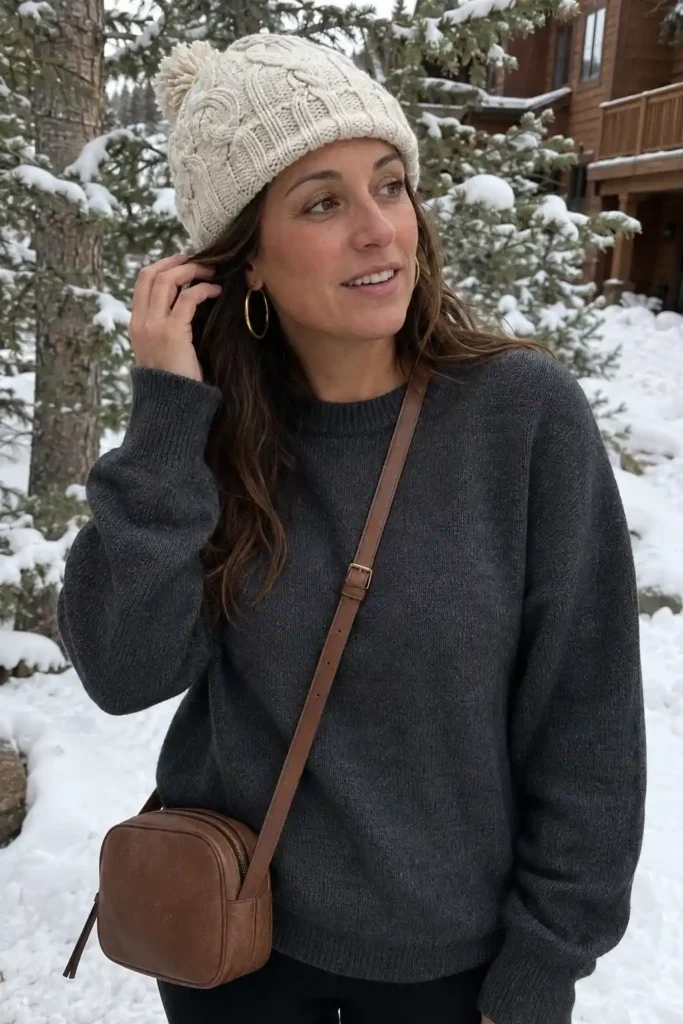
This is the fun part, and it’s where Pinterest boards genuinely earn their keep. A few small pieces change an outfit from “warm” to “put together.”
- A statement beanie or knit headband adds personality without adding bulk, and it’s the easiest way to photograph well against a snowy backdrop.
- Chunky gold or silver hoops read as intentional even over a simple sweater. I wear the same pair of hoops through basically every winter trip because they work with everything.
- A crossbody bag beats a shoulder bag every time in a crowded lodge. You need your hands free for a drink, a phone, and occasionally a friend who’s had one too many mulled wines.
Colors and textures that photograph well in snow

If the outfit is going on your feed or your Pinterest board, color choice matters more than people admit.
Snow is a bright, cool backdrop, and it flattens out pale, washed-out colors fast.
Deep colors, burgundy, forest green, camel, and charcoal, tend to pop against white snow without fighting it.
Bright red is a classic for a reason. It photographs like nothing else in a snowy setting, and it’s practically a genre of its own on Pinterest during winter.
Texture does a lot of visual work too.
Mixing a chunky knit with something smooth, like leather boots or a satin slip under a cardigan, keeps a monochrome outfit from looking flat in photos.
Dressing for different après-ski occasions
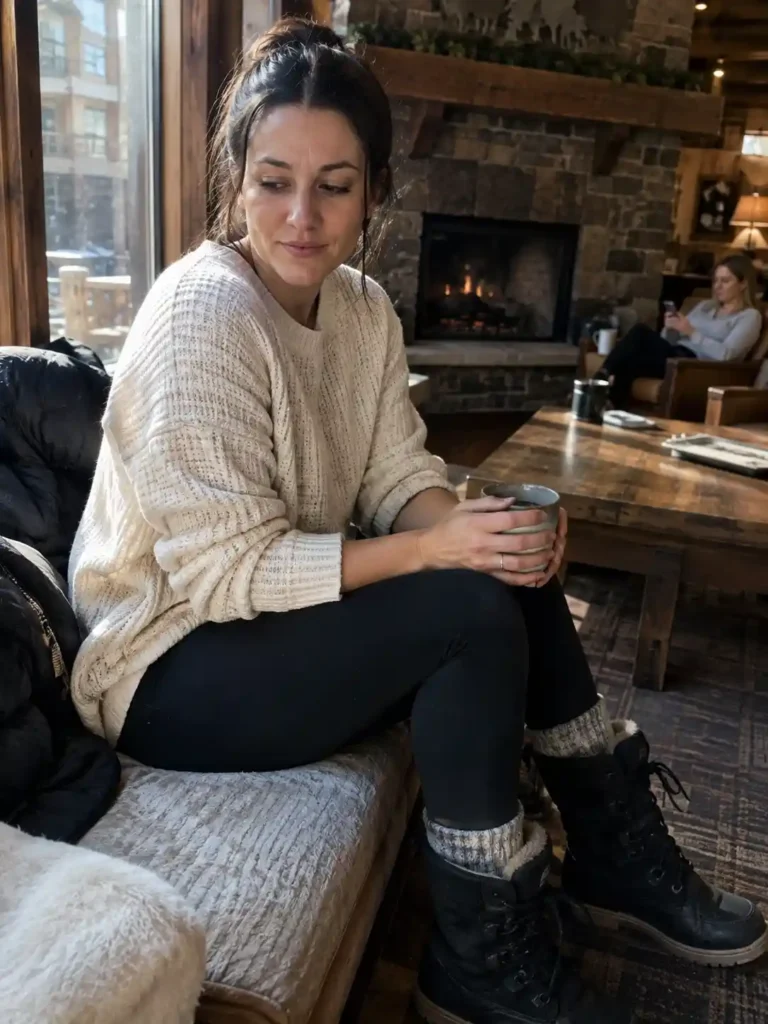
Not every après moment calls for the same energy, and treating them all the same is honestly the most common mistake I see.
Casual lodge hangout: Comfortable knits, fleece-lined leggings, and your warmest snow boots. Nobody expects glamour here. Save your energy.
Fire pit or outdoor patio: Layer up more than you think you need to. Wool coat, thick scarf, gloves you can actually hold a drink in.
Cold weather changes fast once the sun drops, and cold skin also ages faster over time, which is one more reason a genuinely warm layer beats a thin, trendy one.
Cleveland Clinic has a solid rundown on how cold air actually affects skin if you’re curious.
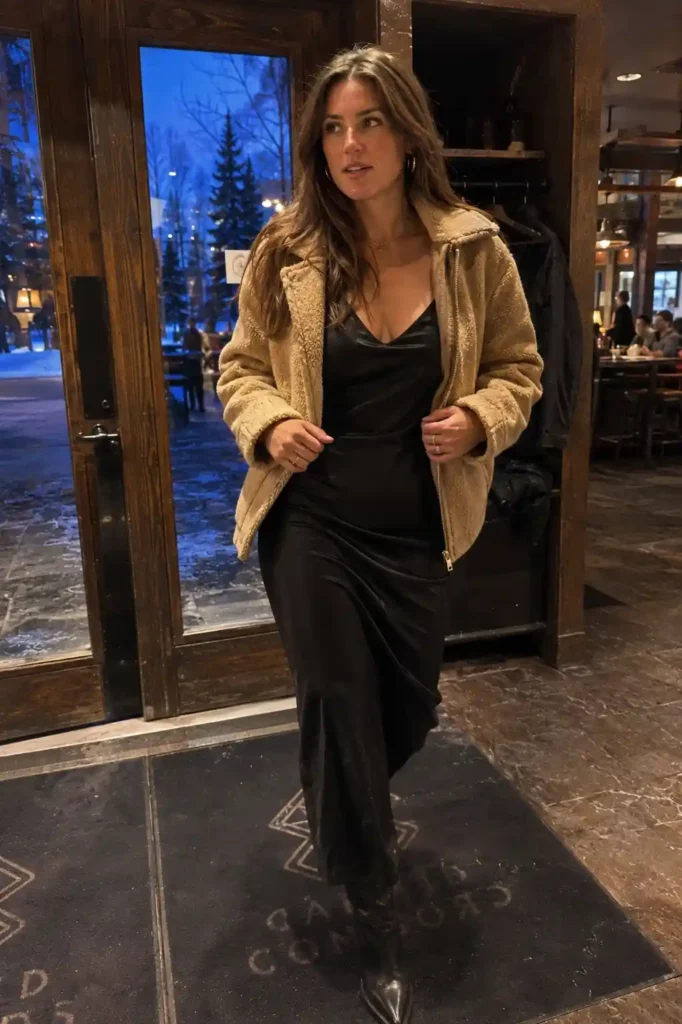
Dinner reservation: This is where the faux fur vest or shearling jacket earns its keep, paired with a slip dress or a fitted sweater and tailored pants.
Late-night dancing: Drop a layer, keep the boots, and lean into something with a little shine. A metallic top under an open cardigan works surprisingly well once the room warms up from body heat alone.
Building your own après-ski Pinterest board
If you’re pinning inspiration before a trip, save images by category instead of just by outfit.
A board split into outerwear, footwear, and accessories makes shopping and packing genuinely faster later, and it stops you from buying five variations of the same puffer vest because you forgot what you already pinned. Wow, that’s a mistake I’ve made more than once.
For broader seasonal inspiration beyond just après looks, Pinterest’s own trend reports are worth a scroll before you start building your board.
They track what’s actually trending each winter instead of recycling the same five outfits every blog reposts.
Frequently asked questions
Do I need actual snow boots for après-ski, or will regular winter boots work? Regular winter boots work fine as long as they have real tread on the sole. The issue isn’t warmth, it’s grip. Ice doesn’t care how cute your boots are.
What’s one après-ski trend that’s overrated, in your opinion? Full matching ski suits worn indoors at the bar. They look great on the mountain and genuinely uncomfortable an hour later once the room heats up. Swap the jacket for something lighter the second you’re inside.
Can I wear the same outfit skiing and to après, or should I plan two separate looks? Plan two. Even a quick base-layer swap and a jacket change make a real difference, and you’ll actually enjoy the evening instead of overheating in gear built for a chairlift.
Final thought
After-ski dressing isn’t complicated once you stop treating it like a costume and start treating it like actual clothing for an actual cold night.
Layer smart, pick boots with grip, and let one or two statement pieces, a faux fur vest, a red coat, a great pair of hoops, do the rest of the work.
What’s your go-to après-ski piece, the one item you’d never leave off a winter packing list? Drop it in the comments or pin this for your next trip.
