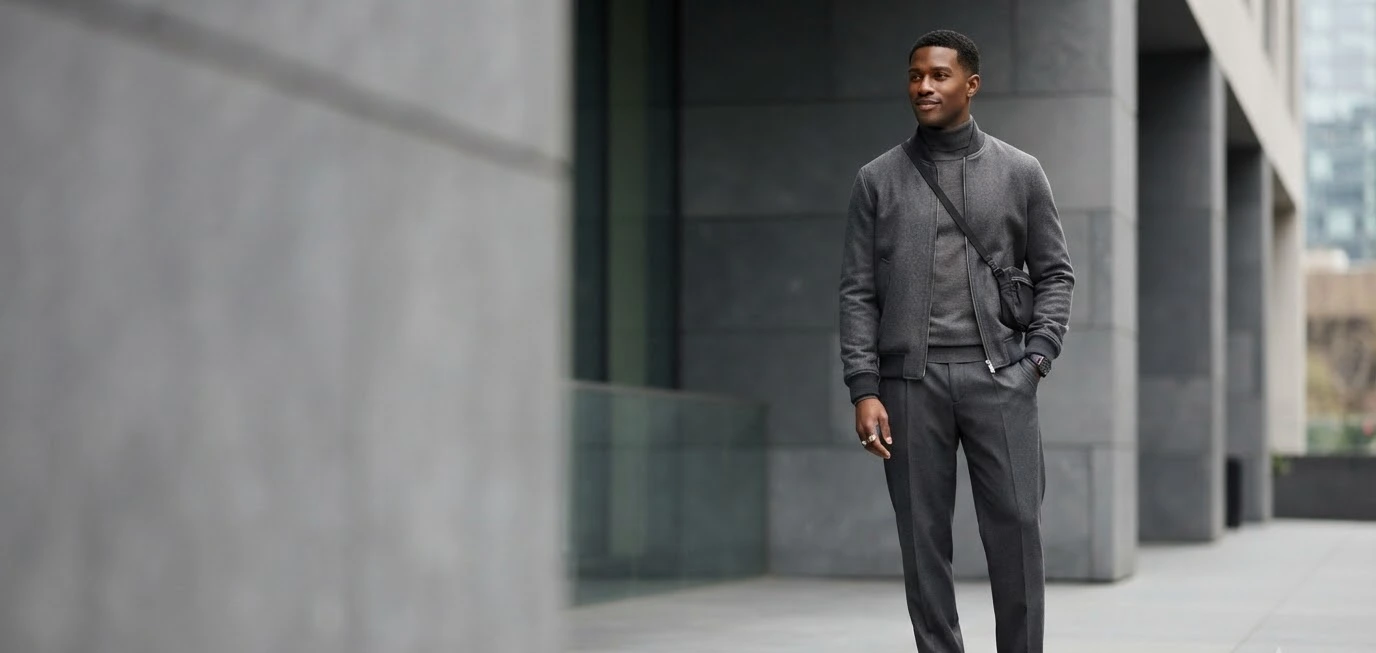
You don’t need a trust fund to dress like you have one.That’s the truth I wish someone had told me five years ago when I’d scroll through Instagram,
seeing guys in pristine Dior fits and rare sneakers, and feel completely defeated about my own wardrobe.
The gap between high fashion and reality felt impossibly wide. But here’s what I’ve learned: it’s not actually about the money.
It’s about understanding the game, knowing where to look, and making smarter choices than most people do.
This isn’t about cheap fast fashion or settling for less.
This is about building a genuinely stylish wardrobe that turns heads—without bankrupting yourself or looking like you raided a clearance bin.
I’ve done this myself, and I’m going to walk you through exactly how.
Understanding High Fashion Street Style
Before we talk budget hacks, let’s get clear on what we’re actually going for here.
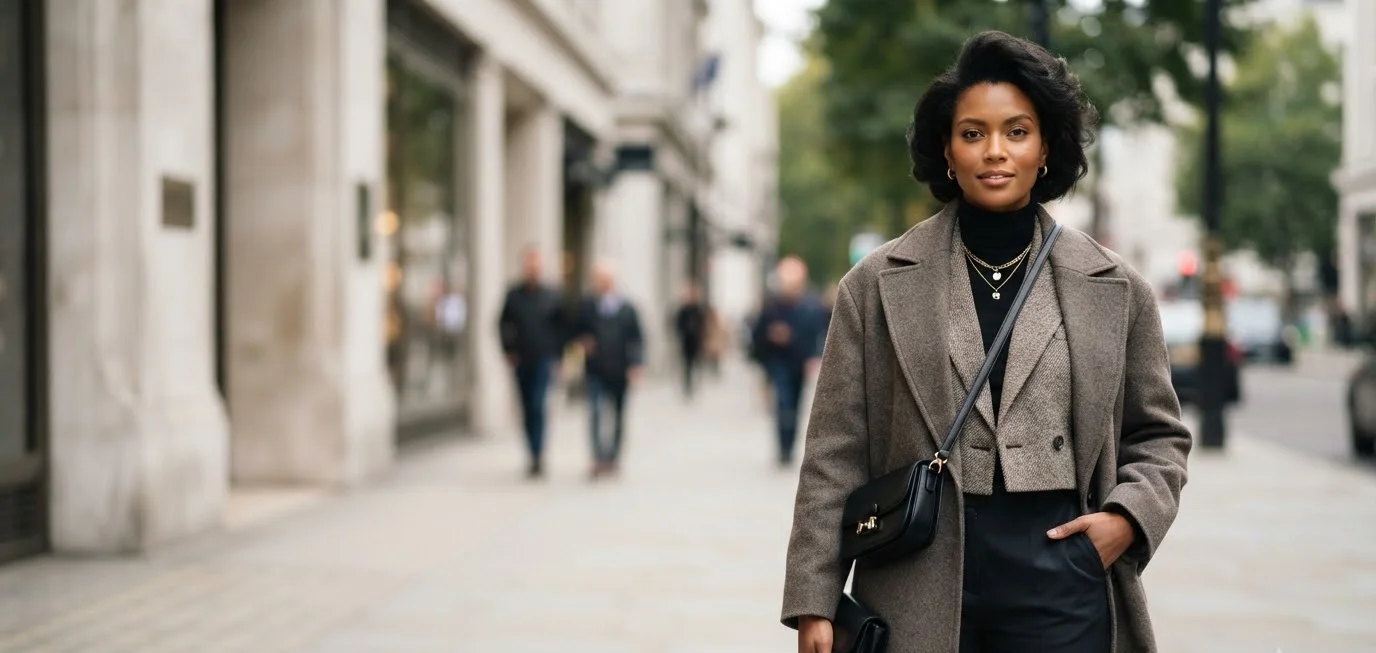
High fashion street style isn’t about logos or price tags. It’s about intentionality. It’s about proportion, fit, color theory, and confidence.
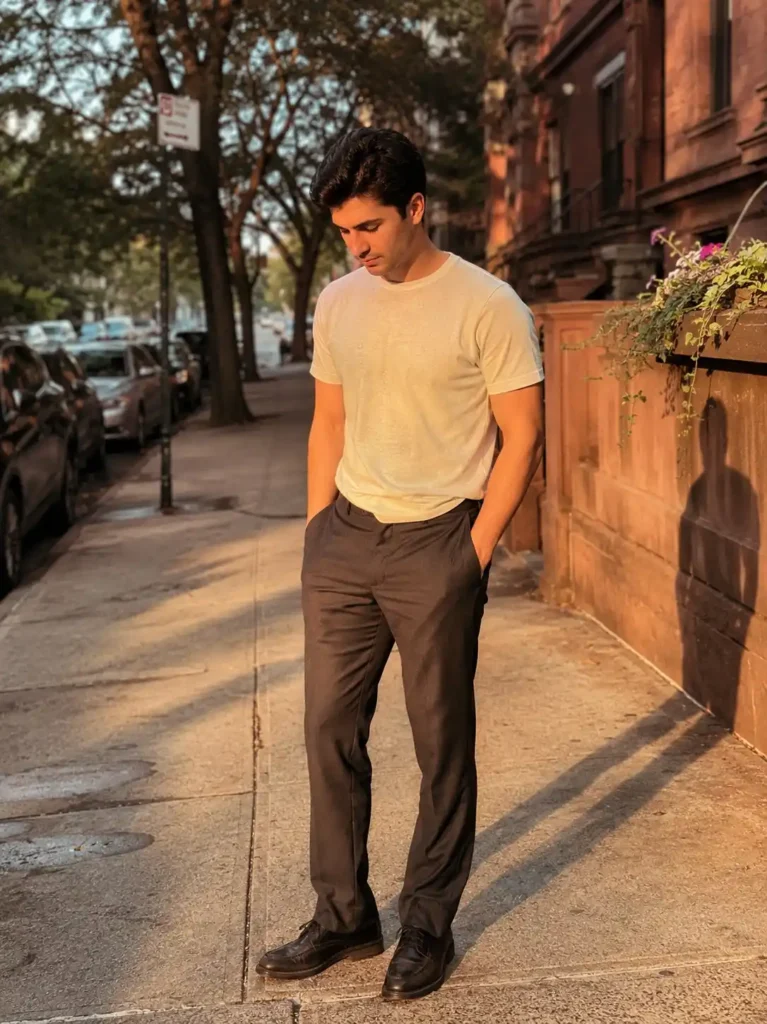
That guy walking down a Milan street in a simple tee and tailored trousers? He’s winning because he understands his pieces work together.
The fit is right. The colors make sense. Everything communicates something.
Street style specifically means fashion that works in real life. Not runway clothes (though runway inspiration definitely matters).
We’re talking about pieces you actually wear when you leave your apartment.
Pieces that feel effortless but secretly took thought to put together.
The budget part? That’s actually where most guys mess up. They think budget means accepting worse quality or giving up on style.
Wrong. Budget means being ruthless about priorities.
It means buying fewer things and making sure those things are right. It means knowing the difference between an investment piece and a disposable trend.
I used to spend randomly on whatever caught my eye. Now I spend deliberately on things that work with what I already own. That shift changed everything.
Building Your Foundation: The Core Pieces

Let me be real—you can’t build high fashion street style without basics. But these aren’t boring basics. They’re strategic basics.
Start with solid-colored t-shirts and long sleeves. Not the cheap, thin kind that shrinks after two washes.
We’re talking quality cotton that’ll last. Uniqlo’s Airism line is genuinely solid here.
Around 10 dollars per shirt. That’s not nothing, but it’s reasonable for something you’ll wear 100 times.
Next, get neutral-colored basics: white, black, gray, navy, cream, and maybe a deep olive.
These are your foundation. You’re building an outfit language here. Everything you buy after this should work with multiple pieces you already own.
The classic white tee is non-negotiable. One good white tee solves so many styling problems.
Pair it with literally anything. Blazer? Done. Oversized jacket? Works. Cargo pants? Absolutely. The white tee is your safest investment.
Here’s what you actually need at the beginning:
Core Basic Pieces (Priority Order)
- Three white or cream t-shirts (mix of heavyweight and standard)
- Two black t-shirts
- One gray t-shirt
- Two long-sleeve shirts in neutral colors (white, light gray, or cream)
- One button-up shirt in white (this works for so many situations)
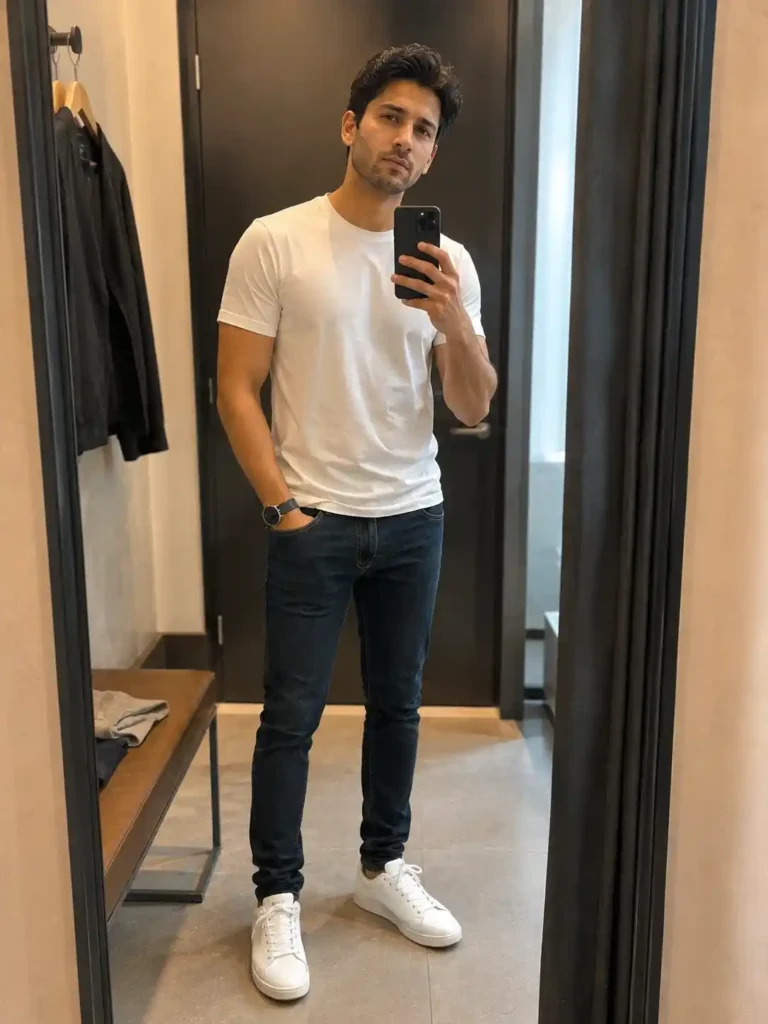
- Jeans in dark wash (classic fit or slim—not both, not skinny)
- Chinos in navy or khaki
- One pair of black trousers
That sounds like a lot, but it’s genuinely the minimum. You’re not buying everything at once. This is a 2-3 month process if you’re smart about it.
Why this approach? Because these pieces create endless combinations. That white tee goes with literally every bottom.
The button-up shirt can be worn open over a tee, worn alone with jeans, or dressed up for something slightly more formal.
The dark jeans work from morning coffee to evening drinks.
The Fit Game: Why It Matters More Than Brands
This is where most budget fashion fails, and it’s also where you win if you get it right.
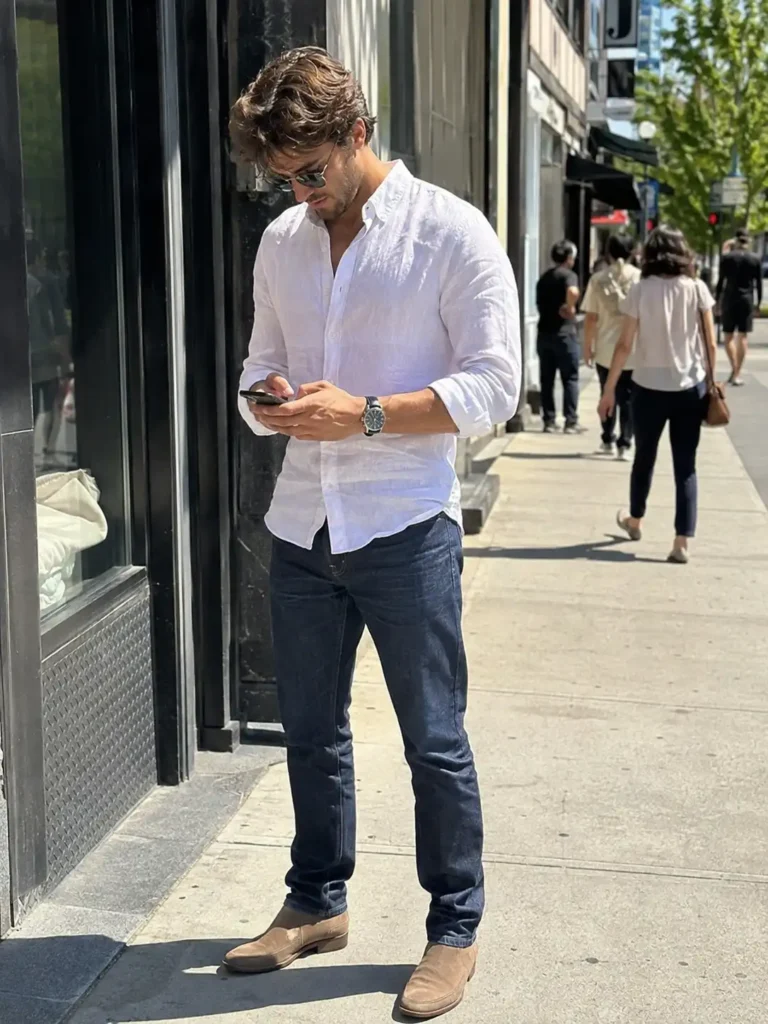
A 40-dollar shirt that fits perfectly beats a 300-dollar shirt that doesn’t. Full stop. I’m not exaggerating.
I’ve seen guys in expensive pieces look sloppy because the fit was wrong.
I’ve seen guys in modest pieces look like they stepped off a runway because they understood fit.
Fit means these things work:
- Shoulders hit at your actual shoulder point, not drooping
- Sleeves end at your wrist (not your palm, not your knuckles)
- The shirt doesn’t billow around your torso
- Waist sitting at your actual waist, not your hips
- Inseams that hit the top of your shoe
That last point about inseams is huge. Too-long pants age you instantly. Too-short makes you look like you’re waiting for a growth spurt.
Get them tailored. Seriously. A tailor costs 10-15 dollars per pair, and that investment makes everything look intentional.
This is where your budget actually works in your favor. Cheaper pieces often need tailoring anyway.
Work with a tailor. Build a relationship. They’re your secret weapon.
Finding a good tailor is like finding a good barber—it’s transformative.
I used to avoid tailoring because it felt like extra expense. Then I realized an untailored expensive piece looks worse than a tailored cheap piece. Total perspective shift.
Where to Actually Find Good Pieces
Let me give you the places that actually work if you know what you’re doing.
Uniqlo is obvious, but that’s because it’s genuinely solid. Their basics are reliable. Colors stay true.
Fits are consistent. Prices are fair. Not fancy, but functional and honest. I’ve built entire outfits around Uniqlo basics and they hold up.
H&M gets clowned on, but their divided line has underrated pieces.
Their casual blazers are surprisingly good for experimenting with structure. Just check the stitching and seams.
Cheap brands are cheap because they sometimes skip the details. Inspect before you buy.
COS is the middle ground everyone sleeps on. Slightly pricier than Uniqlo but way better quality.
Their minimalist aesthetic actually teaches you about proportion if you pay attention.
I bought a button-up shirt from them three years ago and it looks better now than when I bought it. That’s investment quality at accessible prices.
Banana Republic Factory (the outlet, not regular BR) has legitimate deals. Their chinos are actually great.
Their sweaters hold up. Wait for sales—they always have them. I’ve walked out with pieces that should cost more than I paid.
Target’s Goodfellow line is weirdly underrated. Their jeans are solid. Their crewnecks are appropriate. Nothing flashy, everything dependable.
Now the fun part: thrift stores and secondhand apps.
This is where budget becomes an advantage. High-end pieces show up in thrift stores constantly.
Guys with more money than style buy expensive designer pieces and never wear them. That’s your opportunity.
Depop, Vinted, and Poshmark have legitimate designer stuff at 40-50% of retail.
A 200-dollar cashmere sweater for 80 dollars because someone bought it and never wore it. That’s not luck; that’s just understanding where to look.
Hit local thrift stores specifically for blazers and sweaters. Wool doesn’t wear out like cotton; it gets better with age.
I found a Barbour jacket for 35 dollars at Goodwill. That piece was made in the 90s and it looks incredible. It’s now my favorite jacket.
The key with secondhand: look for natural fibers. Cotton, linen, wool, silk. Synthetics degrade.
Natural fibers age gracefully. Look at seams and stitching. Designer quality shows in the details. You’re training your eye to spot the difference.
One honest thought: shopping secondhand takes time. You can’t just grab something and leave.
You have to dig. You have to try things on. It’s not convenient. But if you’re on a budget,
it’s where the wins happen. I’ve learned more about quality and style from thrift shopping than from anywhere else.
Color Theory Without Sounding Like You’re Trying
Here’s what I see most guys get wrong: they treat color like an accident.
Most of us wear whatever color appeals to us in that moment. Blue shirt with green pants because, why not.
But high fashion street style depends on understanding how colors relate to each other and to you.
You don’t need to study color theory. You just need three principles:
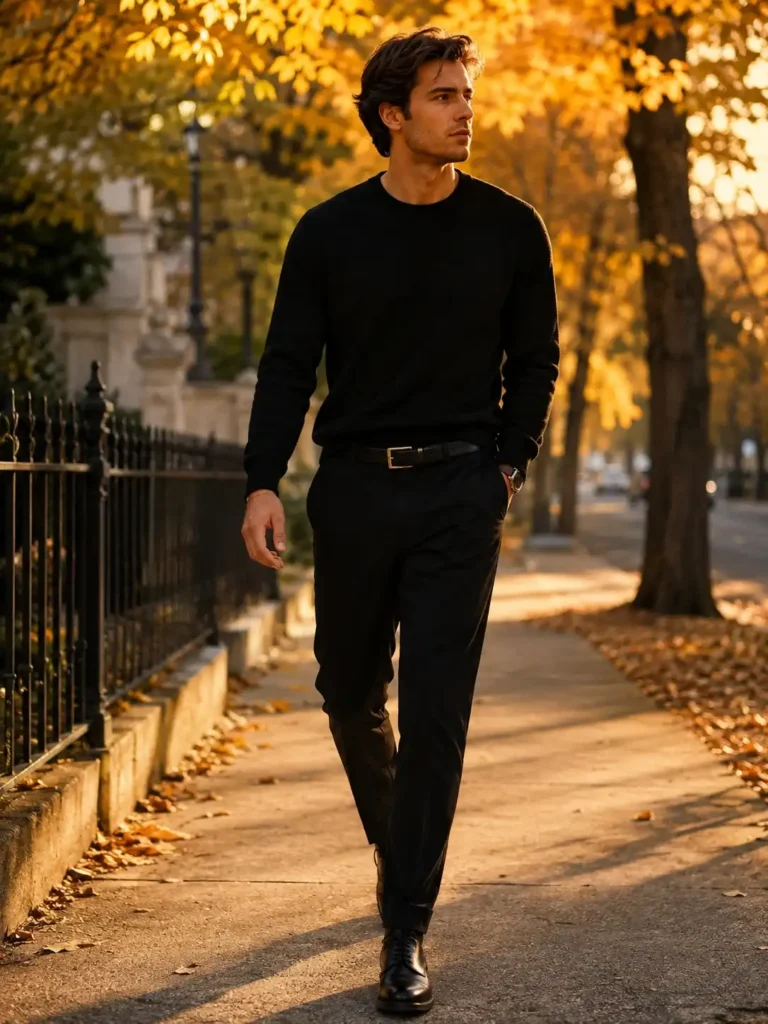
Monochromatic dressing (shades of the same color) makes you look intentional.
Black pants, black sweater, black shoes. That’s either boring or sophisticated depending on execution.
The difference? Details. Texture. One interesting piece that breaks the monotony slightly.
A monochromatic outfit in matte black looks flat. Add a glossy belt or a ribbed sweater and suddenly it’s interesting.
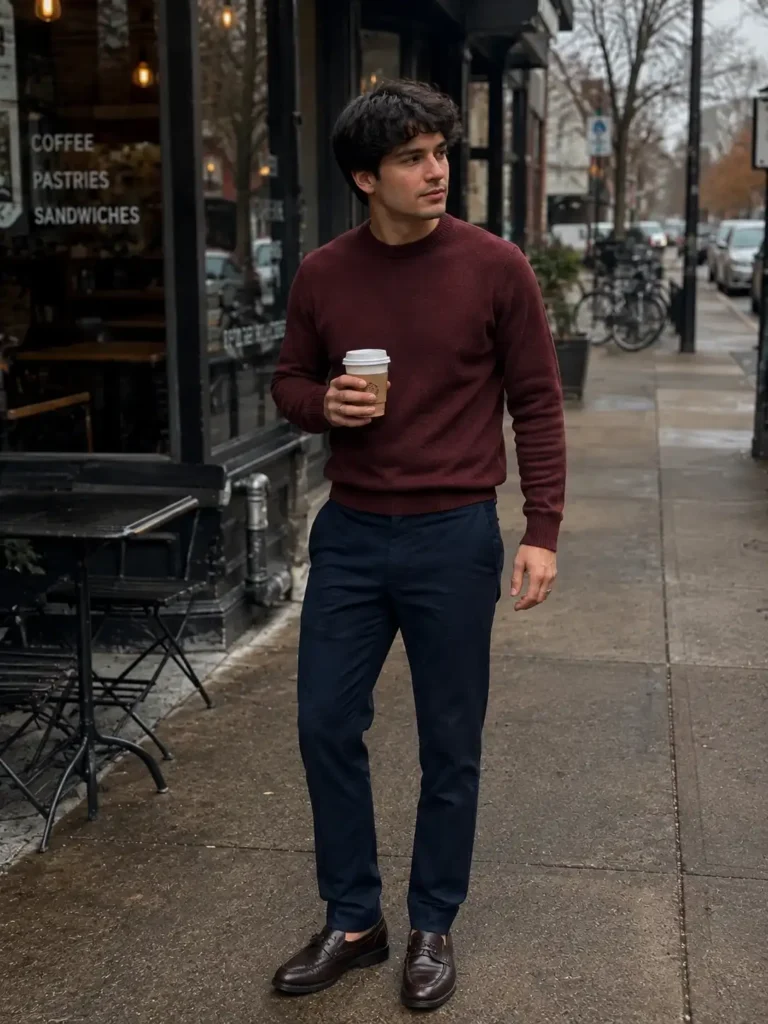
Complementary colors (opposite on the color wheel) create visual interest. Navy and orange.
Gray and gold. White and navy. These combinations work because your eye naturally sees them as balanced. You don’t have to think hard. Just trust the combination.
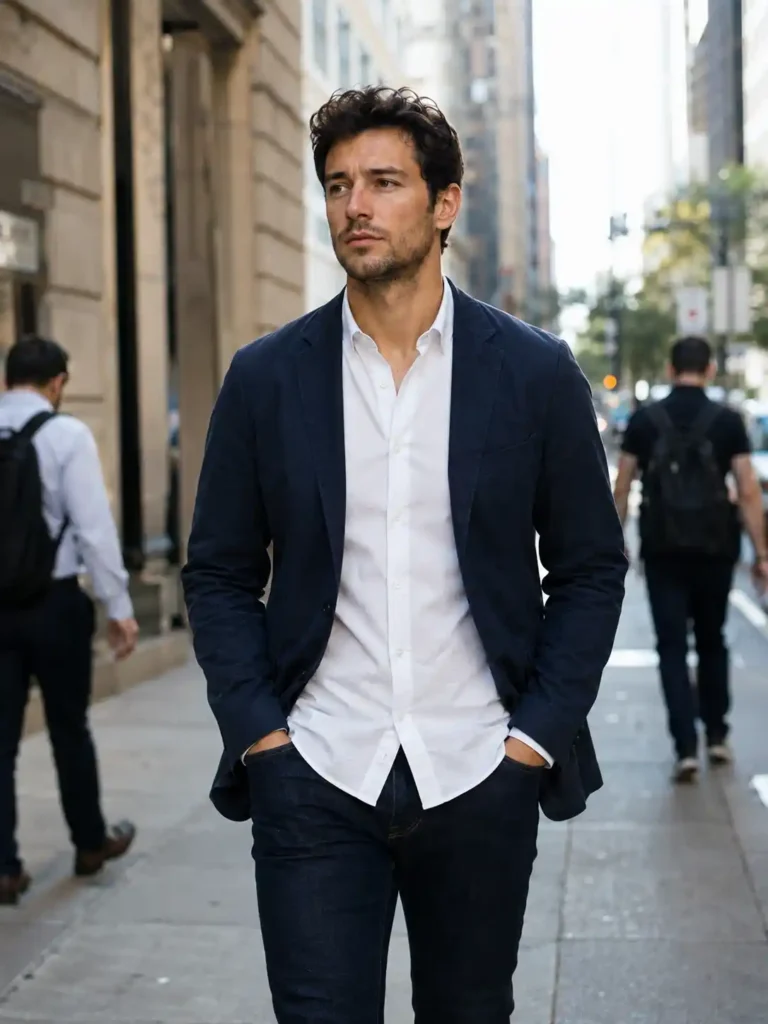
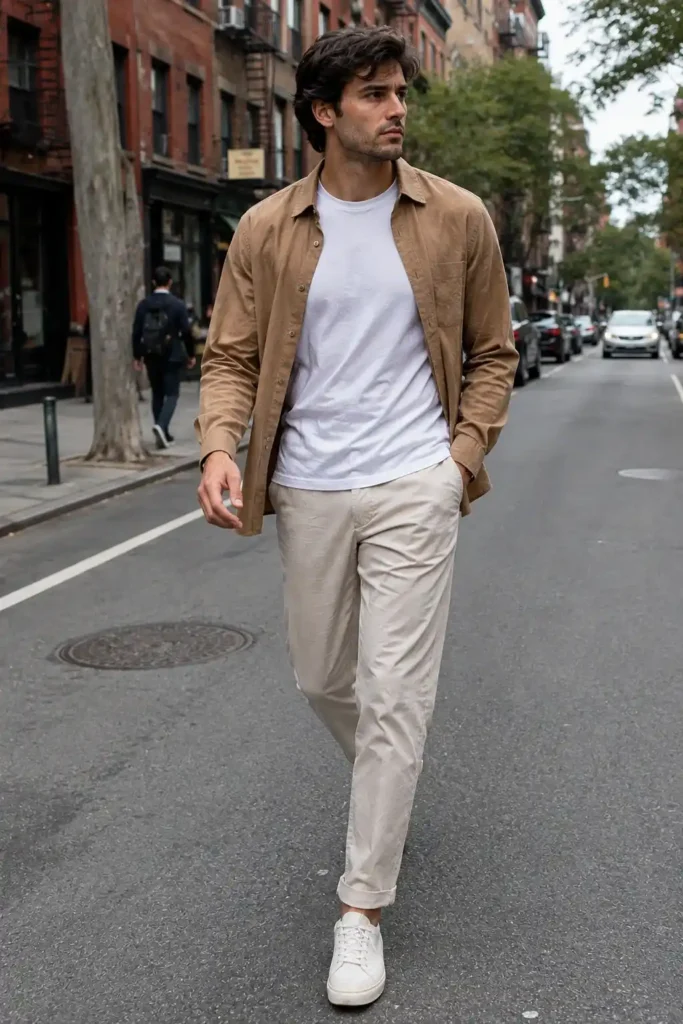
Neutral-based dressing (cream, beige, gray, black, navy as your foundation) with one accent color gives you endless flexibility.
Cream chinos with a burgundy sweater. Gray trousers with a forest green overshirt. That’s where versatility lives.
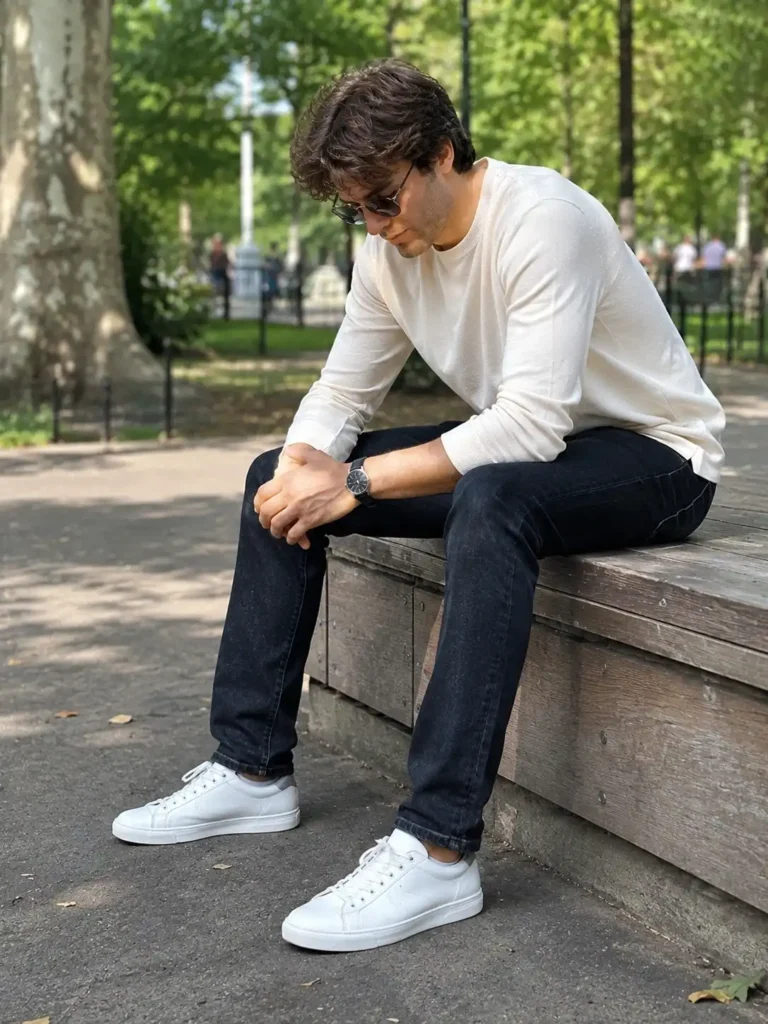
Here’s what I actually wear most of the time: 70% neutral, 30% accent. On cool days I throw on a colored layer.
On warm days the color might be a watch strap or shoes. This keeps everything flexible while still looking intentional.
Don’t overthink this part. Nature uses certain color combinations all the time. Pine trees and sky. Sand and ocean. Your job is just borrowing those ideas.
The Strategic Investment Pieces
Now we’re past basics. You’ve got your foundation. Time to add personality.
A good blazer is the cheat code to looking intentional. Navy, charcoal, or black.
Something unstructured if you’re new to this—more comfortable, more modern.
Unstructured blazers look less formal, which is exactly what street style is going for. You want to look put-together, not like you’re about to a board meeting.
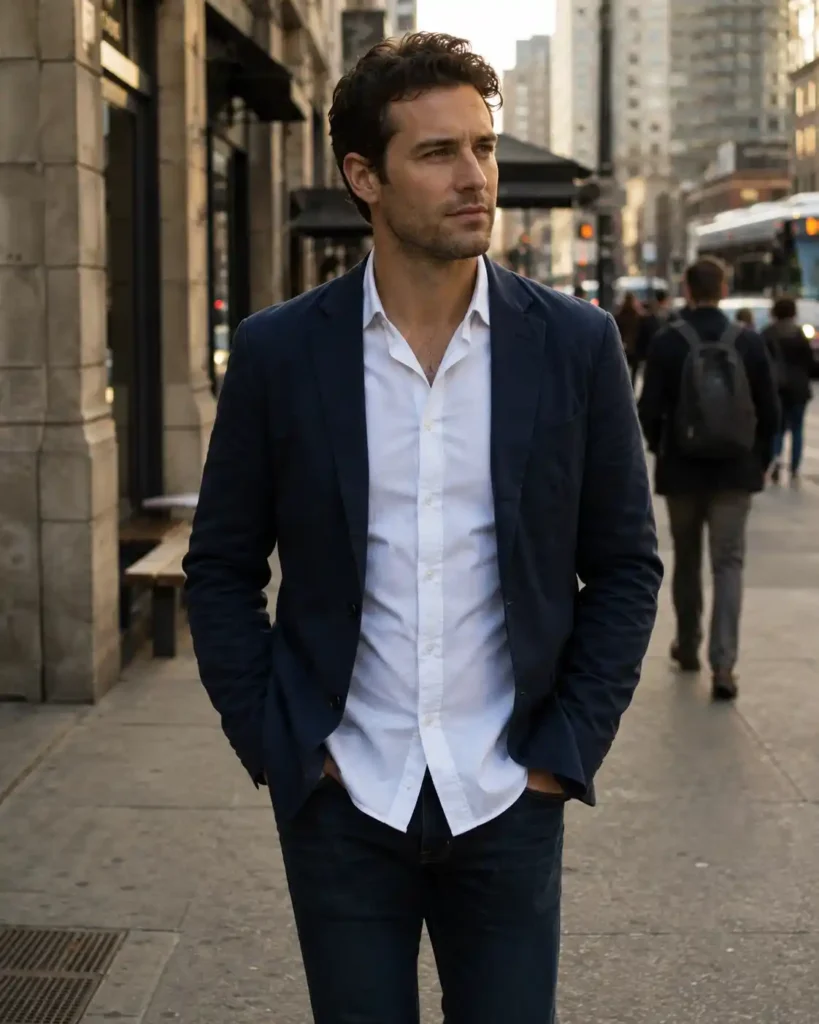
Here’s where budgeting gets smart: buy a used blazer or wait for sales.
A 60-dollar casual blazer in decent condition beats a 200-dollar one if the fit is right. Go to thrift stores specifically looking for blazers.
Try them on. Most people have them in their closet untouched. That’s your opportunity.
A good pair of shoes matters more than most guys realize. Not expensive shoes—good shoes.
Well-made. Interesting. I’m talking about leather sneakers, Chelsea boots, or simple loafers. These pieces get noticed because they show intentionality.
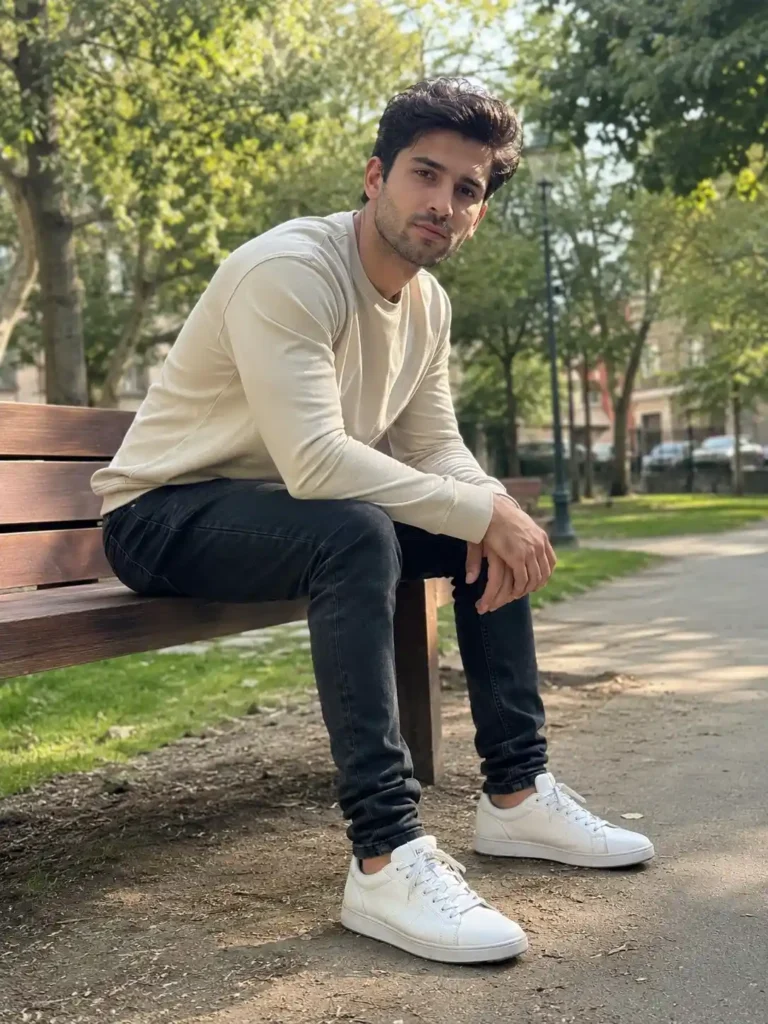
White leather sneakers are a staple. They go with almost everything. Keep them clean.
Seriously, clean shoes elevate an entire outfit. I spend 30 seconds with a white cloth on my white sneakers before I leave the house.
That tiny detail changes how everything looks.
Brown or black leather boots work for cooler months.
Chelsea boots specifically—they’re versatile, they look expensive, and they work with almost everything.
Clarks and Thursday Boot Company make affordable versions that look way better than their price point suggests.
Loafers are weirdly underrated for casual high fashion. They signal a kind of ease. Worn loafers (like actually worn, not beat up) look sophisticated.
New loafers can look costumey. If you go this route, thrift for slightly worn loafers.
Here’s the investment breakdown:
| Piece | Budget | Mid-Range | Why It Matters |
|---|---|---|---|
| Blazer | $40-60 (thrift) | $100-150 (quality) | Transforms casual outfits instantly |
| Leather Boots | $50-80 (sales) | $120-180 (quality) | Works in multiple seasons and styles |
| Quality Jeans | $40-60 (outlet) | $80-120 (brand) | Foundation piece you wear constantly |
| Casual Sweater | $30-50 (Uniqlo/COS) | $70-120 (wool) | Adds depth to outfits effortlessly |
Budget doesn’t mean cheap. It means strategic. You’re buying pieces that multiply with what you already have.
Layering: Your Secret Advantage
Layering is how you create high fashion looks from basic pieces.
Most guys either wear one piece or dress randomly.
High fashion street style is about understanding how to build an outfit vertically. Thin layer, medium layer, outer layer.
Each one serves a purpose both practically and aesthetically.
Summer: white tee, maybe nothing else, but your shirt fits well so it’s intentional.
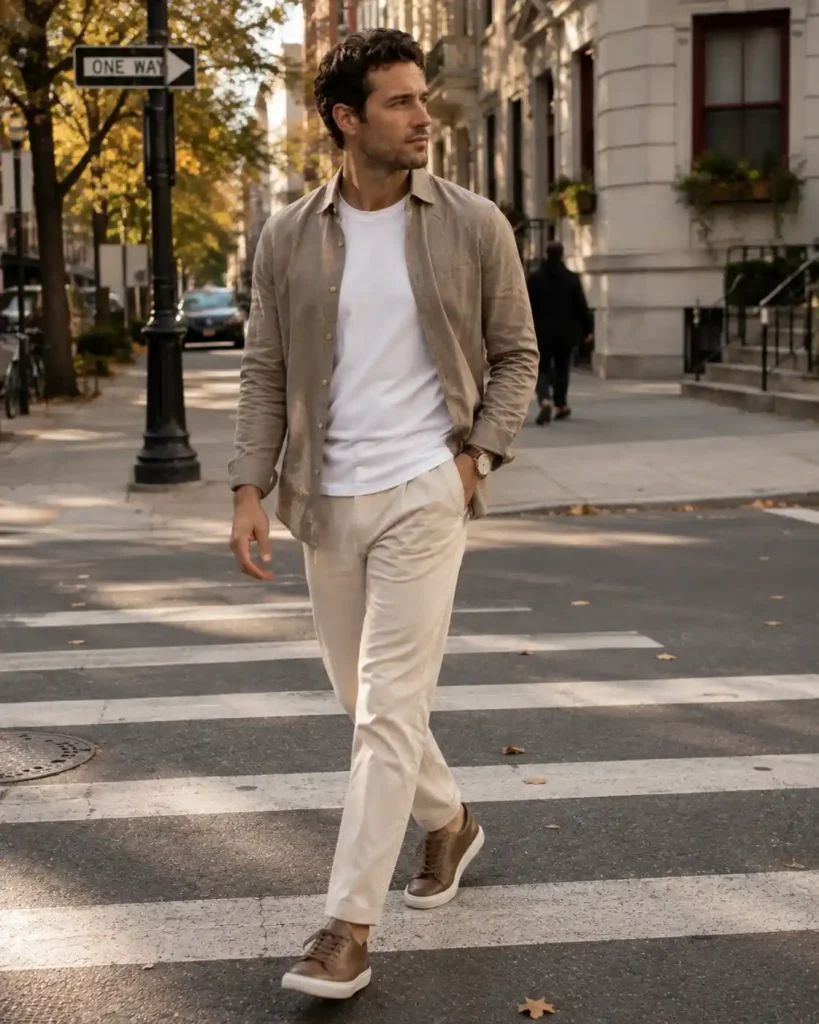
Shoulder season: white tee, casual button-up worn open, minimal shoes.
Cold weather: white tee, sweater, blazer or jacket. Each layer visible. Each layer communicating something different.
Layering isn’t actually complicated. It’s just thinking about what’s visible and making sure it works together.
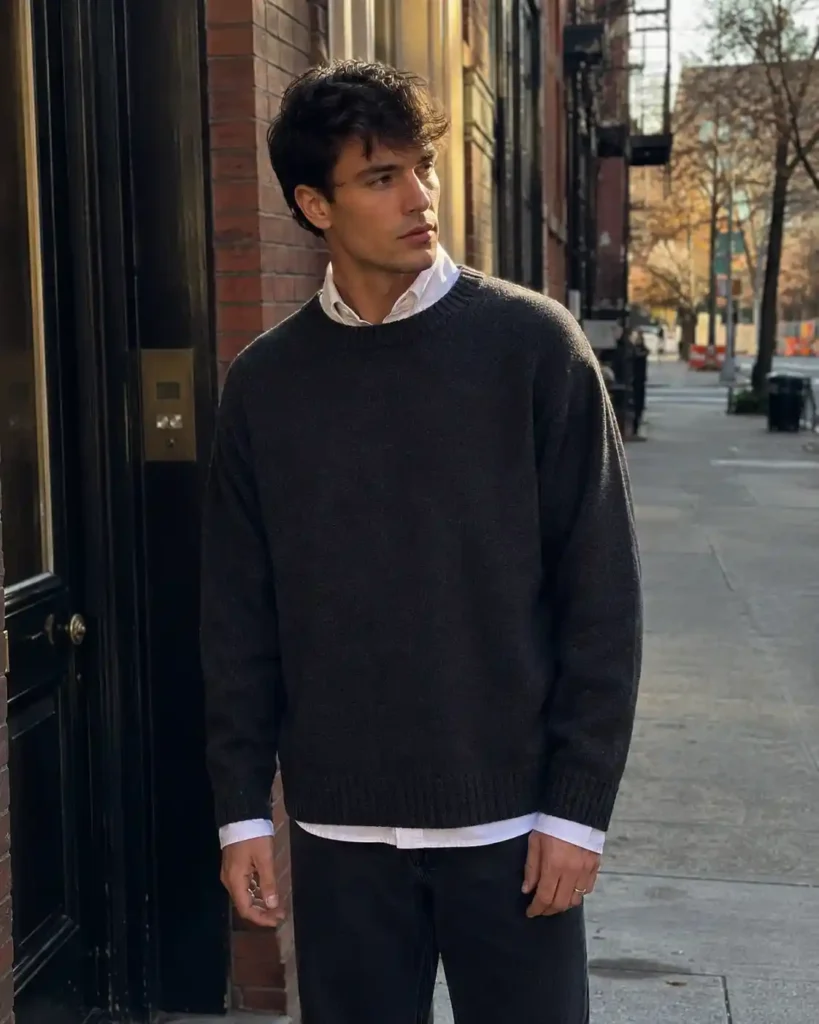
An oversized sweater over a crisp white shirt. A long cardigan over a tee. A linen shirt worn open over a minimal tank top.
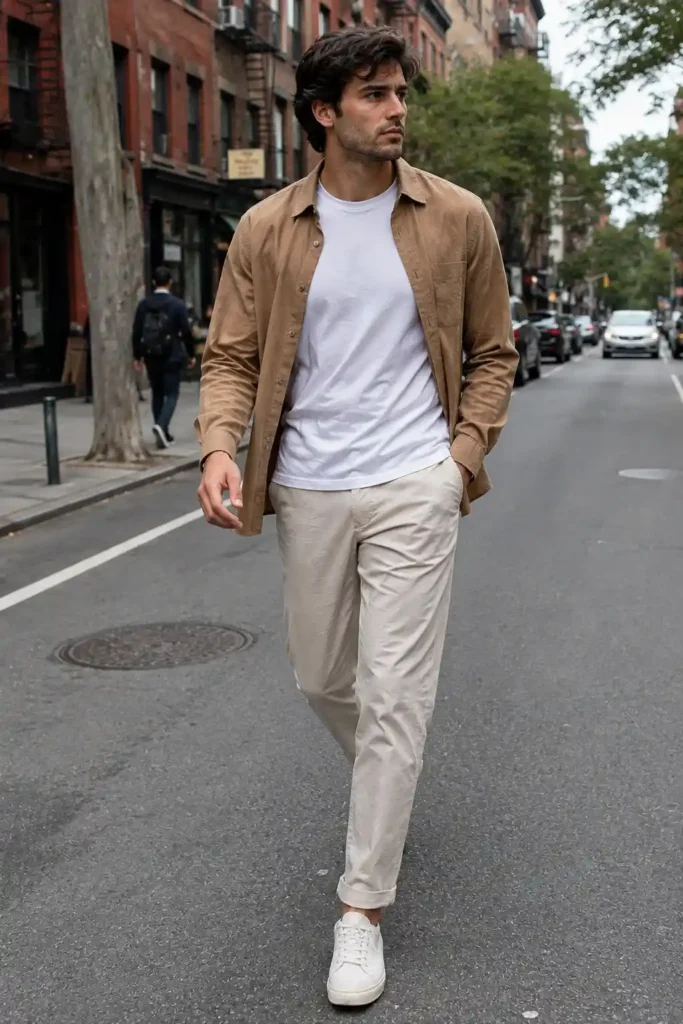
The proportion matters though. If everything is oversized, you look sloppy. If everything is fitted, you look stiff.
Mix it. Oversized top, fitted bottom. Fitted top, relaxed bottom. That contrast is interesting.
I used to think layering was for winter. Now I layer year-round because it’s where style actually lives.
You’re creating visual interest. You’re showing that you thought about the outfit.
The Anti-Hype Approach
This might sound weird in an article about fashion, but hear me out: trendiness is the enemy of budget high fashion.
When you chase trends, you buy pieces that go out of style in three months. That’s expensive. That’s wasteful. That’s the opposite of budget smart.
High fashion street style actually lives in the timeless zone. Classic jeans. Solid sweaters. Simple tees. These pieces never look dated because they’re never trendy. They’re just always appropriate.
Trends can happen in your accent pieces. Your belt. Your shoes. Your watch. These are cheaper to replace when they rotate out. Your foundational pieces should be immune to trend cycles.
I bought into the oversized streetwear look pretty hard. Huge pants, huge shirts, everything baggy.
Spent money I didn’t need to spend. Then the fit normalized and suddenly I looked behind the times wearing clothes I’d overpaid for.
Now I invest in pieces that work regardless. Classic fit. Timeless proportions. Details that matter rather than logos that fade.
This actually saves money, which is literally the entire point.
Accessories: The Multiplier
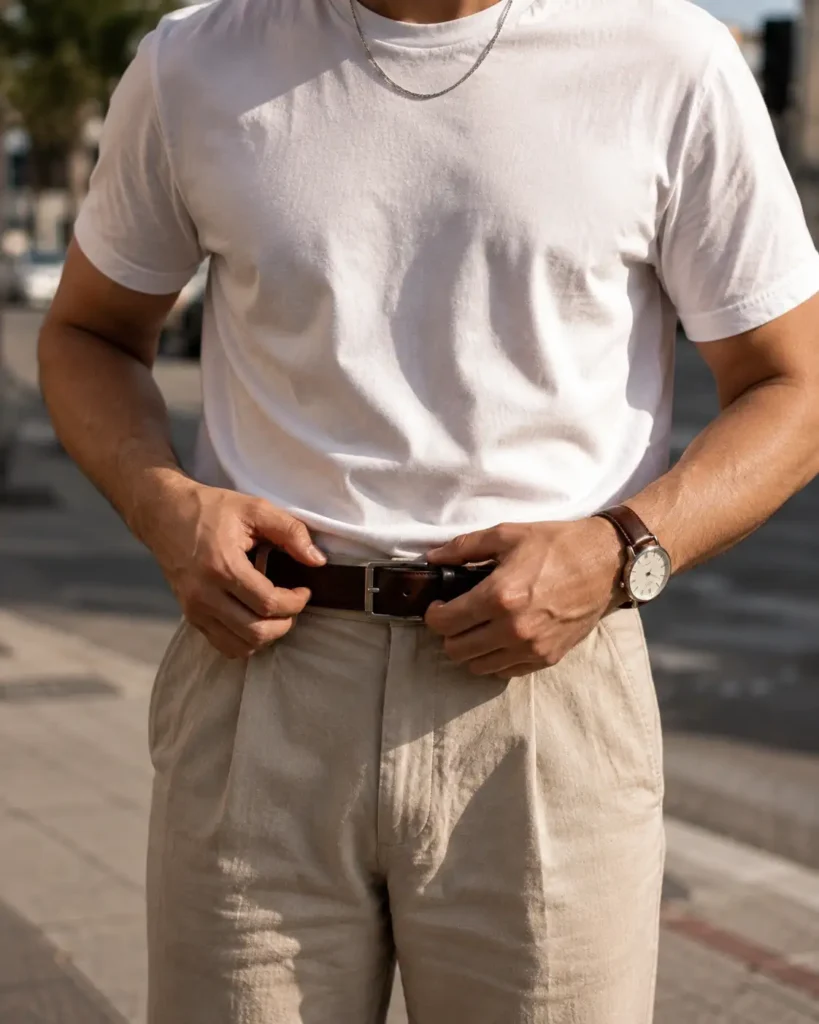
Here’s where I see guys waste money: they ignore accessories then suddenly realize they need them.
Accessories multiply your outfit options exponentially. A new belt changes how your jeans sit and look.
A simple watch changes how an outfit reads. A scarf adds season-appropriate interest.
You don’t need expensive accessories. You need intentional ones. A leather belt from
Everlane costs 30 dollars and looks genuinely nice. A simple silver chain from Urban Outfitters costs 15 dollars and changes an entire outfit.
A basic watch from Timex costs 40 dollars and makes you look like you have your life together.
Build slowly. Add one accessory that genuinely interests you. Wear it until it feels natural. Then add another. That’s how you develop actual style.
I used to buy accessories randomly. A scarf here, a belt there, nothing coordinated.
Now I think about how new accessories work with what I already have. That single shift made everything look more cohesive.
The Reality Check: This Takes Time
Okay, real talk. Building high fashion street style on a budget takes longer than just spending money.
If you had unlimited funds, you’d buy a complete wardrobe this weekend. You don’t. So you buy strategically over time. One good piece per month. That’s it. Twelve pieces a year.
In two years you have a genuinely functional, stylish wardrobe.
That slow approach actually teaches you about what works and what doesn’t. You get to experiment.
You learn your proportions. You figure out what colors you naturally reach for.
Most guys abandon budget approaches because they want everything immediately.
Then they end up with a closet full of pieces that don’t work together. Intentional slowness beats frantic purchasing.
Start with your foundation. Spend two months getting that locked in. Then add one investment piece each month. By the end of a year, you’ve got something real.
External Resources Worth Your Time
I’d be remiss if I didn’t point you toward actual resources that have shaped how I think about this stuff.
Menswear inspiration: Check out Mr. Porter’s Style Guide for how actual designers think about men’s fashion. Not to buy (those prices are silly), but to train your eye on proportion and color combinations.
Budget-friendly shopping: The Outfitters curates affordable fashion specifically around street style. They understand the assignment.
Tailor finding: Use a local search for tailors near you and read reviews. Ask other guys who their tailor is. This is worth actual effort.
Quality baseline learning: Real Men Real Style talks about quality and construction in ways that help you spot good pieces.
Secondhand shopping apps: Depop, Vinted, Poshmark, and Grailed all have legitimate stuff. Grailed specifically is for guys thinking about streetwear and heritage fashion.
These aren’t random links. I actually use these resources. They’ve shaped how I approach this.
The Small Victories Count
Here’s something nobody talks about: the confidence boost from dressing intentionally is real.
I’m not going to promise you’ll become a different person or that strangers will suddenly respect you more (though honestly, small improvements in appearance do affect how people respond).
I’m saying that when you pick your outfit and feel like it’s actually right, that affects your entire day.
You walk different. You carry yourself differently. You actually pay attention to things.
Starting this journey on a budget forces you to be thoughtful. You can’t just throw money at fashion problems.
You have to understand the problems first. That understanding is actually more valuable than the money would be.
I’ve learned more about style, quality, and intentionality through budget constraints than I would have if I’d just spent whatever I wanted.
Mistakes I Made (So You Don’t)
Let me just rip off the bandaid on the dumb stuff I did.
I bought expensive pieces before I understood my style. Spent 300 dollars on a designer shirt because the brand was prestigious.
Wore it twice because it didn’t actually work with my life.
That money should have gone toward multiple foundational pieces.
I ignored tailoring for way too long. Wore ill-fitting expensive clothes when I could have worn well-fitting budget clothes and looked better.
I chased trends and abandoned them when they rotated. Bought expensive trend pieces instead of building a foundation.
I didn’t take time to actually learn about fit and proportion. I just bought stuff and hoped it worked.
Don’t do any of that. Start smart. Start slow. Start intentional.
The Blueprint: Your First Three Months
Here’s exactly what I’d do if I was starting over:
Month 1: Buy your neutral basics (3-4 white/cream tees, 2 black tees, 1 gray tee, dark jeans, white button-up, chinos). Total: 80-100 dollars.
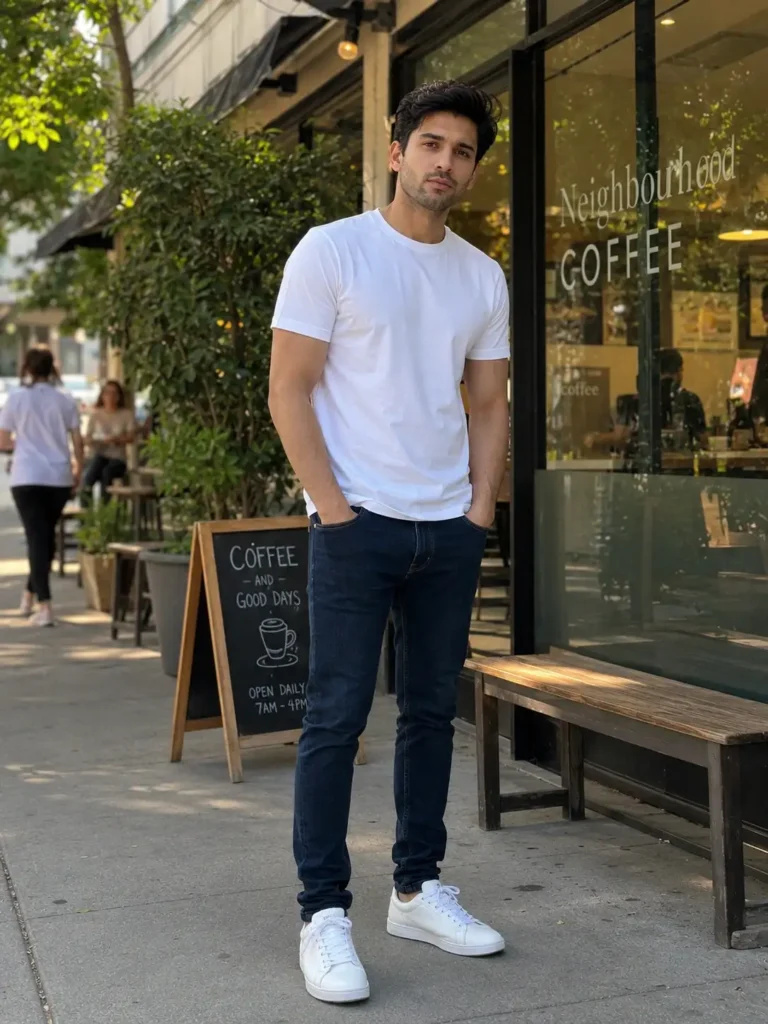
Month 2: Add long sleeves and a casual sweater or cardigan. Get your jeans tailored. Total: 60-80 dollars.
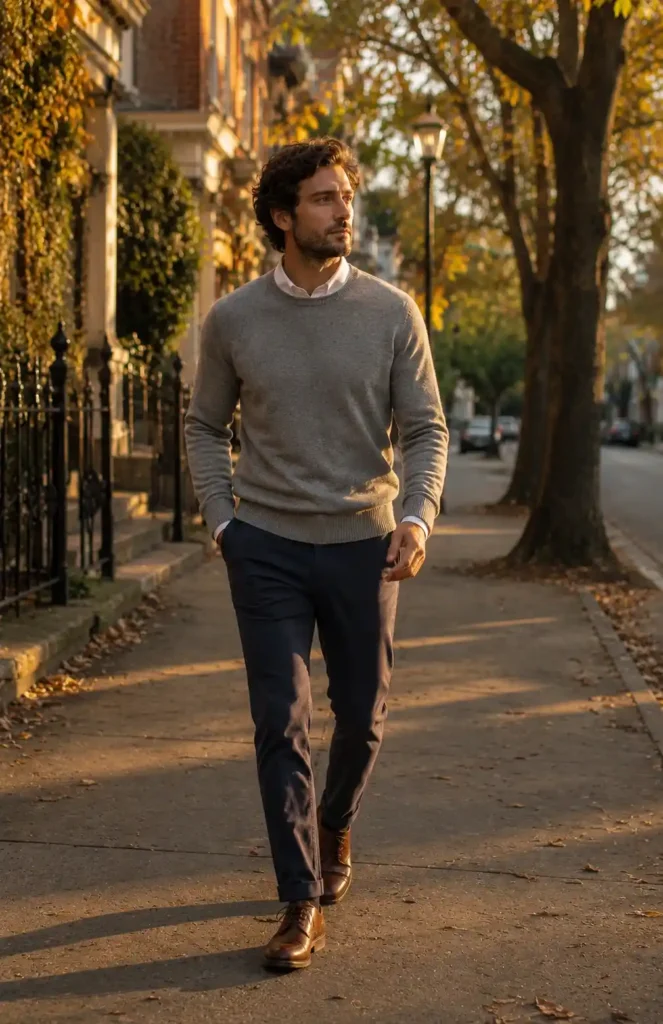
Month 3: Find a decent blazer (thrift or sale) and a pair of leather shoes. Maybe start exploring secondhand apps. Total: 100-150 dollars.
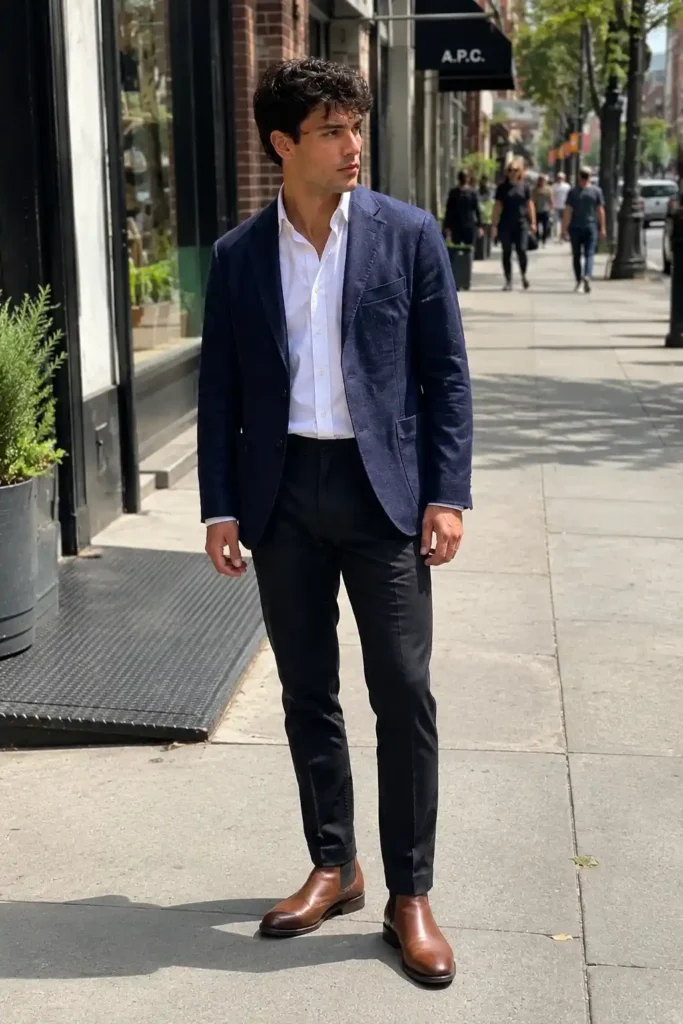
That’s three months and you’ve got a genuinely functional wardrobe. Add one intentional piece per month after that.
By month 12 you’ve got legitimate options and genuine style.
Quick FAQs
Q: Can I actually build high fashion street style on a real budget?
Yes. But “budget” means different things to different people. If budget is 50 dollars total, no. If budget is being smart instead of reckless, absolutely yes. The guys who look the best aren’t always the ones who spent the most. They’re the ones who understood fit, proportion, and intentionality.
Q: How often should I buy new clothes?
Once you have your foundation, one new piece every 4-6 weeks is plenty. You’re not running out of clothes. You’re building a cohesive system where new pieces multiply with what you have.
Q: What’s the biggest mistake guys make?
Buying without thinking. They see something they like, buy it, get home, realize it doesn’t match anything they own. Be intentional. Ask yourself: “What in my closet does this work with?” If the answer is nothing, don’t buy it yet.
Building high fashion street style on a budget isn’t about deprivation or settling. It’s about playing smarter. It’s about understanding that one great piece beats ten mediocre ones. It’s about knowing yourself well enough to make choices that actually work.
This takes patience. It takes intention. It takes willingness to thrift and get things tailored and pass on trends that don’t serve you.
But here’s what you get in return: a wardrobe that actually works. An understanding of style that goes way beyond following trends. Confidence that comes from knowing your clothes fit and look right.
The guys who look like they just threw an outfit together? They spent hours thinking about it. That effortlessness is the point. You’re not trying to look like you’re trying. You’re trying to look like you just naturally have it figured out.
Start with one piece. Build from there. Stop looking at what other people have and start looking at what actually works.
That’s how you actually do this.
FINAL THOUGHT: What’s one piece in your closet right now that actually makes you feel good when you wear it? Start there. Build around that feeling. That’s your real foundation.
