My first ski trip, I packed one jacket and zero opinions about it. Big mistake.
By day two I was freezing on the lift and looking like a marshmallow at dinner.
That trip taught me more about winter dressing than any packing list ever could, and I’ve been obsessing over ski jacket styling ever since.
If you’ve been pinning cute snow outfits for months and still feel unsure how to actually wear the thing on your body, you’re in the right place.
This guide covers how to pick, layer, and style a ski jacket so it works on the slopes and looks good the second you walk into the lodge.
Why your ski jacket does more work than you think
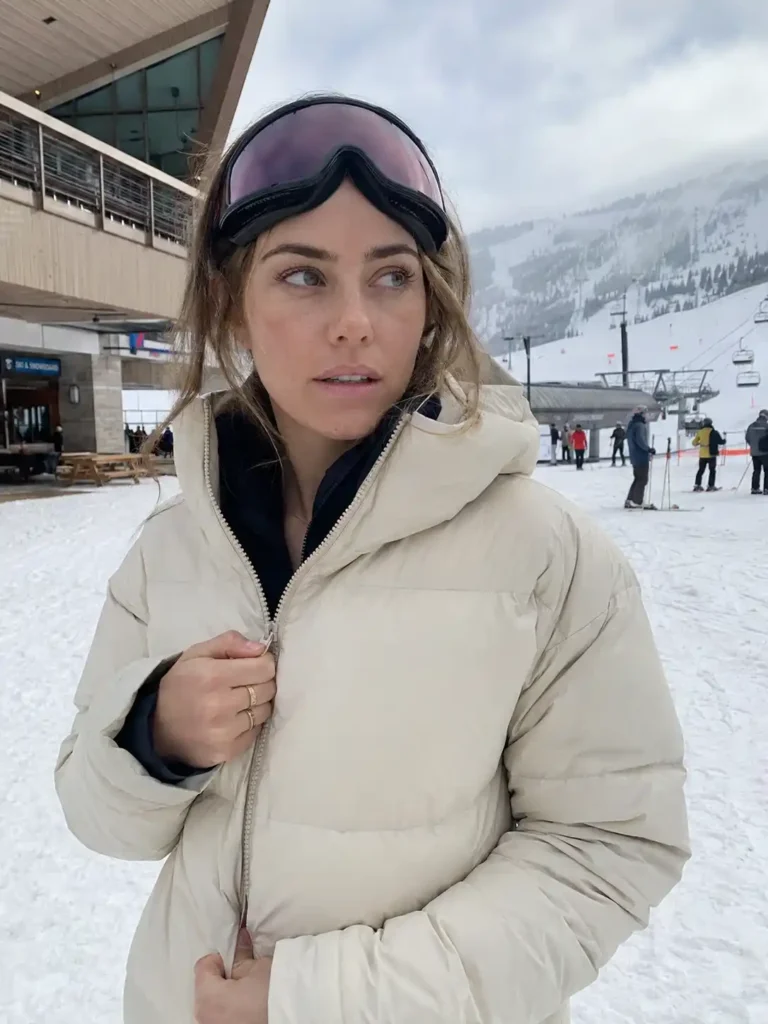
A ski jacket isn’t just outerwear. It’s the piece that decides whether your whole day feels good or miserable.
Pick the wrong one and you’ll either sweat through three layers by 11am or shiver through the chairlift wondering why you agreed to this trip.
Pick the right one and it becomes the anchor for every outfit you build around it, on the mountain and off.
Fit, warmth, and versatility matter more than color. I know, I know, color is the fun part. But get the fundamentals right first and the cute part becomes way easier.
Building the base: what goes under your ski jacket
Nobody sees your base layer in photos, but everyone feels it when it’s wrong. A bad base layer ruins a great jacket every time.
Start with a real base layer
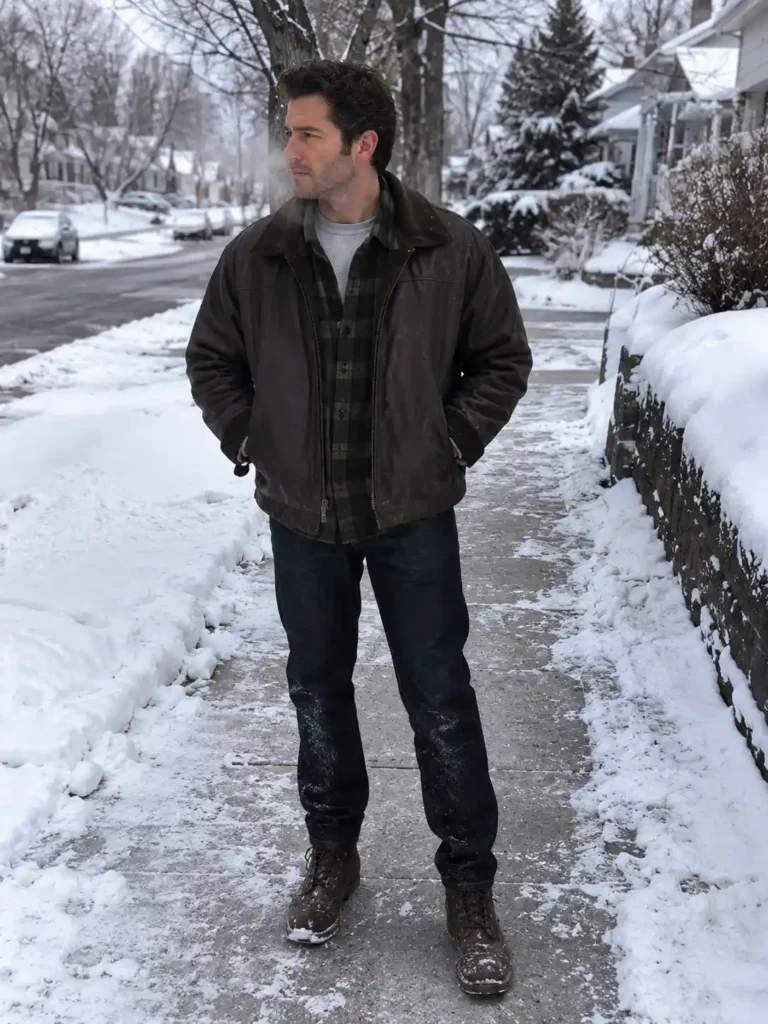
Skip the cotton t-shirt. Cotton holds sweat against your skin and turns into a cold, damp sponge the second you start moving.
Merino wool or a synthetic wicking fabric does the actual job here.
REI’s guide on what to wear skiing and snowboarding breaks this down well: base layer wicks moisture, mid layer traps heat, outer layer blocks wind and snow.
Simple system, and it works.
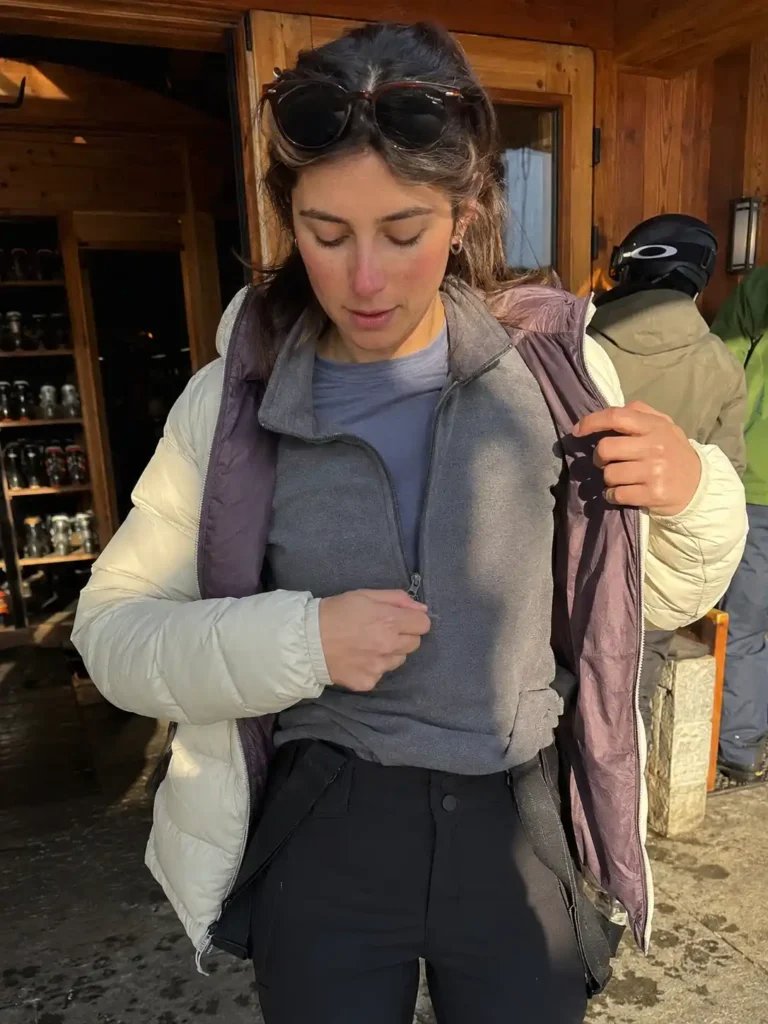
Add a mid-layer that pulls double duty
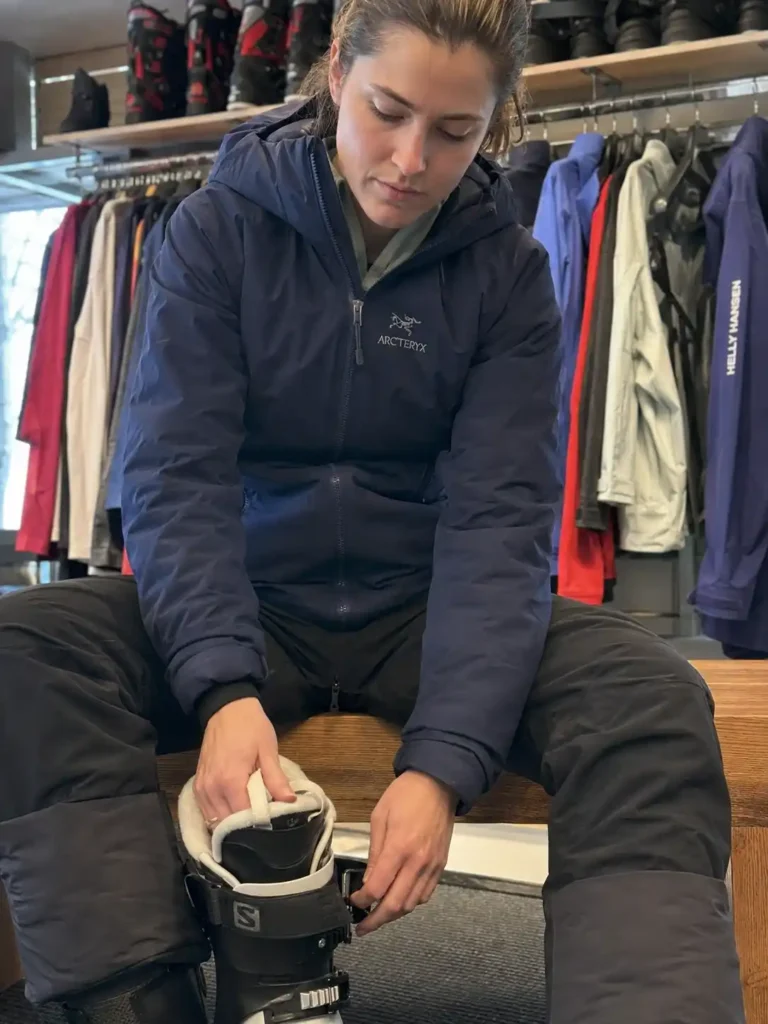
A fleece pullover or a thin puffy vest under your jacket adds warmth without turning you into the Michelin Man.
My personal pick is a lightweight puffer vest. It keeps my core warm, doesn’t restrict my arms, and rolls up small enough to stuff in my bag once the sun comes out.
IMO, this is the most underrated piece in anyone’s ski wardrobe.
People spend all their money on the jacket and forget the layer doing half the actual warming.
How many layers is too many?
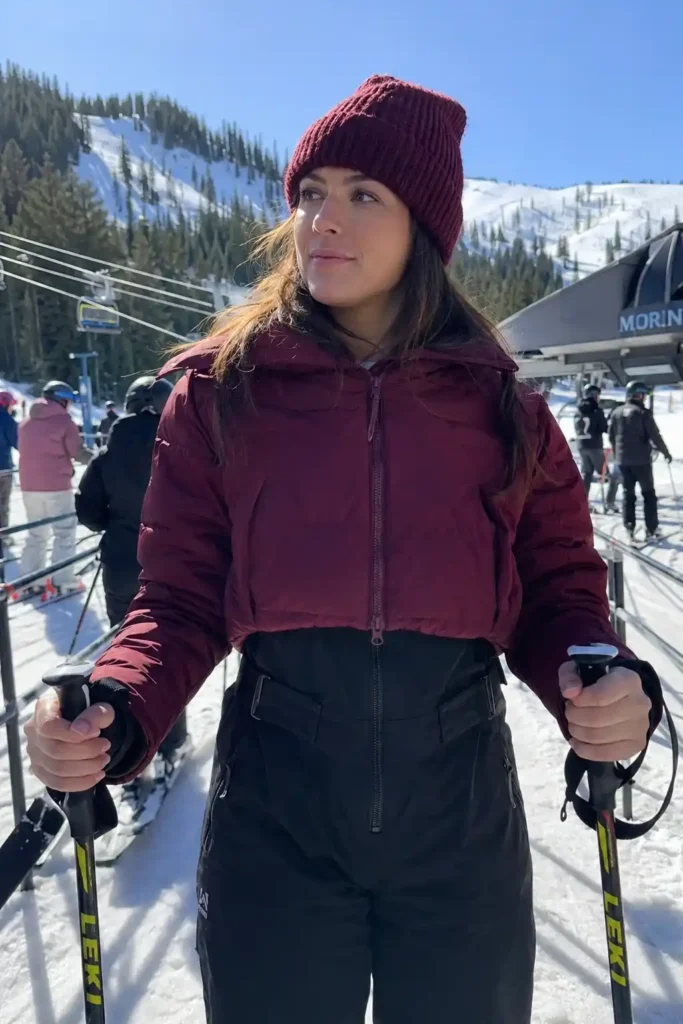
Three is usually the sweet spot: base, mid, outer. Add a fourth only if you genuinely run cold or you’re facing single-digit temperatures on the mountain.
I learned this the hard way in Colorado, where I once wore four layers under my jacket for a bluebird day that turned out to be 28°F with full sun.
I spent the entire afternoon overheating and stripping layers off at the top of every lift, which is its own kind of miserable.
Check the forecast the morning of, not the week before.
Mountain weather changes fast, and packing based on old information gets you either freezing or drenched in your own sweat.
Getting the fit right before you worry about style
Ever tried on a jacket that looked great on the hanger and then felt like a straightjacket the second you raised your arms to grab a chairlift bar?
Fit ruins more outfits than color ever will.
A good ski jacket should let you move your arms fully overhead without the hem riding up past your hips.
Sit down and mimic buckling your boots. If the jacket bunches uncomfortably at your shoulders or the sleeves creep up your wrists, size up or try a different cut entirely.
Length matters more than people realize. A hip-length jacket pairs well with high-waisted pants and gives you that clean, proportioned look apres-ski photos are built around.
A shorter, cropped jacket looks great with bibs but leaves more skin exposed at the waist if you’re not wearing something underneath that covers the gap.
Ski jacket styles and how to pick yours
Not every jacket suits every skier. Here’s a quick breakdown I wish someone had handed me before my first gear shopping trip.
| Jacket type | Best for | Style vibe |
|---|---|---|
| Insulated (puffer-style) | Cold climates, casual skiers | Cozy, rounded, cute |
| Shell (no built-in insulation) | Layering flexibility, warmer days | Sleek, sporty, minimal |
| 3-in-1 (shell plus zip-out liner) | Travelers who want one jacket for everything | Practical, slightly bulkier |
| Cropped ski jacket | Apres-ski, high-waisted pants or bibs | Trendy, figure-flattering |
An insulated jacket works best if you run cold or you’re skiing somewhere brutal.
REI’s buying guide for insulated outerwear is worth a read if you’re torn between down and synthetic fill. Down is warmer for its weight but useless when wet.
Synthetic insulation handles moisture better, which matters if you’re the type who ends up sitting in snow at some point (guilty).
A shell jacket gives you more control. You add or remove layers as the temperature swings, which happens constantly on the mountain.
Morning runs feel arctic, afternoon runs feel like spring.
Cute ways to style your ski jacket on the slopes
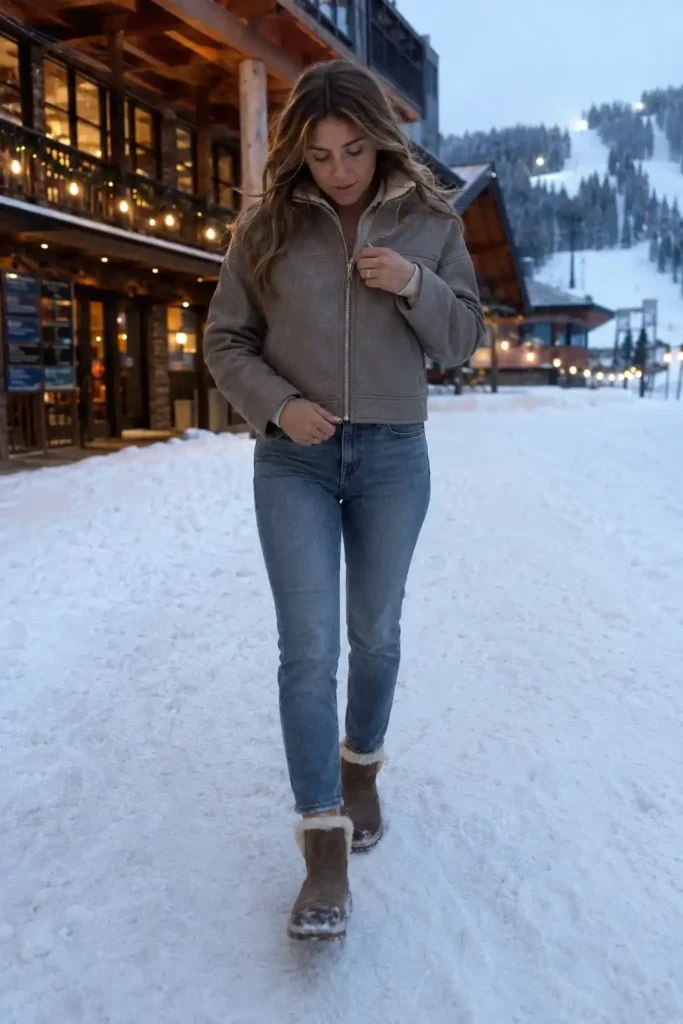
Ever wonder why some people look put together on the mountain while everyone else looks like they raided a lost and found bin? It comes down to a few small choices.
- Match your jacket to one accent color, not everything. Pick your goggles or beanie to echo a color already in the jacket instead of adding five competing shades.
- Tuck your jacket into high-waisted ski pants for a cleaner silhouette. Loose jacket over loose pants reads sloppy fast.
- Keep your hardware visible. A jacket with a nice zipper pull or a contrast lining looks intentional when you leave the top few inches slightly open at the neck.
- Choose a beanie that actually fits your head shape. This sounds small. It changes everything about how put together you look in photos.
A cropped jacket paired with bib-style snow pants is one of my favorite combos right now.
It’s flattering, it’s warm at the waist where bibs already overlap, and it photographs well against snow.
This isn’t a new trend exactly, but it’s having a real moment again this winter.
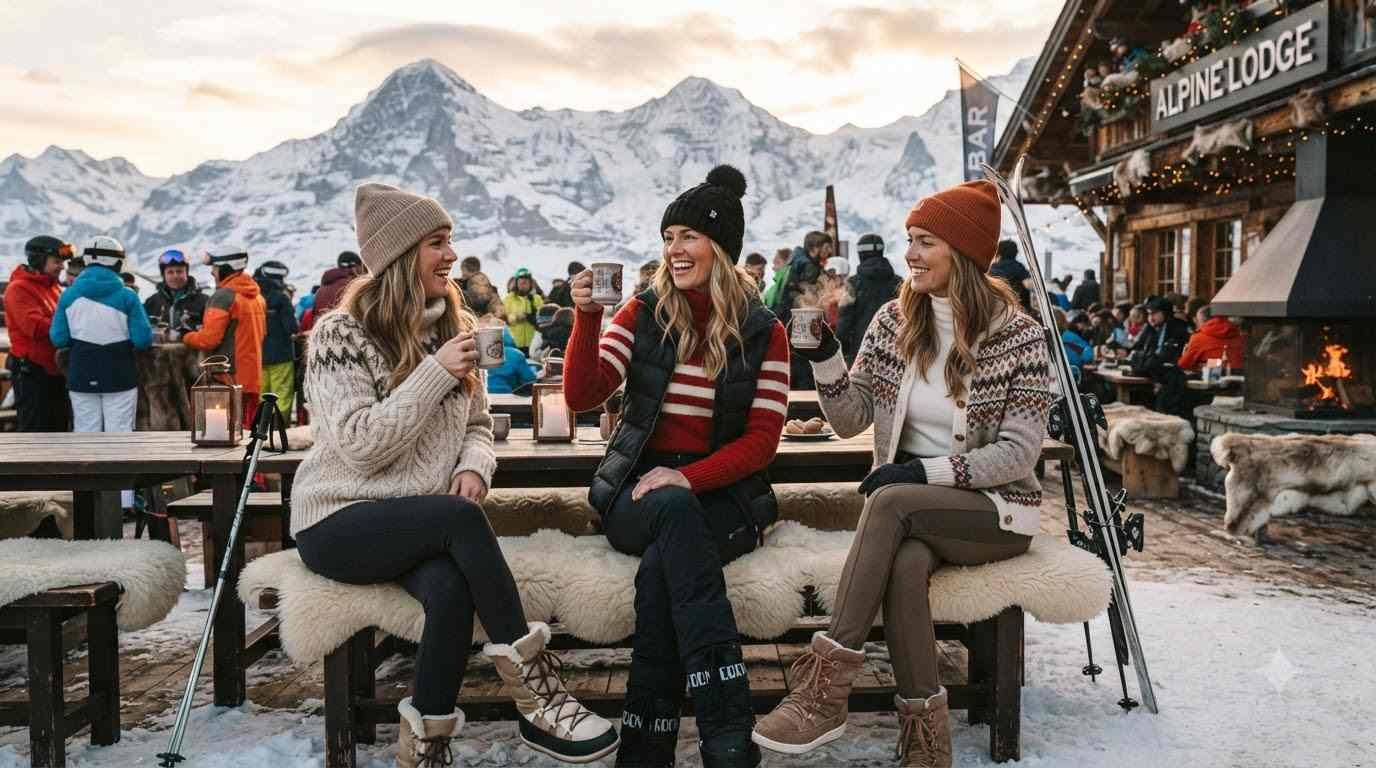
Apres-ski: turning your jacket into a lodge-ready look
This is where most people give up and just throw on sweatpants. Understandable, but you can do better with almost zero extra effort.
Swap what’s underneath, keep the jacket
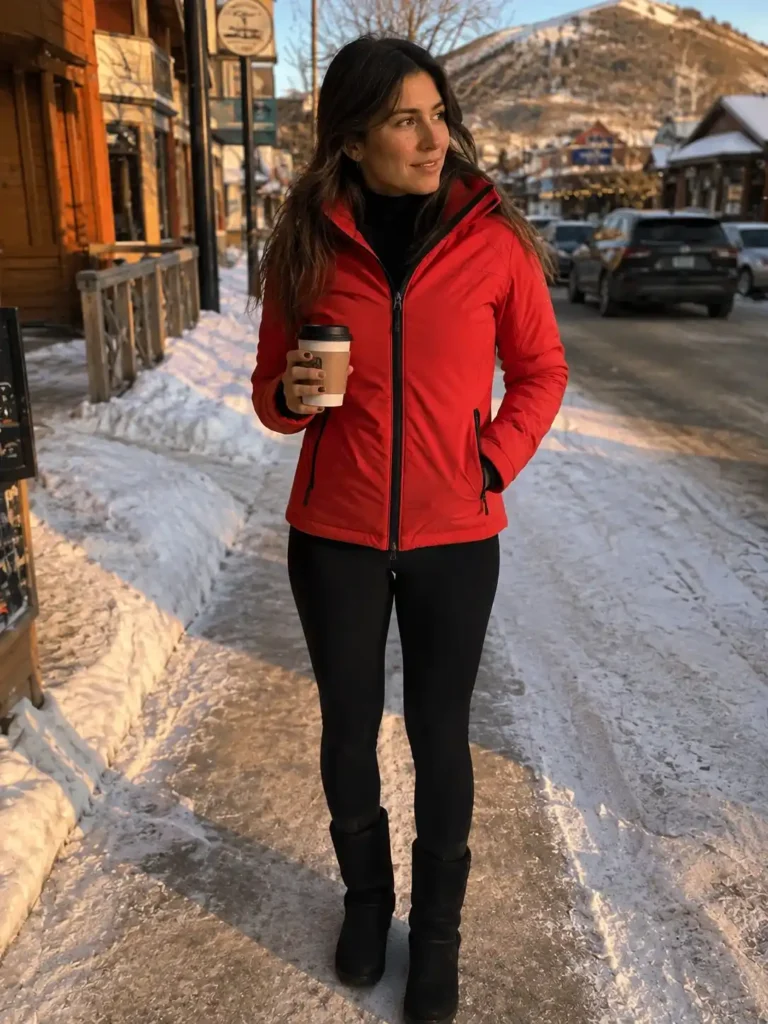
Once you’re off the mountain, the ski jacket can stay.
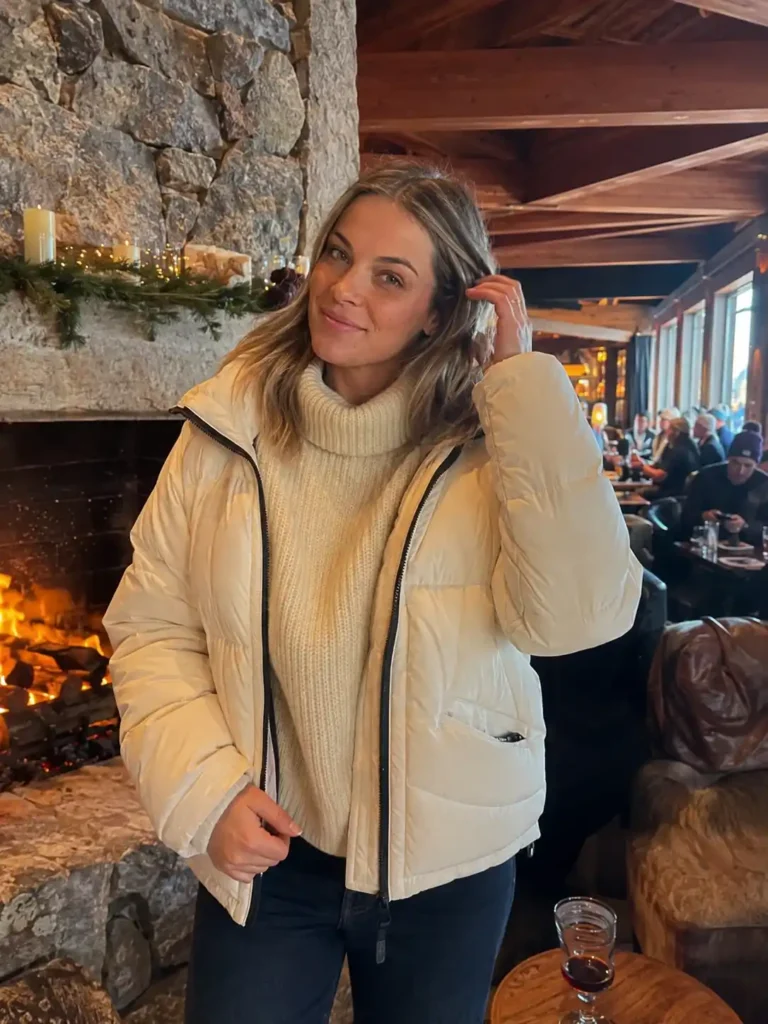
Swap your base layer for a chunky knit sweater or turtleneck, and swap ski pants for leggings or slim jeans. Suddenly your technical jacket reads as a fashion piece instead of gear.
Green Wedding Shoes has a solid rundown of the apres-ski aesthetic if you want more outfit inspiration.
Their point about sticking to a cozy, retro-sporty mood rather than overdressing is a good one. Apres-ski isn’t a red carpet. It’s a fireplace with good lighting.
Accessories that make the outfit
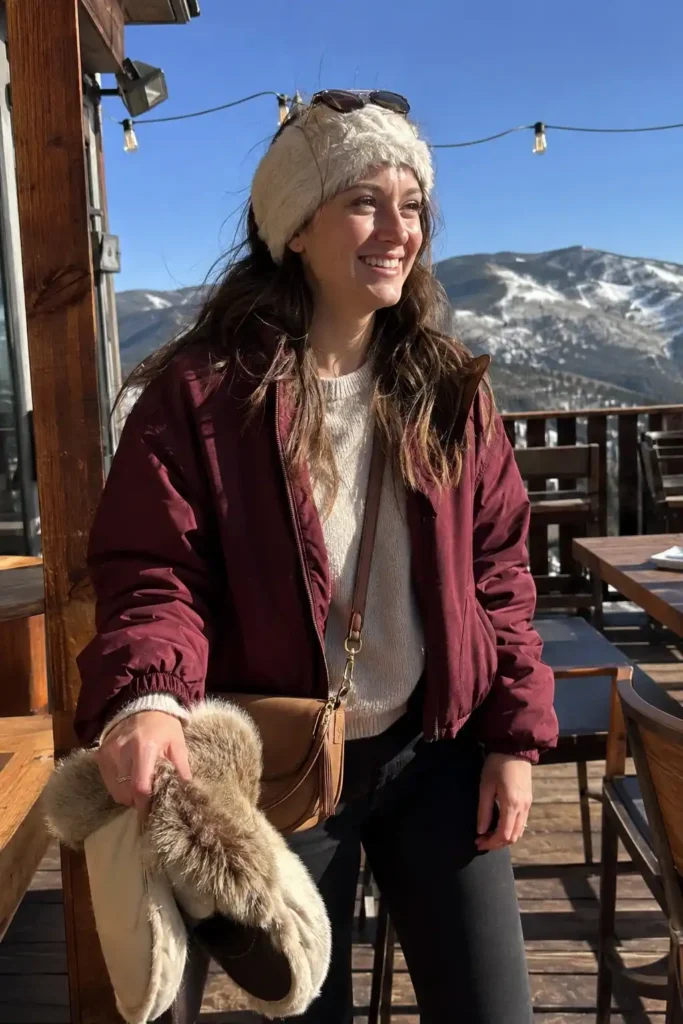
- Chunky knit beanie or a faux fur headband
- Statement mittens (leather or shearling look elevated instantly)
- A crossbody bag small enough to not get in the way of hot cocoa
- Sunglasses even indoors, because lodge windows are bright and honestly it looks great in photos
Footwear that doesn’t ruin the vibe
Ski boots are not apres-ski shoes. Nobody wants to hobble around the lodge in them. Pack a pair of shearling-lined or waterproof ankle boots.
They keep your feet warm on the walk from slope to bar and look intentional rather than like an afterthought.
Color and pattern pairing tips
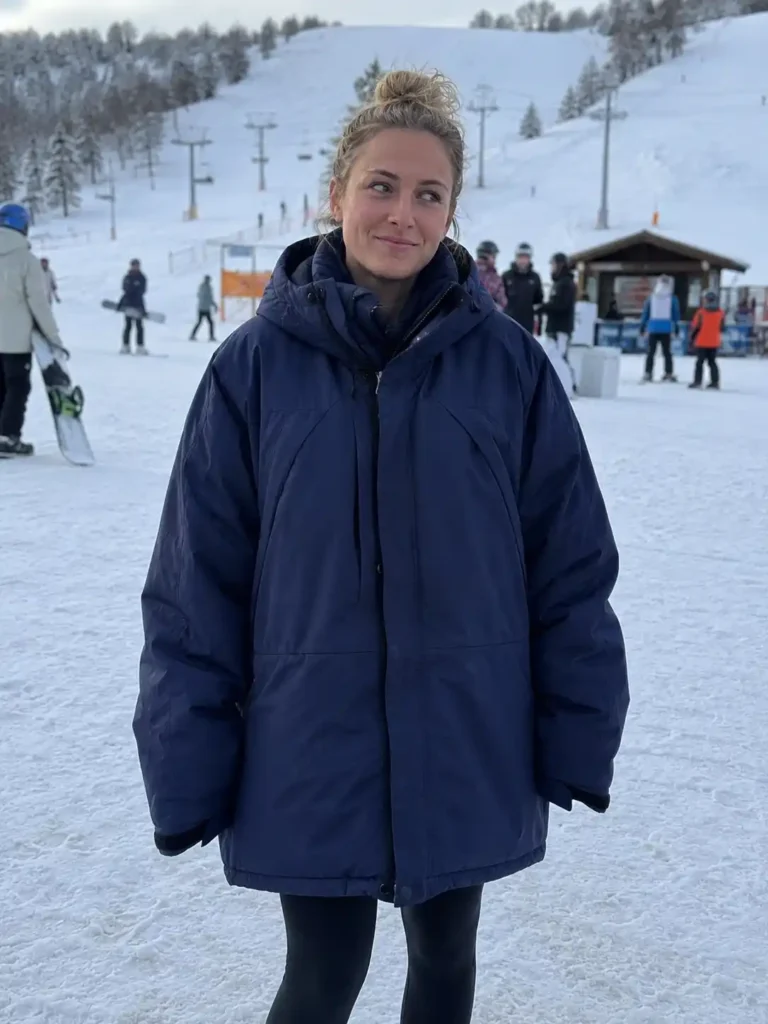
Here’s a slightly random thought, but stay with me: apres-ski style borrows more from ski chalet interior design than people realize.
Think warm neutrals, cream, caramel, deep red, forest green, with one metallic or bold accent.
It’s basically the same palette as a nice cabin, and that’s not an accident.
According to Perfect Moment’s 2026 ski fashion trends, bold colors and high-collared silhouettes are having a big season, paired with more sustainable knitwear off the slopes.
If your jacket is already a loud color, keep everything else simple. If your jacket is neutral, this is your chance to go a little wild with accessories.
A few pairing combos that consistently work:
- Black jacket with a cream sweater and camel-colored accessories
- Bright red jacket with all-black layers underneath (this is genuinely stunning in photos, wow)
- White or cream jacket with a plaid scarf and dark denim
- Olive or forest green jacket with burgundy accents
Common ski jacket styling mistakes I’ve made so you don’t have to
Let me save you some trial and error, because I’ve made every single one of these.
- Wearing a jacket two sizes too big “for layering room.” You’ll look shapeless and you’ll actually lose heat because there’s too much air trapped inside.
- Skipping the mid-layer and relying entirely on the jacket. This backfires the moment wind picks up.
- Ignoring pocket placement when picking a bag or accessories, then fighting your own jacket all day trying to reach your phone.
- Buying a jacket purely for apres-ski photos and realizing on the lift that it’s not actually warm enough. This is insane in hindsight, but I did it, and I paid for it with cold shoulders on a black diamond run.
- Choosing a jacket color that matches nothing else you own, then building an entire new wardrobe around one impulse purchase. Been there. My closet still has the receipts.
- Leaving the powder skirt undone on deep snow days and wondering why snow keeps sneaking up under the jacket. Small detail, huge difference on a fresh powder morning.
None of these mistakes are dealbreakers.
They’re just the kind of thing you only learn by getting cold once or twice, which is honestly how most good gear knowledge gets passed down anyway.
FAQ
Do I need a different jacket for skiing versus apres-ski? Not necessarily. A cropped or insulated jacket that fits well can work for both if you swap what’s underneath. Save a second, lighter jacket for warmer trips or milder climates if your budget allows it.
What color ski jacket photographs best in the snow? Bright colors like red, cobalt, or yellow pop against white snow and show up well in photos. Neutrals look elegant but can blend into overcast skies, so pair them with a colorful beanie or scarf if photos matter to you.
Can I wear my ski jacket as a regular winter coat in the city? Yes, especially insulated or cropped styles. Just swap the technical base layers for a cute sweater and you’ve got a coat that works for a coffee run just as well as a chairlift.
So, here’s my actual final thought: the best ski jacket outfit is the one that keeps you warm enough to actually enjoy the mountain, because a cute outfit doesn’t mean much if you’re too cold to stay outside past noon.
Pick your layers first, let the styling follow, and don’t be afraid to wear the same jacket from the summit to the fireplace.
What’s your go-to apres-ski color combo this winter? Save this guide, pin your favorite look, and tell me in the comments what you’re wearing on your next trip.
