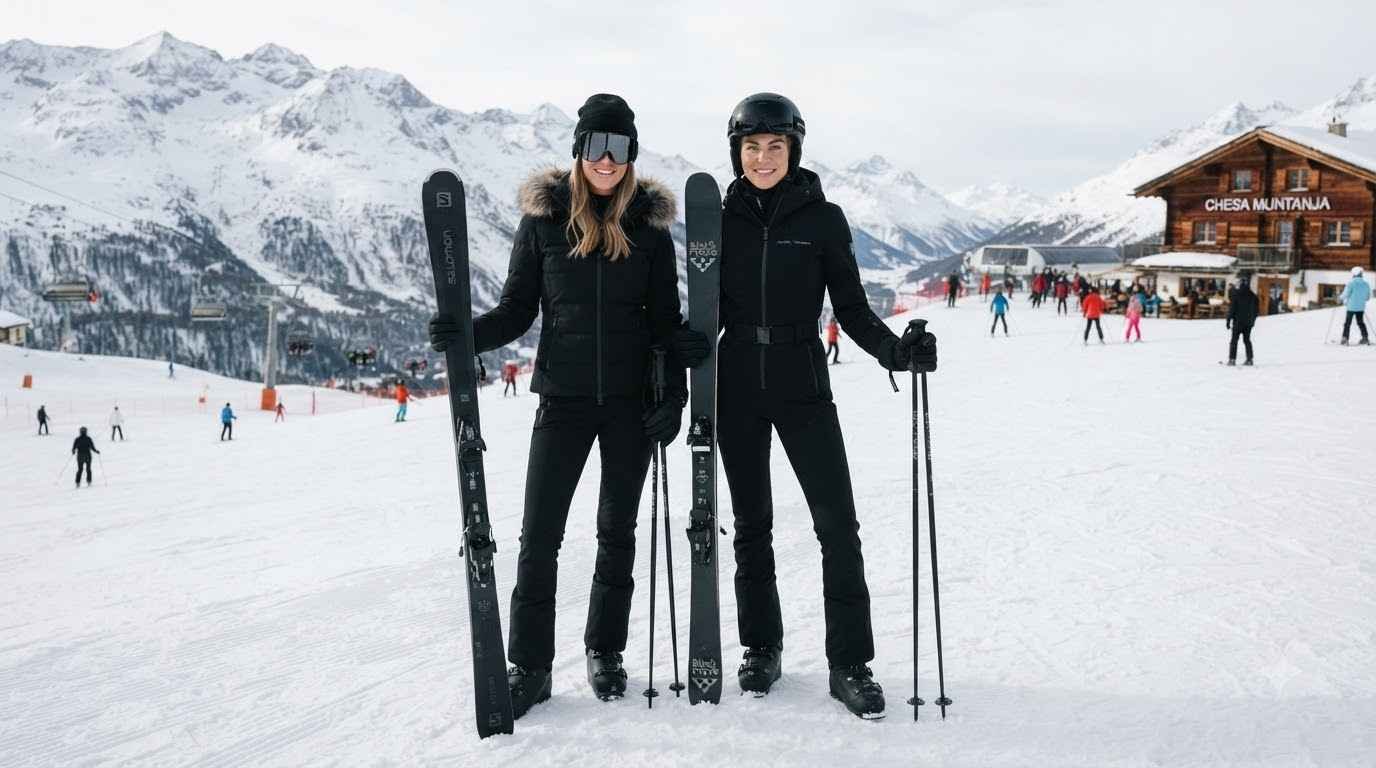
Black on the slopes isn’t just a color choice. It’s a whole mood.
I started skiing in my twenties wearing whatever my sister handed down to me: a neon orange jacket that made me look like a traffic cone with legs. It was warm, sure, but I never once felt good in photos.
Then I switched to an all-black kit for a trip to Park City, and something clicked. I looked put together. I felt confident.
And I stayed just as warm, if not warmer, because dark layers trap heat a little more efficiently in direct sun.
This guide pulls together 15 outfit combinations I’ve either worn myself, tested on friends, or researched deeply enough to trust.
Every one is built for real cold, real snow, and real Pinterest-worthy photos. Let’s get into it.
Why all-black ski outfits work so well
Black reads as sleek no matter the cut of your jacket or pants.
It photographs beautifully against white snow, which is exactly why you see so many all-black ski fits saved and repinned every winter.
There’s also a practical side: darker fabrics absorb more solar heat, so on sunny bluebird days you might find yourself needing fewer layers underneath.
That said, black isn’t automatically flattering just because it’s black. Fit, texture, and layering matter more than color alone.
A boxy all-black jacket paired with baggy pants can look sloppy fast.
The outfits below focus on silhouette first, warmth second, and color last, since black is doing most of the aesthetic work already.
Matte shell jacket with fitted base layer
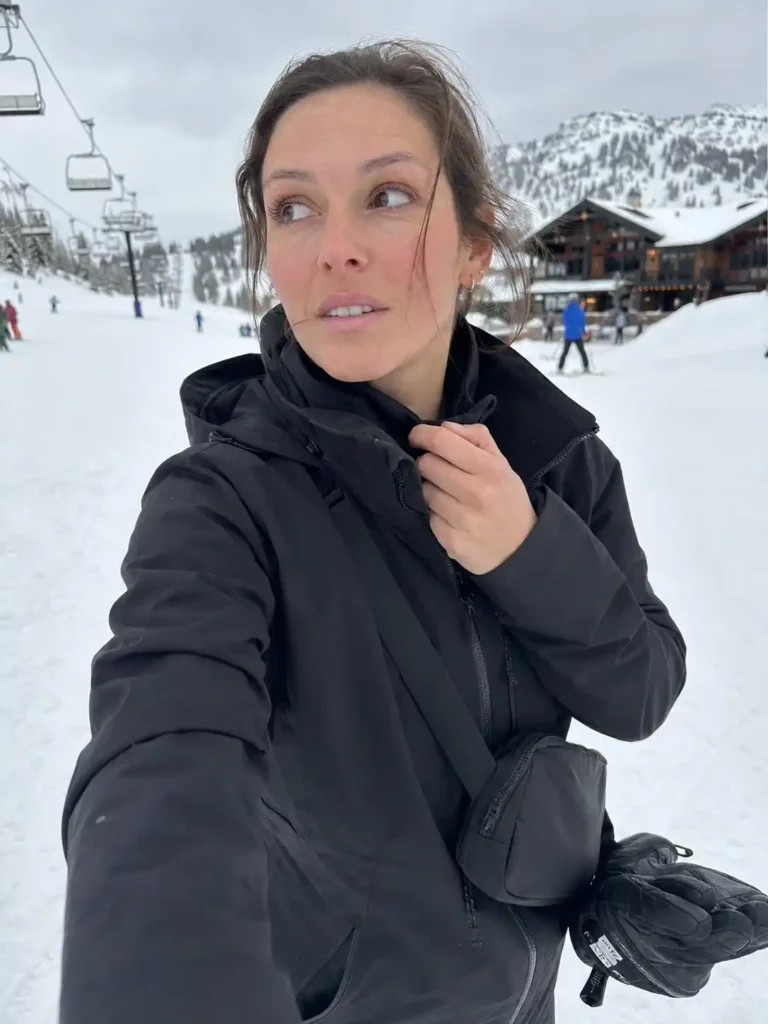
Start with a matte black shell, not a shiny one. Shiny puffer fabric photographs a little cheap in daylight.
A matte softshell from a brand like Patagonia holds its shape better and looks intentional rather than accidental.
Underneath, wear a fitted merino wool base layer.
Merino regulates temperature far better than synthetic thermals, and it doesn’t hold odor after a full day on the mountain.
I learned that the hard way after three days in polyester thermals during a Whistler trip. Never again.
Cropped puffer with high-waisted ski pants
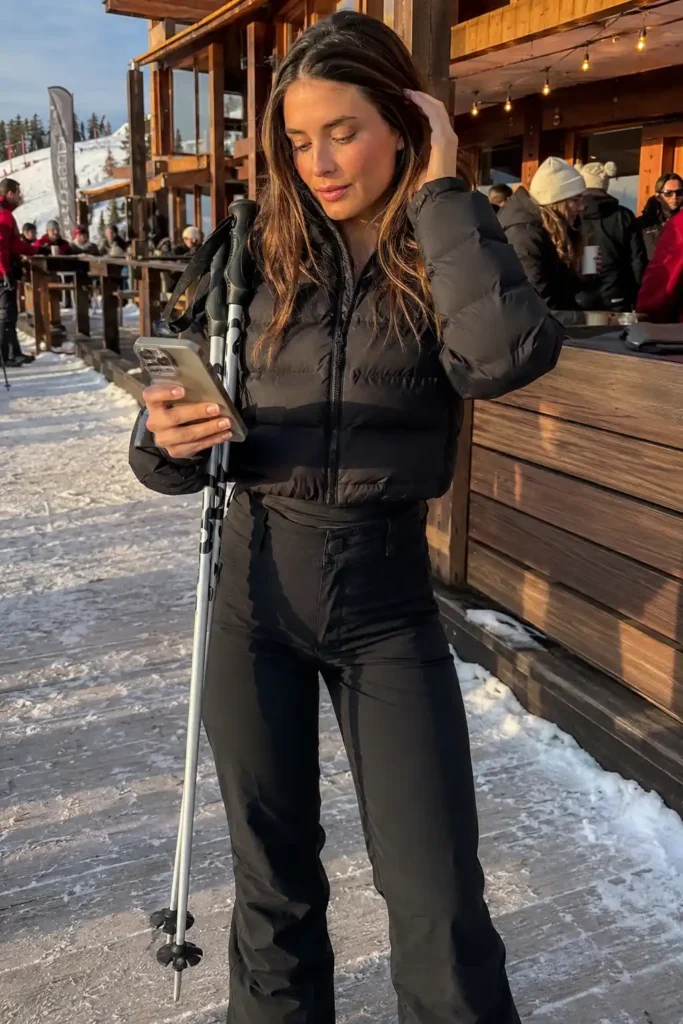
This combo is having a real moment on Pinterest right now, and honestly, it deserves the attention.
A cropped black puffer paired with high-waisted, slightly flared ski pants creates a waist-defined silhouette that most bulky ski gear just doesn’t offer.
Look for pants with reinforced knees and a solid waterproof rating (10,000mm or higher). Cute doesn’t matter if you’re soaked by lunch.
One-piece black snowsuit
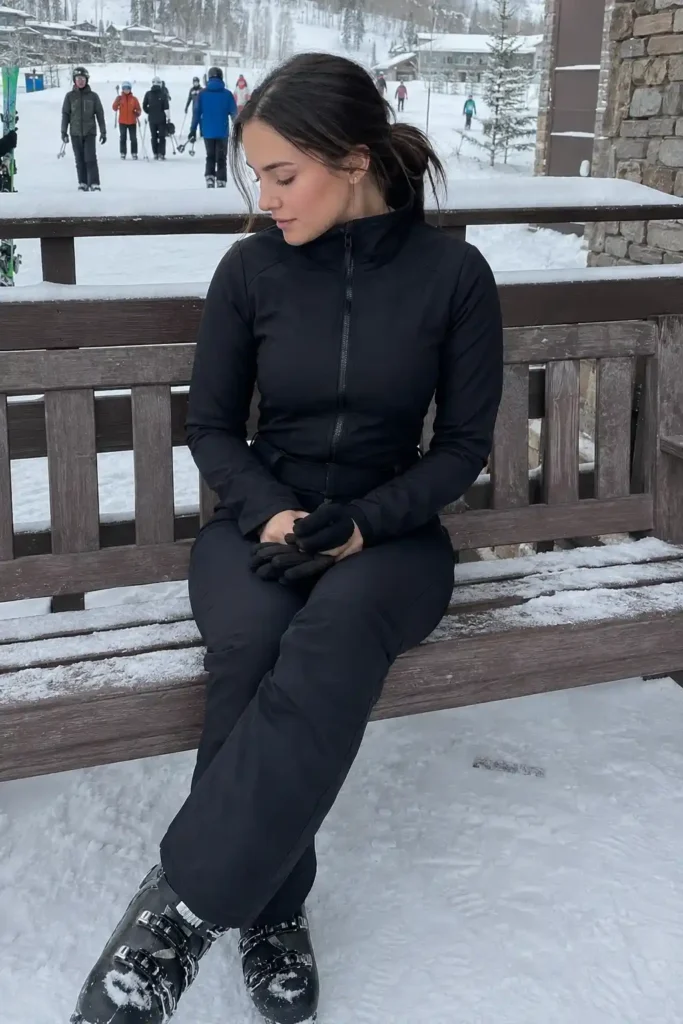
I resisted the one-piece trend for years. Then I tried one and understood the appeal immediately.
No gap at the waist means no snow sneaking in when you fall, and yes, you will fall.
A fitted one-piece in matte black also happens to be one of the most photogenic outfits on this list. Just size correctly.
These run snug through the shoulders on most brands.
Black bomber-style ski jacket with contrast zippers
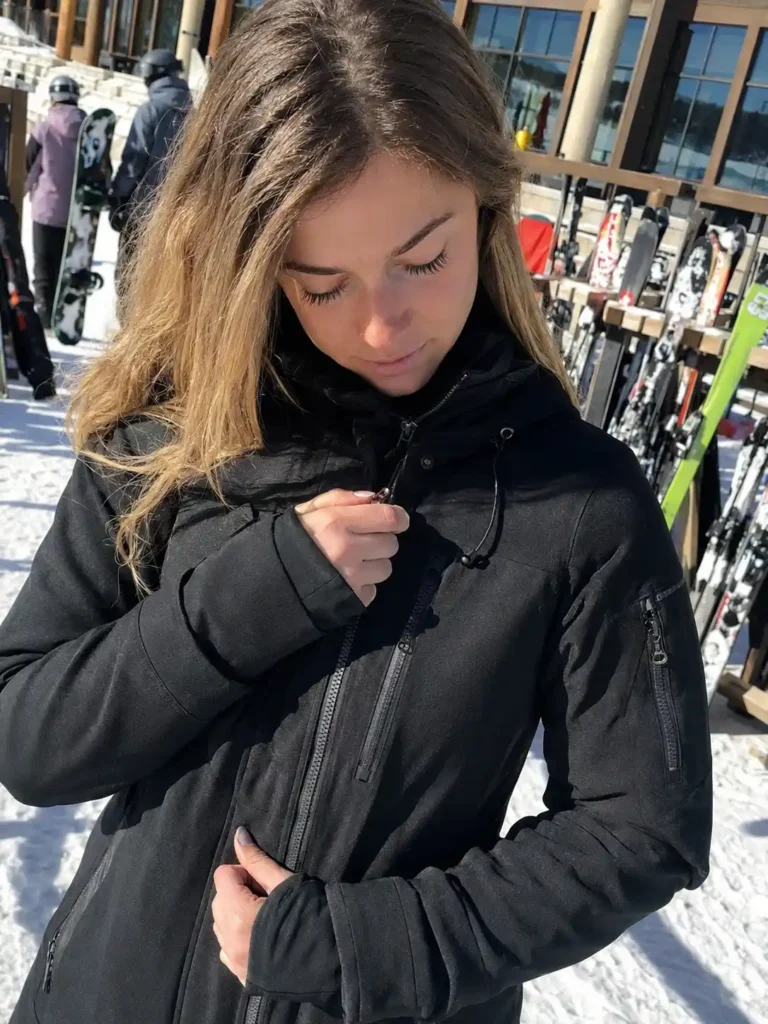
A bomber-cut jacket in black with silver or gunmetal zippers adds just enough visual interest without breaking the monochrome look.
It reads more streetwear-meets-slope than traditional ski gear, which is exactly the aesthetic a lot of younger skiers are chasing this season.
Faux fur trim hood
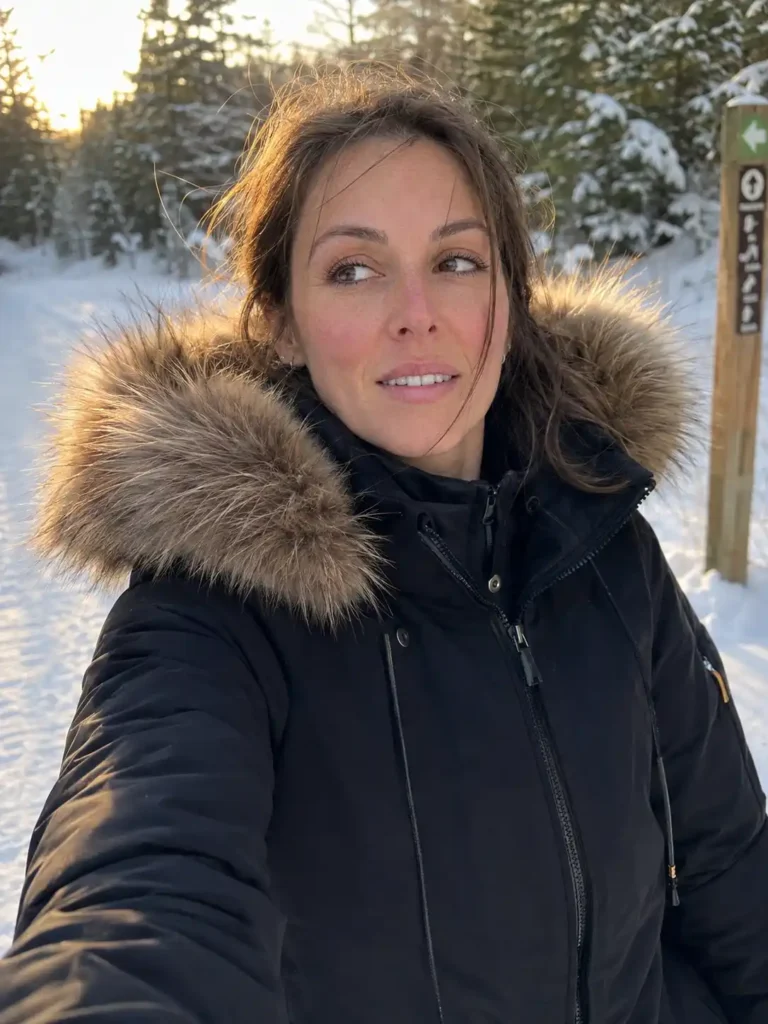
Small detail, big difference. A faux fur trim around the hood softens an otherwise stark all-black outfit and keeps wind off your face.
Genuine coyote or rabbit fur trims exist, but faux versions perform nearly as well and cost a fraction of the price.
Black turtleneck base layer peeking out
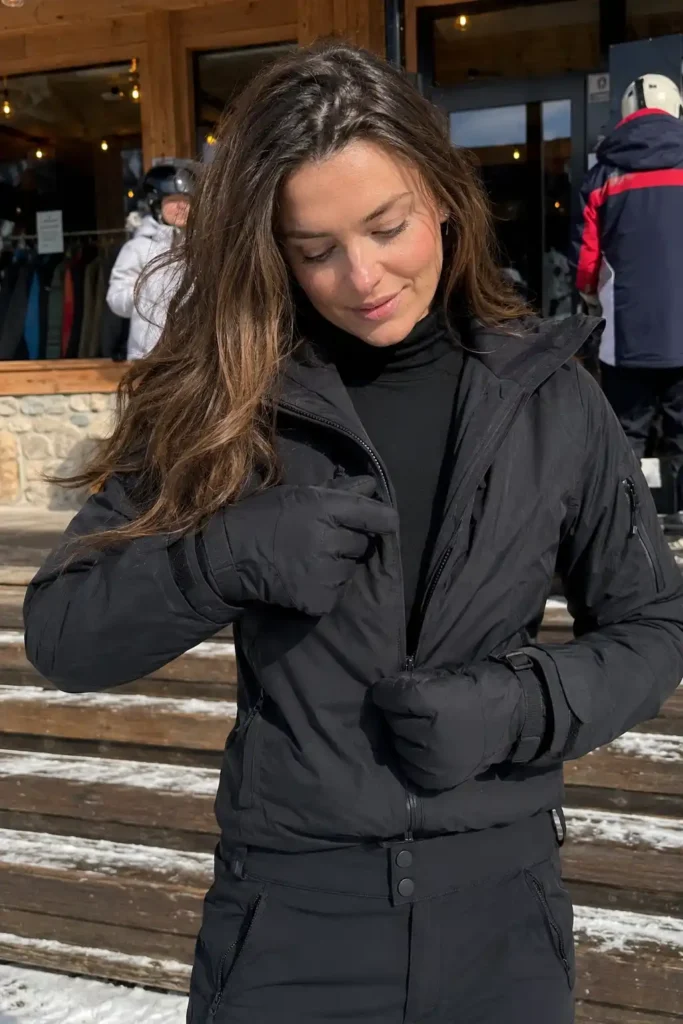
Let a black turtleneck base layer show slightly at the collar of your jacket.
It’s a small styling trick, but it makes the whole outfit look layered and considered rather than thrown together at 6am in a cold parking lot (we’ve all been there).
Matching black balaclava and goggles
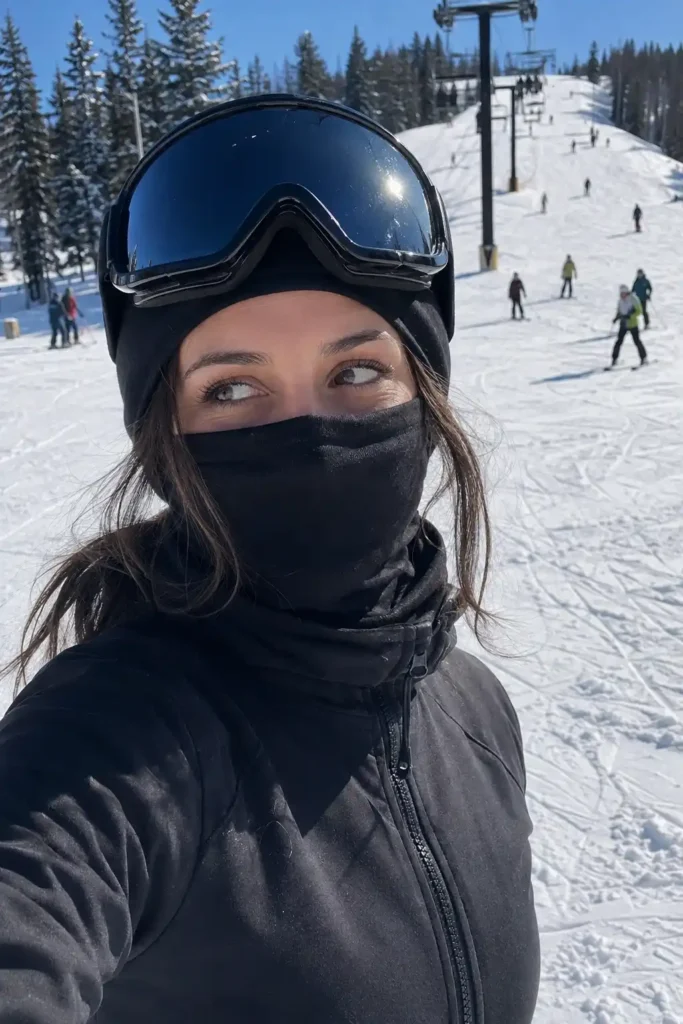
Balaclavas went from purely functional to genuinely fashionable over the last few winters.
A black balaclava paired with black-lensed goggles gives serious main character energy. IMO this is the single easiest way to elevate an otherwise basic outfit.
Wide-leg black snow pants
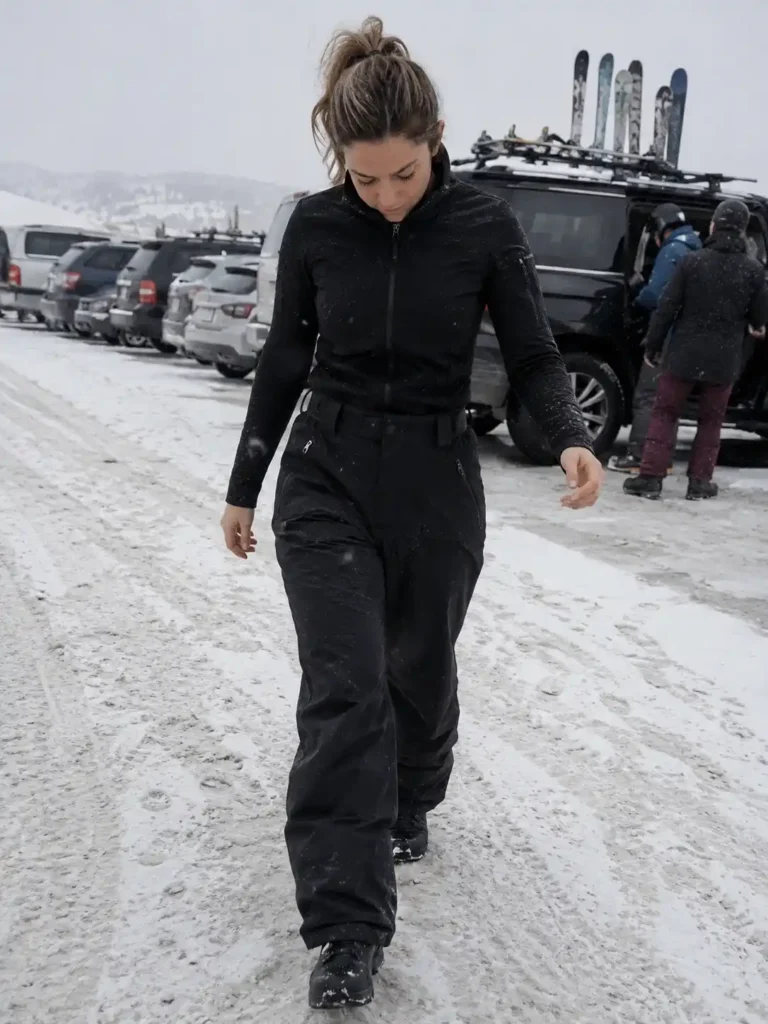
Wide-leg cuts are trending hard away from the skinny ski pant era.
They move more freely, layer easier over base layers, and honestly just look cooler in motion shots.
Brands like Burton and The North Face both make solid wide-leg options built for actual mountain conditions, not just Instagram.
Black puffer vest over a fitted jacket
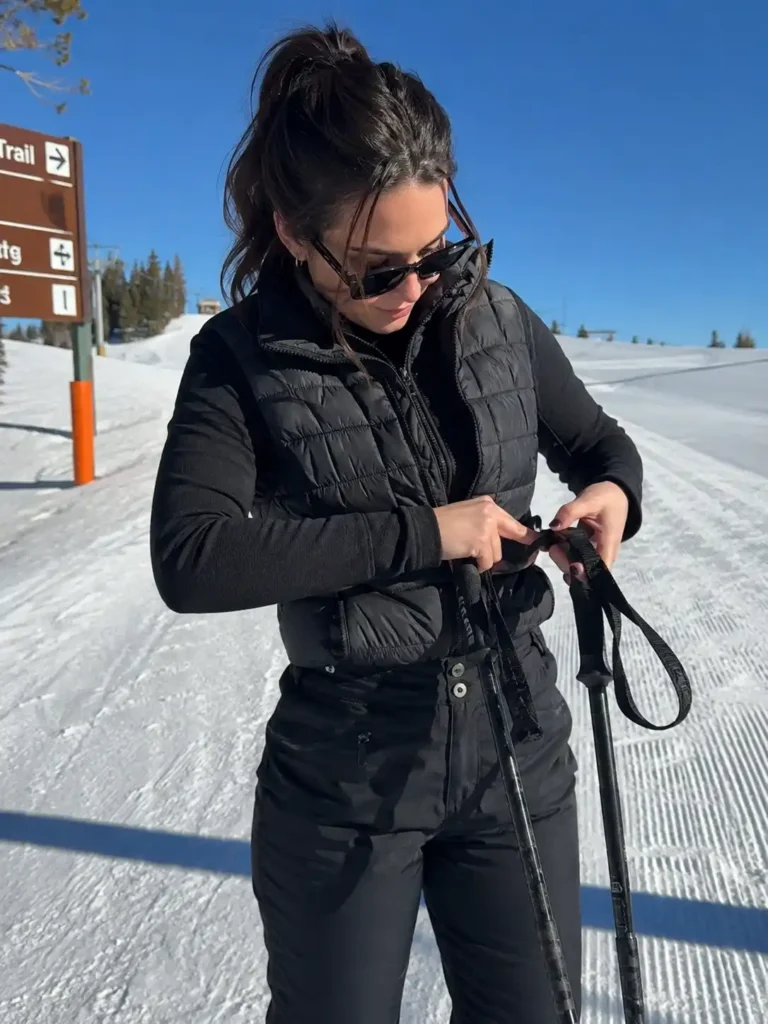
Layering a sleeveless puffer vest over a fitted black shell adds visual texture and extra core warmth without bulking up your arms.
Your arms move a lot when you ski. Keeping them mobile matters more than people realize.
All-black fit with a single pop of metallic hardware
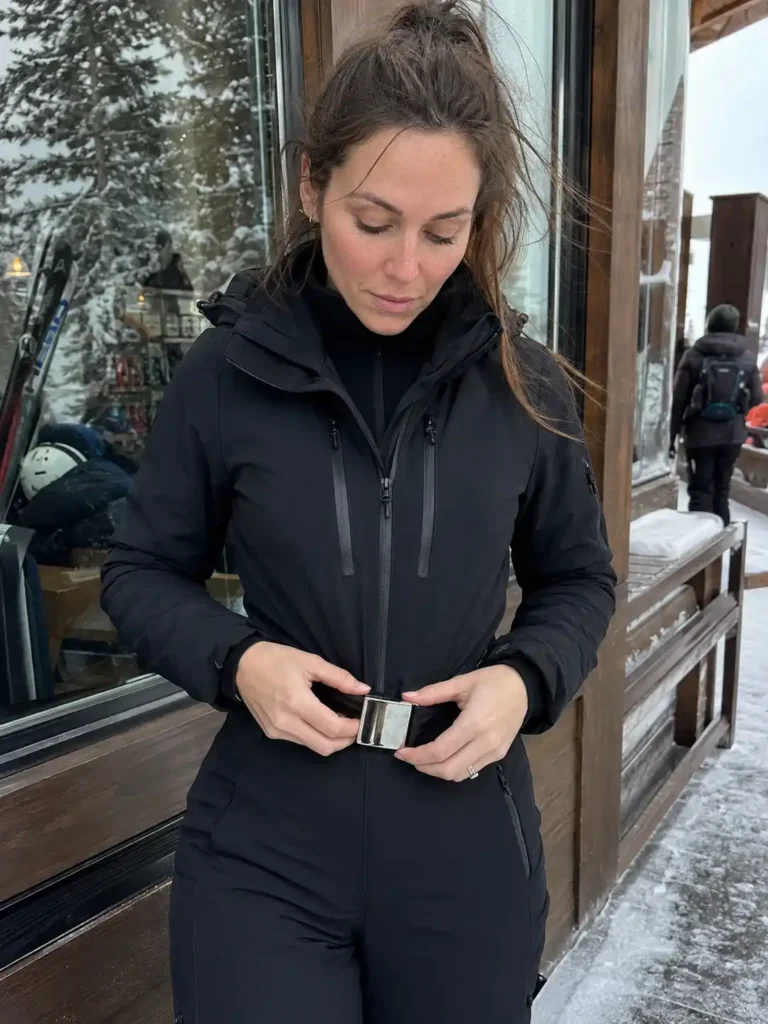
Buckles, zipper pulls, or a metallic belt add just enough shine to break up an otherwise flat black outfit.
This is one of those details that looks accidental but is almost always intentional.
Black thermal leggings under a fitted ski pant
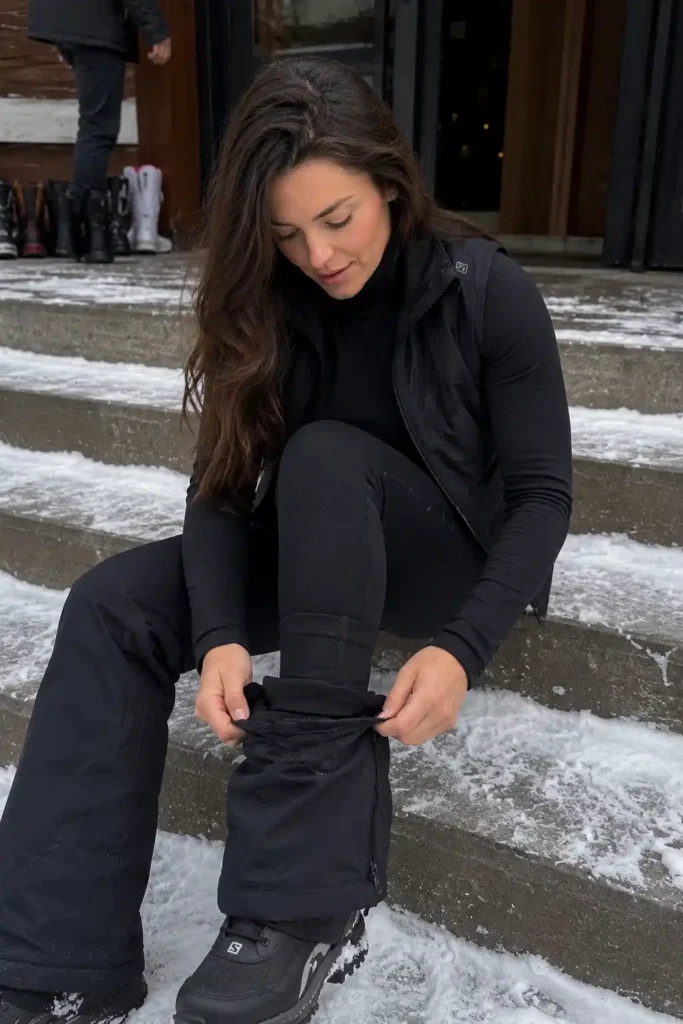
For genuinely freezing days, layer thermal leggings under your pants rather than relying on the pants alone.
Fleece-lined ski pants exist, but a separate thermal layer lets you adjust warmth without needing five different pairs of pants in your closet.
Structured black parka for lift-heavy days
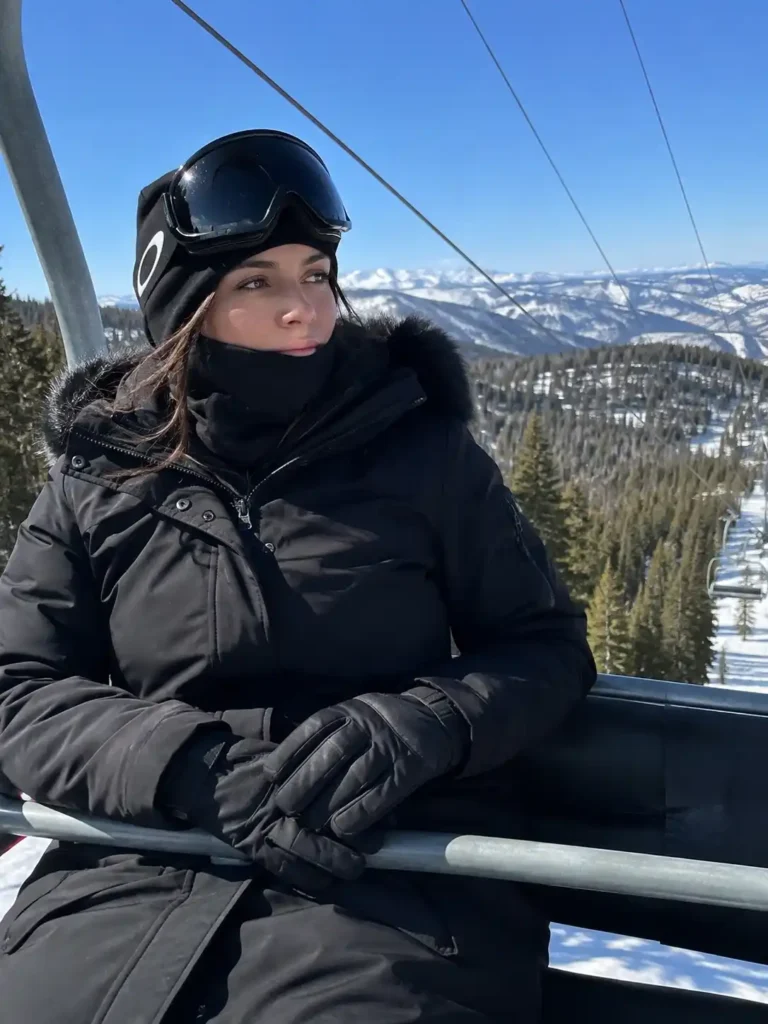
If you’re spending more time on chairlifts than actually skiing (no judgment, some of us are there for the views), a longer structured parka keeps your core and thighs warmer while sitting still.
Movement generates heat. Sitting doesn’t.
Cropped puffer with mid-rise leggings for apres-ski
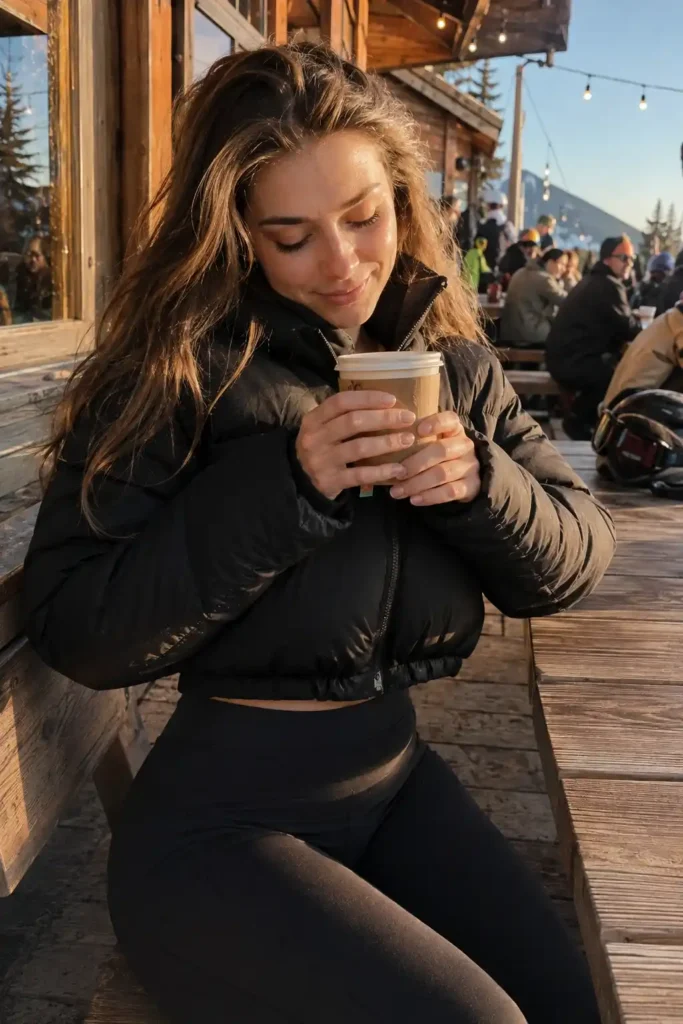
Not every outfit on this list needs to survive an actual black diamond run.
A cropped puffer with mid-rise black leggings works beautifully for apres-ski coffee or lodge lounging, where you want to look the part without the bulk of full ski gear.
Head-to-toe monochrome with a colored beanie
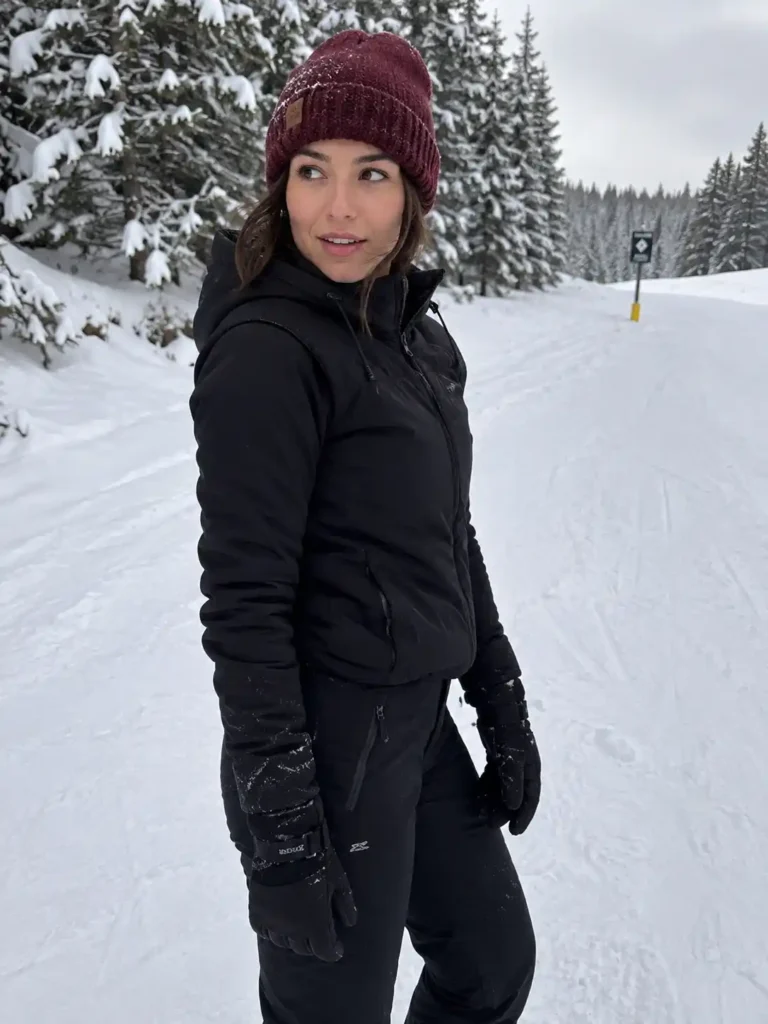
Full black from head to toe reads dramatic, sometimes a little too dramatic.
Breaking it up with one colored beanie, think burgundy or forest green, keeps the outfit from looking like a funeral procession on skis.
Black tech shell with removable insulated liner
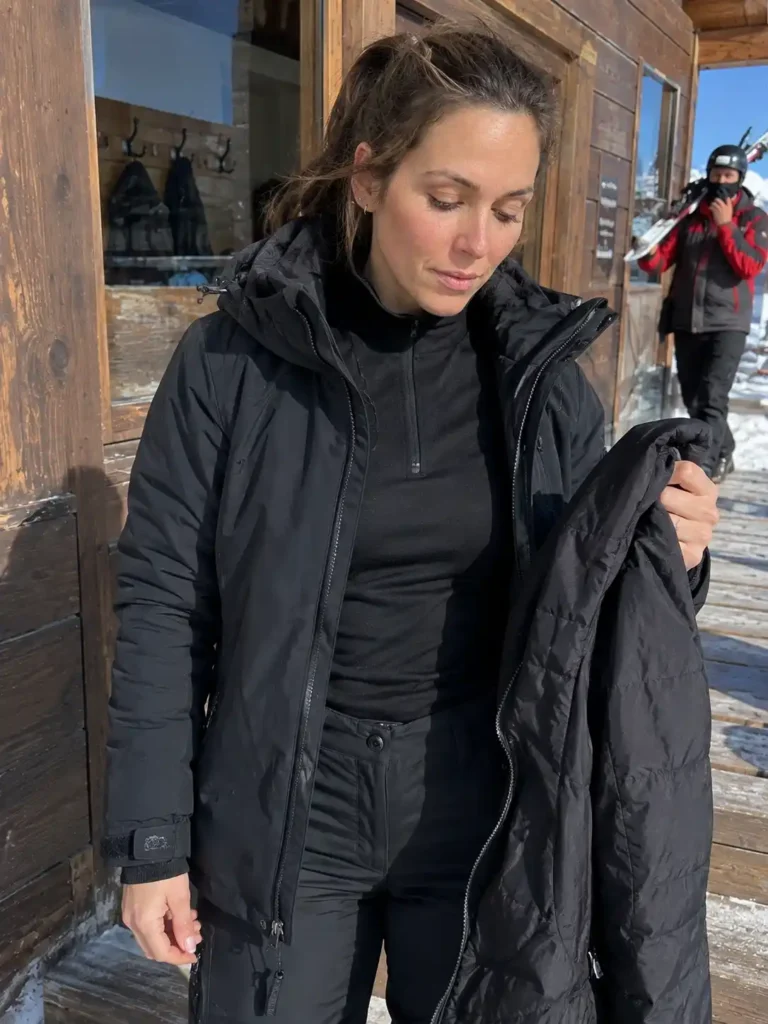
This is the most practical entry on the list, and I stand by it fully.
A 3-in-1 tech shell with a removable insulated liner lets you wear the shell alone on warmer days and zip the liner back in when temperatures drop.
One jacket, two seasons of use, and it still looks sharp both ways.
Quick layering reference
Here’s a simple breakdown I keep coming back to when packing for a ski trip:
Layer type | Material to look for | Purpose Base layer | Merino wool or synthetic thermal | Moisture control, warmth Mid layer | Fleece or light puffer | Insulation Outer shell | Waterproof, windproof fabric | Weather protection
Keep it that simple and you’ll rarely overpack or underdress.
What to actually check before buying
A few things matter more than color when you’re shopping for ski gear, even if the aesthetic is the whole reason you clicked this article.
Waterproof rating: Look for at least 10,000mm, higher if you ski in wet coastal snow rather than dry powder.
Insulation type: Down packs warmer for its weight but performs worse when wet. Synthetic insulation holds up better in damp conditions.
Fit through the shoulders: This is where most jackets either move well or feel restrictive. Try lifting your arms overhead in the fitting room. If it rides up uncomfortably, size up.
I’ll admit, I once bought a jacket purely because it looked incredible in a mirror selfie, only to find out on the mountain that the arms were too tight to actually raise my poles properly.
Lesson learned. Function first, aesthetic second, even on a list literally about aesthetics.
A quick tangent, unrelated but worth mentioning: I’ve noticed black gear tends to show salt stains from de-icing chemicals in parking lots more than lighter colors.
Nobody talks about this. Wipe your boots down before you get in the car.
Frequently asked questions
Does wearing all black make you colder on the slopes? Not really.
Darker fabrics actually absorb more solar heat on sunny days, which can make you feel slightly warmer, not colder.
Insulation quality matters far more than color when it comes to actual warmth.
Is an all-black ski outfit practical for beginners? Yes, and honestly it might be smarter for beginners.
Black hides the inevitable snow stains and minor scuffs from falling a lot better than lighter colors do, which happens plenty when you’re still learning.
Can I mix brands in an all-black ski outfit? Absolutely. Most skiers do. Just make sure your outer shell and base layers are compatible in terms of warmth rating so you’re not overheating or freezing depending on the day’s temperature.
Final thought
An all-black ski outfit gives you warmth, structure, and a look that photographs well in every kind of light, from bluebird skies to grey overcast lodge days.
Pick two or three combinations from this list that match your budget and your actual skiing style, not just the aesthetic you see saved on Pinterest boards.
Which one are you trying first this season? Save this list, plan your kit, and go find out how good black looks against real snow.
