Why All Black Just Works on the Mountain
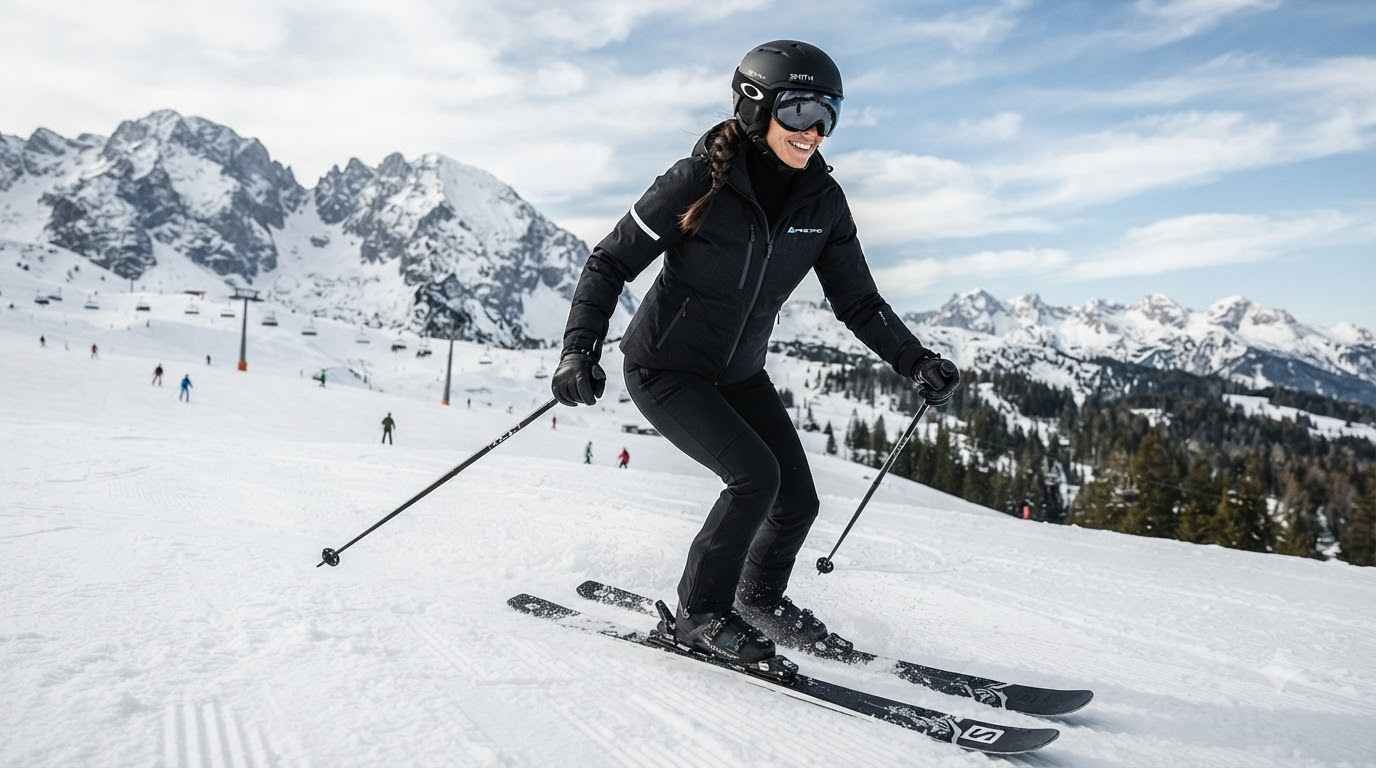
Look, there’s something undeniably powerful about showing up to the slopes in pure black. You move differently.
You feel sharper. And honestly, it’s way more practical than people think—black absorbs heat, keeps you warmer in cold conditions, and looks clean (well, relatively speaking) even after you’ve face-planted in the snow a few times.
I switched to all-black ski outfits about four years ago, and I haven’t looked back.
Before that, I was cycling through neon jackets and colorful base layers, convinced I needed to stand out.
Turns out, standing out comes down to fit and confidence, not highlighter yellow.
The real benefit? Everything coordinates. You don’t waste mental energy matching pieces or worrying that your jacket clashes with your pants.
You show up, you look intentional, and you get to focus on actually skiing instead of thinking about your outfit.
Building Your All-Black Foundation: Layers Matter
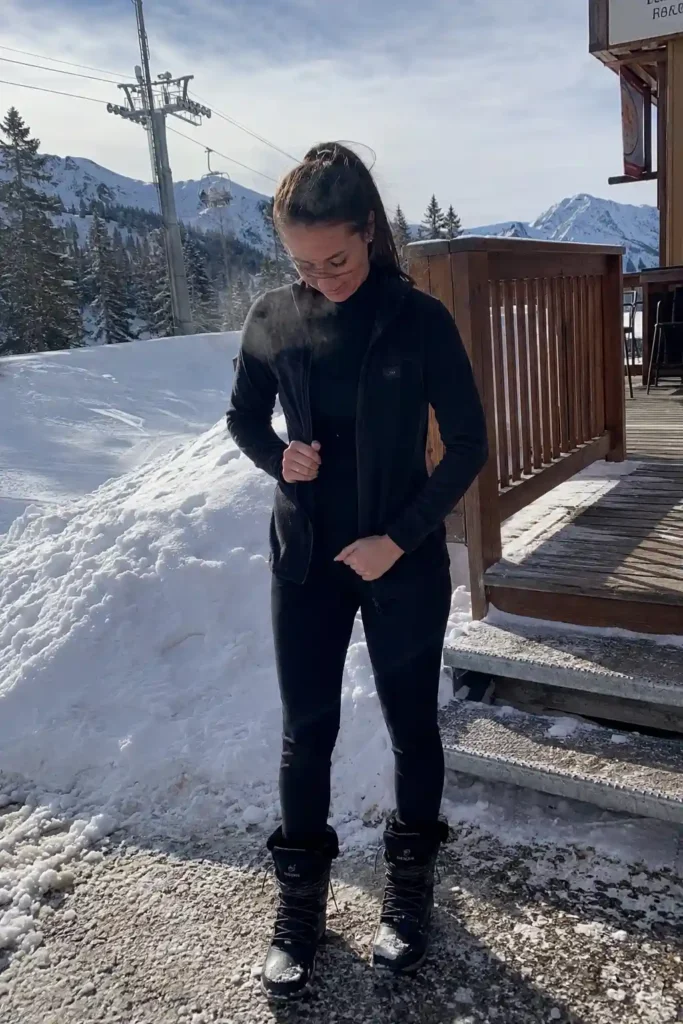
Here’s where most people mess up: they buy one heavy black jacket and call it a day. That’s not a strategy; that’s laziness wearing expensive sportswear.
All-black ski dressing requires intentional layering. Your base layer, mid-layer, and outer shell all work together to manage moisture and temperature.
Ignore one, and you’ll either overheat or freeze—neither is ideal when you’re 8,000 feet up a mountain.
Base Layers: Your Secret Weapon
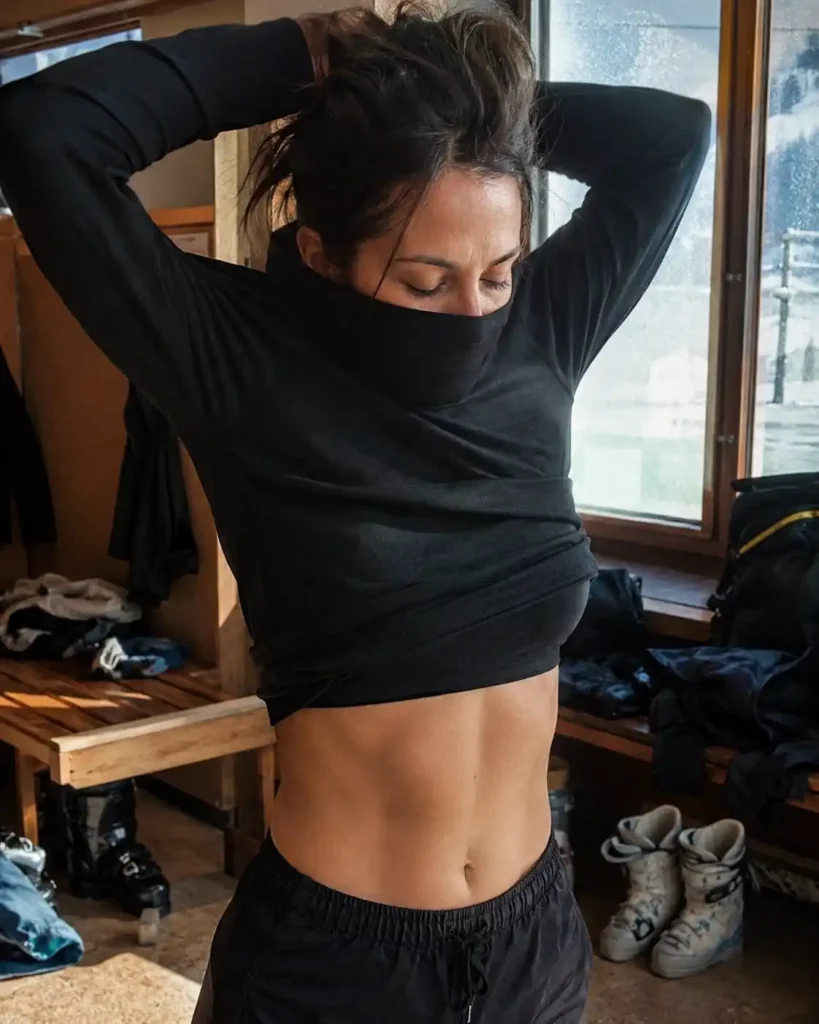
Your base layer sits directly against your skin and does the actual work.
It pulls sweat away from your body so you don’t end up soaked and miserable halfway through the day.
Merino wool base layers are the gold standard. They regulate temperature better than synthetic materials, don’t smell after two days of wear (seriously, this matters), and feel less scratchy than people assume.
Brands like Smartwool and Icebreaker make solid black merino options that won’t break the bank.
Synthetic bases work too if merino isn’t your thing. Look for polyester or nylon blends labeled “moisture-wicking.” The key is avoiding cotton entirely—it holds moisture and defeats the purpose.
Pro tip: Size up slightly on base layers. Tight compression is overrated. You want room to move.
Mid-Layers: The Insulation Play
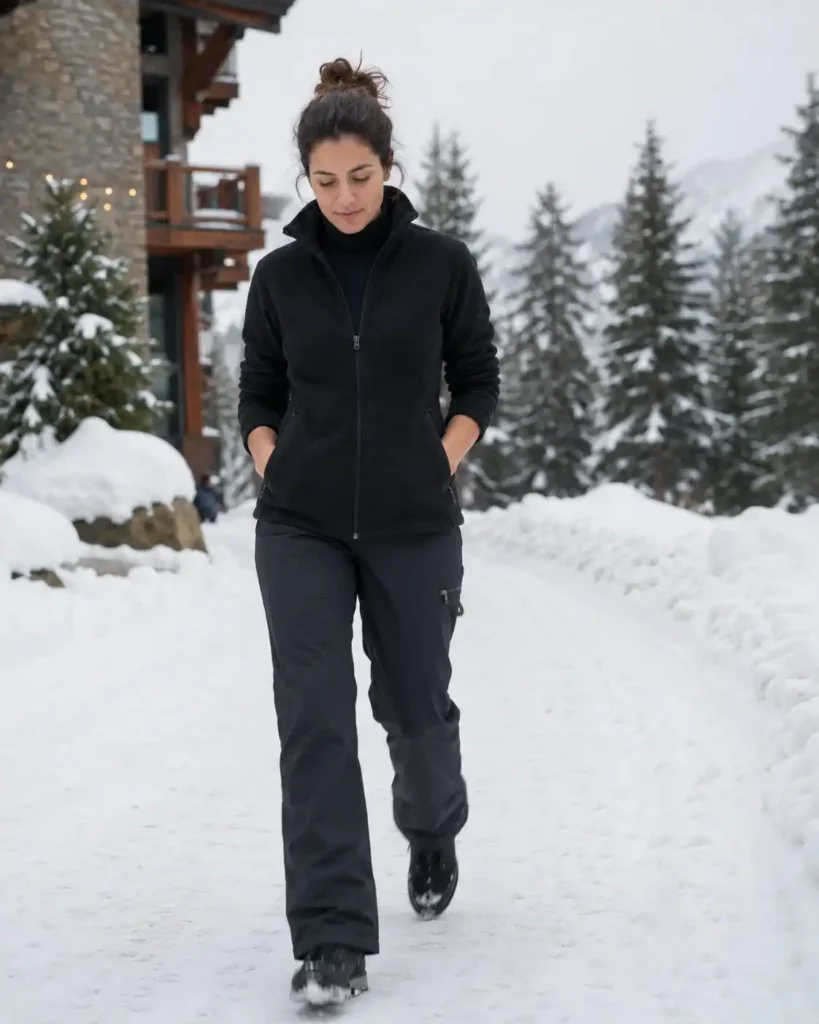
This is your chance to get creative with texture while staying in the black family. Mid-layers trap warm air and add serious insulation without the bulk.
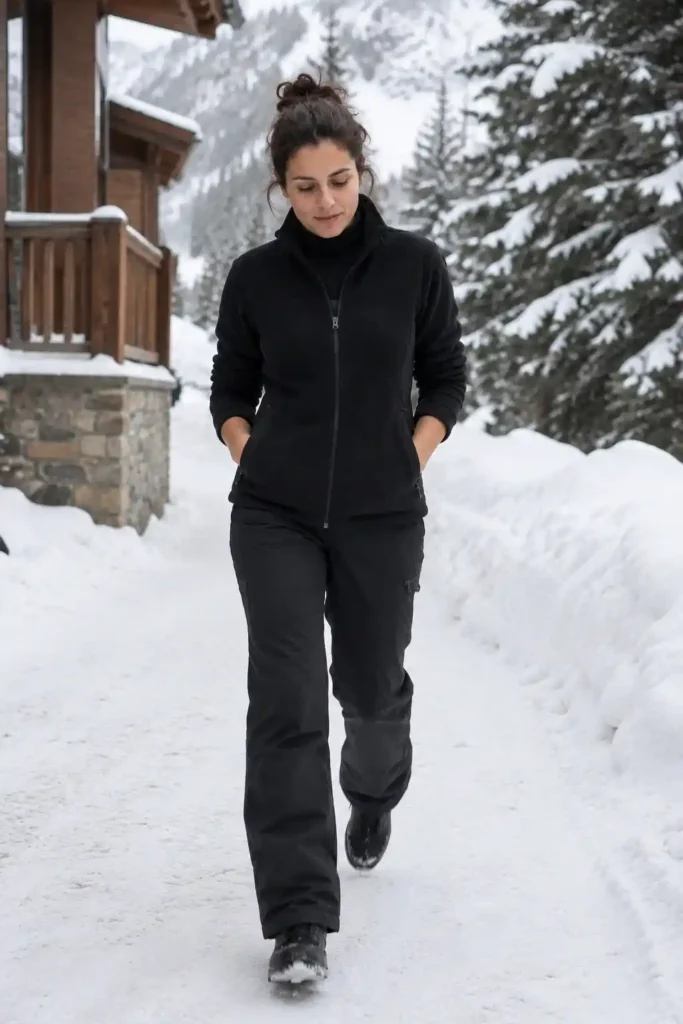
Fleece jackets work great. A black fleece mid-layer gives you warmth and a bit of visual depth.
Alternatively, lightweight down jackets in black add insulation without taking up much space in your bag.
The trick is choosing breathability over pure warmth. You’ll heat up on the way down the mountain, and you want that moisture moving outward, not getting trapped inside your jacket.
Outer Shell: The Non-Negotiable Layer
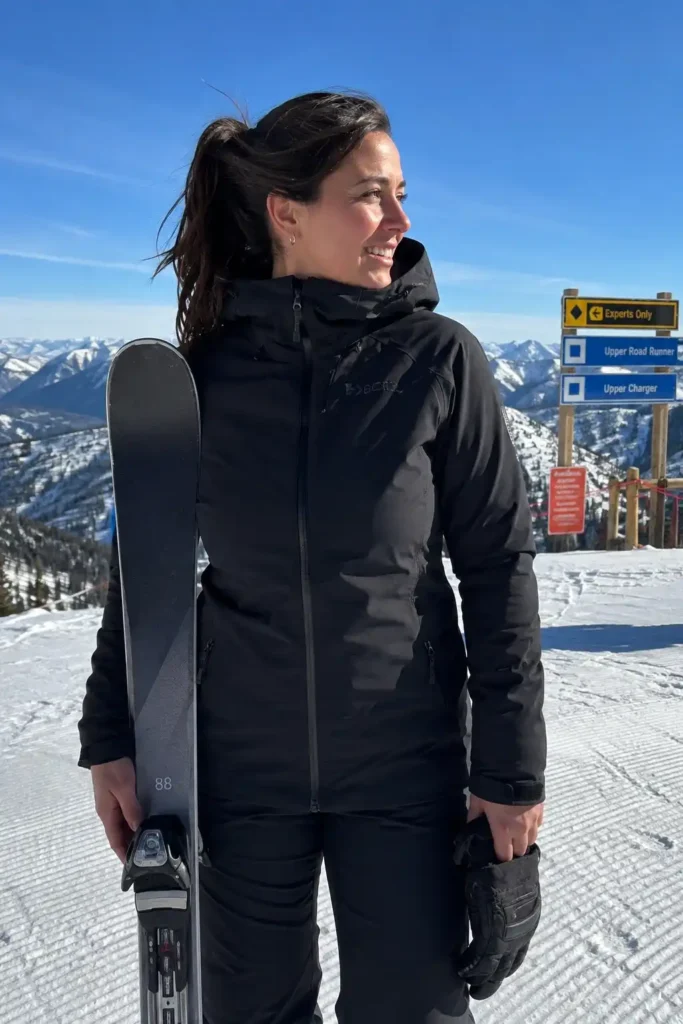
Your ski jacket is the piece people actually see. It needs to be waterproof, breathable, and actually black—not charcoal, not navy, but black.
Look for jackets with sealed seams and a decent DPM (Denier Per Meter) rating. The higher the DPM, the more durable the fabric.
Anything above 10,000 DPM will handle regular use without tearing.
Fit is everything here. You want enough room to layer underneath, but not so much that you look like you’re wearing a parachute.
The jacket should hit your hips, and the sleeves should cover your wrists when your arms are at your sides.
Brands to consider: The North Face, Patagonia, Arc’teryx, and Mammut all make solid black ski jackets.
They’re not cheap, but you’re wearing this thing for years, so it’s worth the investment.
Bottoms: Black Ski Pants That Actually Fit
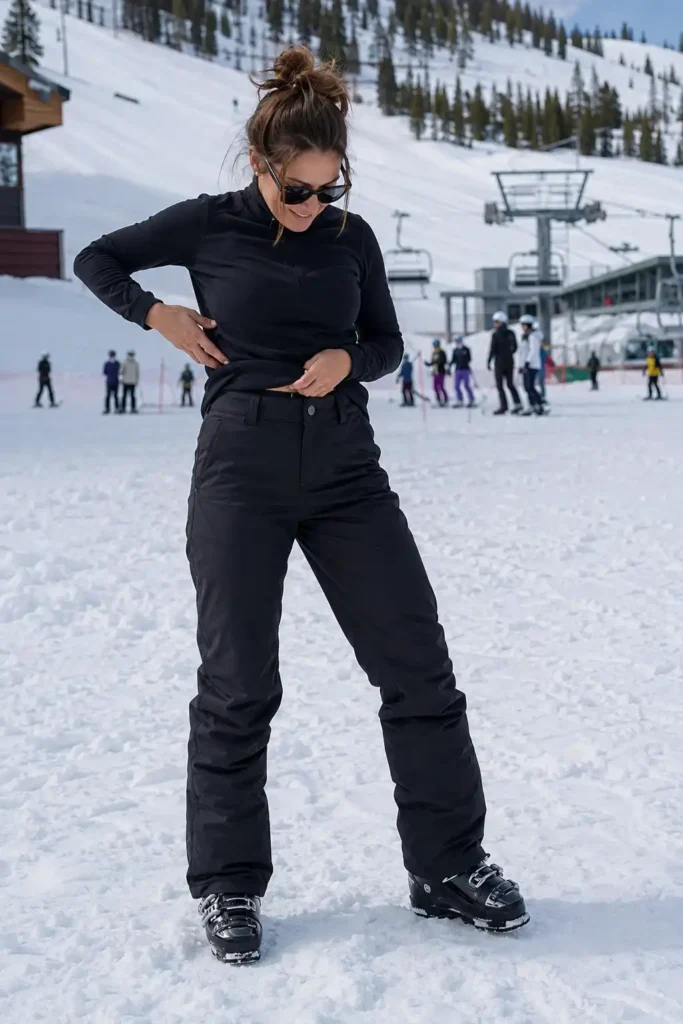
This is where your silhouette comes together. Black ski pants can either make you look polished or make you look like you raided your dad’s closet in 1995. The difference comes down to fit.
Straight-leg pants are your friend. They elongate your legs and give you a modern look. High-waisted designs have made a comeback too, and they’re genuinely more functional—they stay put when you bend and twist.
Sizing here is tricky because ski pants run big.
Go one size down from your regular size. You want them snug around your hips and thighs, with enough room in the ankles that you’re not cutting off circulation.
Look for pants with ankle gaiters (those little straps that go under your boots). They keep snow out and warmth in.
They’re also one of those small details that separate people who ski seriously from people who just look like they might.
| Feature | Why It Matters | Budget Option | Premium Pick |
|---|---|---|---|
| Waterproofing | Keeps moisture out during falls | 5,000+ DPM | 10,000+ DPM |
| Waist Adjustment | Prevents gaps and drafts | Drawstring | Velcro + Buckle |
| Ankle Gaiter | Stops snow entry | Standard | Reinforced |
| Inseam Gusset | Reduces bunching | Basic | Full coverage |
Accessories: Where Personality Sneaks In
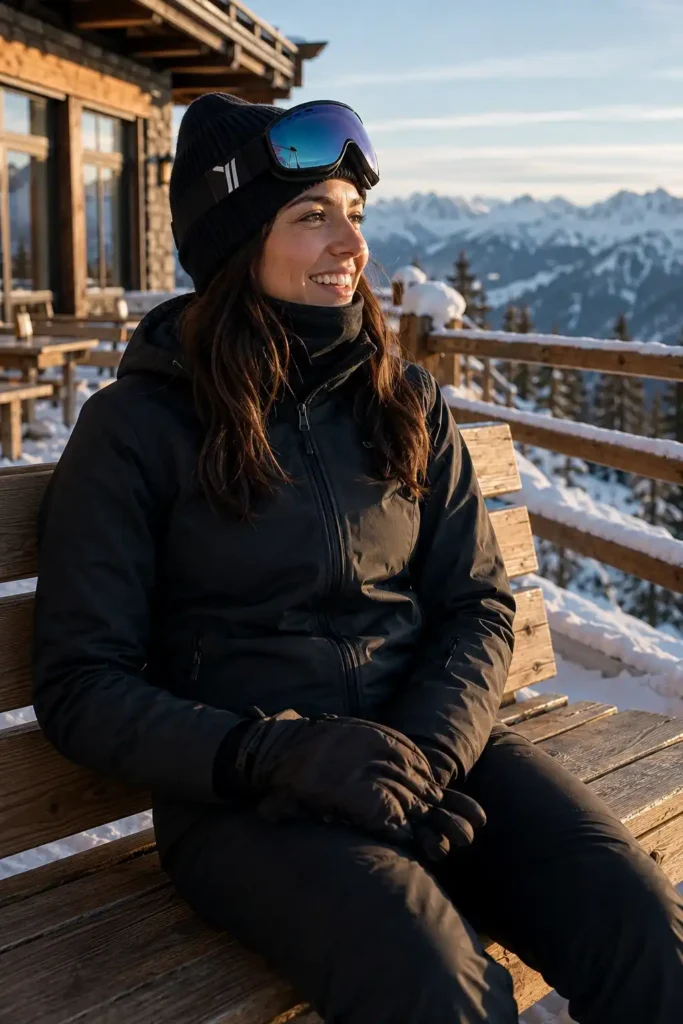
All-black doesn’t mean boring. Your accessories are where you inject personality while staying cohesive.
A black beanie in wool or merino keeps you warm and looks intentional. Throw in a textured knit pattern or a slightly thicker fabric, and suddenly you’re giving off serious skier energy.
I’m partial to a ribbed knit—it catches light differently than flat fabric and looks less flat overall.
Gloves or mittens should match your jacket’s vibe. Black ski gloves are standard, but texture variation matters.
A fleece lining reads warmer than a synthetic one, and leather palms grip better than glossy nylon.
Goggles are your one place to veer off-brand slightly. Honestly? Mirrored lenses look cooler than rose-tinted ones, and they perform better in variable light.
Your goggles can be silver, gold, or even a dark smoke tint without breaking the all-black aesthetic. They’re functional gear, not outfit pieces.
Neck warmers (or balaclavas if you prefer) in black keep your face warm and complete the look.
Merino wool options breathe better than fleece, so if you’re doing any serious climbing, grab a merino one.
Why Black Actually Keeps You Warmer
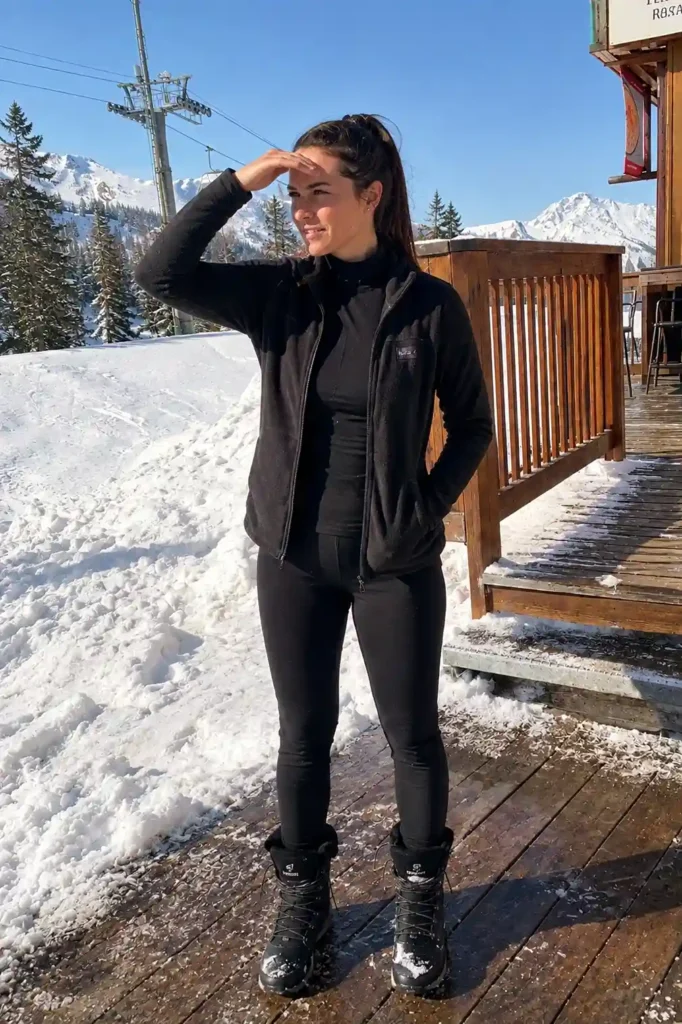
This probably sounds backward, but black absorbs solar radiation, which sounds fancy but basically means the sun heats your jacket even when it’s cold outside.
I noticed this my first winter in all-black—on sunny days, I actually felt warmer than in my old bright-colored jackets.
The downside? You heat up faster on chairlifts or during flat sections. But you adjust layers, and the payoff is worth it.
You’re essentially using the sun as free heating.
Snow glare is less intense when you’re wearing black too, though this is more psychological than scientific.
Your eyes don’t work as hard against dark fabric.
The Confidence Factor
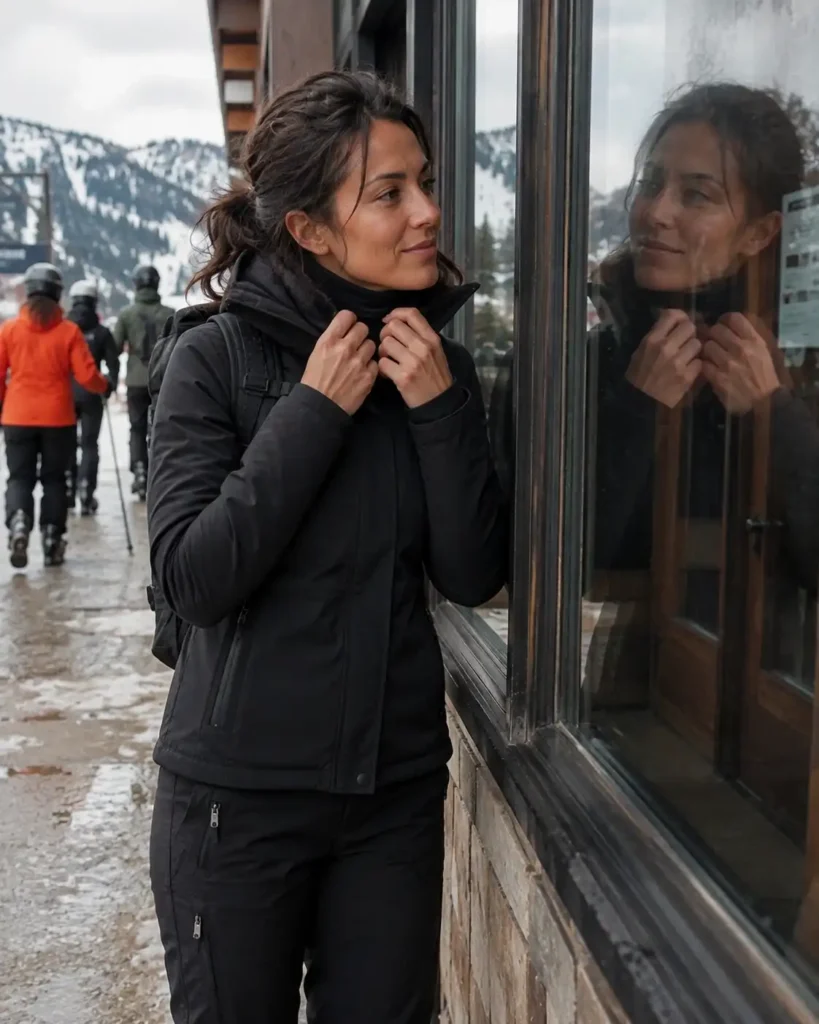
Okay, this might sound weird, but outfit confidence matters on the slopes.
When you know you look good—intentional, coordinated, sharp—you actually ski better. You carry yourself differently. Your posture improves.
I’m not saying clothes make the skier, but there’s something about showing up in a cohesive all-black outfit that makes you feel like you belong on that mountain.
And that feeling translates to how you move and how others perceive you.
Personal note: I used to spend 10 minutes every morning deciding what ski clothes to wear. Now I spend 30 seconds.
Everything is black. Everything works together. That mental space I freed up?
I use it to actually enjoy skiing instead of worrying about looking coordinated. Sounds small, but it genuinely improves your day.
Real Talk: Maintenance and Care
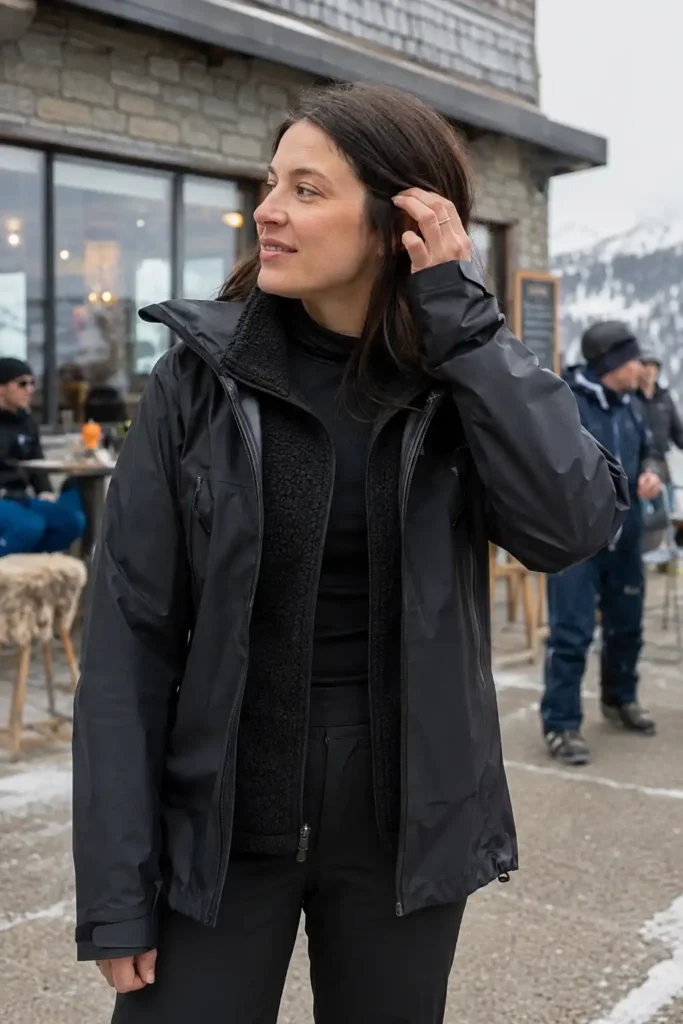
Black ski gear needs care to stay looking sharp. Snow and salt take a toll, especially on shells.
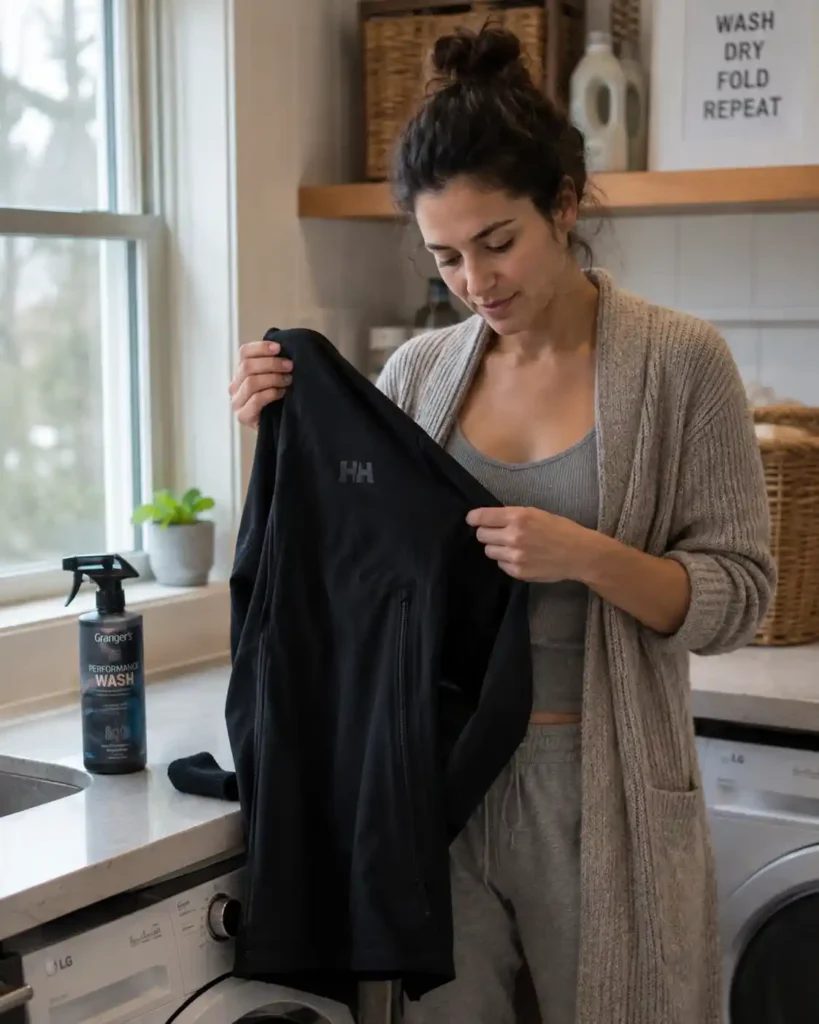
Wash your jacket after every few trips. Use cold water and a gentle cycle. Avoid regular detergent—it leaves residue that breaks down waterproofing.
Grab some technical gear wash instead. It’s designed for ski wear and won’t mess with your jacket’s coating.
Dry your gear flat or hang it. High heat ruins waterproof coatings.
This seems obvious, but I’ve watched people toss their ski jackets in a dryer and wonder why they stopped working.
Refresh the waterproof coating every season or two. DWR (durable water repellent) spray is cheap and takes 10 minutes to apply.
It keeps water beading off instead of soaking in.
Black fade is real. Prolonged sun exposure will eventually turn your jacket more charcoal-gray.
It’s unavoidable, but proper storage (cool, dry place) slows it down.
Styling Variations: Playing With Texture
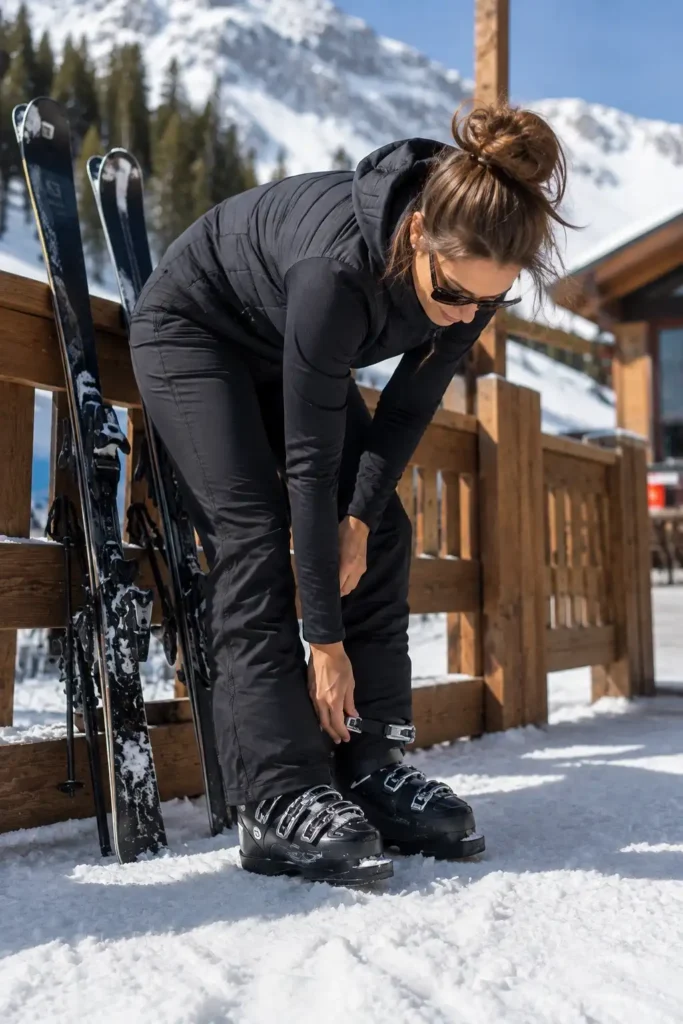
All-black doesn’t mean all-smooth. Mixing textures keeps things visually interesting.
Matte finishes (fleece, wool, brushed nylon) paired with glossy elements (shiny nylon shells, polished leather gloves) create depth.
I wear a matte black base layer, a textured fleece mid-layer, and a glossy shell, and the combination reads way more sophisticated than solid glossy black would.
Ribbed knits on beanies, quilted patterns on jackets, chunky knit scarves—all these add visual dimension without introducing color.
This is insane how much texture can do for an all-black outfit, honestly.
Metallic accents (zippers in silver or gold) are fair game.
They’re functional details on quality ski gear, and they add just enough contrast to keep things from feeling flat.
Sizing and Fit Deep Dive
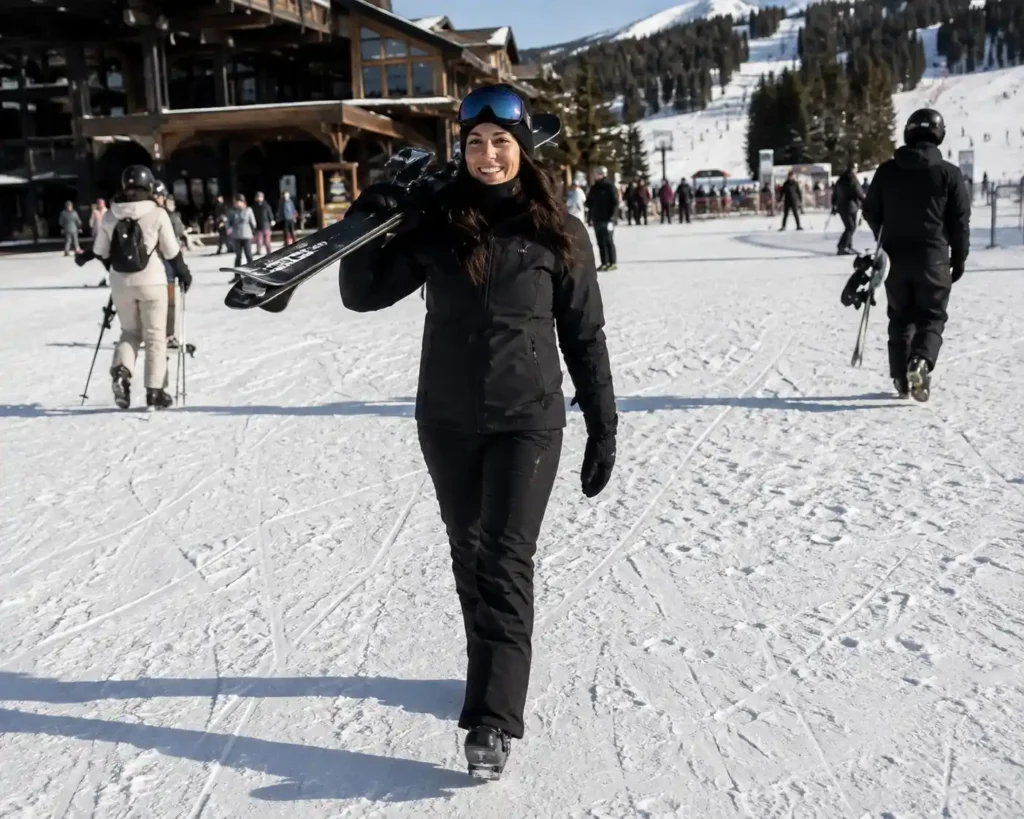
This deserves its own section because I see people get this wrong constantly.
Ski clothes need room to move, but they also need to fit close enough that layers don’t shift around. The sweet spot is snug without constriction.
Try everything on with your base layer and mid-layer underneath.
Not doing this is how you end up with a jacket that fits fine alone but feels strangled once you’re actually wearing your thermal layers.
Wrist length matters more than people think. Your jacket cuff should cover your wrist when your arm is bent and at your side.
Gloves should overlap slightly with your jacket cuff—this creates a seal that keeps snow out.
Pants should fit snug through the hip and thigh, then taper slightly.
Bunching at the ankles looks sloppy and catches on boot tops, which is annoying when you’re trying to click into bindings.
Inseam length is crucial. You want the pants to hit right at the top of your boot. Too long, and you get that pinched look.
Too short, and your base layer shows every time you bend.
Common All-Black Mistakes to Skip
People mess this up in predictable ways. Learn from their stumbles.
Cheap shell fabric feels papery and looks it. Budget constraints are real, but spending a bit more on the jacket pays dividends.
It’ll last years longer, perform better, and look intentional instead of utilitarian.
Baggy everything is the second-biggest mistake. Oversized ski clothes don’t protect you better; they just look like you borrowed your uncle’s wardrobe. Fit is everything.
Ignoring the base layer might be the first. People show up in a black shell with no moisture management and wonder why they’re soaked after an hour. Your base layer does 80% of the work. Don’t skip it.
Mixing matte and shiny in bad ways is more subtle. One glossy element (shell) and mostly matte works. Two shiny, two matte creates visual confusion. Stick to a 70/30 split.
Getting the wrong kind of black is annoying but fixable. Some blacks lean navy, some lean charcoal. Look at the jacket in natural light before buying. Online photos are often weird.
The Investment Breakdown
Let’s talk money because this matters.
You don’t need to drop $2,000 on a full outfit. Here’s what realistic spending looks like:
Quality base layer: $60-100. You’ll own multiple and rotate them.
Merino wool fleece mid-layer: $100-150.
Solid ski jacket: $250-600 depending on brand and quality.
Ski pants: $200-500.
Gloves: $50-100.
Beanie and neck warmer: $40-80 combined.
Goggles (if you don’t have them): $100-300.
Total realistic spend: $800-1,800 for a complete, quality setup.
This seems high until you realize you’re wearing this for 10-15 years if you take care of it.
That’s roughly $60-180 per season. Compare that to the cost of a ski pass, and suddenly it’s not excessive.
Budget alternatives exist at every level. I know people who rock solid all-black outfits from Costco basics and mid-tier brands. The key is prioritizing fit and fabric over brand names.
FAQ: All-Black Ski Outfits
Q: Won’t I get too hot in all black?
A: Not if you’re layering properly. Your base layer manages heat, not your jacket color. That said, black does absorb more solar heat on sunny days, so you might shed a layer slightly faster. Embrace it—you’ll have excellent temperature control once you dial in your layering.
Q: Do I actually need merino wool base layers, or is that marketing?
A: Merino is objectively better, but it’s not mandatory. A good synthetic moisture-wicking layer works fine. Merino just wins on odor control and temperature regulation. If your budget is tight, grab a quality synthetic base and upgrade to merino later.
Q: Can I wear regular black pants, or do I need actual ski pants?
A: Real ski pants, please. Regular pants don’t have gaiters, aren’t waterproof, and won’t keep you dry when you fall. You’ll regret it after your first spill.
Final Thought
All-black ski outfits work because they’re intentional. You’re not relying on bright colors to create style; you’re relying on fit, texture, and quality. That approach carries weight. It looks sharp, functions well, and honestly makes getting dressed on ski mornings a lot less complicated.
Whether you’re a casual weekend skier or someone who lives on the mountain, this formula works. Build your base layers, invest in a good jacket, get pants that actually fit, and accessorize with intention.
The mountain doesn’t care what color you wear.
But you will—especially when you catch your reflection in a lodge window and realize you look like someone who actually knows what they’re doing.
Ready to build your all-black ski setup? What’s the first piece you’re upgrading this season?
