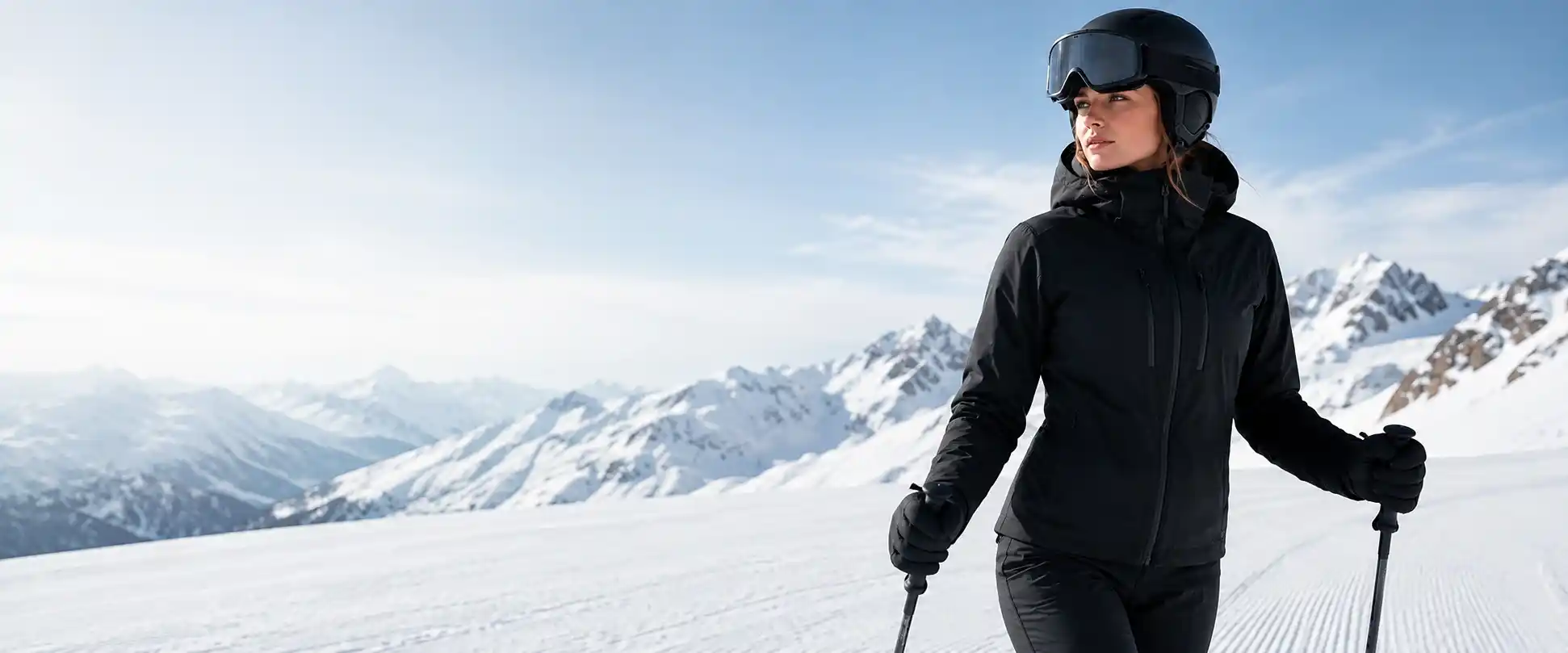
Black on the slopes never goes out of style. It photographs well against white snow, it hides the inevitable lift grease stains, and it pairs with literally everything else in your closet.
I built my first all-black ski kit three seasons ago after getting tired of my mismatched neon collection, and I have not looked back since.
This guide walks through every layer, from the thermals nobody sees to the boots that do all the work.
I’ll flag what’s actually worth the money and what you can skip. No fluff, just what works when it’s 15 degrees and you’re staring down a chairlift line.
Why an all-black ski outfit actually works
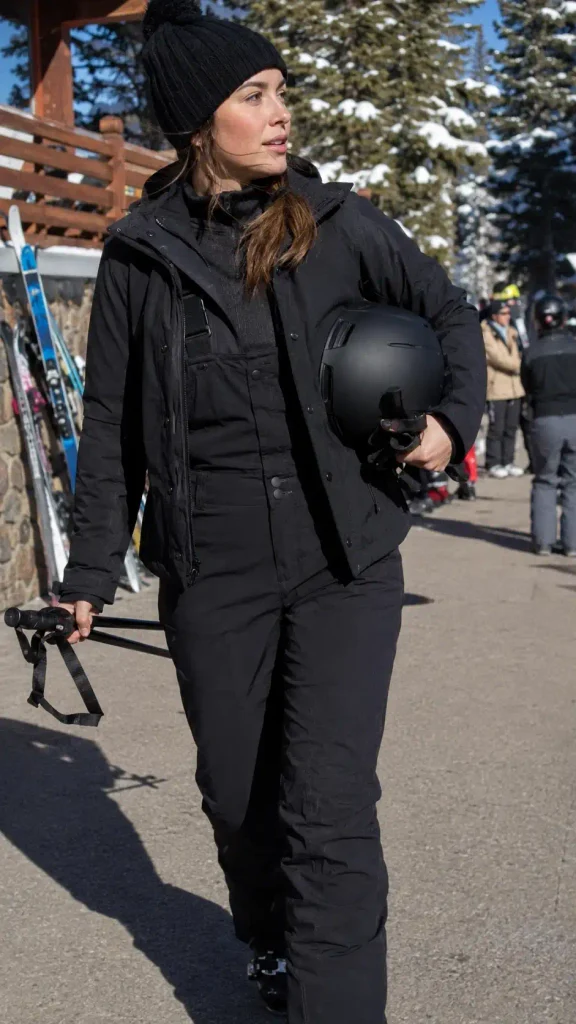
Black isn’t just a color choice. It’s a strategy.
A monochrome kit means you never have to think about matching again. Buy a new jacket in three years and it still goes with your old pants.
That’s not nothing when a single mid-layer can cost more than your first ski pass.
Black also does something practical: it absorbs heat. On a cold bluebird day, a dark jacket picks up a bit of extra warmth from direct sun.
It’s not a huge effect, but combined with good insulation, it adds up.
There’s a style argument too. All-black ski fits have a quiet, expensive look that neon and pastel combos rarely pull off. Think less “Nesquik bunny” and more “I know exactly what I’m doing.”
Quick comparison: black vs. bright ski outfits
| Factor | All-black outfit | Bright/multicolor outfit |
|---|---|---|
| Mix-and-match ease | Very high, everything pairs | Low, colors clash easily |
| Visibility on the mountain | Lower in whiteout conditions | Higher, safer in poor visibility |
| Heat absorption on sunny days | Slightly better | Slightly worse |
| Stain and wear visibility | Hides dirt and salt stains well | Shows stains and fading faster |
If you ski mostly groomers and resort terrain, visibility isn’t a huge concern.
If you’re heading into backcountry or low-visibility zones, add one bright accessory (a helmet, a pack, anything) so ski patrol can spot you.
Base layer: the part nobody sees but everyone feels
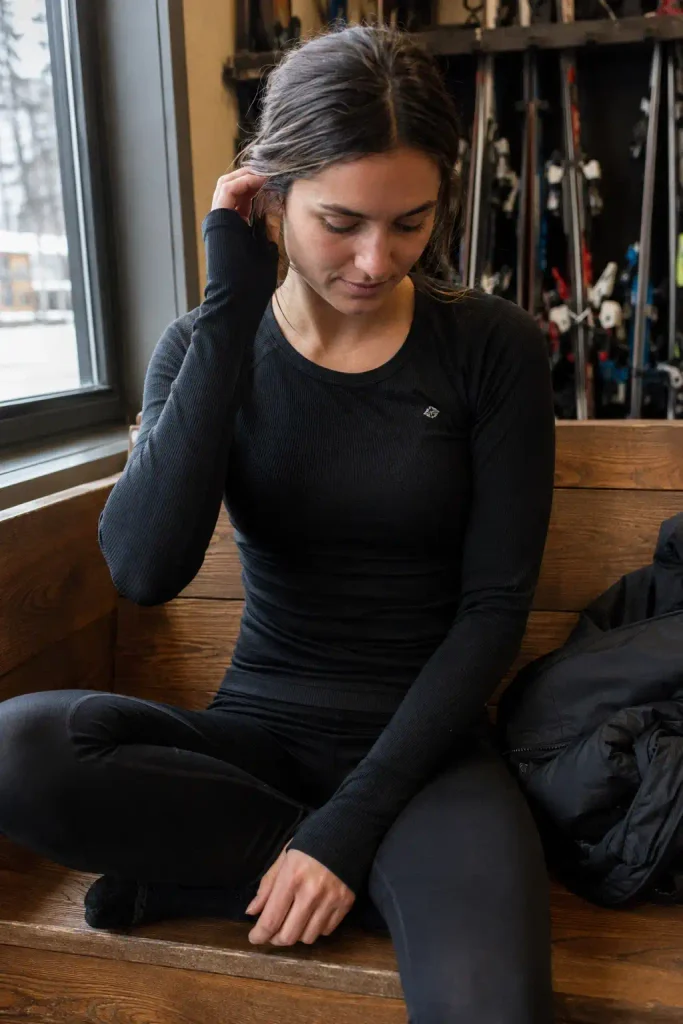
Your base layer is doing more work than any other piece in this outfit.
It sits against your skin all day, managing sweat and keeping you from freezing when the chairlift stalls halfway up the mountain.
Skip cotton entirely. I learned this the hard way on a trip to Colorado where a cotton long-sleeve turned into a clammy, cold sponge by lunchtime.
Cotton holds moisture and takes forever to dry, which is exactly what you don’t want at altitude.
Go for merino wool or a synthetic blend instead. Both wick sweat away from your skin and dry fast.
REI’s guide on choosing base layers breaks down weight options depending on how cold you run, and it’s worth a read if you’re buying your first set.
What to look for in a black base layer
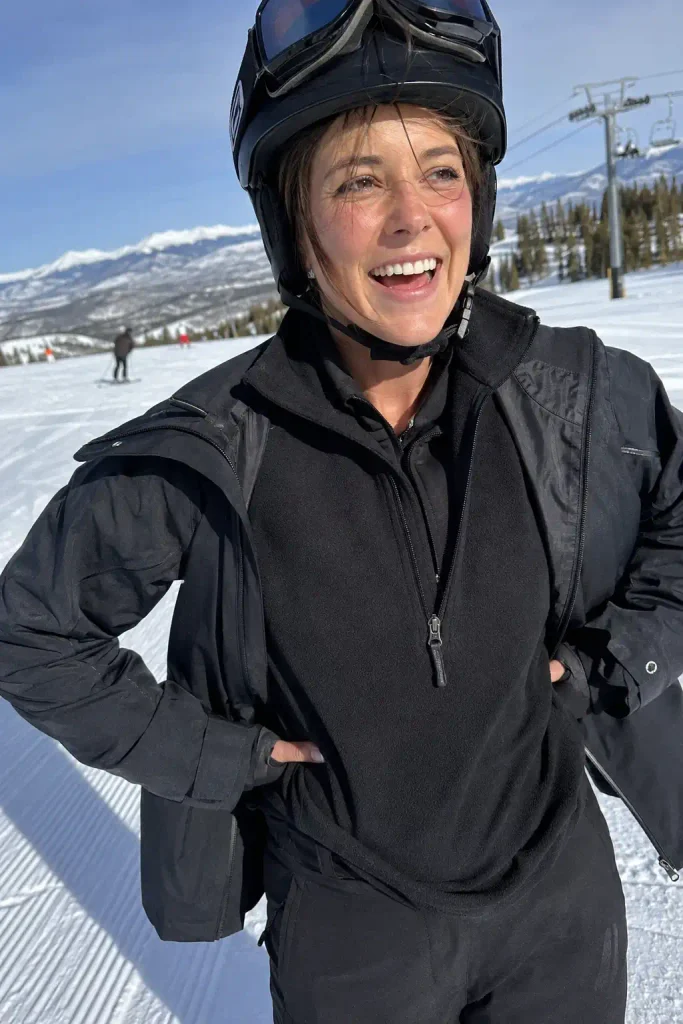
- Weight: lightweight for warmer resort days, midweight for typical cold days, heavyweight only if you’re genuinely always freezing.
- Fabric: merino wool for odor resistance and natural warmth, synthetic for durability and a lower price tag.
- Fit: snug but not compression-tight. You want it hugging your skin without restricting movement.
- Seams: flatlock seams reduce chafing under tighter mid-layers.
IMO merino is worth the extra cost if you ski more than a handful of days a season.
It doesn’t hold onto smell the way synthetic does, which matters when you’re re-wearing the same top three days in a row on a ski trip.
Mid-layer: your actual warmth engine
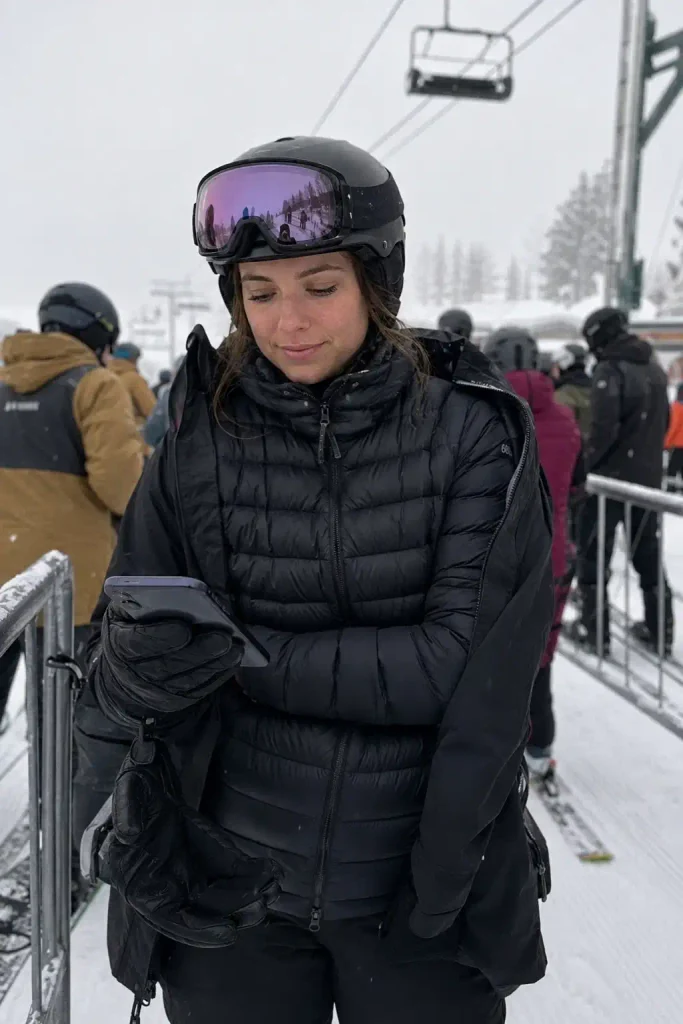
If the base layer manages moisture, the mid-layer manages heat. This is the piece that decides whether you’re comfortable or shivering on the lift.
A black fleece or a lightweight black puffy both work well here. Fleece breathes better and works for aggressive, high-output skiing. A puffy traps more heat for less bulk, which suits colder days or slower cruising.
I run a black synthetic puffy on anything below 20 degrees and switch to a fleece once temps climb into the 30s.
Ever notice how you overheat the second you start actually skiing hard?
A fleece mid-layer solves that better than a puffy does, since it vents heat instead of trapping it all.
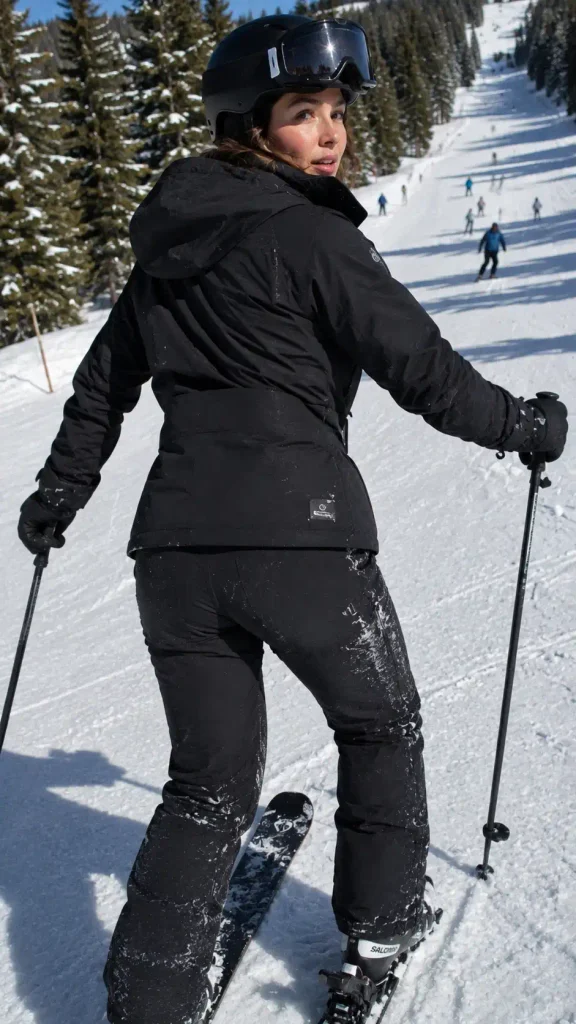
A few mid-layer options worth comparing:
- Lightweight fleece: best for high-exertion skiing and warmer days, very breathable.
- Synthetic insulated puffy: best for cold, low-output days, packs down small.
- Down puffy: warmest per ounce, but loses insulating power when wet, so pair it with a genuinely waterproof outer shell.
The outer shell: your black jacket and pants
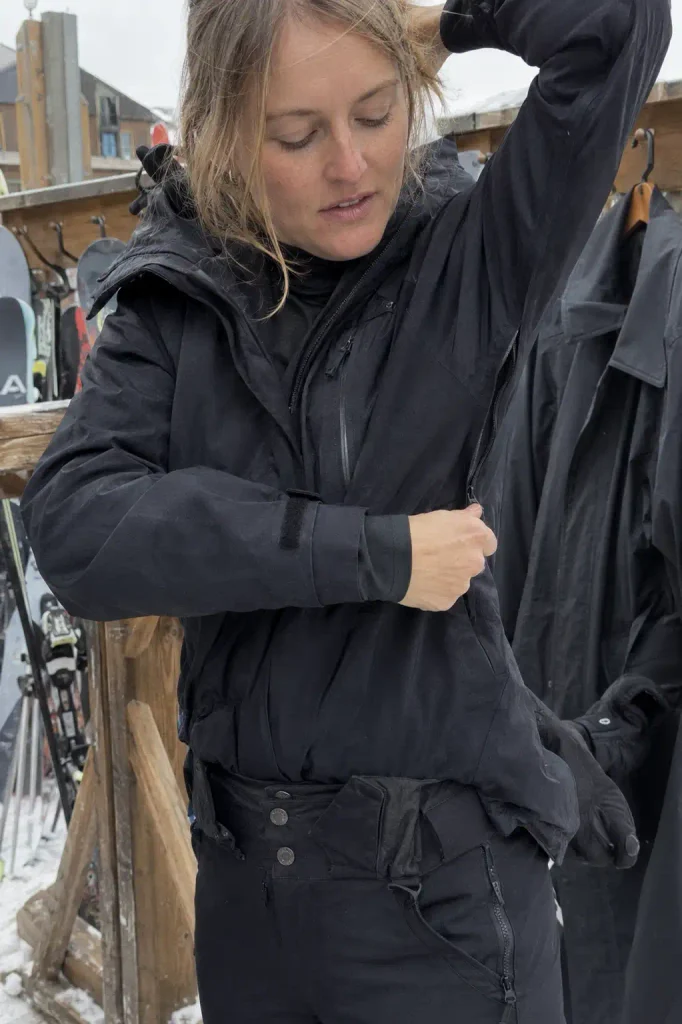
This is the piece everyone actually sees, so it matters for the aesthetic. But don’t let looks override function here.
A cheap non-waterproof shell will ruin your day faster than any other gear mistake on this list.
Look for a jacket rated at least 10,000mm waterproof and 10,000g breathability for typical resort skiing.
If you’re skiing in the Pacific Northwest or somewhere genuinely wet, go higher, closer to 20,000mm.
Jacket features that actually matter
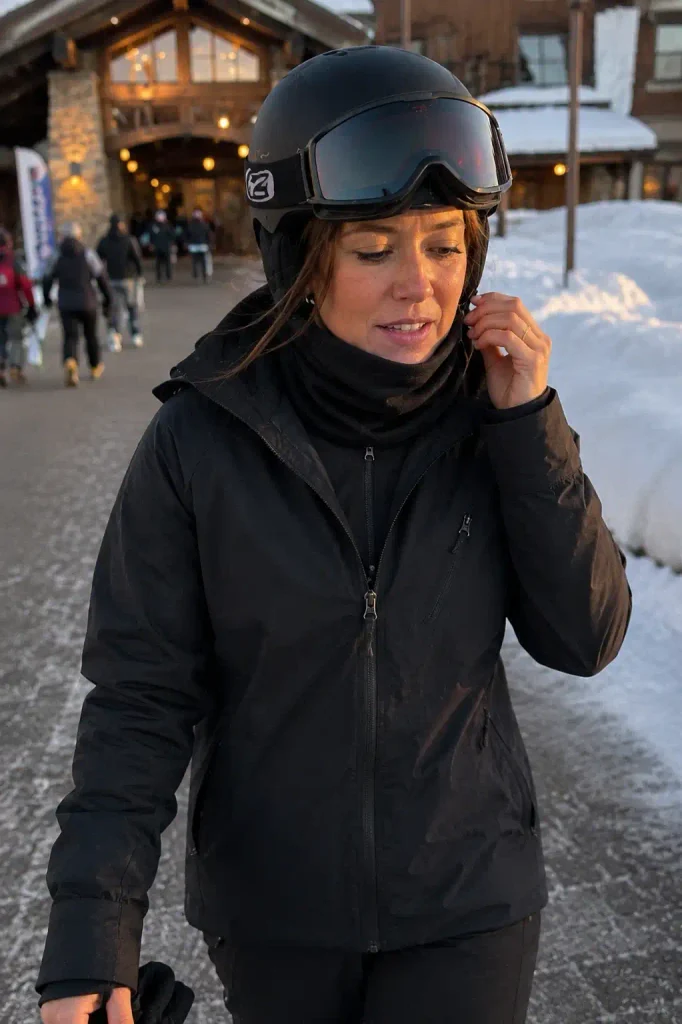
- Powder skirt: keeps snow out when you eat it on a mogul run.
- Pit zips: let you vent heat without removing layers mid-run.
- Helmet-compatible hood: sounds minor, tries to zip a non-compatible hood over a helmet once and you’ll understand.
- Wrist gaiters: stop snow from creeping up your sleeve during a fall.
For pants, insulated bibs are, honestly, underrated. They cover your lower back so no gap of skin shows when you bend over to buckle your boots, and they don’t ride down under a pack.
I switched to black bibs two seasons ago and genuinely wonder why I waited so long.
The REI guide on dressing for cold weather covers the general three-layer logic if you want the fuller technical breakdown behind all of this.
Accessories: gloves, goggles, and the small stuff
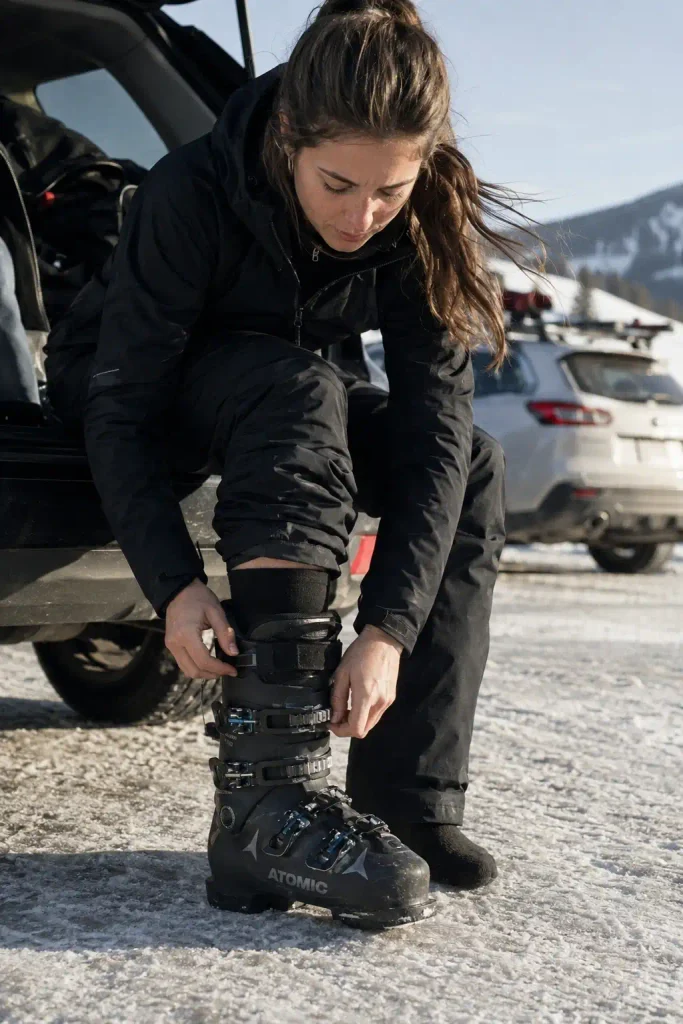
A black outfit lives or dies on the details. Mismatched accessories in wrong shades of black (yes, that’s a real problem, matte black doesn’t match glossy black) can throw off the whole look.
Gloves or mittens: mittens run warmer since your fingers share heat, gloves give better dexterity for buckles and zippers.
I keep both in my bag and switch depending on the day.
Goggles: get a black frame with a lens tint matched to conditions, not just style. A dark lens (VLT under 25%) works for bright bluebird days, while a lighter rose or amber lens (VLT 35-55%) handles flat light and overcast skies far better.
REI’s breakdown on choosing ski goggles explains VLT in more detail if lens shopping confuses you the way it confused me at first.
Neck gaiter or balaclava: a black gaiter does double duty as face protection and a style piece. Cheap ones bunch up and slide down constantly, so spend a little more here.
Helmet: matte black helmets look cleaner than glossy ones, but check ventilation specs too.
A helmet that looks perfect but fogs your goggles every five minutes isn’t actually doing its job.
Ski boots: the unglamorous foundation
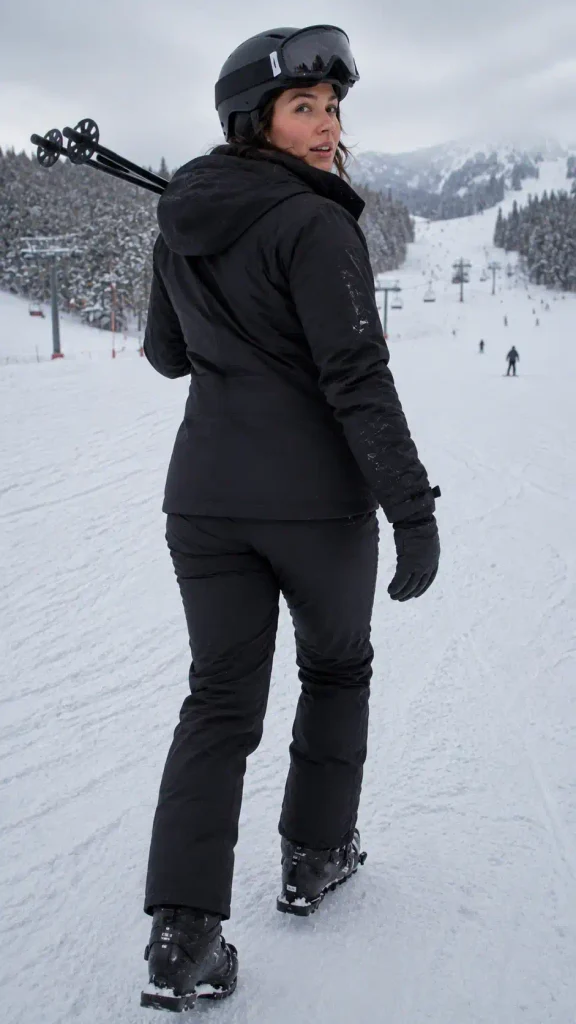
Nobody gets excited about ski boots, but they’re arguably the single most important piece of gear on this whole list. A boot that fits wrong ruins every other good decision you made above.
Boots use Mondopoint sizing, based on your actual foot length in centimeters rather than your regular shoe size. Getting professionally fitted, rather than guessing off a size chart, makes a genuinely noticeable difference in comfort and control.
I resisted a proper fitting for two seasons because I thought it was an unnecessary upsell.
It wasn’t. My feet stopped going numb on the third run once I finally got fitted correctly.
For an all-black look, most major boot brands now sell full matte-black shells, so this is one of the easier pieces to source.
Just don’t sacrifice fit for color. A boot that looks perfect but pinches your fifth toe for six hours isn’t worth it, and I say that as someone who tried anyway.
Sock note: wear a single pair of thin merino or synthetic ski socks, never two pairs. Extra socks reduce circulation and actually make your feet colder, not warmer.
This trips up a lot of first-timers, myself included on my very first ski trip.
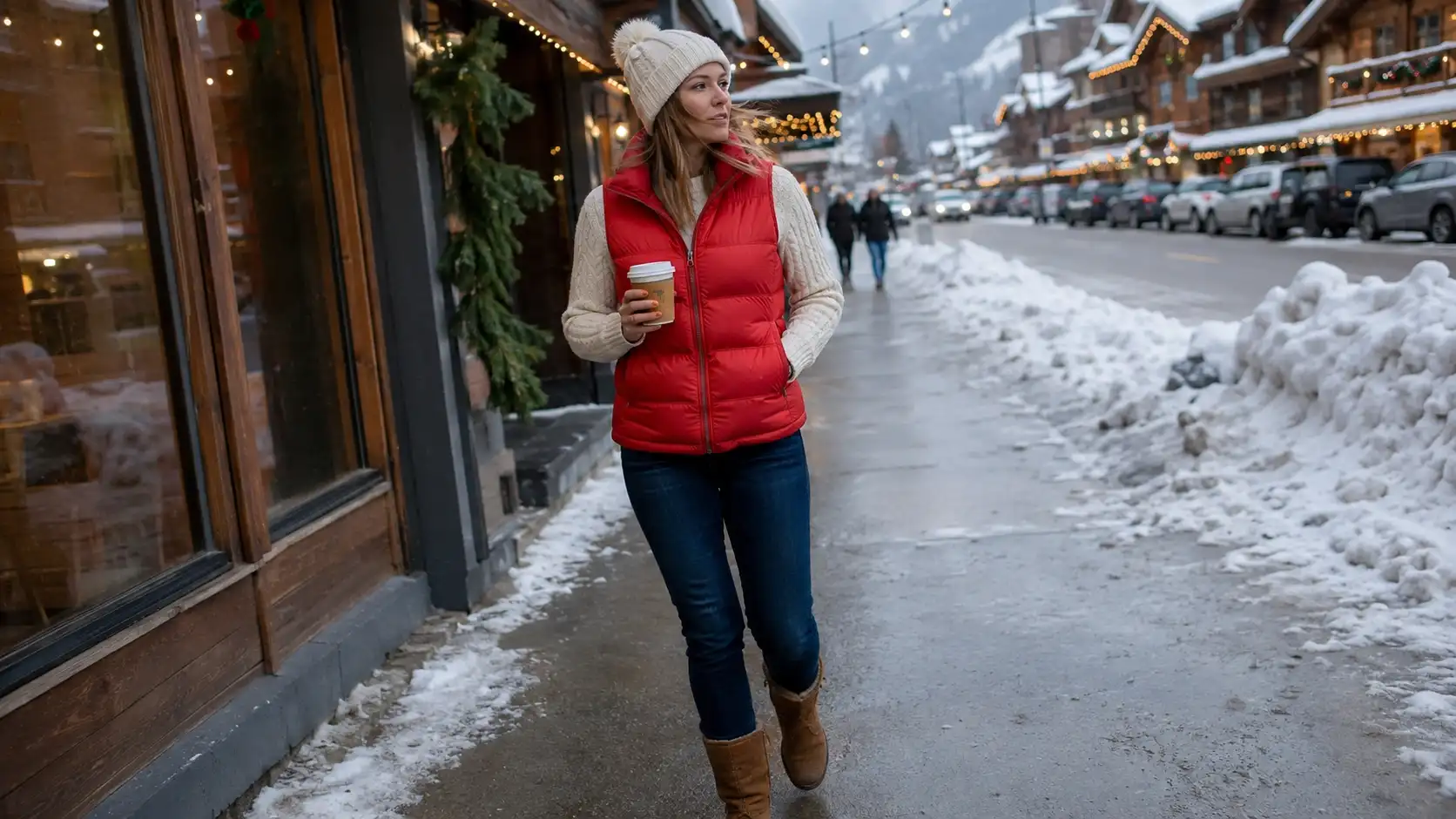
Building the full outfit: a quick recap
Here’s the whole system laid out from skin to shell:
- Base layer: merino or synthetic top and bottom, black or dark charcoal.
- Mid-layer: fleece or lightweight puffy in black.
- Outer shell: waterproof black jacket and insulated bibs or pants.
- Accessories: black gloves or mittens, tinted goggles, neck gaiter, helmet.
- Boots: properly fitted, matte-black shell, single pair of technical socks.
One slightly random thought while we’re here: black gear also tends to hold its resale value better than bright seasonal colors, since it never really looks dated.
Worth keeping in mind if you upgrade gear every few seasons like I do.
Common mistakes to avoid
A few things trip people up when building this kind of outfit for the first time.
Buying boots online without a fitting is probably the biggest one. Save yourself the pain and get measured in person at least once, even if you buy online after.
Skipping the powder skirt or wrist gaiters seems minor until you’re digging snow out of your waistband after a fall.
And doubling up on socks, as mentioned above, actually works against you.
This is insane, but I once watched someone show up to a black-diamond run in jeans because “they matched the outfit better.
” Please, for the love of your knees, never do that. Denim gets wet, stays wet, and offers zero insulation.
FAQ
Does an all-black ski outfit make you hotter in the sun? Slightly, yes. Dark colors absorb more solar heat than light colors, though the effect is small compared to your layering system. On very sunny spring days, a lighter mid-layer helps offset it.
Is all-black gear harder to see in a whiteout? It can be. If you frequently ski in low-visibility or backcountry conditions, add one bright accessory, like a helmet or pack, so you stay visible to others on the mountain.
Can I mix matte and glossy black pieces? You can, but it tends to look a little mismatched up close. Sticking to one finish, usually matte, across your jacket, pants, and helmet gives a more put-together look.
So that’s the full black kit, base layer to boots. Building it piece by piece over a season or two beats buying everything at once and guessing on fit. What’s the one piece you’re missing right now: the jacket, the boots, or the goggles? Start there, and build the rest around it.
