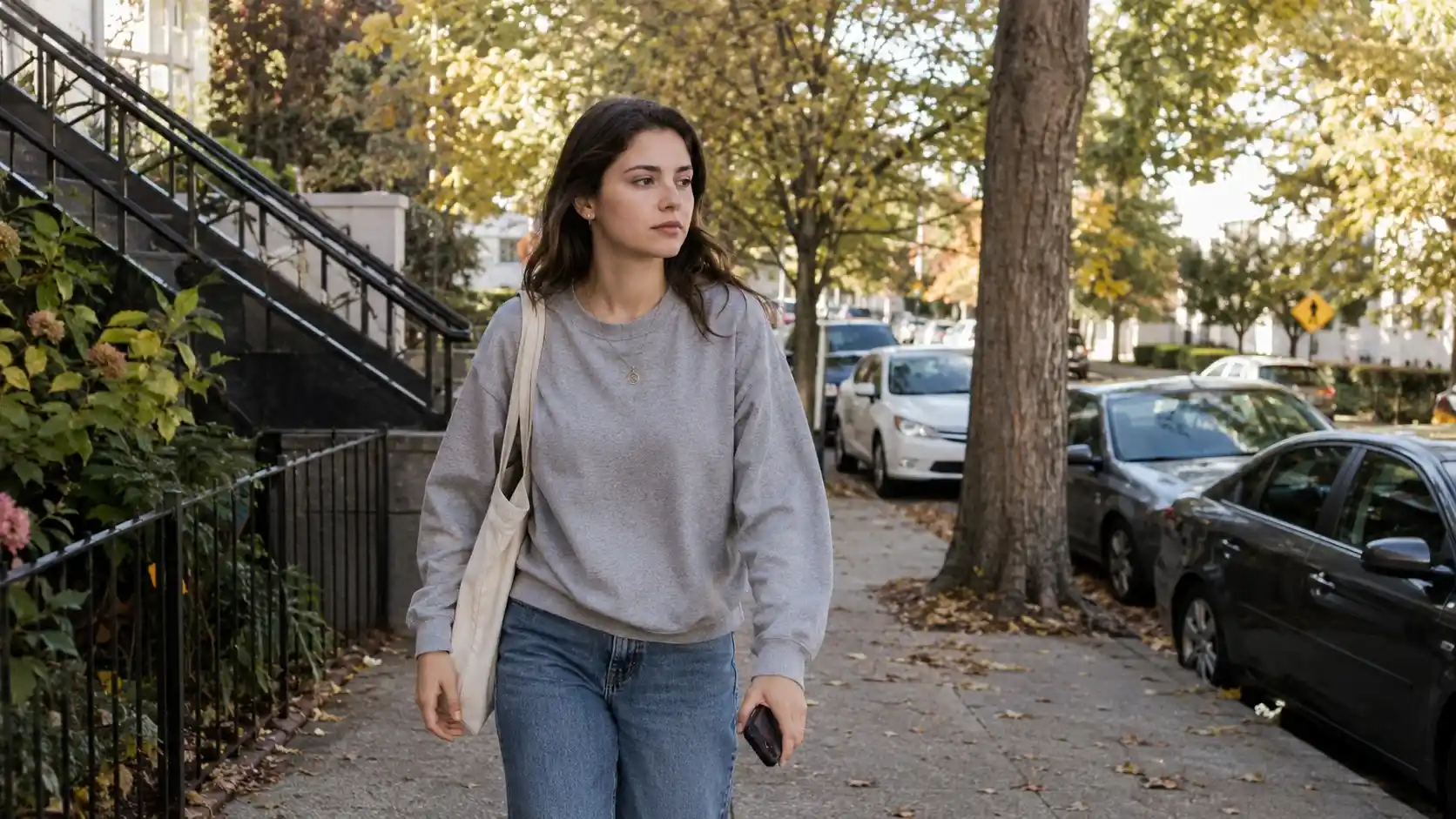
Senior year lasts nine months. The sweatshirt lasts a lot longer than that.
I bought mine three years ago and I still wear it to grocery runs, on flights, and once, embarrassingly, to a job interview I thought was casual (it was not). If you’re shopping .
for one right now, whether for yourself, your kid, or a whole graduating class, here’s everything I wish someone had told me before I hit “checkout.”
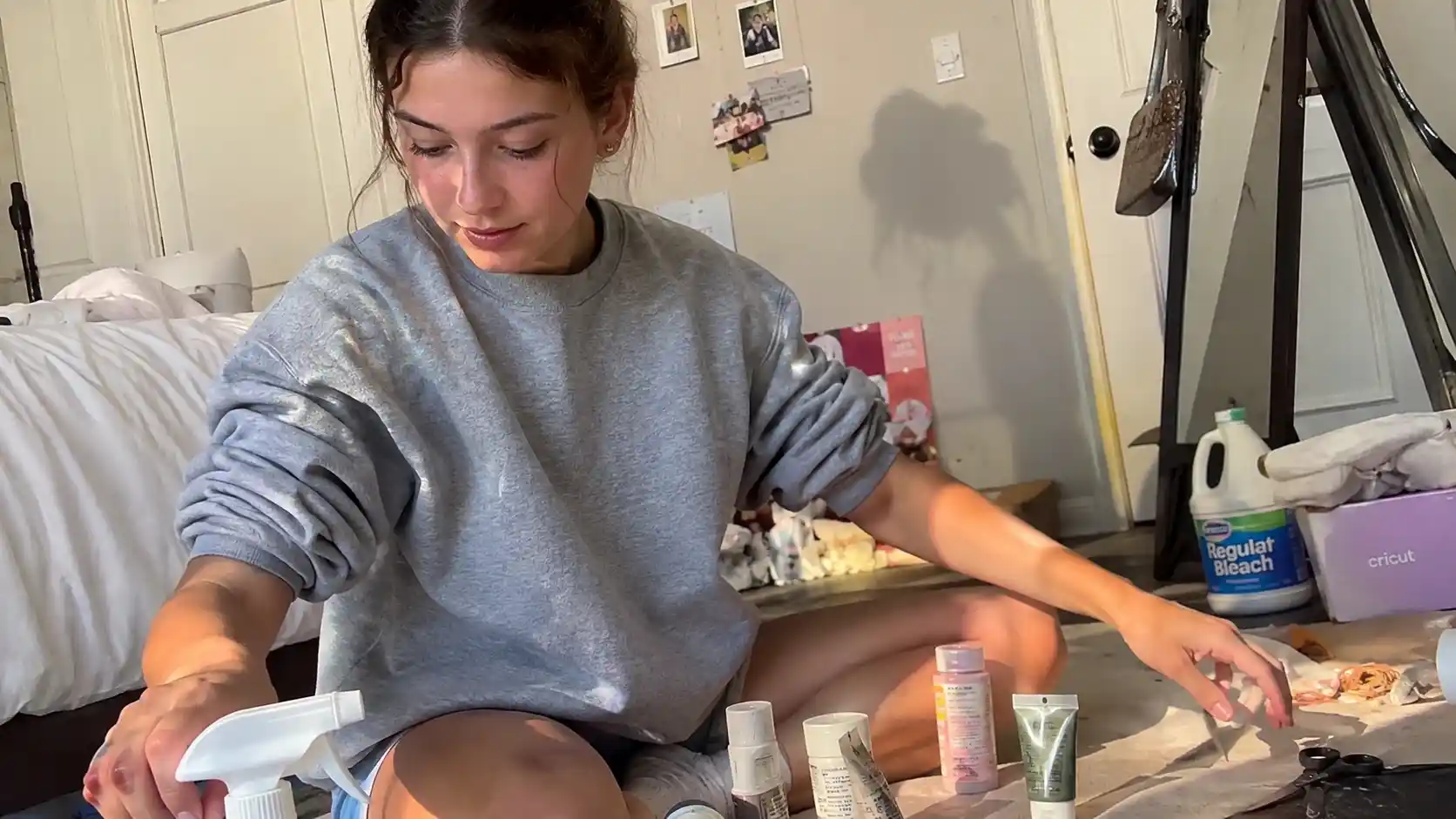
Why senior year sweatshirts actually matter
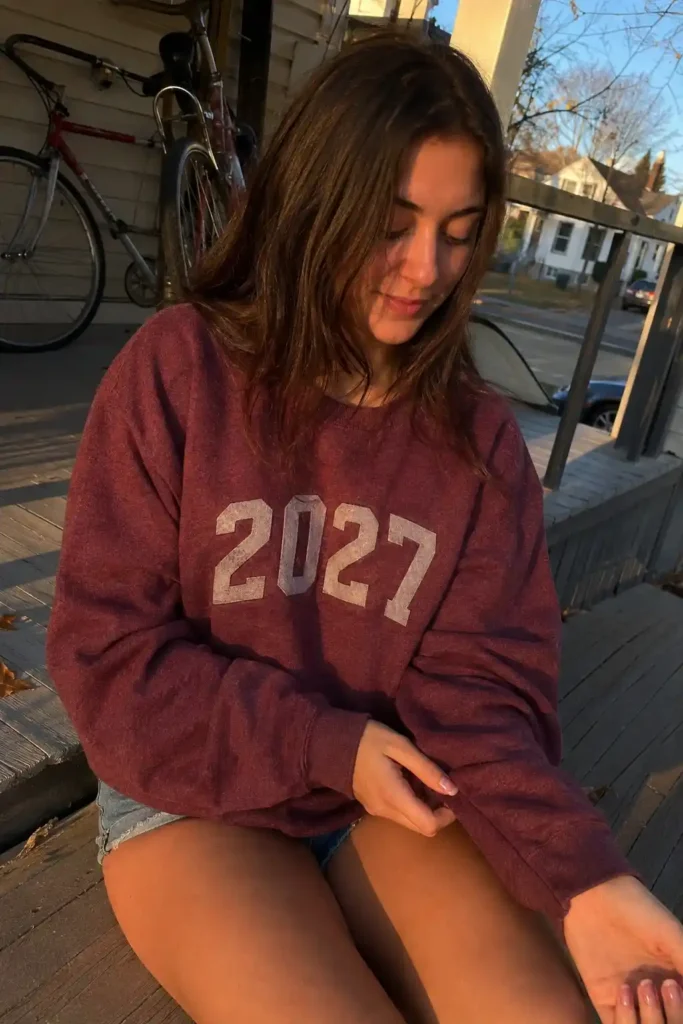
A senior sweatshirt isn’t just merch. It’s the one piece of clothing that turns into a time capsule.
Think about it: yearbooks get lost, group chats die, and half your Instagram followers from that era have already gone private.
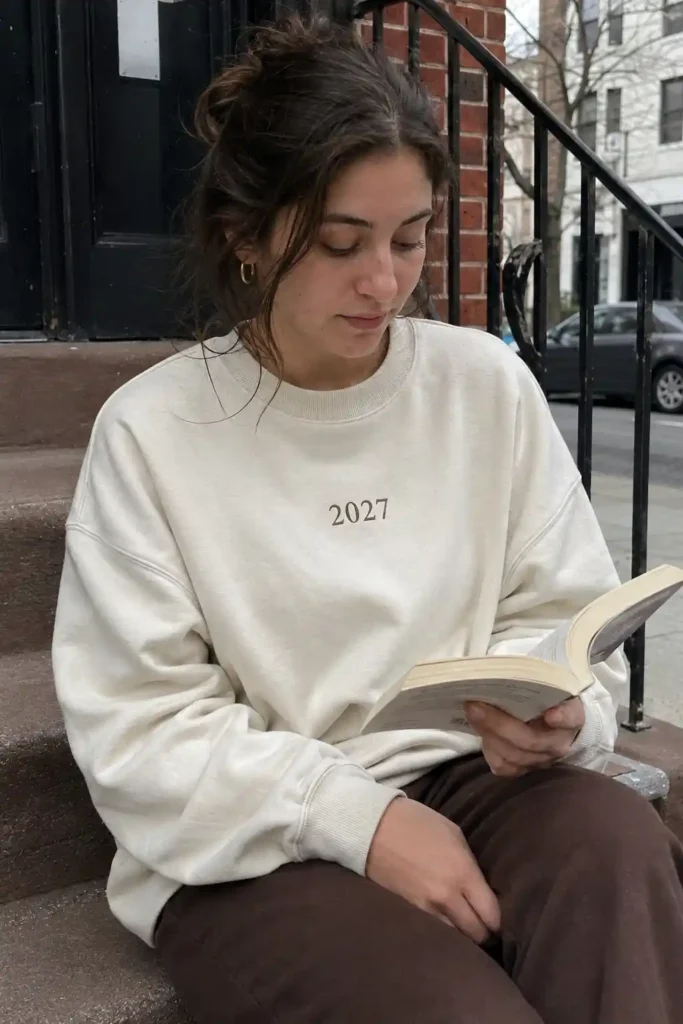
But that sweatshirt with “2027” printed across the chest? It sits in a closet for a decade and still means something the day you pull it back out.
That’s also why getting it right matters more than people assume going in. A cheap print cracks after six washes.
A bad fit means nobody wears it past October. Pick well, and you get a piece people actually reach for years later.
Popular styles for senior year sweatshirts
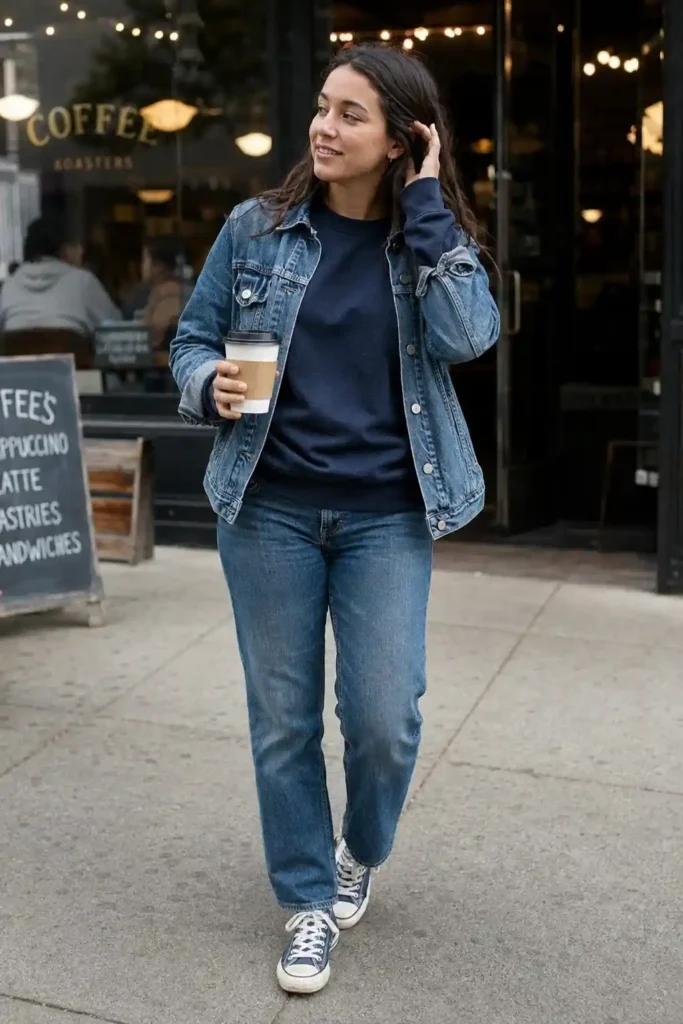
Not every senior sweatshirt has to look like the ones from 2004 with the huge block letters.
Styles have moved on, and honestly, thank goodness.
Crewneck classics
The crewneck is the safest, most versatile choice, and there’s a reason it never goes out of rotation.
It layers under jackets, it works with jeans or joggers, and it doesn’t scream “school spirit wear” the way some other cuts do.
Best for: classes that want something everyone will actually wear past graduation, not just during spirit week.
Hoodies
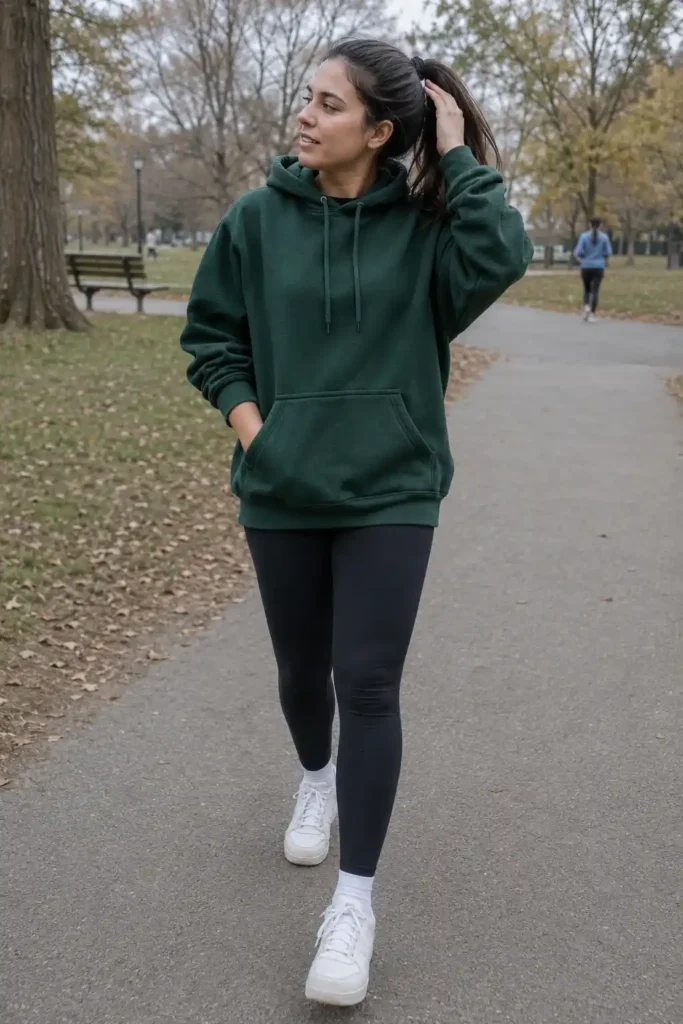
Hoodies win the popularity contest almost every year, and I get why.
The hood adds function in cold weather, the front pocket is genuinely useful, and the silhouette photographs better for group pics.
Best for: groups that want a design with more real estate, since hoodies give you a bigger canvas across the back.
Quarter-zips

These have quietly become the pick for seniors who want something that doesn’t scream “college kid” the second they wear it to a real job.
Cleaner lines, a slight collar, a bit more polish. IMO, this is the most underrated option on the list.
Oversized and cropped fits
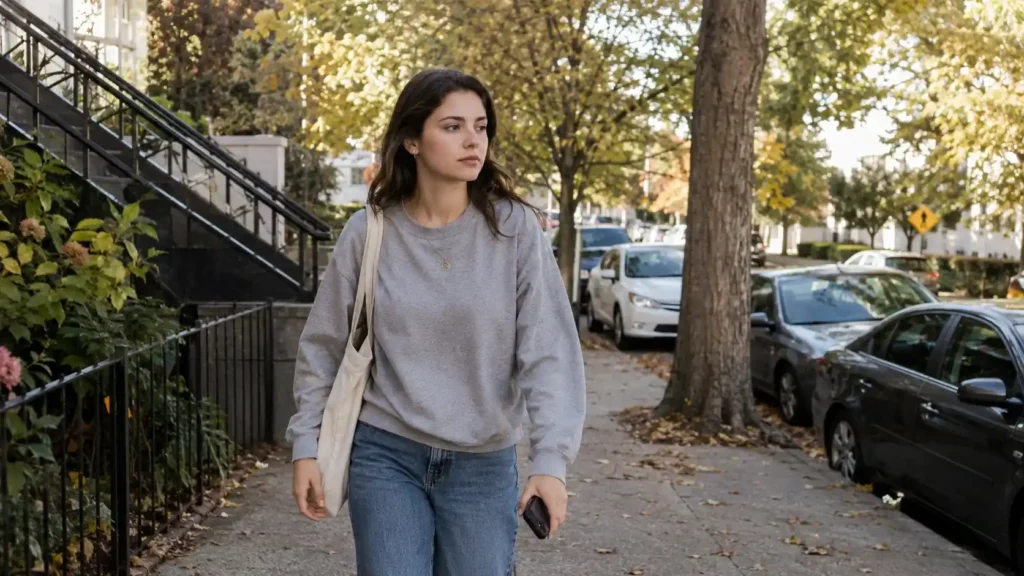
Oversized fits dominate right now, especially with anyone shopping with Pinterest boards open in another tab.
Cropped versions have picked up steam too, particularly for senior sweatshirts worn as part of a full outfit rather than just loungewear.
Design ideas that actually look good (not just trendy for five minutes)
Here’s where a lot of senior sweatshirt orders go sideways.
Somebody grabs a template, slaps the graduation year on it in Impact font, and calls it done. You can do better, and it doesn’t take much more effort.
A few directions that consistently age well:
- Minimalist typography — just the year, or a single word, in a clean serif or a soft script. Less clutter, more staying power.
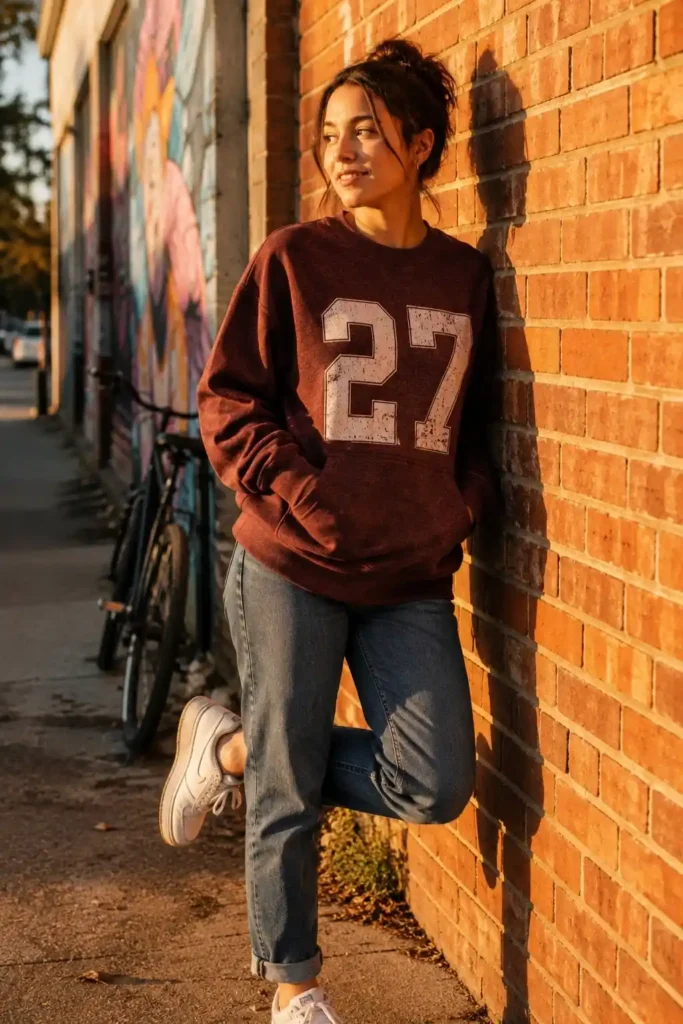
- Retro varsity numbers — think collegiate block numbers with a distressed texture. This one photographs beautifully for Pinterest-style flat lays.
- Mascot silhouettes — a simplified, single-color version of the school mascot instead of the full detailed logo. Simpler prints hold up better long-term anyway.
- Custom class mottos or inside jokes — genuinely my favorite category, because these are the sweatshirts people keep the longest. A shared joke means more than a generic slogan ever will.
- Color-blocked sleeves — contrast sleeves in the school color, solid body. Feels current without trying too hard.
Quick aside, and this has nothing to do with sweatshirts: does anyone else find that the best design ideas show up at 1am and are completely gone by morning?
Write that stuff down. I’ve lost so many good concepts to a phone that died overnight.
Fabric and fit: what actually holds up
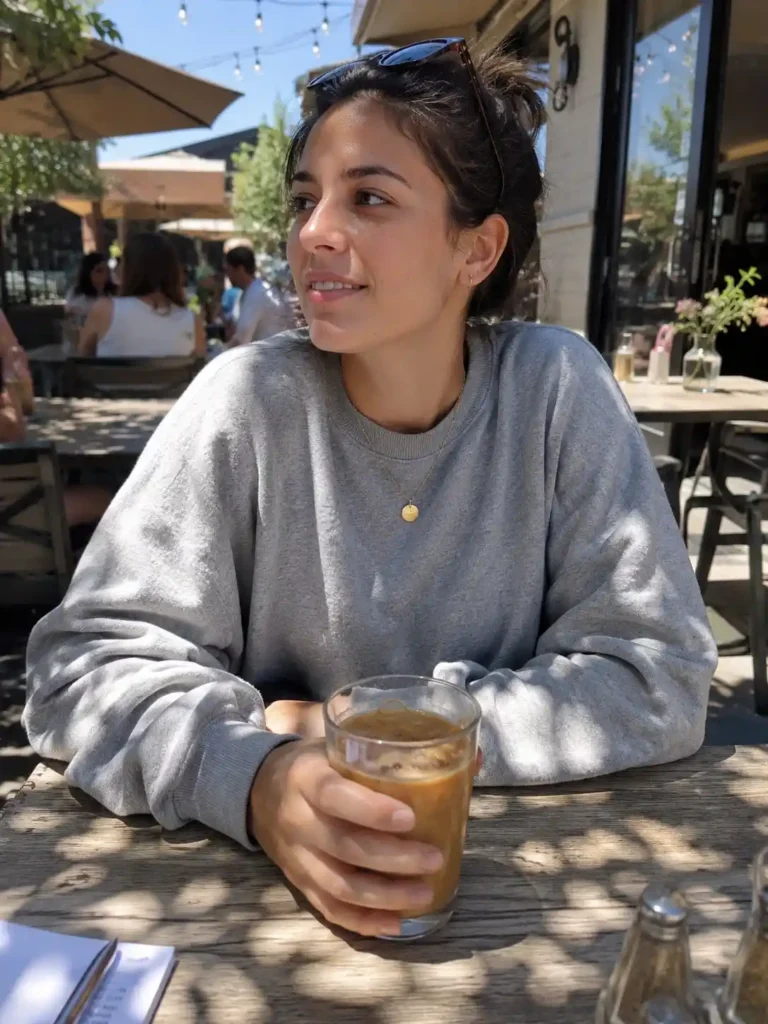
This is the part everyone skips, and it’s the part that decides whether the sweatshirt survives senior year or falls apart by winter break.
Fabric weight gets measured in GSM (grams per square meter), and it tells you more about durability and warmth than any product description will.
Here’s a quick breakdown based on standard fabric weight guidance for hoodies:
| GSM range | Feel | Best for |
|---|---|---|
| Up to 280 GSM | Light, breathable | Layering, warmer climates |
| 280–350 GSM | Medium, everyday weight | Most senior sweatshirts, year-round wear |
| 350+ GSM | Heavy, structured | Cold-weather regions, longer wear life |
| 500+ GSM | Very heavy, premium | Streetwear-style drops, statement pieces |
I’ll be honest: I underestimated fabric weight the first time I ordered a batch for a group.
We went with something cheap and thin, and by March, half the class had holes at the cuffs. Lesson learned the expensive way.
A few fit notes worth knowing:
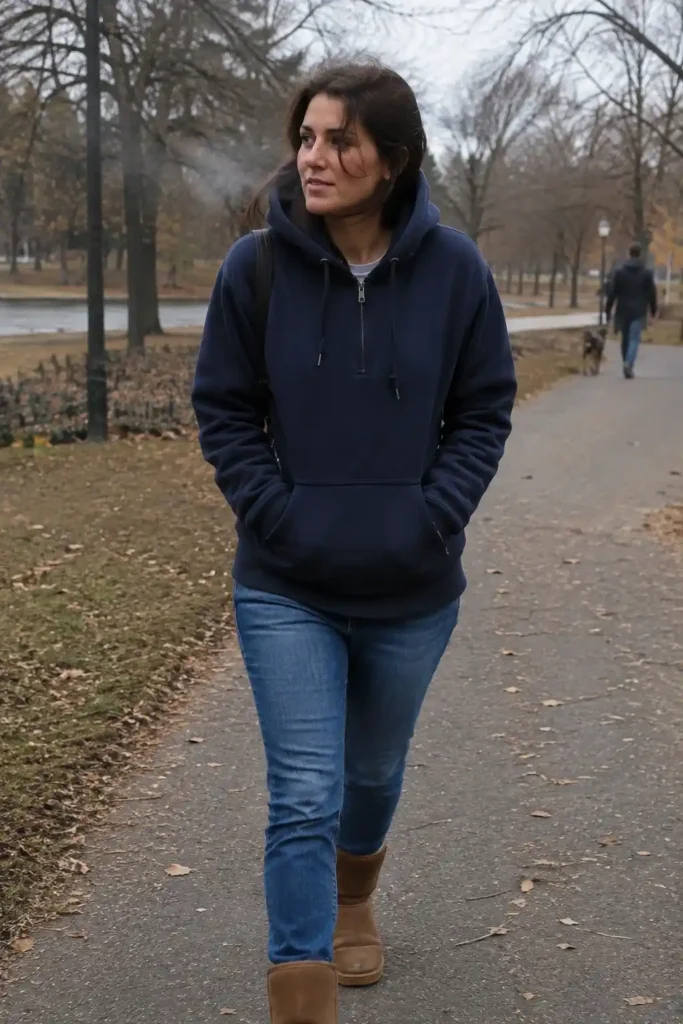
- Cotton-poly blends (commonly 80/20) hold prints better than 100% cotton and resist shrinking.
- Unisex sizing tends to run large. If most of your group wants a fitted look, size down.
- Fleece-lined interiors add warmth but also weight, which matters if you’re shipping in bulk.
Printing methods: why this decides how long the design lasts
Two methods dominate custom sweatshirt printing, and the difference between them genuinely changes how the final product looks and wears.
Screen printing pushes ink through a mesh stencil, one color at a time, which makes it durable and vibrant on basically any fabric.
Direct-to-garment (DTG) printing works more like an inkjet printer for fabric, spraying ink straight onto the shirt for full-color, high-detail designs.
According to Wikipedia’s overview of direct-to-garment printing, the process uses specialized inkjet technology that produces sharper resolution than older decoration methods.
Meanwhile, guidance from Printful’s comparison of the two techniques points out that screen printing tends to be the better call for large, simple-color orders, while DTG shines on smaller runs with more complex artwork.
Here’s my take after ordering both ways for different groups:
- Screen printing wins for large class orders with a simple 1-2 color design. Cheaper per unit at volume, and it lasts through dozens of washes.
- DTG wins for smaller friend groups or anyone wanting a full-color, detailed graphic. You pay more per piece, but you get way more creative freedom.
Neither one is objectively better. It depends on your order size and your design.
Personalizing without turning it into a mess
Group sweatshirts get complicated fast once everyone wants their own touch on it. I’ve watched a simple class order spiral into eleven different opinions on font size alone.
The trick is separating what stays uniform from what gets personalized.
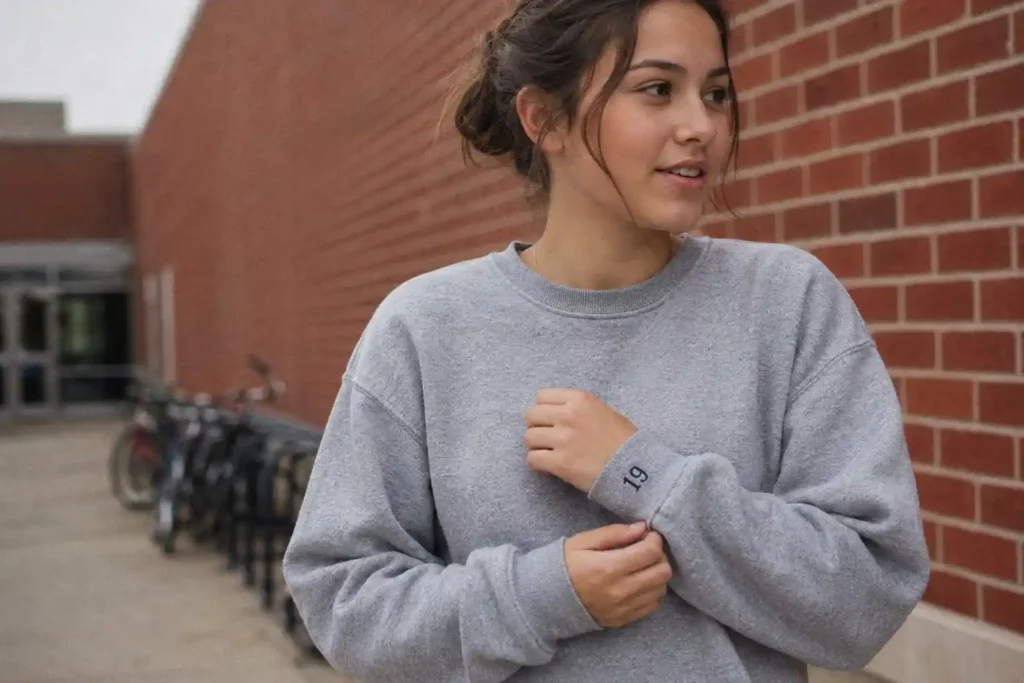
Keep the front design locked (school colors, main graphic, the year if you’re using one) and let personalization live somewhere smaller, like a sleeve or the back hem.
That way the group still looks cohesive in photos, but individual names or nicknames still show up.
A few personalization approaches that work well without derailing the whole order:
- Back-of-neck tags with a name or initials, small and subtle.
- Sleeve numbers, borrowed from the jersey playbook, tied to a locker number, birth year, or inside joke.
- A shared back design with individual front placement, so everyone gets a small custom detail up front while the group graphic stays consistent on the back.
Wow, some of the sweatshirt mockups I’ve seen from senior classes lately are honestly better designed than half the merch actual brands put out.
Seniors take this stuff seriously, and it shows.
Choosing colors that don’t fight the design
Color choice trips people up more than they expect.
School colors feel like the obvious pick, and most of the time they are the right call, but there’s a real difference between using school colors well and just slapping them on because that’s what’s expected.
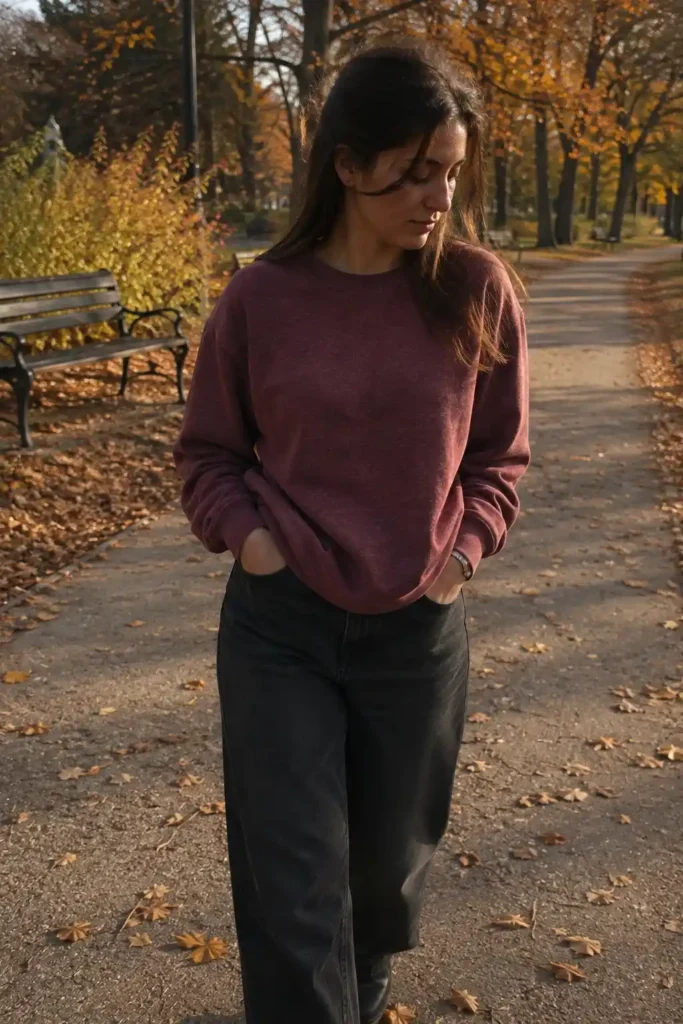
A muted or heathered version of a school color usually reads as more “wearable” than the bold, saturated version.
Bright red looks great on a poster. On a sweatshirt someone plans to wear for the next five years, a heathered maroon or a washed navy tends to age better and pair with more of an actual wardrobe.
If your school’s colors clash (looking at you, schools running orange and purple together), consider using one as the dominant color and the other strictly as an accent, like stitching, a small logo outline, or the drawstring on a hoodie. It reads as intentional instead of chaotic.
Buying tips that’ll save you money and regret
A few things I genuinely wish someone had told me before I placed my first group order:
- Order a sample first. Always. Fabric feels different in photos than it does on your actual body.
- Confirm sizing charts per brand, not per style. A medium from one supplier can run completely different from a medium at another.
- Ask about minimum order quantities before you finalize a design, since some printers only offer good pricing above a certain count.
- Check the return policy on customized items. Personalized gear is often final sale, which stings if sizing goes wrong.
- Budget for shipping weight, especially with heavier fleece. It adds up fast on bulk orders.
FYI, prices swing a lot depending on season. Ordering in late spring, right when every senior class in the country wants the same thing, usually costs more than ordering in fall.
FAQs
Do senior year sweatshirts need to include the graduation year? Not necessarily. Plenty of the most-worn designs skip the year entirely and lean on a mascot, motto, or color scheme instead, which also means the sweatshirt doesn’t instantly read as “outdated” a few years down the line.
What’s the most durable fabric for a group order? A cotton-poly blend in the 280–350 GSM range tends to hold up best for everyday wear without becoming too heavy to ship or too hot to wear indoors.
How far in advance should a class order sweatshirts? Aim for at least 6 to 8 weeks before you need them, longer if the order is large or the design has multiple colors. Rush orders exist, but they cost more and limit your printing options.
Final thought
A senior year sweatshirt is a small thing that ends up mattering more than anyone expects going in.
Pick a fabric that survives real wear, a design that still looks good in five years, and a fit people will actually reach for after graduation.
So, what’s your pick going to be: classic crewneck, oversized hoodie, or something nobody’s tried yet at your school? Drop your favorite senior sweatshirt design idea. I read every one.
