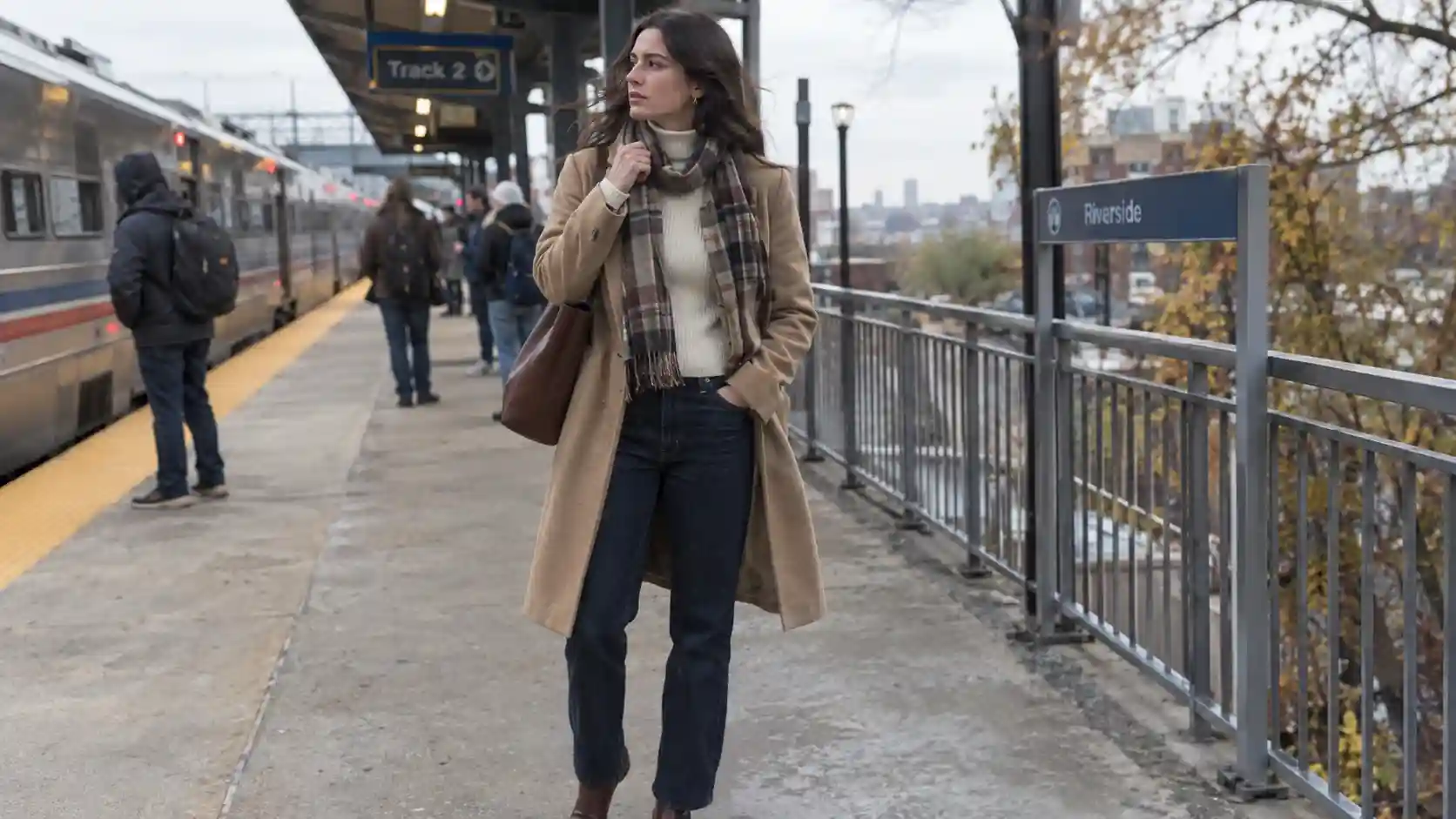
I used to think layering meant throwing a puffer over whatever I already had on and calling it a day.Then I spent one January morning shivering on a train platform in three “warm” pieces that somehow added up to zero warmth, and I finally sat down and figured out what actually works.
Turns out the order and the fit matter way more than the amount of fabric you pile on.
A handful of combinations pull double duty: they keep you warm AND they look pulled together, not like you got dressed in the dark during a fire drill.
I’ve spent years writing about fashion, and even more years actually wearing this stuff through real winters in cities that don’t play nice with a light jacket. So consider this your no-fluff guide.
Twenty-three combinations, organized by vibe, a table you can screenshot, a couple of mistakes I made so you don’t have to, and a few opinions I’ll fully own as personal rather than gospel.
Save this one for your Pinterest board. You’ll want to come back to it in November when the temperature drops 20 degrees in a single weekend, which, let’s be honest, happens every single year and somehow still catches everyone off guard.

Why layering actually works (and why one heavy coat doesn’t)
Here’s the thing nobody explains at the store: a single thick coat traps a huge pocket of air around your whole body, which sounds cozy until you realize that pocket is hard to regulate.
Walk into a warm store and you’re sweating. Step back outside and that sweat turns cold fast, and now you’re colder than you were before you bundled up.
Layers solve this because you can add or peel off pieces as your body temperature shifts throughout the day.
Cold weather safety experts, including the National Weather Service, recommend dressing in loose, layered clothing rather than one bulky item, precisely because it lets your body trap warm air in smaller, adjustable pockets instead of one giant unmanageable one.
That’s not just a styling tip. It’s genuinely how your body regulates heat, and it’s the same principle hikers and outdoor workers rely on when the temperature actually matters for safety, not just for a cute outfit photo.
I learned this the hard way during a Chicago winter when I wore one giant wool coat with nothing strategic underneath, figuring the coat alone would handle it. I was fine standing still at the bus stop.
The second I started walking fast to catch that bus, I was drenched under the coat and freezing everywhere the coat didn’t cover.
A base layer and a light mid layer would’ve let me vent heat without stripping down on a street corner like some kind of public meltdown.
There’s also a simpler reason layering wins: it gives you more outfits out of fewer pieces.
Ten solid layering pieces, mixed and matched, easily produce 20 or 30 distinct looks. One heavy coat gives you exactly one look, worn on repeat until spring.
The 3-layer system, explained without the jargon
Every combination below builds on the same skeleton, and once it clicks, you’ll start seeing it everywhere.
- Base layer: sits against your skin, moves moisture away from your body. Think thin merino, silk, or a fitted cotton-blend tee. This layer should be snug, not baggy, because trapped air needs a thin barrier to warm up quickly.
- Mid layer: your insulation. Sweaters, cardigans, flannels, vests. This is where most of your actual warmth comes from, and it’s also where most of the personality of an outfit lives.
- Outer layer: blocks wind and wet. Coats, jackets, parkas. This layer protects everything underneath it, and it’s usually the piece worth spending the most money on.
Once that structure clicks, everything else is just picking pieces you like within each category.
IMO this is the single most useful thing I can tell you before we get into the actual outfits, because it turns “what do I wear today” into a much smaller decision: pick one base, one mid, one outer, done.
One small note before the list: fit matters more than fabric weight.
A slim base layer under a slightly roomier mid layer under a properly fitted outer layer will trap warm air far better than three tight pieces stacked on top of each other.
Loose over fitted, generally, works better than fitted over fitted.
23 layering combinations, broken down by mood
I split these into five categories because “23 outfits” as one giant list is exhausting to read. Nobody wants that.
Pick the section that matches your week, or honestly, just skim all five and steal whatever catches your eye.
Cozy weekend layers (1 to 5)
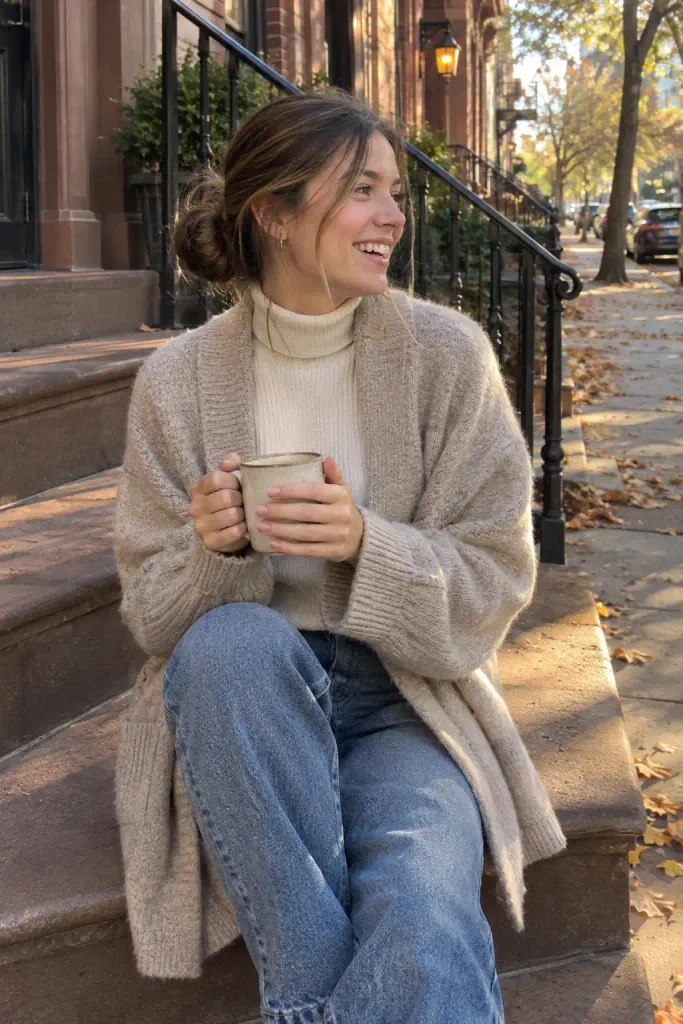
- Ribbed turtleneck + oversized cardigan + straight-leg jeans. My personal go-to on lazy Sundays. The turtleneck keeps your neck warm without bulk, and the cardigan does the heavy lifting while you barely have to think about it.
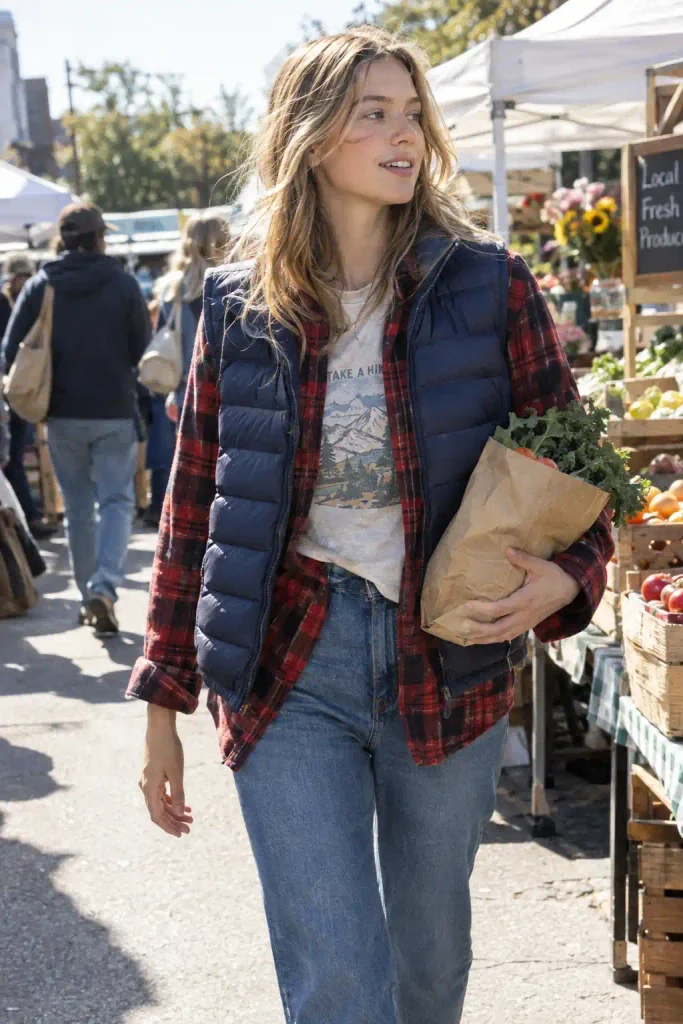
- Flannel shirt (unbuttoned) over a graphic tee + puffer vest. This one photographs beautifully for a Pinterest board, honestly. The vest adds shape without hiding the flannel underneath, so you get the best of both pieces.
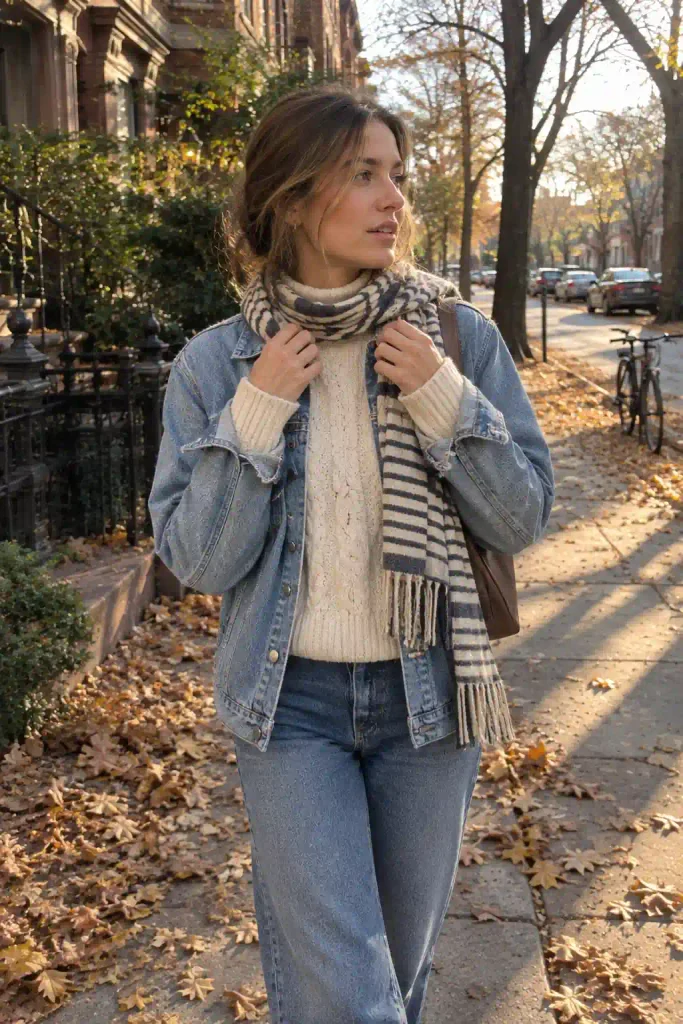
- Chunky knit sweater + denim jacket + scarf. Denim jackets get dismissed as a fall-only piece, but layered over wool, they hold up fine into early winter, especially with a scarf covering the gap at your neck.
- Hoodie + shearling-lined jacket + joggers. Comfortable enough for errands, structured enough that you won’t look like you rolled out of bed. Mostly.

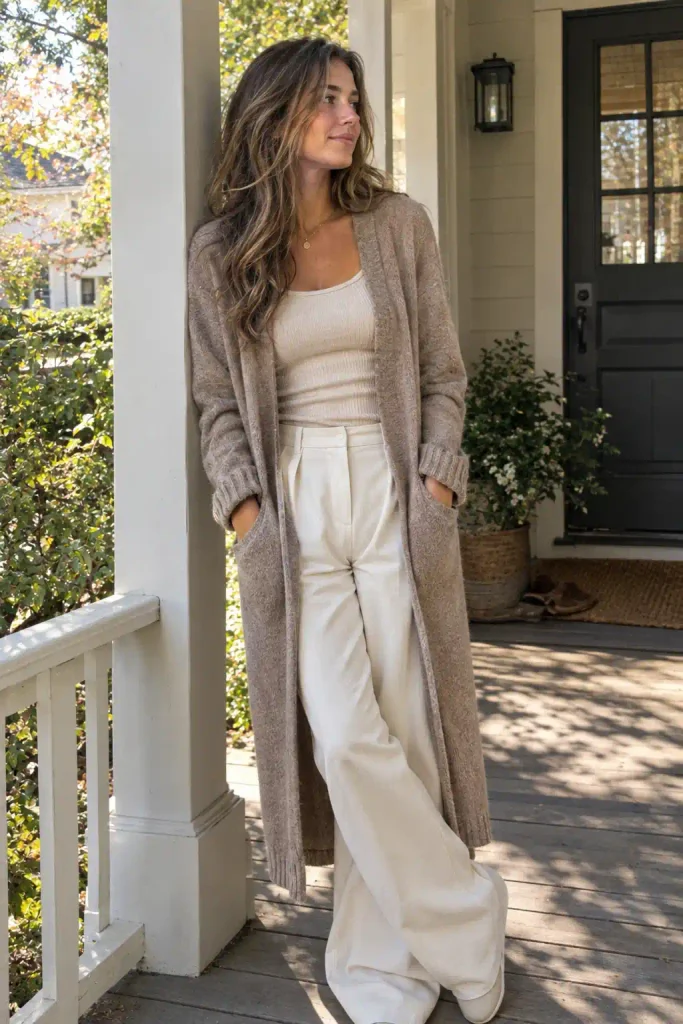
- Long cardigan (duster length) + fitted tank + wide-leg trousers. This is my favorite trick for making loungewear look intentional without any extra effort.
Office-appropriate layers (6 to 10)
- Silk blouse + fine-knit vest + tailored blazer. Three layers, zero bulk. Works under a coat on the commute and still looks sharp once you peel it off at your desk.

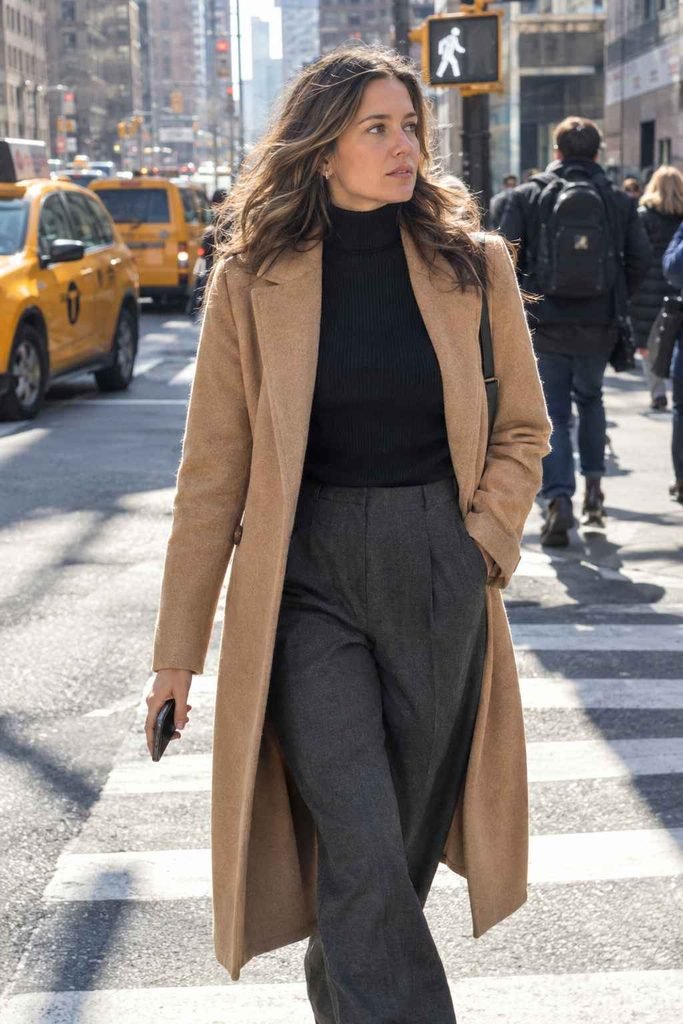
- Turtleneck + wool trousers + long wool coat. A classic for a reason. I own this combo in three colorways and wear it more than I’d like to admit, mostly because it never fails me on days I don’t have energy to think about clothes.
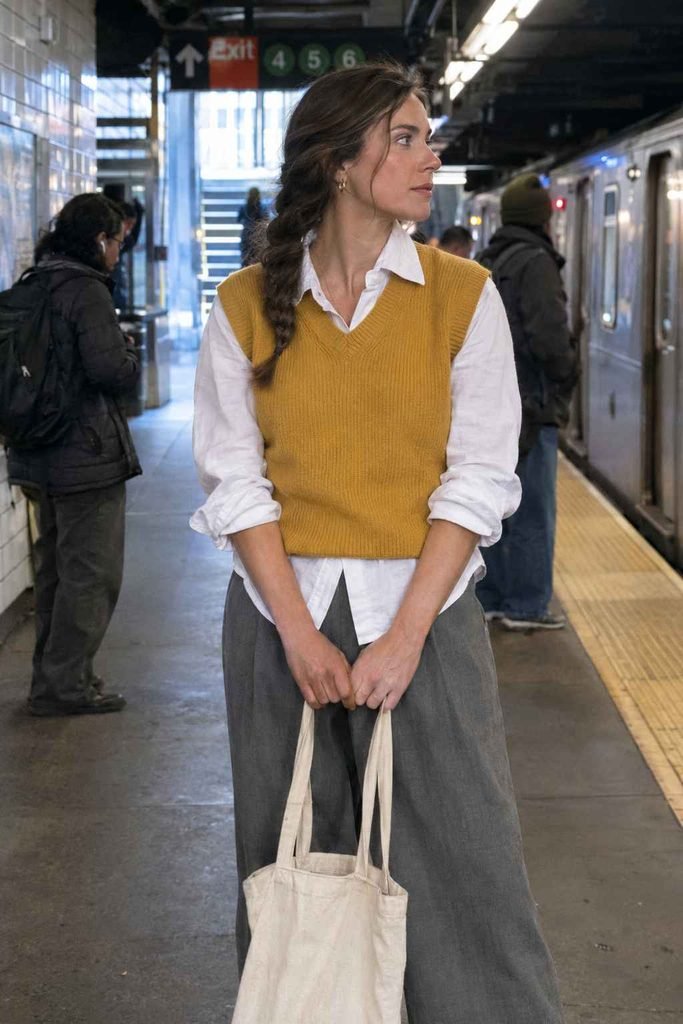
- Button-down + sweater vest + wide-leg trousers. The sweater vest is having a real moment again, and honestly, it deserves it. It adds warmth without hiding your shirt collar, which keeps the whole look looking finished.
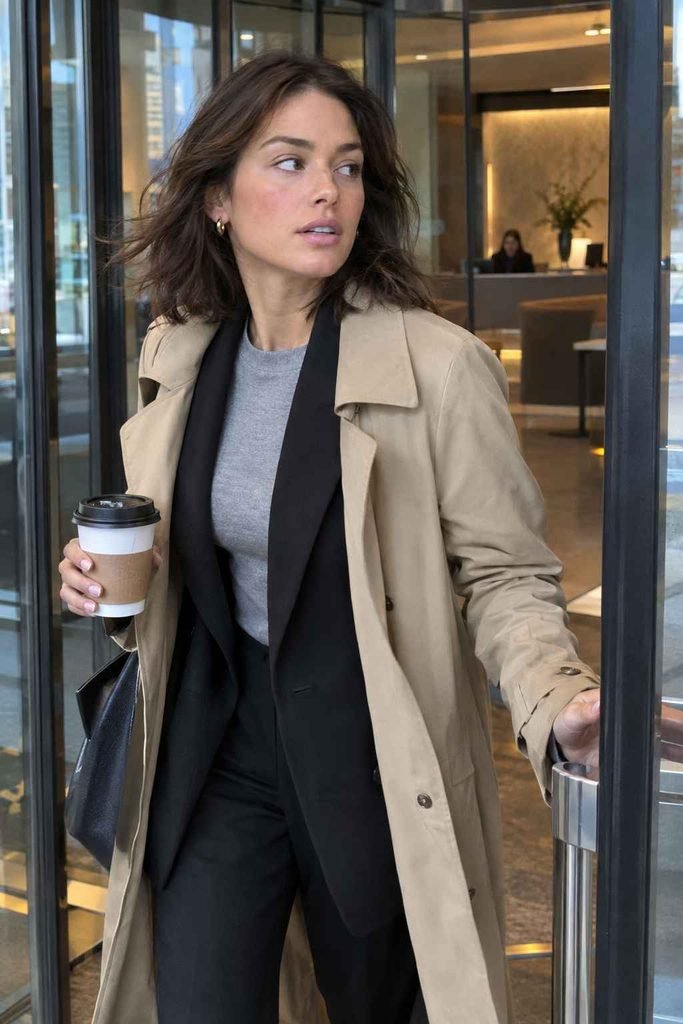
- Fitted crewneck + structured blazer + trench (unlined). Great for those weird 45-degree days where a full winter coat feels like overkill but a blazer alone isn’t quite enough.
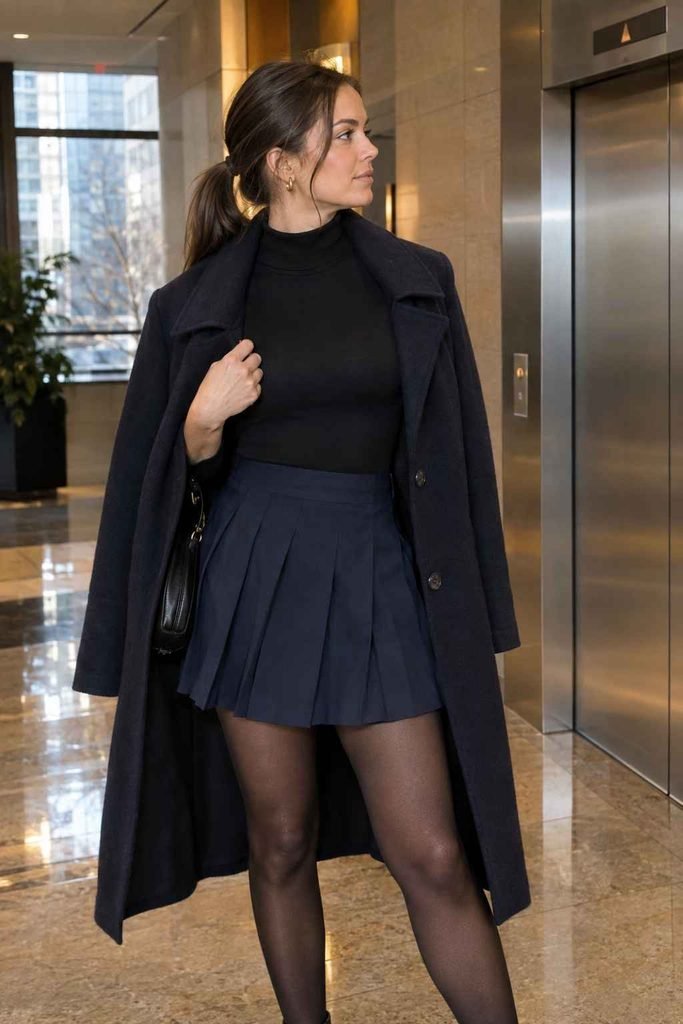
- Turtleneck bodysuit + pleated skirt + tights + long coat. This one takes five extra minutes to plan and looks like it took an hour. Nobody needs to know.
Date night and dinner layers (11 to 15)
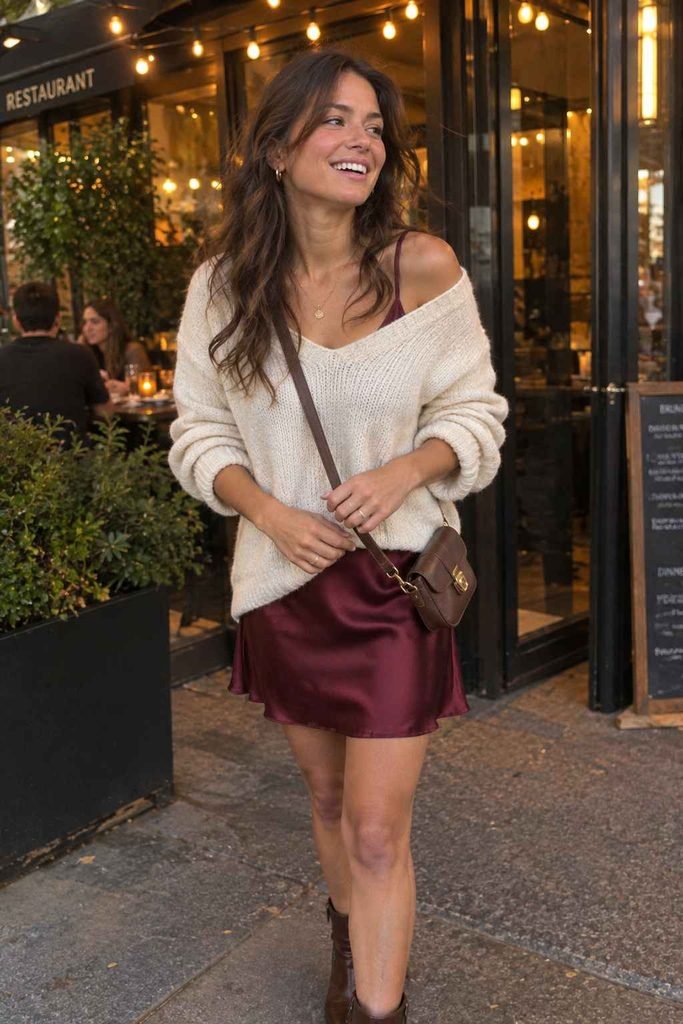
- Slip dress + chunky sweater + ankle boots. Sounds odd on paper, looks incredible in person. Ever wondered why this combo shows up on every Pinterest board around November? Now you know: it’s the texture contrast between silky and chunky that photographs so well.
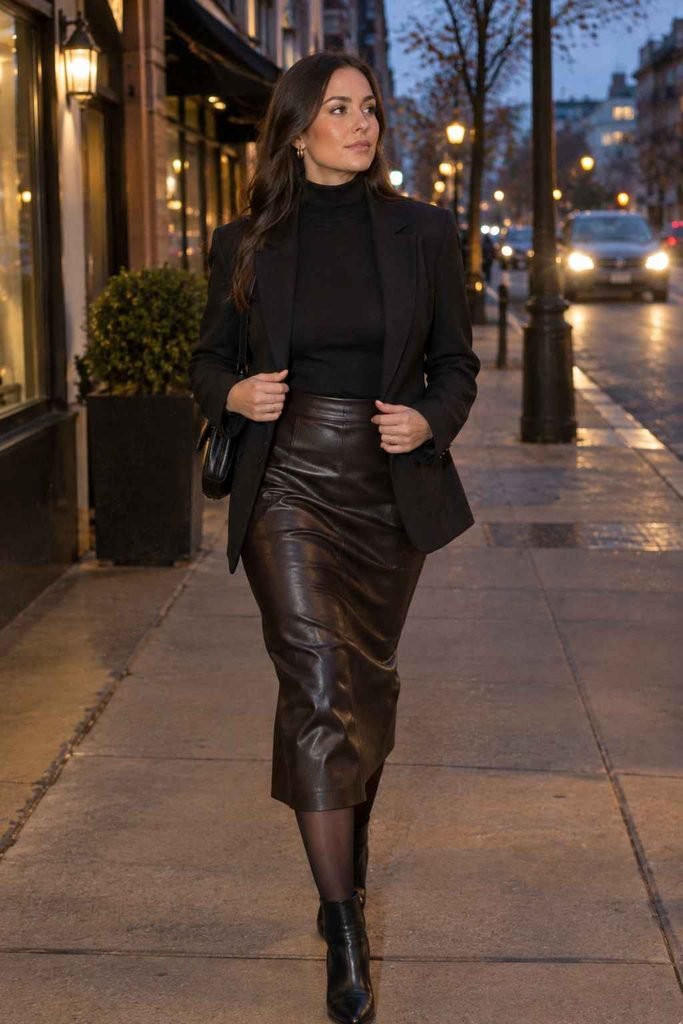
- Turtleneck + leather (or faux leather) skirt + blazer. Sharp, a little edgy, still warm enough for a walk to the restaurant if you add tights underneath.
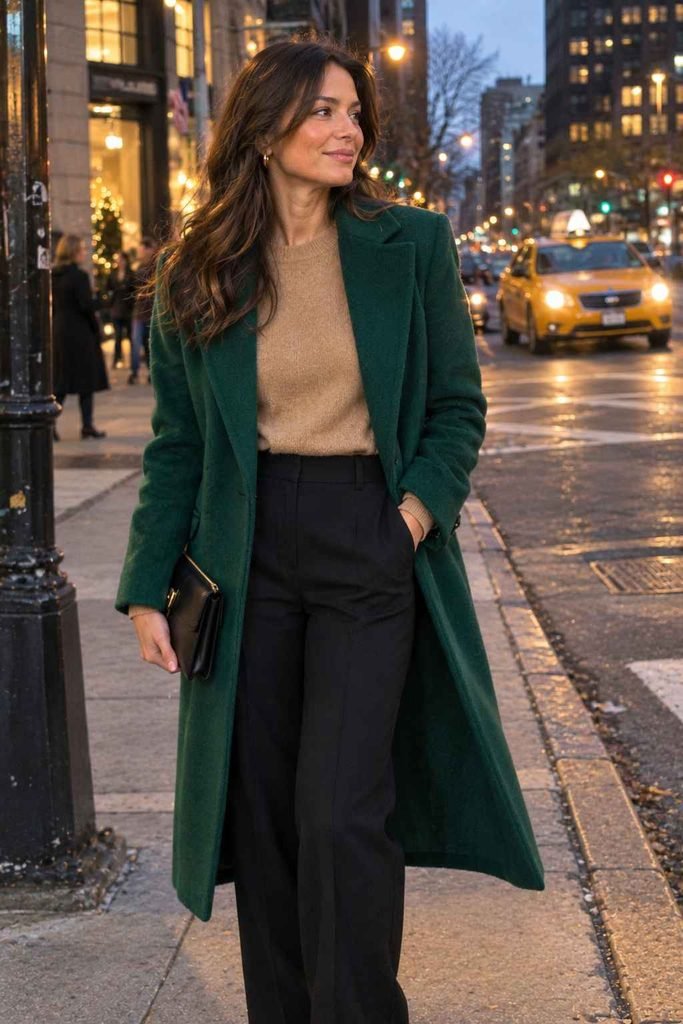
- Cashmere sweater + tailored trousers + statement coat. If you’re only investing in one “nice” layering piece this season, make it the coat. It transforms everything underneath and it’s the piece people actually notice first.
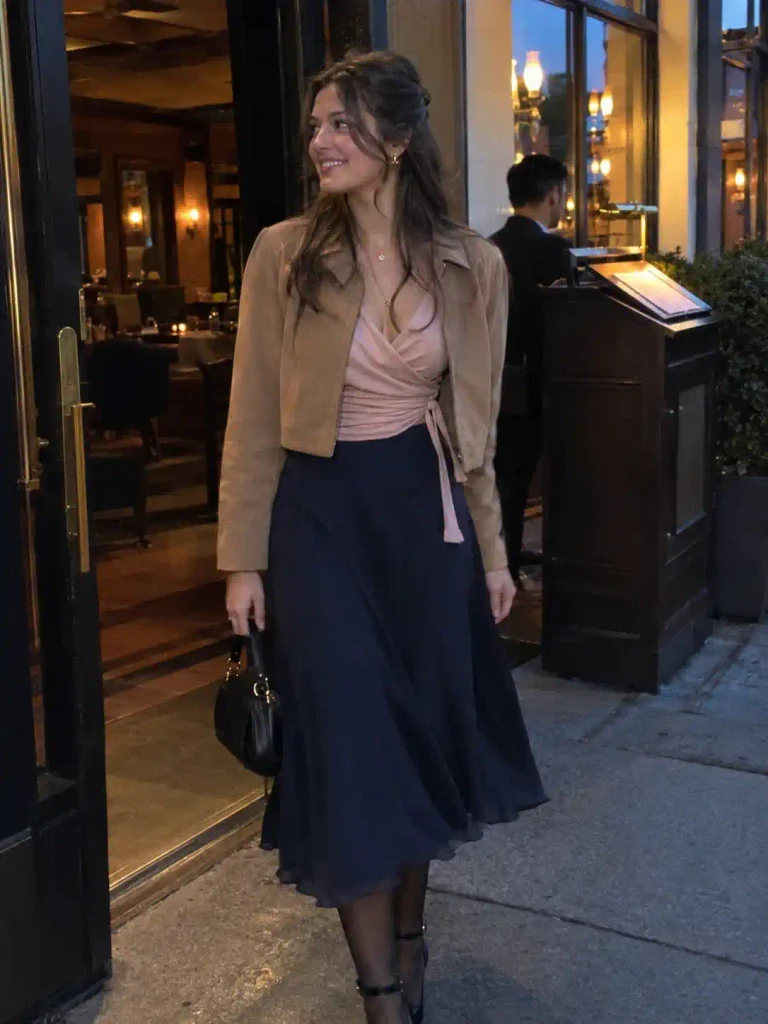
- Wrap top + midi skirt + tights + cropped jacket. Feminine without being fussy. I wore a version of this to a friend’s engagement dinner and got three compliments before appetizers arrived, which never happens to me at family dinners, for the record.
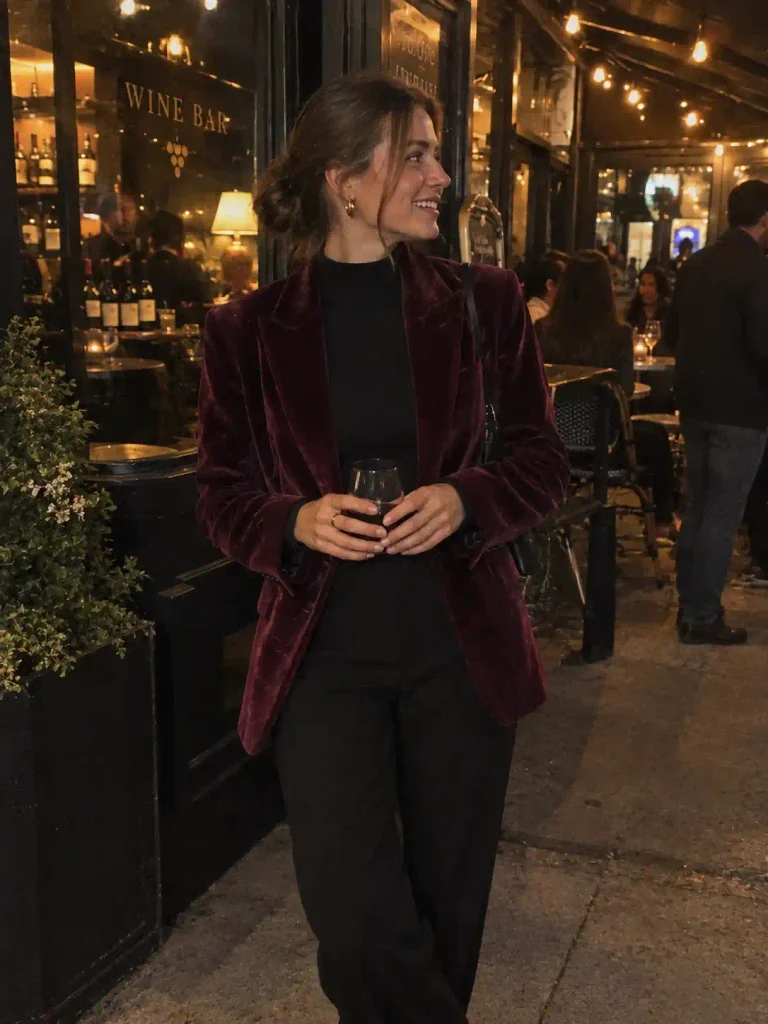
- Mock neck + velvet blazer + straight trousers. Velvet reads dressy instantly, so this is my shortcut for “I didn’t have time to change but I still want to look put together.”
Statement outerwear layers (16 to 19)
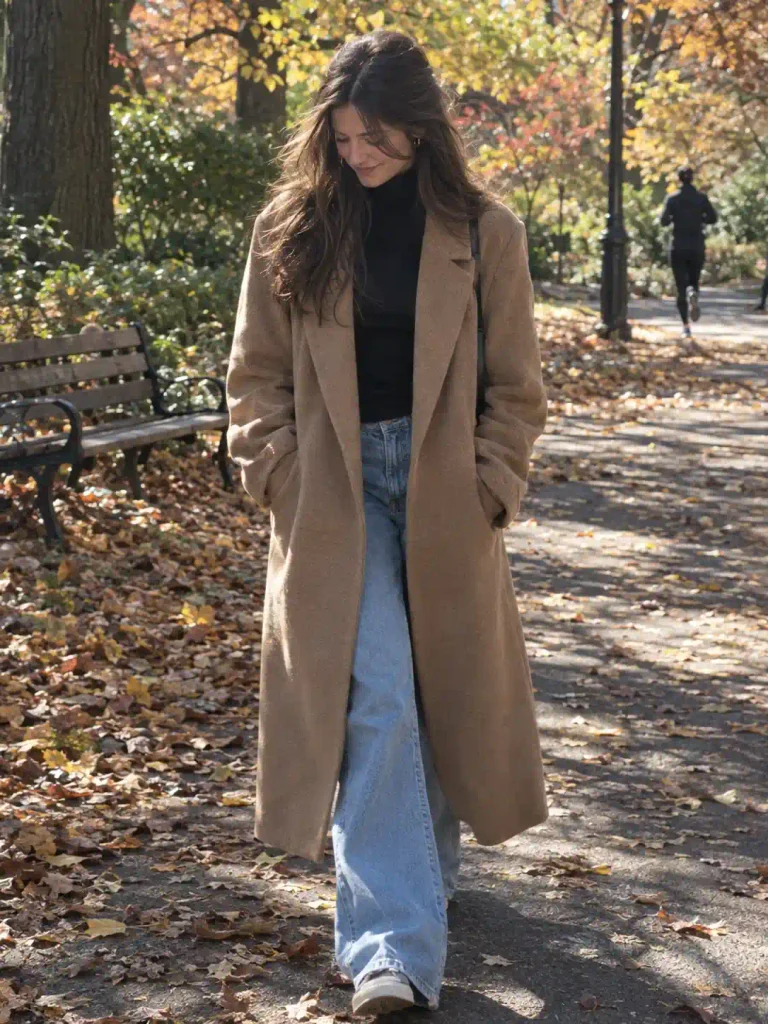
- Turtleneck + wide-leg jeans + oversized wool coat. The coat does 80% of the work here. Go big on the coat, keep everything else simple, and let the silhouette speak for itself.
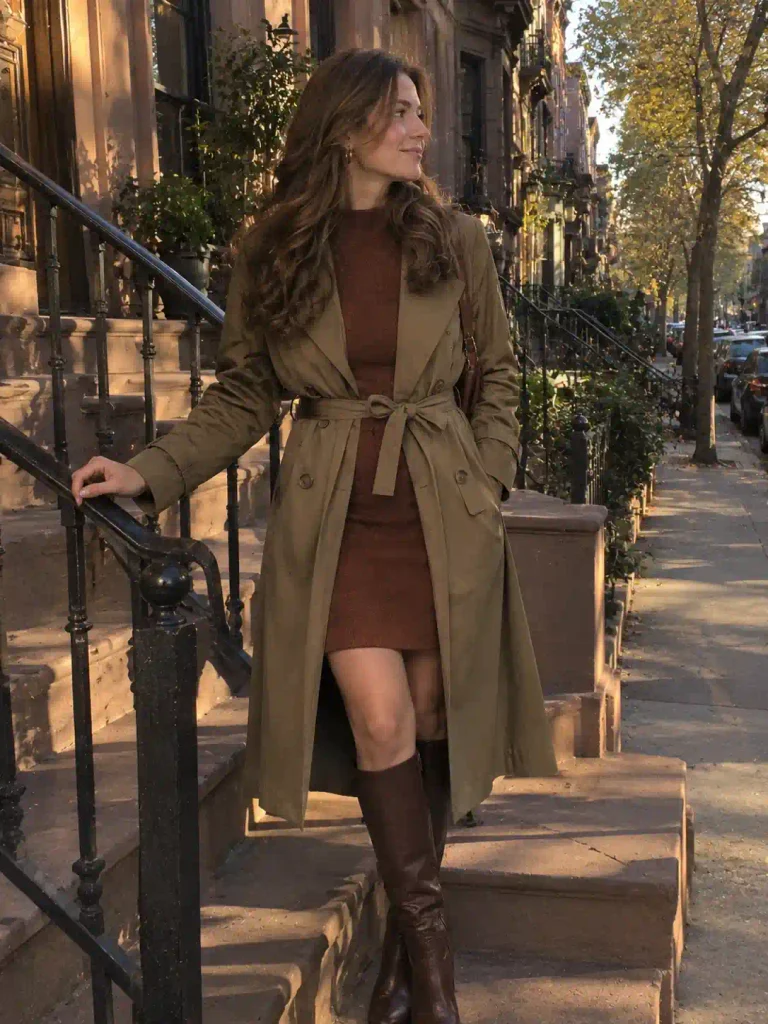
- Knit dress + belted trench + tall boots. Belting the trench over a knit dress gives you shape you’d otherwise lose under bulky knitwear, and it turns a plain dress into something that looks styled on purpose.
- Fleece jacket (yes, actually fashion now) + puffer over the top + straight jeans. This is the one combo on this list that genuinely surprised me. Two “sporty” pieces stacked together somehow reads intentional and cool, not like you’re headed to a ski lodge you never booked. This is insane how well it works given how simple it sounds on paper.

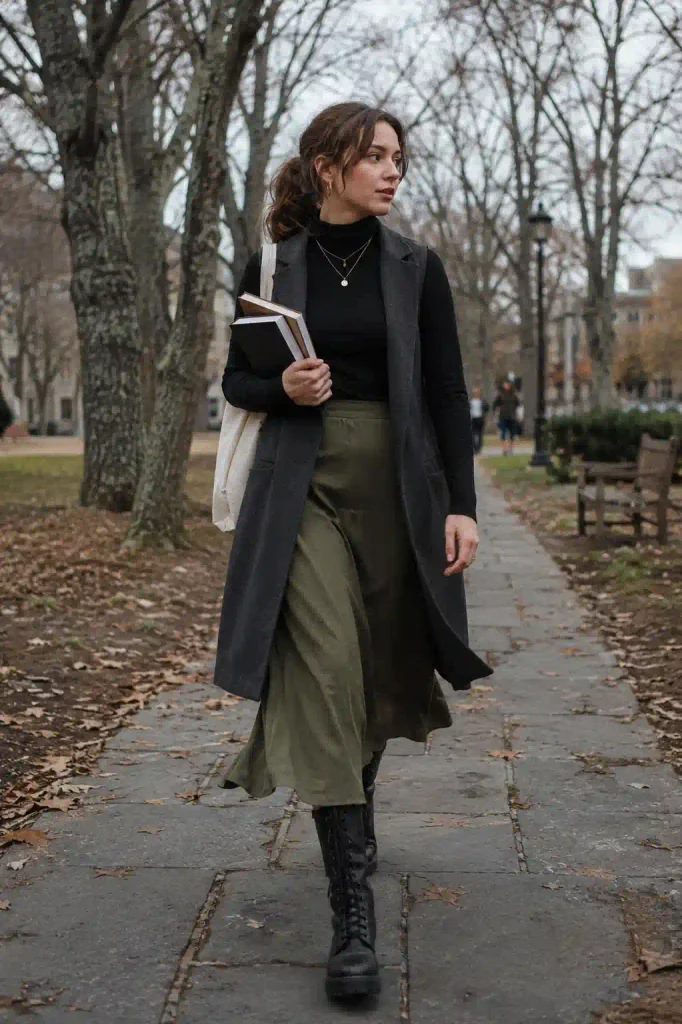
- Turtleneck + long vest + midi skirt + boots. Vests are criminally underused. They add warmth to your core without swallowing your silhouette the way a full sleeve sometimes does.
Budget-friendly layers anyone can pull off (20 to 23)
- Basic tee + flannel + denim jacket. Three pieces most people already own. This combo alone proves you don’t need a shopping spree to nail fall layering, and it’s usually the first thing I reach for when I’m packing light for a trip.

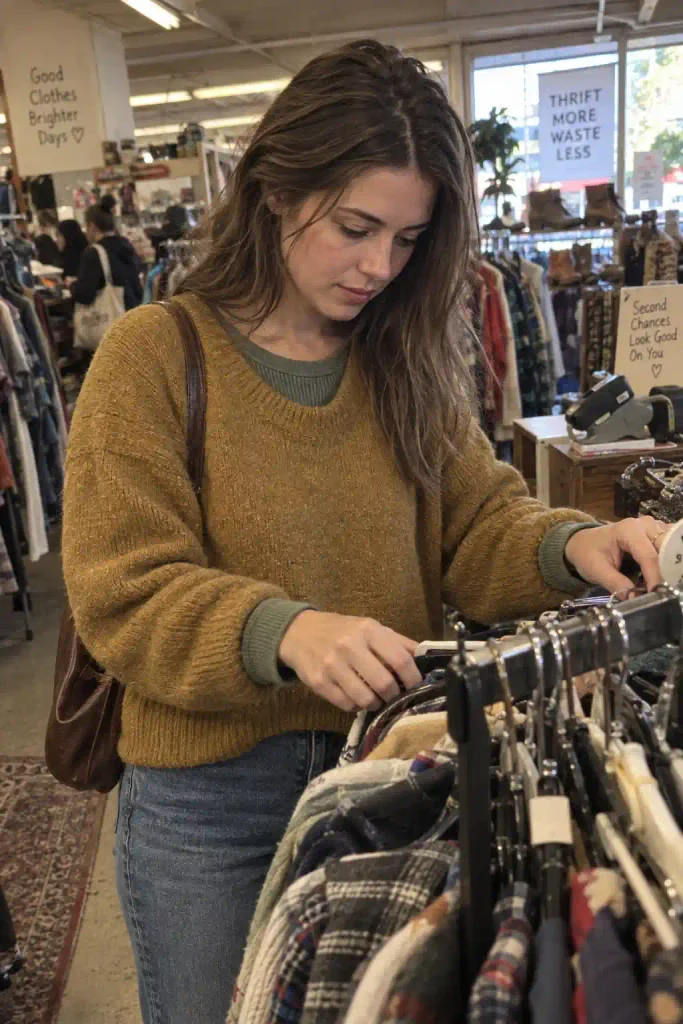
- Thermal top + thrifted sweater + jeans. Some of my favorite mid layers came from thrift stores. IMO a $6 wool sweater beats a $60 synthetic one every time for actual warmth, and thrifting means you’re not wearing the exact same sweater as everyone else on your feed.
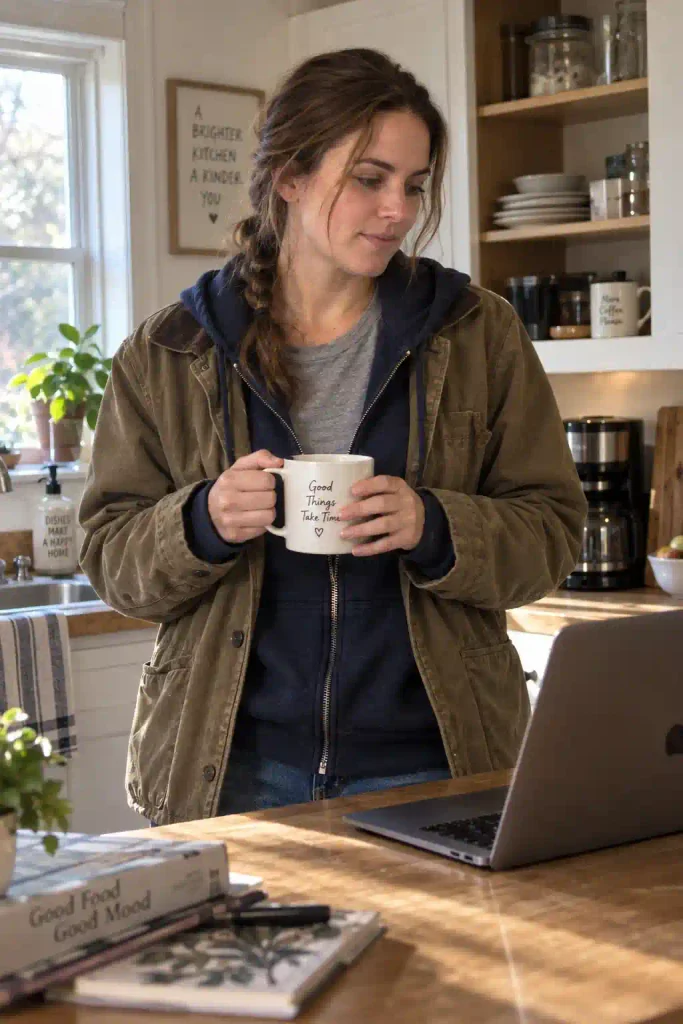
- Cotton tee + zip-up hoodie + barn jacket. Casual, warm, and honestly this is what I wear on 90% of my actual work-from-home days when nobody’s watching a Zoom call below the shoulders.
- Turtleneck + oversized flannel (worn as a jacket) + leggings. The most forgiving combo on this whole list. Zero rules, maximum comfort, and it still reads as an outfit rather than pajamas, which matters more than people admit on a grocery run.

A quick table because sometimes you just want the short version
| Layer | Best Fabric | Where It Shines | My Honest Take |
|---|---|---|---|
| Base | Merino wool, silk | Under everything | Worth spending a bit more here |
| Mid | Wool, fleece, cashmere blends | Cardigans, sweaters, vests | Thrifted wool sweaters are underrated |
| Outer | Wool, down, waterproof shell | Coats, parkas, trenches | Invest once, wear for years |
| Accents | Scarves, tights, gloves | Finishing touch | Cheapest way to change a whole look |
Footwear and small details that finish the look
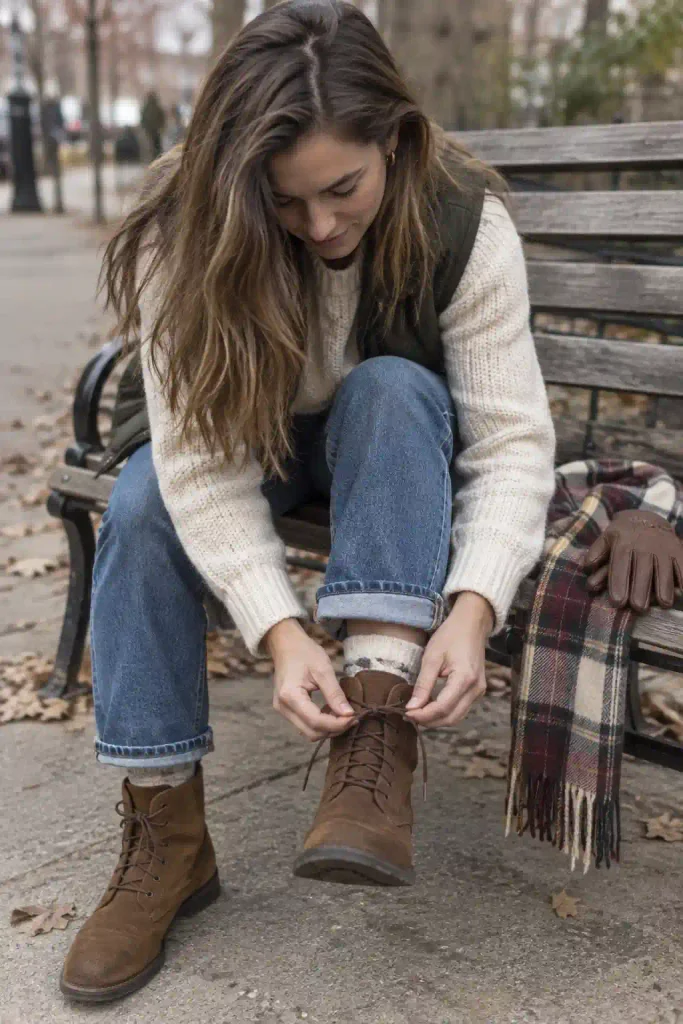
Nobody asked about footwear specifically, but I’m bringing it up anyway because the wrong shoes can undercut an otherwise great outfit.
Ankle boots handle most of the combinations above without a problem.
Tall boots work best with skirts and dresses where you want a clean line rather than a gap of bare leg between hem and boot.
For anything office-related, a low block heel or a polished loafer keeps things practical without sacrificing the put-together look you were going for with the rest of the outfit.
And honestly, wool socks under boots make a bigger difference to how warm you feel than a whole extra clothing layer ever will.
Cold feet ruin an outfit faster than anything else, no matter how good the rest of it looks.
Accessories deserve a mention too. A scarf in a contrasting texture, not just a matching color, adds visual interest without you having to buy another garment.
Gloves that actually fit (not the free ones from a drawer somewhere) make a bigger comfort difference than people expect.
Where I usually mess it up (so you don’t have to)
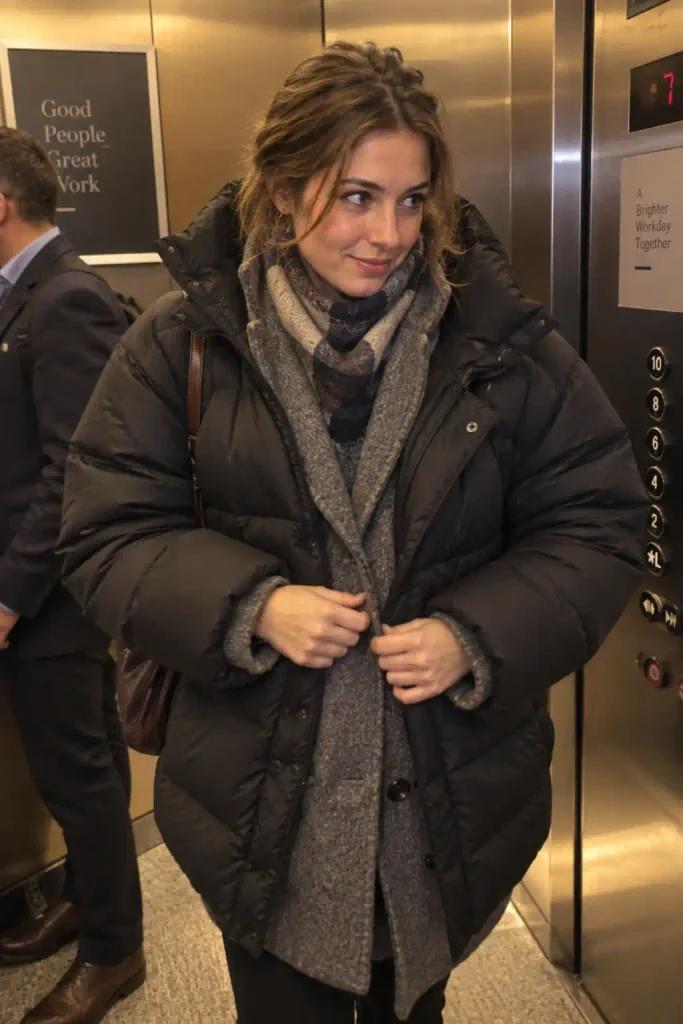
Okay, slightly random tangent, but I once spent an entire October convinced that “layering” just meant wearing two coats at once.
It did not work. I looked like I was smuggling a third coat underneath for later, and I definitely got a weird look from a coworker in the elevator. Anyway, back to the actual mistakes.
The biggest one? Skipping the base layer because “it’s not that cold yet.” It’s always colder than you think once the sun goes down.
A thin base layer weighs nothing in your bag, so there’s no real reason to leave it home, and you’ll thank yourself around 6pm when the temperature drops without warning.
The second mistake, and this one’s IMO the most common: choosing bulky fabrics for every single layer. If your sweater is thick, your coat should be leaner, and vice versa.
Two bulky pieces stacked together just make you look wider, not warmer, and honestly it makes movement uncomfortable too.
The third one, which took me embarrassingly long to figure out: ignoring proportions.
A big chunky sweater over wide-leg trousers can swallow your whole shape if nothing anchors the silhouette.
A belt at the waist, or swapping in a slimmer bottom, fixes this instantly. Small adjustment, big visual difference.
Color and texture pairing, without overthinking it

You don’t need a color science degree for this. Stick to two or three tones you already love and rotate textures instead of colors.
A neutral palette built around one dark shade, one light shade, and one mid-tone connector makes almost every combination on this list mix and match without much thought, a strategy laid out well in Rue Sophie’s guide to building a capsule wardrobe color palette.
Texture is where the visual interest actually comes from once your colors are simple. Ribbed knit against smooth wool.
Fuzzy shearling against crisp denim. Wow, does that contrast do more heavy lifting than people expect, and it costs you nothing extra since you probably already own pieces in different textures.
If you want one rule to hold onto: match your metals and match your undertones, but let your textures clash a little.
That small bit of friction between materials is what keeps a neutral outfit from looking flat or boring in photos.
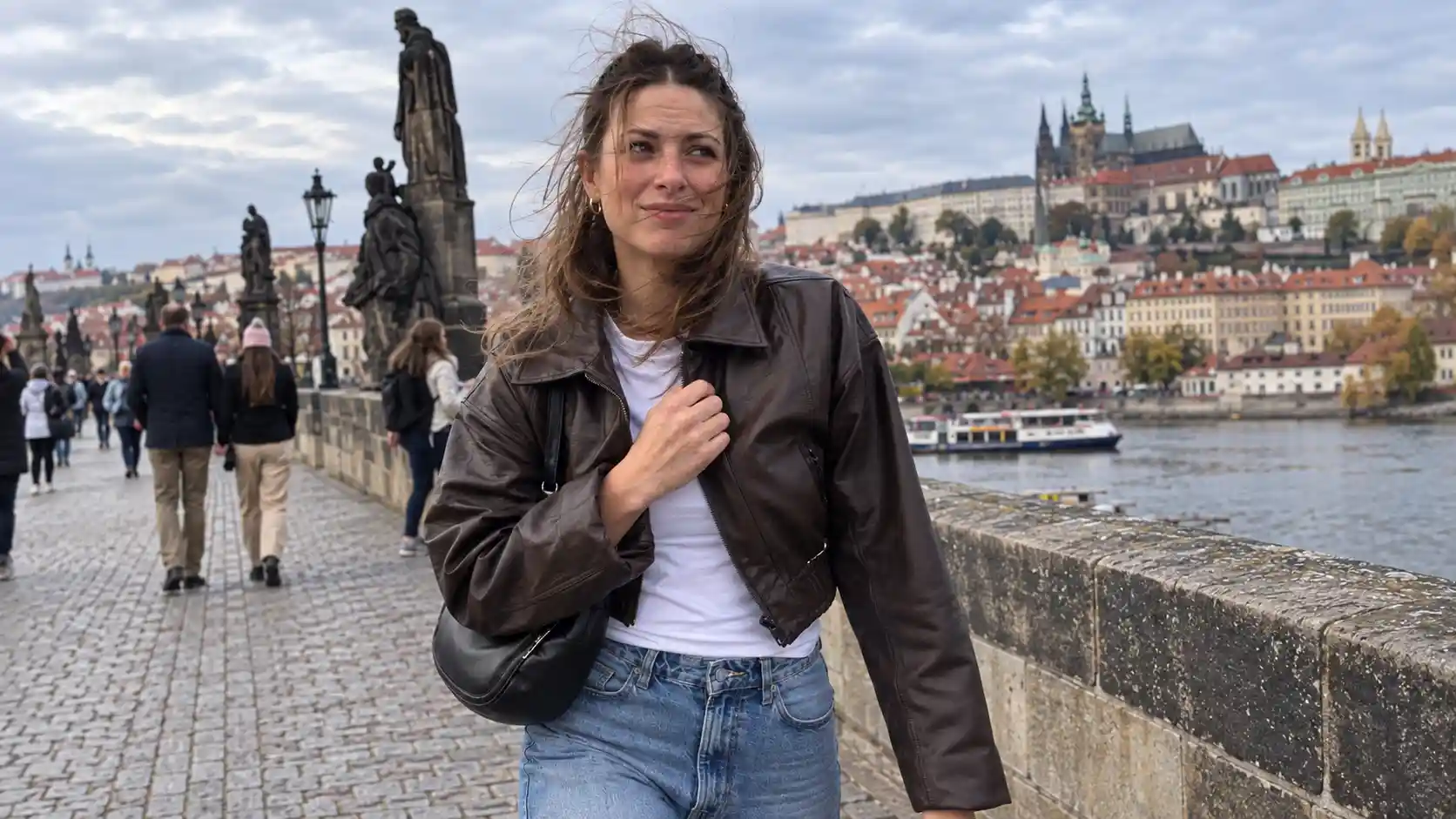
Europe Outfit Inspo Fall 20 Layering Techniques To Stay Stylish And Warm
See More Ideas →How to build this wardrobe without overspending
You don’t need all 23 combinations sitting in your closet at once. Six or seven core pieces, chosen carefully, will get you through most of this list.
A turtleneck, a chunky sweater, a cardigan, one blazer, one denim jacket, one wool coat, and a pair of well-fitted trousers cover a huge portion of the outfits above.
Buy your outer layer first and buy it well. It’s the piece you’ll wear the most and the one most visible in photos. Everything else can be built slowly, thrifted, or borrowed from a sibling’s closet (no judgment, I’ve done it).
Adjusting layers through the day (the part everyone forgets)
Most guides stop at “here’s what to wear” and skip the part where you actually live in the outfit for 10 hours.
Mornings are cold, afternoons warm up, and evenings drop again, so your layering plan needs to survive all three without you carrying a duffel bag of extra clothes.
My rule of thumb: wear your mid layer as something you can remove entirely, not something buttoned into place.
A cardigan you can tie around your bag works better for this than a sweater you’d have to fully change out of in a bathroom stall.
Vests are great for the same reason, since they slide off in two seconds without messing up your hair or your blouse underneath.
If you’re commuting, dress for the walk outside, not for the indoor office temperature.
You can always unzip a coat or push up sleeves once you’re inside. Going the other direction, trying to warm up once you’re already cold, takes far longer and rarely works as well.
I also keep a thin scarf in my bag from October through February.
It weighs nothing, takes up no space, and solves the “why is it suddenly windy” problem that shows up out of nowhere on days that started out mild. Small thing, genuinely useful.
Layering for different climates
Not everyone reading this deals with the same kind of cold, and honestly, a Texas winter and a Minnesota winter are barely the same season.
If you’re somewhere mild, where temperatures hover in the 40s and 50s, you can skip the heavier outer layer entirely and lean on two solid mid layers instead, like a turtleneck under a substantial cardigan.
If you’re somewhere that actually drops below freezing for weeks at a time, don’t skimp on the base layer, and consider adding a fourth piece: thermal leggings under trousers, or a thin down vest between your sweater and your coat.
The combinations above still work as a framework. You’re just adjusting the weight of each layer to match what your winter actually demands.
Humid cold, the kind you get near coastlines, feels colder than the thermometer suggests because damp air pulls heat away from your body faster than dry air does. A water-resistant outer layer matters more here than pure warmth, so prioritize a coat that handles moisture over one that’s simply thick.
FAQs
Do I need to buy a whole new wardrobe to layer well? No. Most of the combinations above use pieces you probably already own. A denim jacket, a basic tee, and a sweater you forgot about in the back of your closet will get you through most of this list without spending anything.
How many layers is too many? Three is usually the sweet spot. Once you’re past four, you start losing shape and mobility, and honestly, you’ll overheat the second you walk indoors and have nowhere to put the extra layer.
What’s the single best investment piece for layering season? A well-made outer coat, hands down. It sits on top of every combination and does more visual work than anything underneath it, and a good one will outlast several years of trend cycles.
Final thought
Twenty-three combinations is a lot to try, so don’t feel like you need to check every box this season.
Pick three or four that actually fit your life, build from there, and let the rest sit on your Pinterest board for next year.
Which one are you trying first, the fleece-under-puffer combo or the slip dress and chunky sweater pairing? I’m genuinely curious which one you’ll pin.
